
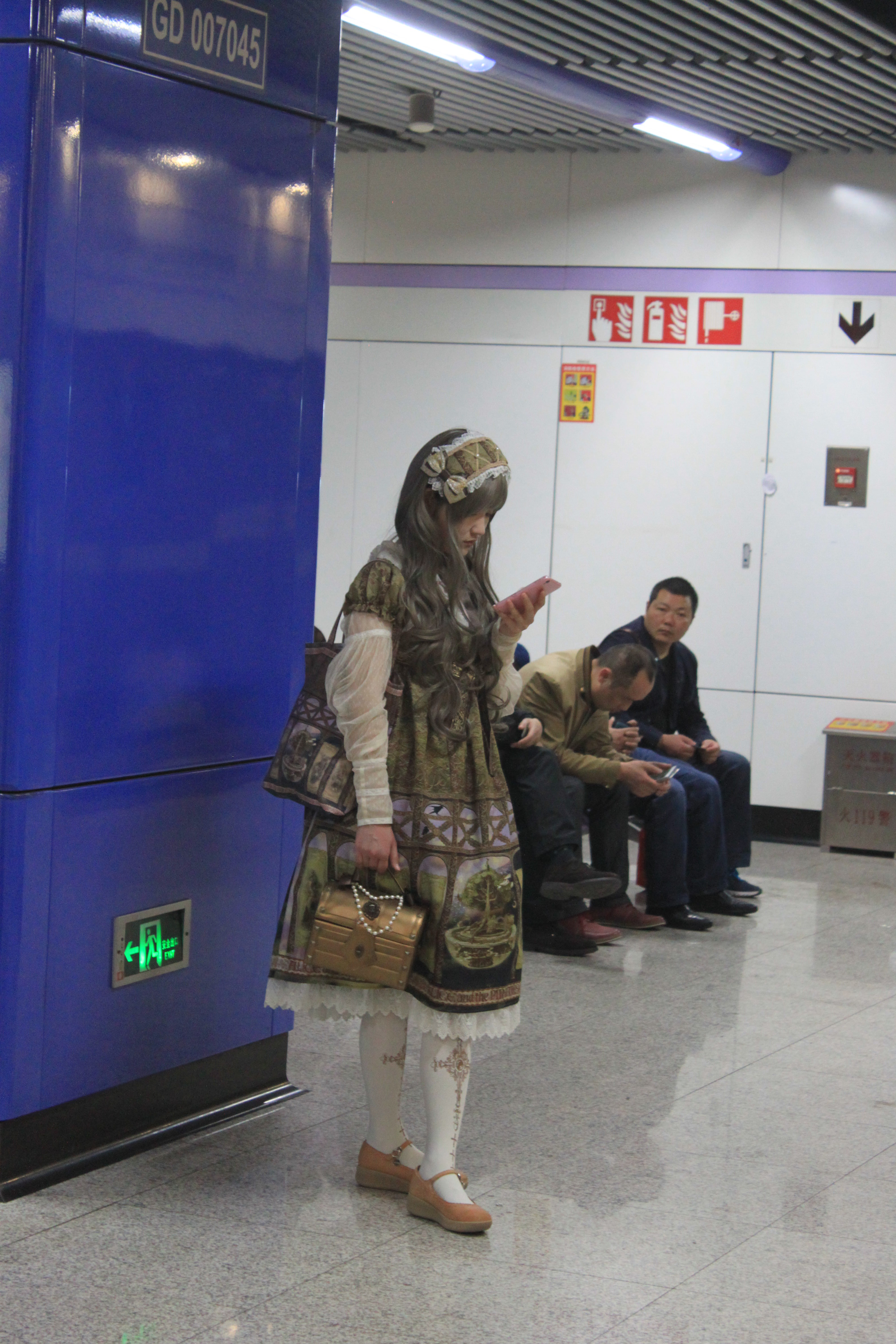
At Yilli Lu Metro Station
I had come across a number of youngsters dressed in extraordinary clothing – mainly at weekends it has to be said – as I wandered around Shanghai. First of all it was the girls that struck me first and my first reaction was one of feminist horror. But my daughter put me straight – this is Lolita Fashion, a phenomenon that originated in Japan in the 1970s and has since made its way around the world. I’ve come to regard it now as similar to the Punk costumes of my youth – people, particularly teenagers, just like dressing up. And so do the older Japanese. A lady from Kyoto said that she liked wearing her kimono because she liked getting dressed up. The phenomenon does however seem to have a very odd name as far as I’m concerned. Lolita for me is a mid 20th Century book about child abuse. Is this fashion phenomenon named after the book? I’m not sure, but I’m certainly still rather disturbed by the thought that it might be.
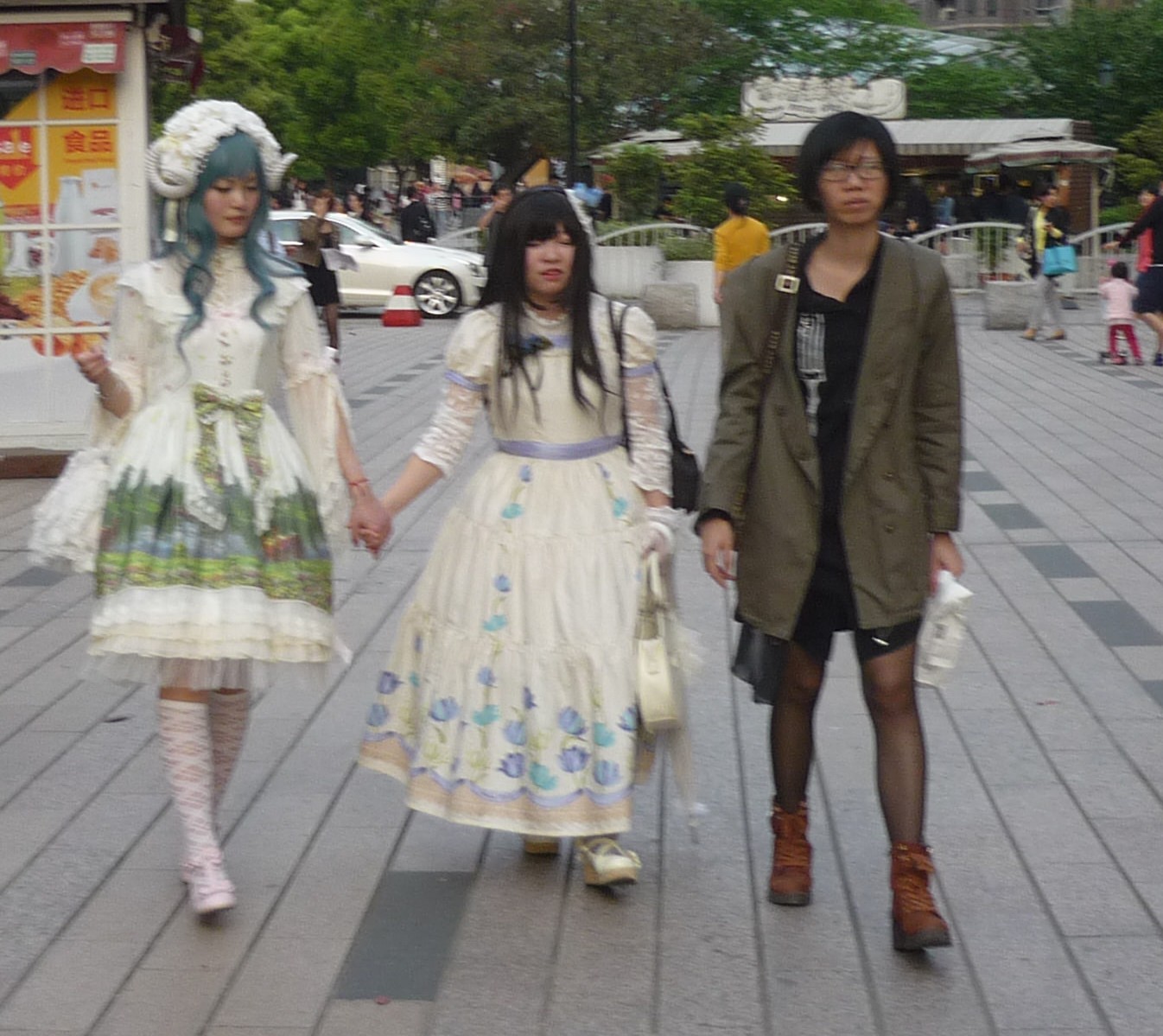
Shiro Lolita Fashion Fans on Golden Street
A whole industry has been set up selling costumes and accessories and the youngsters take part in competitions which show off their interpretations of Lolita fashion. I’ve seen groups similarly dressed at People’s Park and this group strolling down Golden Street just down the road from our apartment. It started off with some Japanese dressing in Victorian-style costumes in a 1970s sub-culture, but now there are gothic, classic, sweet, princess, Shiro & Kiro (White & Black) Lolitas amongst others.
At our metro station the other day whilst we were waiting for the next train we wandered down the platform and came across a whole gang getting ready for an afternoon’s fun.
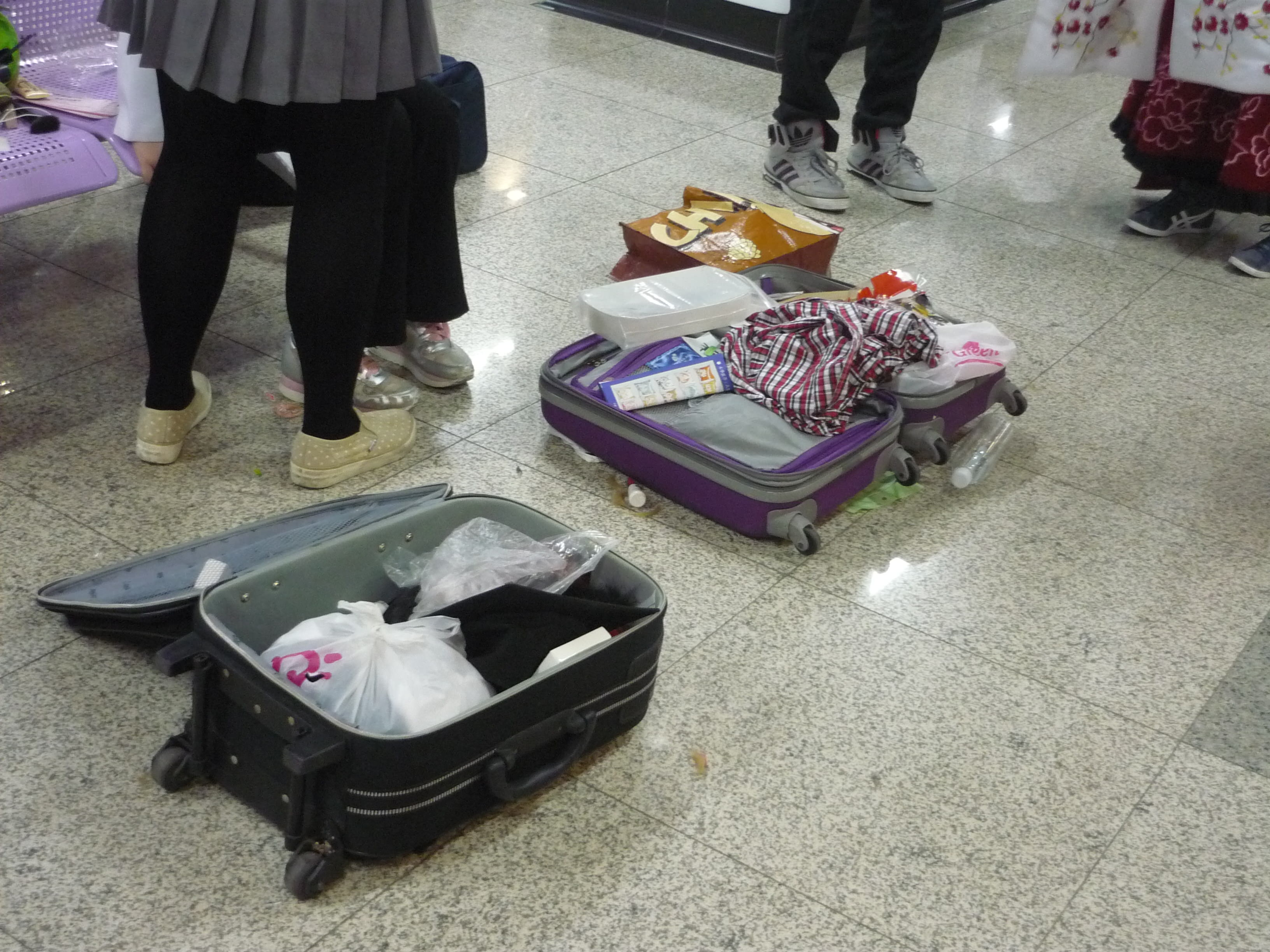
Suitcases full of Lolita kit
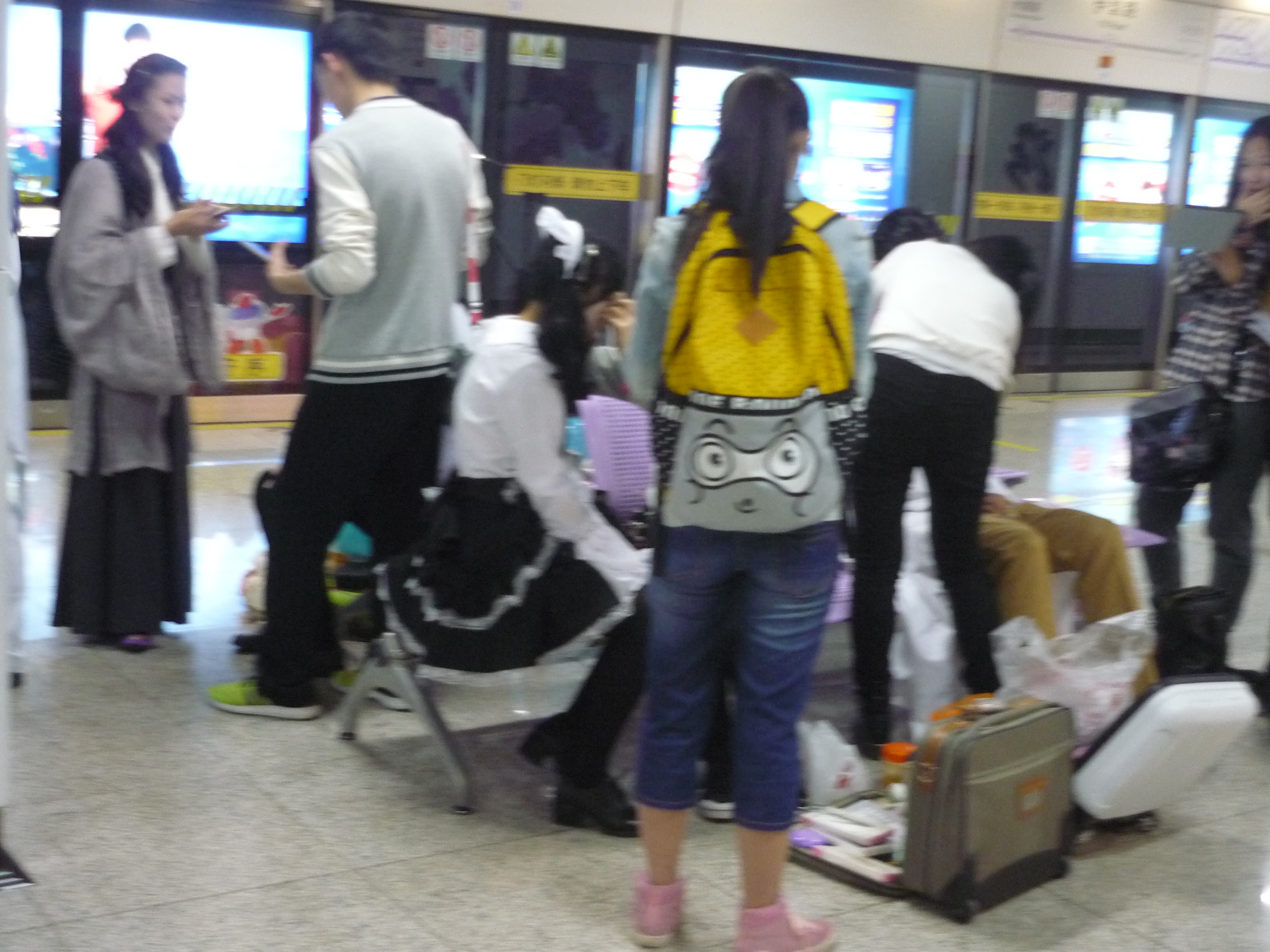
Wigs are important, as is make-up.

Wigs are important

Make-up being applied
The boys seem to have a more individual approach to what this fashion means to them:

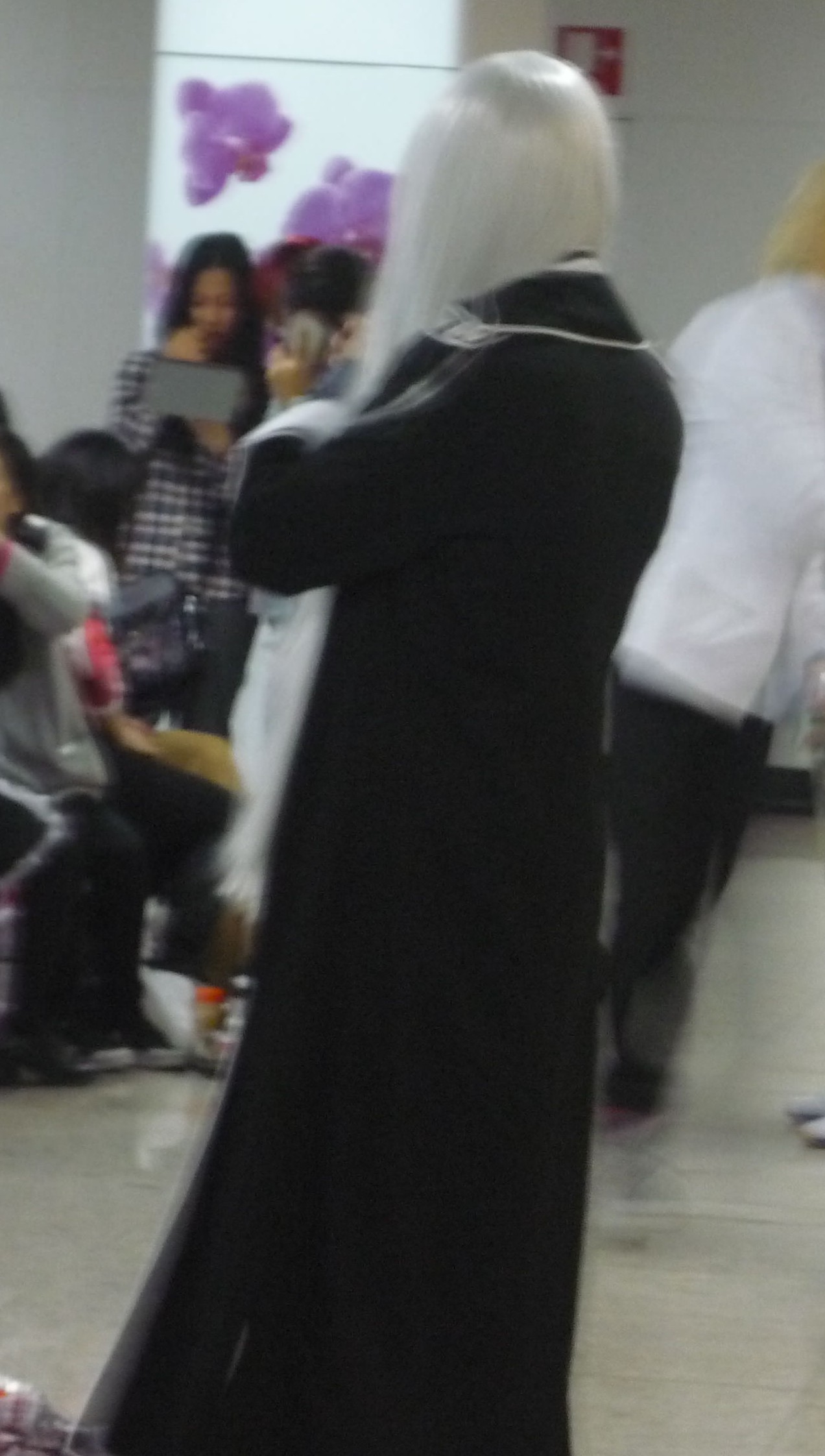

but both sexes were taking a great deal of time and care getting ready, despite the fact that this was on the platform of a tube station

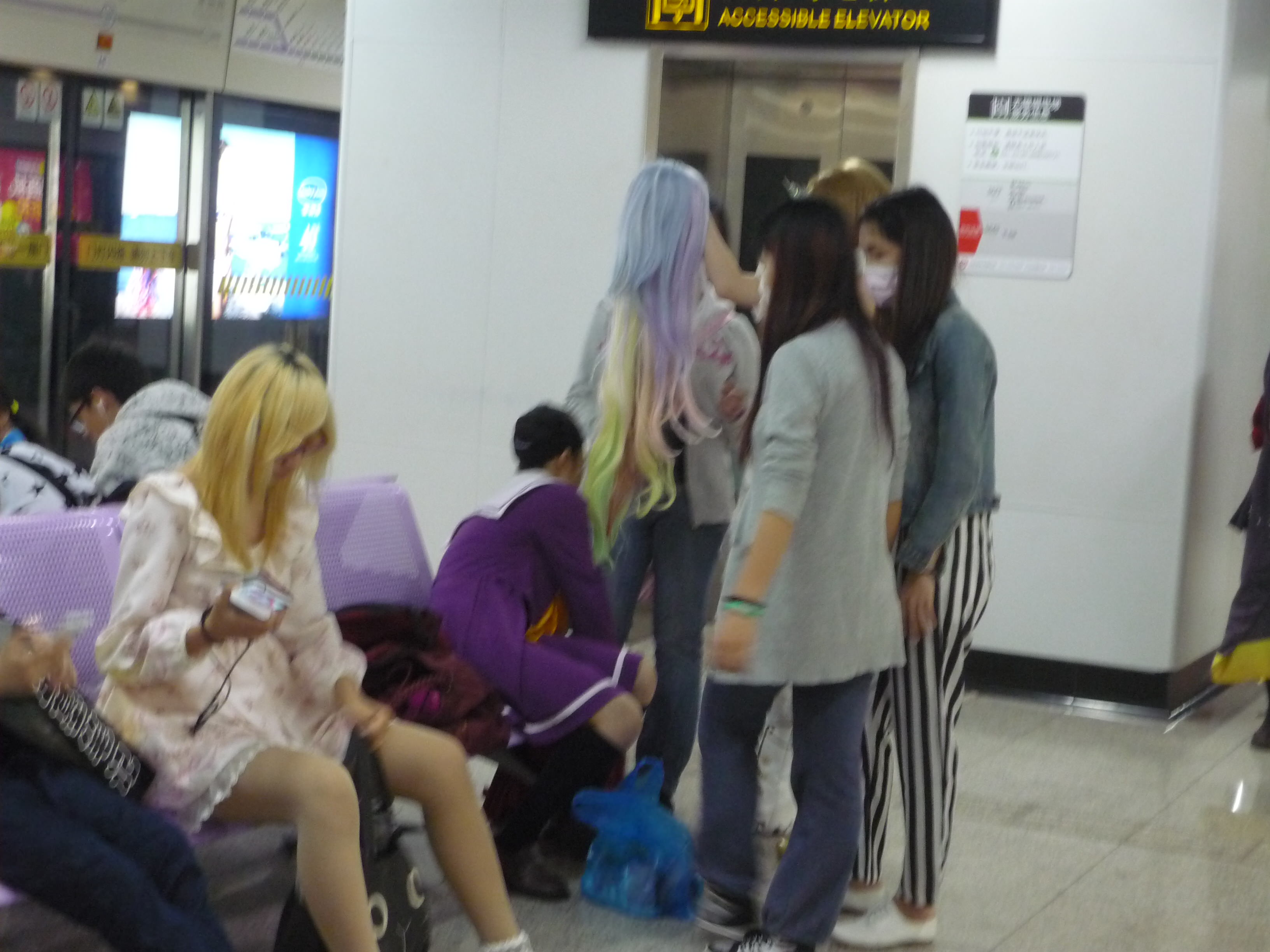
and why here on a Saturday afternoon at Yili Lu Metro station? The answer, I think, lay upstairs, although I can’t be certain. That and watching NHK World an English -language Japanese TV Channel on which I saw a programme about Lolita Fashion competitions. It appears that part of the deal is to have your photograph taken in a suitable place and send it in to the Japanese TV programme.
Upstairs at the Yili Metro station is the Shanghai Takashimaya department store, where I went to investigate the following day, was a Chibi Maruko Chan Dreaming Expo of the apparently popular Japanese cartoon brand with outsize models outside the store and crowd barriers set up to manage the crush.
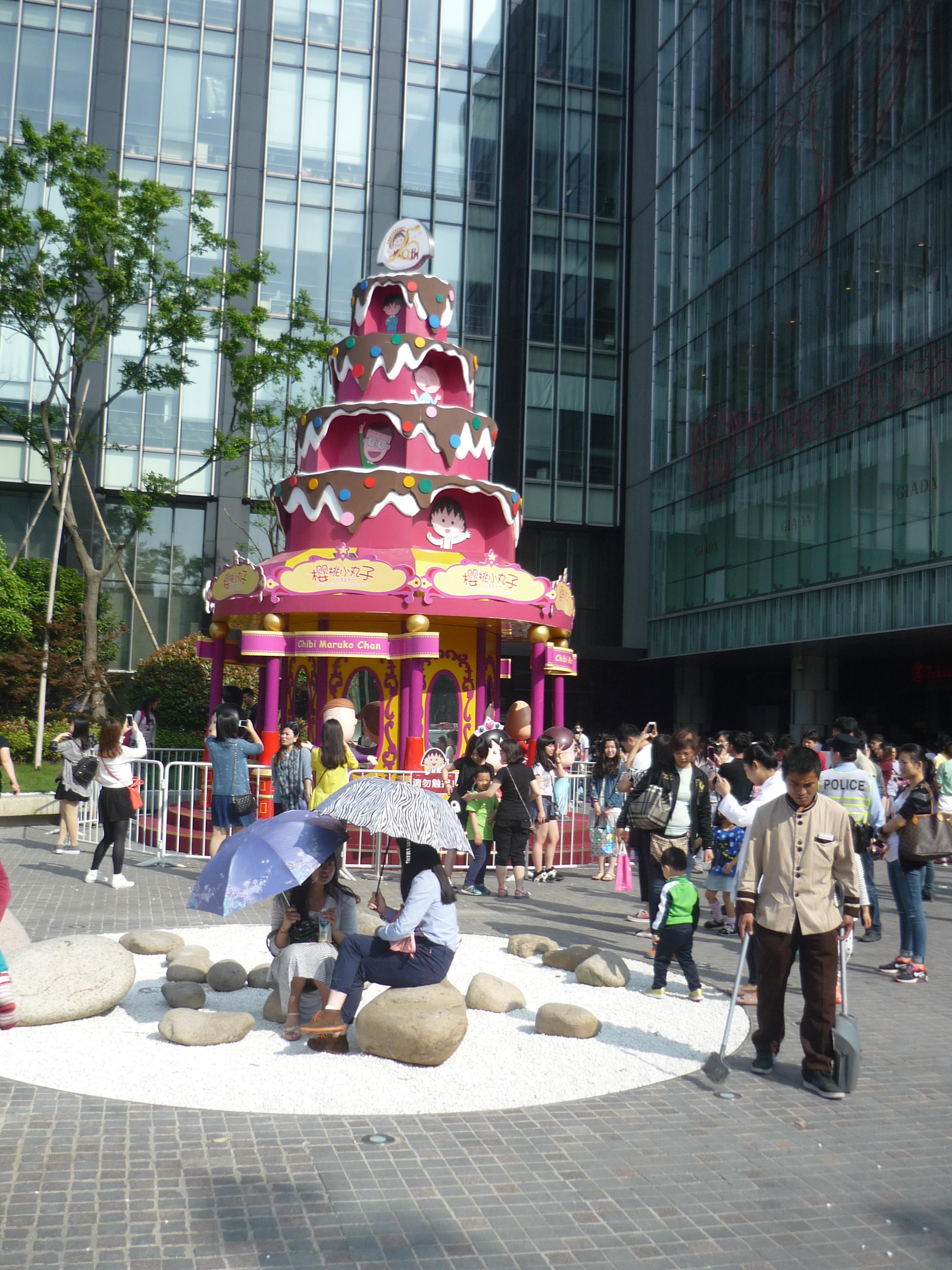
Chibi Maruko Chan Dreaming Expo Cake
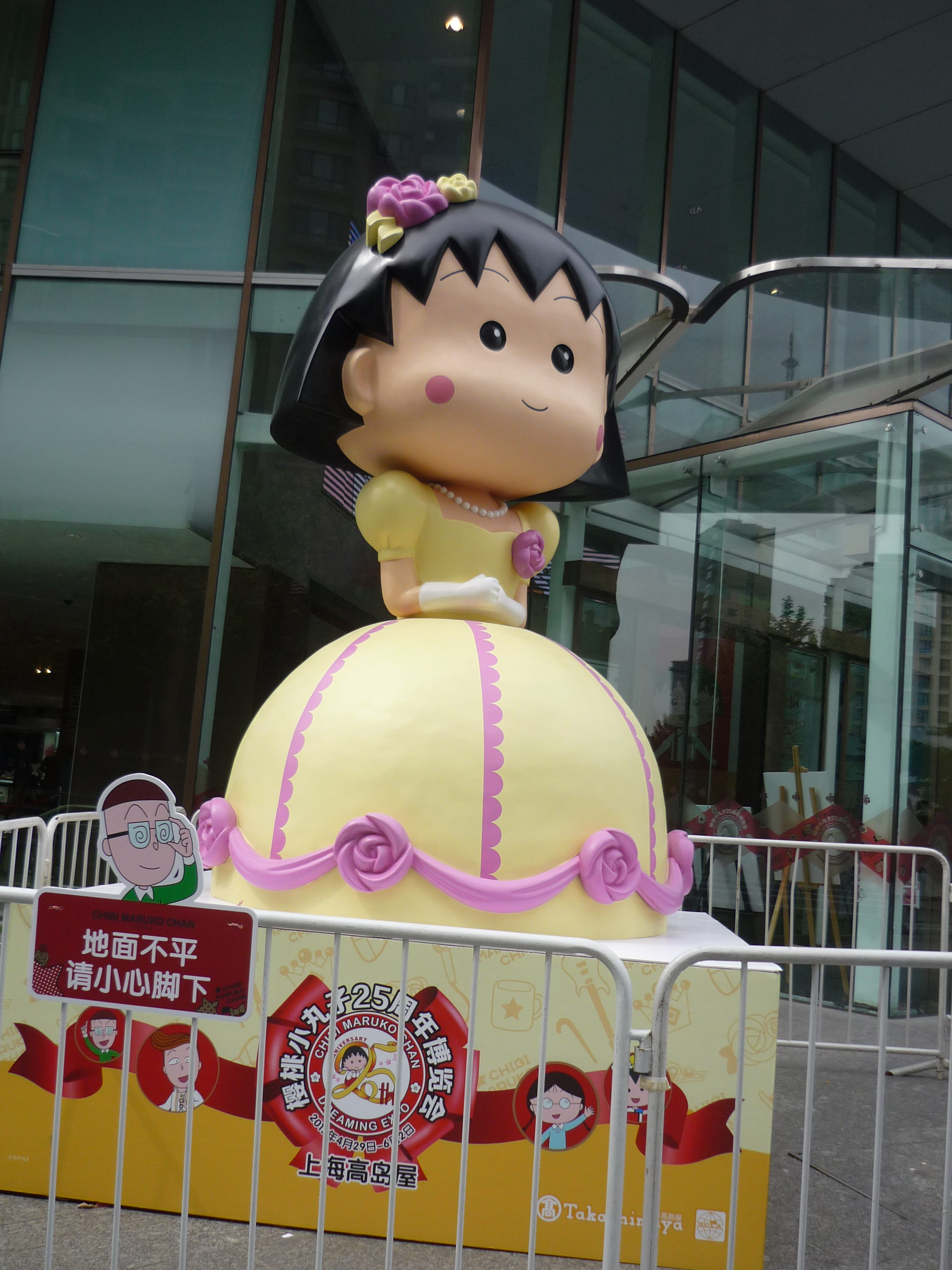
Chibi Maruko Chan Character
And inside the store, which is where I think the Lolita fans must have been heading, were life-size models and scenes where children and adults alike were paying to go in and have their picture taken.
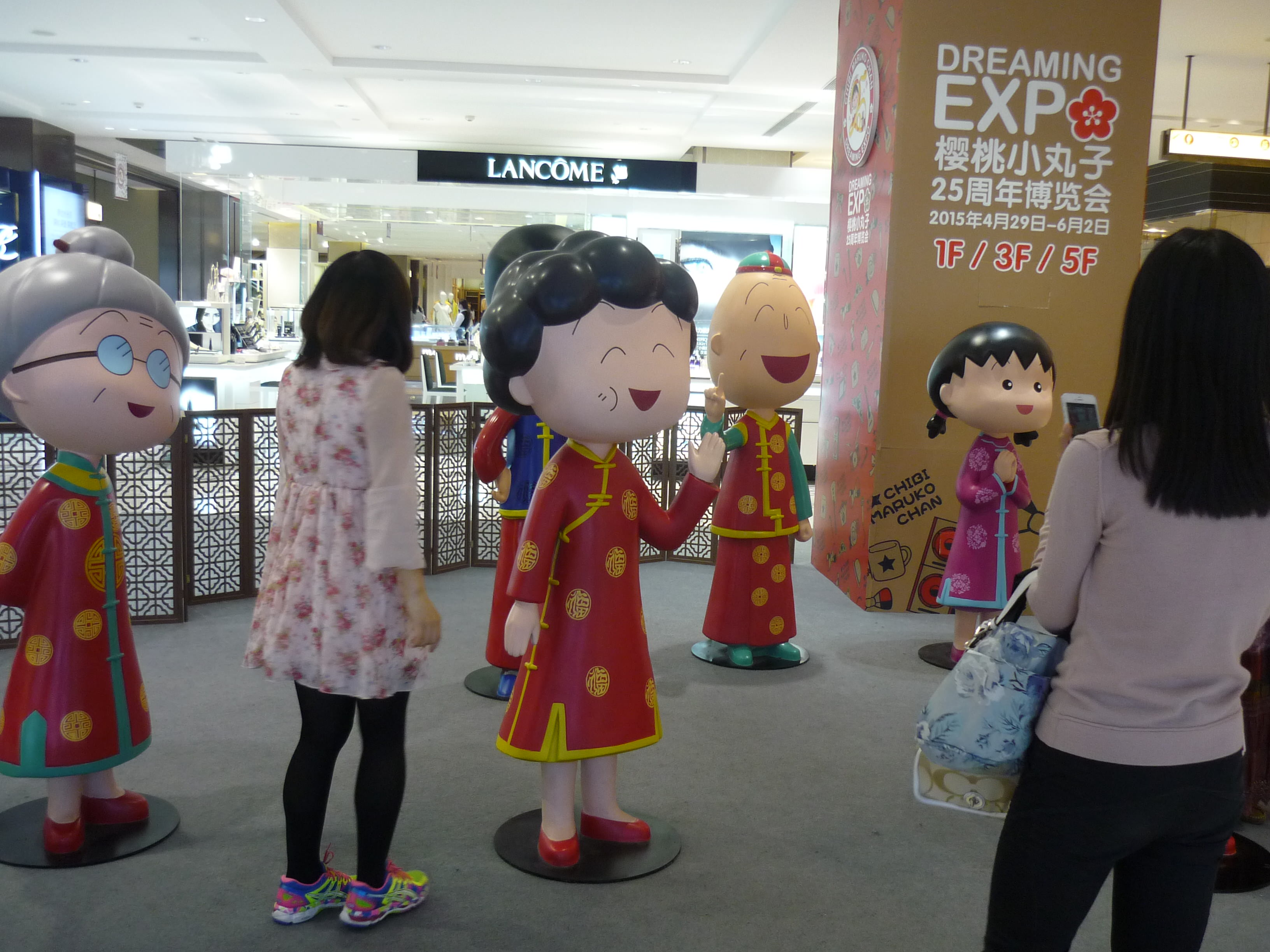
Life-size models of the cartoon characters

Cartoon sets
Having your picture taken in a location appears to be a particularly important East Asian phenomenon. We have noticed it over the years that we have been visiting Hong Kong, China, Taiwan and Japan. Whereas a European will often just take a photograph of a view or a building, it appears to be very important for East Asians to appear in such a view. Perhaps it is to prove that they were there. Anyway it often means that they end up ruining good pictures of mine by standing in the way. And it is the reason why they invented the selfie-stick which is slowly making its way over to the west, but which we have seen in operation in Asia for quite a few years now.
Westerners can also sometimes be part of the subject of their photographs. I’ve seen my self being framed in a selfie by a girl on the metro and turned away suddenly when I realised what she was doing. I don’t understand the attraction myself, of putting me or myself in a picture, but there you go.

 Pearls From The Orient