
The House at Jiaxiu Lane, Morming Road
Down this unprepossessing alleyway, and around a couple of corners I came across this Shikumen House with a classically designed portico and typical black doors with heavy metal door fixtures. Immediately inside is the usual mini open air courtyard. 

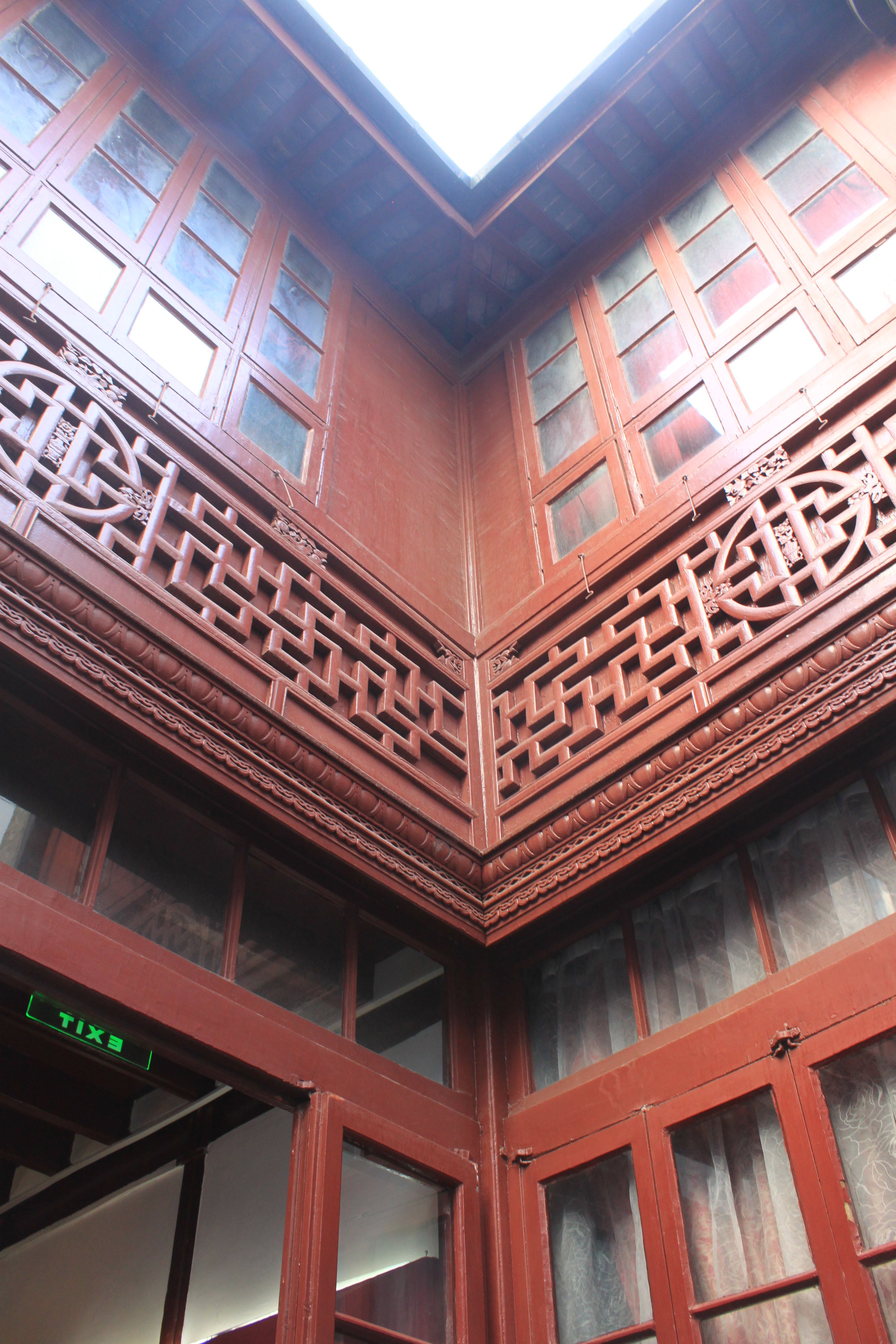
The upstairs floor from courtyard
A wing of this house was originally lived in by Cai Heisen, an early leader of the Chinese Communist Party, who had been one of the students who had gone to France, and his wife Xiang Jingyu in 1924. In June they were joined by a friend from his home province (he was born in Shanghai but grew up in Hunan), Mao who had been in Shanghai since March and his family. Cai and Xiang moved upstairs – the Maos and her mother lived downstairs. Mao was appointed by the Communists to work for the Kuomintang Shanghai Executive Office, whilst still working for the executive bureau of the CPC, after the formal co-operation between the two parties was signed in January of that year. By mid July he was ousted from the KMT job and by the end of the year returned following exhaustion to Hunan.

Kitchen LHS
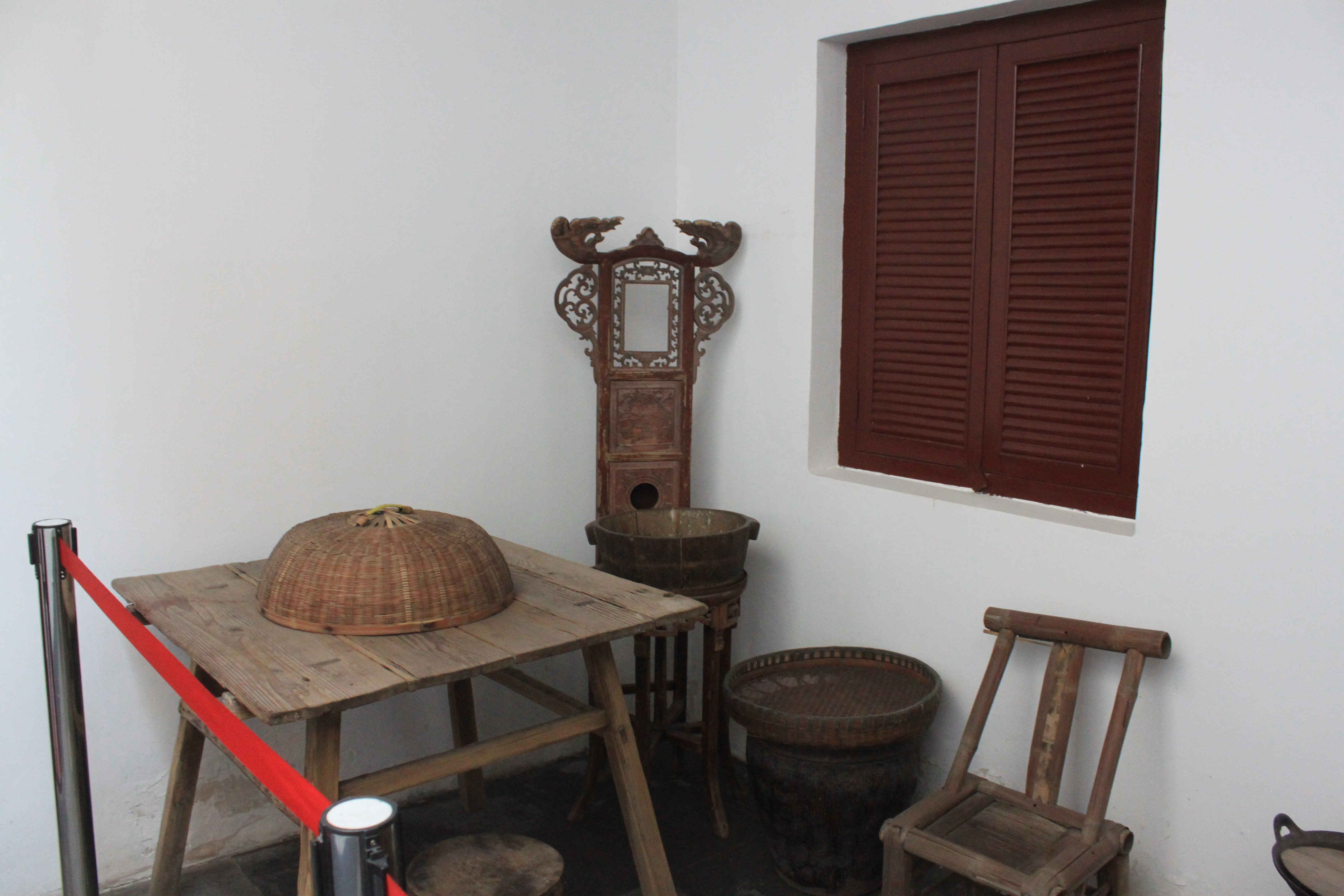
Kitchen RHS
The house contains simple furniture here shown in the bedroom and in the kitchen of the house. Granny, Xiang Zhenxi looked after the two boys Anying and Anging.

Living room Furniture

Front wing Room – Bedroom and Study of Mao, his wife and children
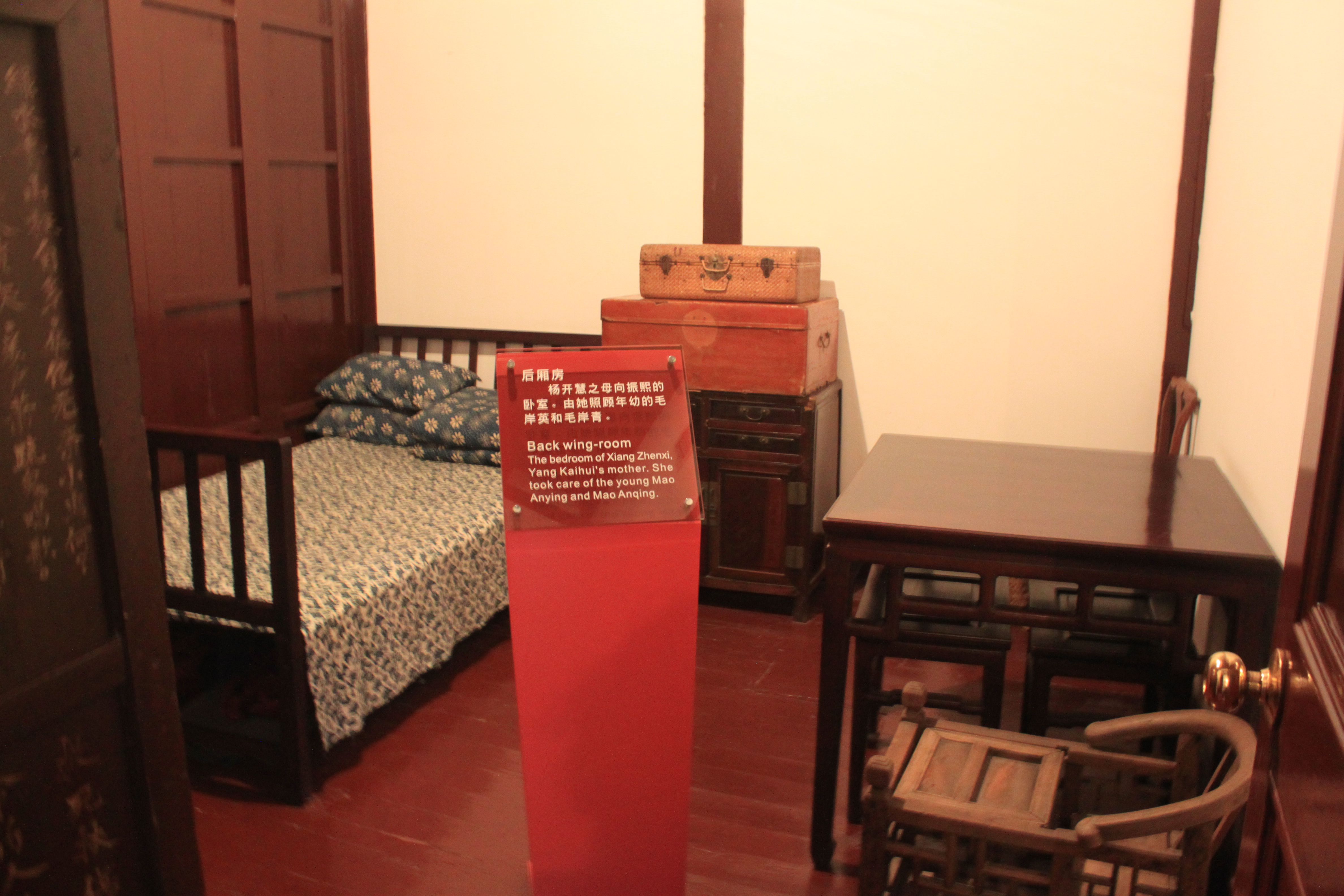
Back-wing Room lived in by Granny Xiang

Typical Shikumen House portico
The rest of the exhibition turned out to be more about Mao’s son Anying than his father:

Mao Zedong and Yang Kaihui married in Changsha Hunan in the winter of 1920

Yang Kaihui with her children
Inside the building there are a number of family photographs some of a young Mao – he was a tall man – and pictures of his family. On 24th October 1922 their eldest son Anying was born in Changsha Hunan.
Anying’s childhood is described in the exhibition as turbulent.
Annoying was two when his mother, Yang Kaihui, moved to Jiaxiu Lane to be with his father Mao Zedong. He was in prison at eight with his mother; at nine he roamed about with his two brothers, Anqing and Anlong, in Shanghai Bund where they made their livings by picking up cigarette ends, taking odd jobs, trundling handcarts and selling newspapers, and had to sleep in a ruined temple. They were often hungry. His turbulent childhood is reported to have tempered his strong willpower.
No-one is smiling in any of the photographs and the ones of his two boys who lived here with him (he had 10 children in all by 3 different women) made me think that they were both very sad children.
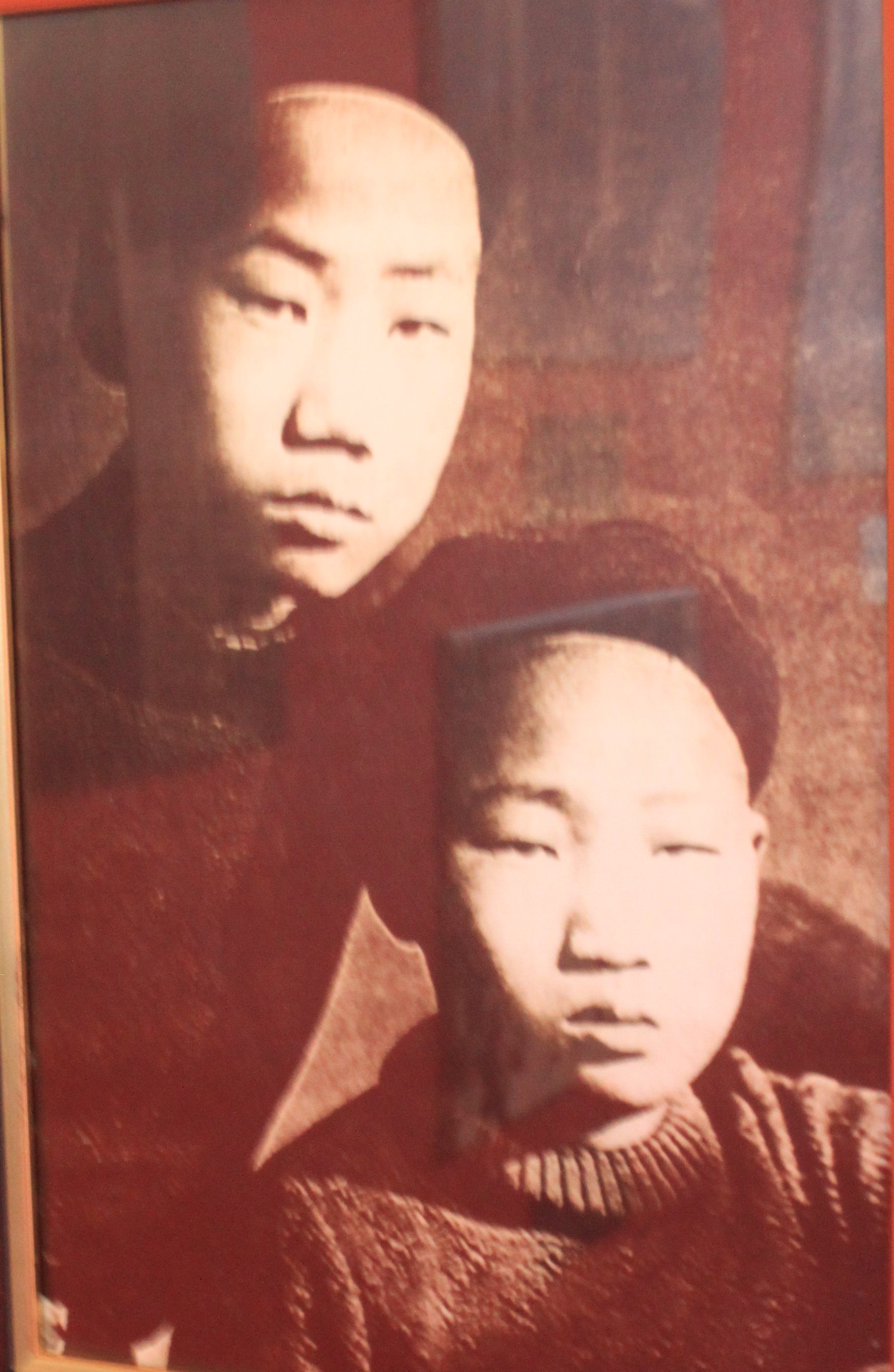
Mao Anying with Mao Anging in the Soviet Union 1942

Mao Anying in the Soviet Union International Children’s Home
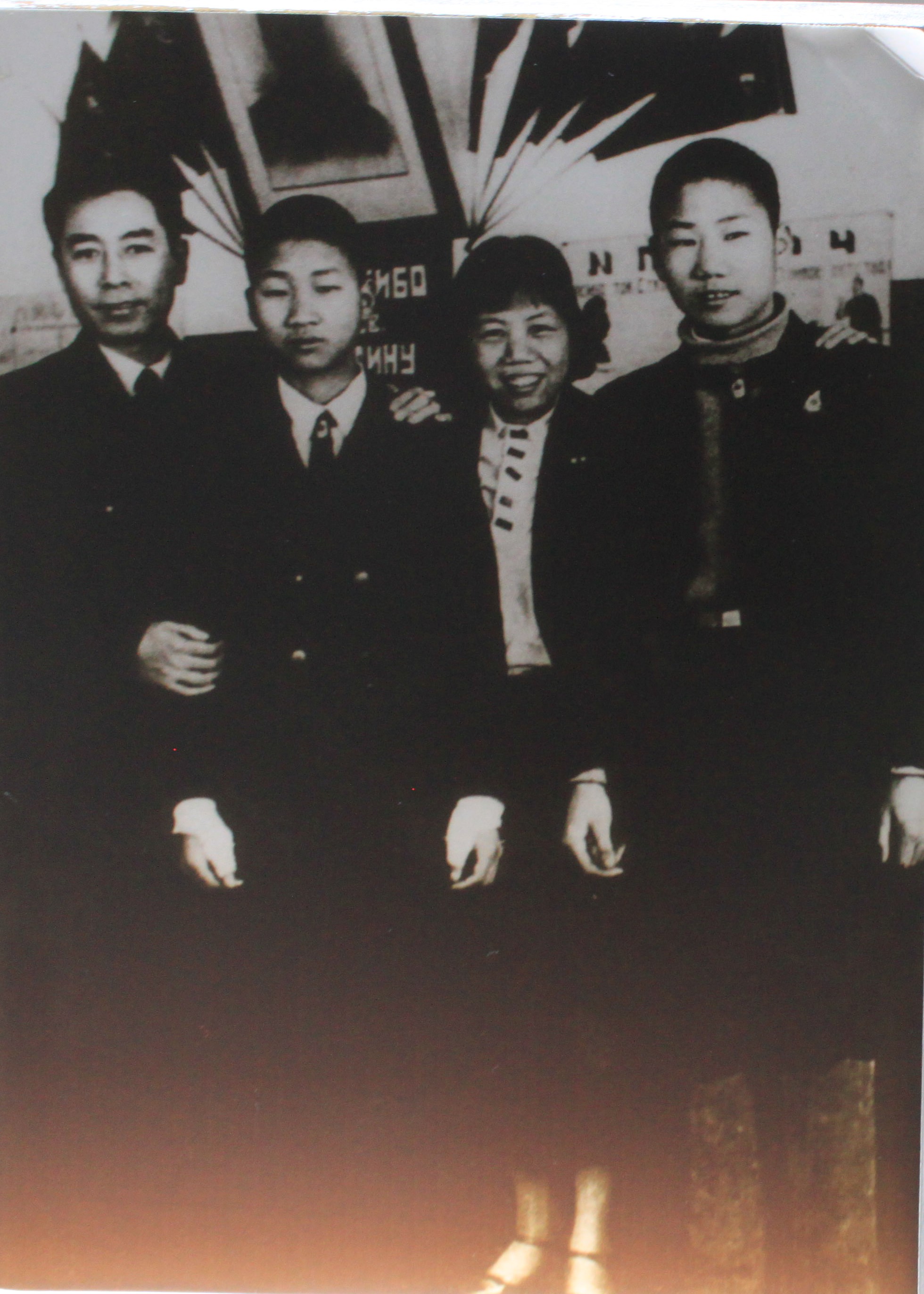
New Year’s Day 1940
At some point two of the brothers, Anying and Anging ended up in the Soviet Union, where they lived in the Communist International Children’s home, where Anying was once a young leader. He joined the Red Army and was received by Stalin.
If Jung Chang’s book Mao: The Unknown Story is to be believed the two boys were held as hostages in the Soviet Union by Stalin, to make sure that Mao didn’t step out of line.
The last photograph above was taken on New Year’s Day 1940 Zhou Enlai and his wife Deng Yingchao made a special trip to visit the Chinese Children in the Children’s Home during his “healing period in the Soviet Union”. From left to right: Zhou Enlai, Mao Anqing, Deng Yingchao and Mao Anying.
After returning to China Mao Anying went to the countryside, working in various grass-roots units to strengthen his mind and body.

Mao Zedong and son Anying
Taken after returning to Yan’an, Mao Anying joined in productive labor at Wujia Zaoyuan upon his father’s instruction and became a member of the “Eighth Route Army” after being a “Foreign Student”

Mao Anying & father in April 1949
This is one of the few photos in which somebody is smiling.

Mao Anying and His Wife Liu Siqi were married 1949
Mao Anying and his wife Liu Siqi were married in 1949.
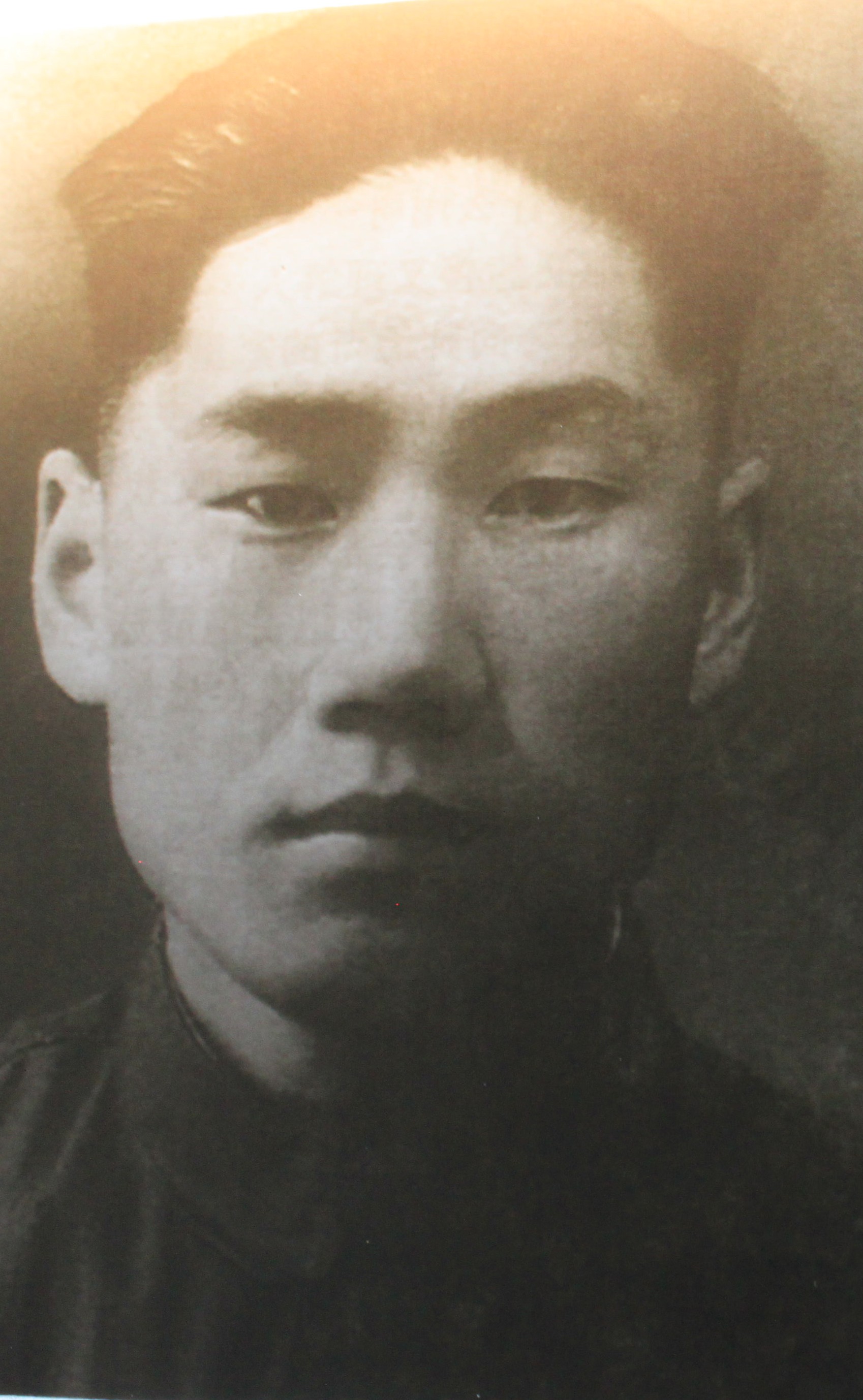
Mao Anying
Mao’s son Mao Anying in the Beijing Machine General Factory. In 1950 he made repeated requests to be transferred from the Social Affaires Department to Deputy Secretary of the Party General Branch where he was mainly responsible for the propaganda work.

Mao Anying in Beijing
Mao Anying on Beijing Tian’anmen Rostrum with Liu Shaoqi and Zhu De 1st October, 1950
“In 1950 Mao Anying took initiative to join the Chinese People’s Volunteer Army, and died a hero’s death when he was merely 28 years old on November 25, 1950 in the War to Resist US Aggression and Aid Korea”

Liu Siqi at Mao Anying’s grave, Korea

Earth From the place where Mao Anying died in Korea
Many of the photographs and artefacts were donated by Mao Anying’s wife, Liu Siqi.
” The exhibition hall displayed Comrade Mao Anying’s short and glorious life through pictures and material objects. His sublime quality and noble character his deep love for the nation and people his spirit of patriotism and internationalism will educate and inspire the young generations forever.”
By the time that I reached this point in this particular exhibition I had lost the plot. I think, but I am not certain, that this section about handmade shoes and the Chinese shoulder poll is about the Long March. But I could be wrong.
The Small Shoulder Pole
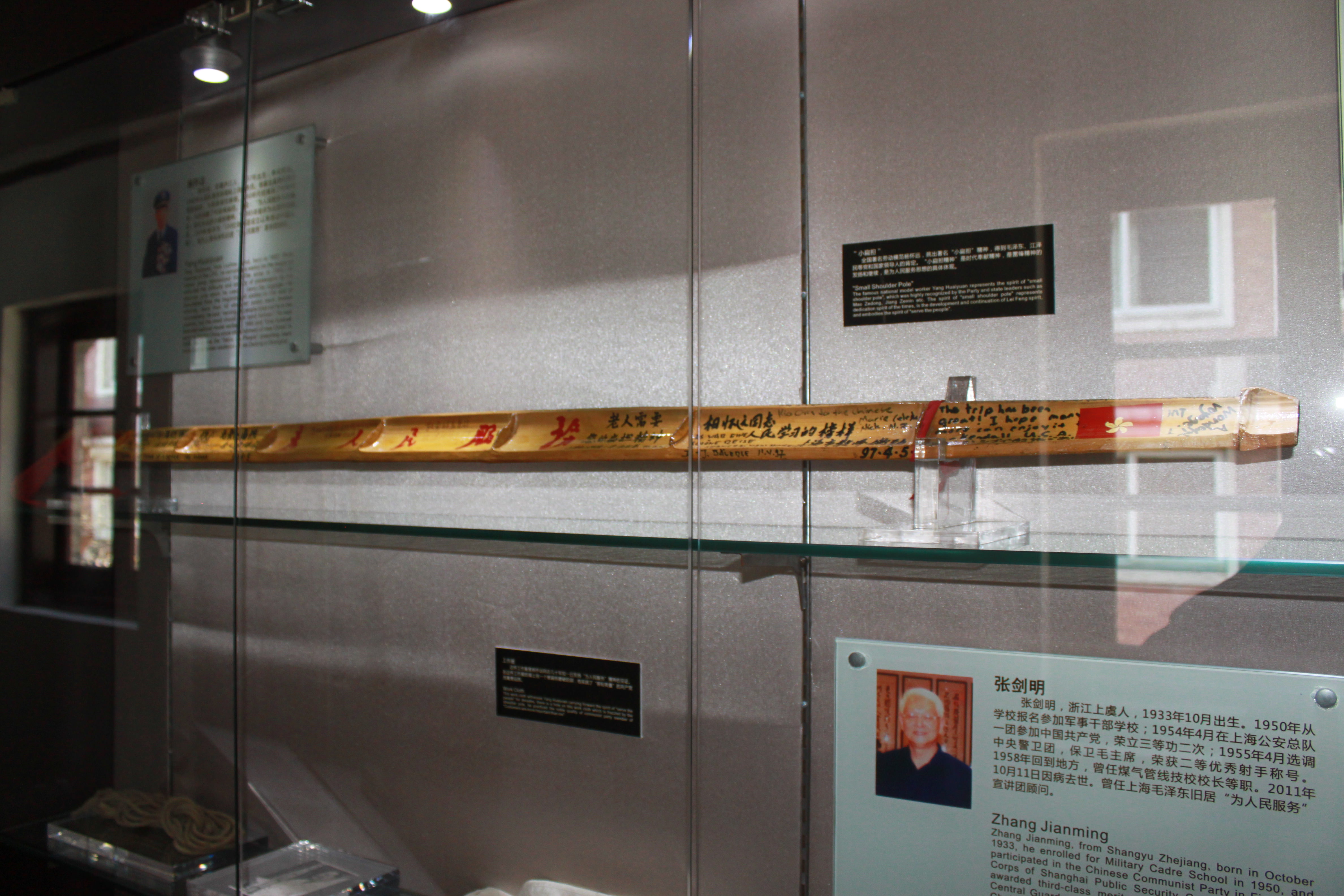
Small Shoulder Pole
The famous national model worker Yang Huaiyuan represents the spirit of “small shoulder pole”, which was recognised by the Party and State leaders such as Mao Zedong, Jaing Zemin etc. The spirit of “small shoulder pole” represents dedication spirit of the times, is the development and continuation of Lei Feng spirit, and embodies the spirit of “serve the people”.

Straw Shoes

Rag Shoes
In order to reduce the heavy burdens of civilians he and his comrade-in-arms of “Good Eighth Company” weaved shoes with straws or rags if straws were not available. They walked to Hualong and Jiangwan areas to open up wastelands, marched and did camping training. They supplied good vegetables they planted to the market, but ate just bad ones and even vegetable skins.
Much was made in the exhibition that although Mao didn’t visit Shanghai for the many years between 1927 and 1949:
he kept close attention to Shanghai all the time. At every crucial historical moment, including the War of Resistance against Japan, the Kuomintang-Communist Negotiations, the War of Liberation and the Battle of Liberating Shanghai, Mao Zedong timely gave instructions to point out the way forward for the struggle of the people of Shanghai.

Shanghai 27th May 1949
The People’s Liberation Army of China liberated Shanghai (from the Nationalists) on 27th May, 1949.
After Shanghai returned to the embrace of the people Mao Zedong paid close attention to the establishment of the new state power. He invited different democratic parties and patriotic personages to the construction of the new China. He managed to consolidate the newborn state power through the movement for the suppression of counter-revolutionaries, the campaign against corruption, waste and bureaucracy and the campaign against bribery of government workers, tax evasion, theft of state property, cheating on government contracts, and stealing economic information from government sources for private speculation. Besides, Mao Zedong attached great importance to the economic operation Shanghai, timely adjusting the policy to the recovering economy. After the general line for the transition period was determined he paid special attention to Shanghai’s transformation of agriculture……
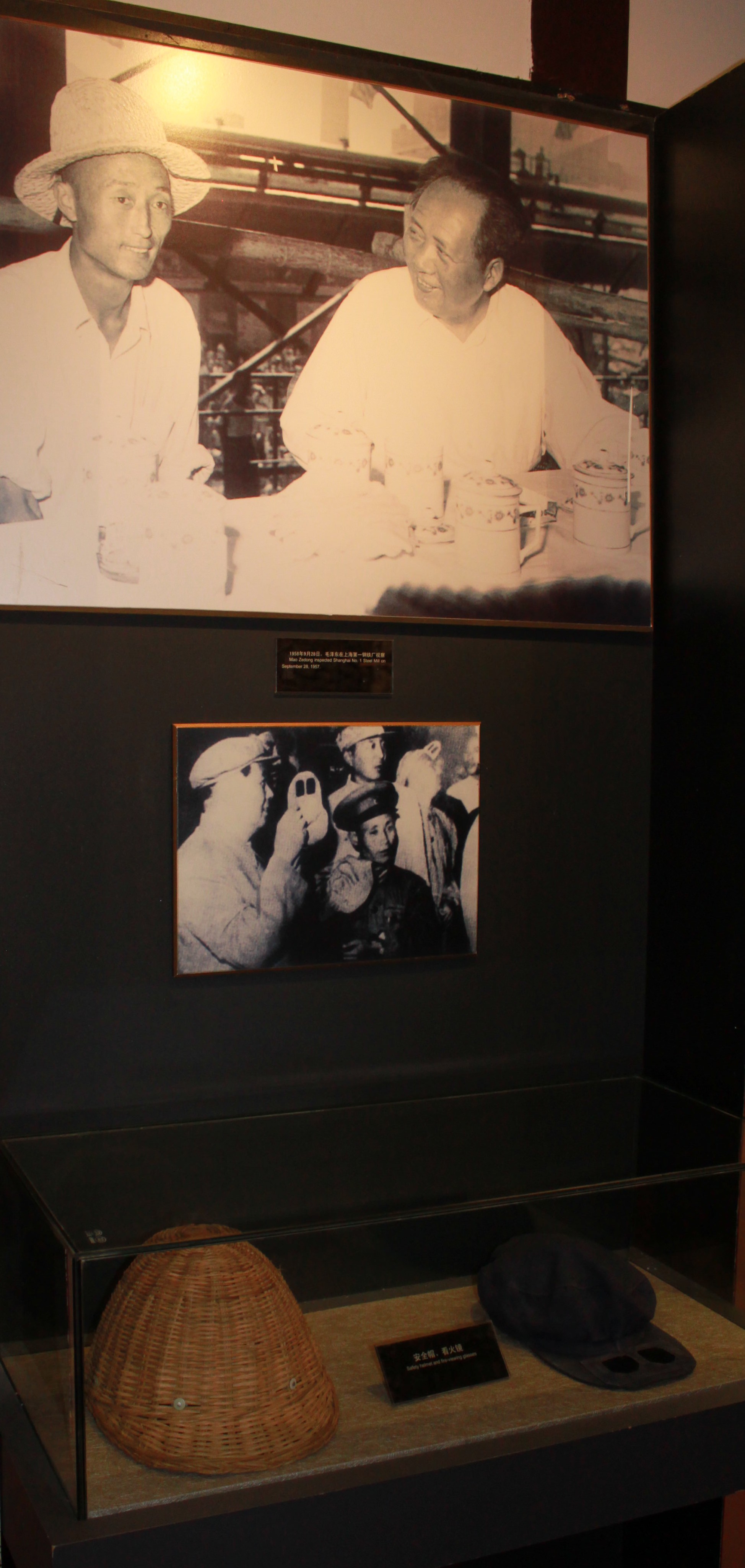
Mao Zedong visiting Shanghai and the bamboo hard hat he used
In his life time, Mao Zedong came to Shanghai tens of times. During his stays in Shanghai he made extensive contacts with people from all walks of life. He fervently expected the workers and the youths of Shanghai to take on the heavy responsibility for the socialist construction. He made friends with many democratic personages, scientist and artist, paying great attention to their mood, life and work. Mao Zedong showed loving care for the people of Shanghai. His noble bearing will be kept in mind of the people of Shanghai forever.
Datong Alley, Datong Road (now 331 Datian Road)

Datong Alley, Datong Road
Mao lived here from November 1926 when he became secretary of the CPC Central Peasant Committee.
Nowadays the house at Anyi Road is completely surrounded by towers China’s version of capitalism and the Bowen’s Women’s School is in the middle of Xintiandi.
This is a direct result of Deng Xiaoping’s opening up and liberalising the economy following his visits to the four dragons, South Korea, Taiwan, Hong Kong but in particular Singapore where he was profoundly impressed by the achievements of the Prime Minister Lee Kuan Yew, after that island state was ousted from Malaysia. Deng was very impressed with Singapore’s economic development, greenery and housing, not least beaches, it was achieved by Chinese and he later sent many thousands of Chinese to Singapore to learn directly from their experience.
“Of course old Deng likes Singapore,” said a young Chinese Government official, at the time. “It’s run by Chinese, it’s efficient, it’s rich, and no one jabbers about human rights.”
It was Deng who combined the Communist Party’s ideology with the practices of the market economy. The adoption of his original 1961 pronouncement (which caused him so much trouble by being labelled a capitalist-roadster at the time and which led to Mao’s Cultural Revolution):
it doesn’t matter whether a cat is black or white, if it catches mice it is a good cat
together with the idea that they are going to have to let some of the Chinese people get rich means that he is generally credited with developing China into one of the fastest-growing economies in the world for over 35 years and for raising the standard of living of hundreds of millions of Chinese citizens.
What would Mao Zedong have thought of the results of Deng’s success?
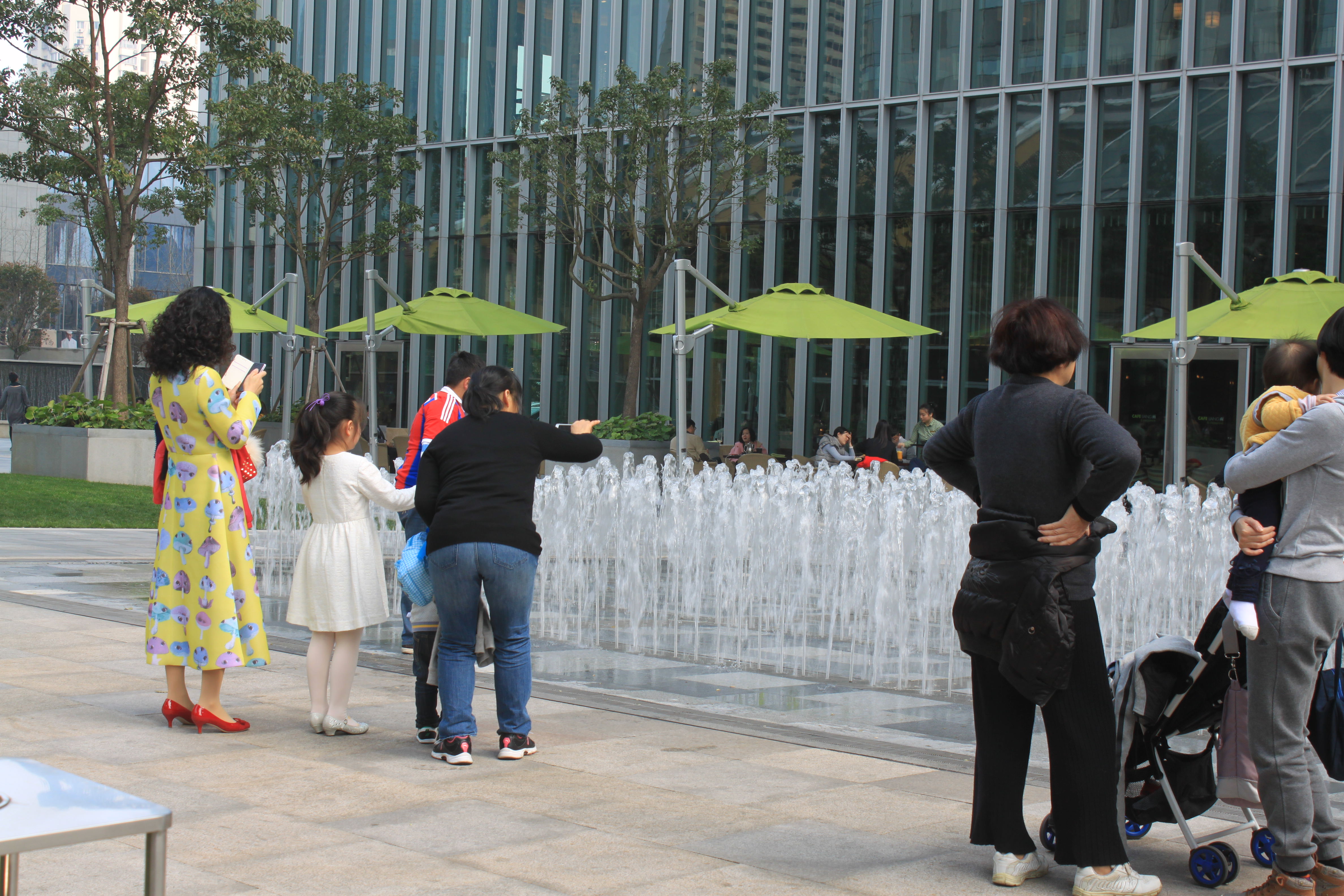
Expensive cafes and play fountain behind
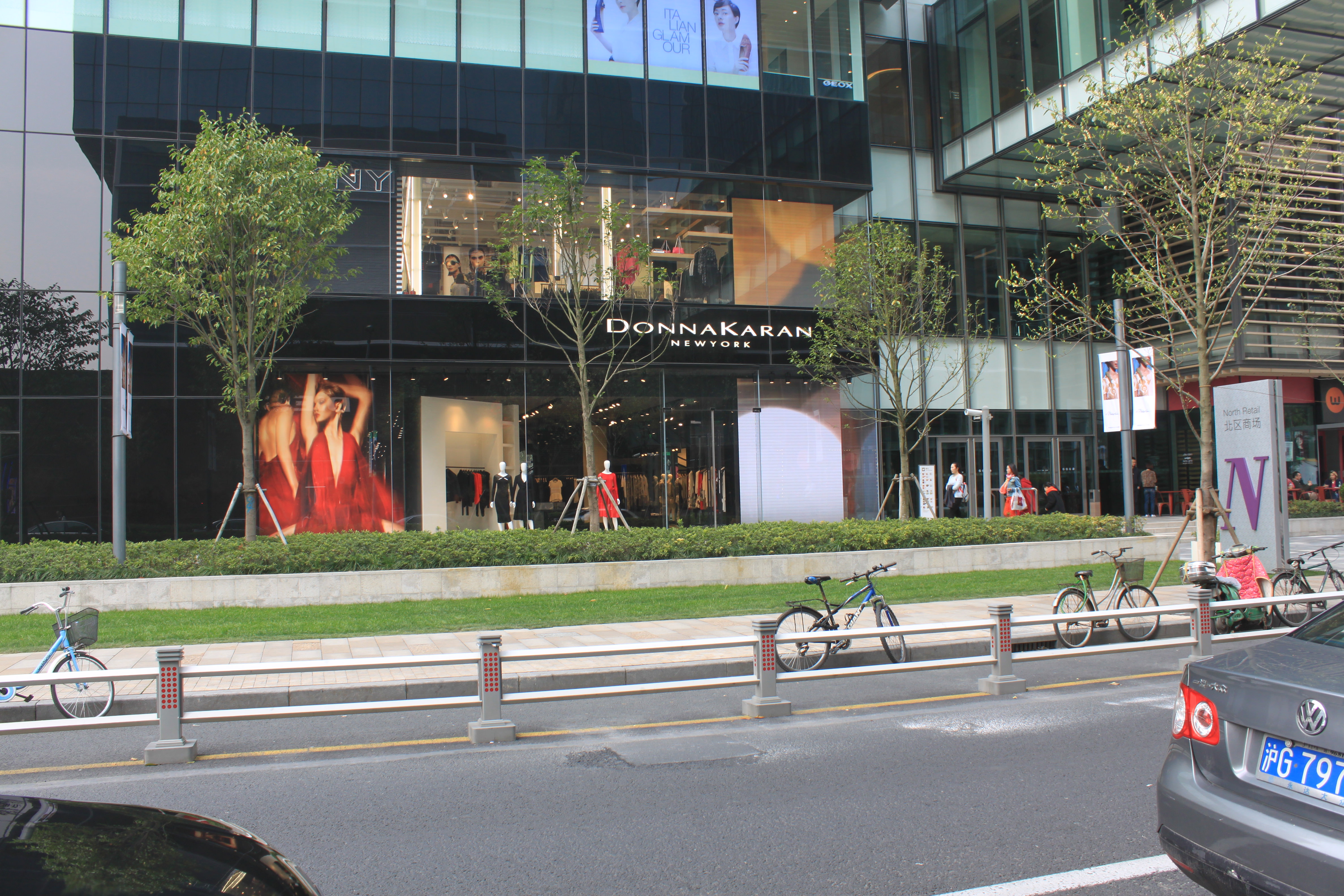
Donna Karan Shop alongside
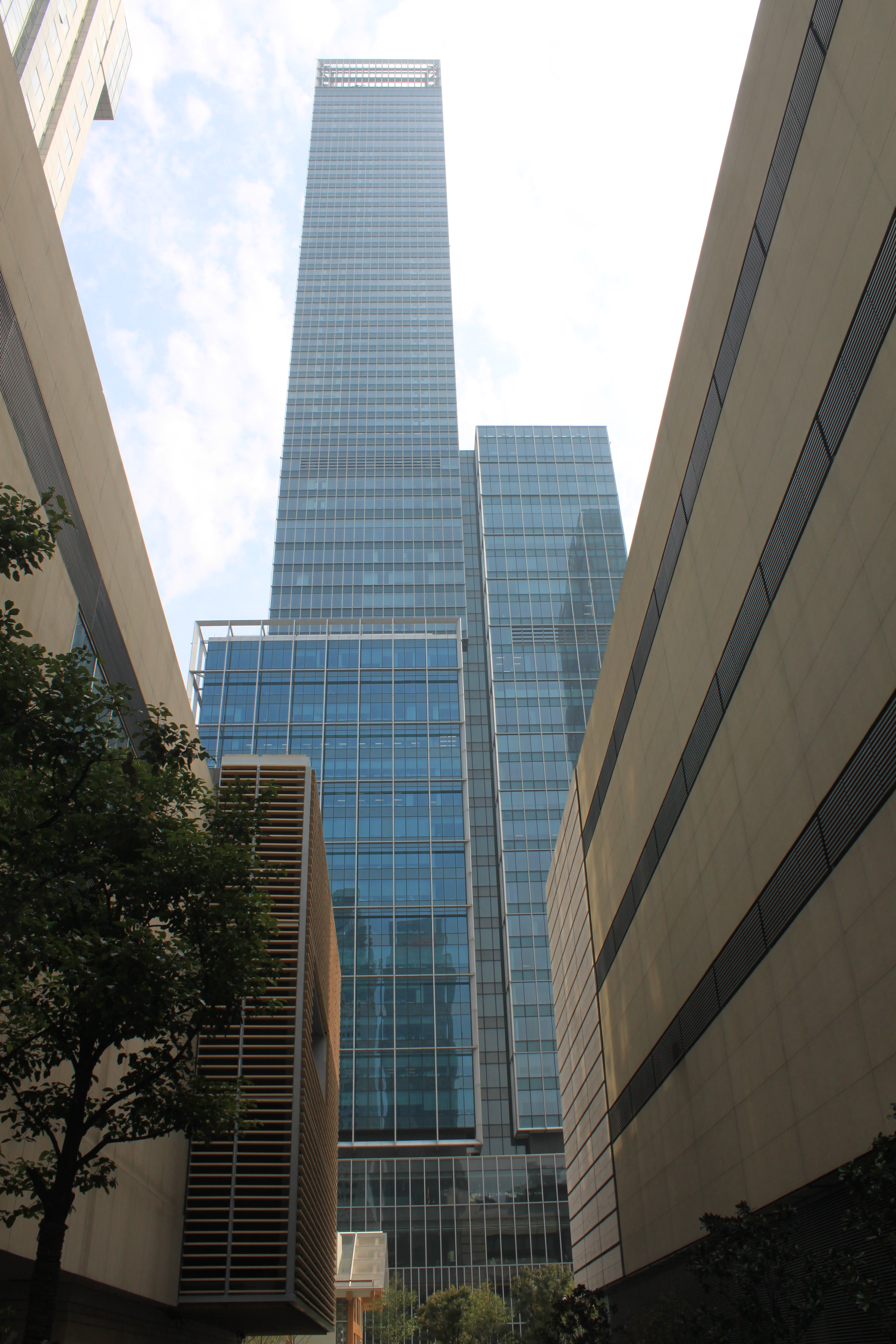
Tower blocks in front
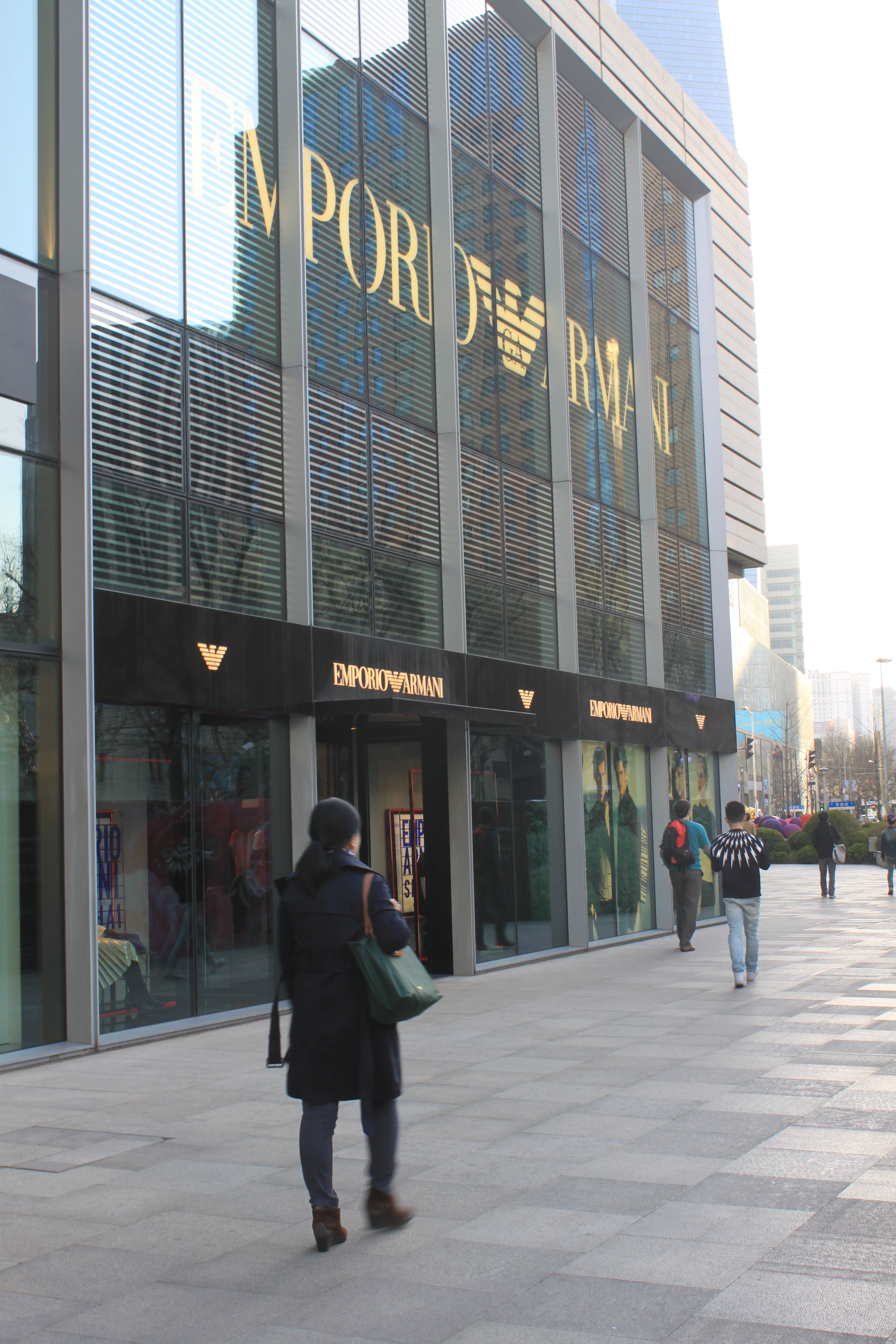
Emporio Armani on next block 50 metres away
Unlike the former residencies of Zhou Enlai, Dr Sun Yat-sen and Soong Ching Ling the two houses lived in by Mao that I have visited in Shanghai have few signs of security guards and both appear to be much more low-key than the others.

 Pearls From The Orient
Wow. Well done Natalie. Really interesting and well written.
LikeLike