
A Brief History of the Seedier Aspects of Shanghai
Japan, on the Restoration of the Meiji, started along its expansionary path – the 1895 Sino-Japanese war had given Japan the Chinese territories of Korea, Taiwan and others. Further treaties forced open cities like Shanghai to trade with Japan and gave them land to the North of the Bund on the north side of the Suzhou Creek – the Treaty of Versailles in 1919 giving German concession lands in Shanghai to Japan. The Fourth of May Movement was a reaction to this and galvanised left-wing opposition to the decrepit Imperial System. (The Japanese went onto to attack Shanghai in January 1932 and then on 7th July 1937 a full-scale Japanese invasion of China began – the real start of World War 2).
As the Qing Dynasty declined, unable to fight off the encroaching foreign powers of the Europeans, but particularly the Japanese, whom China had long regarded as a vassal state, China retreated further and further into conservatism. But following the Boxer Rebellion (1899 – 1901) which was against foreigners in the country, Shanghai became more distanced from what was happening in the rest of the China and became more and more westernised. The child Emperor Pu Yi abdicated in 1912. War Lords took control of the country. And this became the Golden Age of Shanghai which industrialised at an extraordinary speed, with trams, lifts, sewerage and telephone systems rapidly installed, with the fantastic Art Deco architecture growing up daily and thereby becoming a cosmopolitan city on the international stage, whilst all the while harbouring the squalor, exploitation and tormented patriotic resentment. As the government declined, lawlessness increased. Organized crime grew, as did the resentment of the left-wing intellectuals. Just like Havana in Cuba a little later in fact.

Green Gang Mobster Big Eared Du
In the power vacuum that developed after the fall of the Emperor in 1912 an ambitious Green Gang mobster Du Yuesheng or “Big Ears Du” organised an opium cartel out of the prostitution and opium dens that had existed since the British had arrived with their poppy-product in 1845. He had an ally in the French Concession gendarmerie Huang Jinrong or “Pockmarked Huang” who policed in favour of the cartel’s brothels, gambling houses and opium dens.
All this led to the formation of the Chinese Communist Party, with its First National Congress being held in the city in 1921.
Meanwhile the two parties – the Communists and the Nationalists had started off as allies in their opposition to the Imperial System, but on the death of Dr. Sun Yat-Sen (in 1925), the Militarist Chaing took control of the Nationalist organisation and ran the country as a dictator. Mme Sun Yat-sen sided with the Communists and claimed that they had the greater legitimacy as the inheritors of Dr. Sun Yat-sen’s movement, than the Nationalist Chiang, who became her brother-in-law in 1927 by marrying her sister Soong May-ling as his fourth wife (some say to try to give legitimacy as the heir to the ideas of Dr. Sun).
By the late 1920s Big Ears Du was Shanghai’s gangster supremo and courted by Jiang Jieshi (Chiang Kai-chek).
The Longhua Martyrs’ Memorial Park
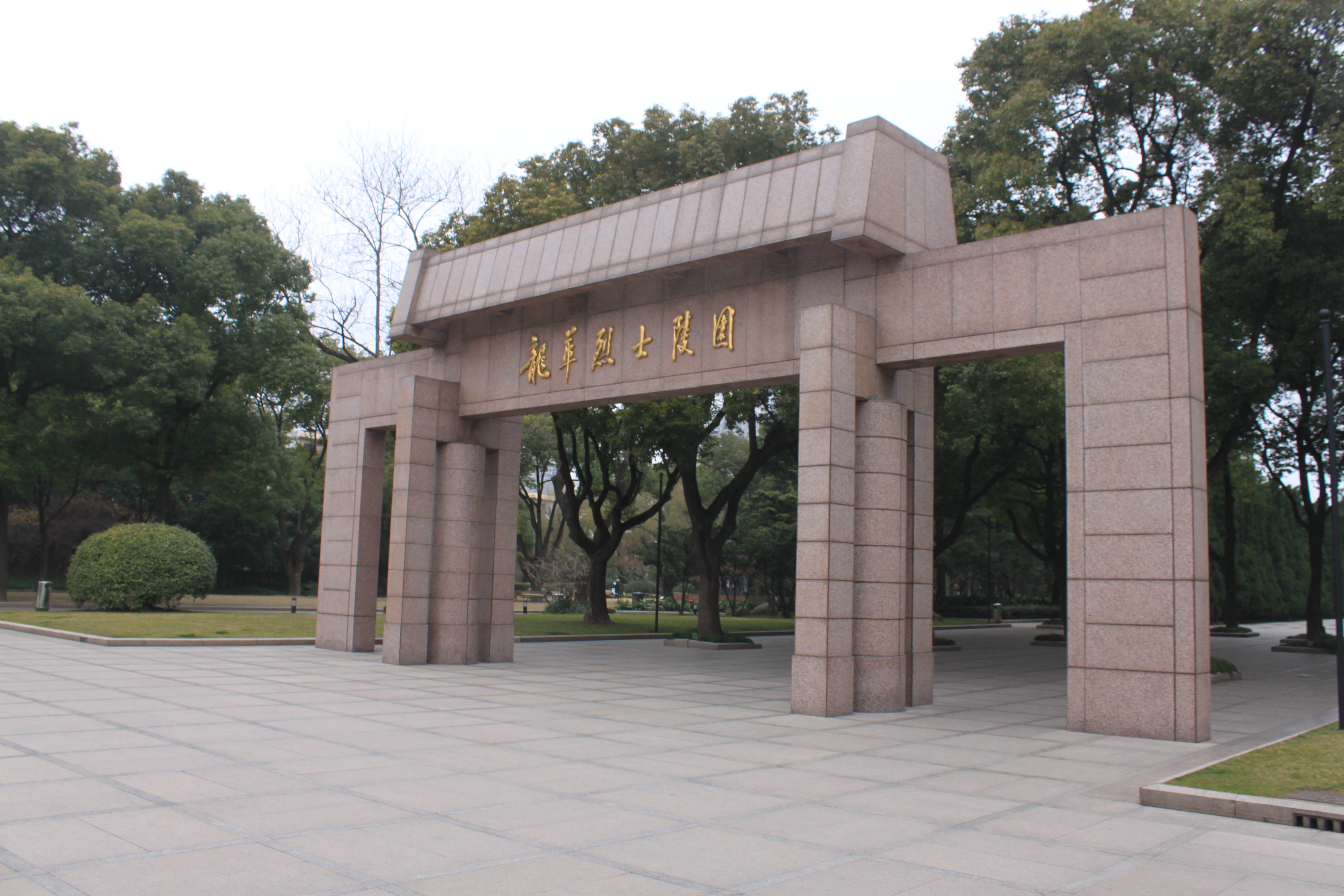
Entrance to the Longhua Park
The Longhua Cemetery commemorates all those Shanghai communists who died in the run-up to the final victory of the Communist Party in the Revolution of 1949, particularly remembered are the victims of a communist-led insurrection in Shanghai of workers, activists and students that were killed by the Green Gang in April 1927, and who massacred 5,000 red militants in the ensuing White Terror. As a reward Chiang Kai-chek appointed Du
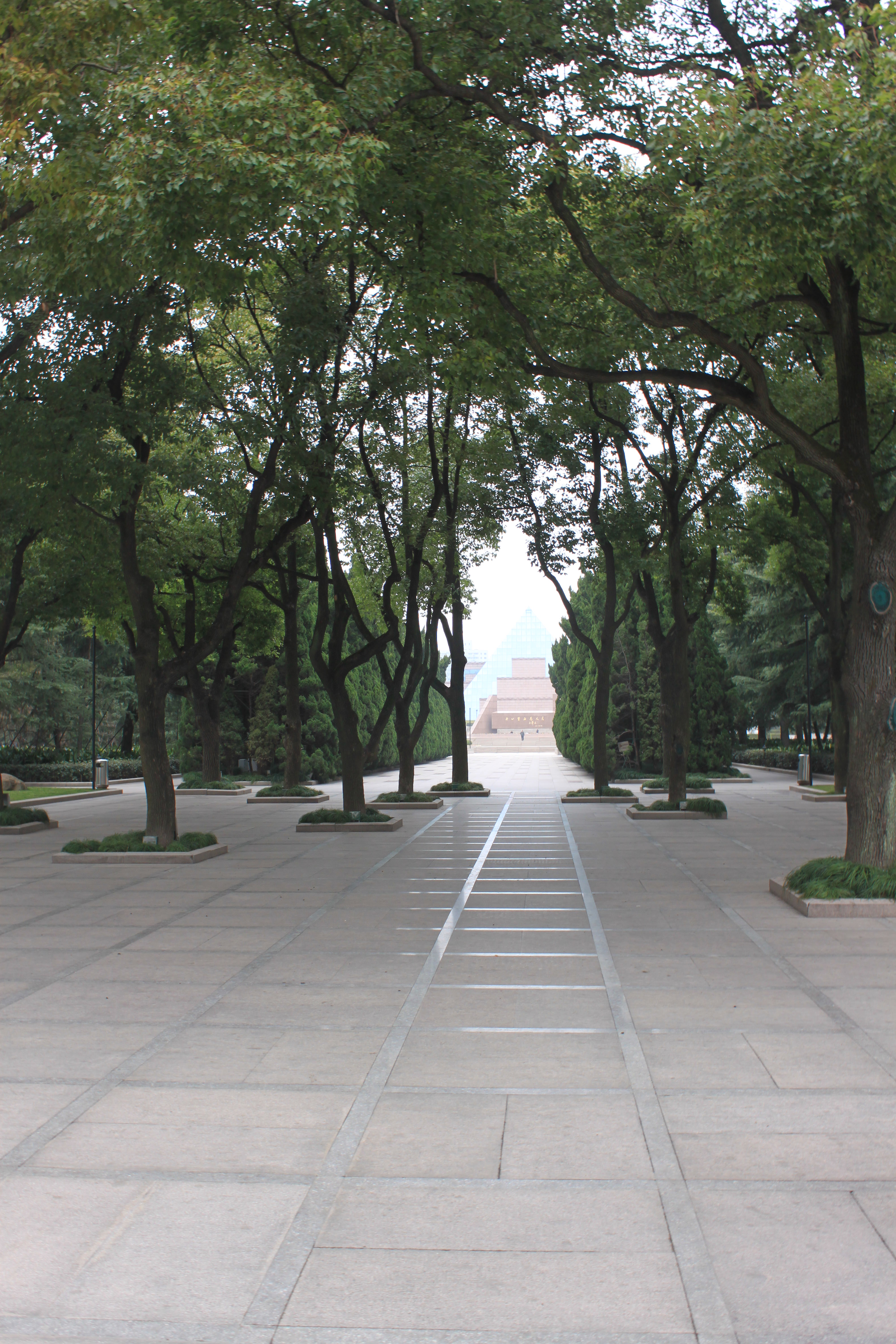
The avenue of trees between the gate and the Memorial Museum
Yuesheng to the Board of the Opium Suppression Bureau – effectively putting the foxes in charge of the hen-coop. At the height of his power Big Ears Du is thought to have had 100,000 gangsters under his command. He thereby earned a strange sort of respectability – his entry in Men of Shanghai and North China began: “One of the leading financiers, bankers and industrial leaders of China……”. He fled Shanghai in advance of the Communist triumph in Shanghai and ended up in Hong Kong, along with many other of the city’s gangsters. He died there in 1951.
Months ago I went to visit the Longhua Temple – it was just after the beginning of the Chinese New Year celebrations and after I had visited the temple, I wandered into the Longhua Martyrs’ Memorial Park that sits just to the northwest of the temple grounds. It

The Longua Martyrs’ Memorial Museum
is classed as one of the Red Tourism sights of Shanghai,
a movement promoted by the Chinese Government in 2005 to “rekindle that long-lost sense of class struggle and proletarian principles” and to inject some much need cash into some economically neglected parts of the country. In Shanghai such sites include the Soong Qingling Memorial Garden and the site of the First National Congress of the Chinese Communist Party.
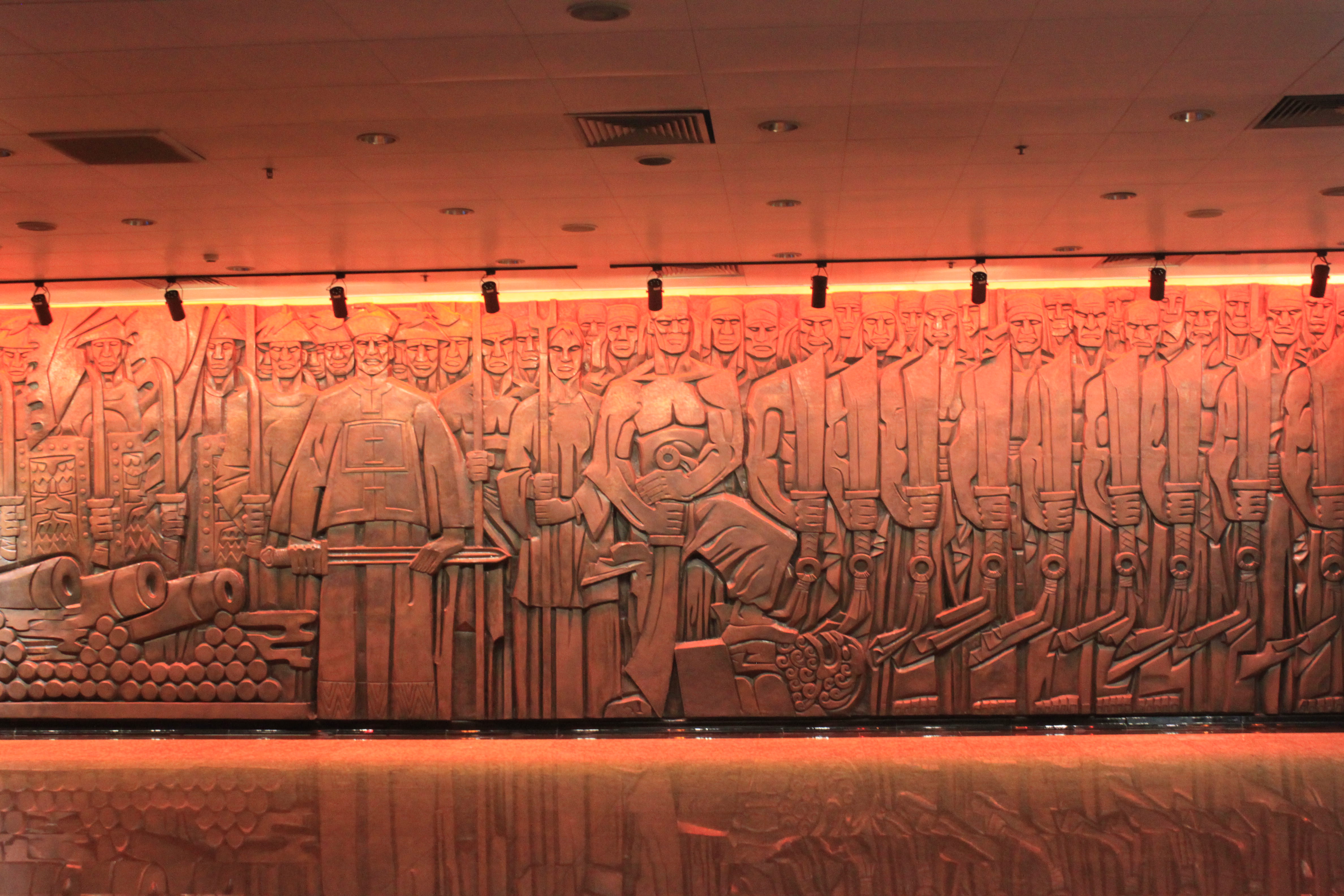
Communist Martyrs Commemorated
From the archway you walk though an avenue of trees towards the pyramid-shaped Longhua Martyr Memorial Museum which houses an exhibition commemorating those who died at the hands of the Kuomintang (KMT) and the Green Gang. Inside the Museum is an exhibition of the fallen martyrs. Once inside the entrance hall at the start of the exhibition you are greeted with photographs of people:


These are photographs of communists that had been killed. But then the exhibition went into a little bit of the history of Shanghai with this summary of Britain’s role and a military costume, followed by a couple of small swords from the Small Sword Society, together with some photographs of Old Shanghai and pictures of Zhou Enlai and others in Paris in 1924 :

Britain’s role in 1840

War Robe Worn by Military Officer in Qing Dynasty
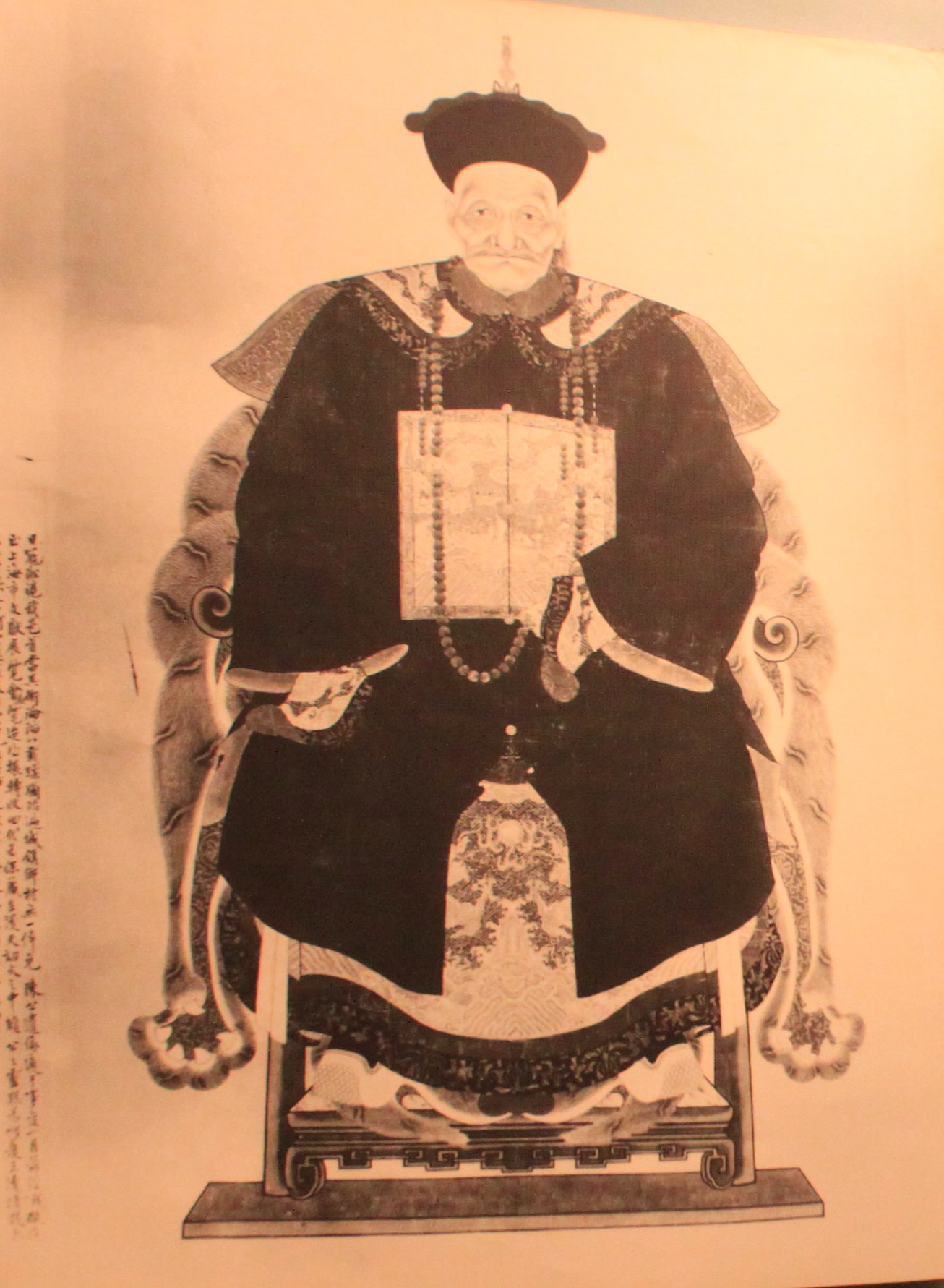
Chen Huacheng General in the Wars of Resistance Against Britain
It was a VERY potted history of Shanghai, without explaining very much and quite bewildering to the uninitiated. I couldn’t work out what the British Opium Wars had to do with the mass killing of Communists by the Nationalists, but maybe you can.
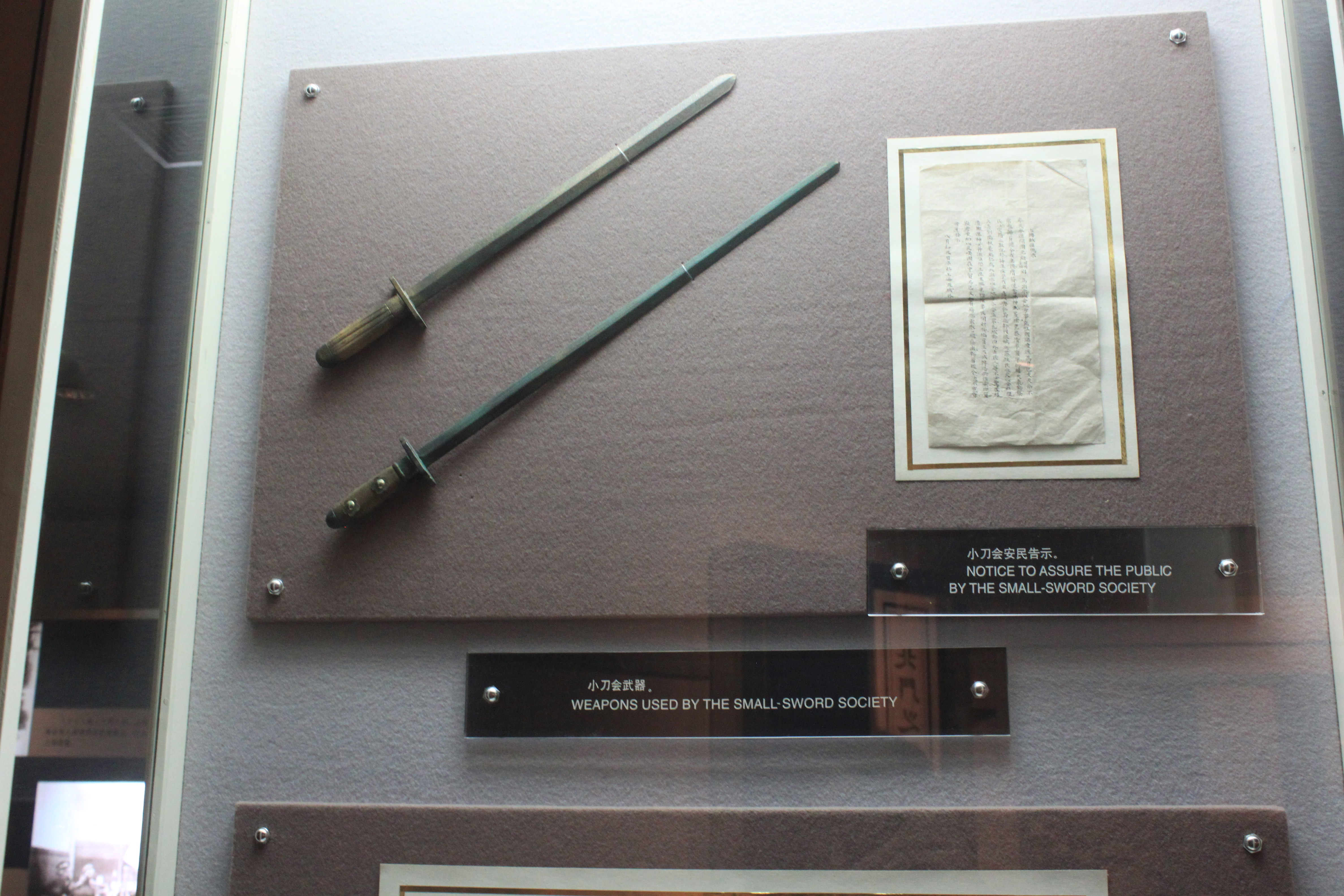
Small Sword Society Exhibit

Photo of the Members of the Standing Committee of the Provisional Government of the Special City of Shanghai Mar 1927

Photo of Yan Changyi with Zhou Enlai and others in Paris
Yan Changyi, one of the French work-study students was in a death cell in 1929 I have since discovered, but whether he was killed here in Shanghai I do not know, but the exhibition assumed I would.
The rest of the exhibition was given over to poignant exhibits of the personal items of some of those who had been killed in Shanghai for the Communist cause.
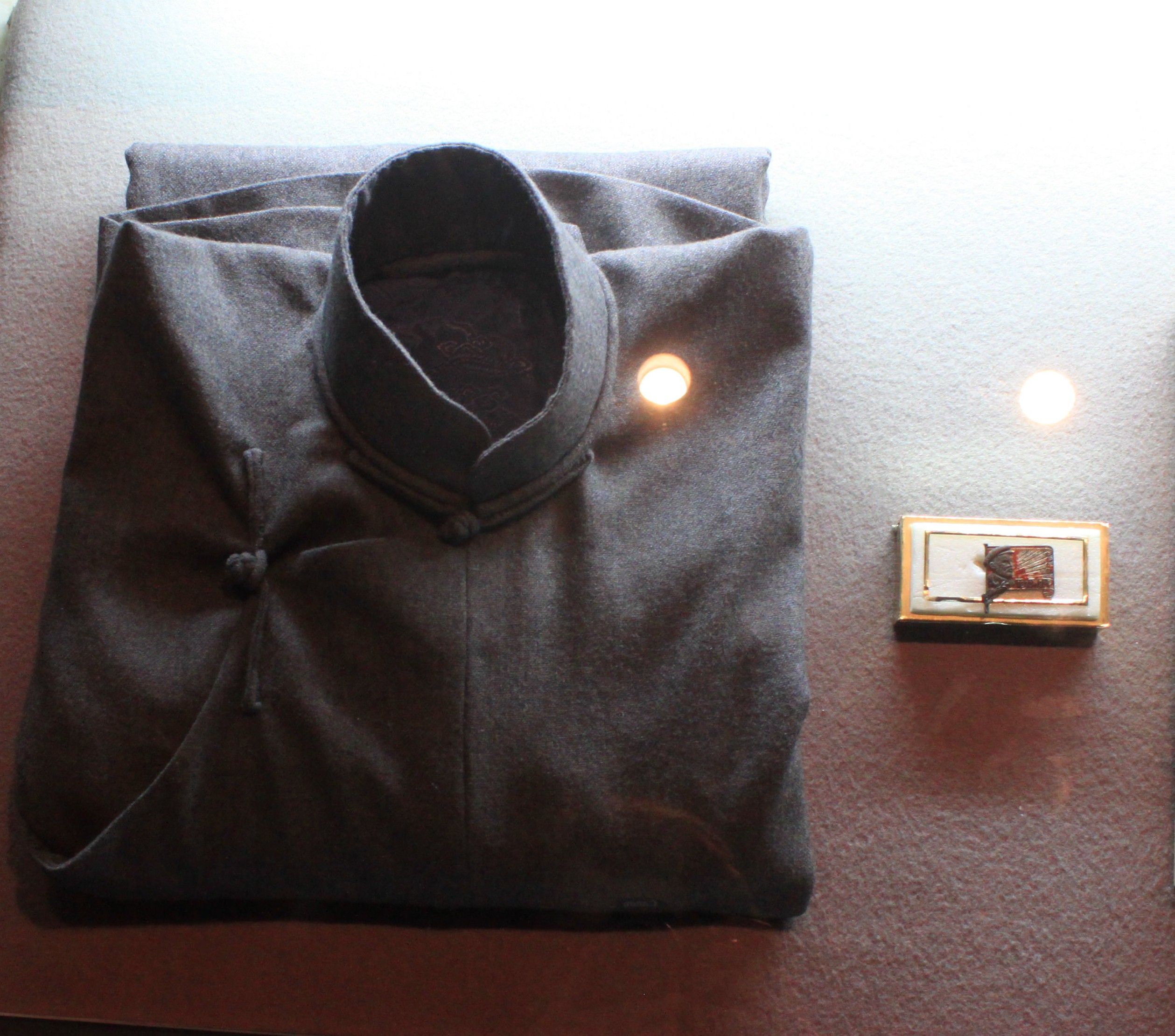
Long garment worn by Luo Yinong, Commemorative Badge of Lenin
Outside in the park are a number of monumental, soviet-style sculptures:
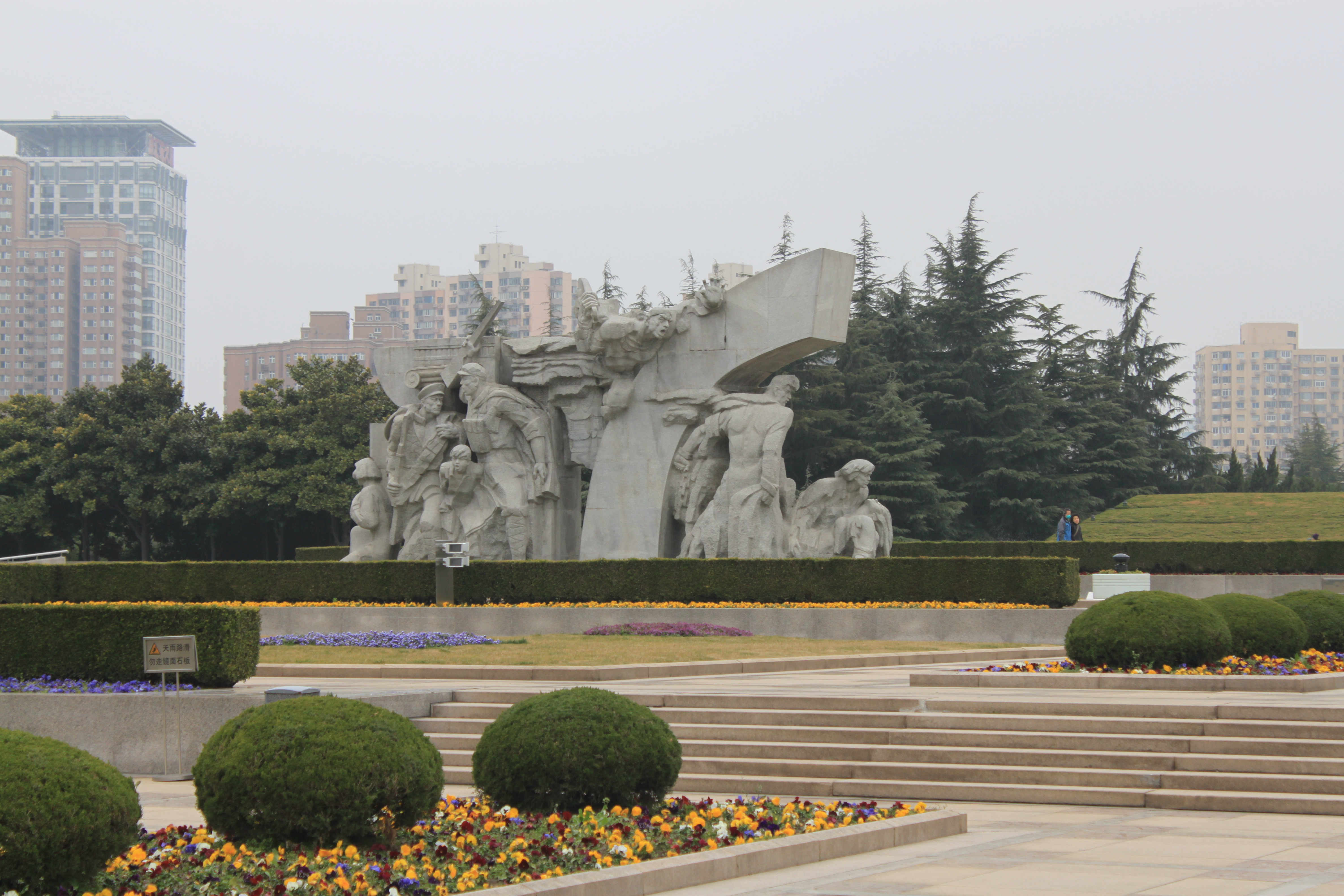
Independence Democracy Liberation Construction Sculpture

Independence Democracy Liberation Construction Sculpture

Dancing For the Loyal Souls Sculpture

Children’s Heroes Sculpture
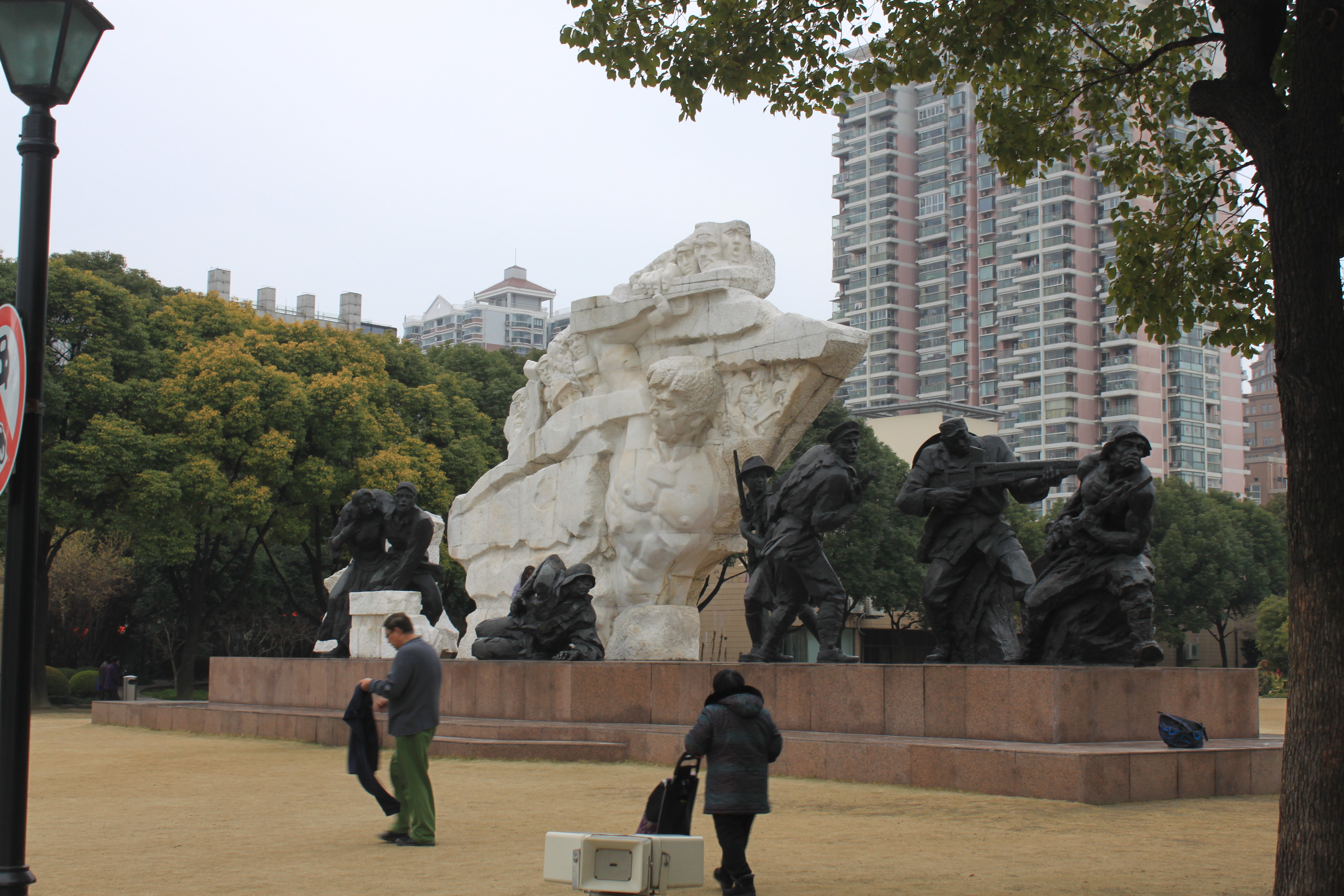
Aggression with One Mind Sculpture
and because it is a park there were Chinese people doing what they always do in parks – their own thing.

Walking with Hair in Curlers

Stretching

Playing with a Diabolo

The Martyrs Graves
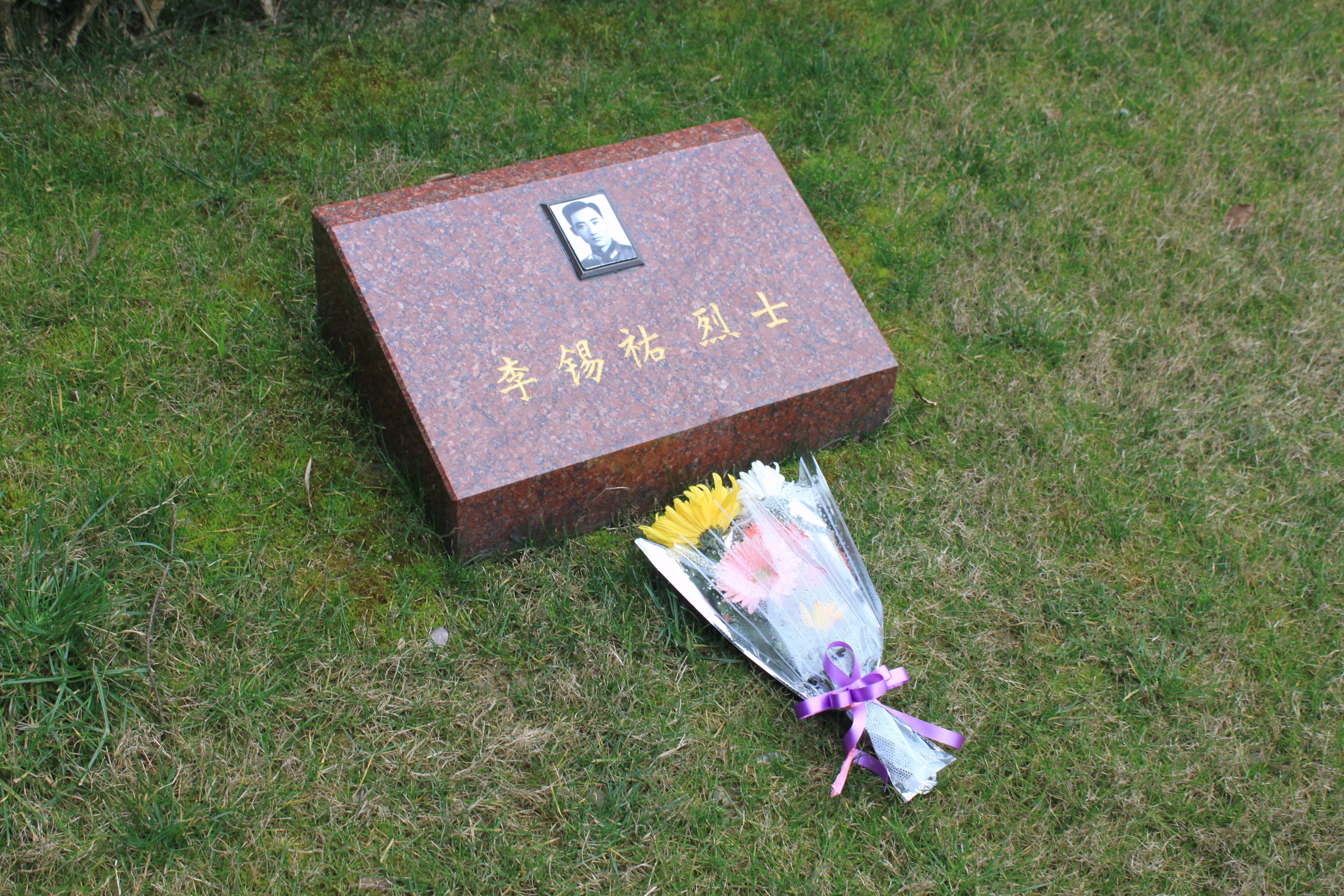
Some gravestones had fresh flowers
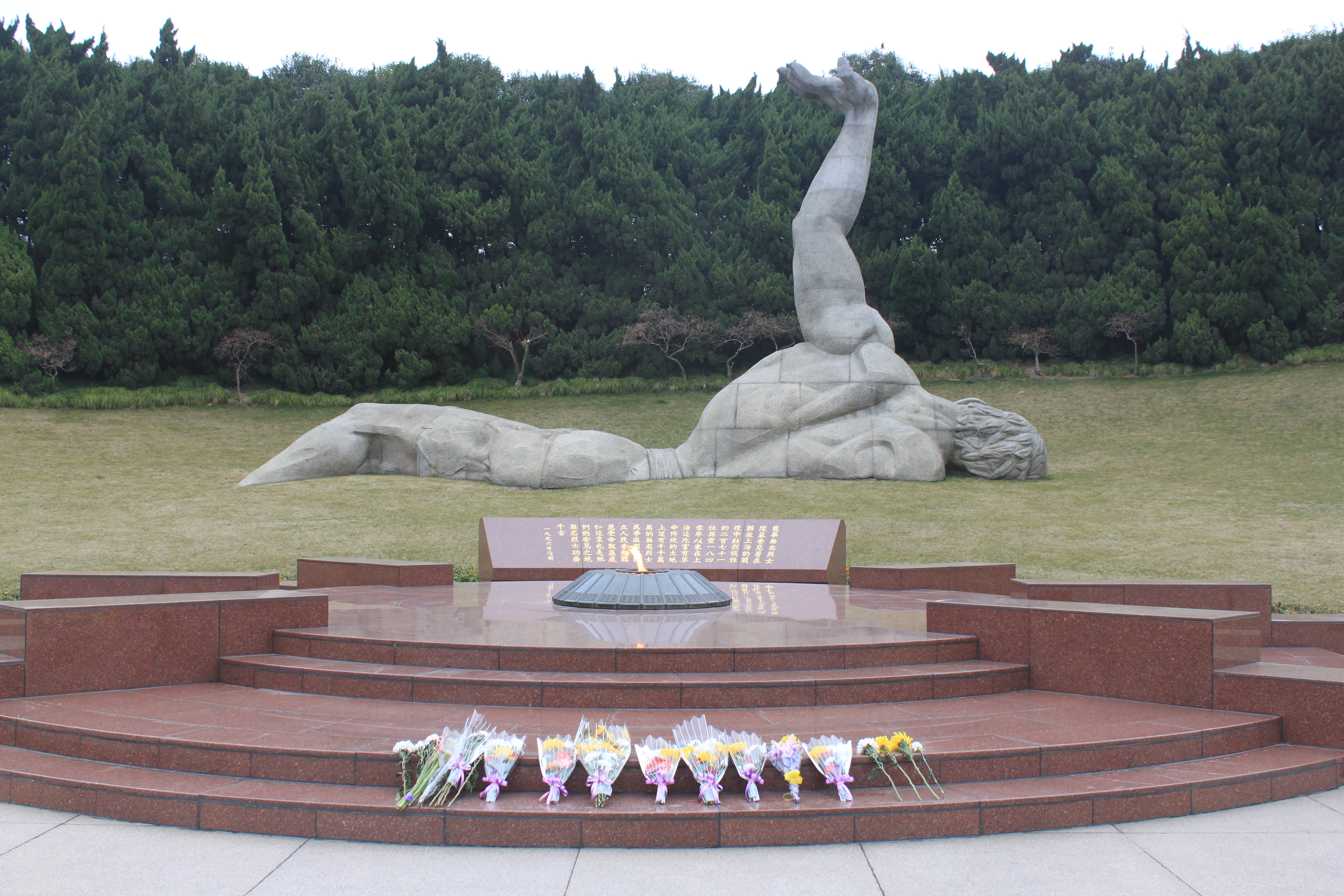
The Unknown Martyrs Sculpture and Graveyard of the Unknown Martyrs Ever-bright Fire
Elsewhere in the park the graves of the Martyrs were laid out in amphitheatre style, with the headstones well cared for and flowers laid beside some of them. And there are the graves of the unknown martyrs with an eternal flame and a statue commemorating them. There are nearly 1700 graves.
The guidebook that I had with me that day didn’t go into the details of the

Map of Longhua Cemetery
Longhua Cemetery and there is precious little English information in the Park, which is unusual for Shanghai. And I didn’t study the photograph I had taken of the map at the park’s entrance so I missed an important feature of this park, which I may go back to someday to have a look at. But in the top right hand corner is a tunnel which leads from the original detention house – this park sits on land that was the Songhu HQ of the KMT – to the spot where many of the remains of the victims were actually found the spot is now under the flame of the unknown Martyr and the sculpture to their memory. Many who were killed here by the KMT were teenagers.
The park has been called Little Yuhuatai after the larger memorial in Nanjing.
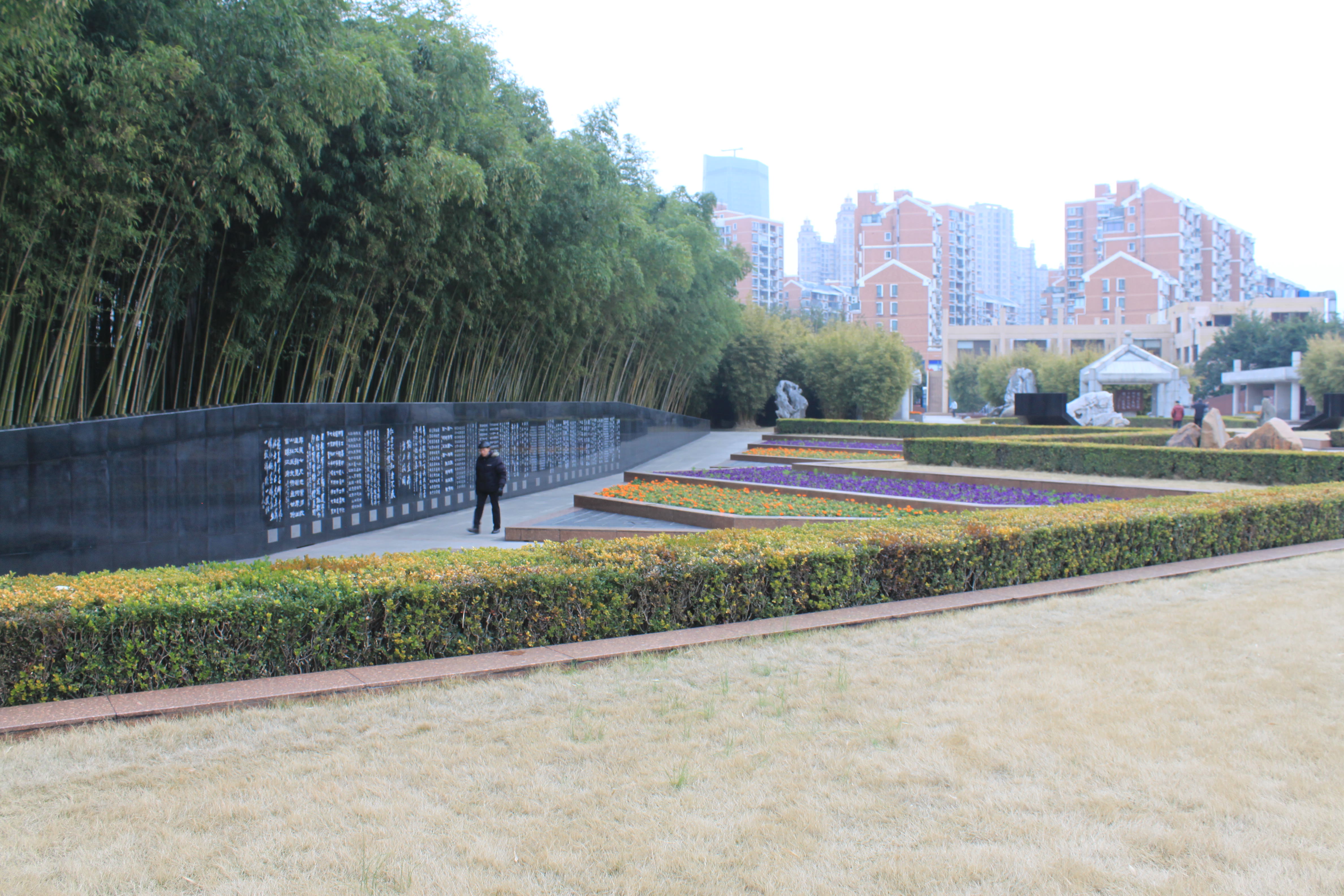
Stele wall
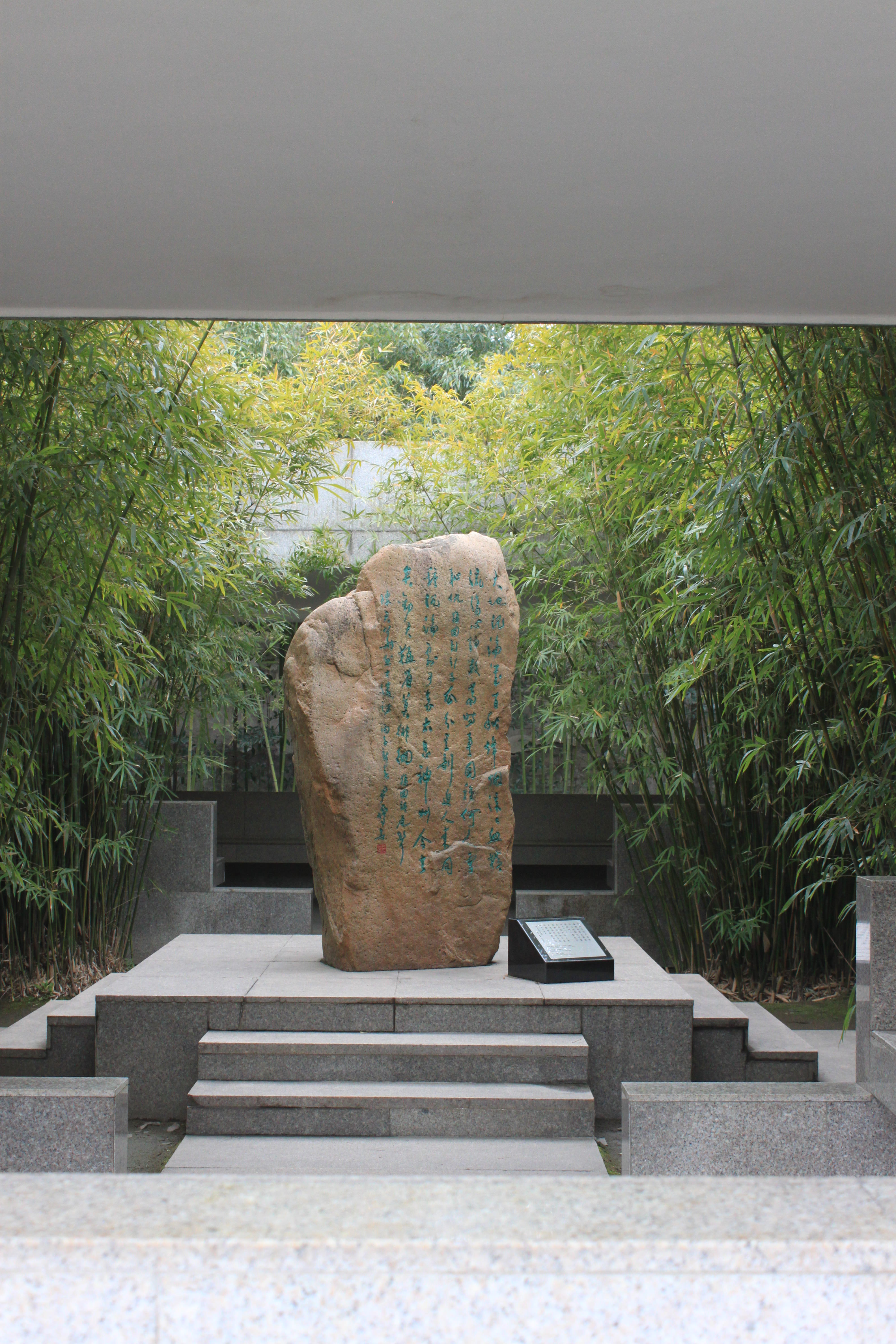
Stone Stele

Stele under concrete canopy
To one side of the main axis is a Steles Garden with stone slabs or stele standing in amongst stands of bamboo or concrete monuments, or as carved into the 50 meter long stone walls of the garden that were very serene and in marked contrast to aggressive soviet-style sculptures elsewhere. And a part of the park I really loved. Some 90 revolutionary poems and articles are inscribed on these stele, some written by those who had been killed.
On my way out of the park, outside the Buddhist Temple – a religion that respects the lives of living creatures to such an extent that some buddhist monks sweep the floor in front of themselves to avoid killing any small creatures as they walk was this:

Tortoises
dinner for someone I presumed, each tortoise straining at their strings trying to get away, but tied down to their trolley base.

 Pearls From The Orient