

The Entrance to the Shanghai Municipal History Museum
At the base of The Oriental TV Pearl Tower, in the basement, is the Shanghai Municipal History Museum. There is no mention here of Big Ears Du or Pockedmarked Huang. All China’s woes are seemingly blamed on the Foreign Imperialists the chief perpetrator of which is Britain. The UK is blamed for forcing opium on China (there is no mention of Britain’s long-standing desire to purchase tea from China and that opium was the only product (apart from silver) that our islands could find that China was interested in trading for tea and silk. It is described here as “Britain launched the Opium War (The Battle of Wusong) as a pretext to invade China.” Perhaps this view of history is correct. The East India Company had certainly been trading opium with China since the 1730s – the Qing Dynasty had made it illegal in 1729. It wasn’t until the Chinese seized 20,000 chests of Opium in Guangzhou in 1839 that Britain went to war on behalf of the East India Company.
China a proud nation and before the 1840s, completely self-sufficient and reliant was completely humiliated by the defeat in the Opium Wars and the subsequent signing of the “unequal” Treaty of Nanjing in 1942 that allowed Britain to own part of Chinese soil. There was also fear, too, that Britain would do to China what it did to India, which was to take control of the whole country. Instead it had one small island, Hong Kong, and just had 5 treaty ports in a country which opened them up to trade foreigners – in a country where only a century before it had been illegal for anyone to sail into the ocean – all vessels had to stay in coastal waters. (A year later another treaty gave Britain extraterritorial rights which exempted them from the local law – diplomatic immunity is one such law).
Whereas the hurt is expressed, the acknowledgement of the benefits of the opening up of China to trade with the rest of the world is more implicit and much less explicit in this exhibition.
And whilst this has little to do with Shanghai, I find the Chinese reaction to the Imperialist British “land grab” rather bemusing considering their own behaviour over the lands of others which to the outside world makes them to be completely hypocritical. But no Han Chinese person would see it as such. They are not taught otherwise. And in general they do not question what they are taught.
They all appear to know about the recent Scottish referendum for independence and one gets the impression that they were rather gleeful that the United Kingdom might have split apart. But it would never occur to them that they too are an Imperialist nation and they too could, or maybe should, allow their own ethnically separate groups to have their own such referenda. Instead China is moving as many Han Chinese into these regions as are prepared to go.
In visiting a number of museums and exhibitions now it strikes me that China still feels itself to be a victim. But with my Imperialist’s hat on I ask the question if China had not opened itself up to trade in the mid 19th Century, where would it be now? How much of the failings during the end of the 19th and the beginning of the 20th Century are down to its own moribund way of doing things (for example the exclusion of foreigners, an Emperor trapped for life in a Forbidden City, or a Civil Service Exam that examined for achieving a stylised form of essay, not whether the applicant was any good at getting things done for example). The “unequal” treaty of Nanjing led to a weakening of the Qing Dynasty and ultimately the overthrow of their country’s long-surviving feudal system. Admittedly many died in the rebellions, civil wars and revolutions that followed, but that is true of political disruption all over the world.
I would like to see China break its way out of victimhood and take responsibility for how it thinks about itself and its own role in its history. Will this happen as China becomes more confident on the world stage? I hope so.
That’s enough pontificating. I enjoyed visiting this museum. It covered the 6 ages of Shanghai, but sometimes the boundaries between the six halls were blurred. It is essentially a waxworks museum intertwined with some seriously good scale models.
The History of Traffic
Wheelbarrows

Wheelbarrows
Wheelbarrows like this could seat two passengers, one either side of the large central wooden wheel enclosed by a wooden frame. It was also used to carry goods. The first known record of a wheelbarrow was found in a tomb in Chengdu Sichuan province from 118 AD.
Sedan Chairs
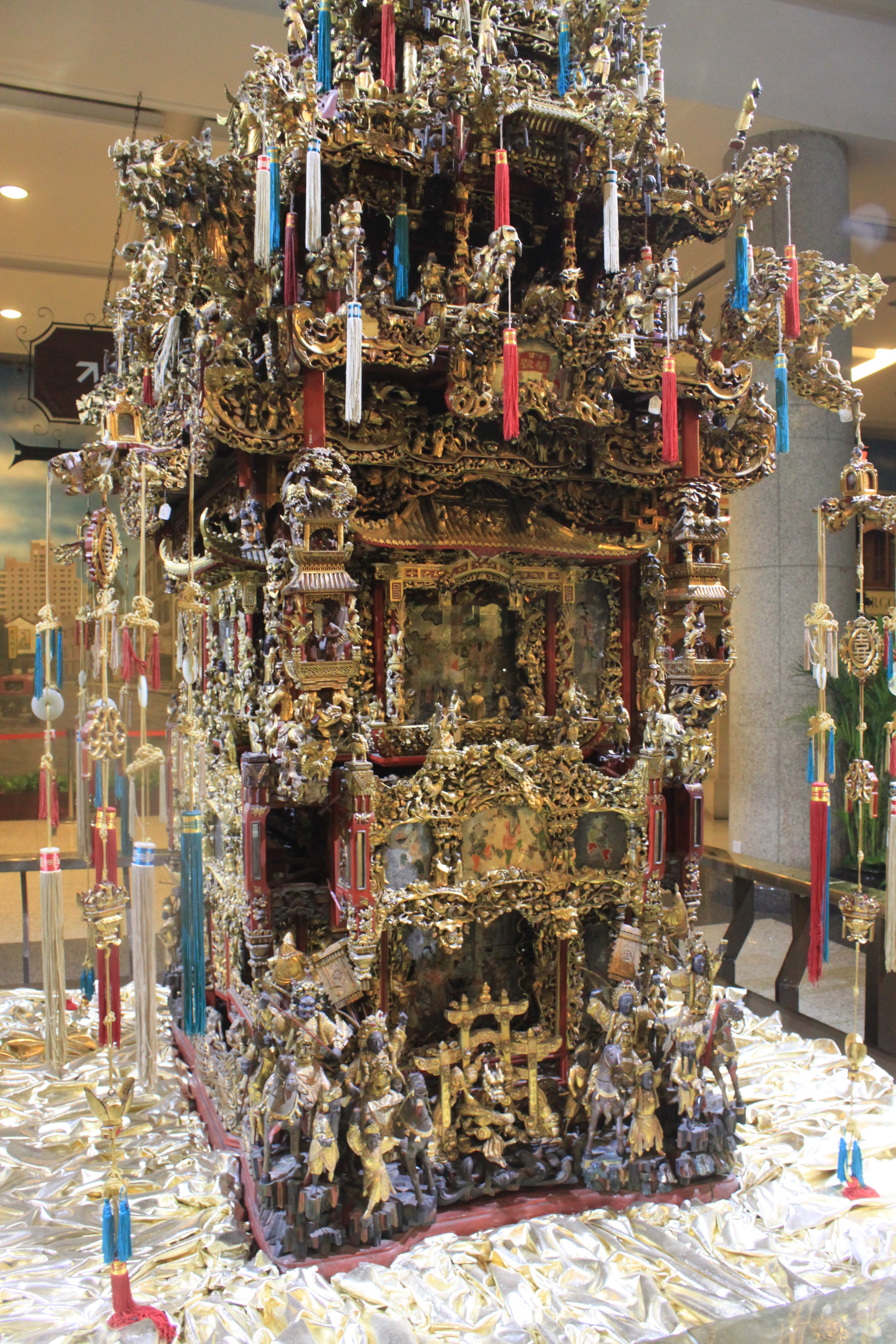
A Wedding Sedan Chair decorated with 100 children
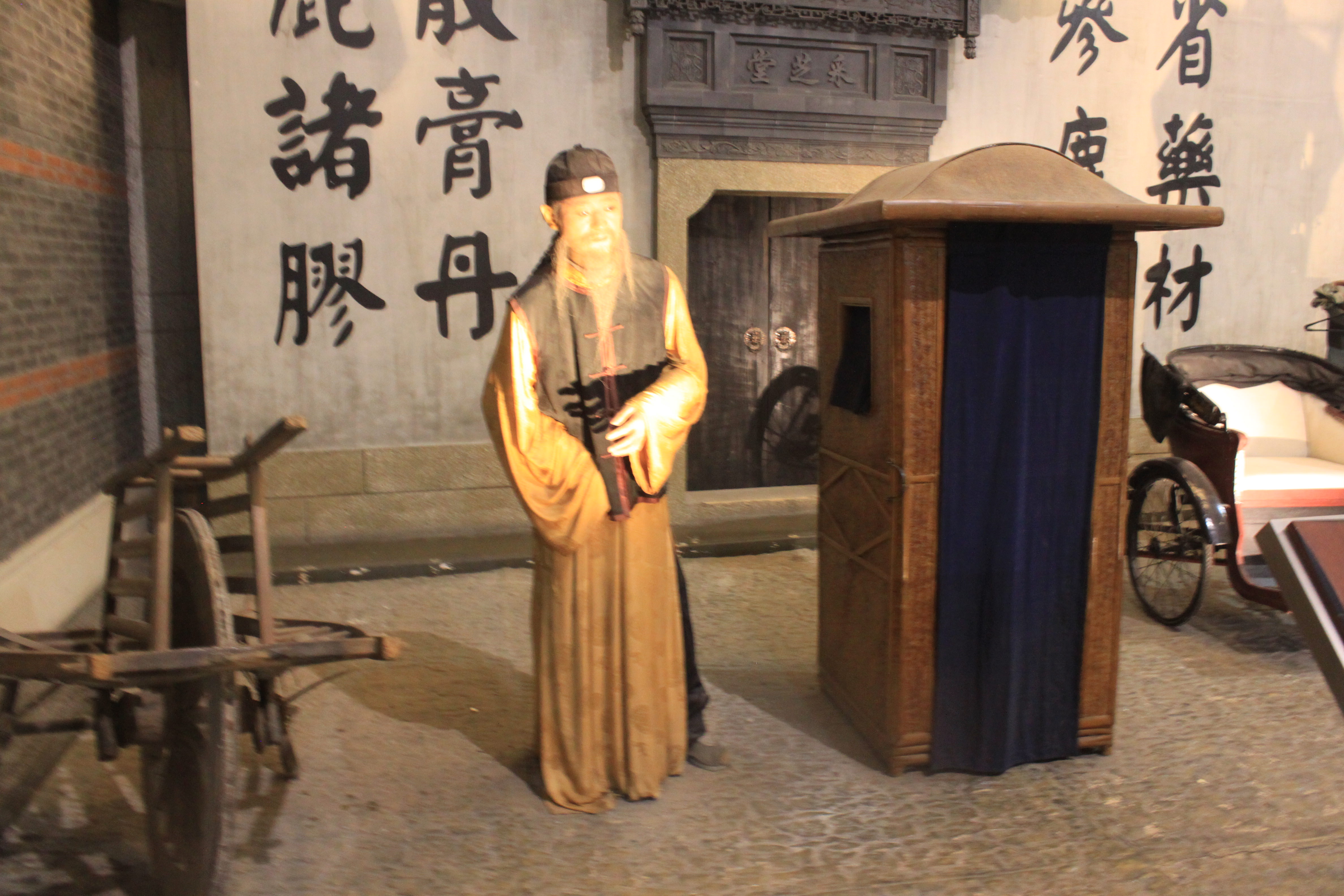
Sedan Chair
Sedan chairs were the main means of travel in 19th Century Shanghai.
This wedding sedan chair was made by the largest renting shop in Old Shanghai – “Wu Hua Hao”. In 1927 the shop owner had it prepared it for the wedding of his son Zhou Zongyu. Ten carpenters carved numerous figures from operas and stories on it over a period of ten years.
Horse carriages were introduced in in the 1850s from Europe, but I don’t think there were many of them. They were used privately at first and then during the 1870s some were used for public use.

Rickshaw
Rickshaws were introduced into Shanghai in 1873 by the Japanese, so they were called ‘dong yang che’ or eastern foreign vehicle and it became the main method of private transport in the 1930s. In 1913 it was stipulated that all the rickshaws should be painted yellow, so they were called ‘huang bao che’ or yellow vehicle.
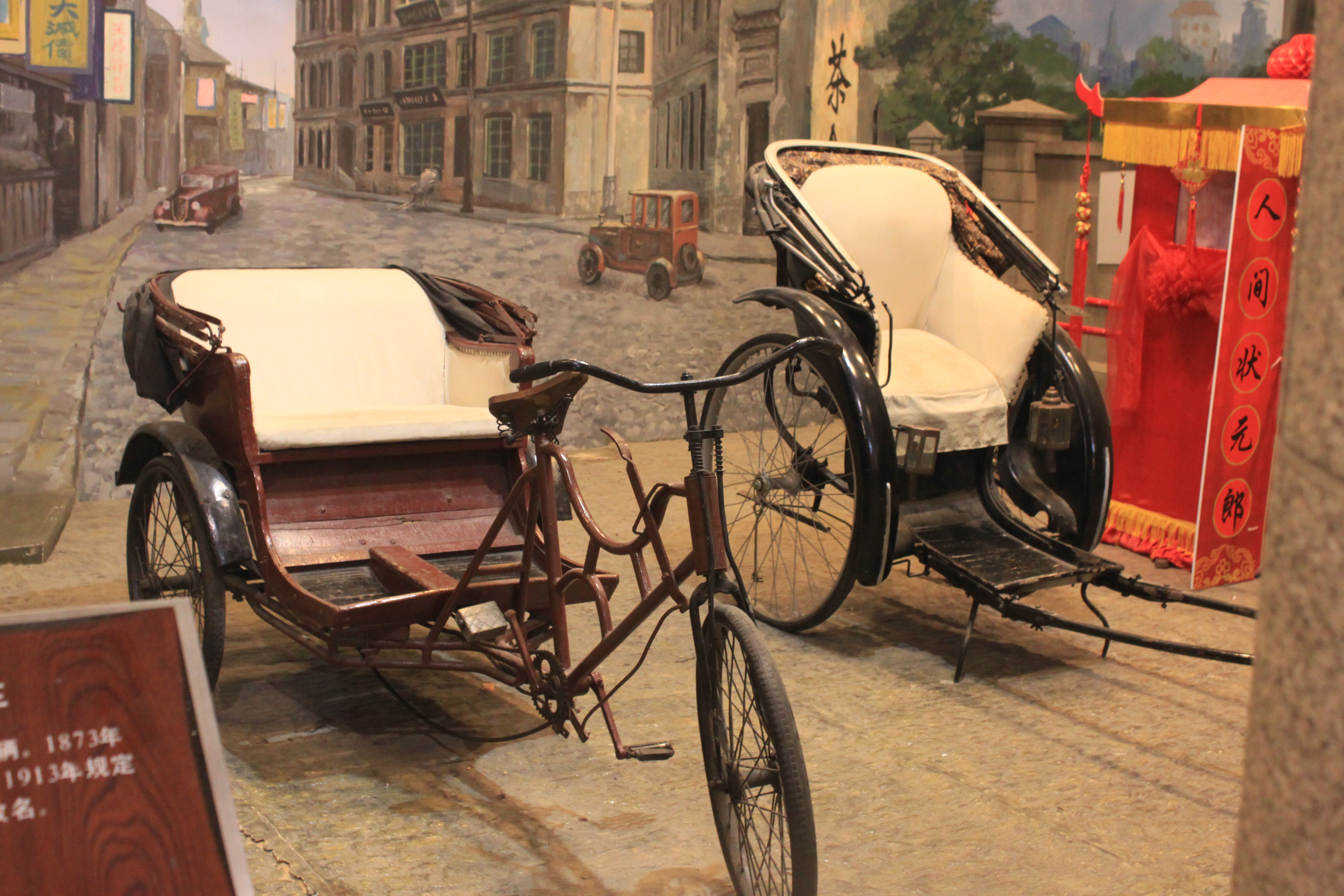
Pedicabs
Pedicabs started to appear on the streets of Shanghai in 1923 and became the main means of transport after the War Resisting Japan’s Invasion, known also as the Second Sino-Japanese War (July 7, 1937 – September 9, 1945), which ended officially one week after the end of World War 2.
Public Transport:

Early Trolley Car Model
On 5th March 1908 the first tram ran in Shanghai. The first Chinese-owned tram-track ran opened on 11th August, 1913.
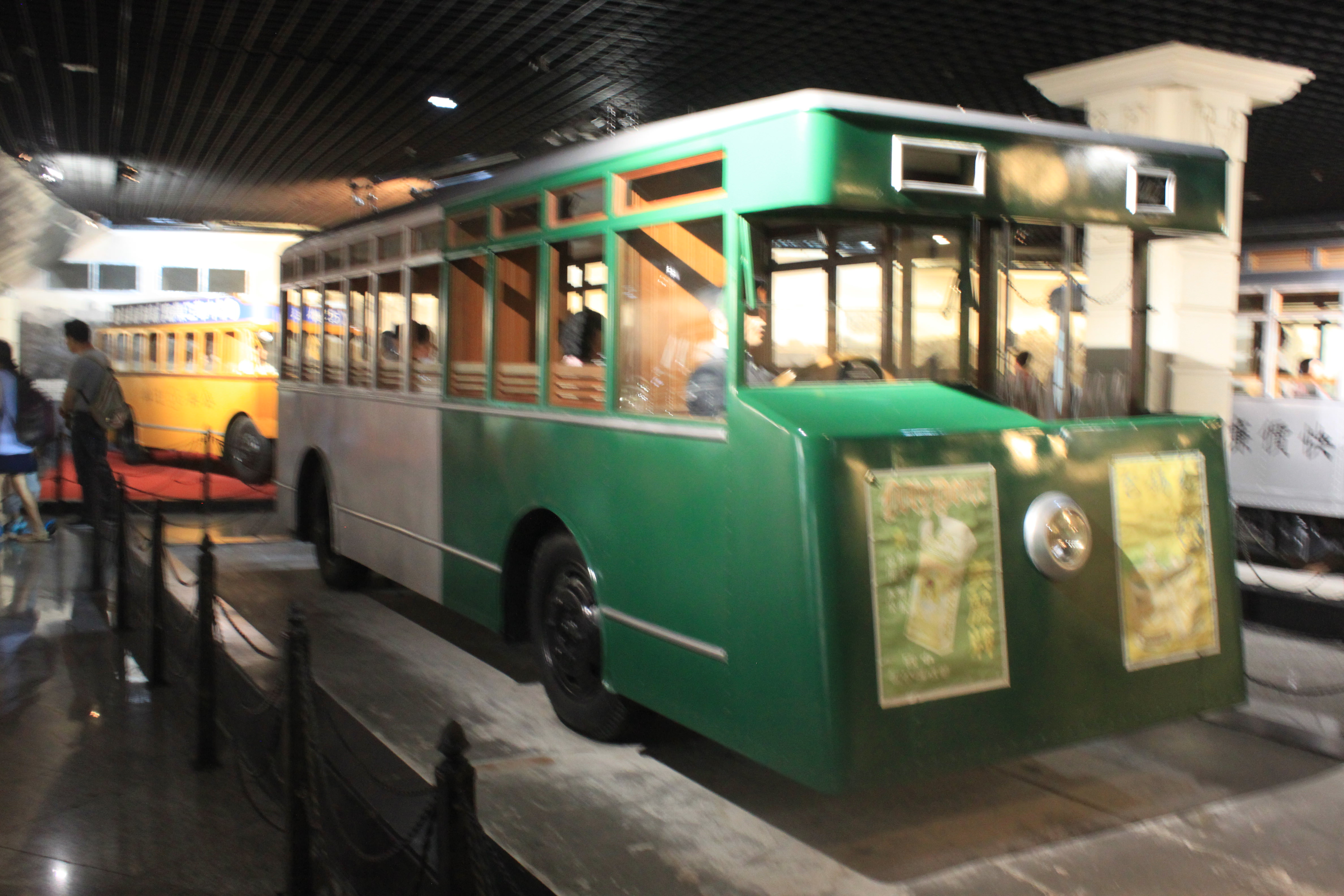
Trackless Trolleybus Model of the 1920s and 30s
On 15th November 1914, the first trackless trolleybus was opened. By the 1920s and 1930s this was the main means of transport around he city.
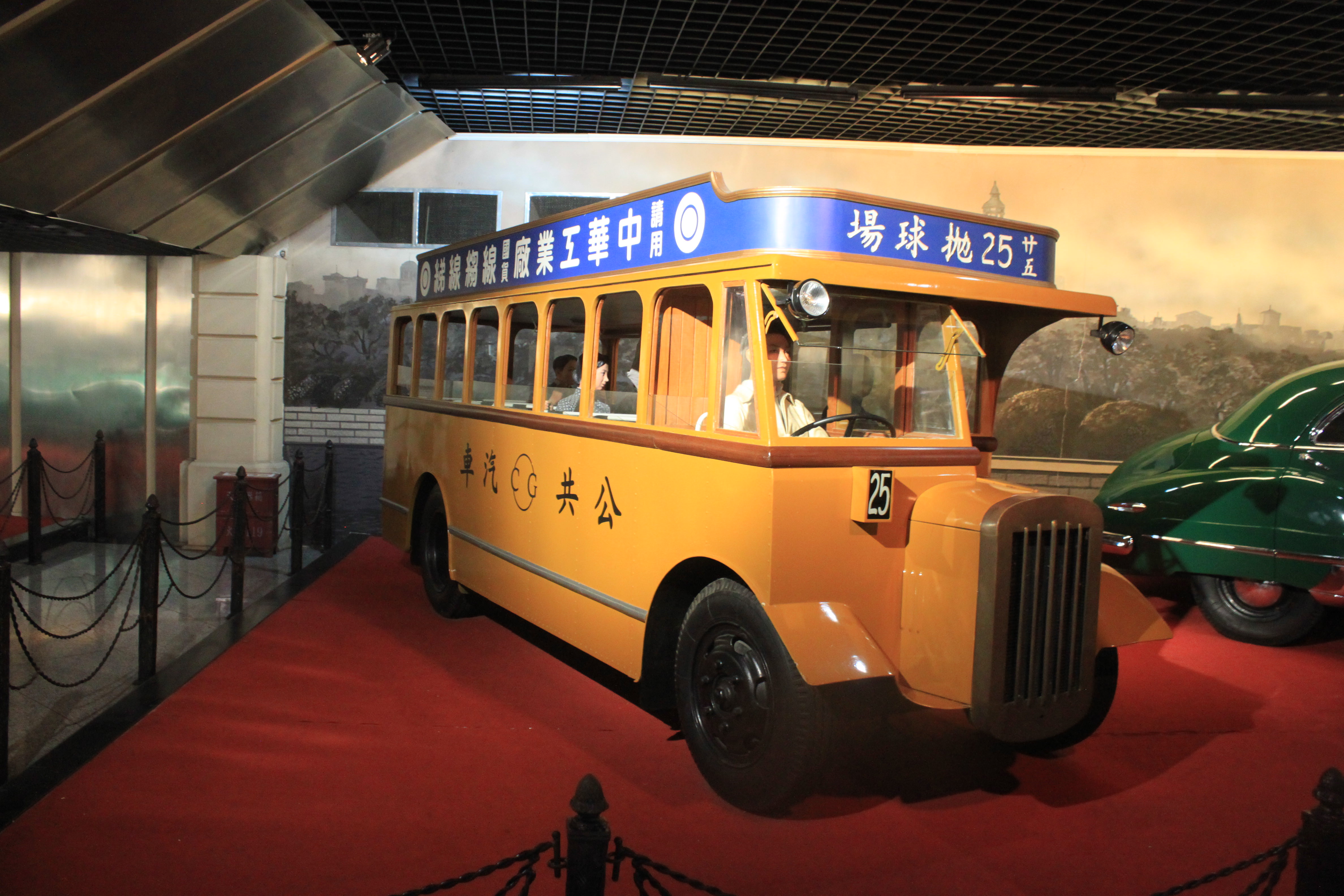
Model of a Bus running on Nanjing Road in the 1930s
On 13th August 1922, the first bus line in Shanghai was opened by Chinese businessmen.
Foreign-made Cars

1920s Model Sedans
This type of early sedan car was used exclusively by the rich and VIPS in Shanghai.

Buick Sedan 1940s

US Jeep 1940s
Chinese-Made Cars

Fenghuang (Phoenix) Sedan 1950s
The Fenghuang (Phoenix) Sedan was the first medium-high-end sedan made in New China. The body was made and the car assembled in the Shanghai Automotive Assembly plant – first car off the line was 30th September 1959.

Santana Sedan of the 1990s
In 1984 Shanghai Volkswagen Co. Ltd. was established as a joint venture between Volkswagen, Germany and the Shanghai Automotive Industry Group. The first car rolled off the production line in March 1985. Nowadays these models cars are mainly used by the three Shanghai taxi companies.
Features of the Old City
The exhibition went onto to look at the early history of Shanghai saying that despite China having made the four major discoveries of gunpowder, the compass, paper-making and typography with movable type, the main activity in China was farmer’s fun (!) and the tableau we were present with showed Farmer’s Fun in the Ming Dynasty. (I really wonder if this has been lost in translation – most farmers I know are rather miserable souls.)

Grinding grain
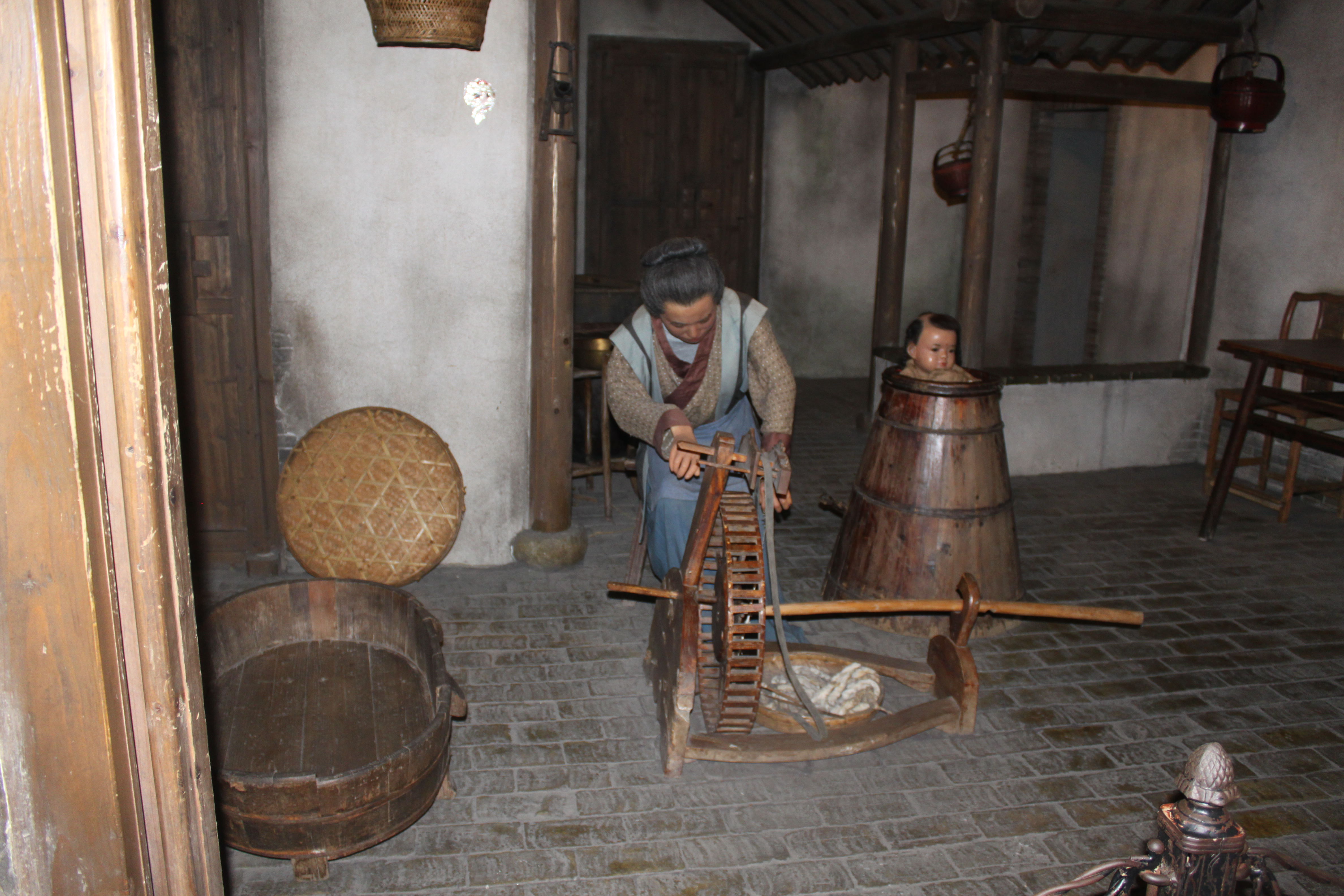
Spinning
Note the baby in what looks like a cone-shaped barrel – I have no idea quite what this is.

Pounding Grain
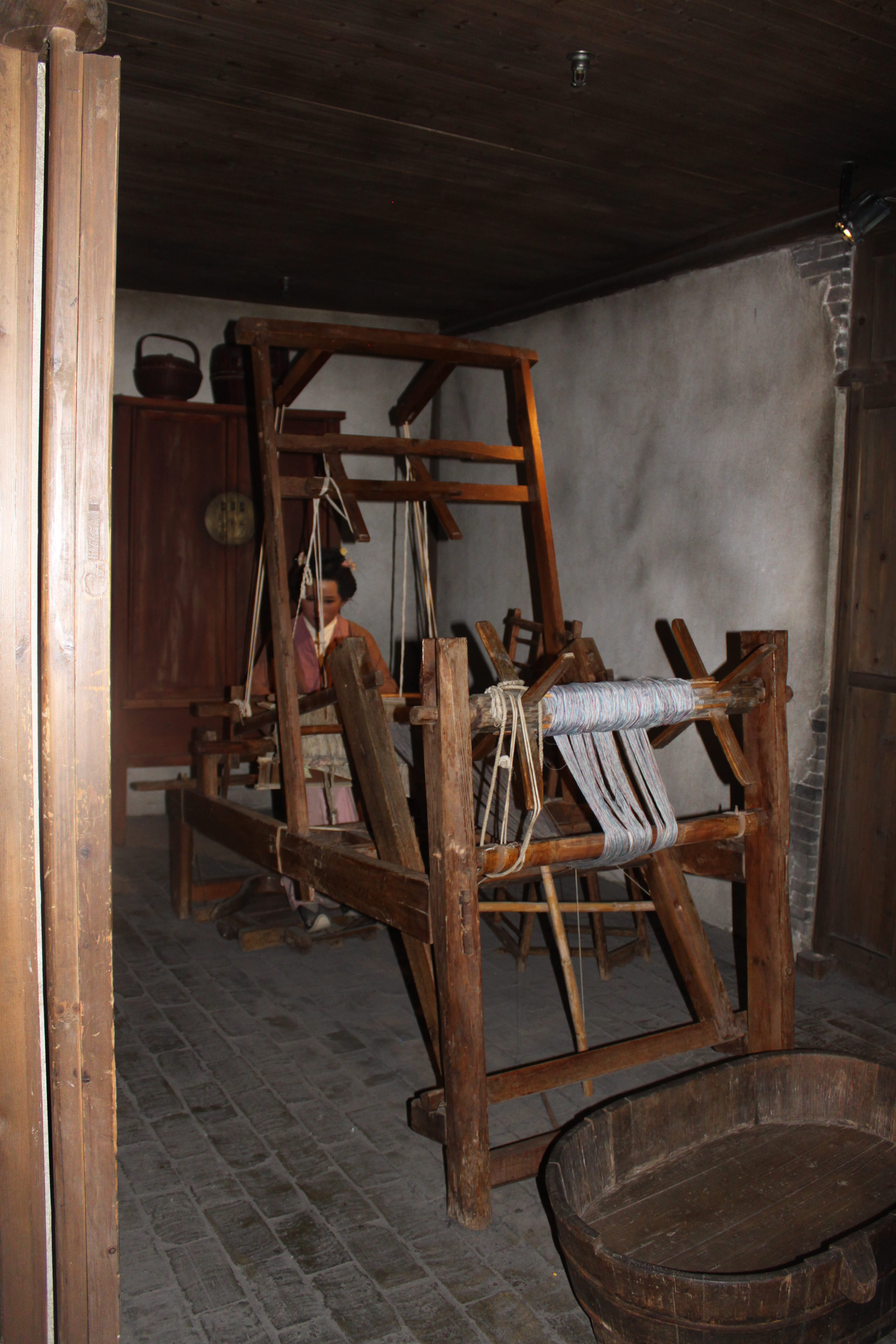
Weaving

Thresher
Shanghai was formally founded as a county in 1291, but was not walled until the middle of the Ming Dynasty. During the middle of Emperor Kangxi’s reign (1662 – 1722) the Ming ban on maritime trade and discourse with foreigners was gradually lifted. Thus cotton and large shipments by Junks became the city’s main activities. As Shanghai grew it became known as “Small Suzhou”, which was the much bigger city at the time.
Commercial Shanghai
All of these activities took place within or just outside the City Walls of the Old City.

Firms For Salted Aquatic Products

The Merchant Boat Owner’s Guild

Bamboo Products Shop
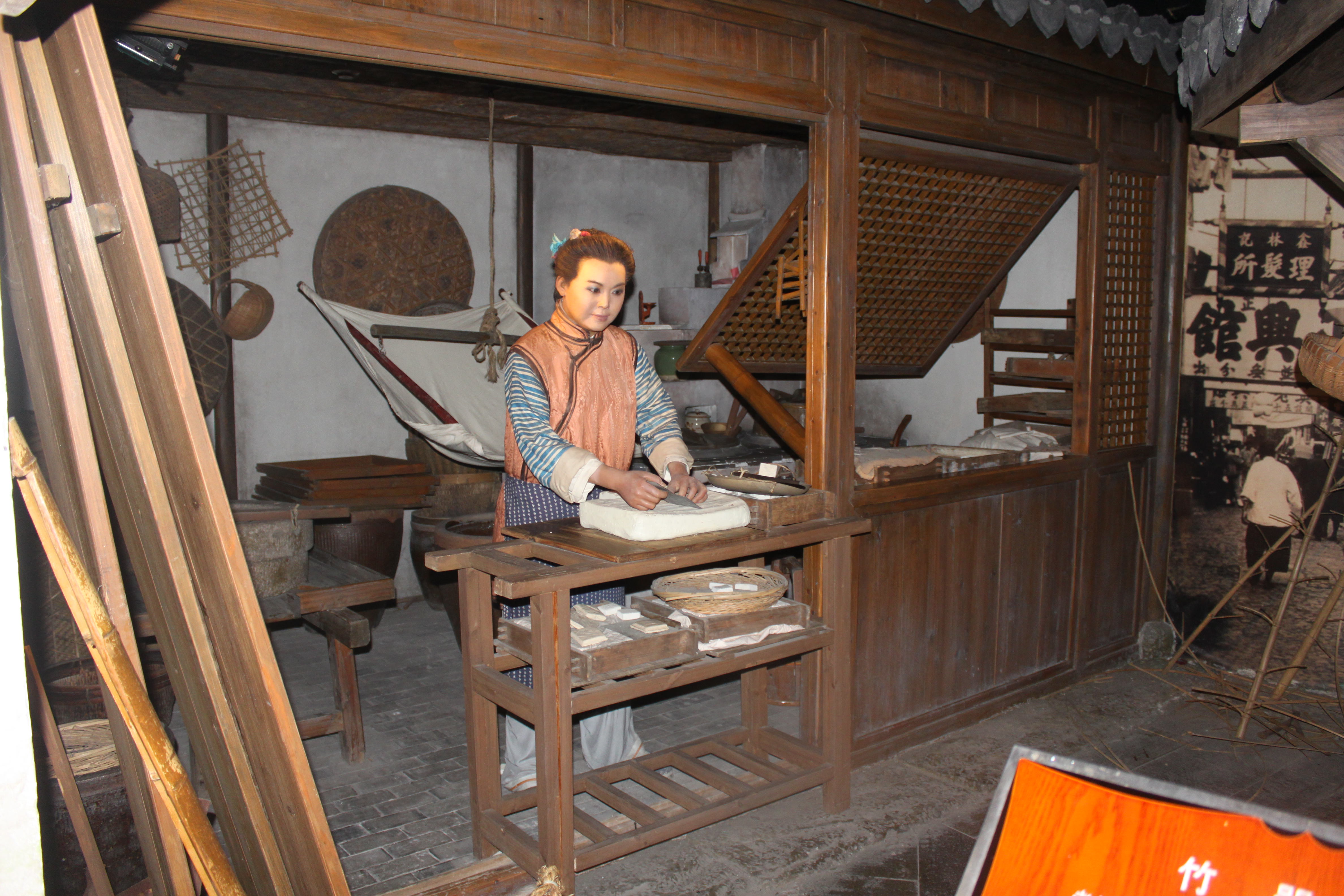
Bean Curd (Tofu) Stall
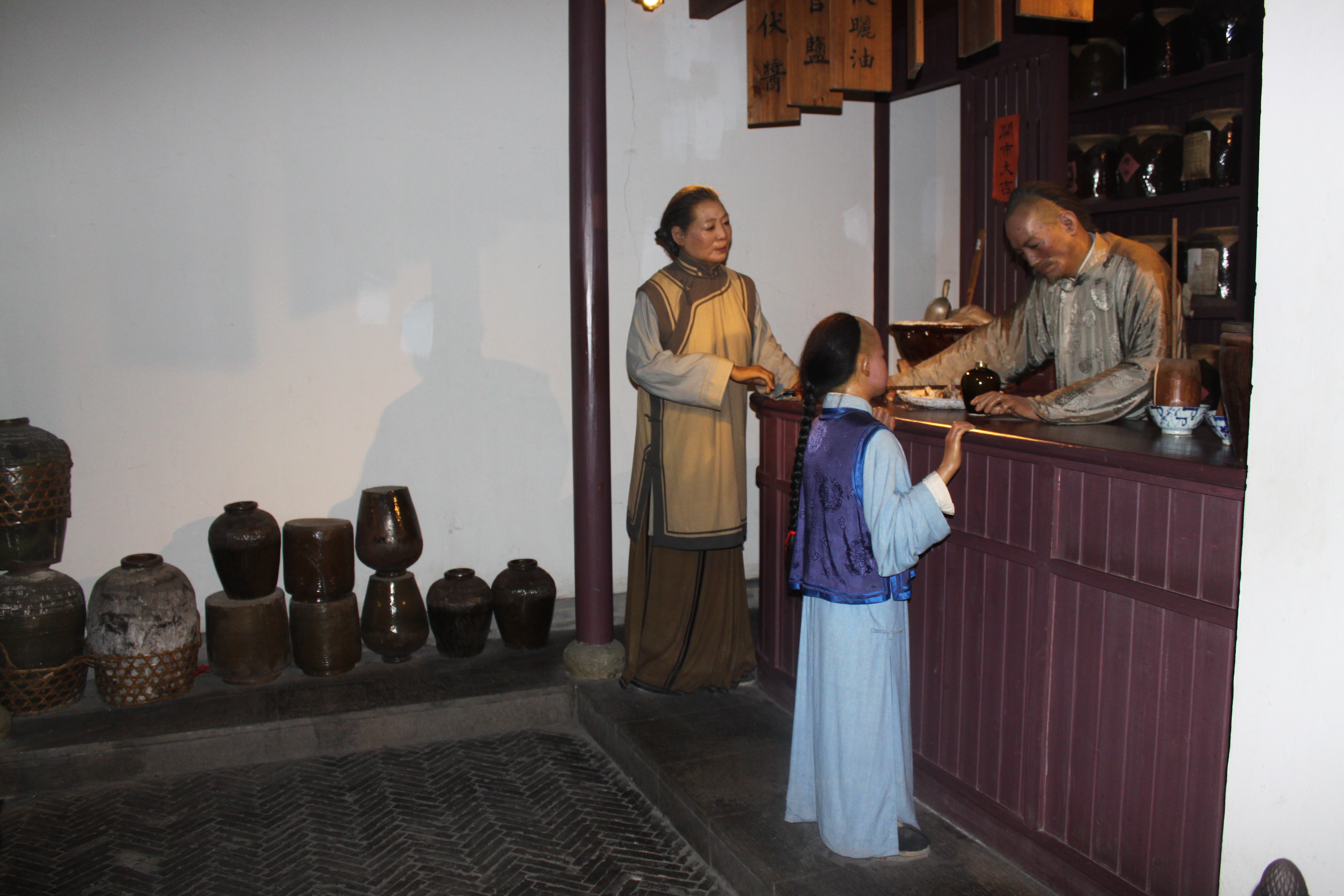
Soy Sauce and Pickle Shop
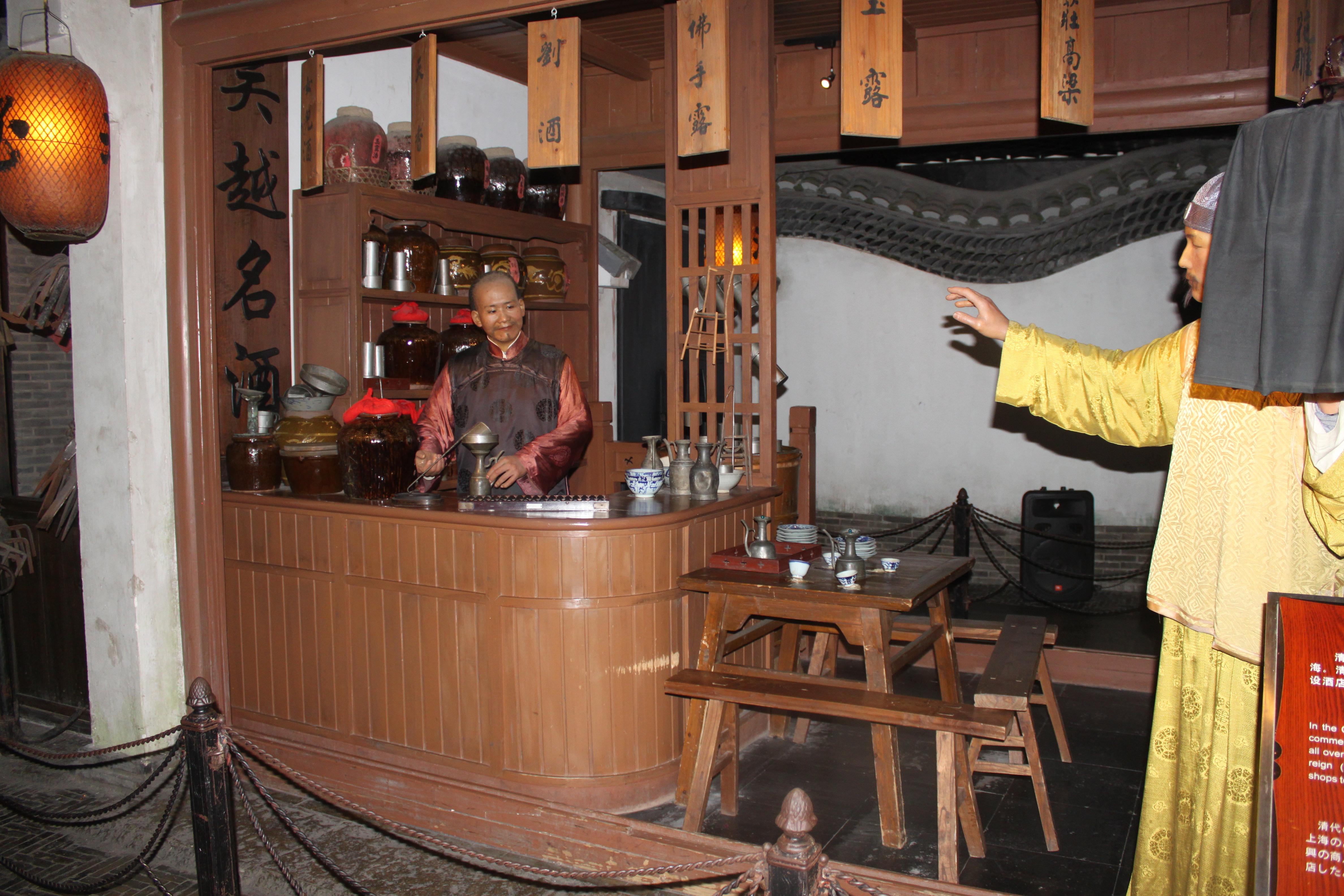
Restaurants
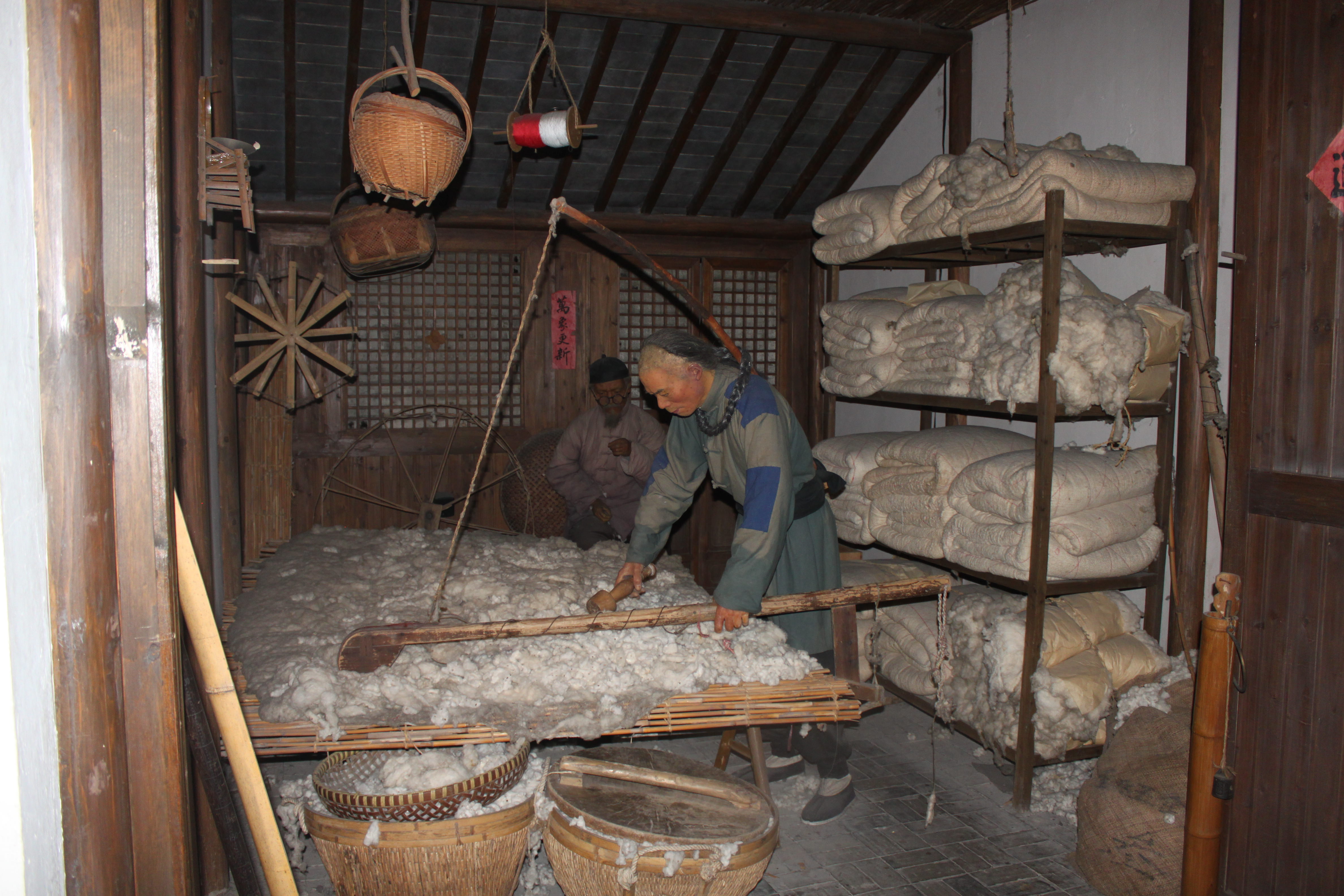
Cotton Production

Chinese Herb Shops

Fortune Teller

The Cloth Shop

The City God Temple
The cotton textile business and the transportation of goods by sea and river (especially once the Beijing-Hangzhou Grand Canal was flooded by the Yellow River) were the mainstays of Shanghai. By Emperor Daoguang’s reign (1821-50) the Merchant Boat Owner’s Guild was the biggest guild in the city of Shanghai. During the Ming & Qing Dynasties, Shanghai produced enough cotton textiles for the domestic market that it was said that “The cloth produced from Songjiang (Shanghai) was enough to clothe the whole of China”. In the Qing Dynasty about 25m kg of cotton were shipped inland each year. Elsewhere I read that cotton production benefited from the American Civil War (1861-5) in that the world export of cotton from the US declined significantly, which allowed Chinese domestic cotton processing in Shanghai to burgeon.
The gunfire of the Opium war and the signing of the “Nanjing Treaty” plunged China into the abyss of Semi-colonialism. In 1845, foreign settlements and concessions were established in Shanghai and China’s sovereignty was further eroded. Nonetheless the forced opening had a far reaching effect on the development of the city’s municipal works, economy and culture.
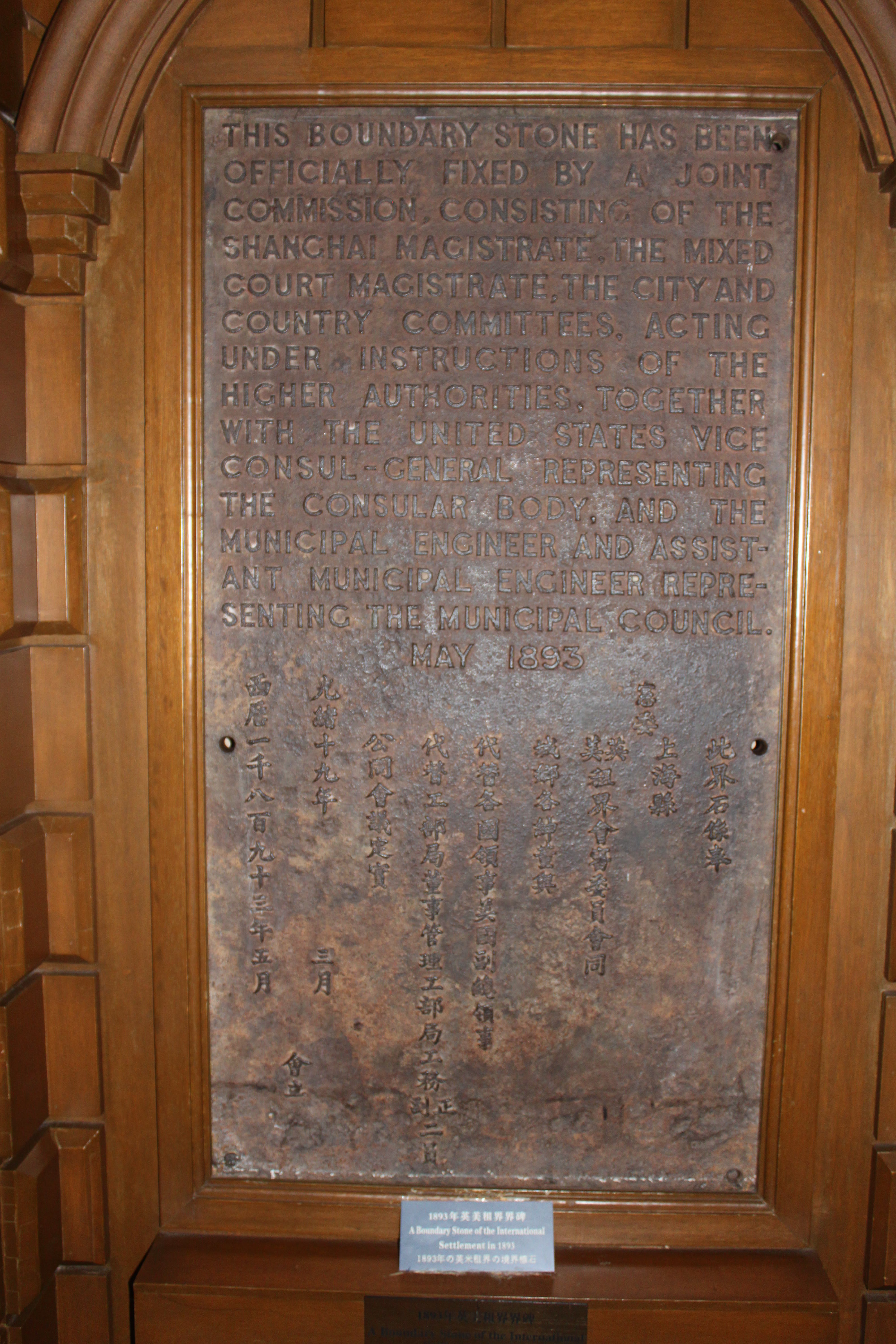
International Settlement Boundary Stone
This and similar boundary stones marked the edges of the International Settlement (UK and USA controlled area) and The French Concession (French). The International Settlement was run by The Municipal Council. In 1943 after Pearl Harbour the foreign concessions were cancelled, along with the Municipal Council thereby ending “an important symbol of Shanghai’s semi-colonial position.”
From here it all got a bit confusing – I couldn’t work out which tableau belonged to which section of the museum. Some of this is about ideas imported from the Westerners, but others like Opera Clothes are very much Chinese, so I didn’t understand the way they classified the following three halls, which was in the hall “Metropolis Infested with Foreign Adventures”, as were the shoes for bound feet, which couldn’t be more Chinese.
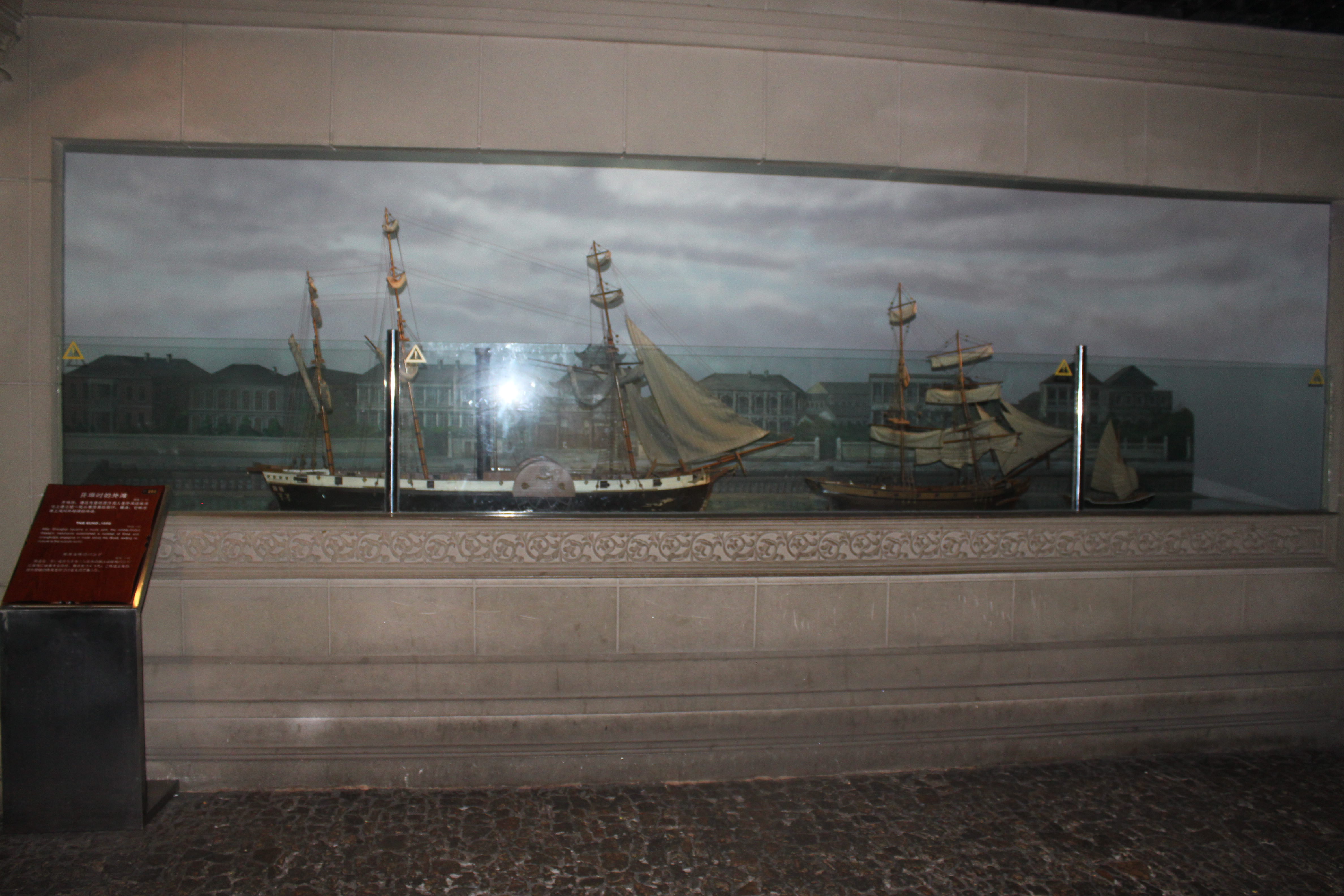
The Bund 1850
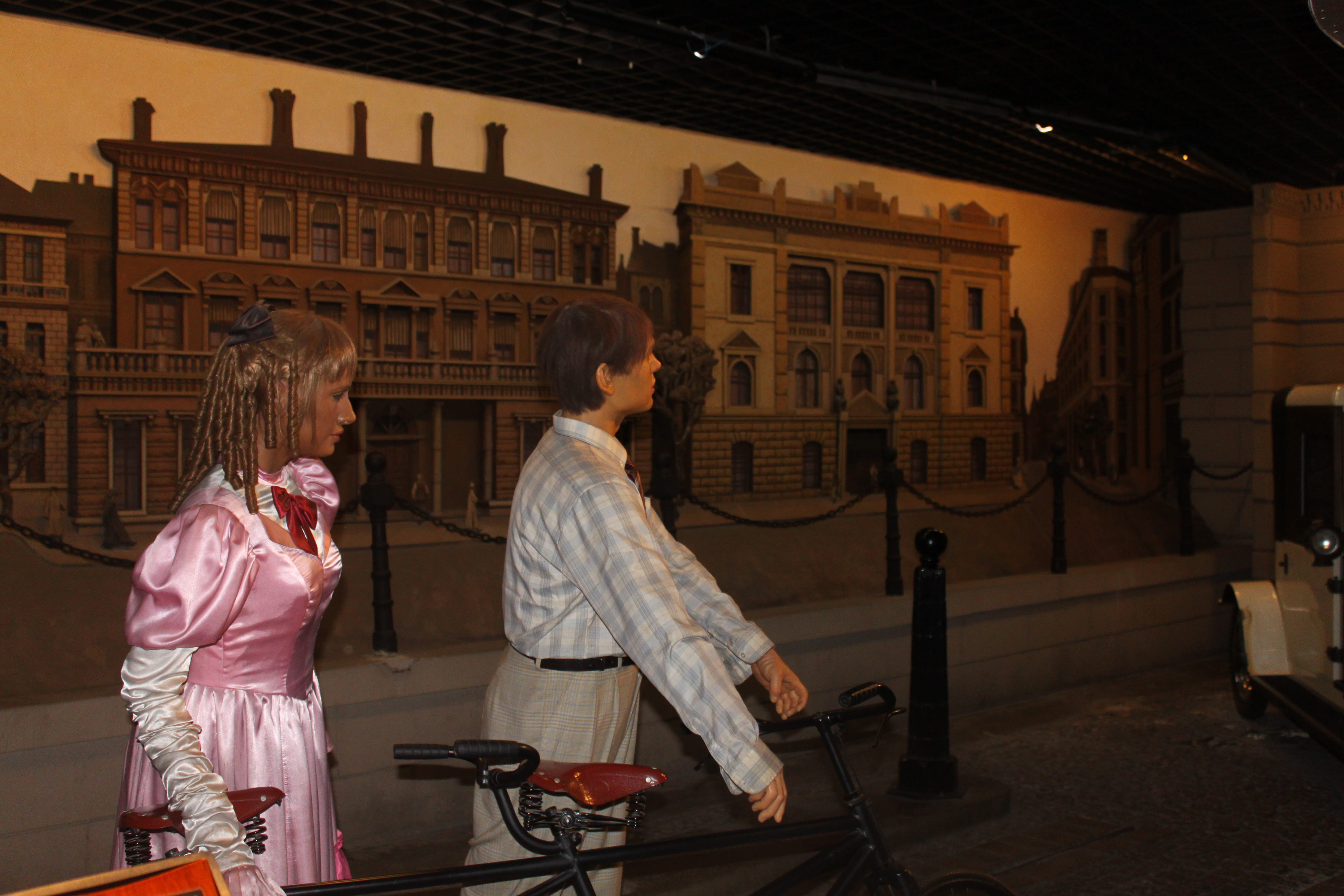
Shanghai’s Streets at the start of 20th Century
Once Shanghai became a treaty port, the nimble-footed Western merchants established a number of firms and strongholds engaging in trade along The Bund, ending its closure to the outside world.
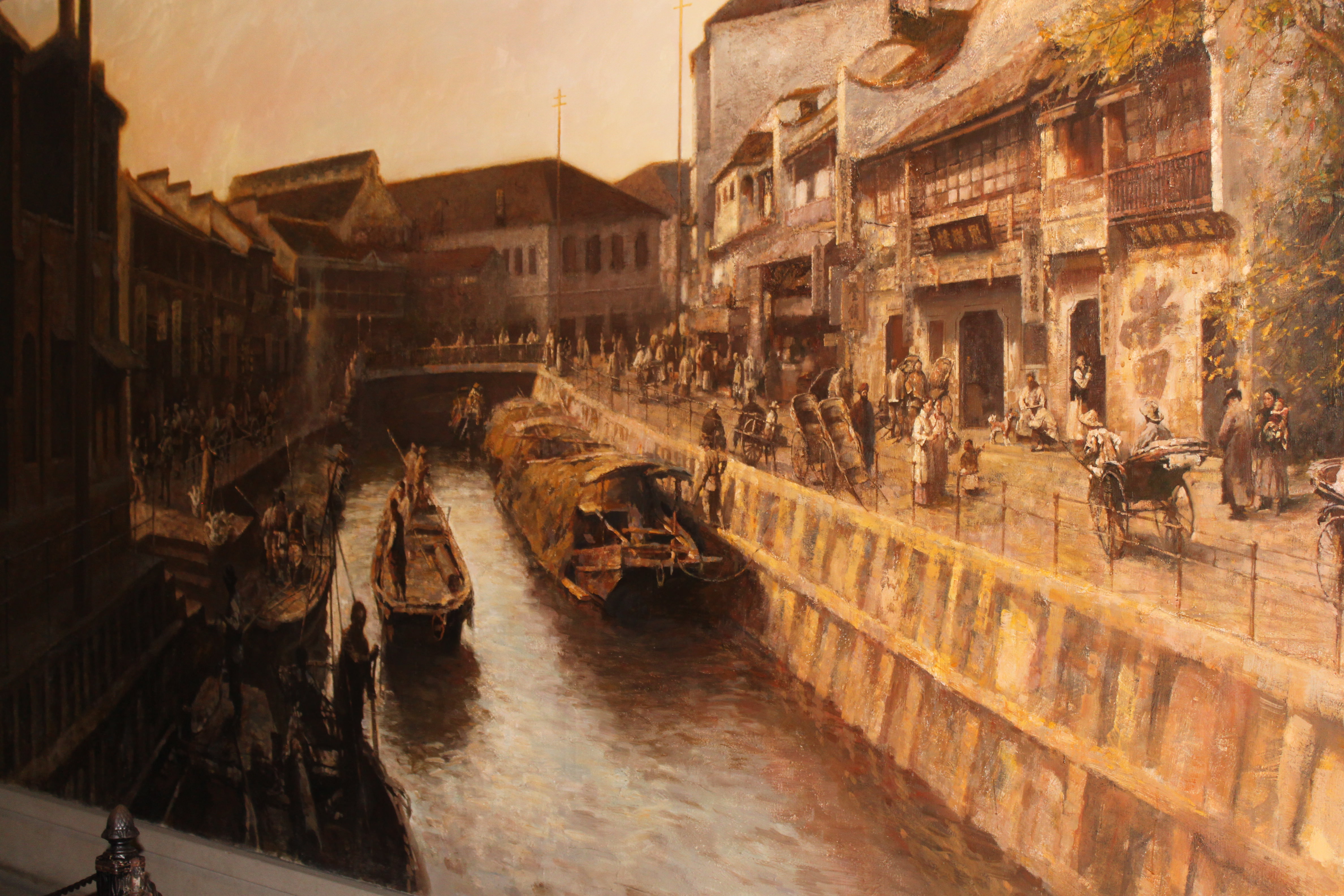
Yang-Jing-Pang Creek
Nowadays this is Yan’an Road (East)
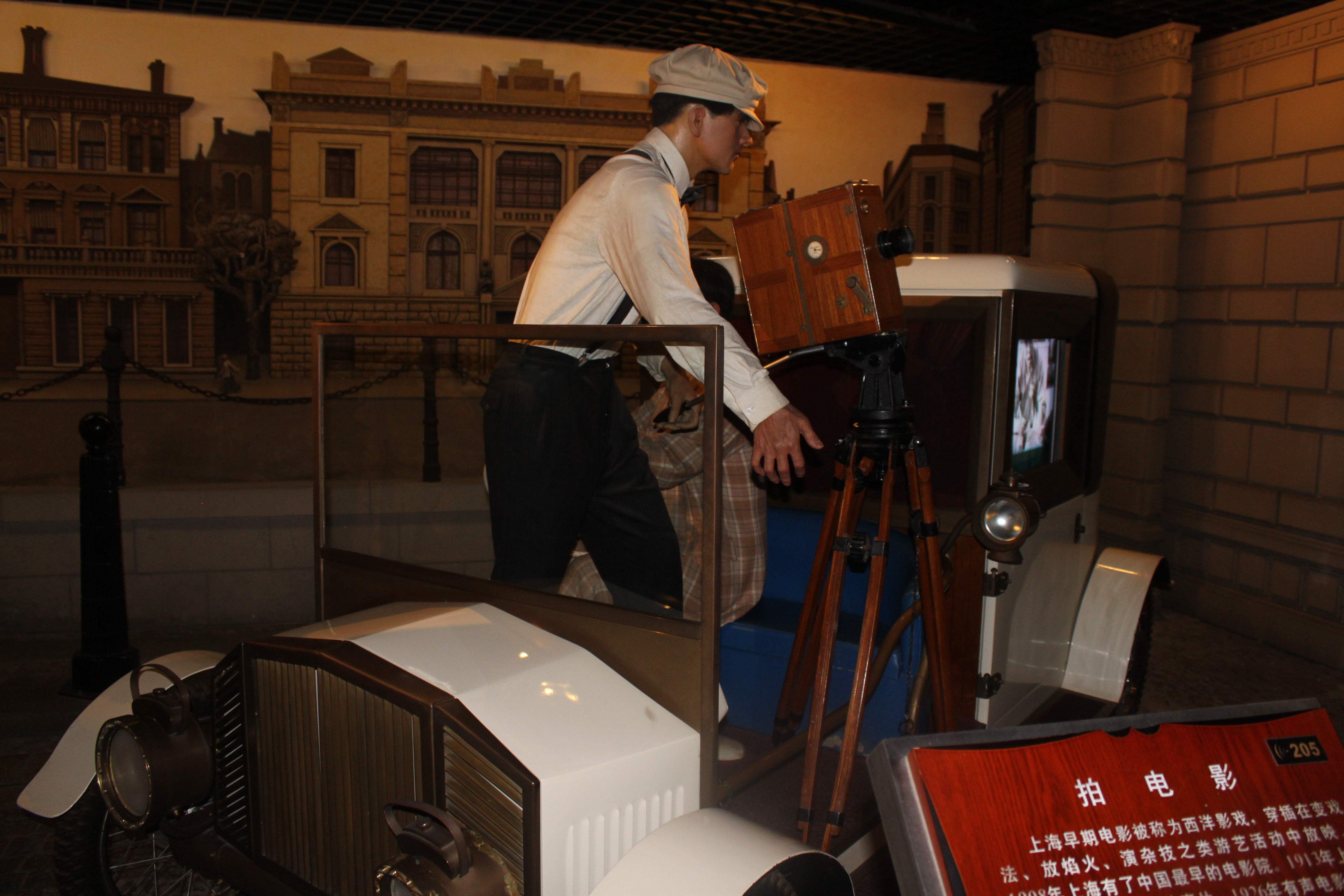
Shooting Films or Western Shadow Play

The Mixed Court

Tobacco and (Toilet) Paper Shop
After Shanghai became a treaty port, the foreign powers seized part of the city’s administrative and judicial powers in the concessions. The Mixed Court, a judicial establishment set up by the Chinese government consists of both Chinese and foreign judges. The loss of judicial sovereignty in the settlement was an important symbol of Shanghai’s semi-colonial status.
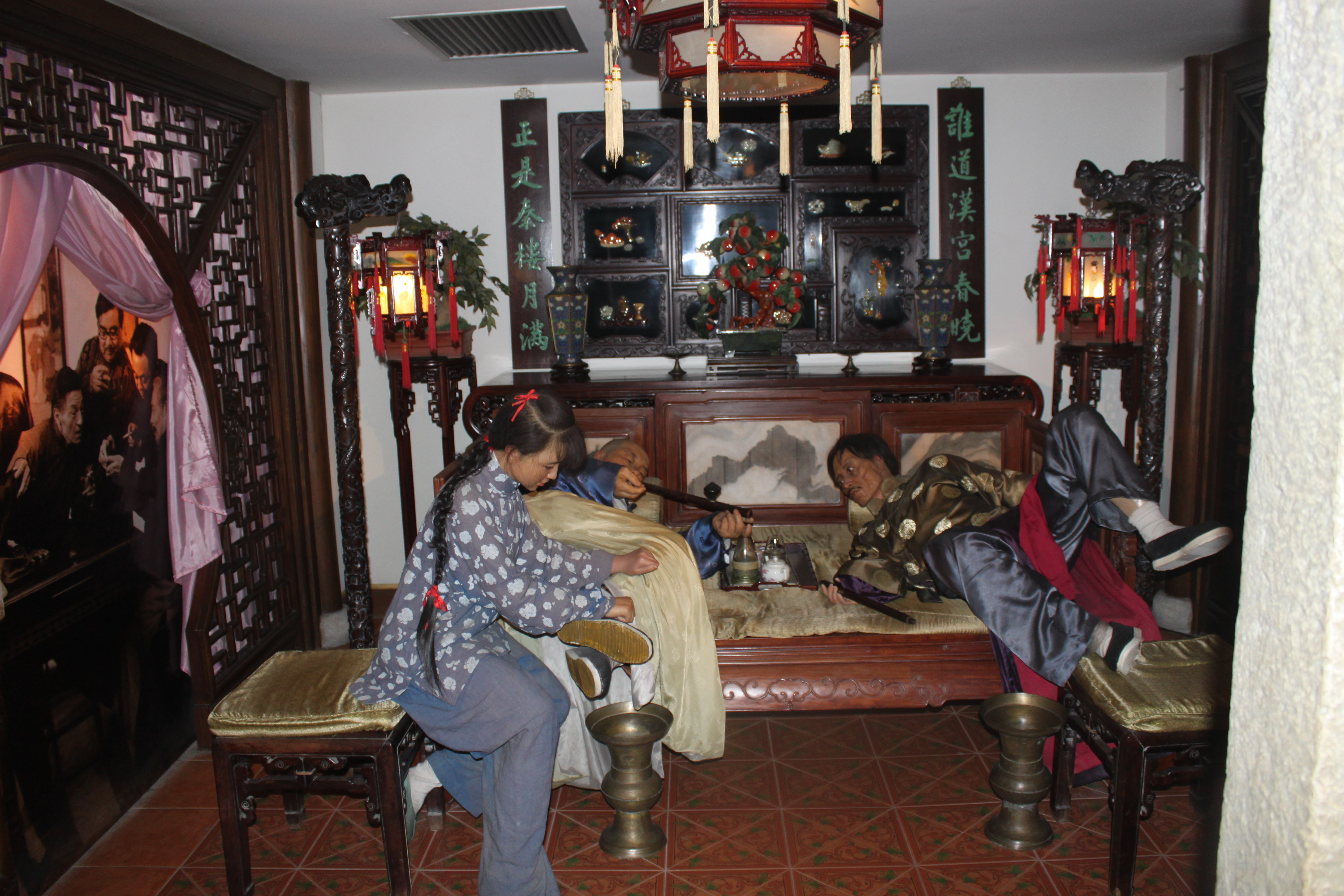
Opium-Smoking House
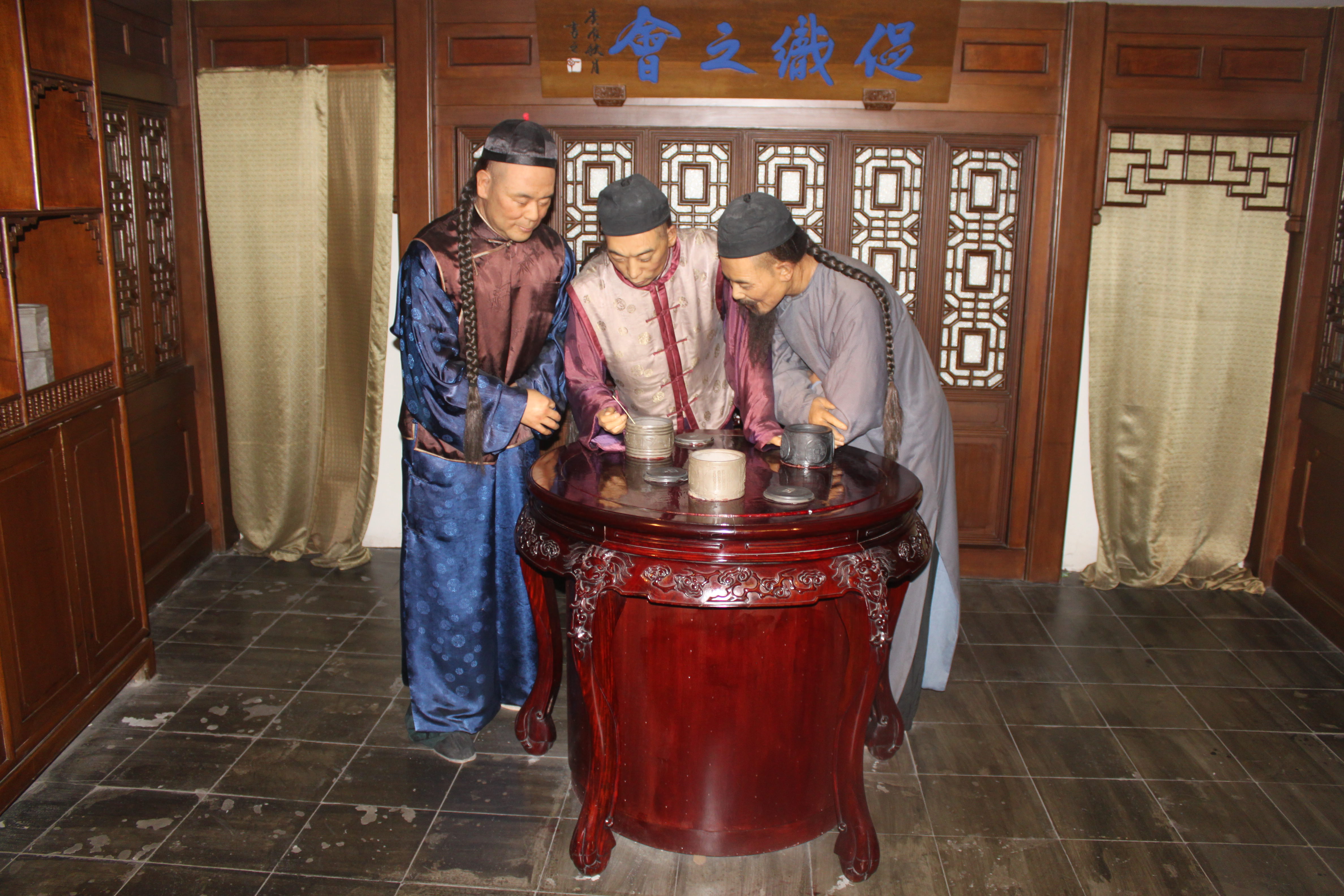
Cricket Fighting
After the Opium War thousands of opium dens were scattered along the streets and lanes of Shanghai and quite a few of them tried to solicit customers with girls. They were called “The Flowery Smoking House”. The numerous opium dens were part of the seedy side of old Shanghai.

Tiger Stoves for Boiled Water

Tushanwan Portrait Painting Workshop
The Tughanwan Portrait Painting Workshop was the earliest art college teaching Western-style waiting in modern China. In 1852, the Tushanwan Orphanage in Xujiahui set up the Tughanwan Art and Handicraft Bureau.

Puppet Show
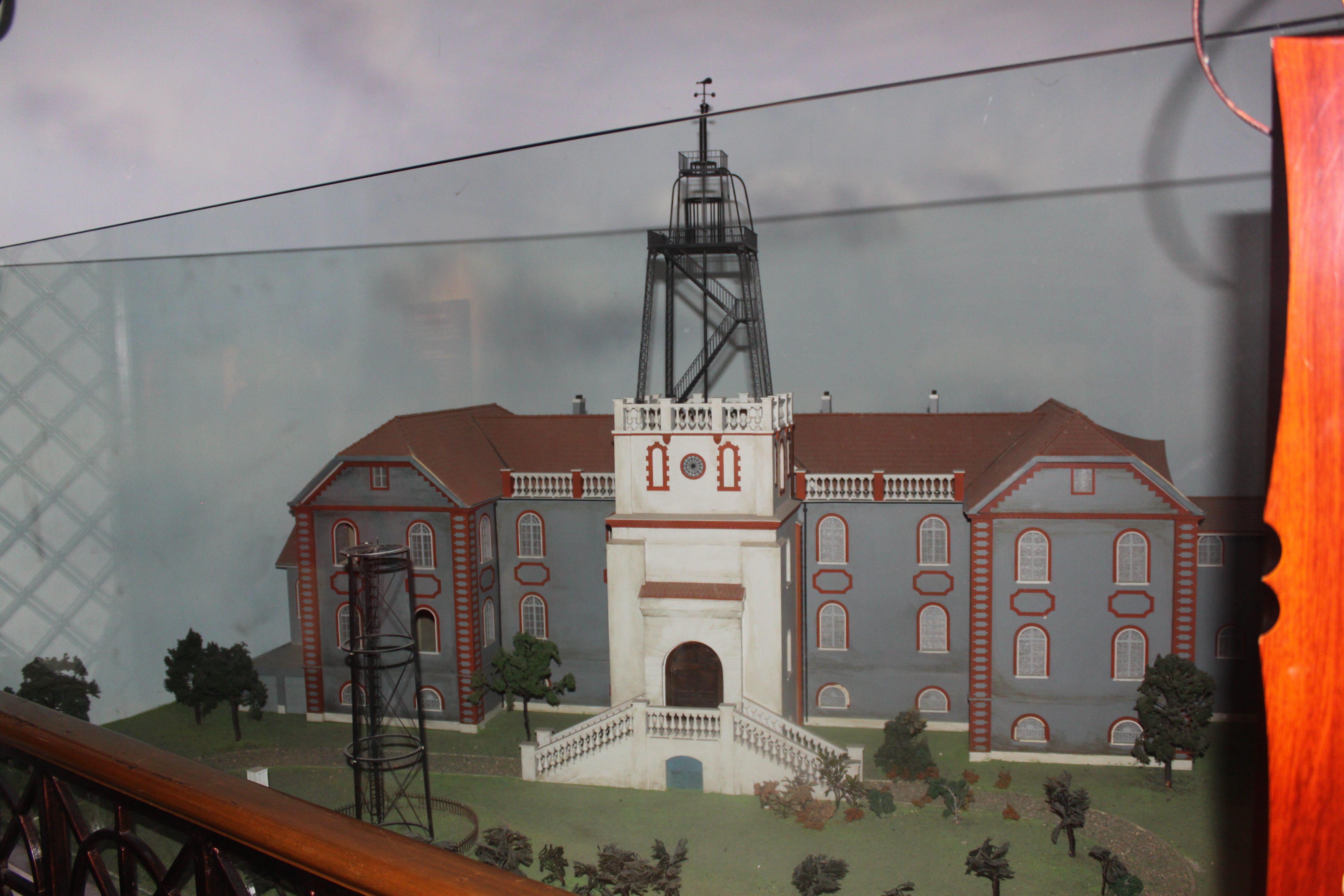
Xujiahui Observatory

Nanjing Road in the 1930s
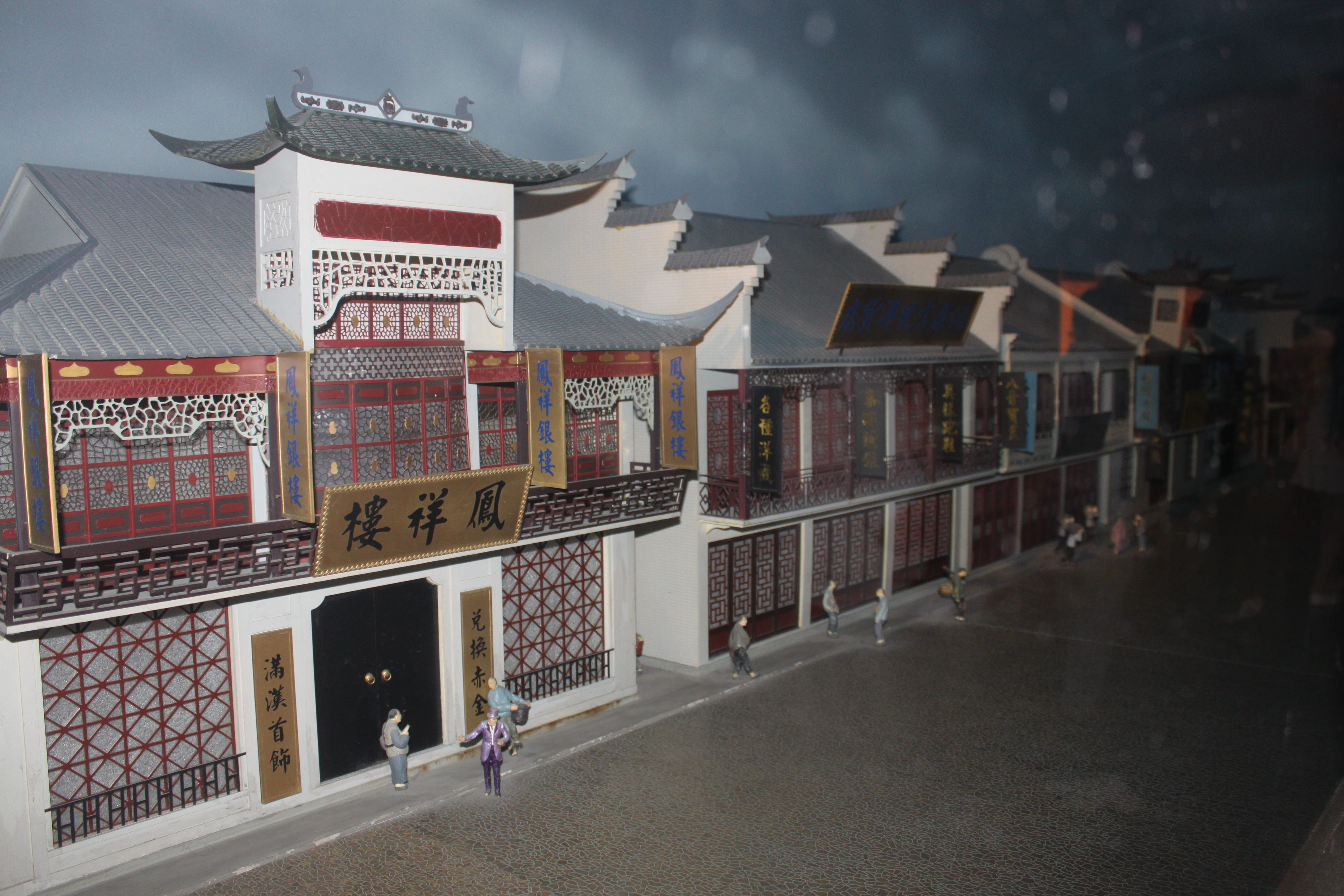
Nanjing Road at the Beginning of 20th Century
With over 50 years of development the commerce along the Nanjing Road thrived. Gas lamps were followed by electric lighting and telephones and piped water were later installed.
Xujiahui Observatory
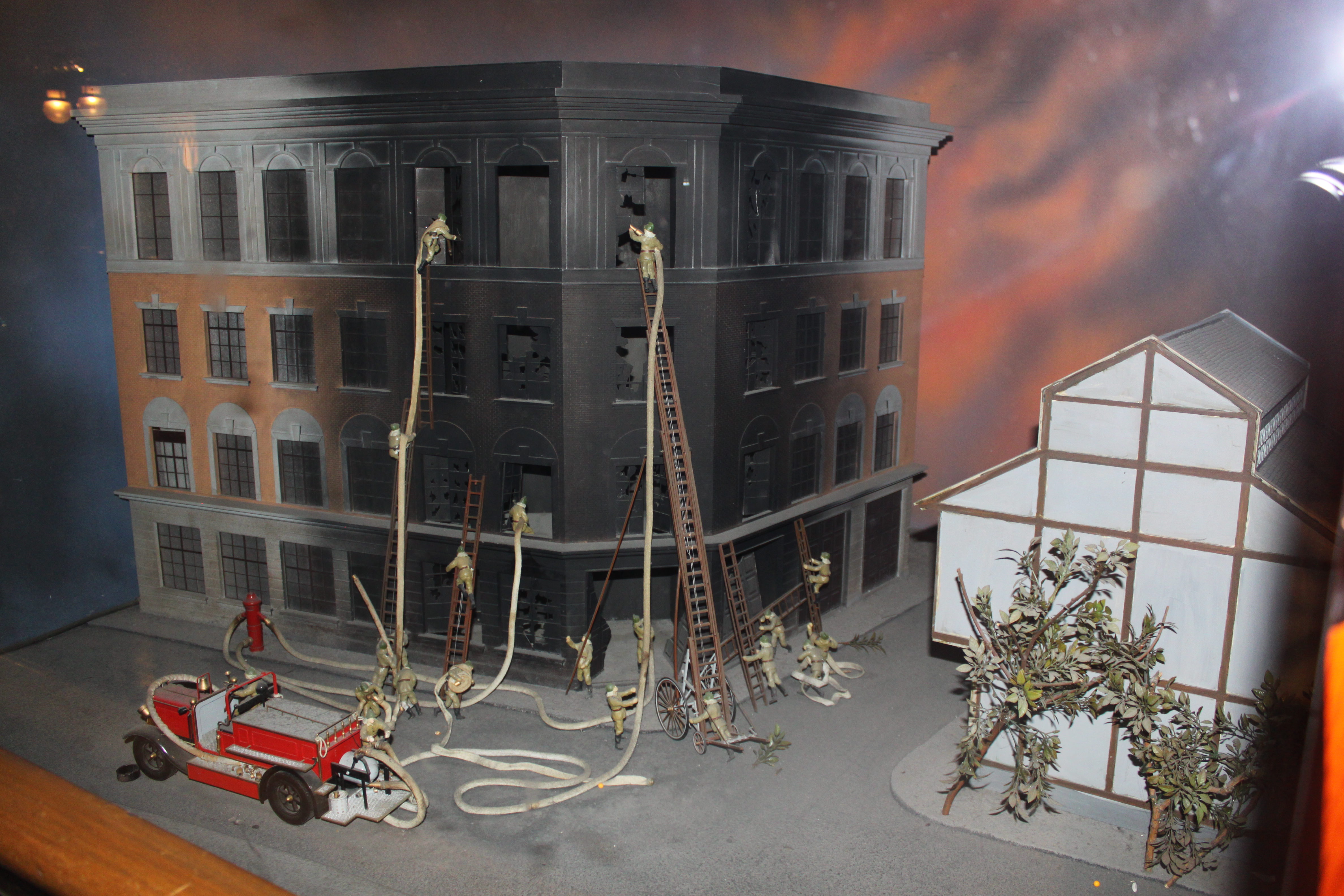
Fire Department and Fire-Fighting Scene at Nanjing Road
The Xujiahui Observatory was established by the Shanghai Catholic Church in 1872 to engage in astronomical, meteorological, geomagnetic work and time service. Its affiliates included the Signal Terrace [with red-dropping ball at midday], which was built at The Bund in 1884, the Sheshan Observatory, which was set up in 1901 and a geomagnetic station that was built at Kunshan, Jiangsu Province in 1908. As a result, Xujiahui Observatory became the largest meteorological research institution in the world at the time.
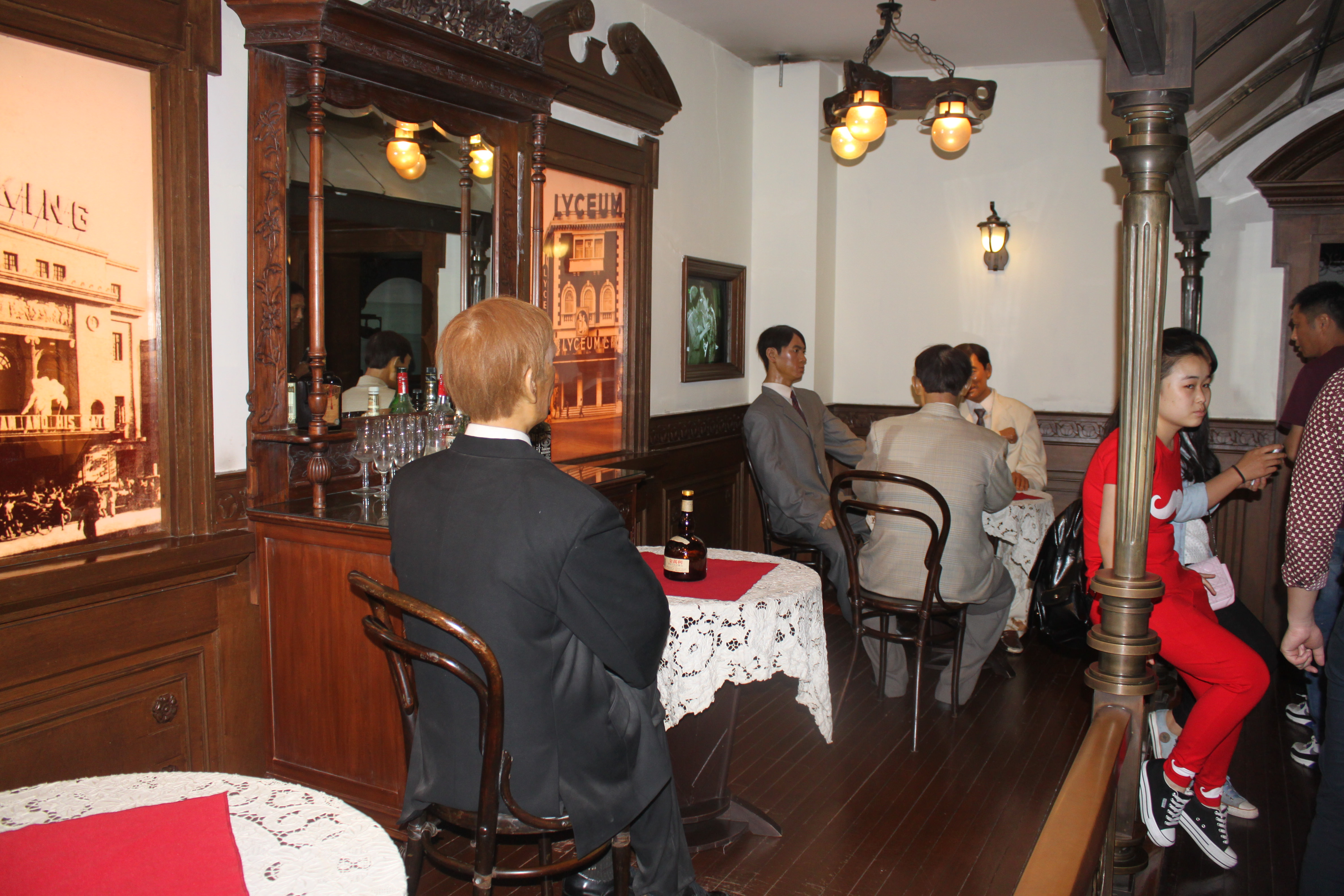
Coffee House
Tiger Stoves for Boiled Water

Shanghai Custom House
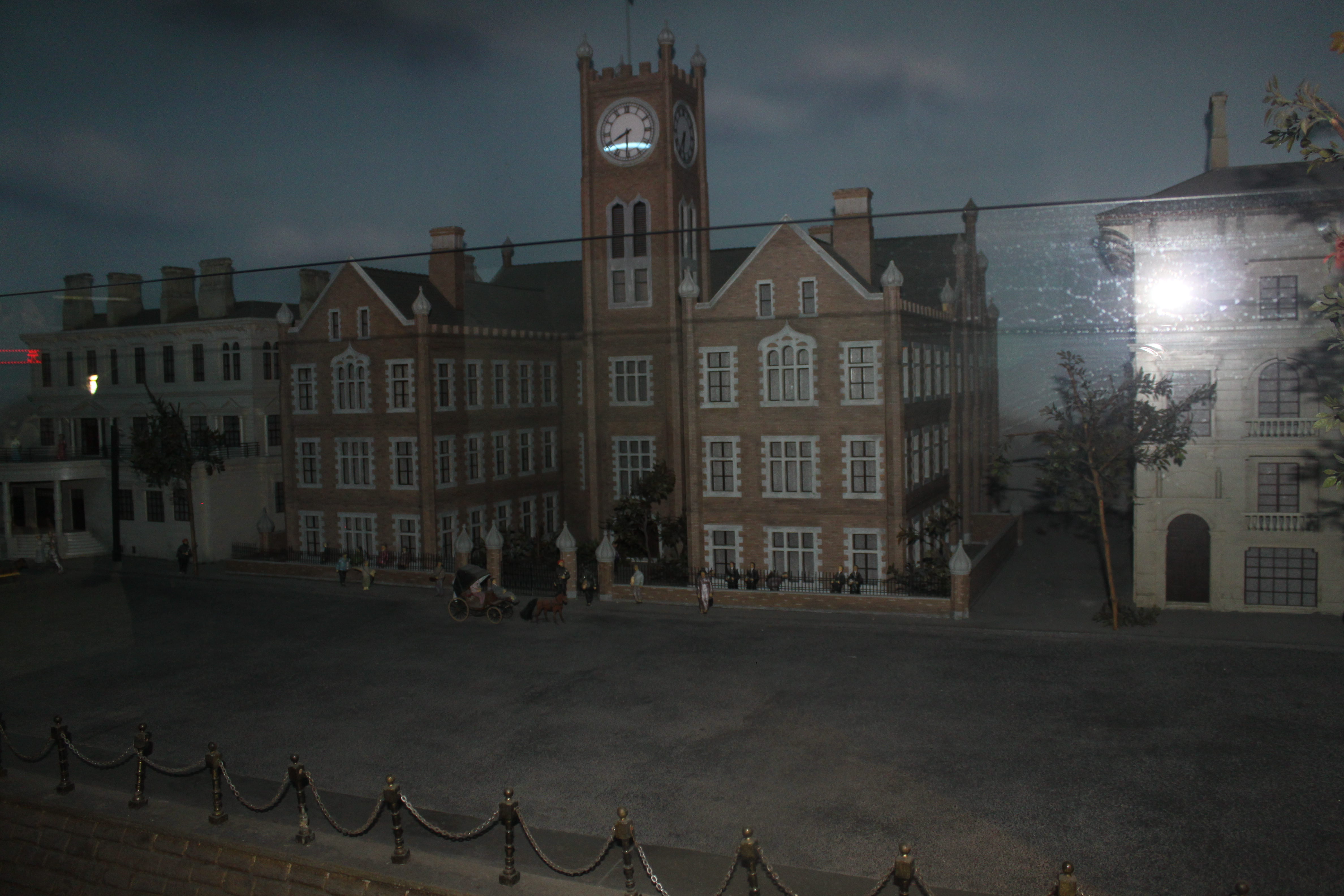
The Custom House
Shanghai Custom House was set up as a new customs house to the north of the old Shanghai Customs House after the Opium war. Taking revenues from the foreign ships which entered Shanghiai harbour was its specific responsibility.
It was a Yamen-like building which was demolished and rebuilt at the end of the 19th Century in 1893 “bearing witness to the loss of China’s customs sovereignty.”

Wangping Street
Wangping Street was the Fleet Street of Shanghai, with 10 newspapers at the beginning of the Republic of China period. Shanghai became a nationwide centre for news and information the 1920s.
The Metropolis Infested With Foreign Adventurers
With European and American ideas approaching the East like wind and rain, modern Shanghai became China’s window for introducing modern Western culture and education. The distribution of Chinese and foreign goods and the growth of consumption enabled Shanghai to experience rapid development in commerce and trade as well as finance. By the 1920s and 1930s , Shanghai had transformed into modern China’s largest commercial, financial and cultural centre, and an important metropolis in the Far East. The architecture and the way of life in the concessions exhibit characteristics from Europe and America. Shanghai was called “a metropolis infested with foreign adventurers”, a reflection of the city’s unusual prosperity.
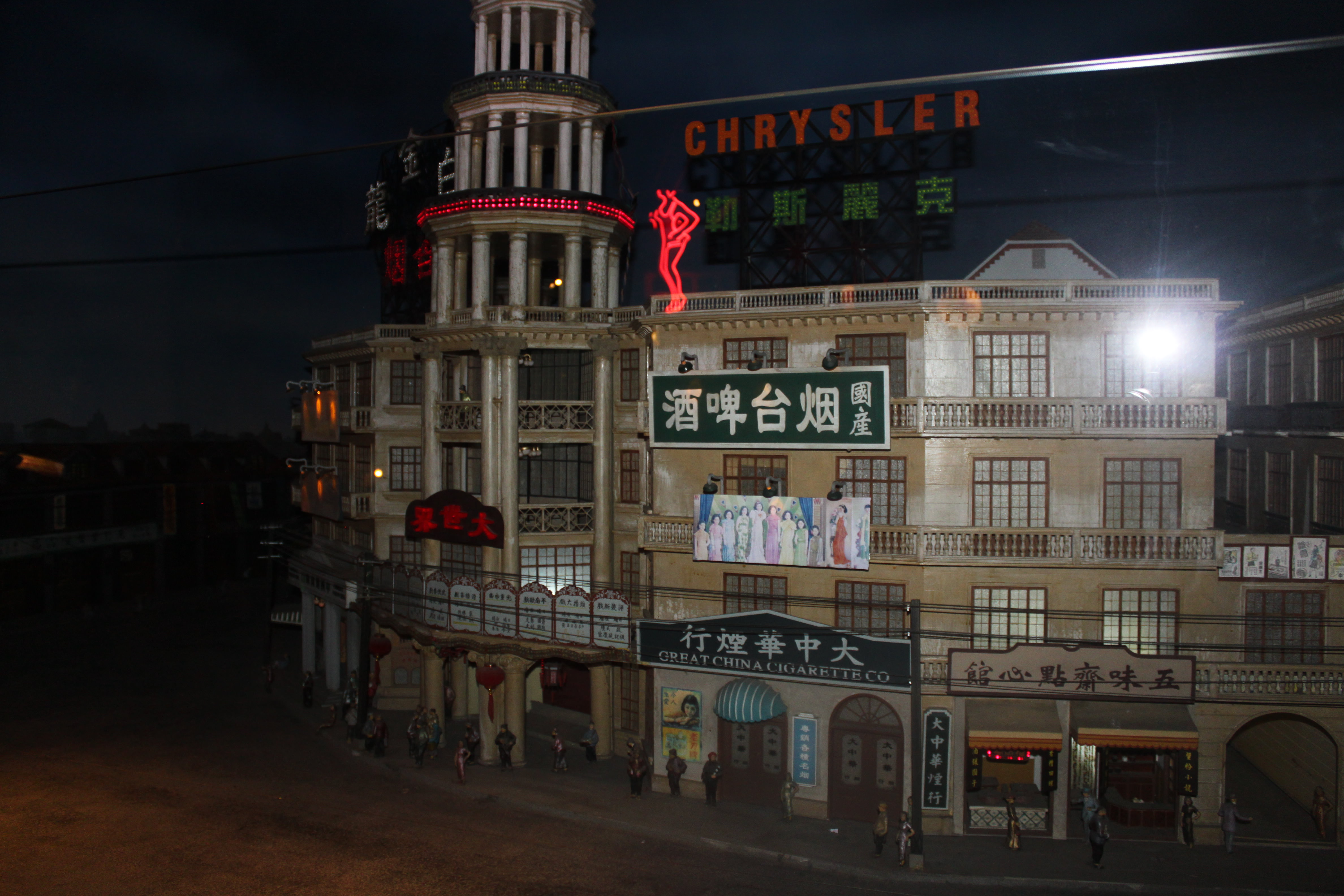
The Great World (Amusement Centre)

Peep Show Ha-Ha Show
The Great World known in Chinese as Da Shi Jie (an Amusement Centre) was set up by Huang Chujiu in 1917. The varied programme included cinema, circus, concerts, local operas and restaurants, with occasional exhibitions and and auctions.

Yiletian Teahou
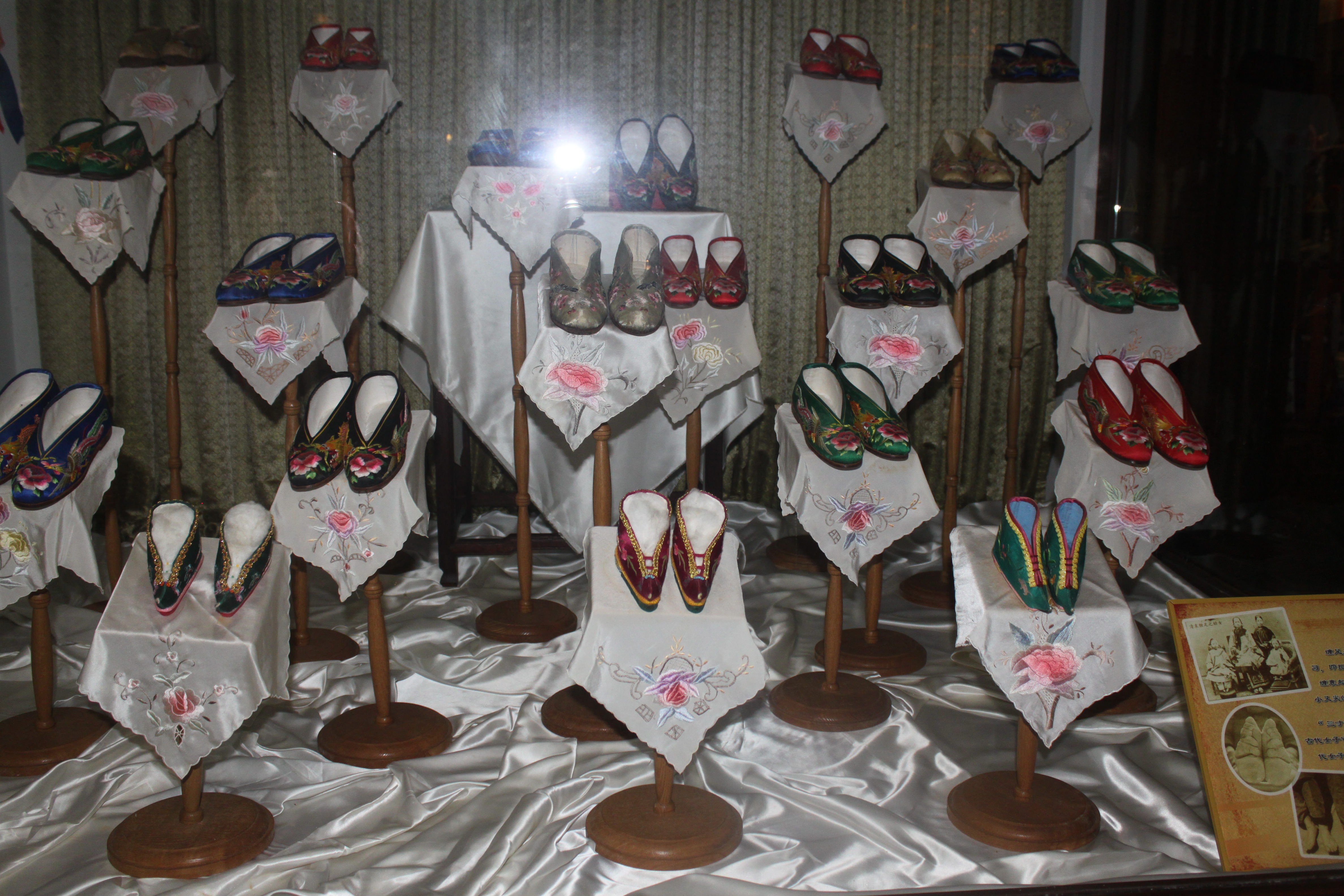
Women’s shoe sho
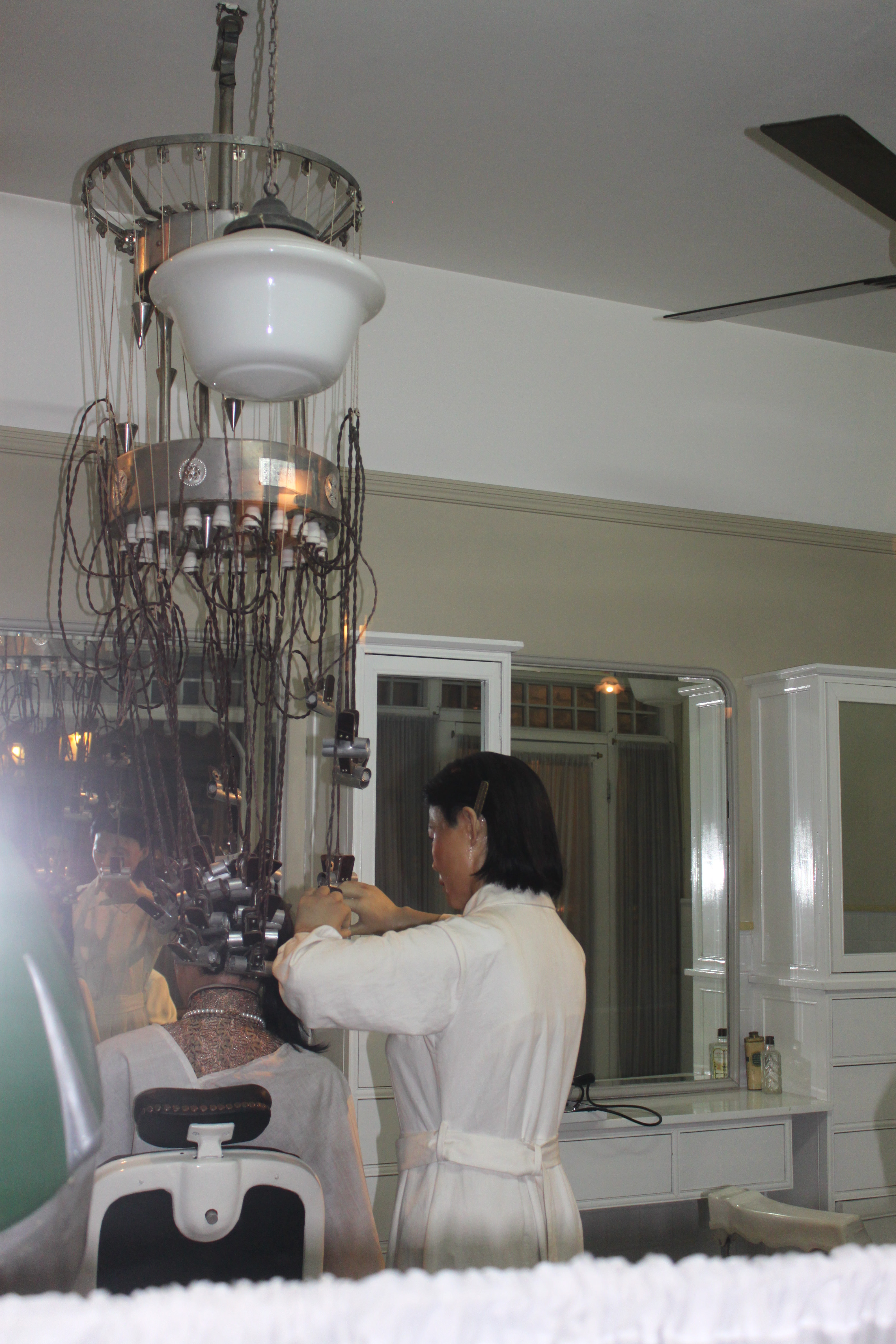
The Barbers
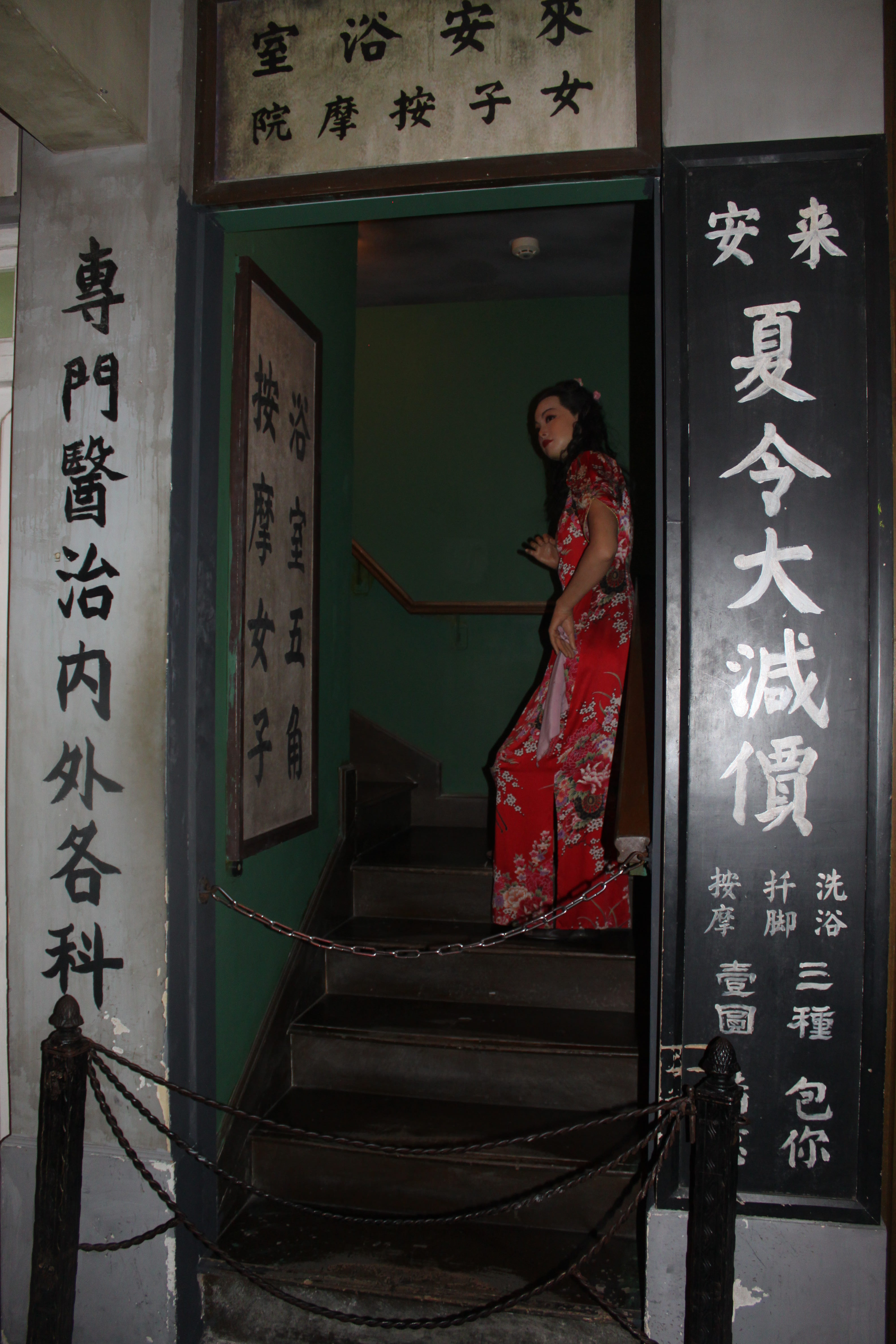
Presumed lady of the Night

Tobacco Store
After the fall of the Qing Dynasty in 1911, a Chinese man was no longer forced to wear his hair in a pigtail and the front half of his head shaved (it had been a Manchurian fashion imported from the North when the Qing dynasty took power in the early 17th Century and was an important symbol of the Han submission to Manchu rule ). Barber’s flourished in the city as a result and there were as many as 1,000 in Shanghai.
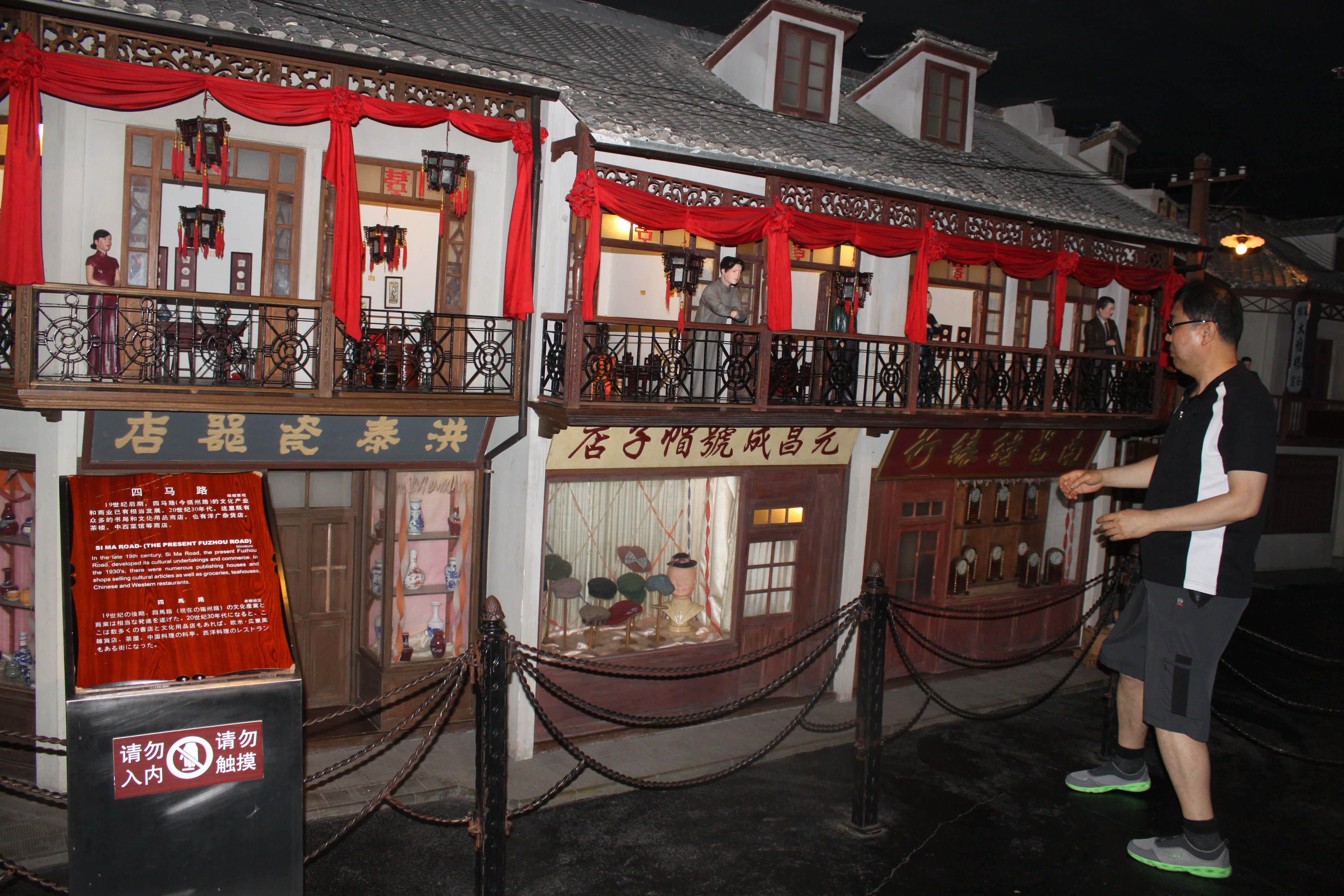
Si Ma Road (currently Fuzhou Road)
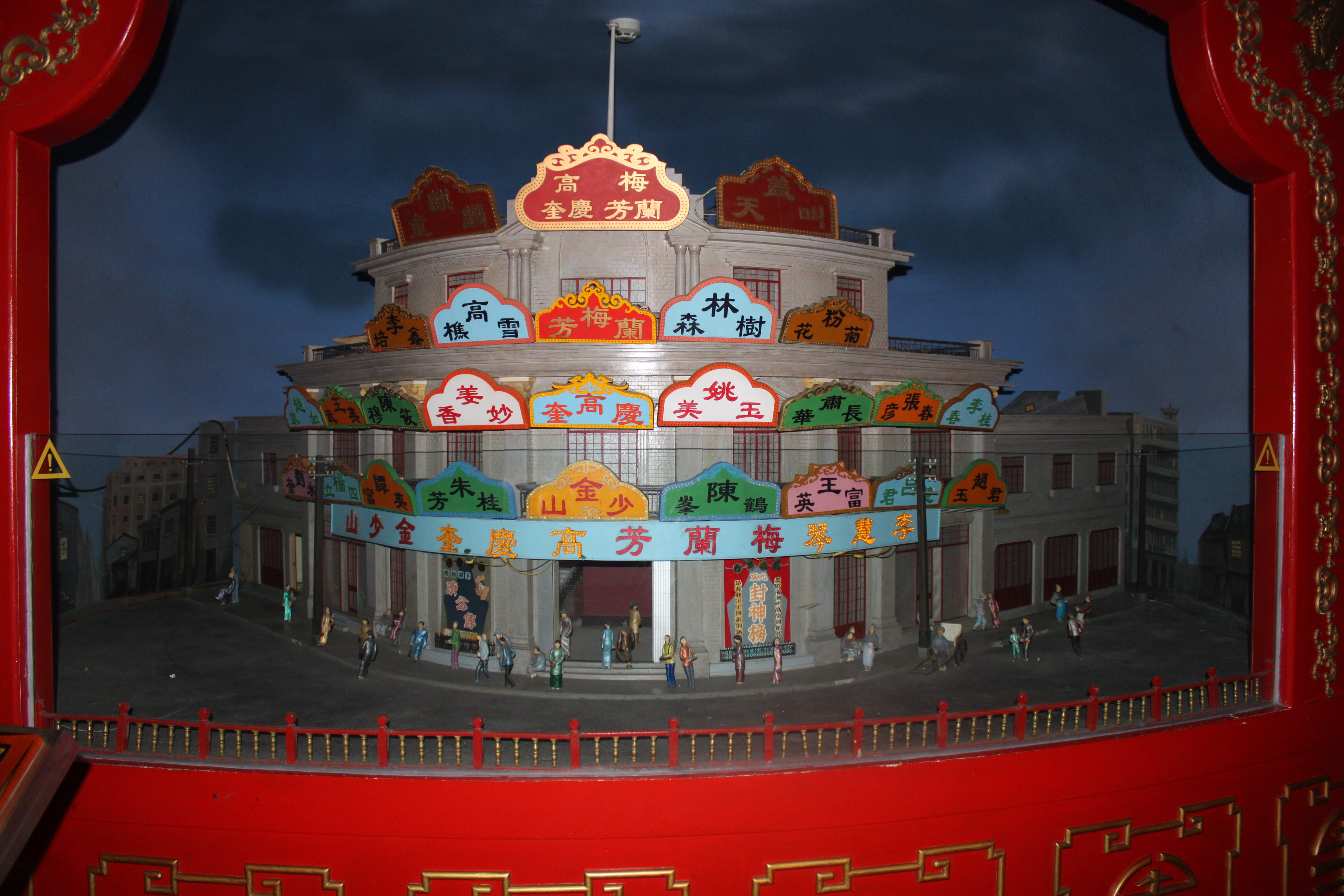
Tianchan Theatre

Texaco (China) Co. Ltd.

Siberia Fur Store
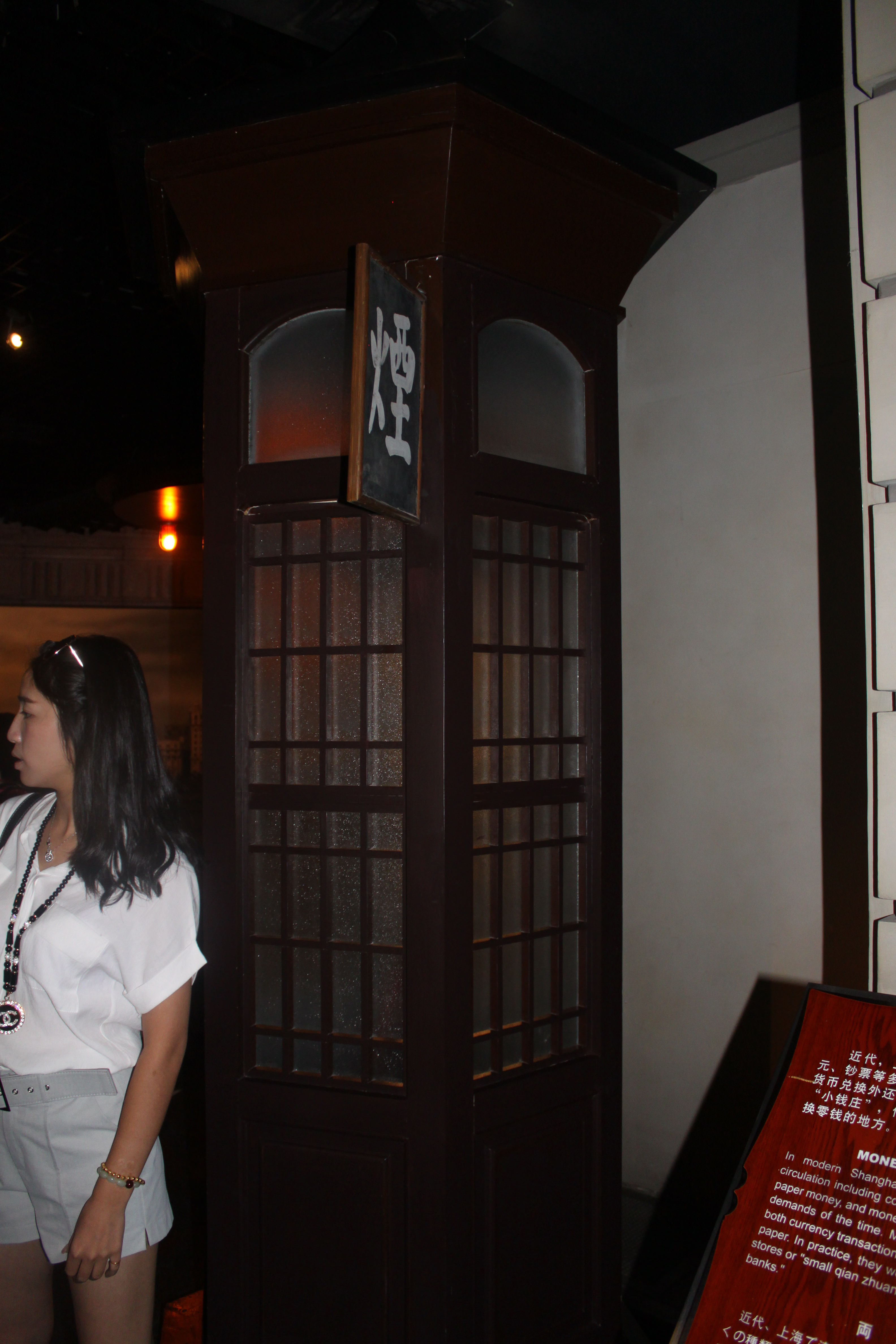
Money Exchange Kiosk

Lei Yun Shang Medicine Shop
At the time of the foreign settlements both foreign and Chinese money were in circulation in Shanghai. In the 1930s, the Bank of China, the Bank of Communication, and the Bank of Peasants were all producing their own promissory notes (China invented the bank note in the 11th Century), and the management of this fiat money led Shanghai to became the hub for such financial activities which established the city as the national financial centre.
Lei Yun Shang was a famous Chinese medicine shop. It started business in Suzhou in 1724 and established a branch in Shanghai in 1860. Its Chinese medicines, including “Liu Shen Wan”, made from a secret recipe, were on sale throughout the country and were immensely popular with doctors and patients.
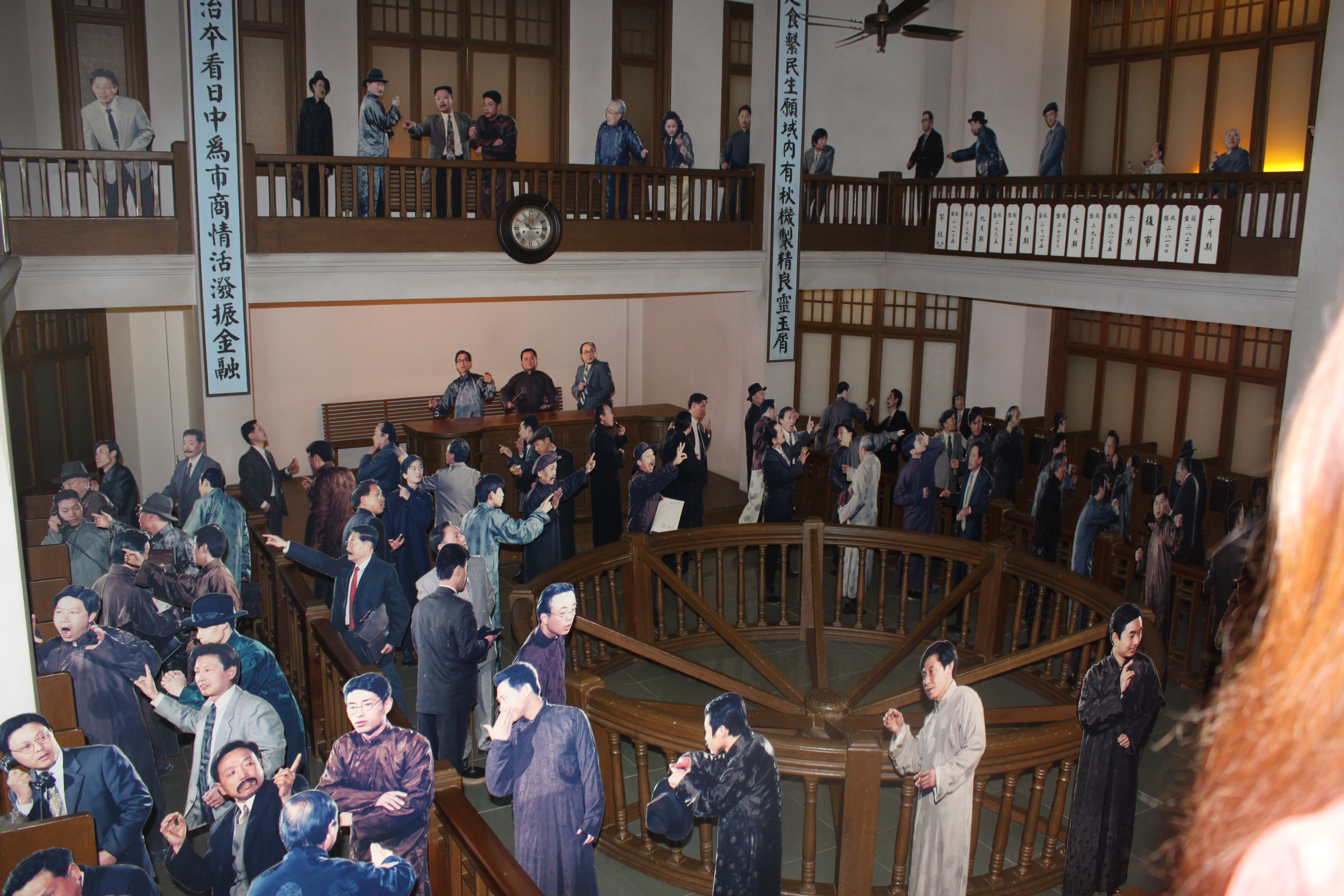
The Exchange
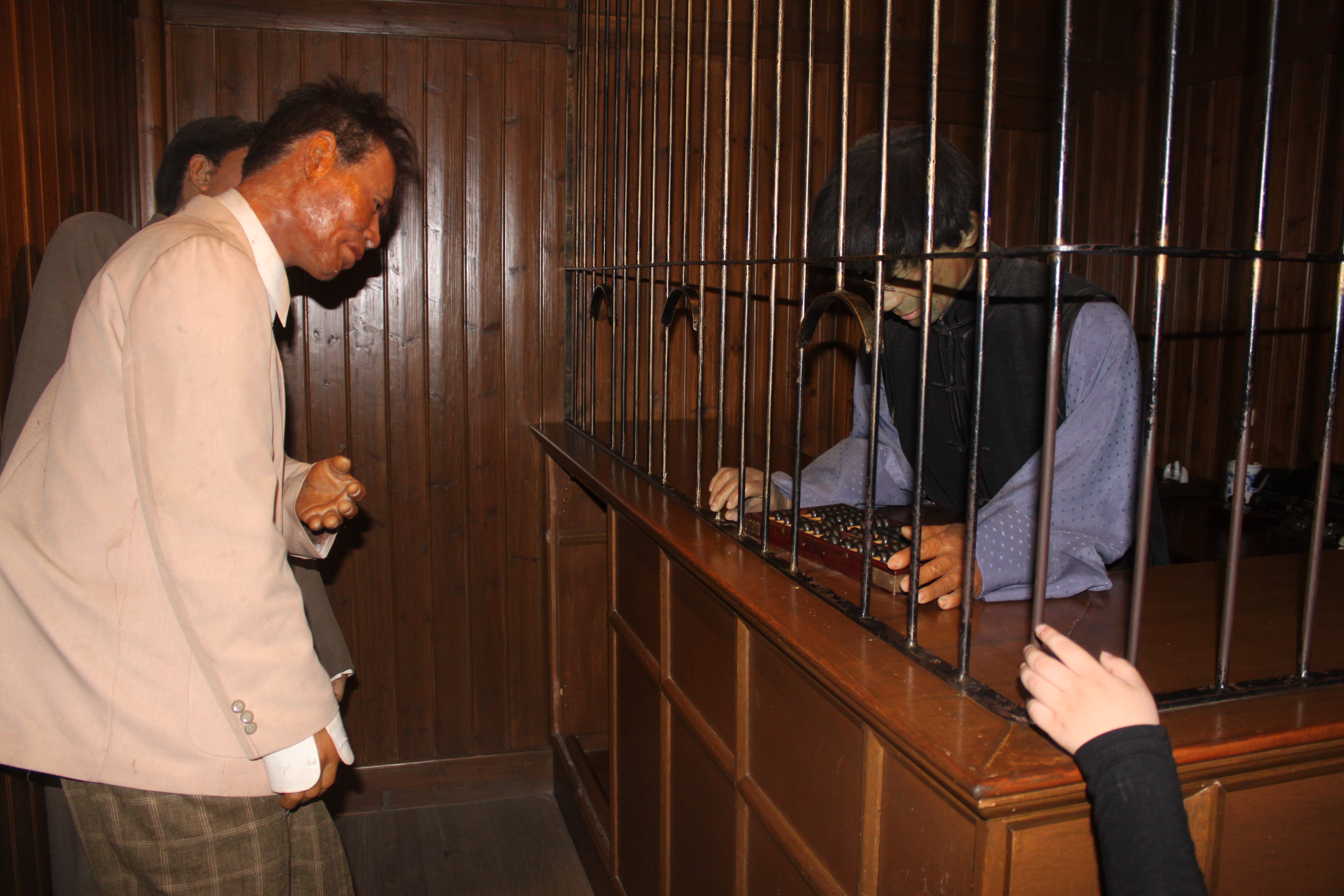
Qian Zhuang (Old Style Chinese Banks)
After the fall of the Qing Dynasty, Shanghai’s guilds started to set up exchanges similar to the western cotton and and grain exchanges. The first such exchange was the Shanghai Stock and Goods Exchange founded in 1920. The model above is of the Shanghai Wheat Flour Exchange established in 1921.
After 1843 when Shanghai became a treaty port, foreign adventures landed here in increasing numbers. In 1854, there were more than 120 foreign firms in Shanghai. In the late 19th Century, a large number of comprehensive and specialized foreign firms controlled a huge amount of Shanghai’s imports and exports.

Collotype Printing
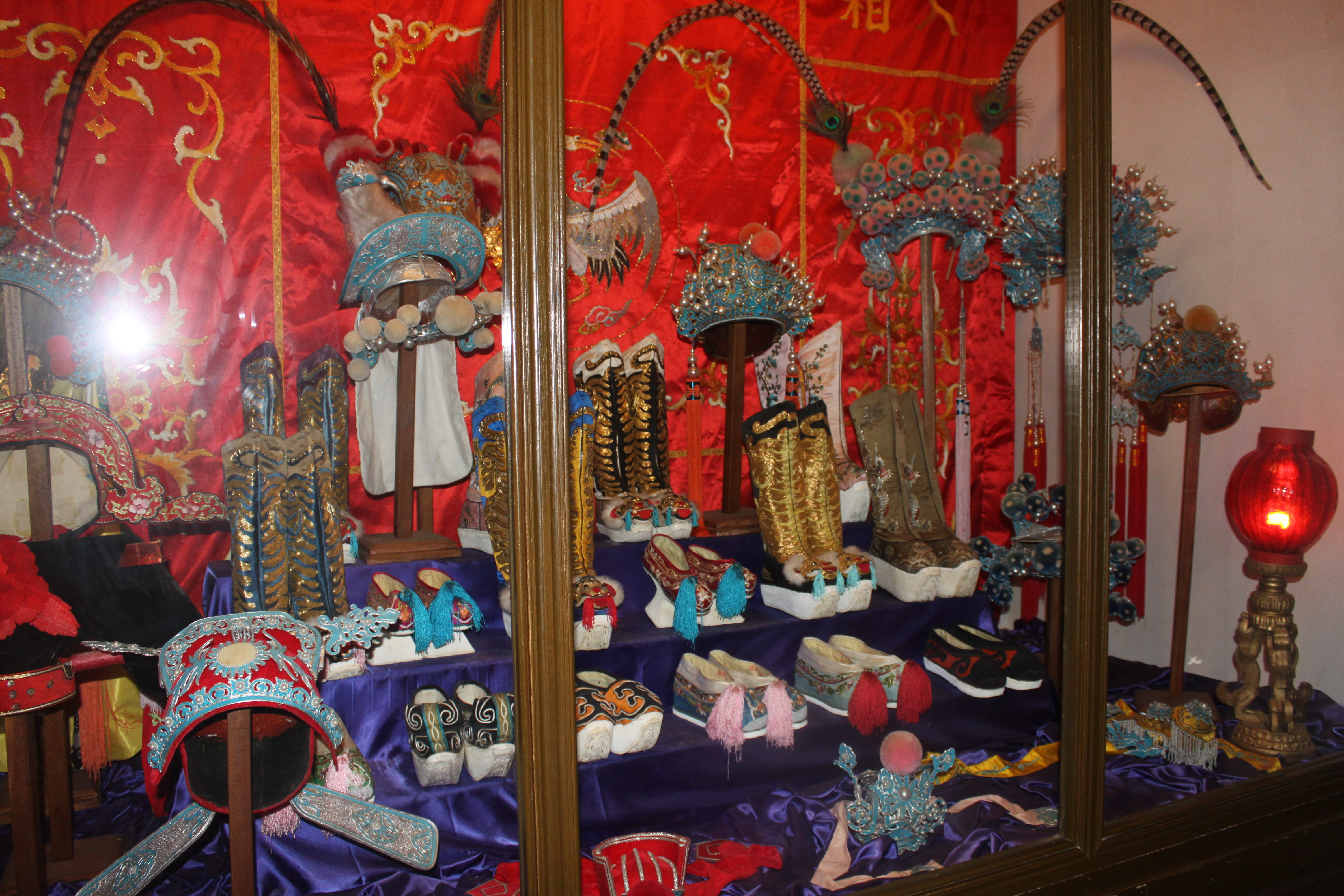
Opera Costume Shop

Opera Costume

Another Opera Costume
Si Ma Road (currently Fuzhou Road)
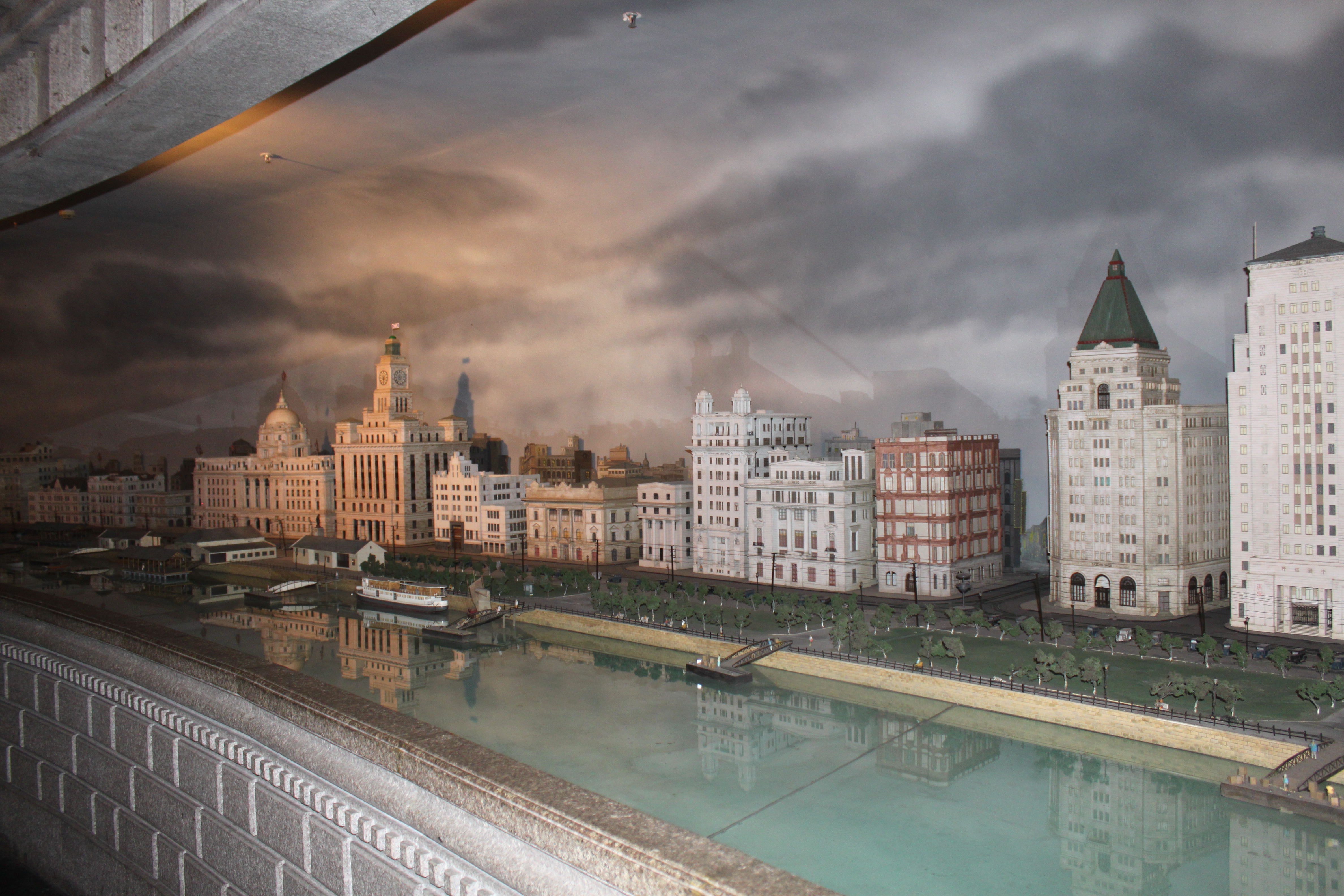
The Bund in the 1930s
The Past Traces of Shanghai
I think this section was about buildings that are no longer standing in Shanghai, but so much of the rest has gone as well, so who knows.
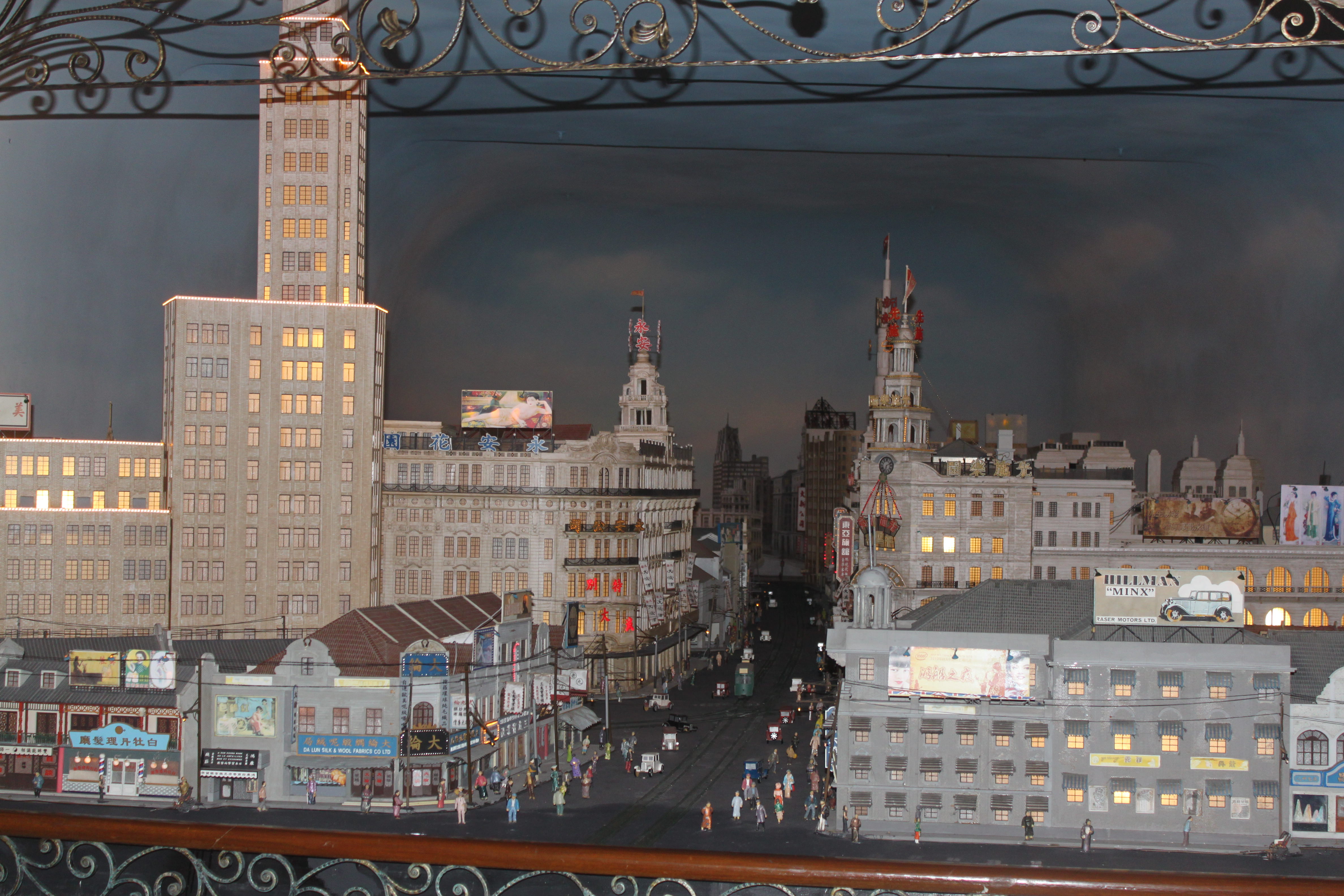
Nanjing Road after 1917

Lobby of the Majestic Hotel

Dangui Tea House

Opera at Dangui Tea House

Zhang Garden

The German Club
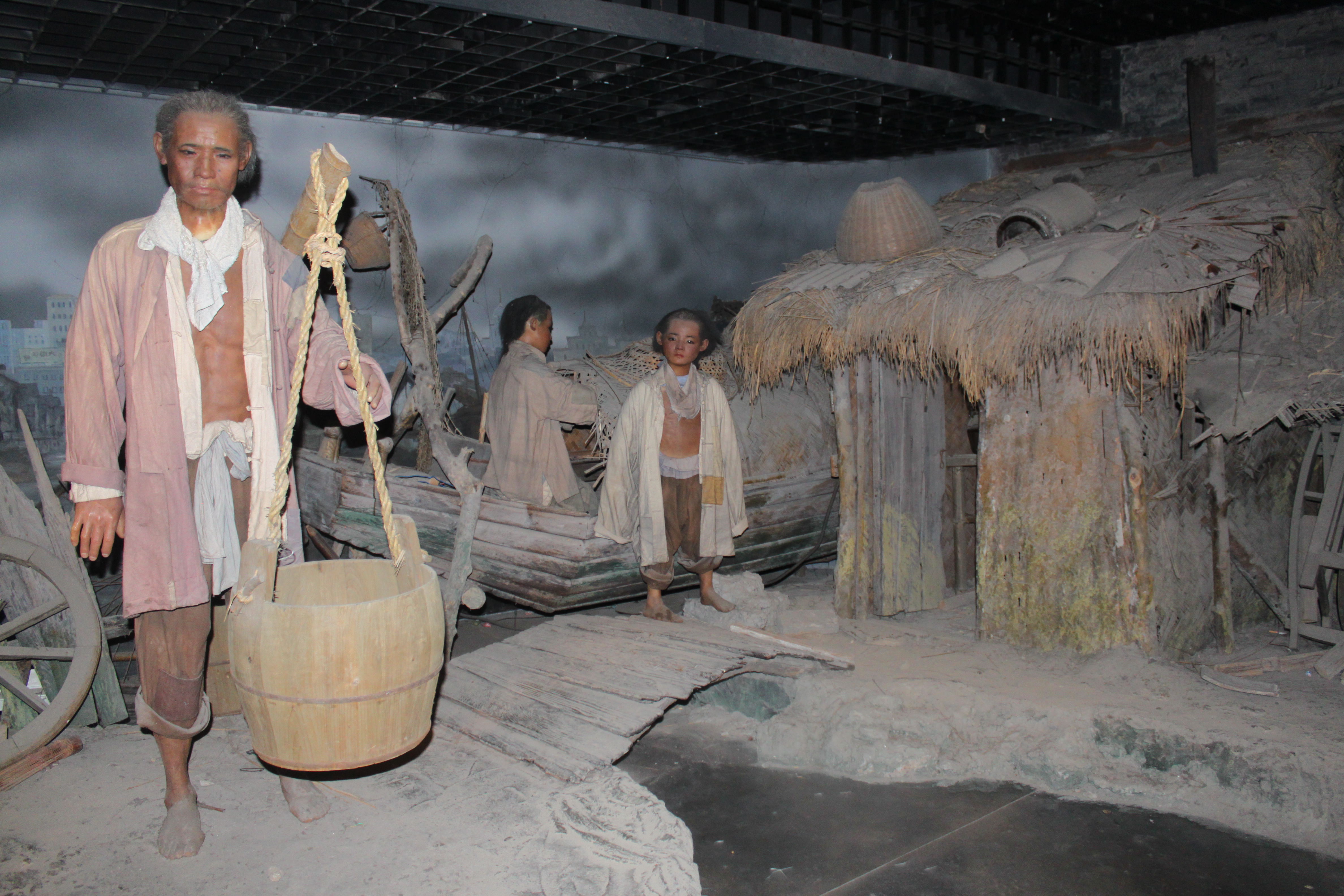
Shack Settlement
The Architecture Collection
This section had a large number of models of the various buildings of architectural importance in Shanghai from the Concession era. We’ve seen other models like this around Shanghai – at the Urban Planning Museum and at the Tourist Centre on the Waikang Road in the Old French Concession.
I was intrigued by this model and floor plan of a garden described as being on Anyi Road. Known as Hardoon Park, Aili Park or Lovely Park it was started in 1904 and completed in 1910 and covered 26 acres. It was famous for the combination of Chinese and English Styles. Anyi Road is the same road as the first Mao Zedong house that I visited. This garden is no longer there, it having been built over by the very Soviet-Style Shanghai Exhibition Centre. The museum says that the house was owned by an English Jew, but it was in fact owned by Silas Aaron Hardoon, (born Saleh) a Jew from Baghdad. The Mao Zedong house was also owned by the Hardoons. When he died in 1931 he left $650 million, about $16 billion in today’s money, and had a one time been the wealthiest man in Asia, having made his money from property development. (Nothing changes then.)

Layout of Hardoon Park
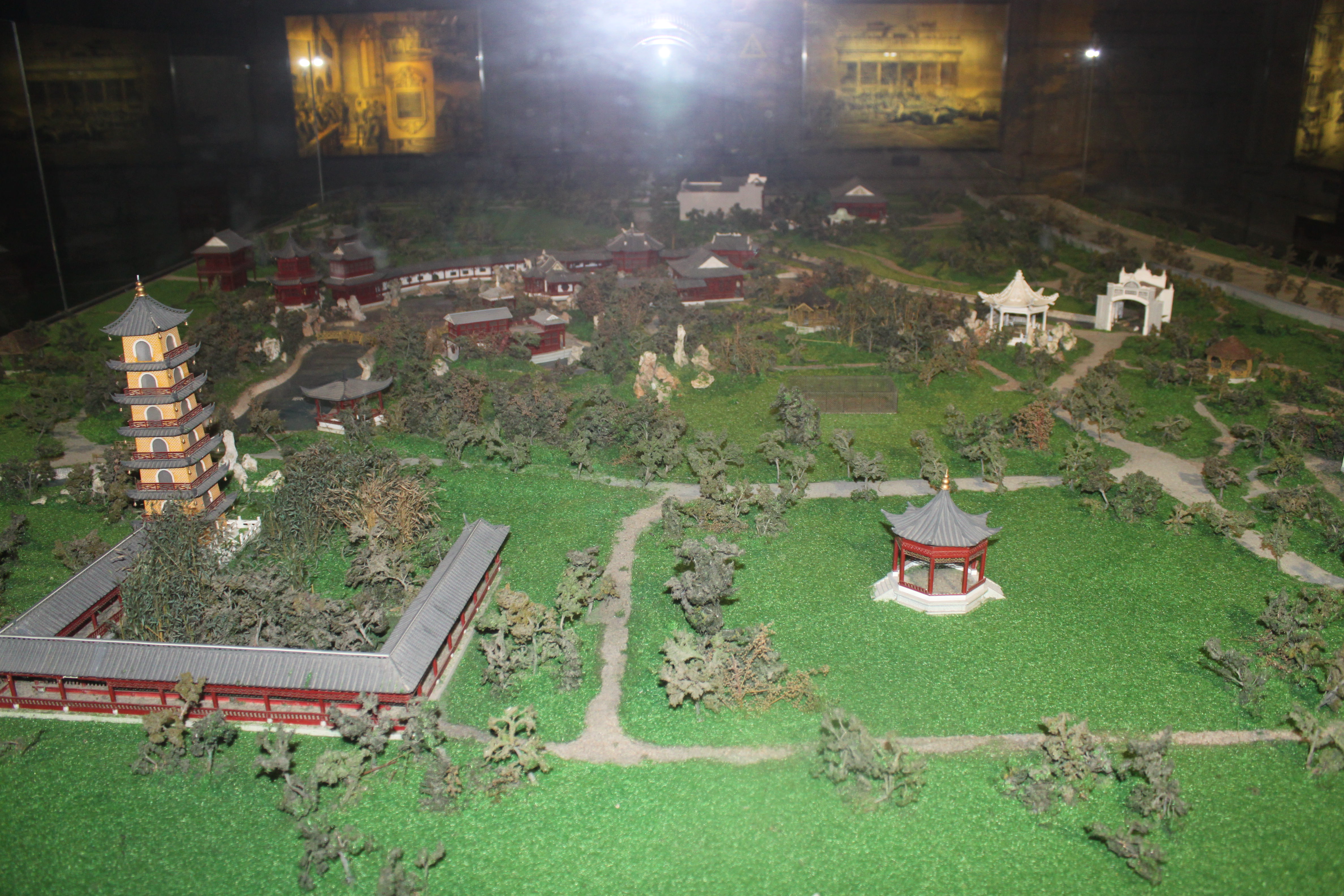
Hardoon Park, Anyi Road

Wu Tongwen Residence
Modernist Building

The Former General Post Office
Classic English Style

Chang Hsueh-liang Residence
Spanish-dstyle
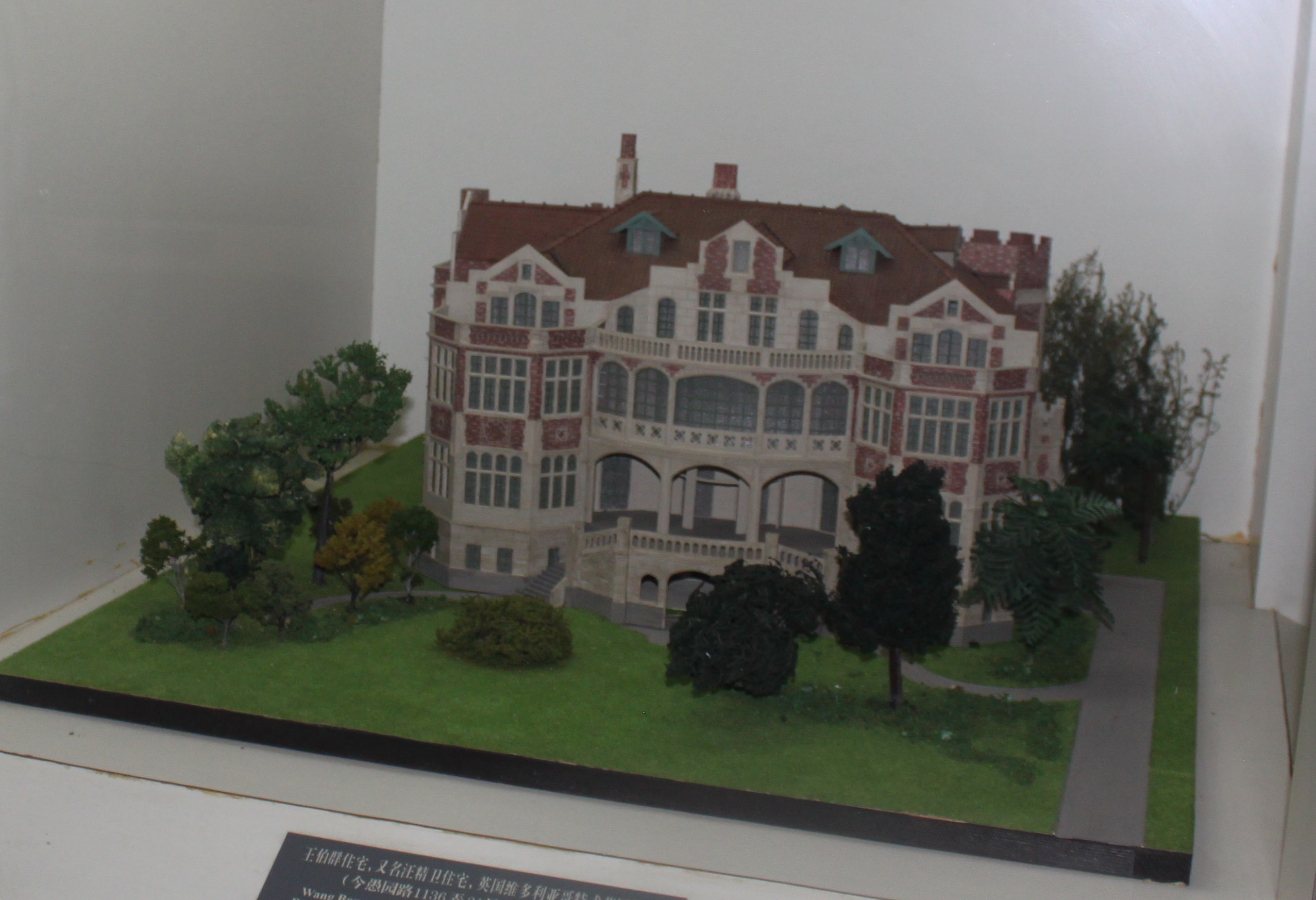
Wang Ching-wei Residence
Victorian Gothic Style

The Old City Hall of Shanghai Municipal Government
Classic Chinese Palace Style

The Eric Moller’s Residence
Norwegian-style

 Pearls From The Orient