
Anyone who has been around say, RHS Wisley, or the Oxford University Botanic Gardens would be surprised by how much of the activity that goes on in the Shanghai Botanical Garden has nothing to do with the study of plants or their appreciation. What struck me most about visiting the Botanical Gardens before I left for the UK in the second week of May was how much people were doing stuff. There was a lady stitching a tapestry and one playing her ruan a long-necked lute.


There were the Tai Chi practitioners, one group of which was pulling at their ear lobes – what is that all about?


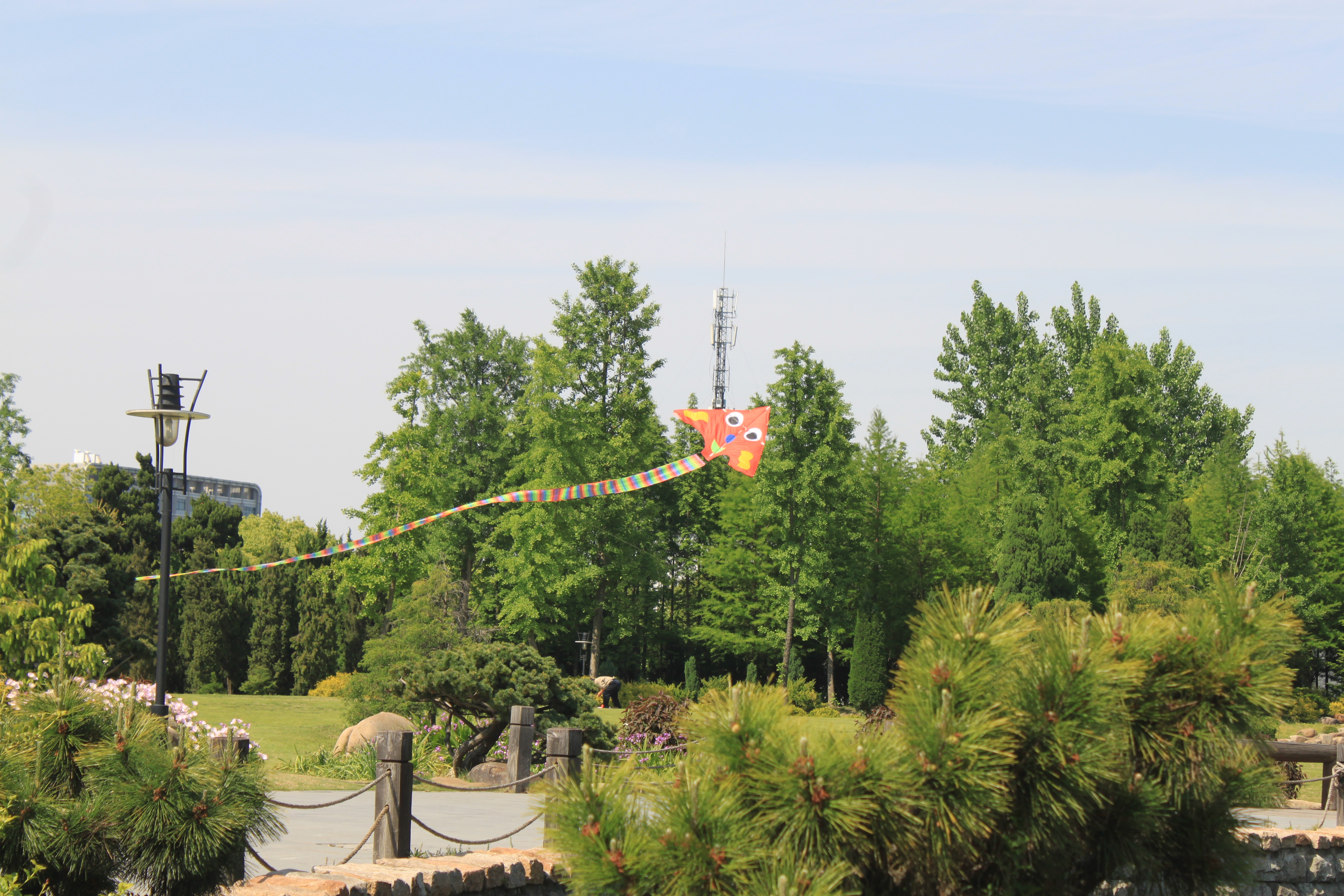
There were kite-flyers

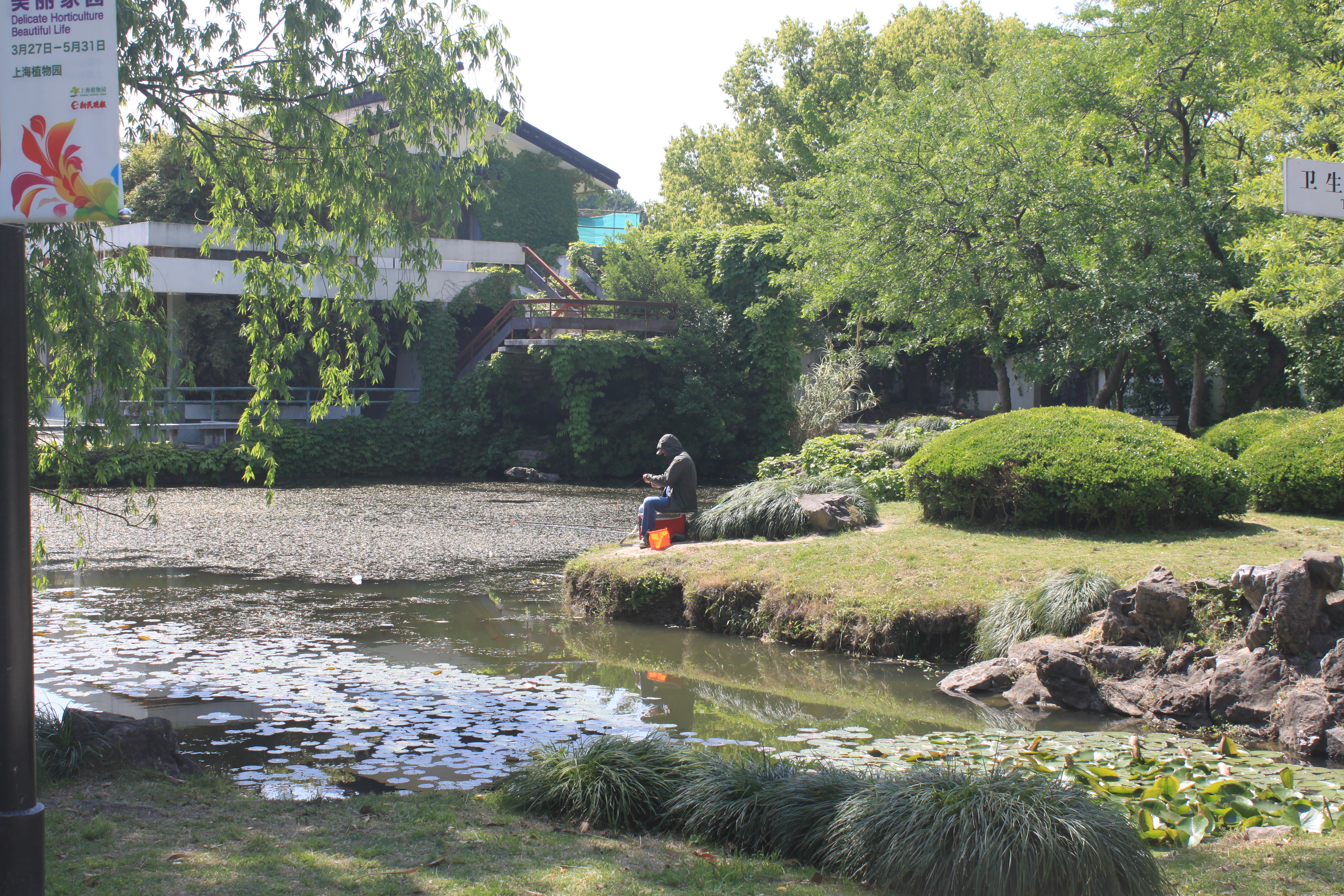
And fishermen (can’t see that being allowed at Wisley)!

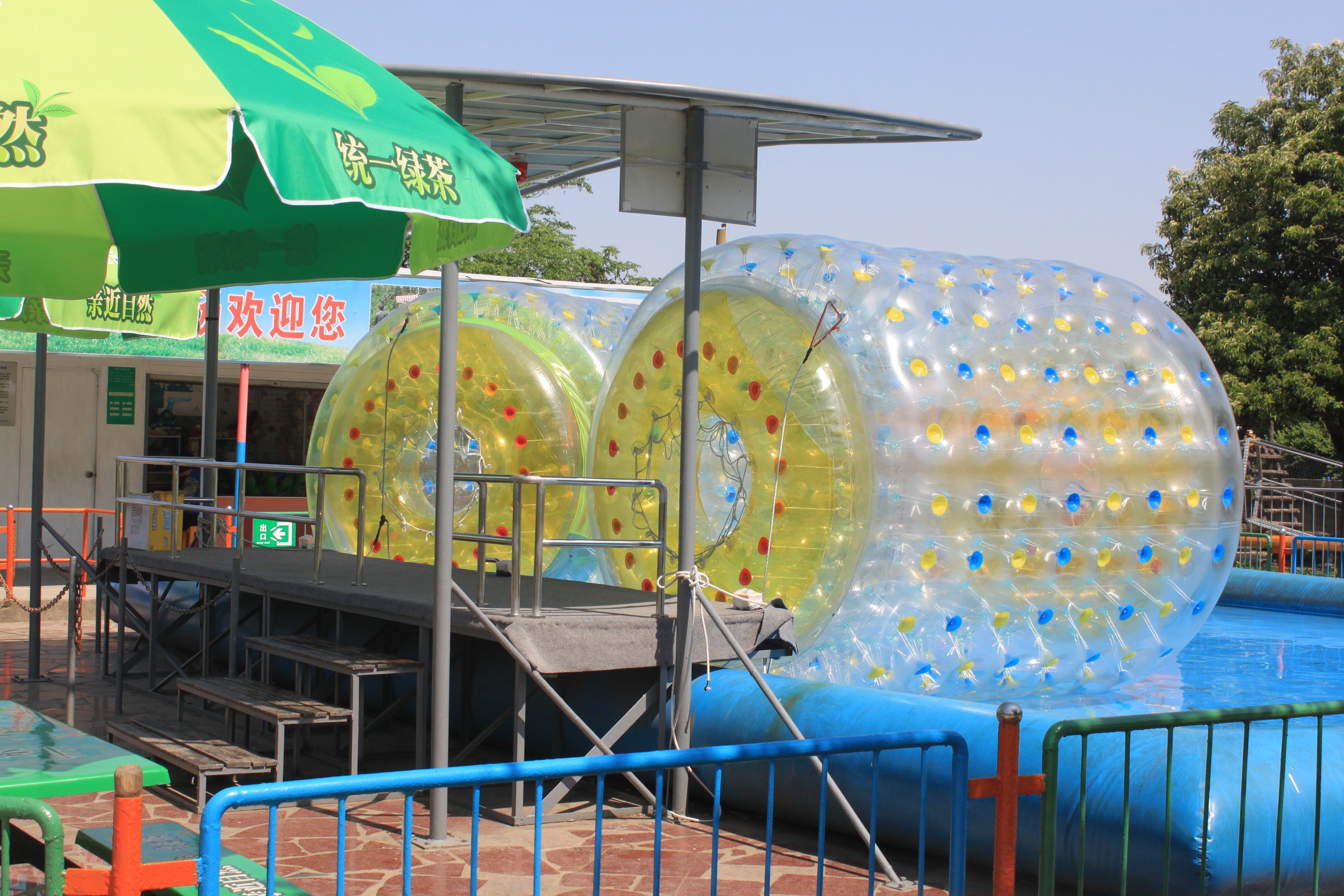
There was the opportunity for children to have some fun in plastic cylinders that you can walk over the surface of the water or in the more traditional boats on a boating lake.

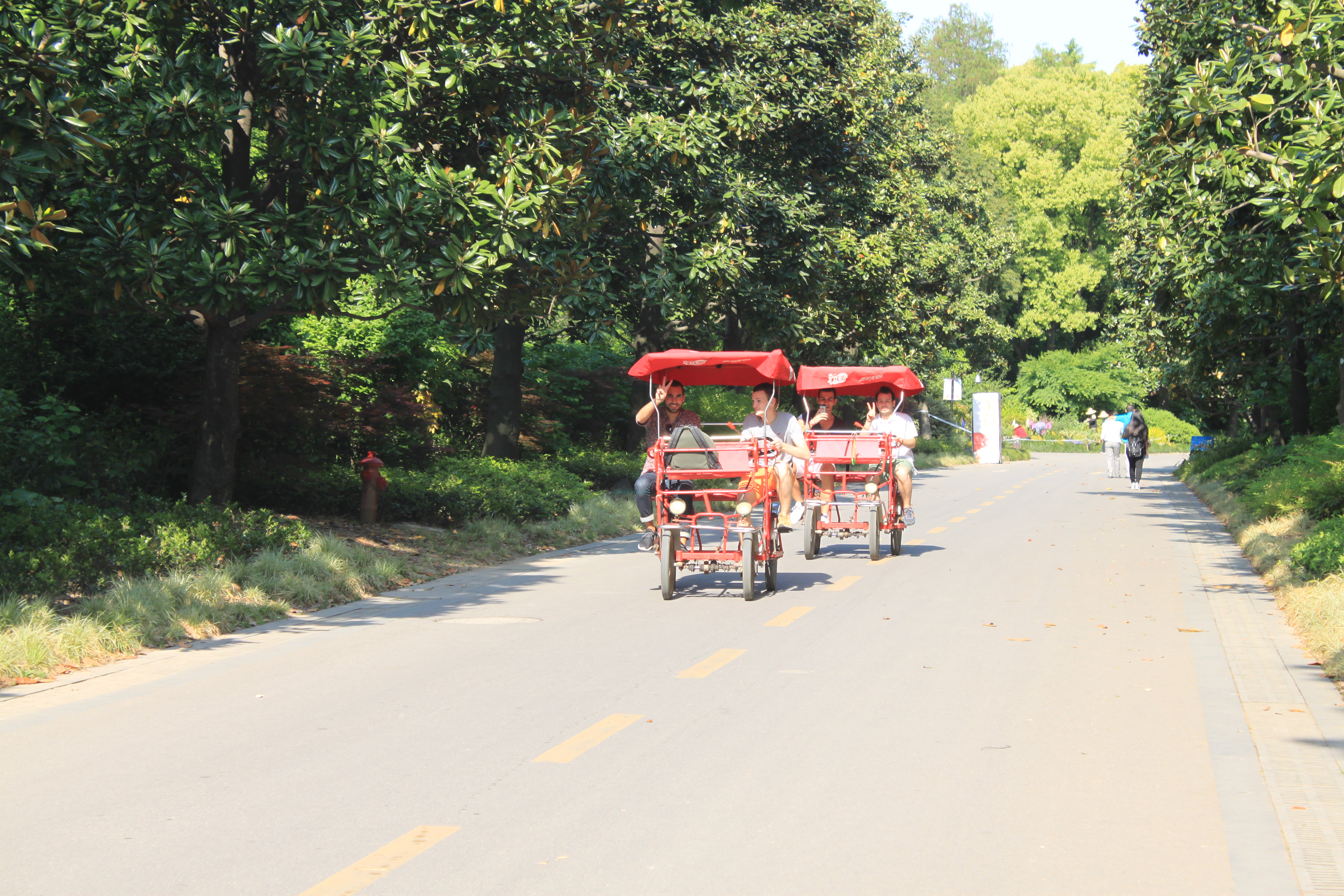
You could pedal yourself on a quadri-cycle or come into the park on your motorised assisted wheelchair and meet up with your mates.

There was a child model being artistically photographed and roses being artistically painted, even though that meant the painter had set up her easel in the middle of the rose bed.


This was a weekday afternoon in a Botanic Garden in the middle of the biggest City in China. And I loved the fact that everyday people were enjoying the space. The labelling of the plants could have been better, and maybe with time it will improve, but I just loved the way that it was being appreciated and treated as any other park.
The Peony Garden

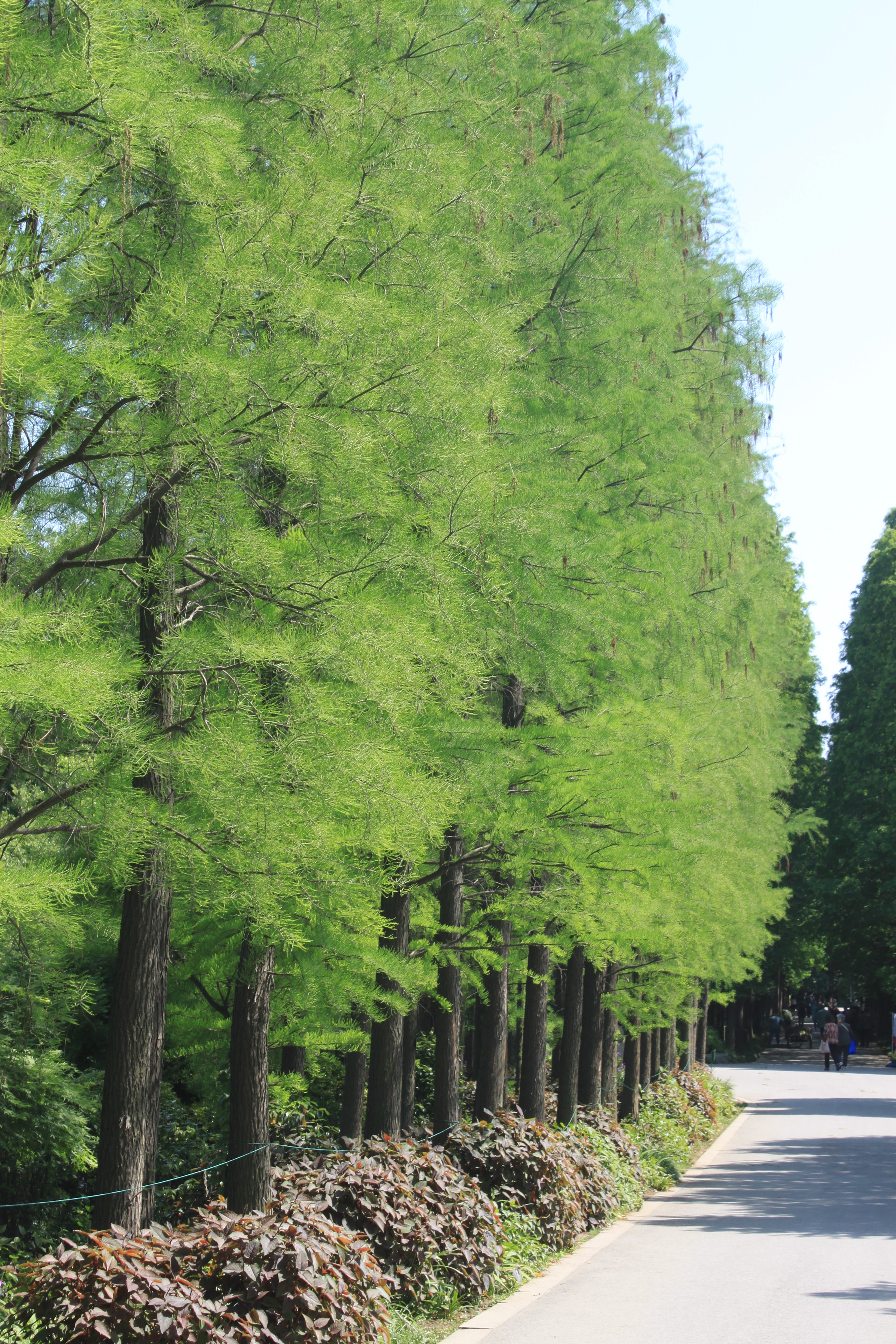
Ginko Biloba Trees
I had gone to see the Peony Garden, but the plants were almost completely over, despite being told that they were in season here at the end of April and into the beginning of May. They are planted in an area with a back-drop of Gingko biloba trees, which at that time of the year have bright light green leaves and would form a perfect backdrop to the mainly complimentary pinks of the peonies. In the centre of the garden stands a white marble statue of the Chinese version of Guanyin, a bodhisattva associated with compassion.

Statue of Guanyin

Guanyin
Peony plants surrounded the statue and a lake nearby and it must look beautiful when the flowers are out.
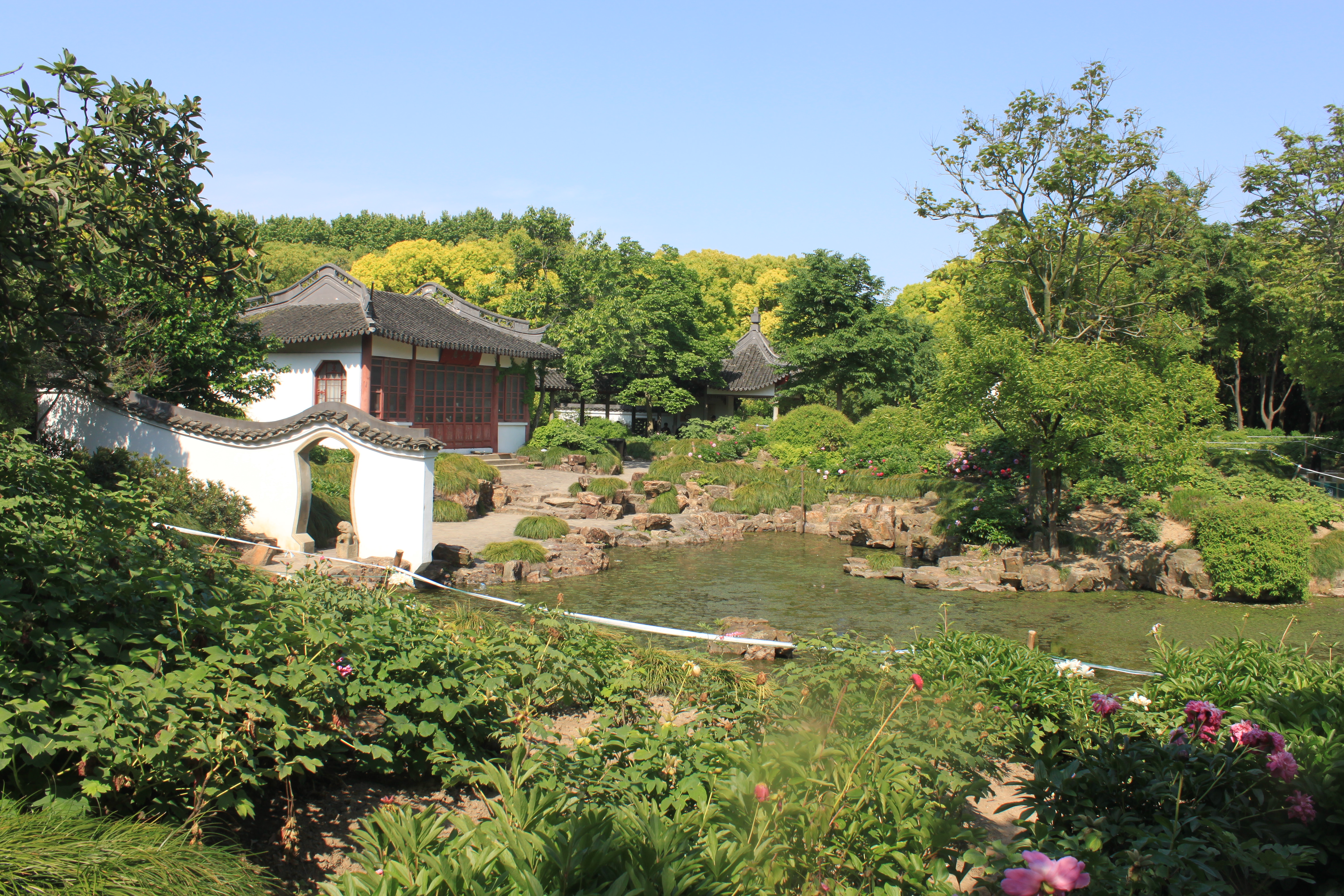
Lake in the Peony Garden

Pink Peony
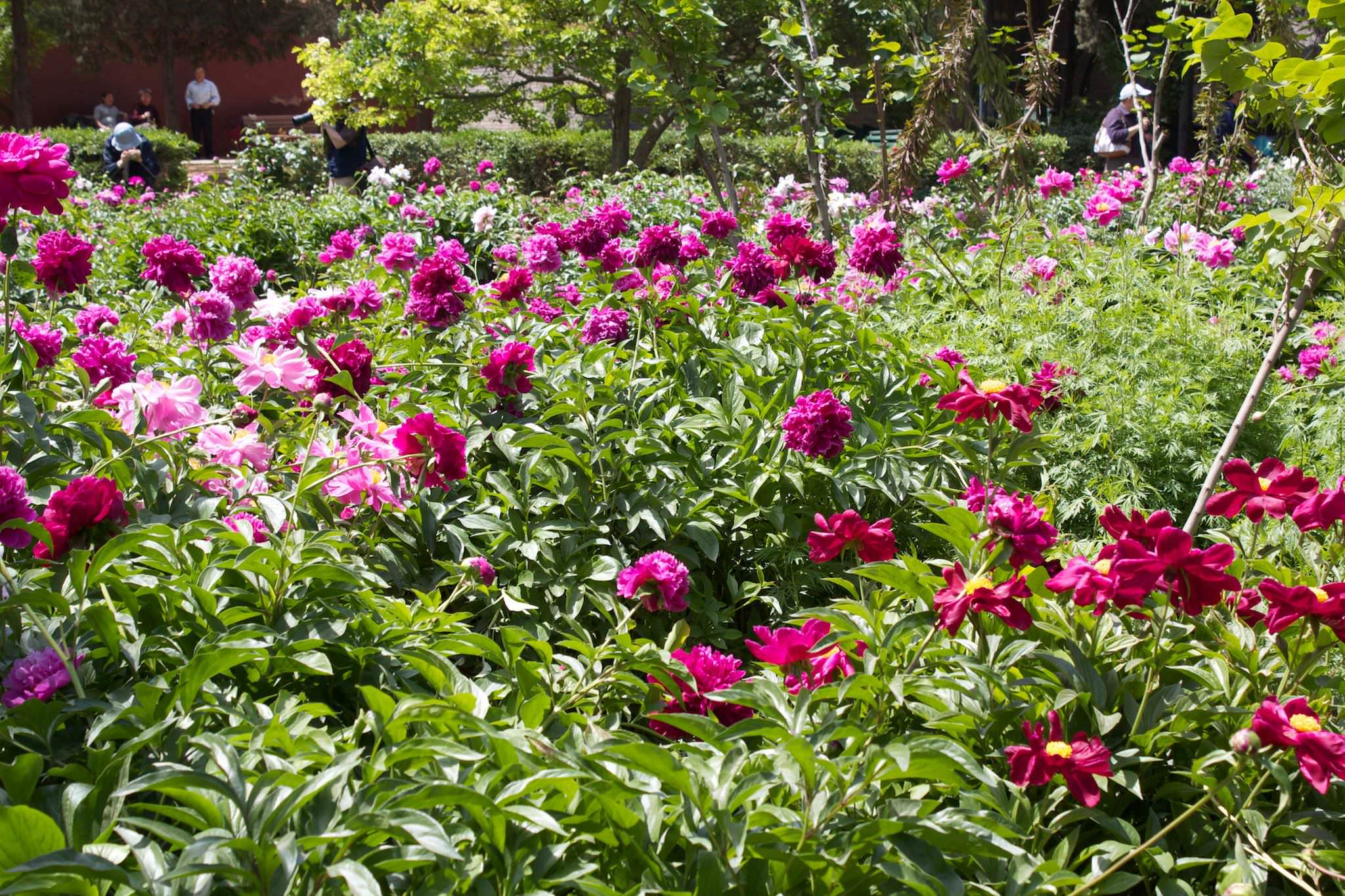
Jingshan Park Beijing
One or two plants were a little behind the times, but there was no longer the display I had hoped to see. We had first come across spectacular mass plantings of peonies in the middle of May in Bejing where there must have been something like 50 varieties of peony – it being the national flower of China – planted in blocks of colour, en masse, throughout Jingshan Park, which were a glorious display of colour and perfume. The Jingshan Park is a 23 hectare park directly north of The Forbidden City and it has an artificial hill which you can climb to get a view into The Emperor’s Palace. It is here that one really ought to visit if, like me, you have a penchant for peonies as there as just so many of them, far more than here in the Shanghai Botanical Gardens – and the middle of May was just fine for a garden that far north, although others say online that March/April is the time that they are open – they must have been early this year and late when we visited the Capital a couple of years ago.
The Rhododendron Garden
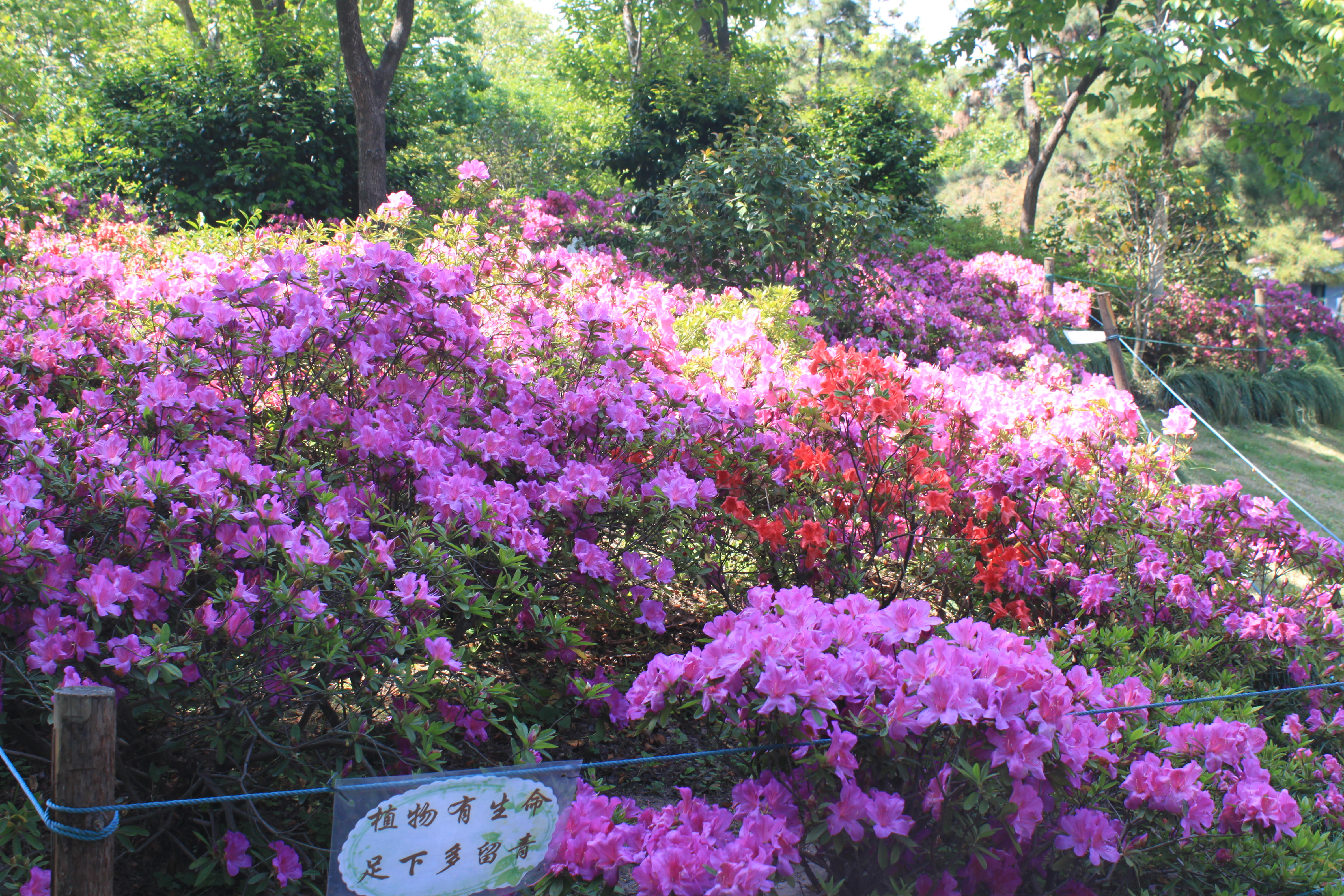
 What were in season were the Rhododendrons, just as they were in the UK at the same time, which had been planted in clumps under pine trees on a huge artificial rockery with a stream running down one side.

Rhododendron Catalogue
There was a chart to show which rhododendrons had been planted, but unfortunately there were no english or latin names, just Chinese.


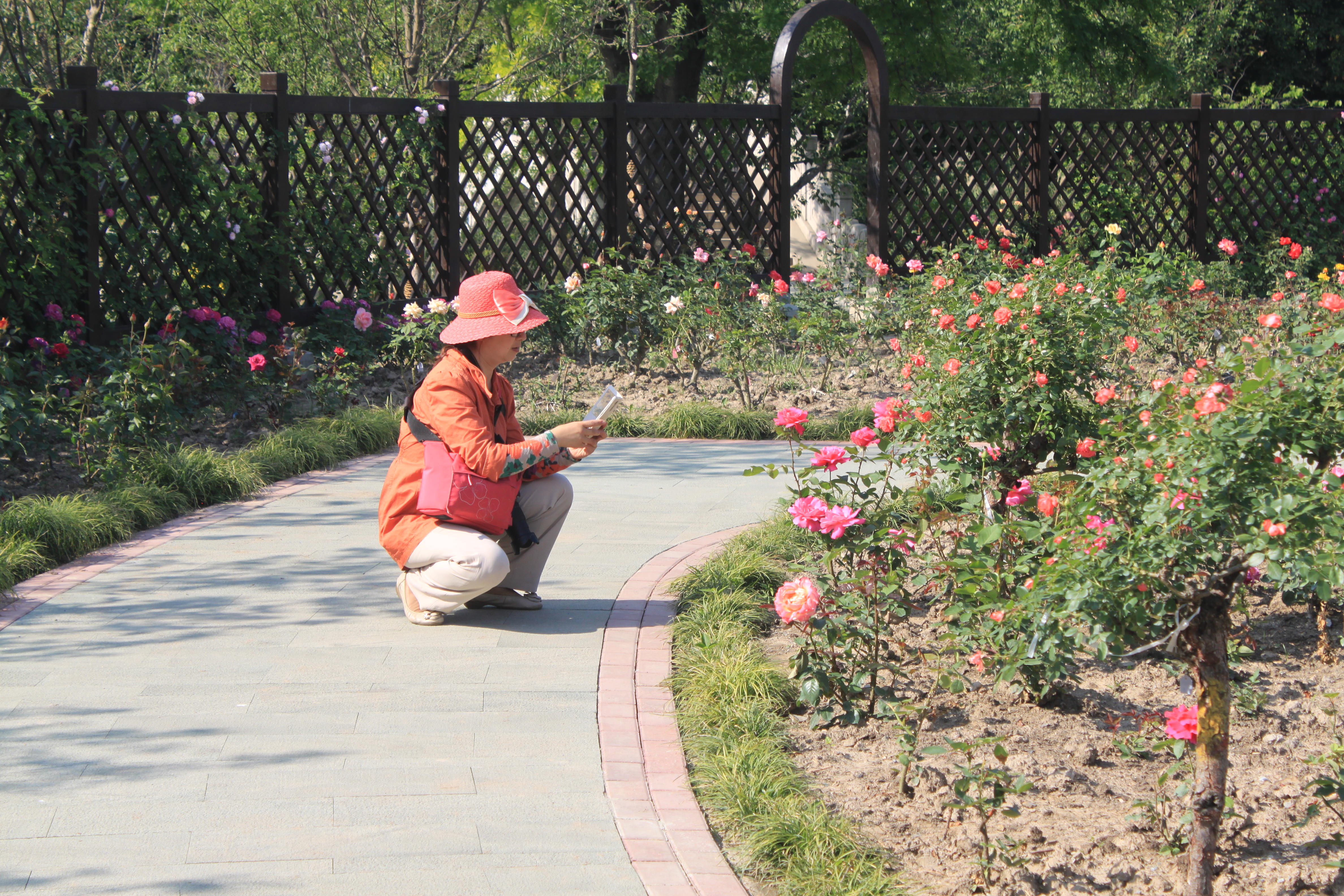
The Rose Garden
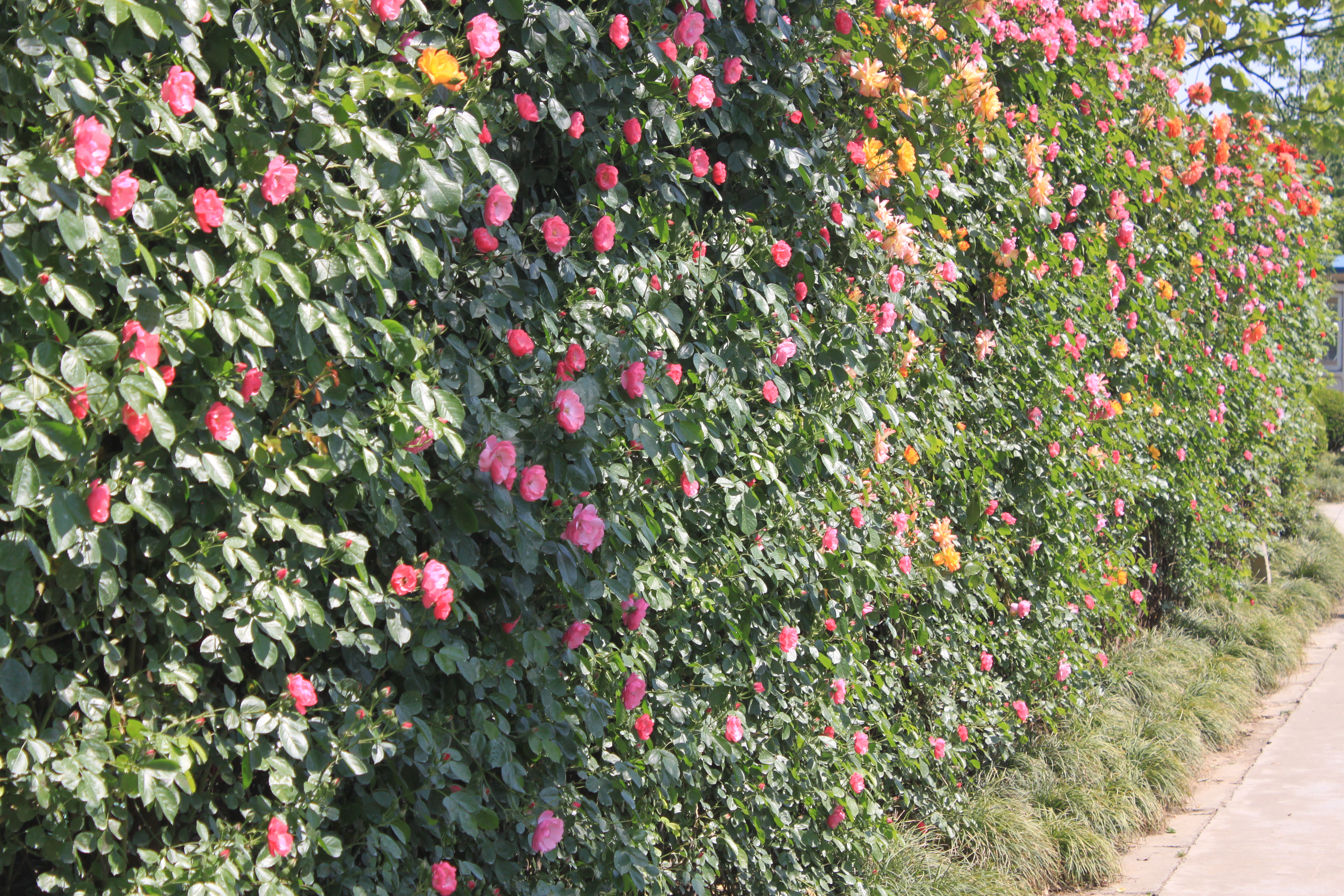
The Rose Garden had a distinctly English feel to it – in a formal Chelsea Flower Show kind of way with the type of metal modern pergola you see for sale at such events and a Classical temple in the middle of it all. This all seemed a bit strange to me as these were all, I think, China Roses, but there is no accounting for taste.

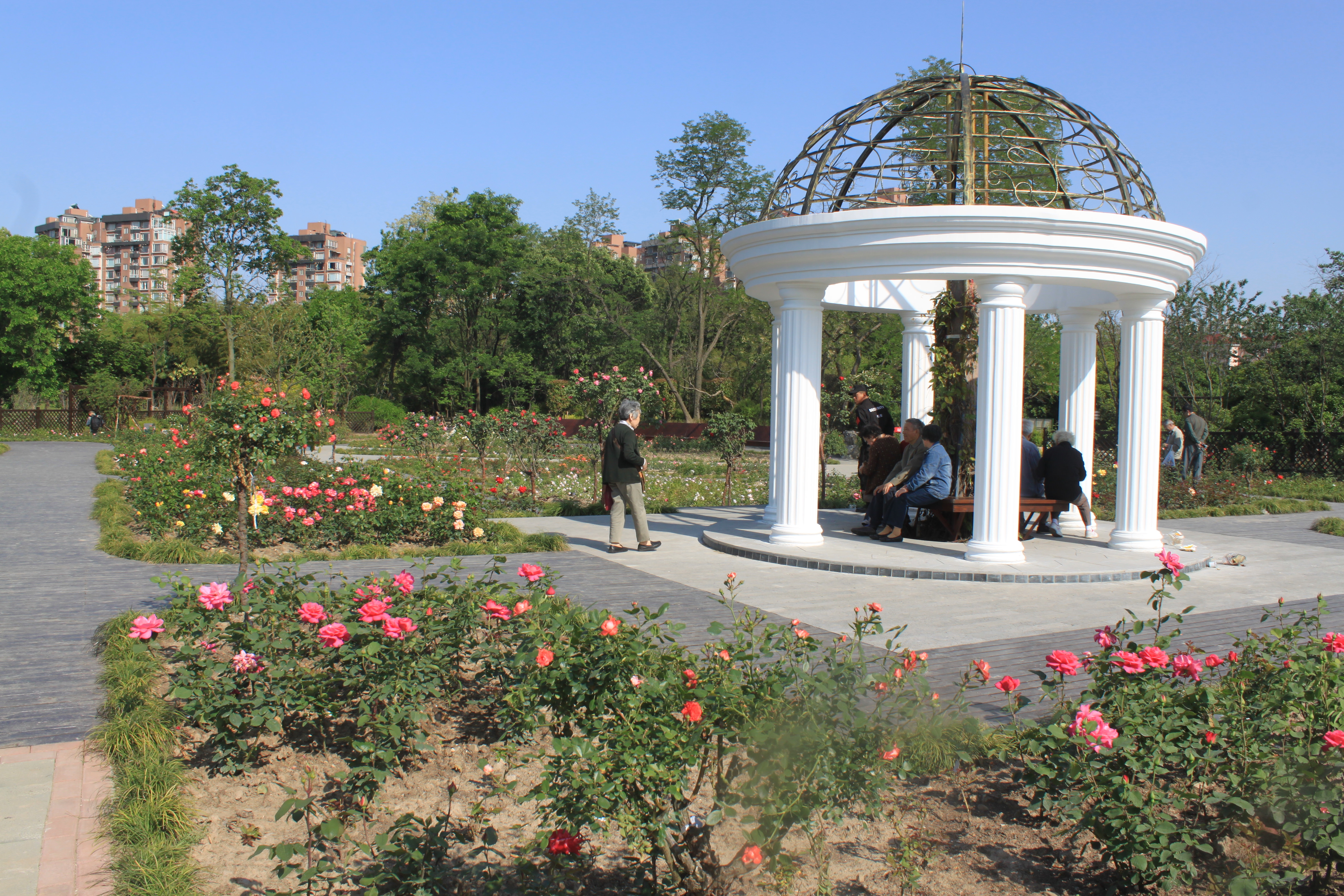
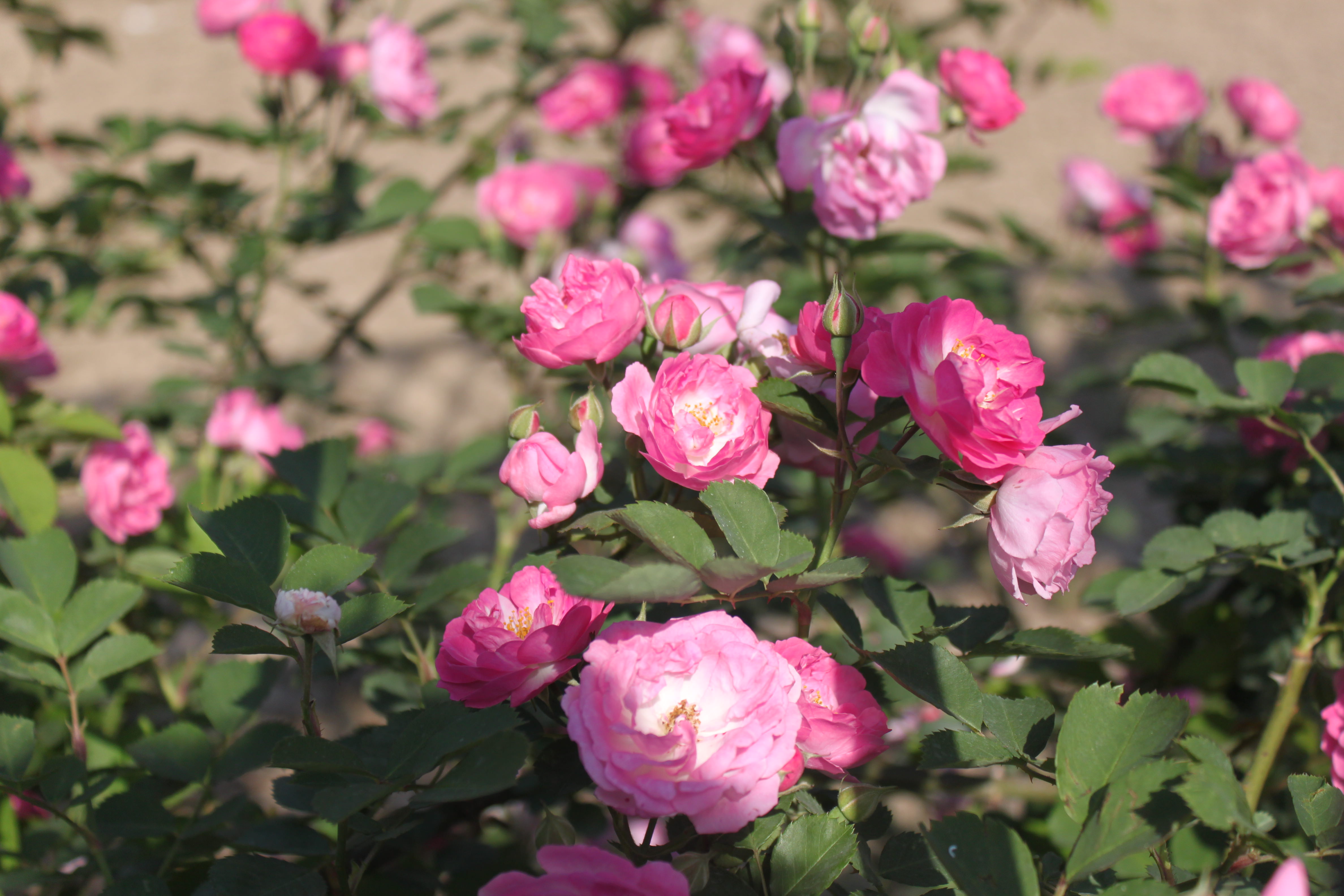
The Rosery and Other Patches of White Concrete
The Rosery had nothing to do with roses, as far as I could tell. What it did have was a small enclosure of citrus trees, fenced off I presume to stop people picking the fruit.
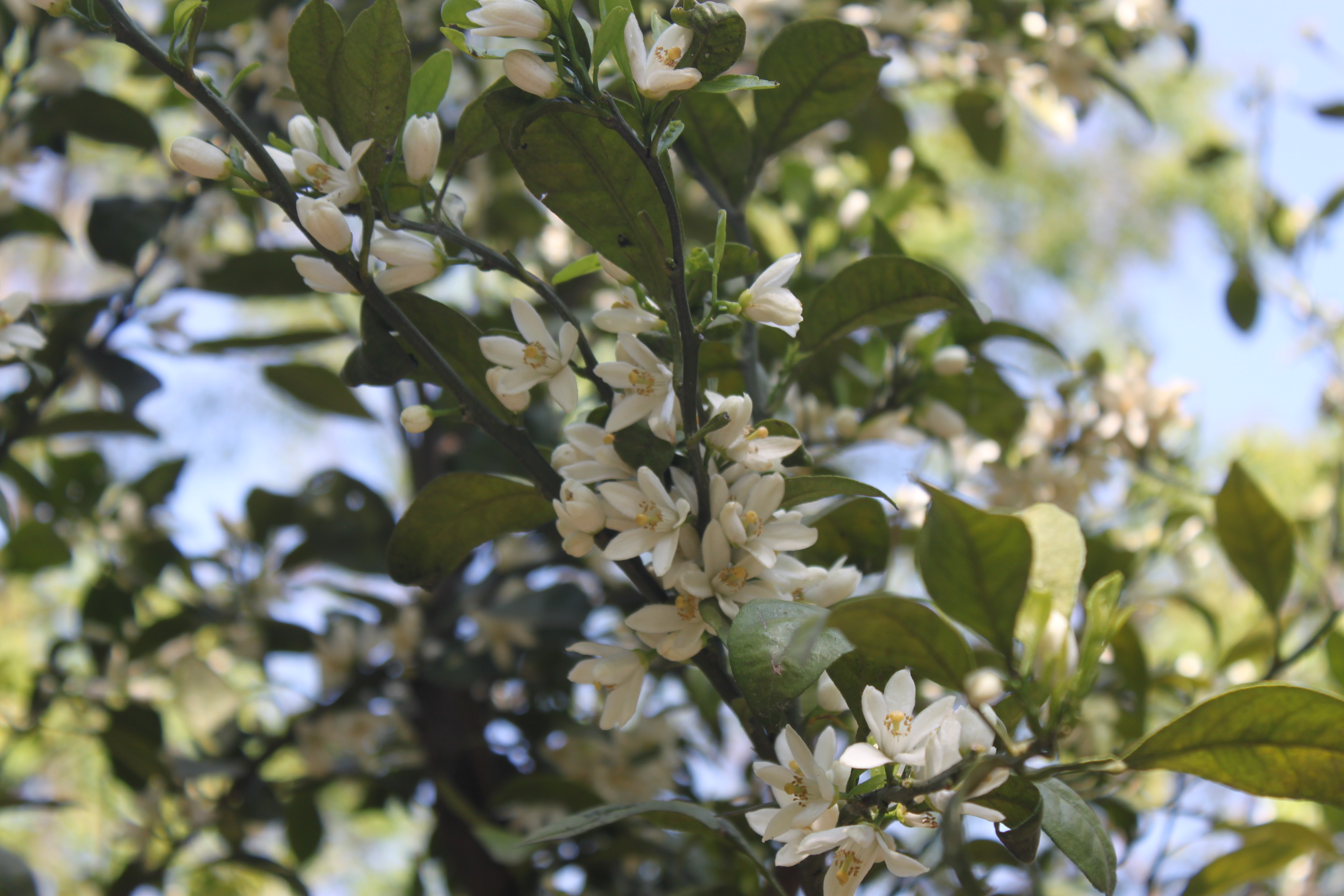
Citrus flowers

Citrus fruit
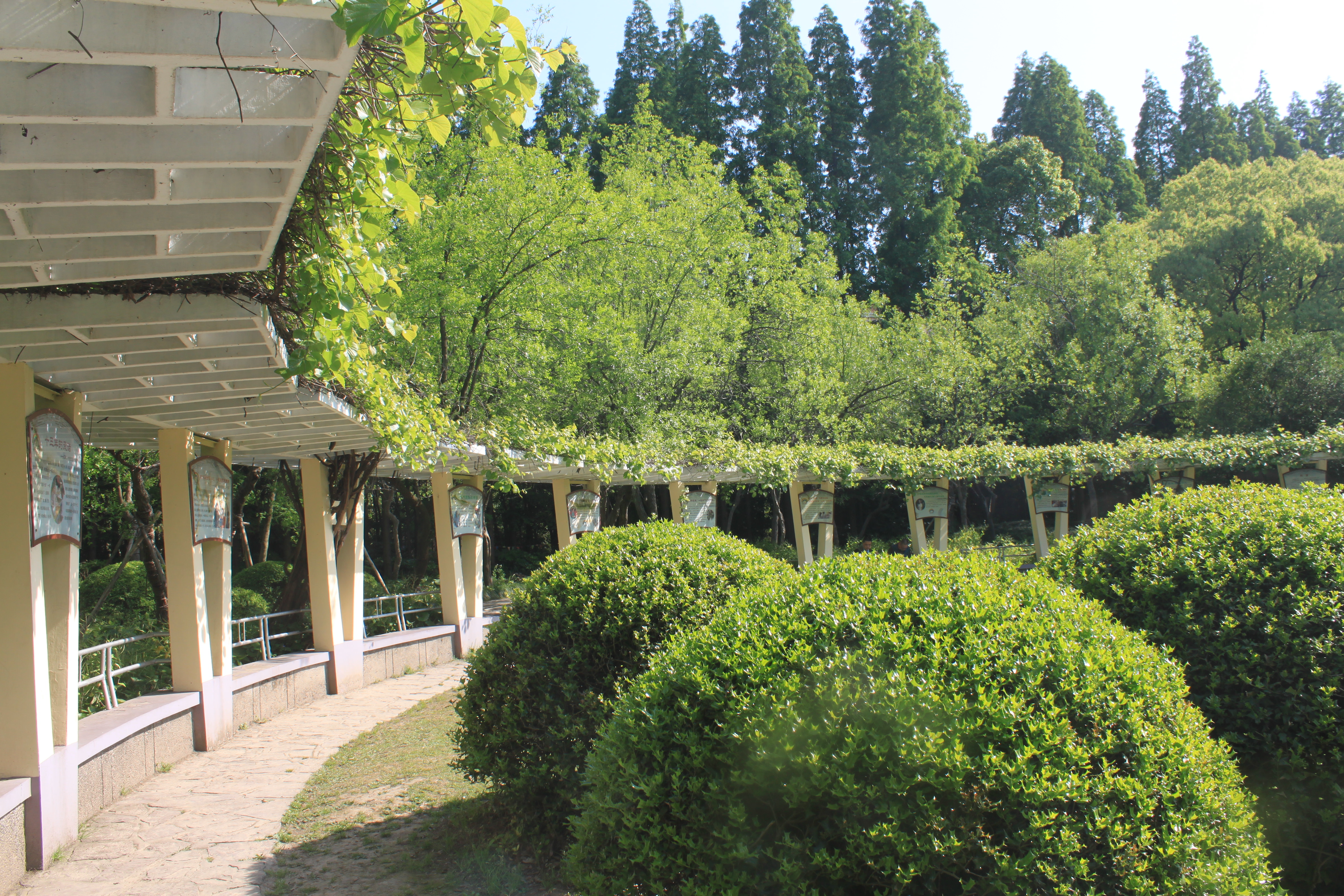 There were trees in flower and others in fruit at the same time. but their perfume did help me to solve the puzzle of the heady smell that we smelt in the hills of Fujian Province. Perhaps roses once grew up the concrete pergola in this area – it was certainly an area of recreation, the musician and a Tai Chi group were busy here. There were other white concrete pergolas in the gardens, all very 1960s in taste – they reminded me sometimes of petrol station forecourt


 architecture of the 1930s and surprisingly, I rather liked them, and there was the odd traditional-style bridge as well. There were white concrete bridges hung with masses of hanging baskets, which I think I would have enjoyed more if the colours had worked together a bit better, as in the last one of the four below.
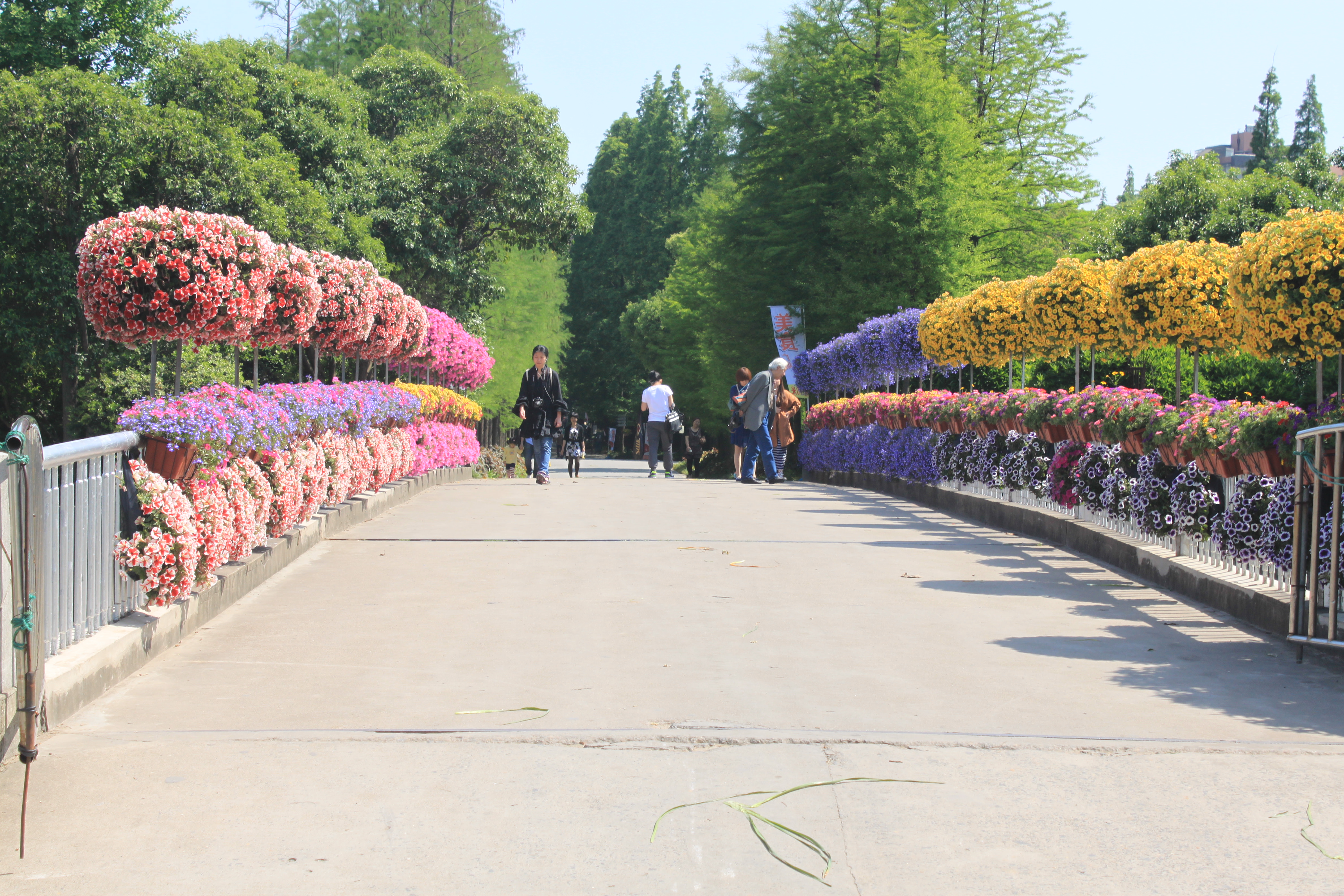

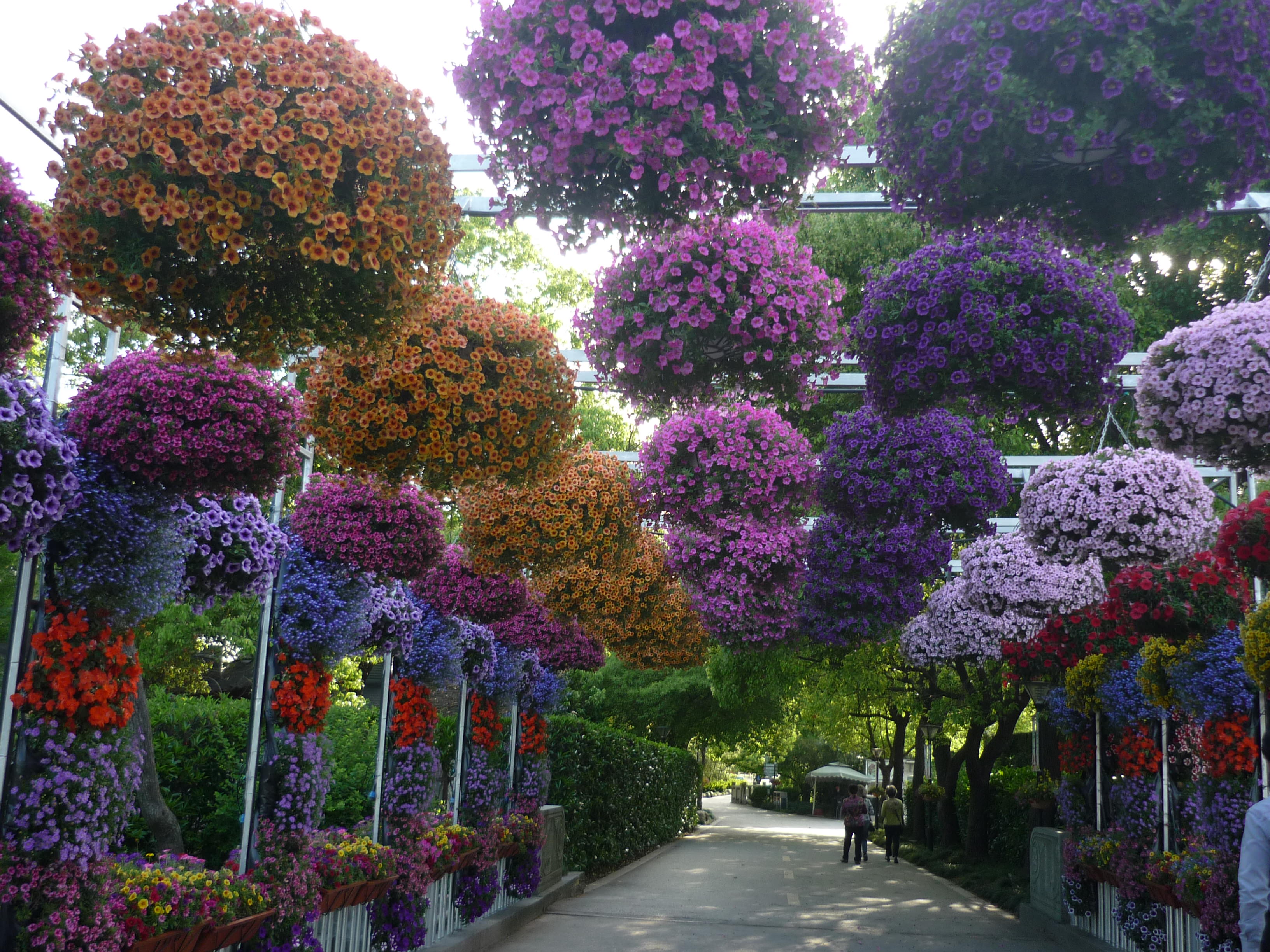
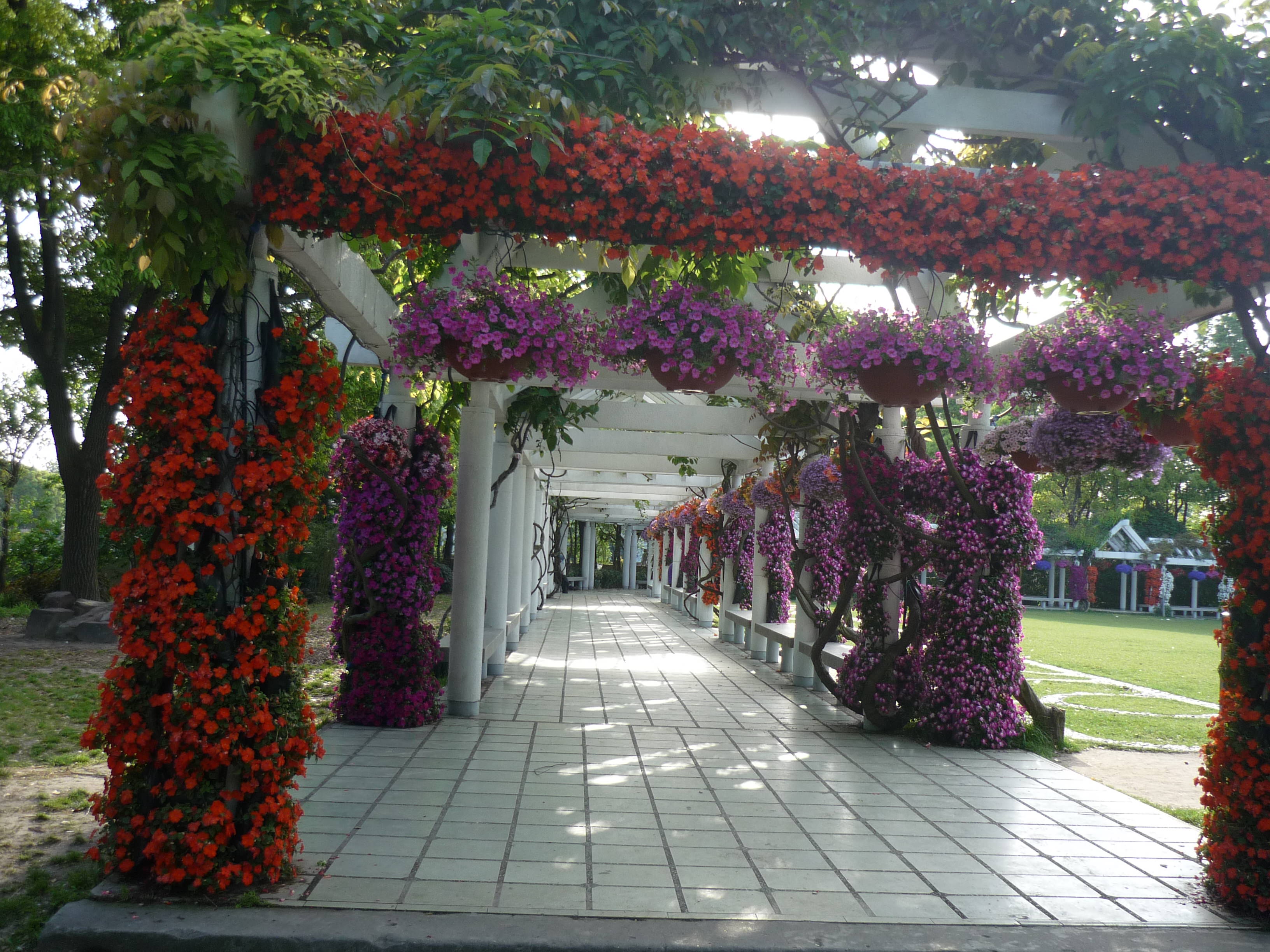
Someone in the garden did have an eye for colour co-ordination, though, as else where the use of colour was constrained and all the better for it in my opinion, but maybe that’s just because I am used to the more subtle light of the north.
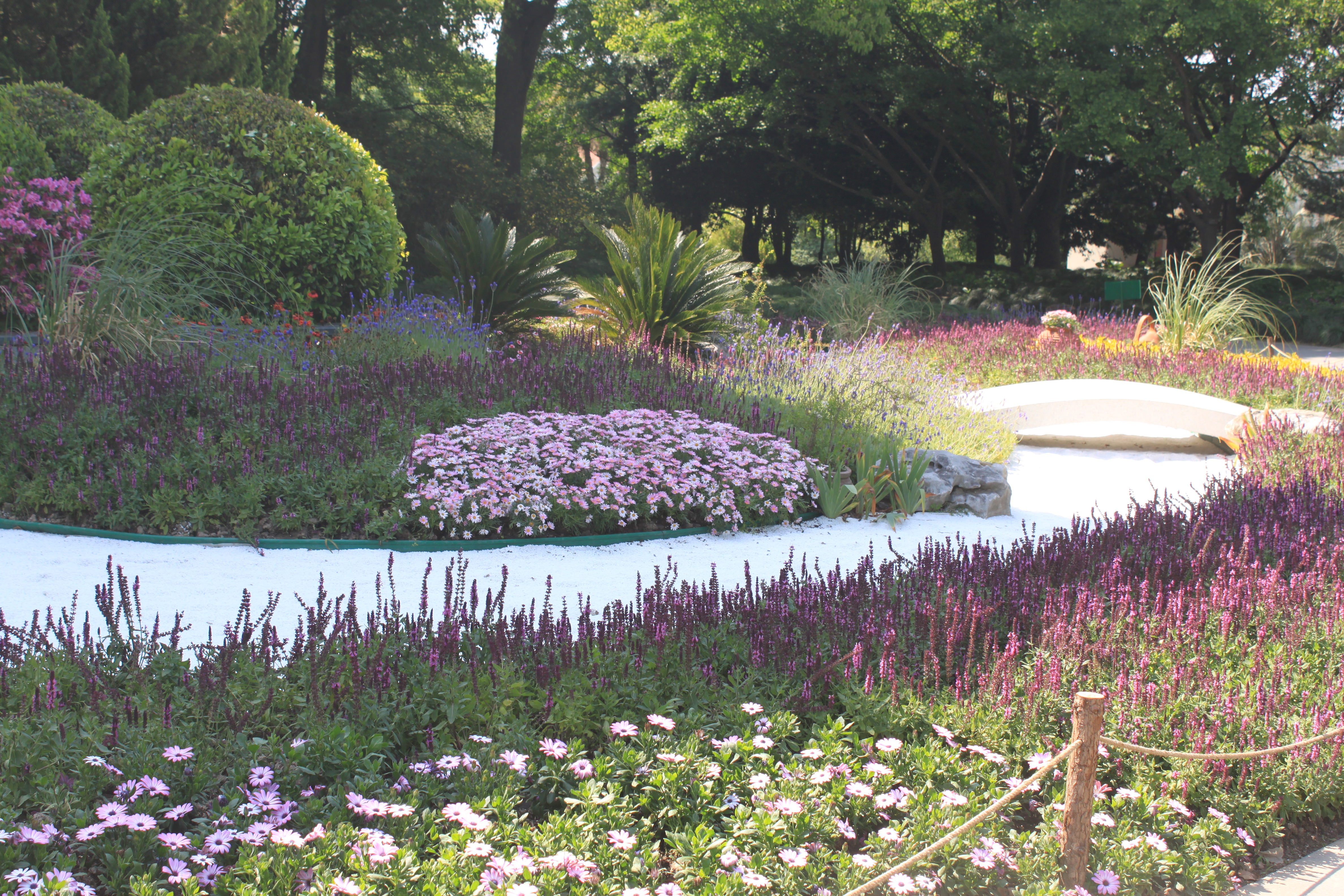


Wooded Areas
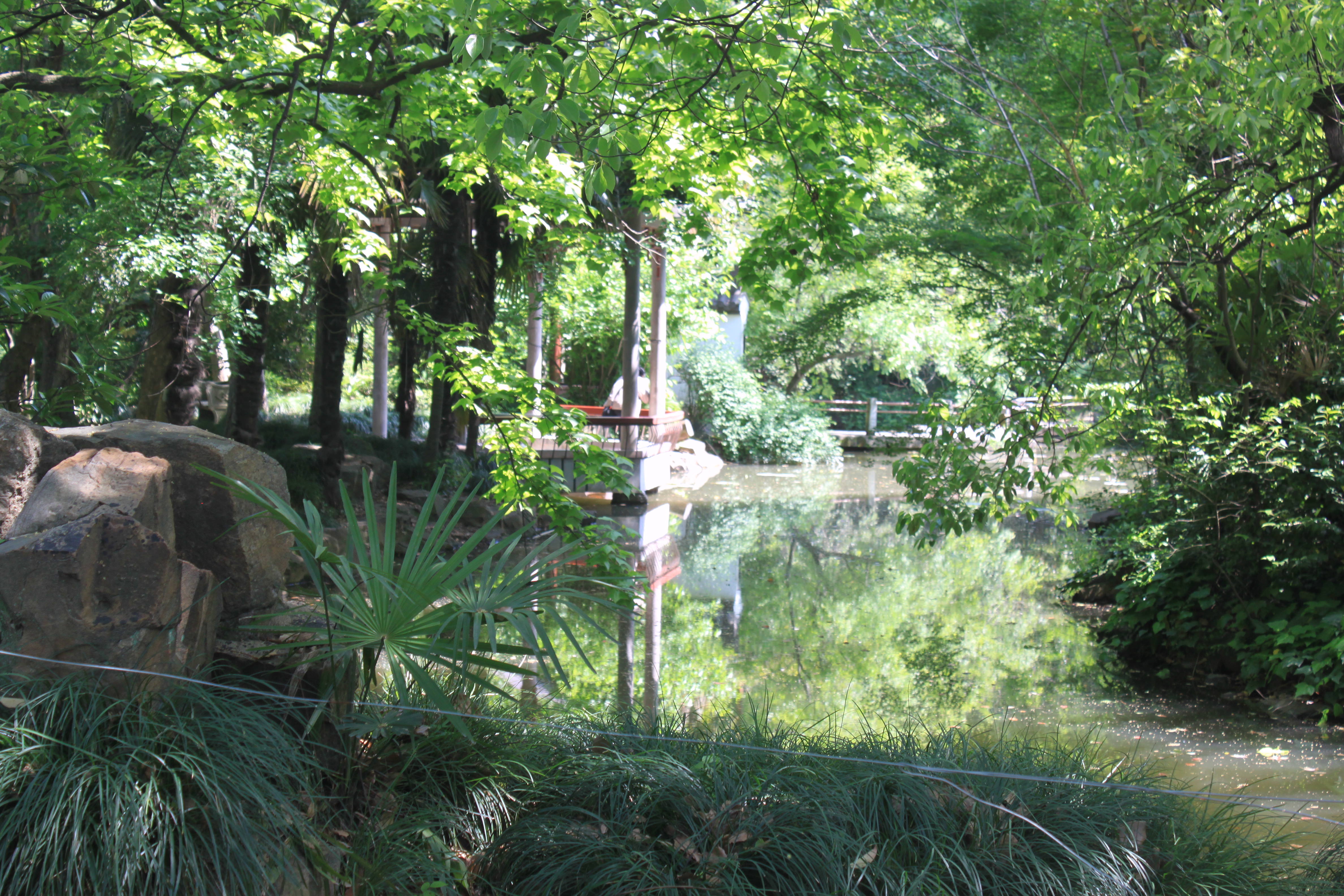
The Botanical Gardens also had specific wooded areas such as the Pinetum and the Maple Tree Garden which also very beautiful




The Four Seasons Greenhouse (Conservatory 2)

The Four Seasons Conservatory
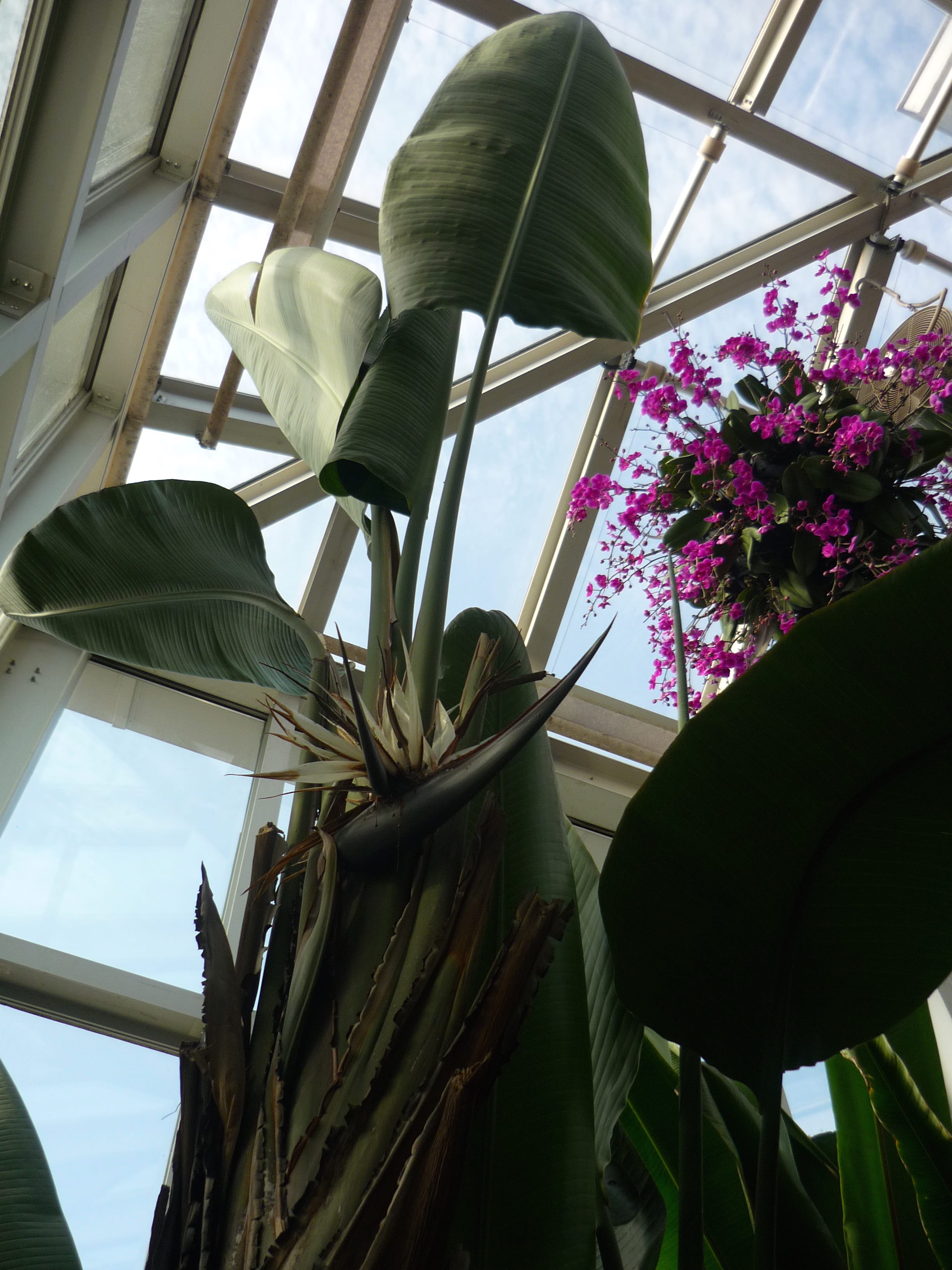
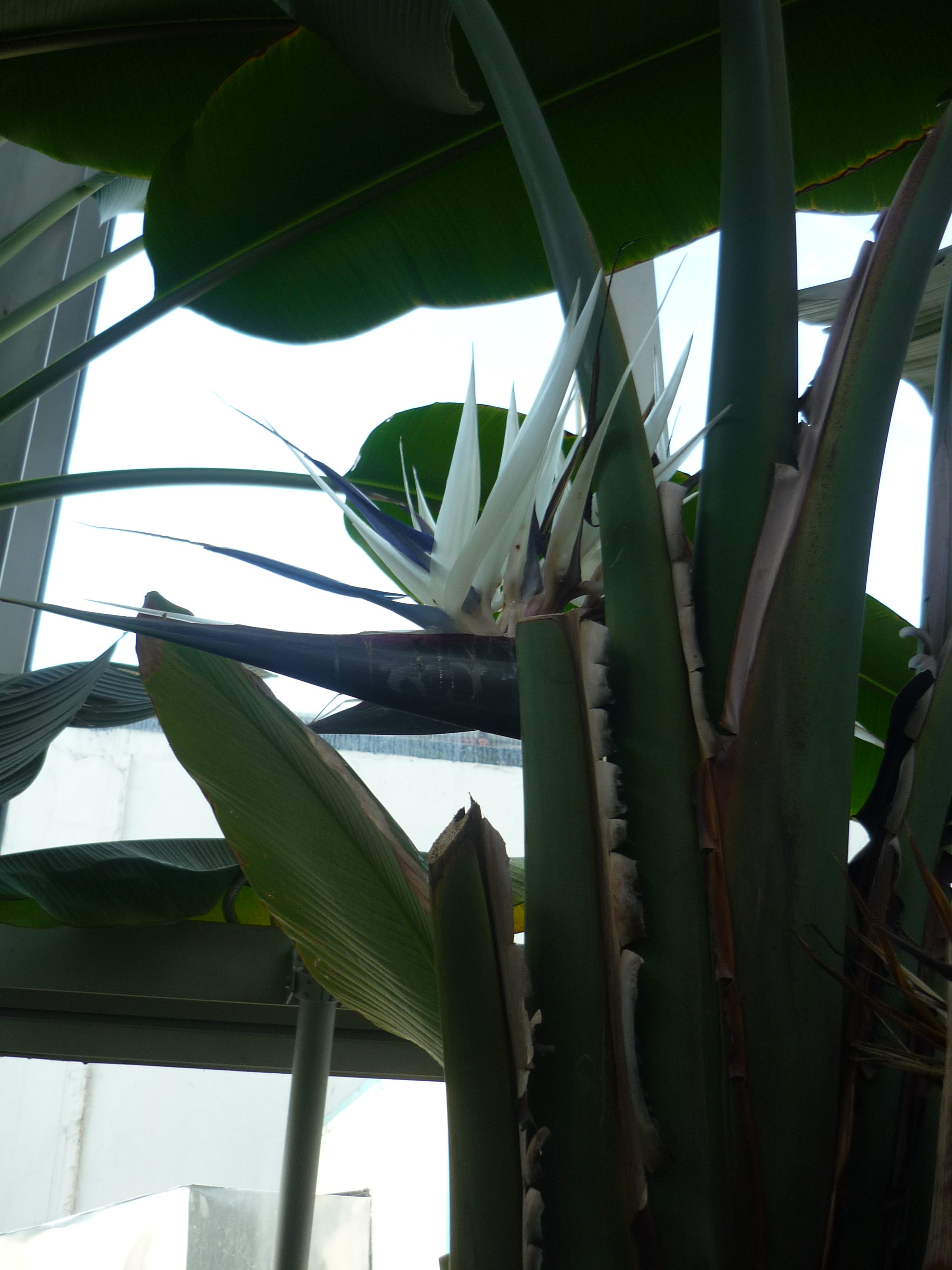
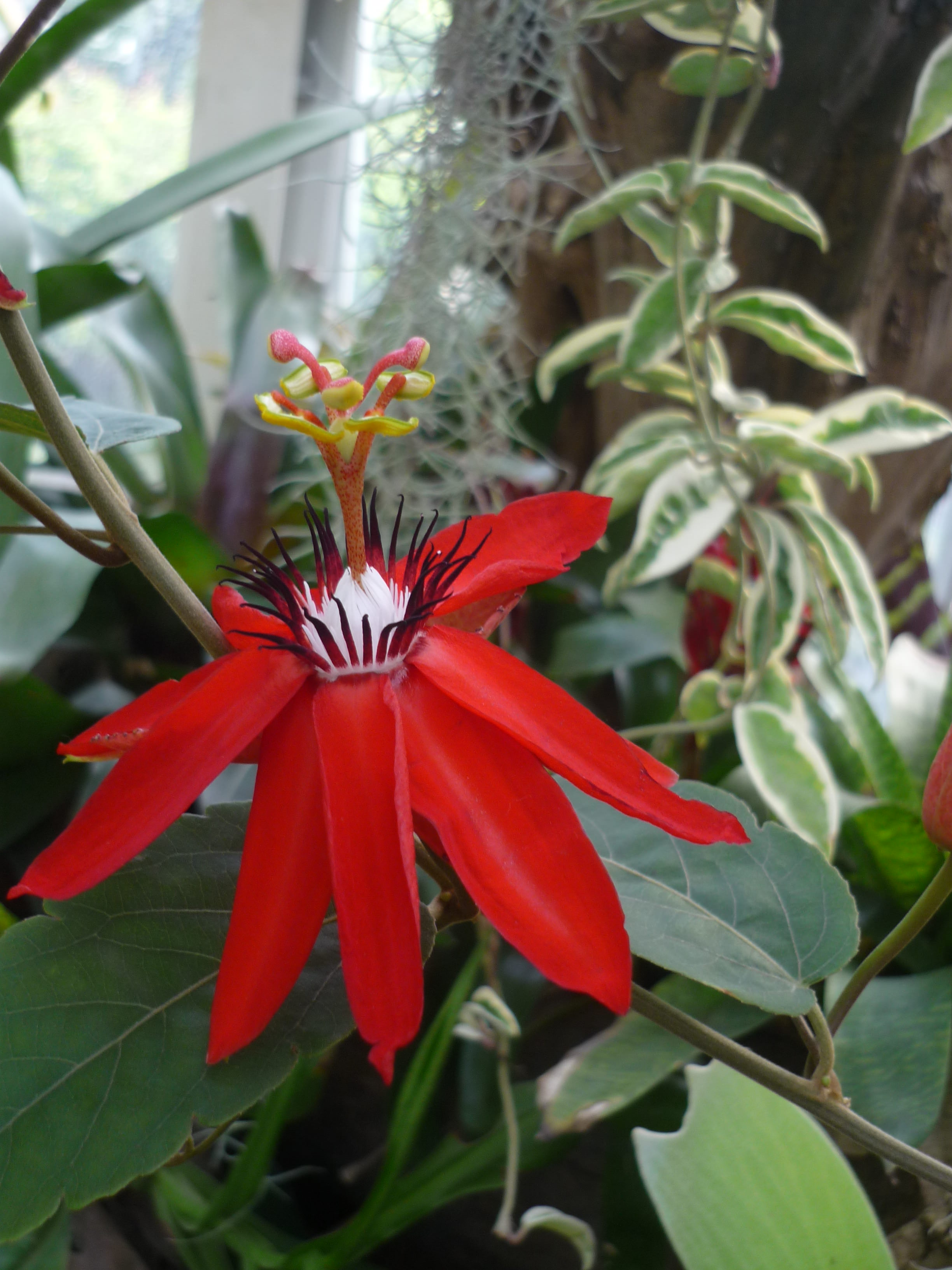
As well as the orchids in the conservatories which I’ve covered in another post, the Four Seasons Greenhouse was home to a variety of plants, including air root plants, a 2m high white and blue Strelitzia and this stunning red passion flower. I think the name is a misnomer because it appeared to be displaying plants from various types of warm areas such as cacti and carnivorous plants rather than the four seasons as we would know it.



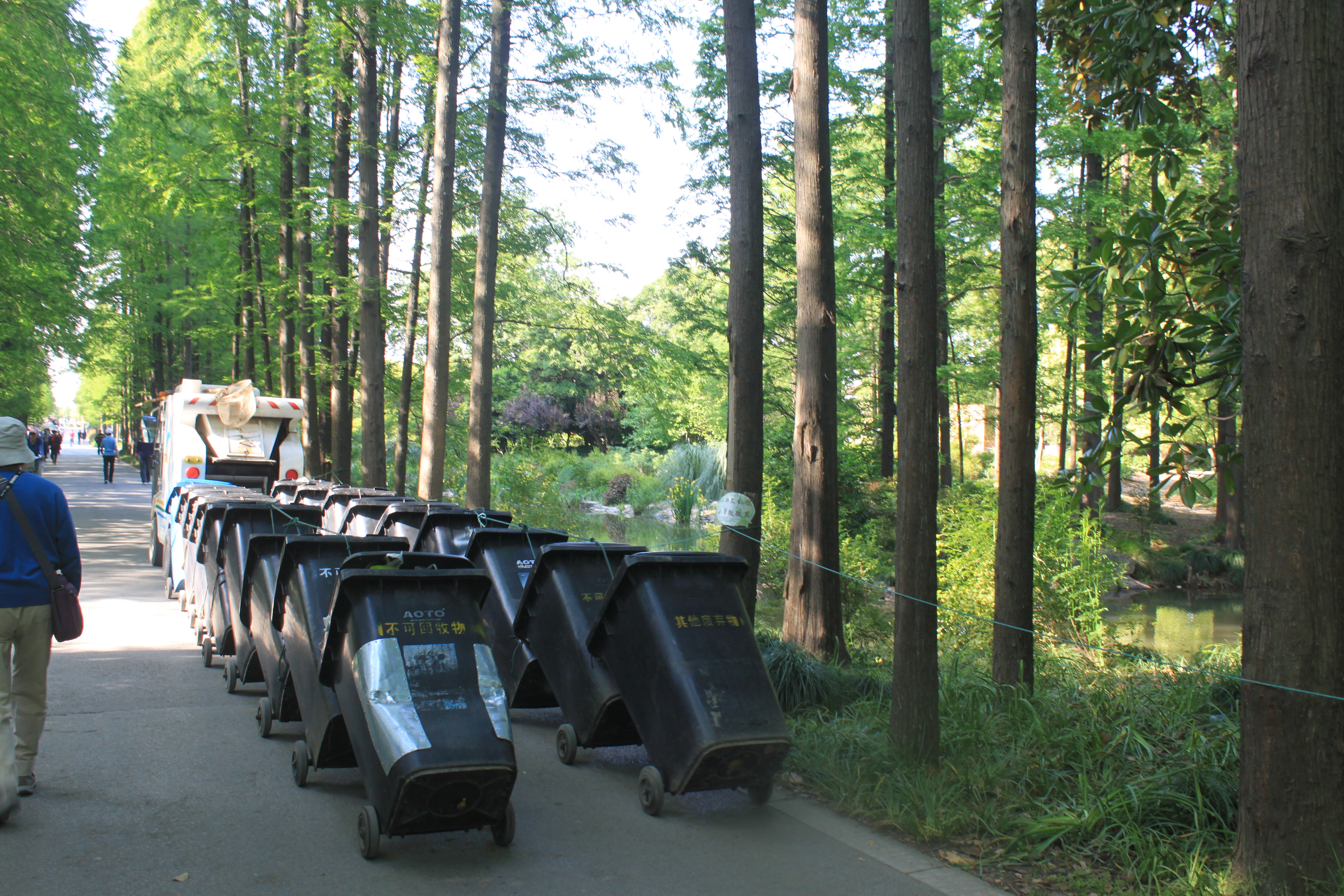
Around the park, gardeners operated in packs and wheelie bins were dragged around by a small truck in long connected tails.


There were many areas of the gardens that I did not visit such as the Osmanthus garden, the Maple Garden, the Bamboo Garden, the Chimonanthes (wintersweets) or Cherry and Peach Blossom, as I ran out of time, energy and in many cases it was the wrong season anyway.
The Shanghai Botanical Garden Flower Show
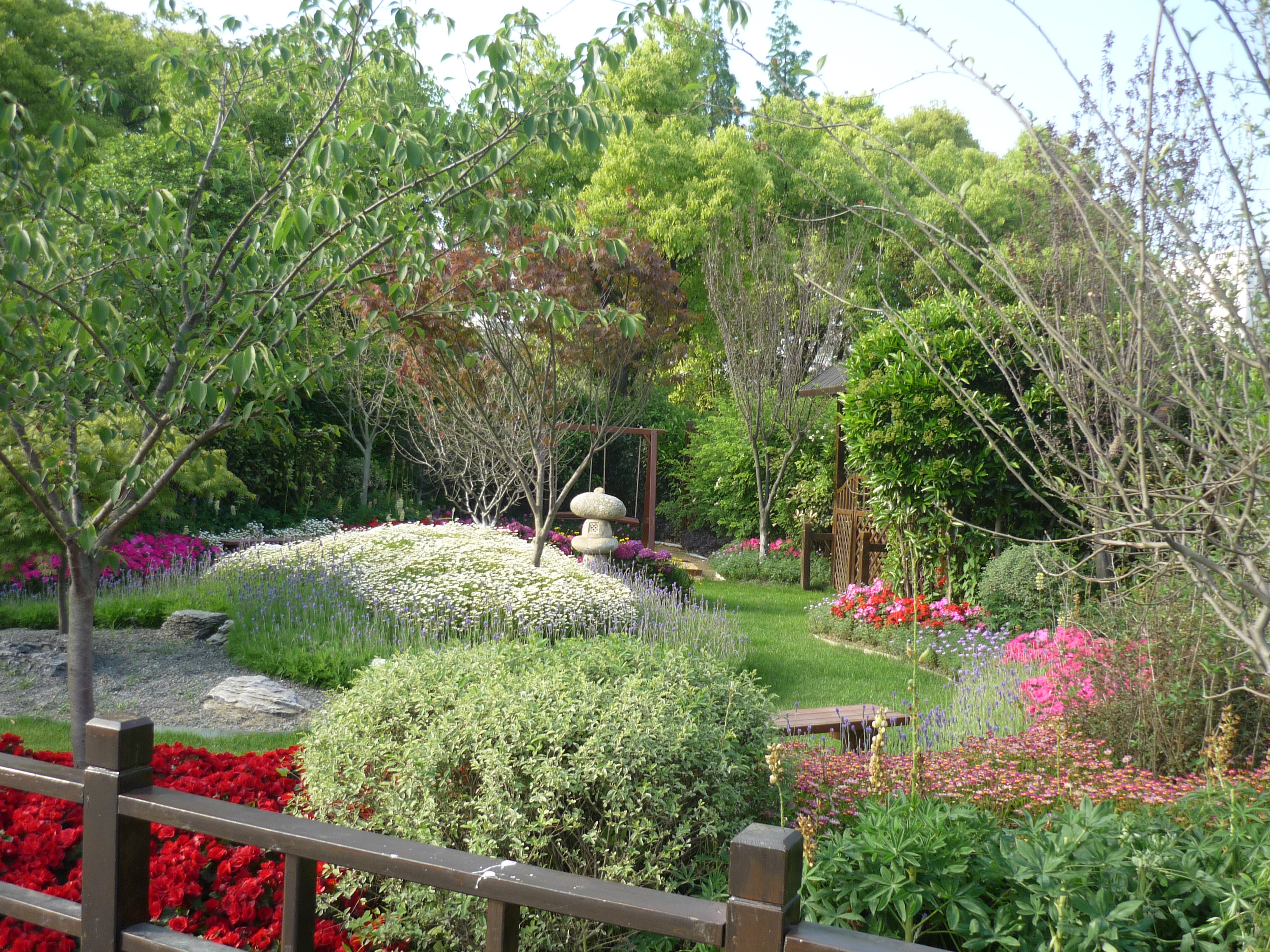
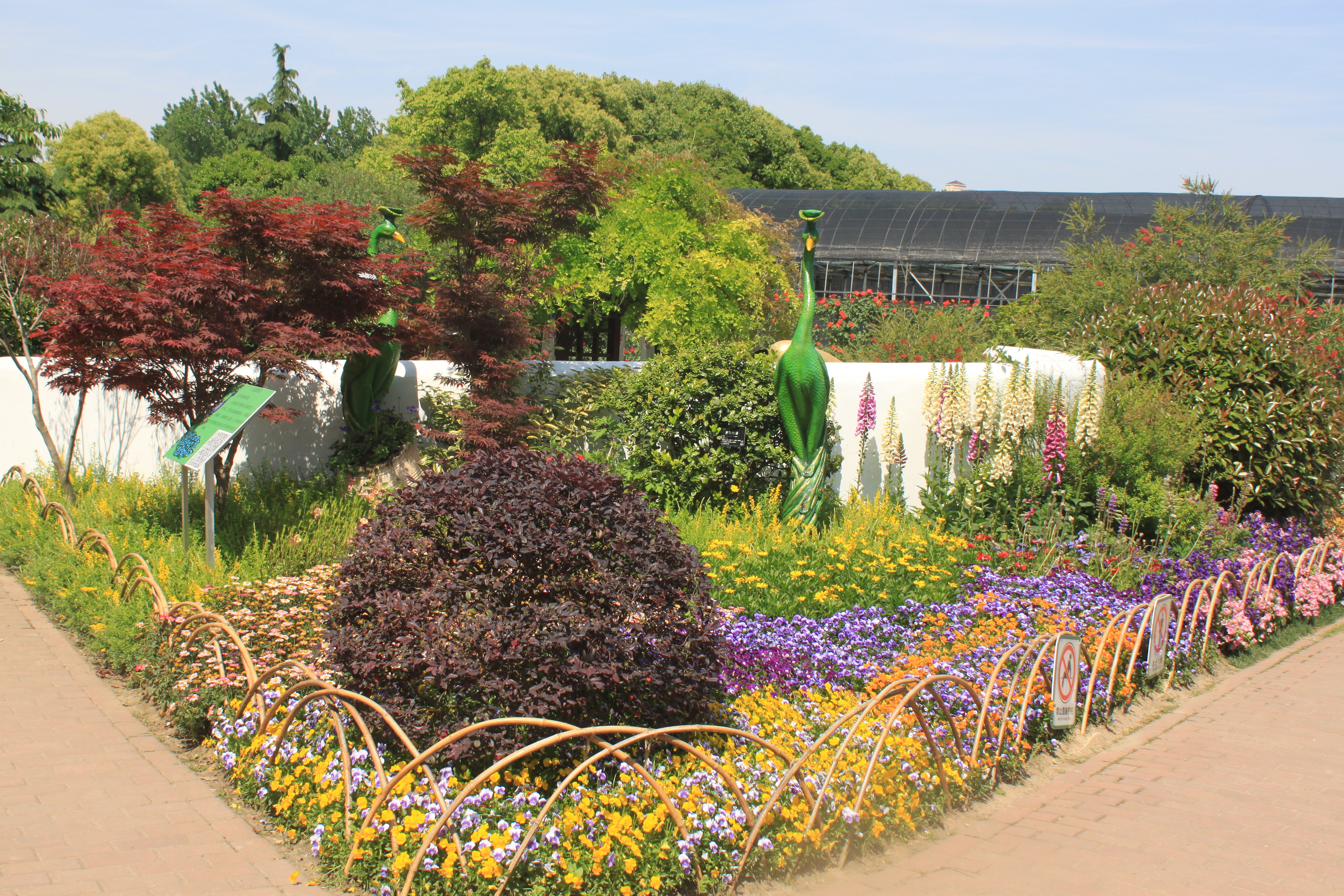
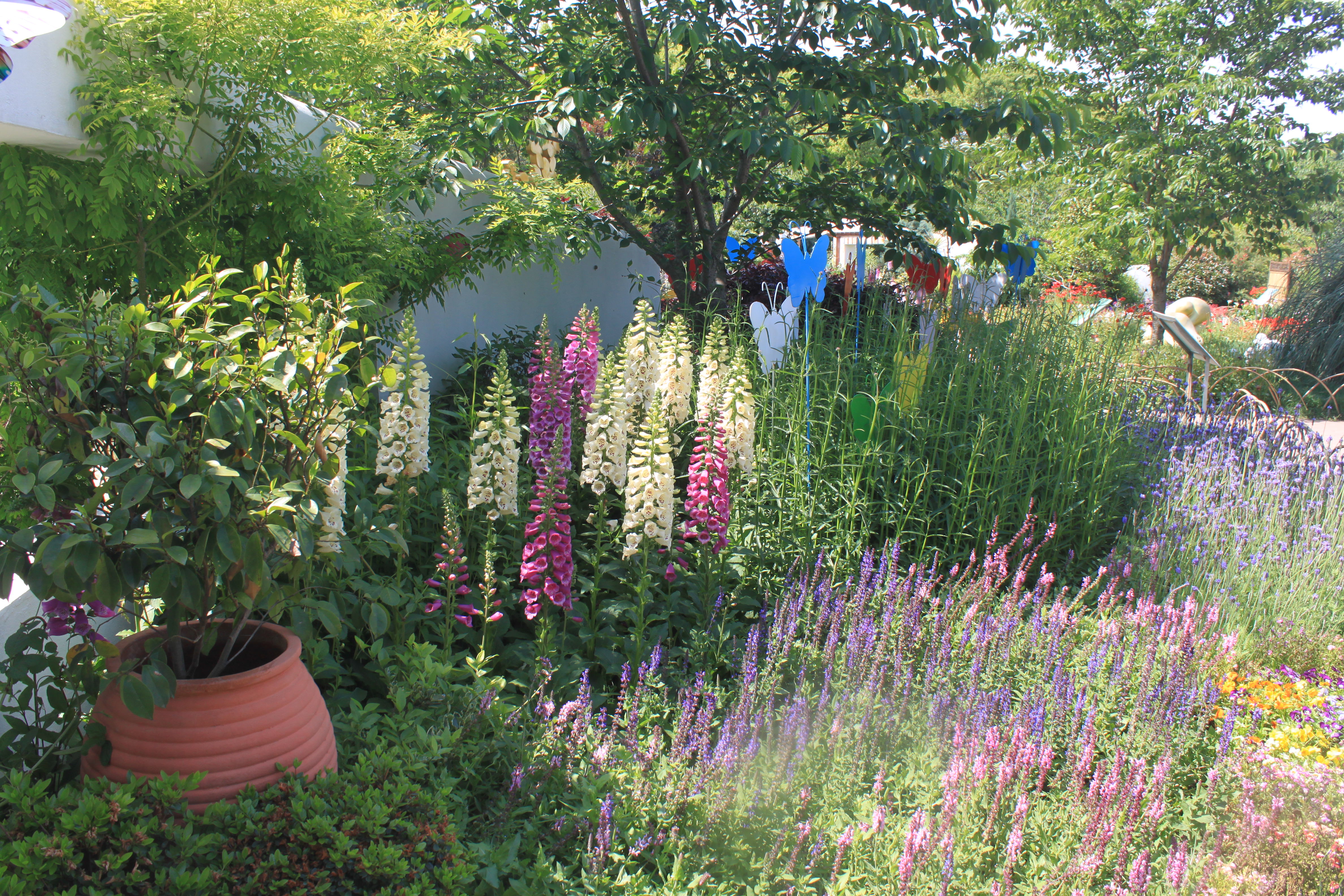
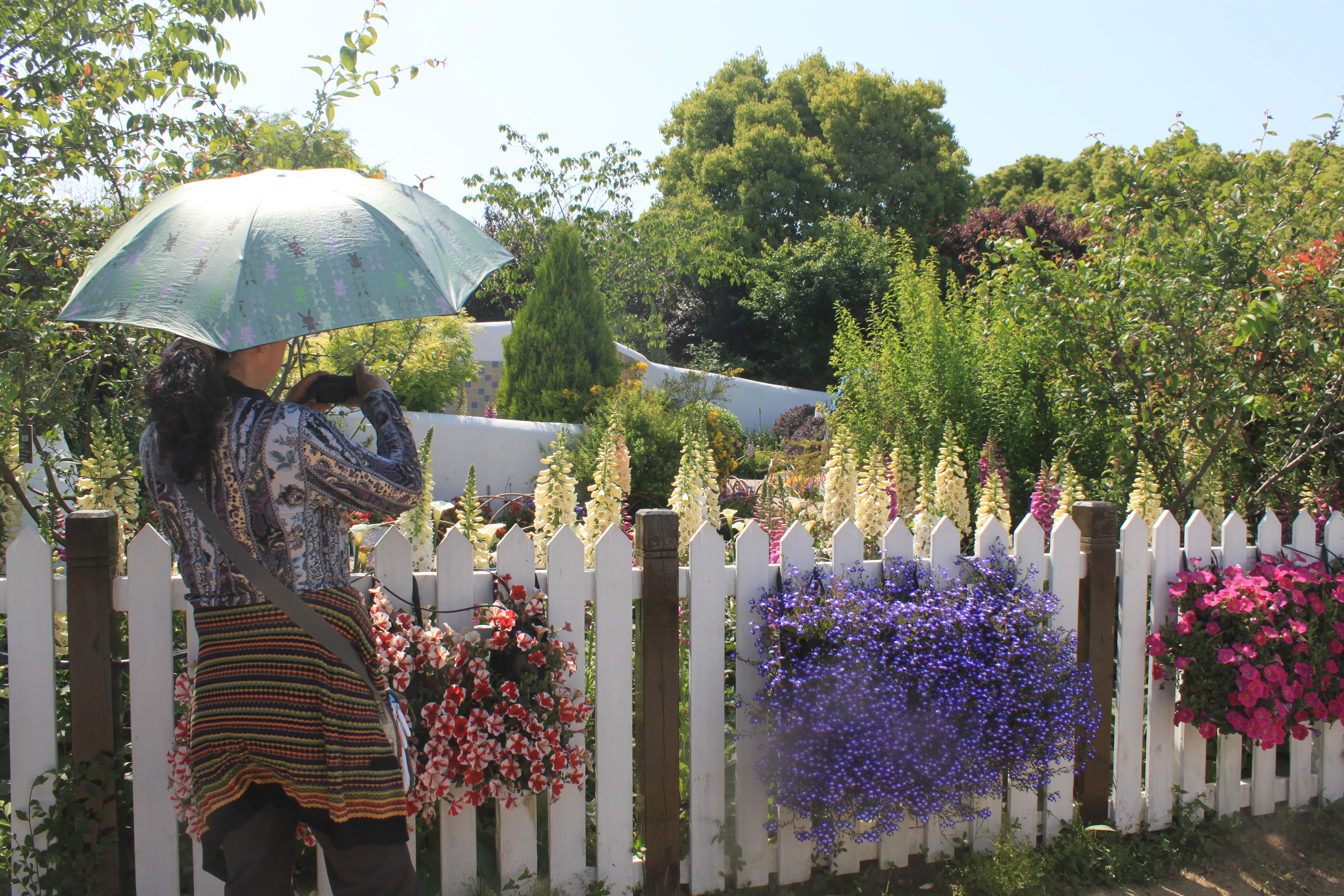
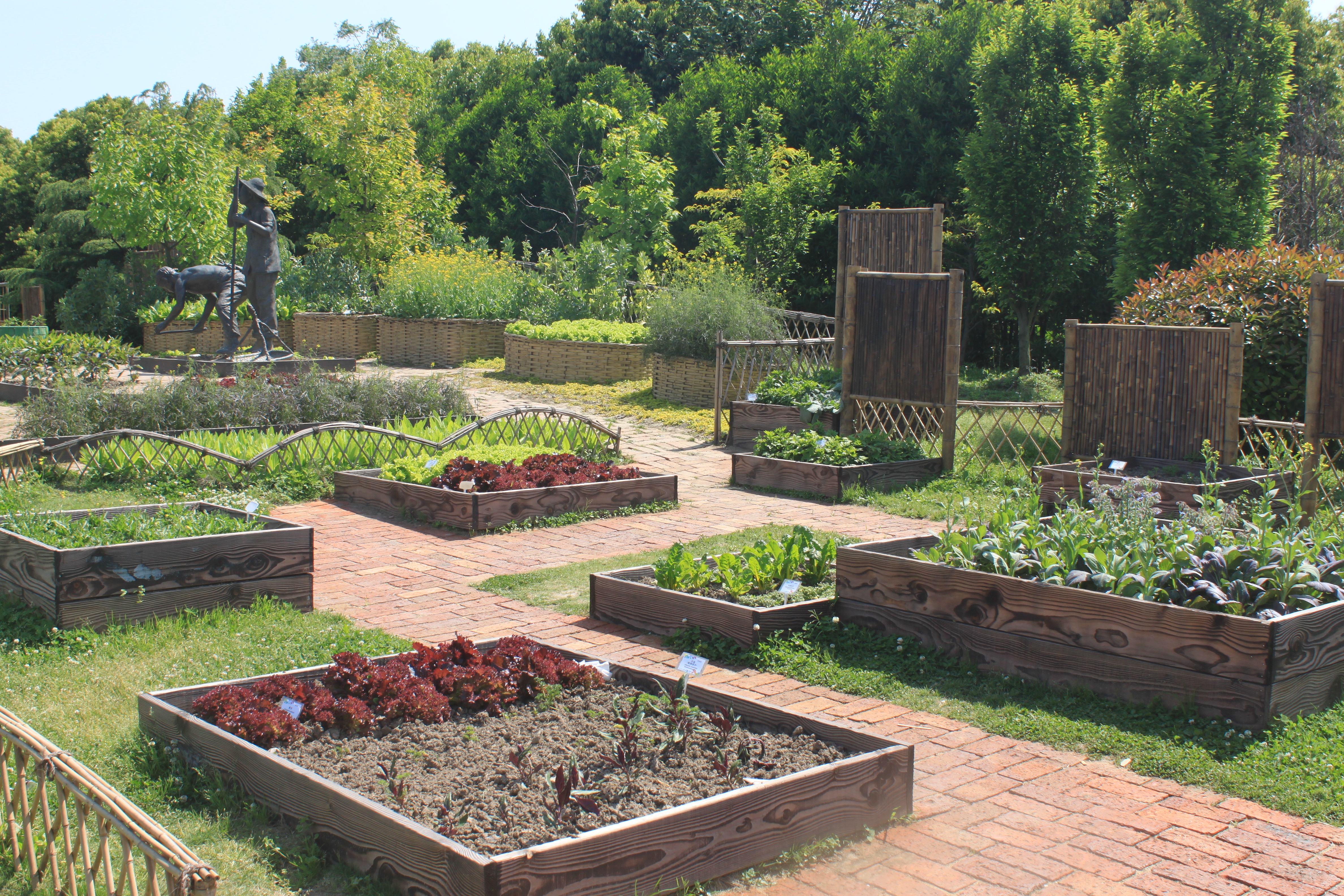
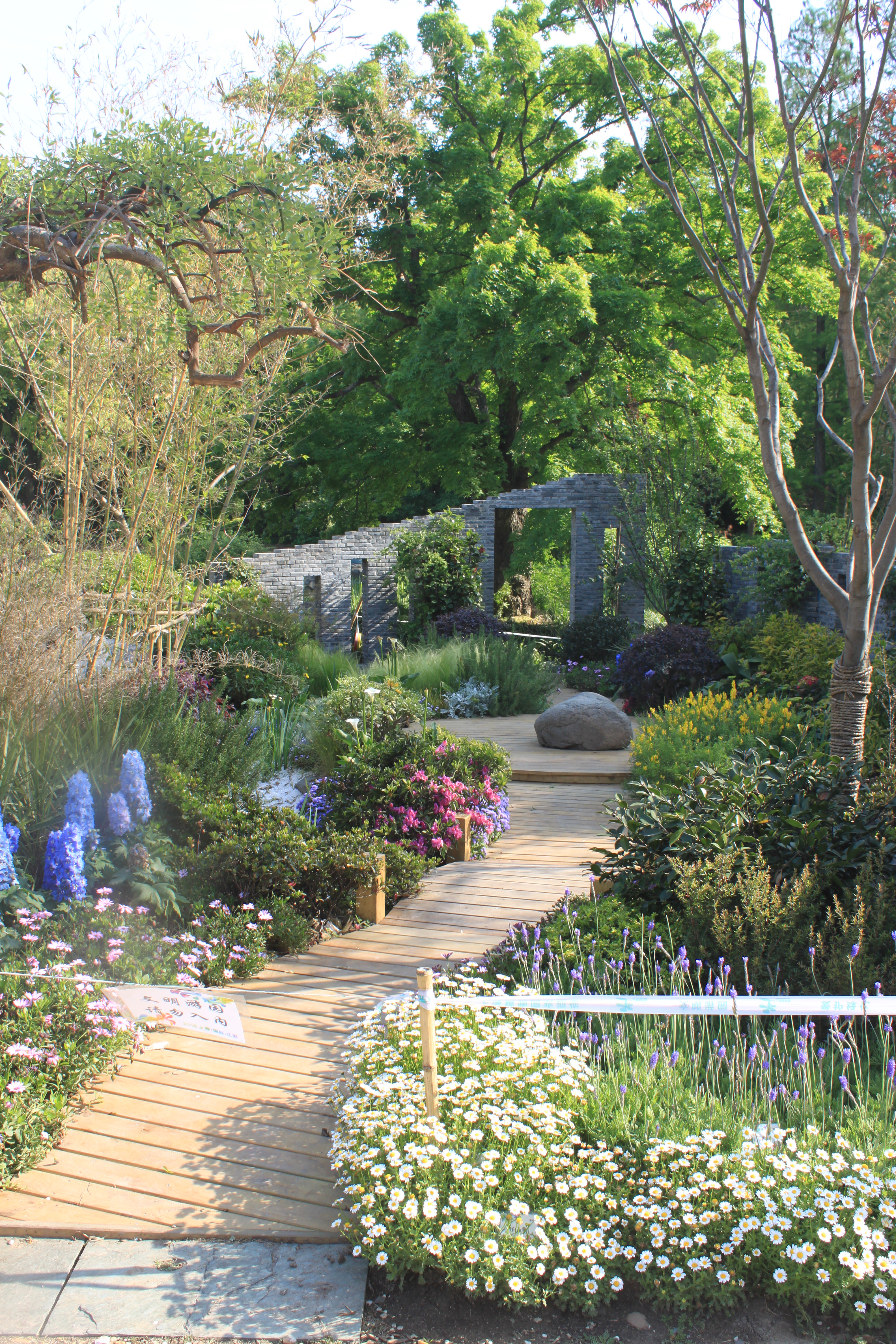
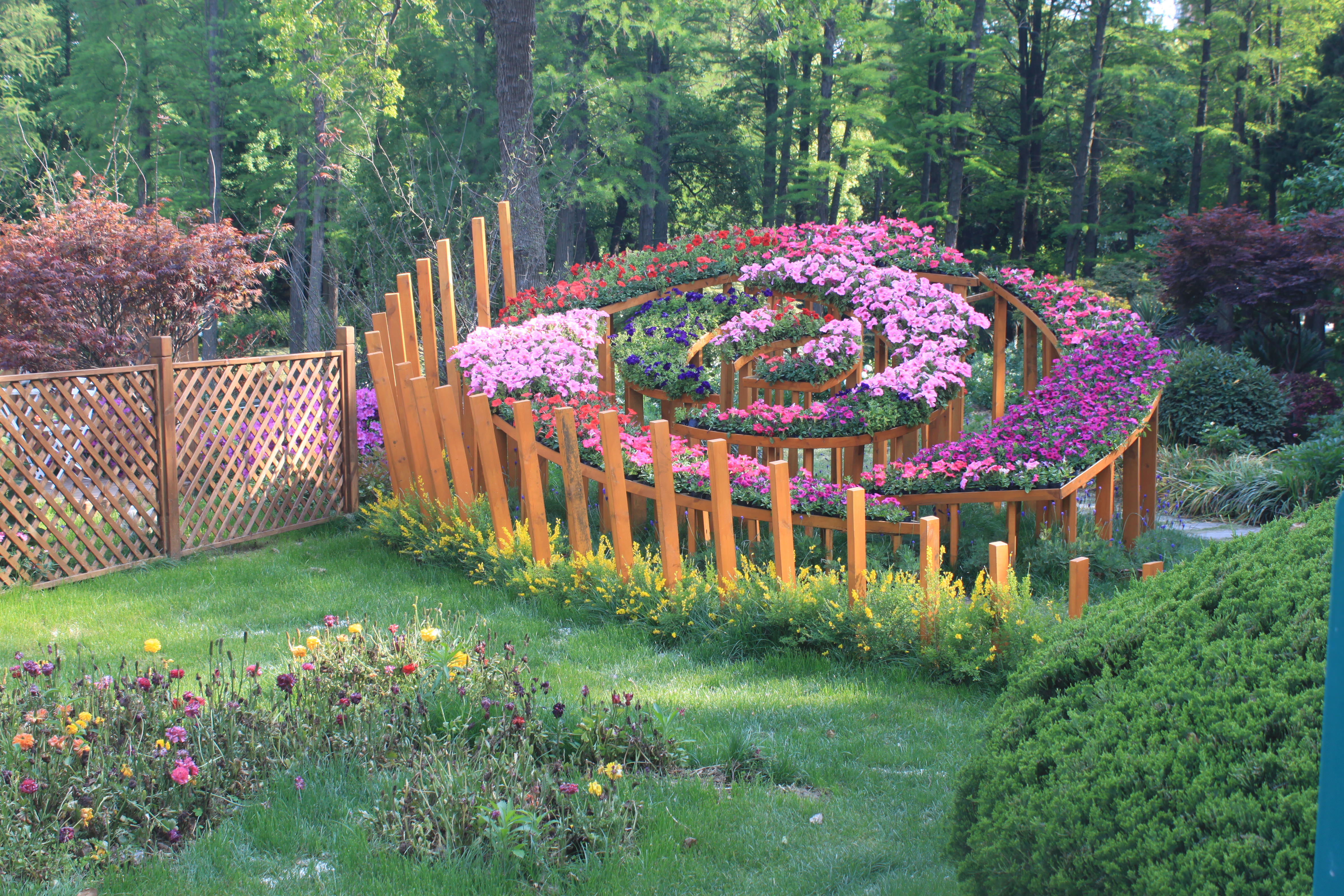
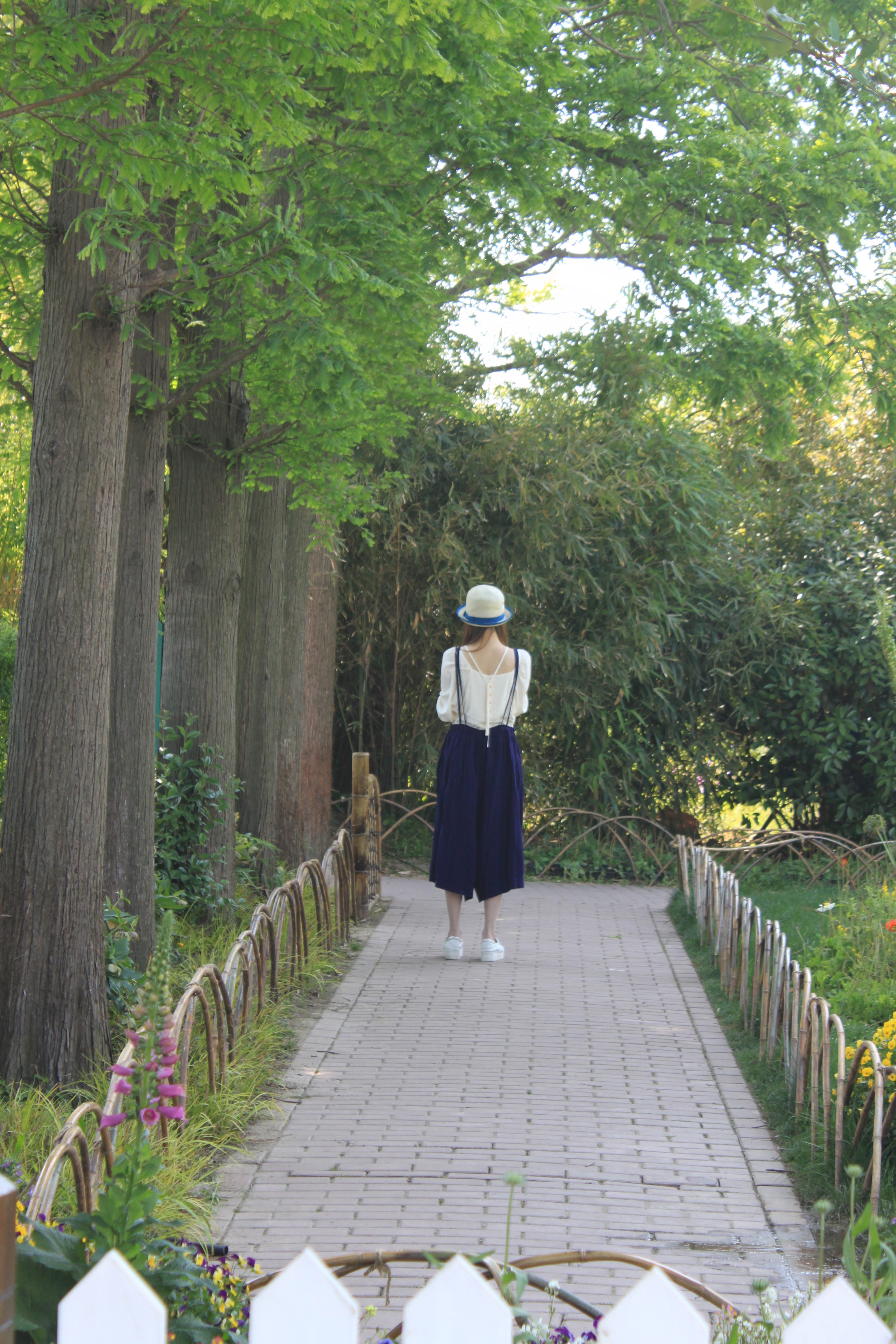
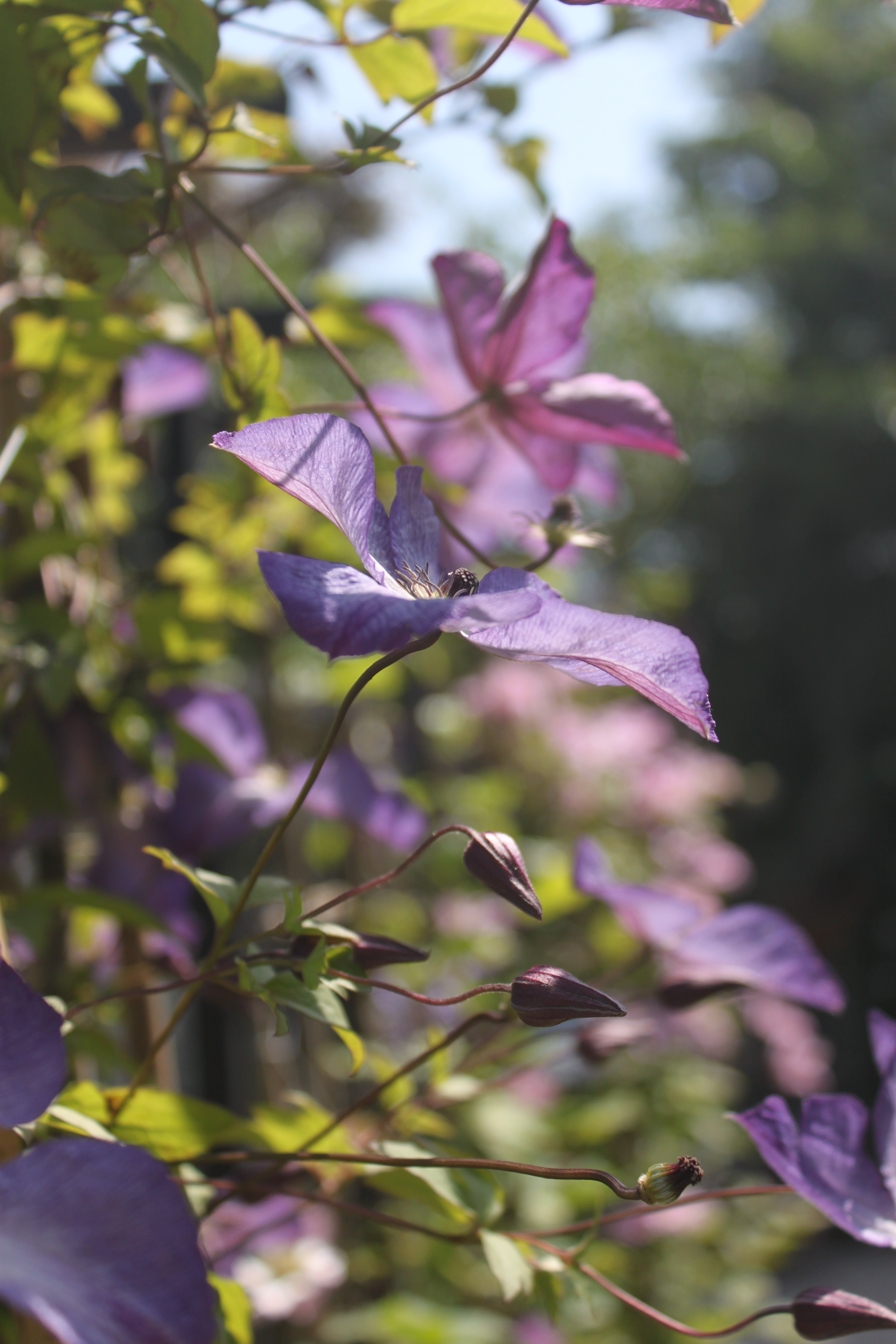
However on top of all this there was the Shanghai Botanical Garden’s equivalent of a garden show, with show gardens around the Park. Unlike the show gardens at say Malvern or Chelsea Flower Shows these gardens were there for the season, so some of them may not have been at their best. But there were some gardens here designed by international teams, such as the one from Lithuania and it was interesting to see what China liked about gardens. There weren’t many of the gardens that I especially liked – their use of colour giving me the most issues. I did like these Japanese-style Gardens as they were a bit more subdued:

and these two for the same reasons:
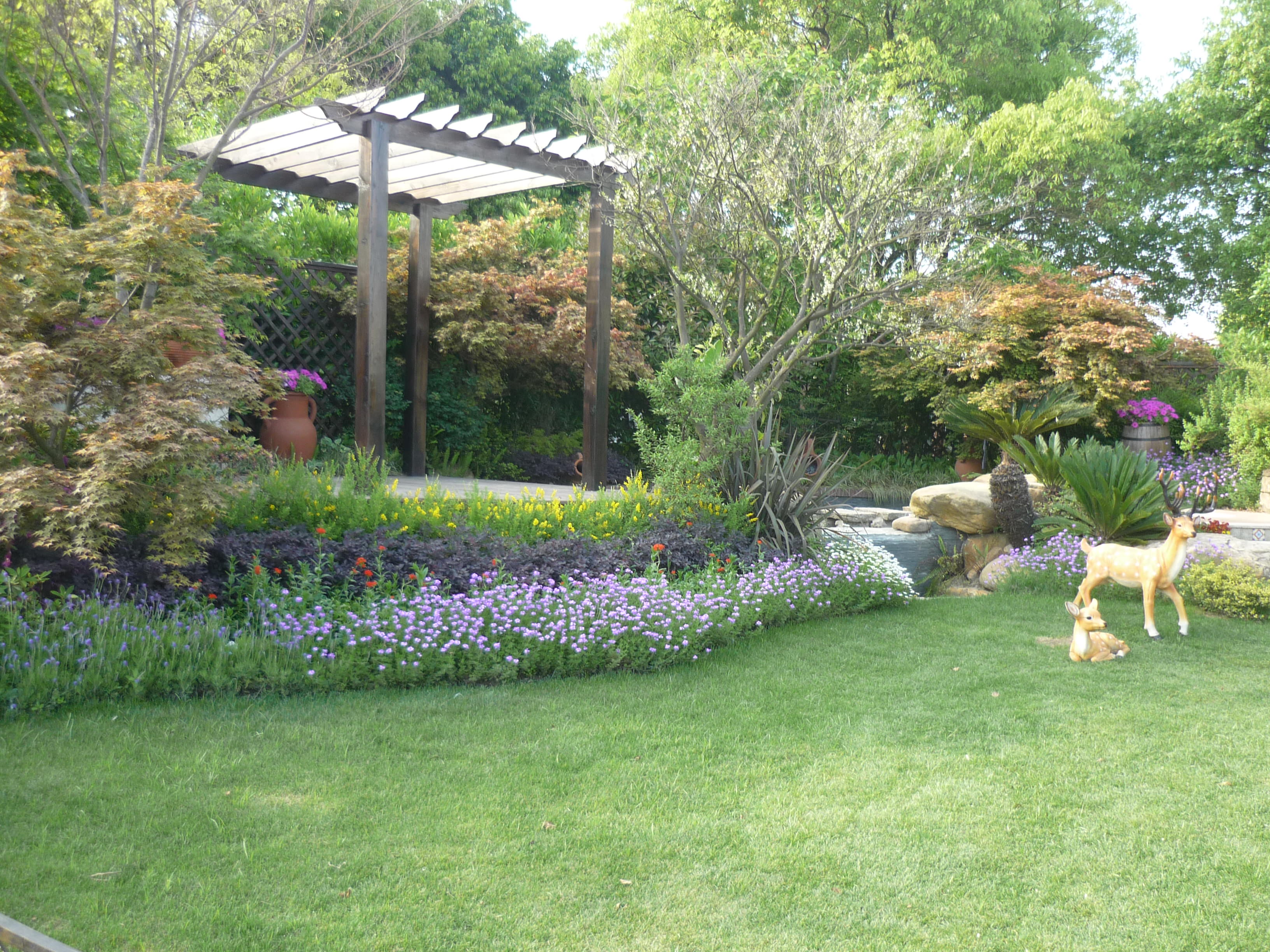
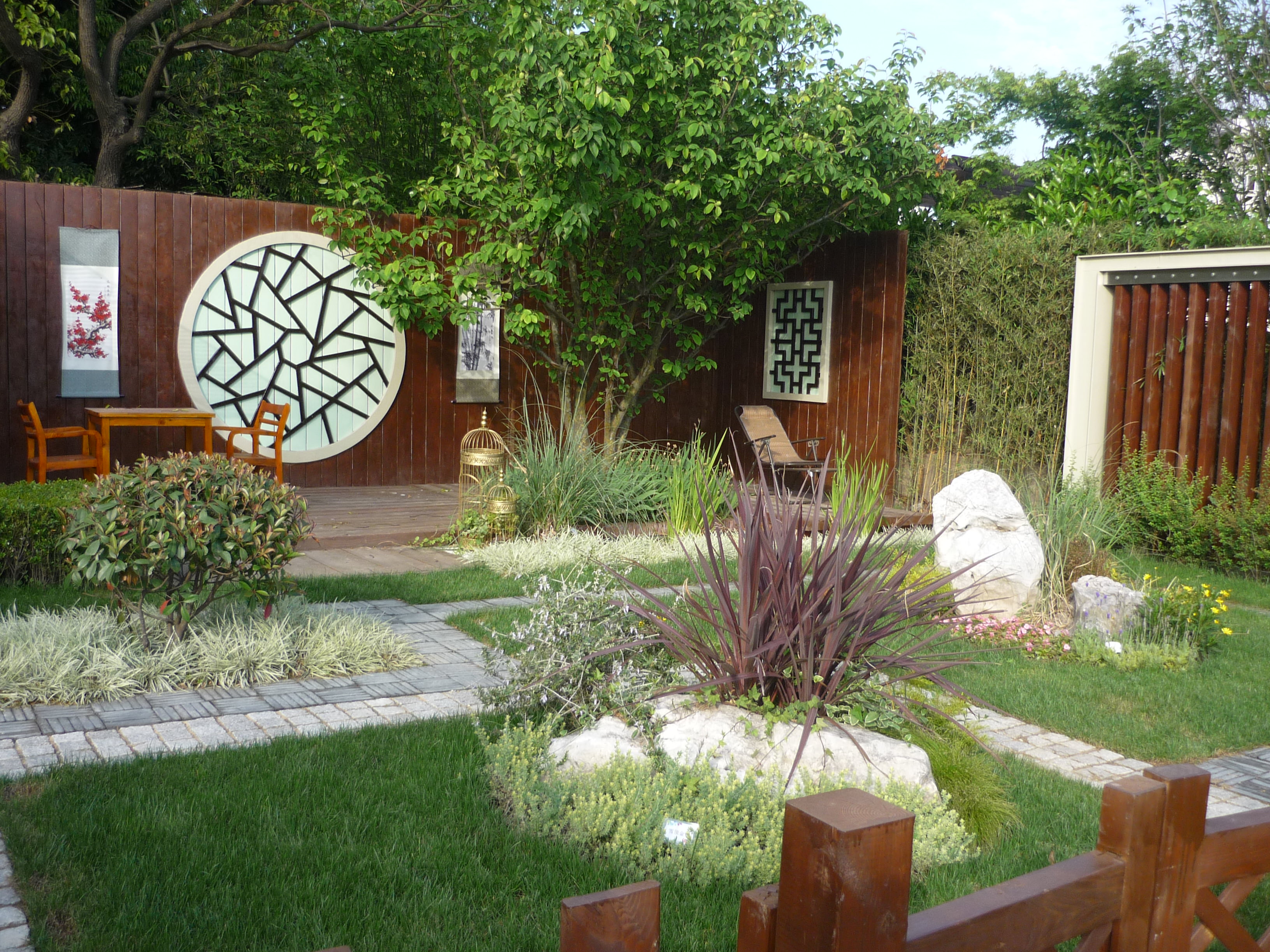
but otherwise the general impression was of a design maxim of the more the merrier prevailed:


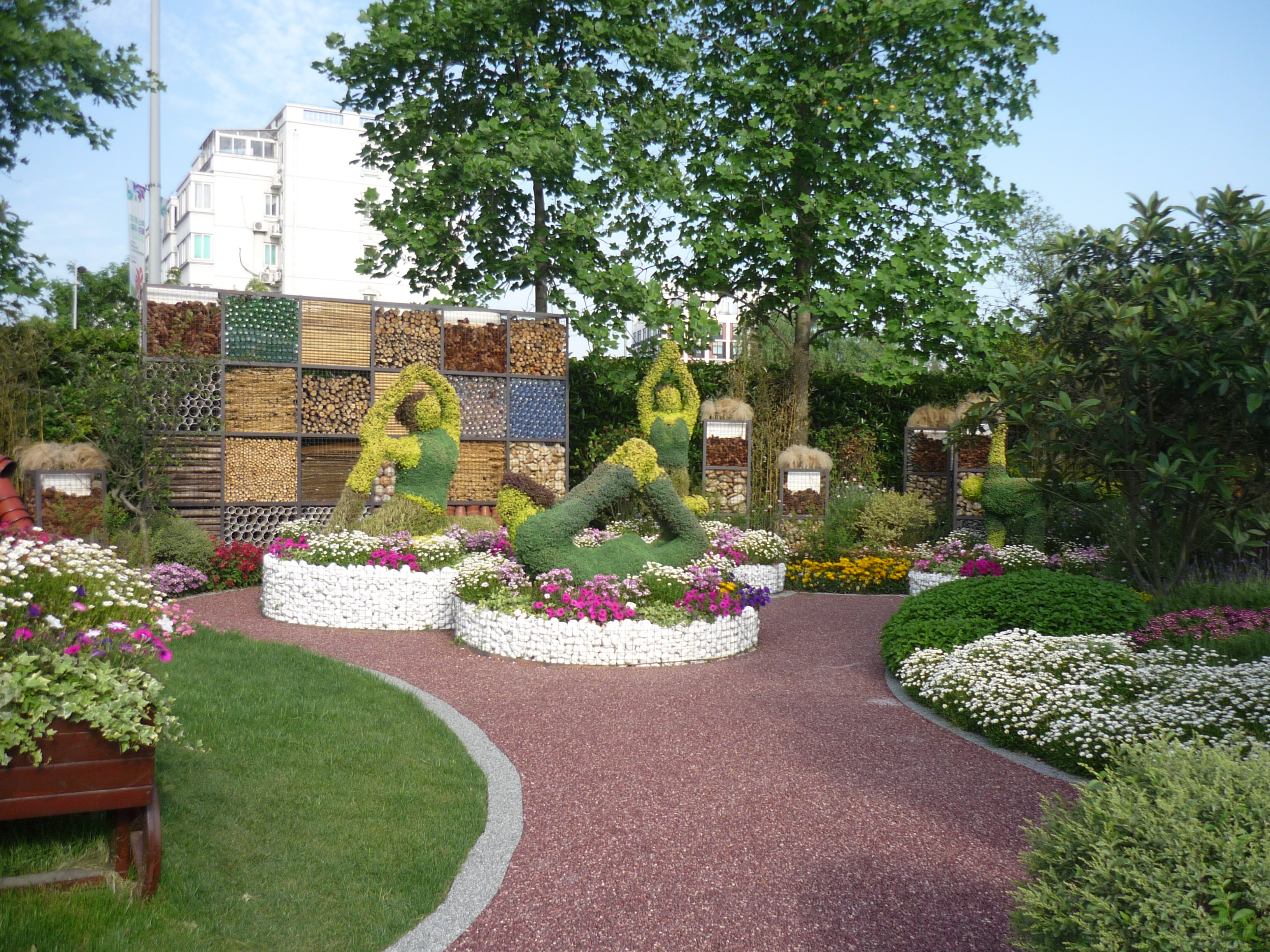


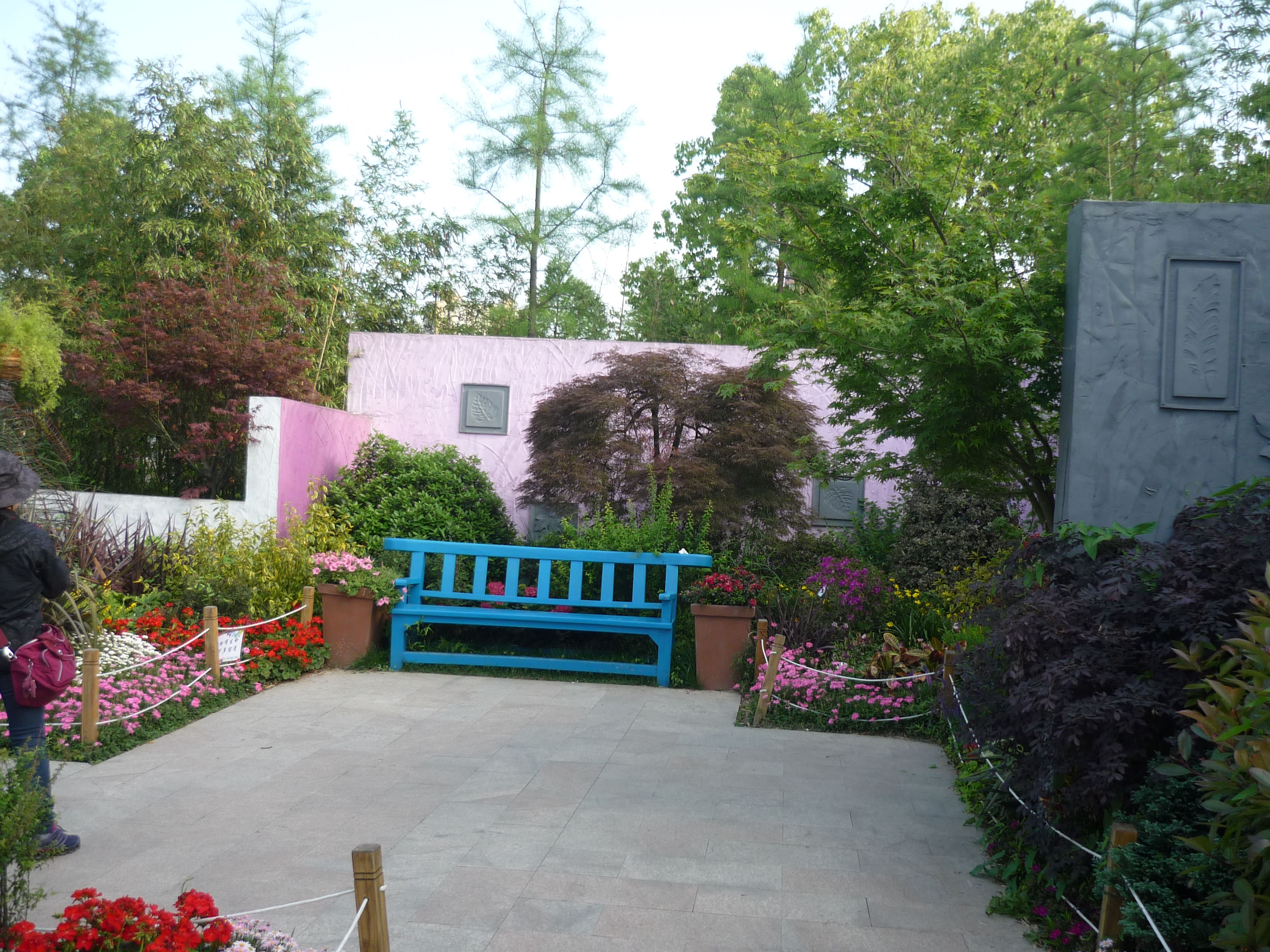








 Pearls From The Orient