

Our Local Korean Restaurant
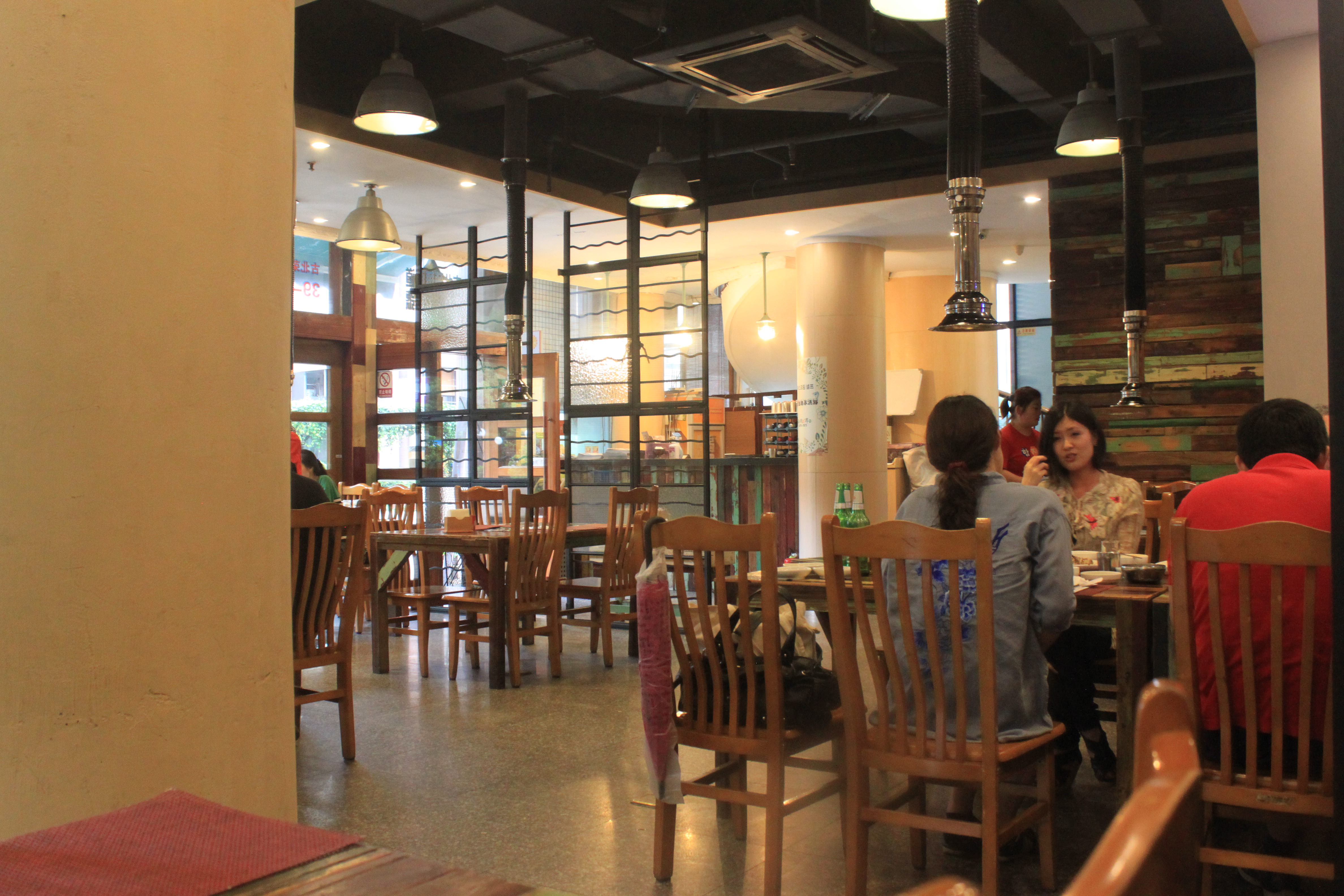
I must pass this restaurant 4 or 5 times a week on my way to the shops. Carrefour and the little Japanese corner shop with imported frozen meat both lie beyond its front door. It is not alone. There are several East Asian restaurants along more or less the same route and all of them will need to be explored at some point, but this one is the nearest to our apartment. Don’t ask me what it is called. I haven’t got a clue. How did we know that it’s
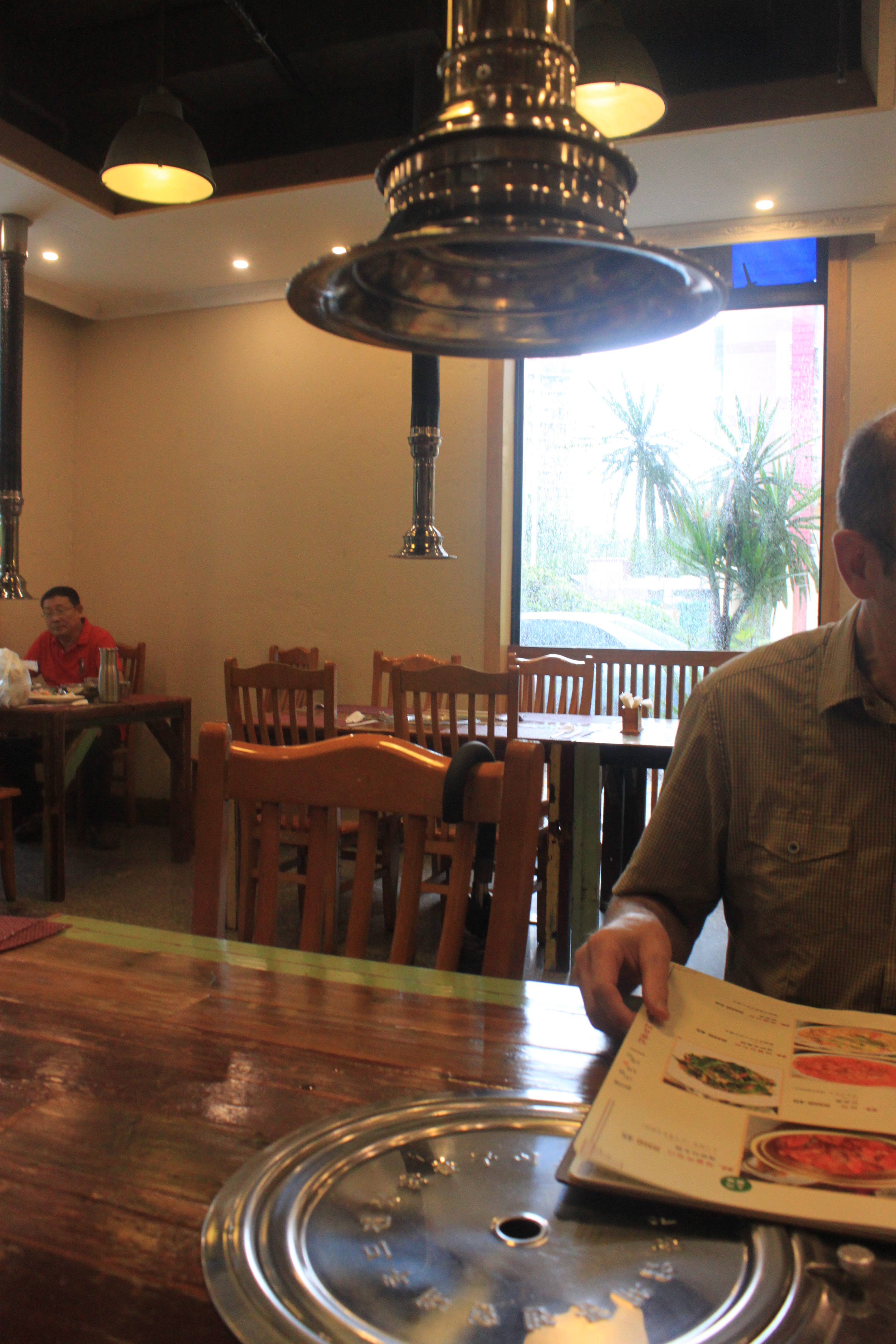
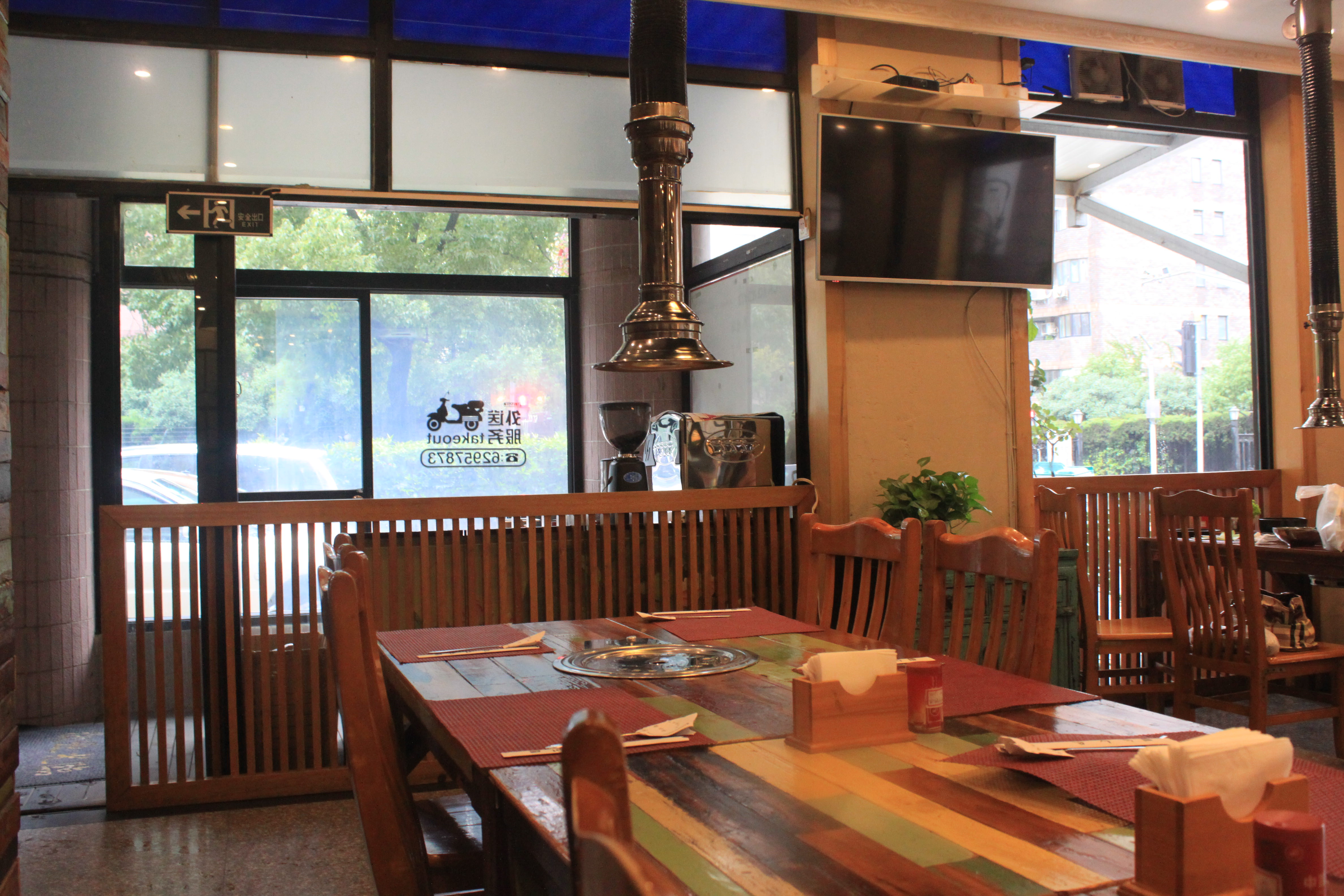
Retractable chimney over BBQ pit
Korean? Partly because of the small retractible chimneys you see hanging down from the ceiling in all the Korean restaurants around here. They hang over the barbecue cooking rings that are fitted in the middle of all the tables and act as extractor fans for any of the smoke coming off barbecued food or any other food cooked at the table, which seems to be most of it.
And because the writing on the menus has a number of ellipses in it; a feature you will not find in either Japanese or Chinese script. It is mainly the vowels that are denoted with ellipses the consanants are usually more linear in form. For over a thousand years the Koreans wrote with adapted traditional Chinese characters called hanja, intermingled with their own
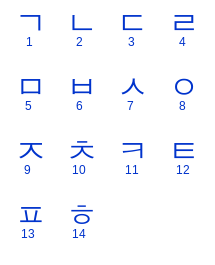
Korean Consonants
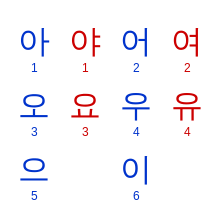
Korean Vowels
phonetic markings. This was the system favoured by the Korean scholarly Confucian aristocratic elite (the yangban) so although the phonetic Hangul alphabetic system had been commissioned by Sejong The Great in the 15th Century, it was not adopted universally until the 20th Century.
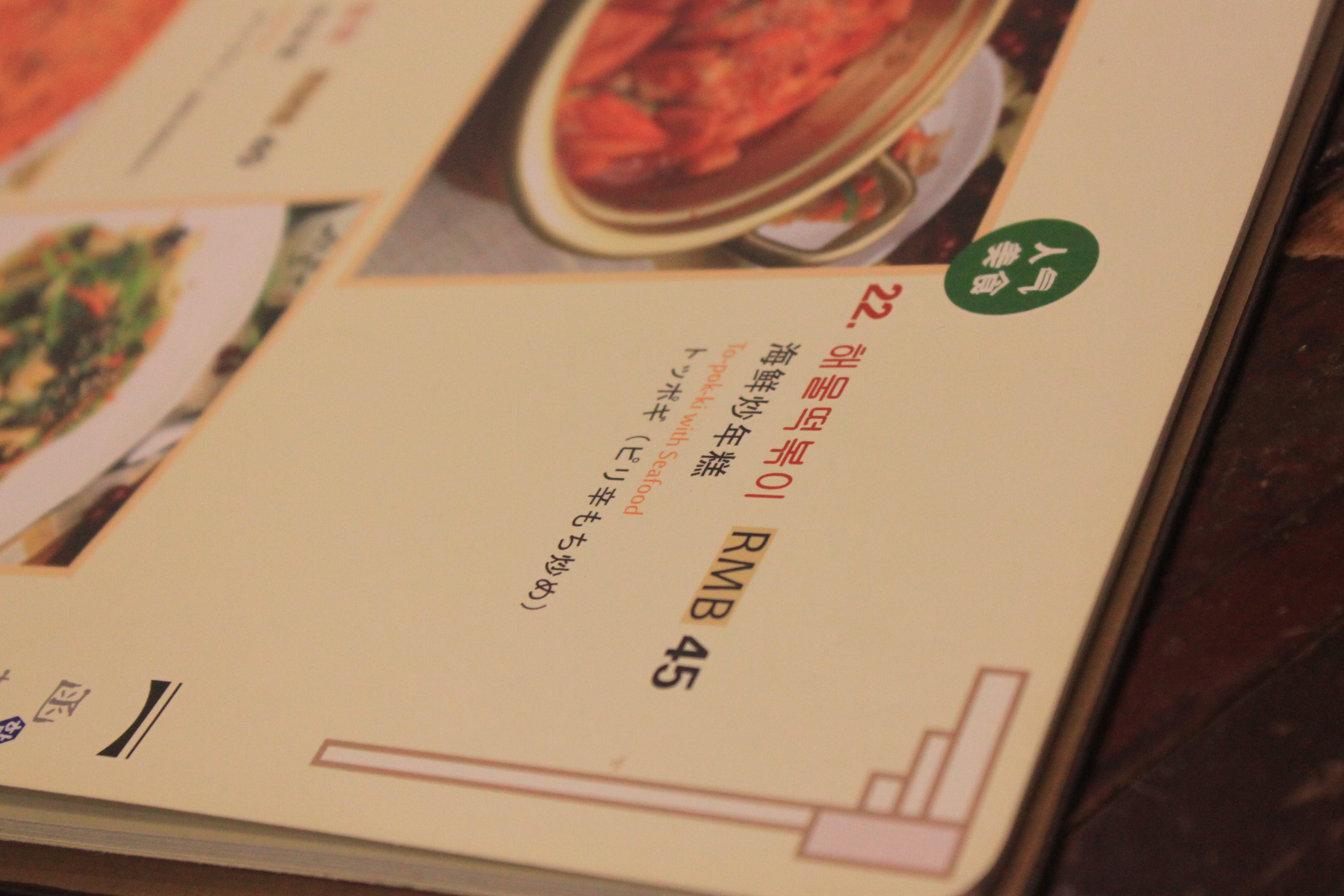
Menu in Korean, Chinese, English and Japanese
None of this helped us to read the menu however, when we went there for Sunday lunch yesterday to sustain Richard during a day of weekend-working from home . We were given pictures. And alongside the pictures we find Korean, Japanese, Chinese and English. But often what is written in English gives no clue as to what to expect. It is all very pot luck, but nothing ventured, nothing gained. And we sipped the tea which had been served in stainless steel cups on our arrival.


Not only were our chopsticks presented in paper wrappers – and there were unusual in shape having more flattened handles than we are used to and more pointed tips – but so is the serving spoon we were both given. This was something we hadn’t seem before. As well as the food – we tried to get the waitress to make some suggestions, but we had a communication issue, and we had no idea whether we had under- or over-ordered. We managed to order some beer.
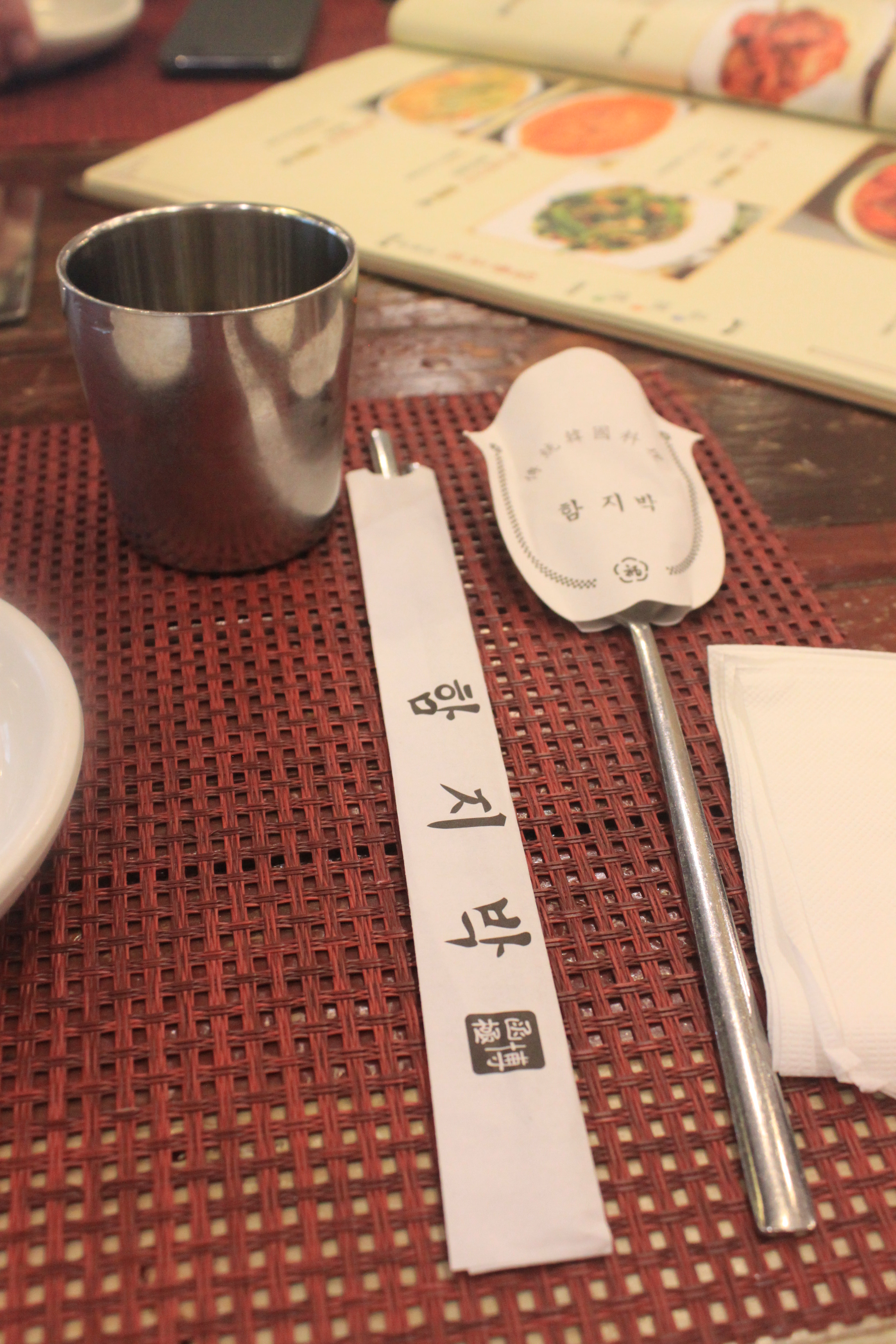
Wrapped Chopsticks and Spoon
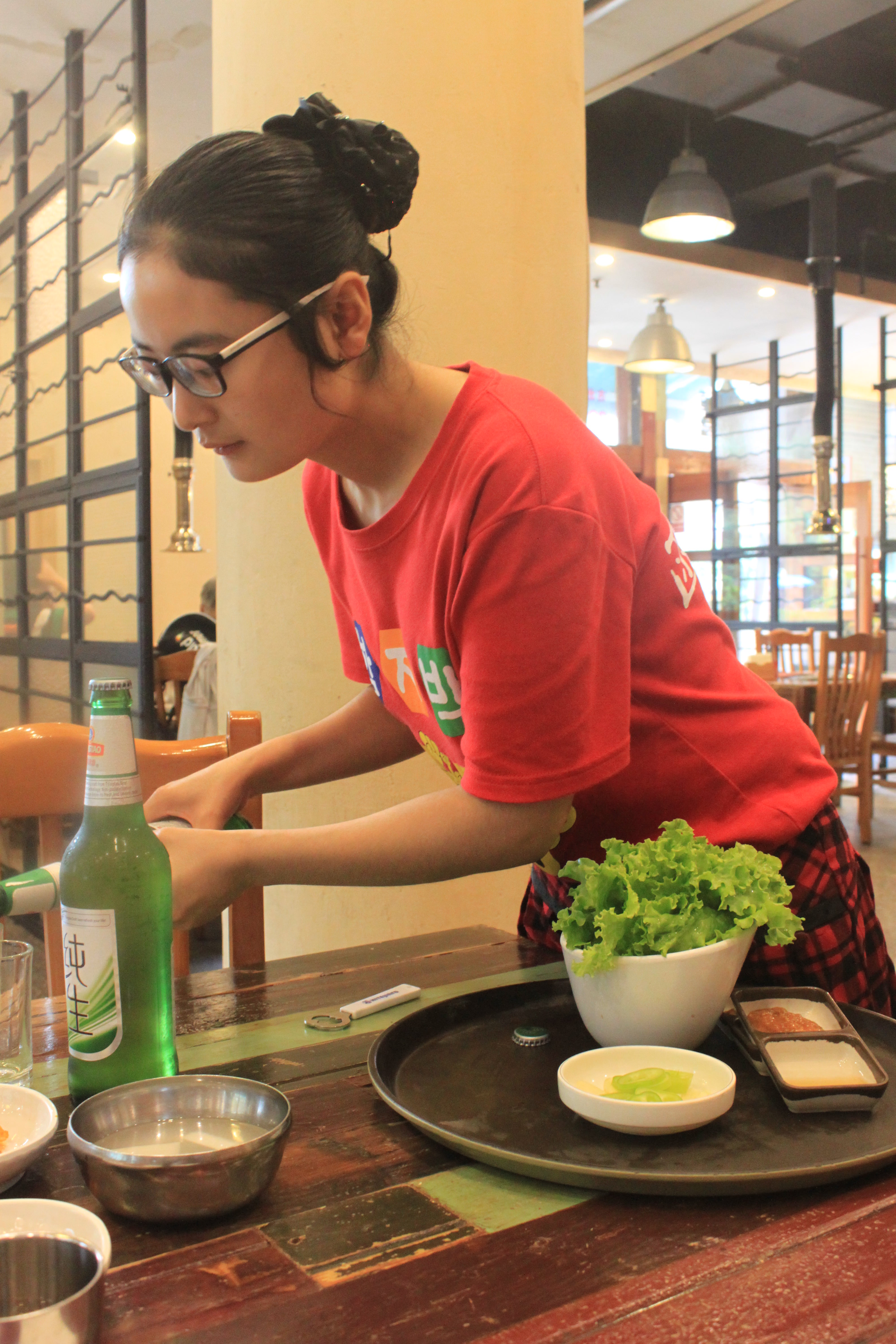
Beer and Lettuce
The beer arrived along with some small dishes of appetisers, which included some white daikon in water, some preserved hot green chilis, sweet sliced lotus root, some kimchi – chilli flavoured cured cabbage – some freshly cooked chilled greens with chilli, and some sardine fillets. The lettuce, sliced
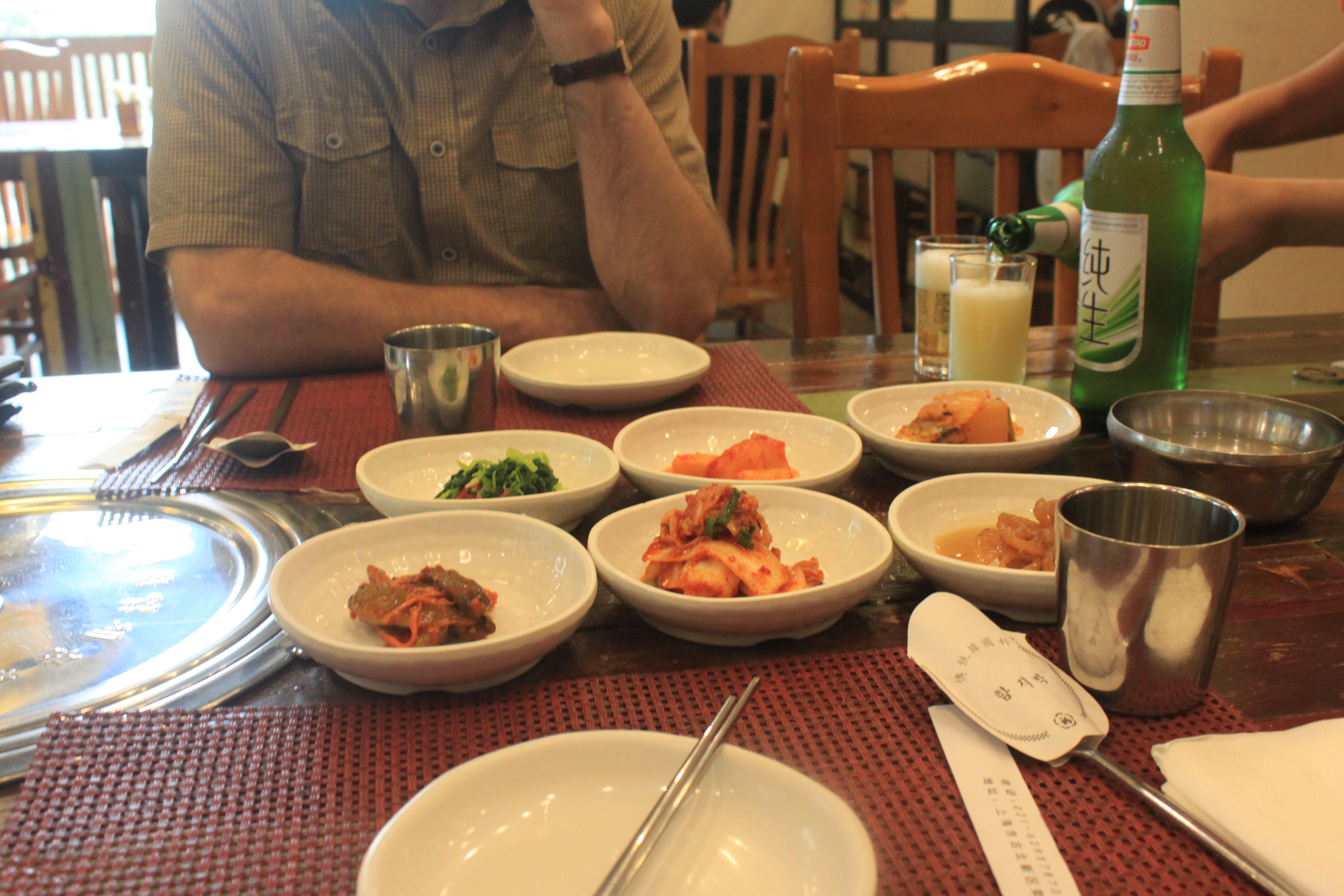
Appetisers
garlic and sliced peppers, sesame oil and a sauce which may have been peanut based appeared with a display of the thin slices of uncooked meat that were then taken away to be cooked. With all this arriving, we realised we had over-ordered and decided then and there that there wasn’t going to be much of an evening meal that night. And that was before much of what we had ordered had appeared on the table.
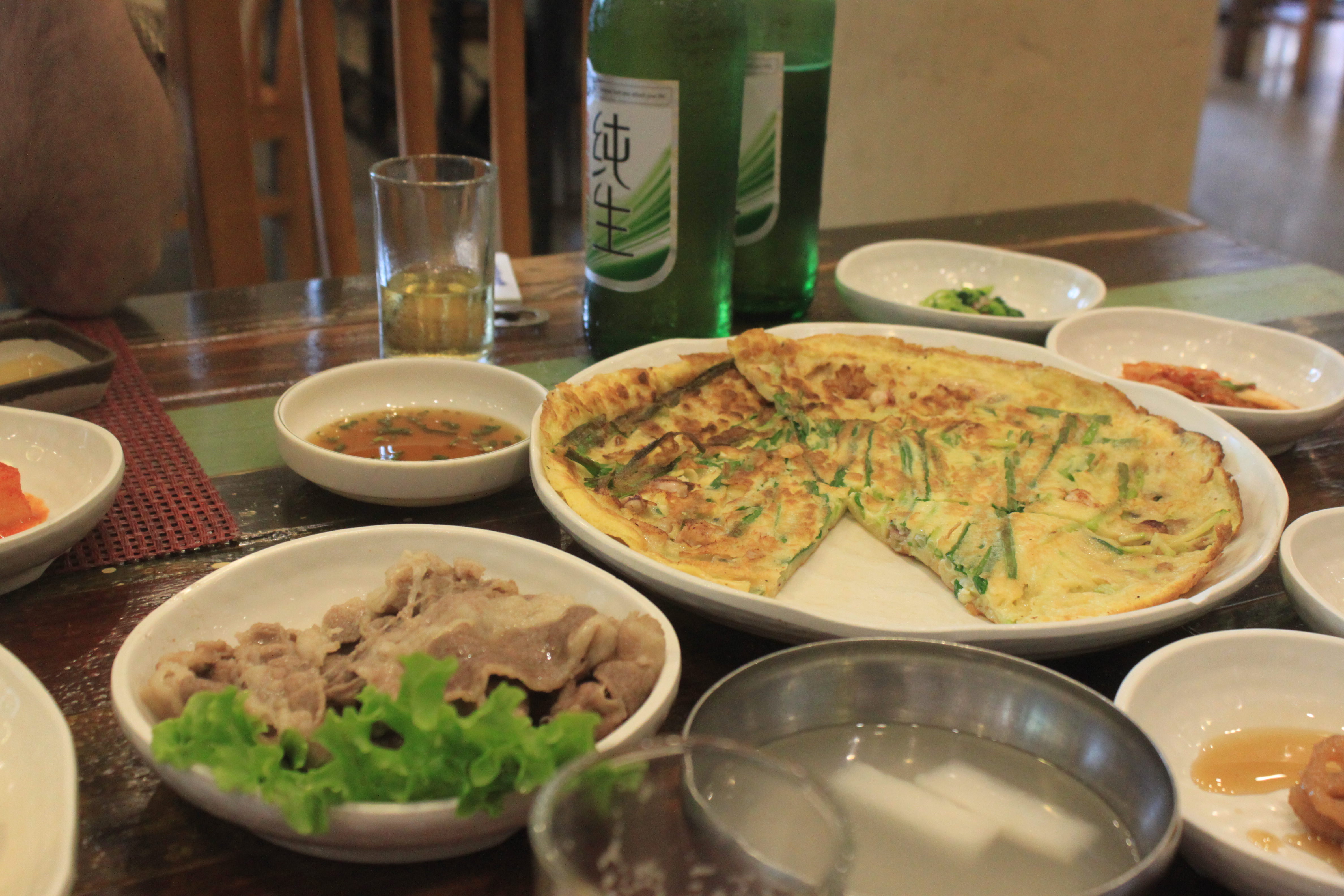
Thin slices of cooked meat and omelette
The cooked thinly sliced meat arrived and we surmised that we were to wrap it in the lettuce together with the garlic and the pepper and dip it in the same oil and sauce – just because all that lot arrived together. We also had what we thought was going to be an omelette, but which turned out to be more of a pancake made with rice flour filled with long thin Chinese spring onions and tiny seafood pieces of octopus and prawns. More
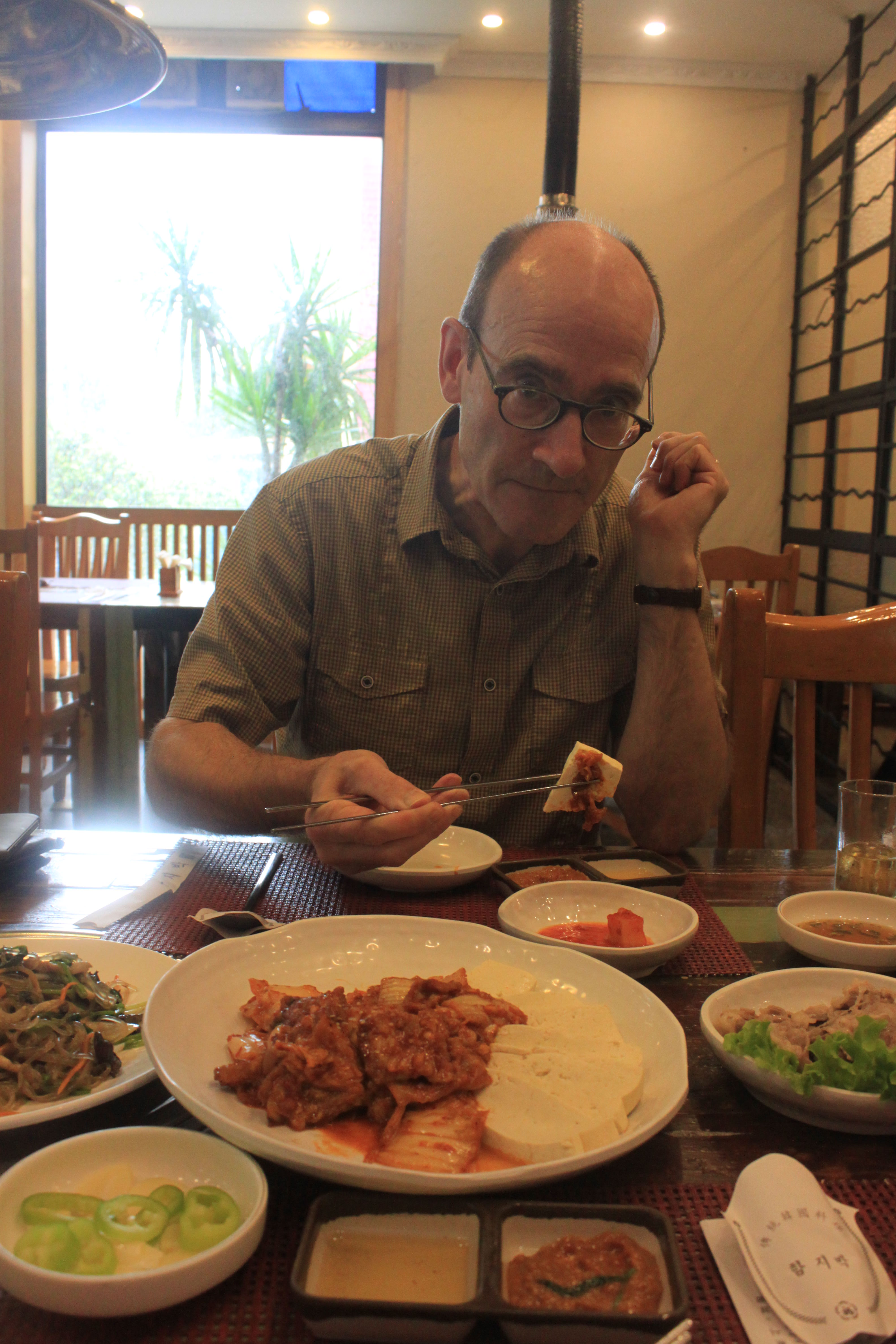
Kimchi and Beancurd
kimchi arrived this time with bean curd which was an excellent way of adding flavour to an otherwise bland foodstuff and which Richard enjoyed immensely as it is rather spicy.
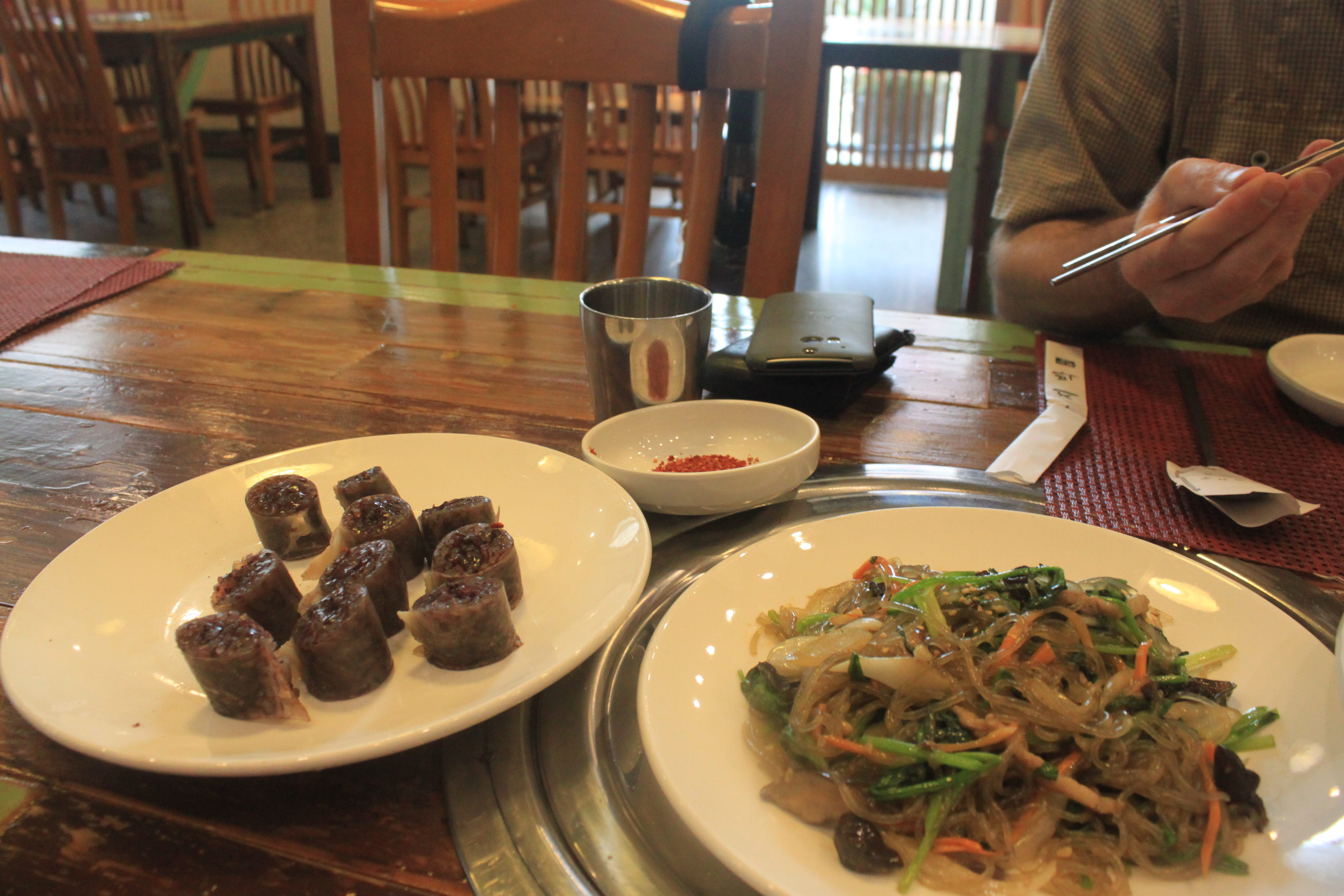
A Plate of Sausage and A Plate of Noodles
We also ordered a plate of thin glass-like noodles which came with a mixture of vegetables including onions, pak choi and small cloud-ear mushrooms and a plate of “we had no idea what” because it looked interesting. Even when we tasted it we still didn’t
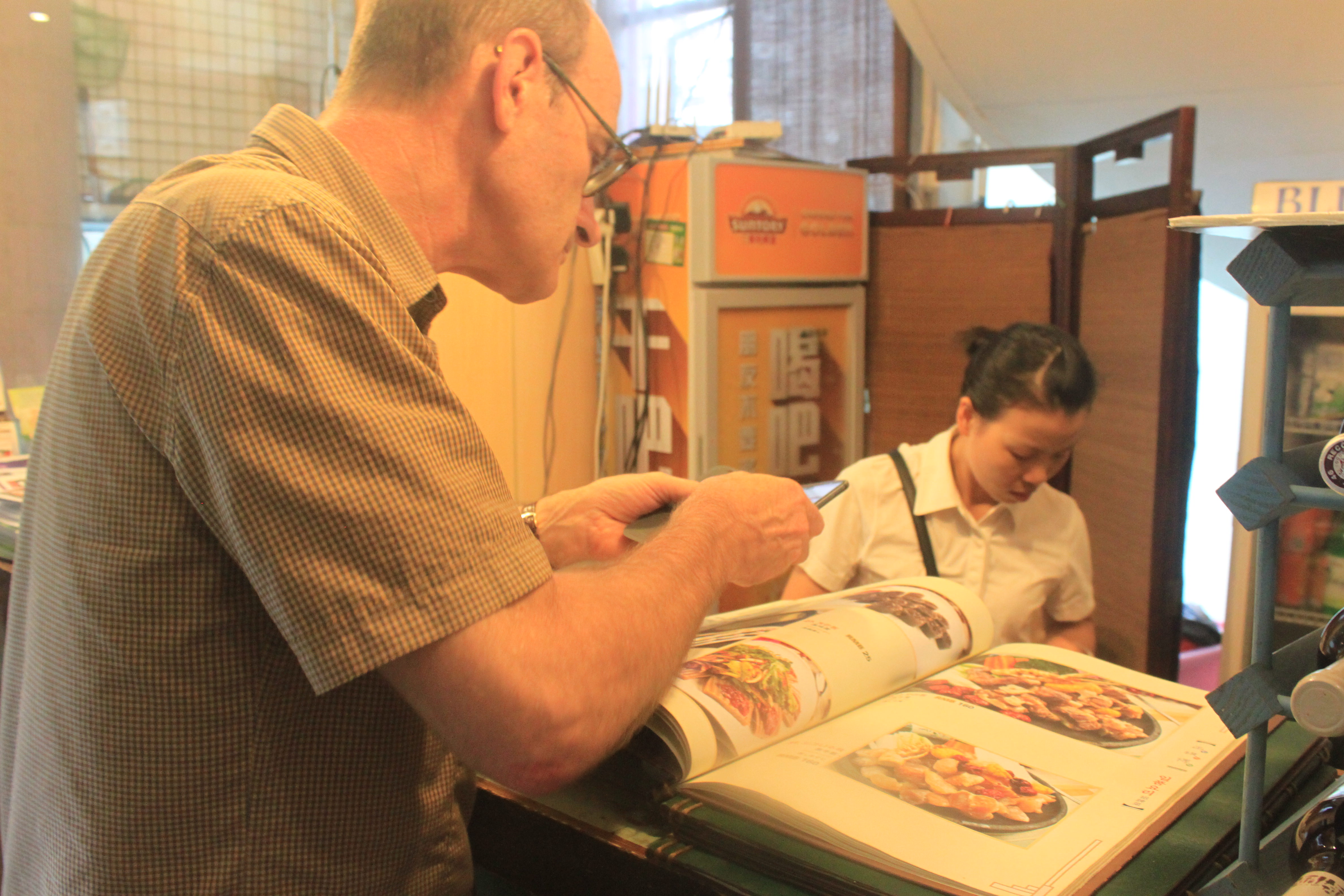
Photographing the menu for clues
really know. The casing seemed to be some kind of animal sausage casing, but the innards of the thickly sliced sausage seemed to made up of gelatinous strips of something or other. Whilst we were paying for the bill we grabbed a menu again and were none-the-wiser, but at least we could try and look up Korean Sun-Dae online once we got back home through the pouring rain. I now have. It’s is a Korean blood sausage or black pudding made from boiling or steaming cow’s or pig’s intestines. They can be stuffed with various ingredients including kimchi and soybean sprouts, but I think we had the most common type which is stuffed with cellophane noodles, barley and pork blood.

 Pearls From The Orient