
I promised many moons ago that I would keep you up to date with my quilting group. I confess I haven’t. We meet every Thursday at a member’s apartment and promise to do at least 5 stitches in the four hours that we are together. Often, but not always, the hostess provides lunch, otherwise you take along your own.


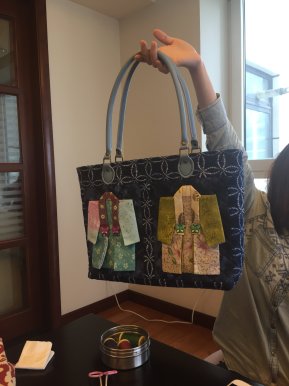
This way we see other parts of Shanghai and other people’s homes. The friendships that are created in this group are long-lasting and spread throughout the world as the constant churn of expats in Shanghai means that people are always leaving and joining but throughout the Thursday meet-up is a constant.
 The nice thing about meeting to create something is not only about the creative act itself, but also seeing and being excited by what others are producing. It also allows for a very natural flow of conversation to which you can contribute or not as the mood takes. A panacea for introverts, in a city and a life that demands extraversion at every turn.

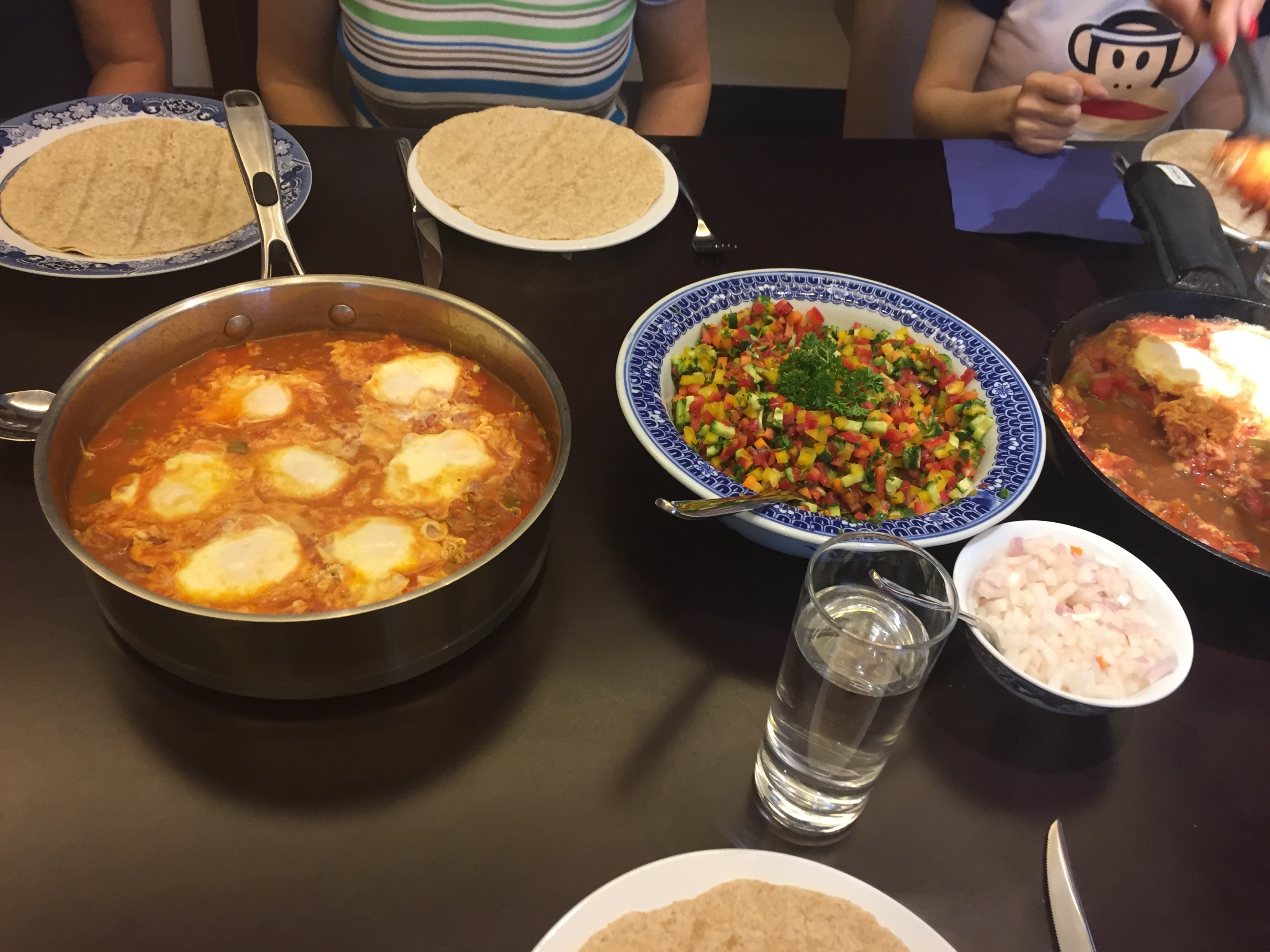 We are a multi-national group. Current membership has a strong Dutch contingent ranging from professionals to complete beginners. Knowledge is generously shared. Luckily for me the lingua franca is English, the food we are served are classic dishes from each of our countries.
Somehow in the Spring we managed to become the subject of an article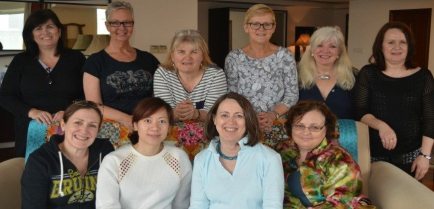 by the Accuquilt company blogger, who seemed to be going round the world visiting her friends and searching out quilt groups to write about as she went. This led to a rather bizarre afternoon that was a lot more lively than normal, verging on the surreal, but we did end up with a nice group photograph of “Jenny’s quilt group”.
 Jenny from Holland had her own quilt shop for many years, but not in Shanghai, although she does support one just two blocks down Gubei Lu from our apartment. She generously helps everyone make their quilts better, teaching the absolute beginners and giving help when asked. She is very good, not often asking “What ARE you doing?” which is what she said to me as she watched me struggling to make my first colonial knots. I’d looked up how to do them in a book and found instructions on line and then tried to reverse their right-handed instructions to my left-handed way of doing things, but was failing miserably. I was doing it in a very cack-handed way. She patiently sat opposite me and plugged away at it with me until I had managed to mirror her right-handed actions to those in my left-hand.
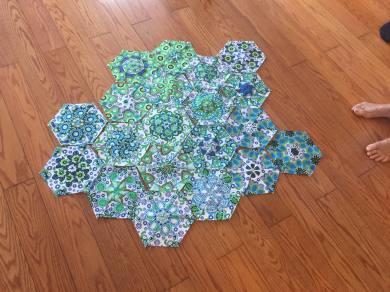
Outside of our regular Thursday meetings Jenny runs the occasional class for our group completely free of charge. The latest one was for a quilt named stack and whack where the
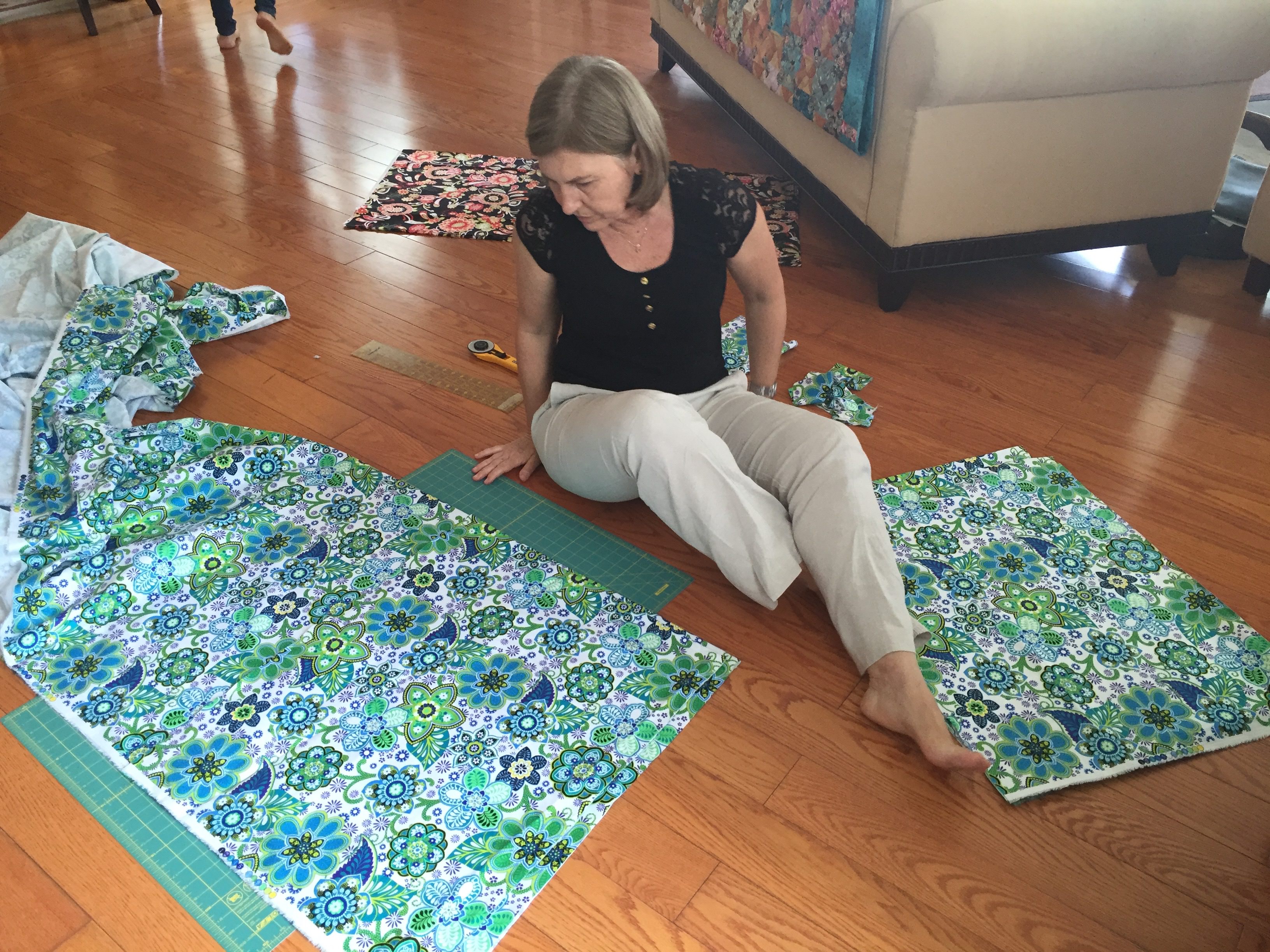

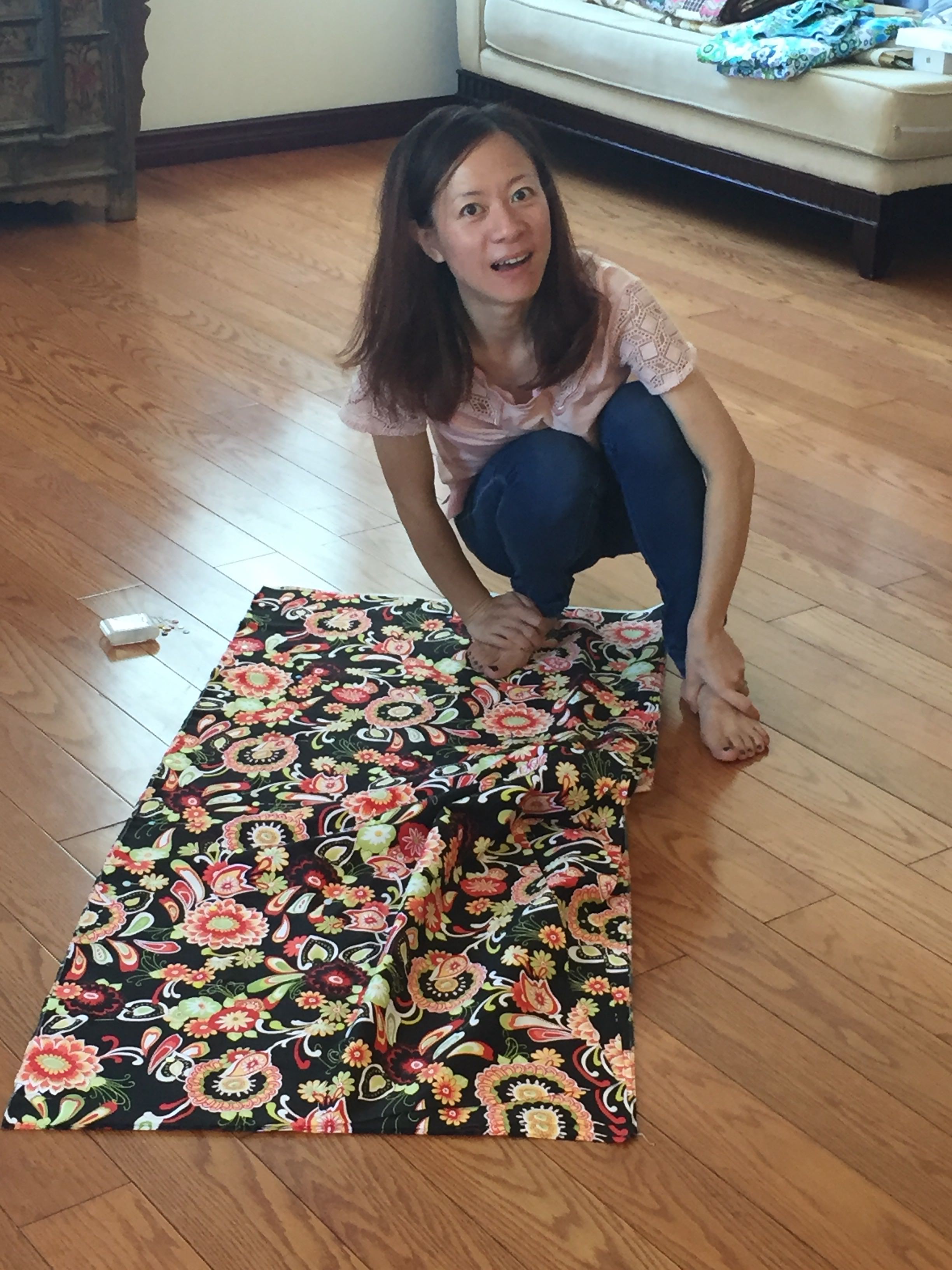
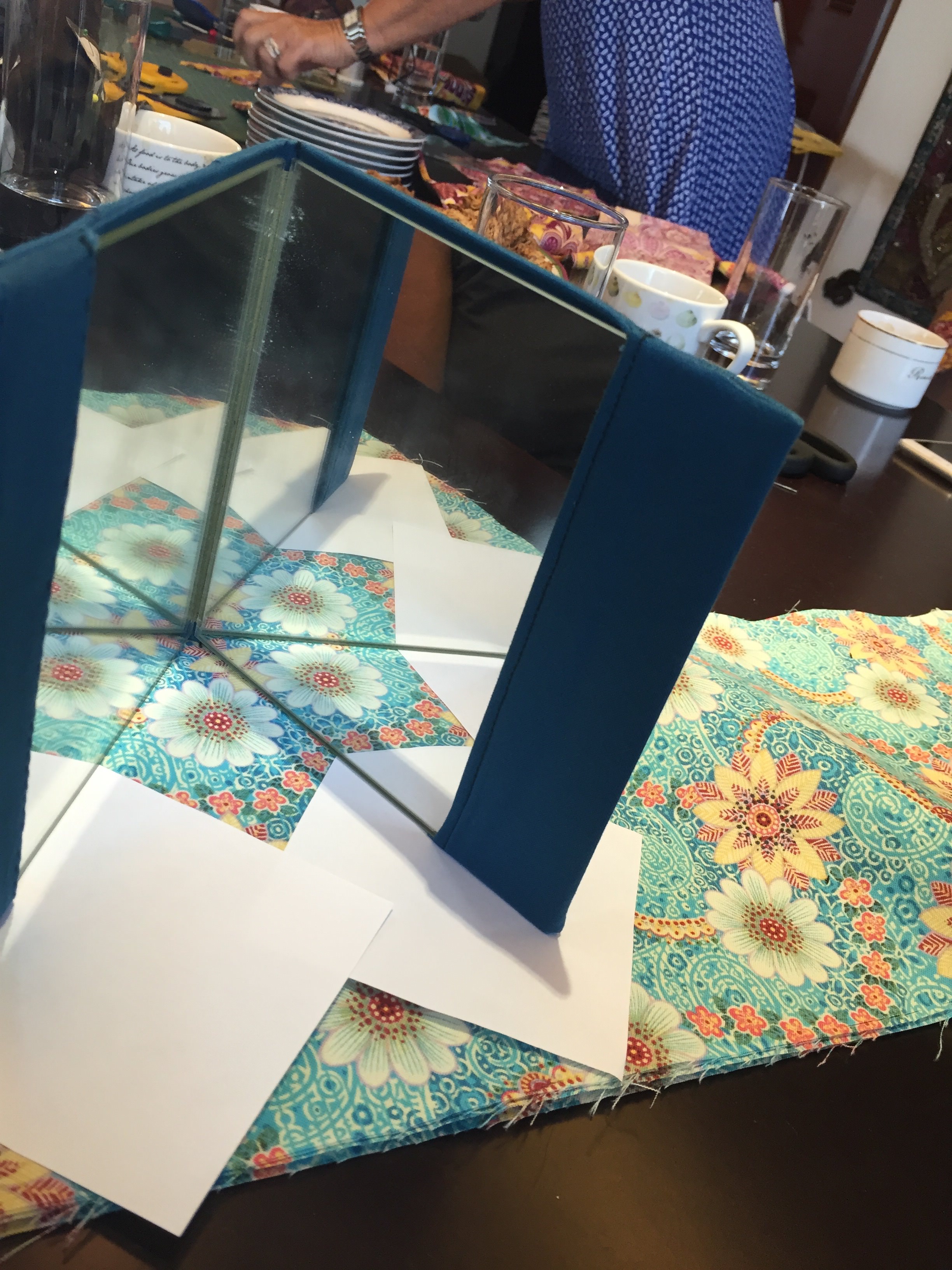
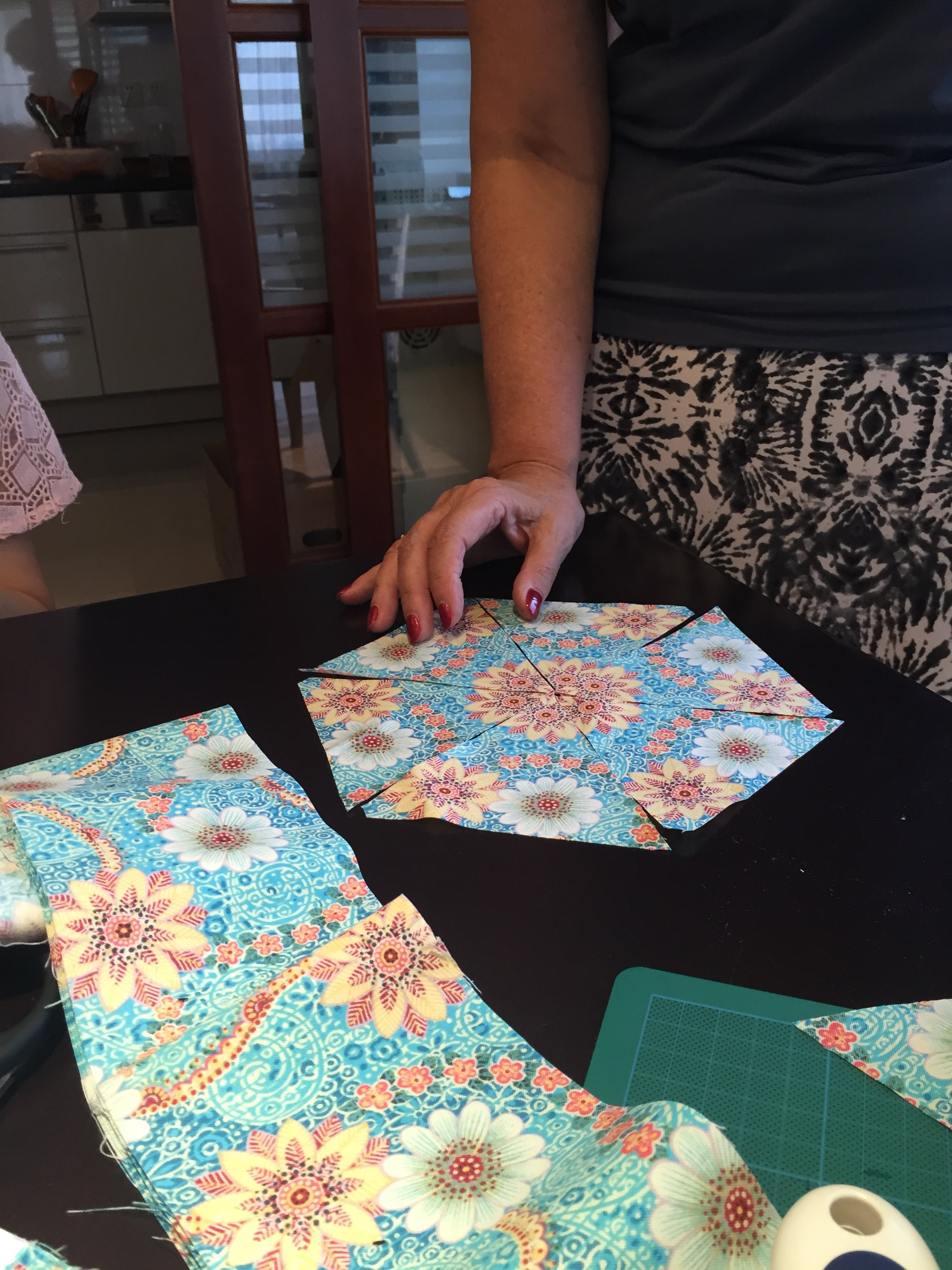
fabrics pattern repeat is exploited 6 times to produce 6 identical strips of fabric that are then layered accurately on top of each other, then secured tightly together and cut into 60 degree triangles. These are then stitched together to form hexagons each one a different kaleidoscope, which are then stitched together, with or without sashing to form a quilt.
Most of the work we do on Thursdays is hand stitching although some die-hards are prepared to lug their machines to meetings. Although the group is called a quilting group hardly anyone does any quilting. Most people are creating patchwork, multi-coloured 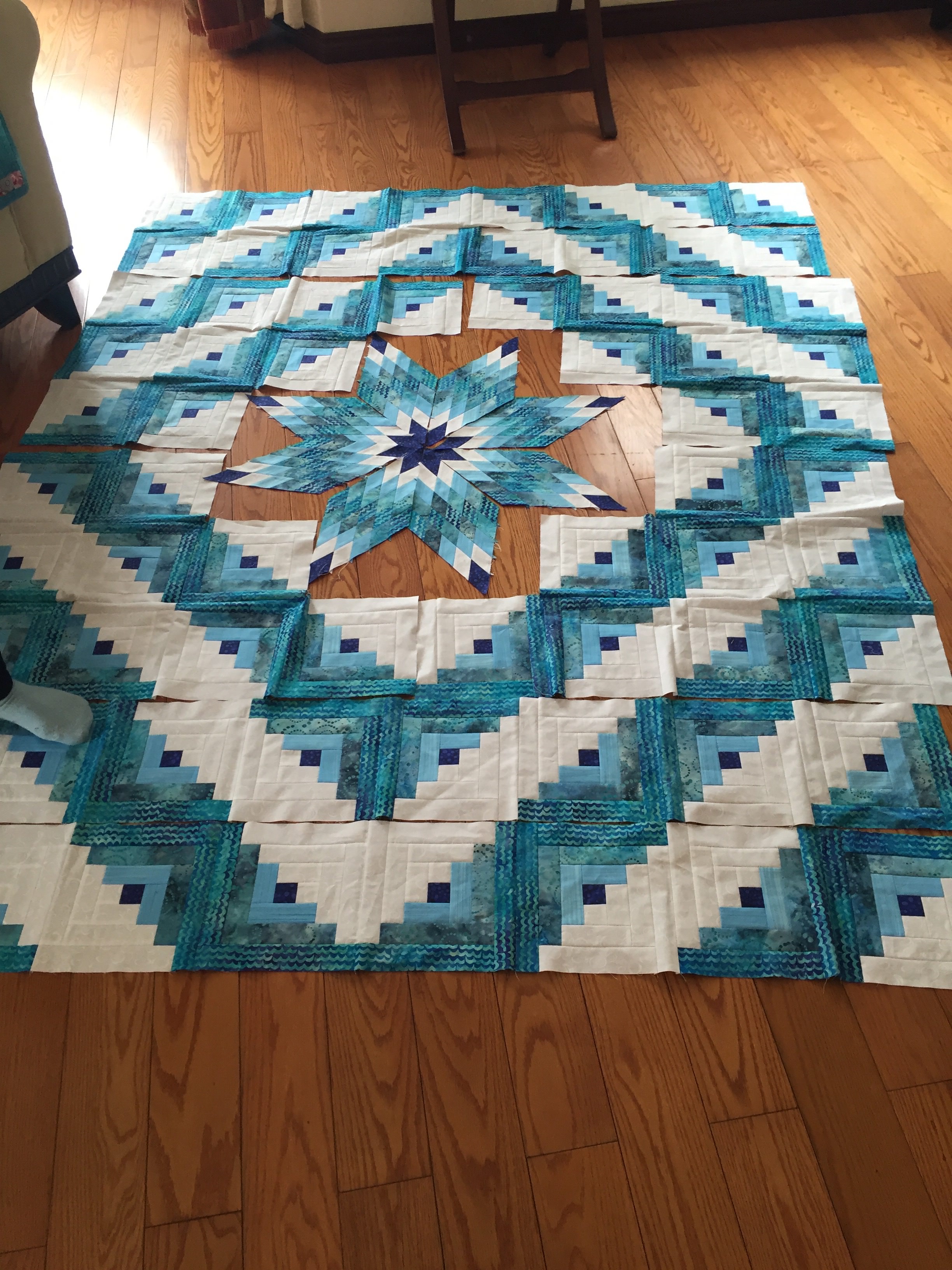
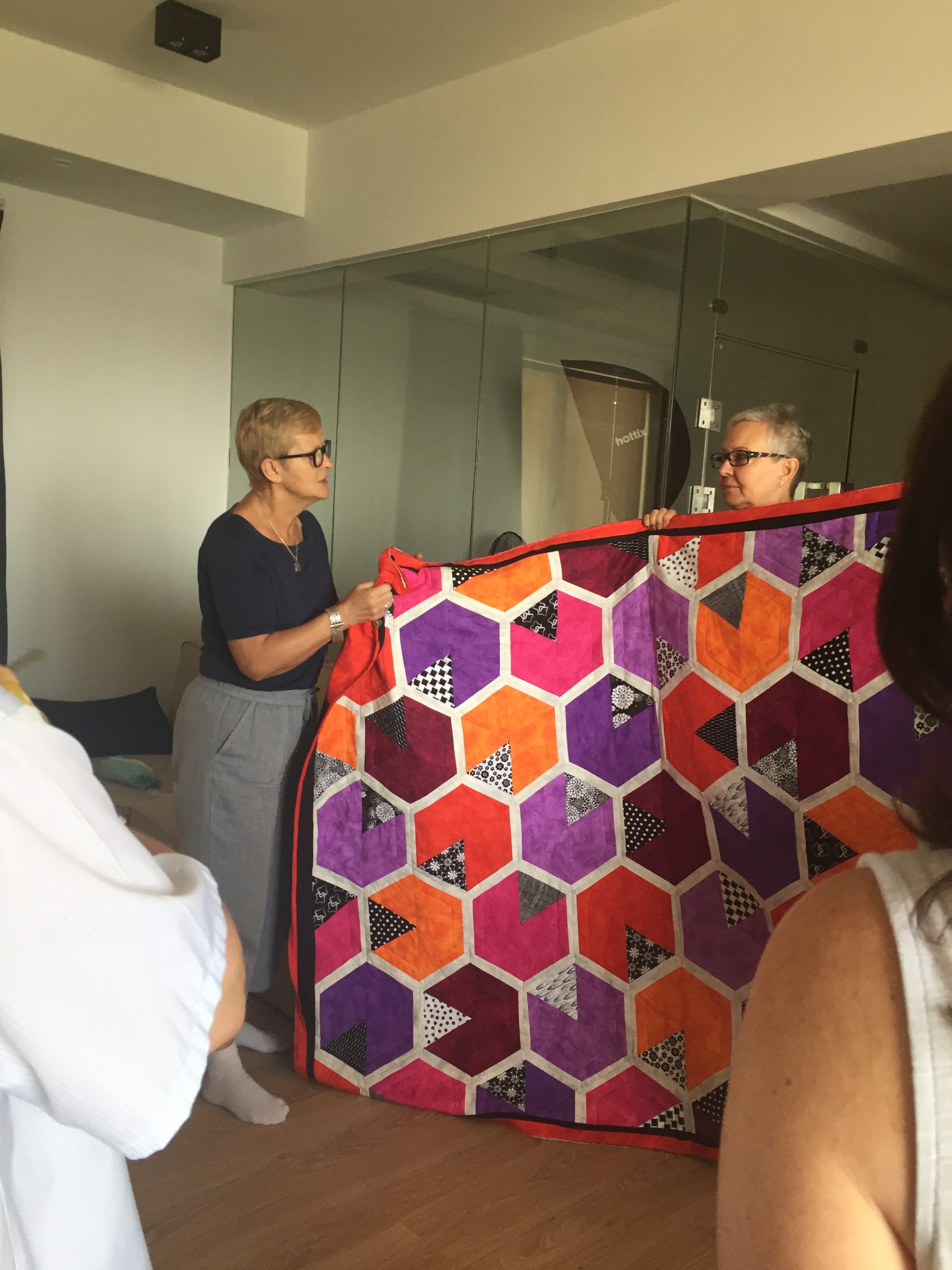 geometrically arranged fabric. Jenny hates quilting and normally sends her patchwork tops away to be quilted by someone else, often on a specialised sewing machine called a long-arm that can manage the volume of fabric of a bedspread made of three layers – the patchwork top, the wadding or batting in the middle and the plainer backing fabric. Some quilt on their own sewing machines. Some have other projects on the go such as preparing fabric for tie-dyeing, or crocheting for instance. We all have UFOs, which in quilting speak means unfinished objects and not what you might initially have thought.
Unusually my quilt was made of appliqué – small pieces of fabric sewn onto blocks of larger pieces of fabric to make pictures, that are then sewn together to make the top layer of the quilt. The style is called a Baltimore Quilt as it originated in Maryland in the 1840s. Mine was designed by a Japanese lady, Yoko Saito, who specialises in the Japanese taupes earth- coloured fabrics often used in yukata and kimonos.
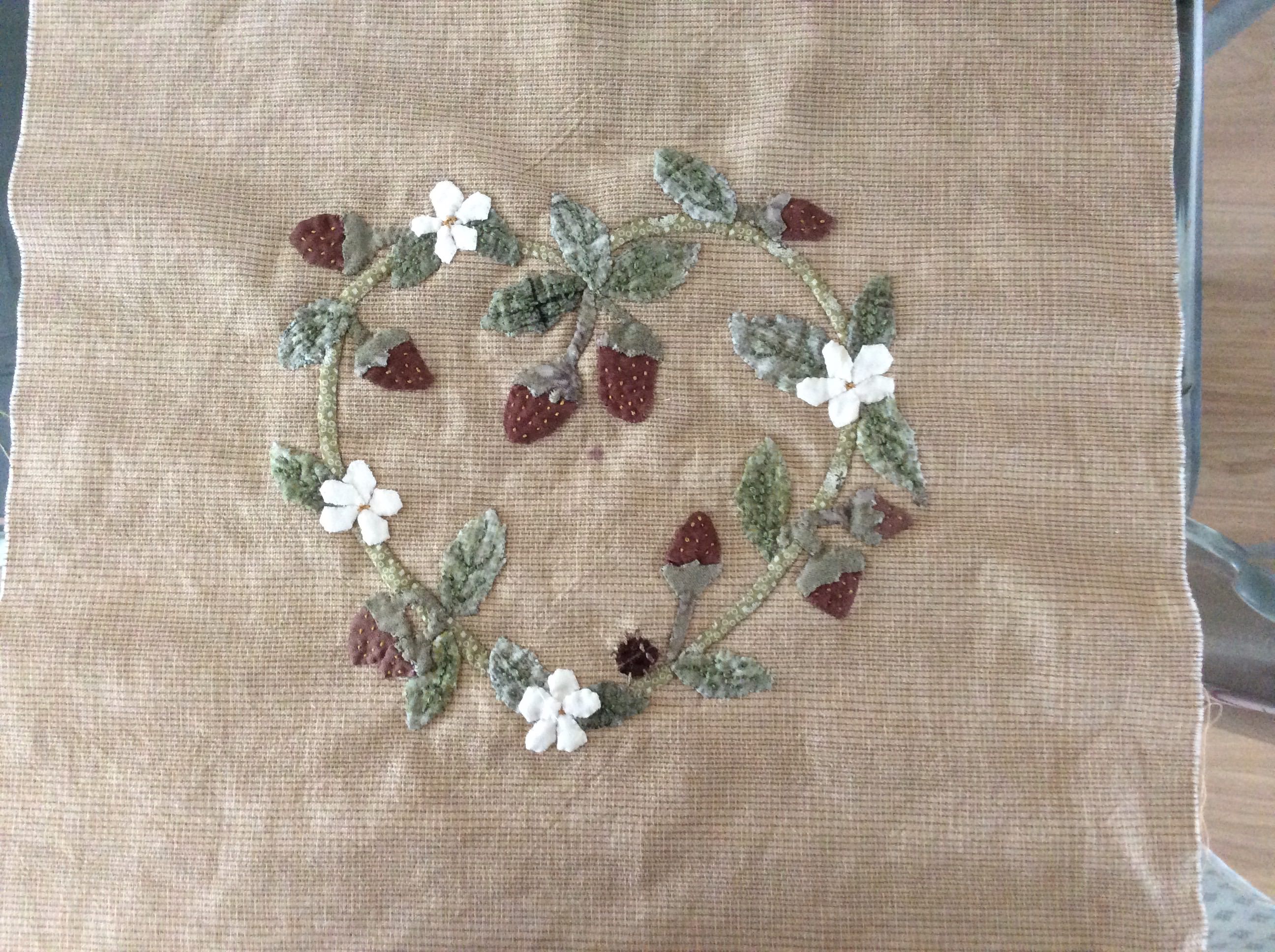
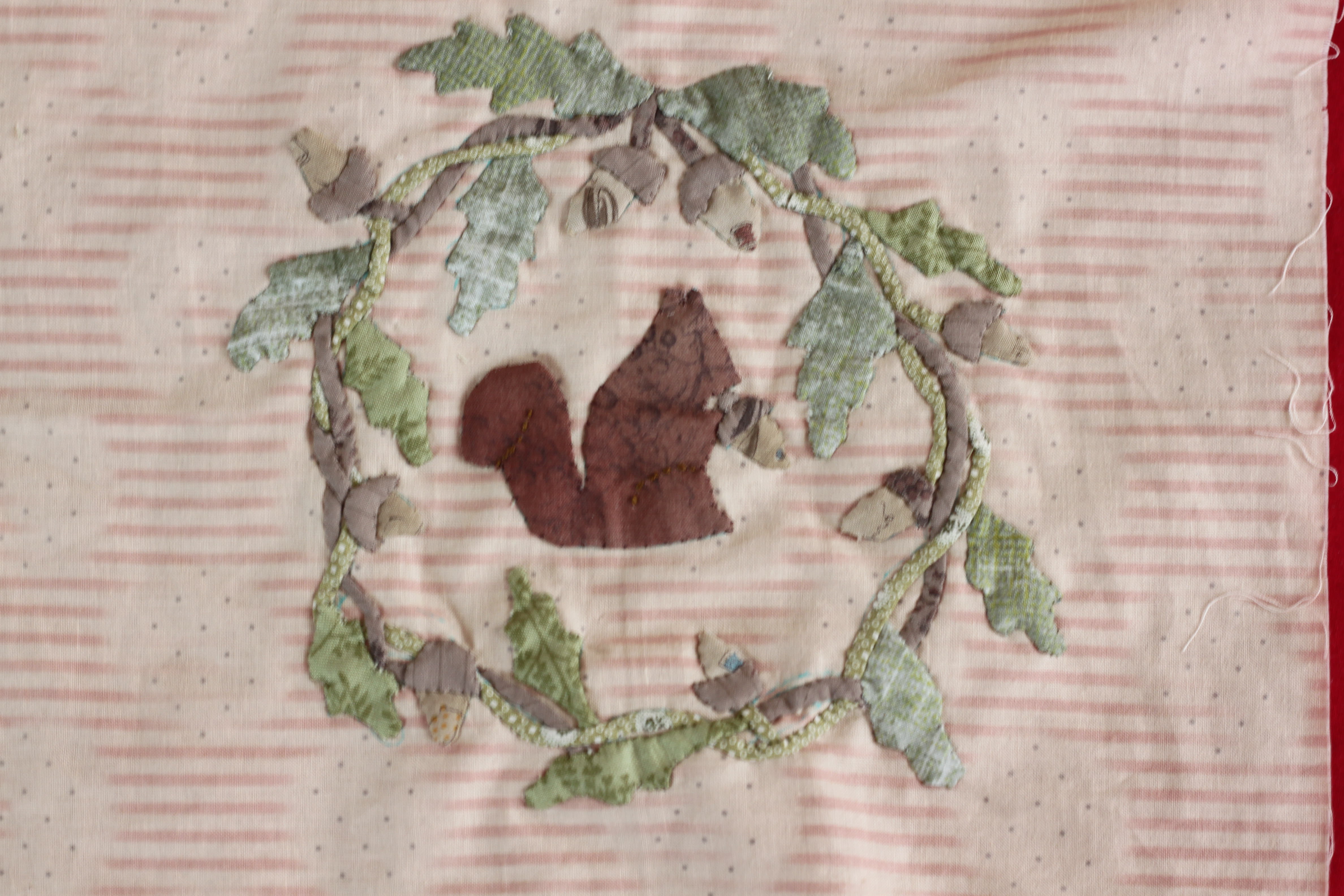
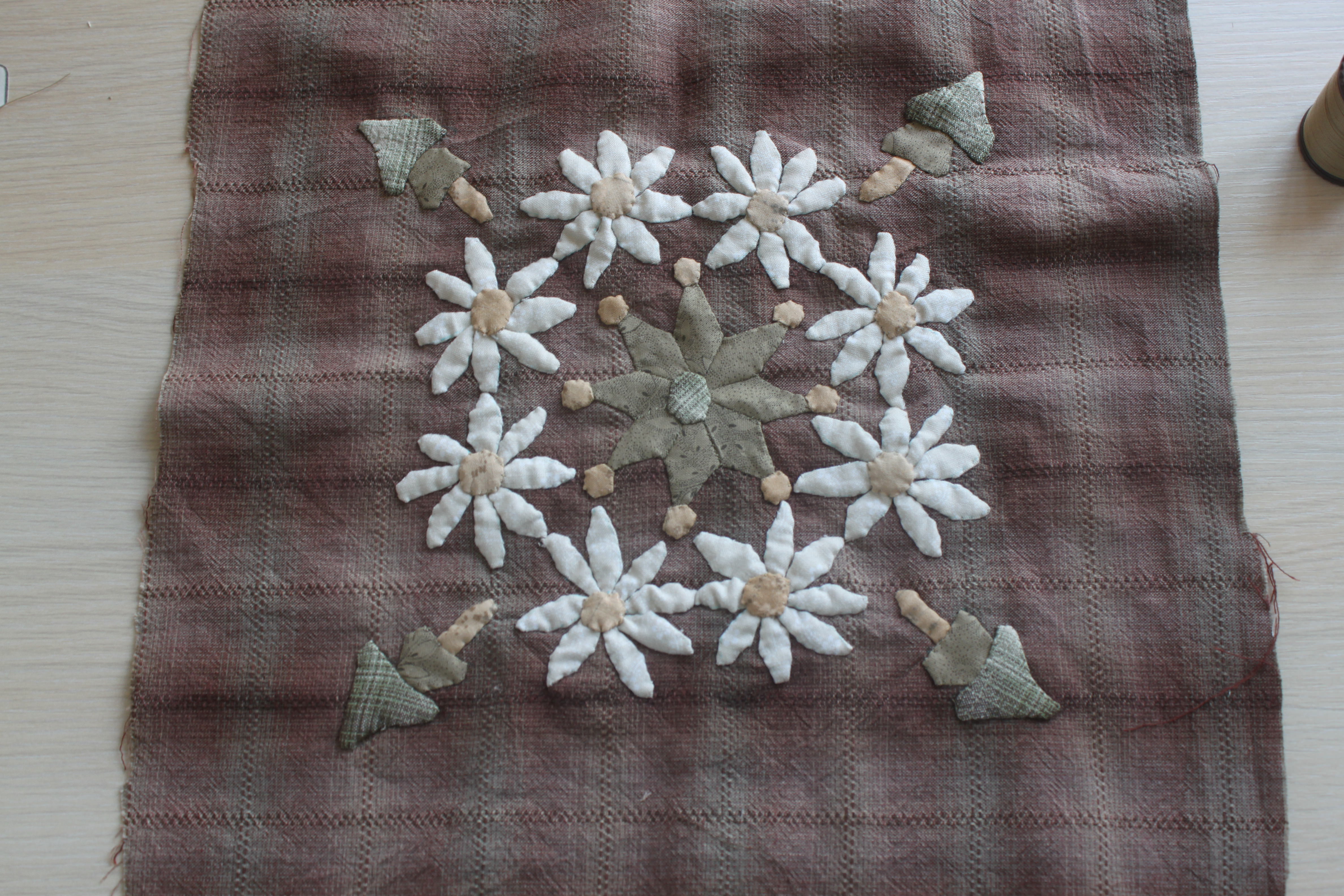
For instance one picture in my quilt is a garland of strawberries; another a squirrel sitting in a garland of oak leaves. Once I had finished all 25 blocks, they are then sewn together with 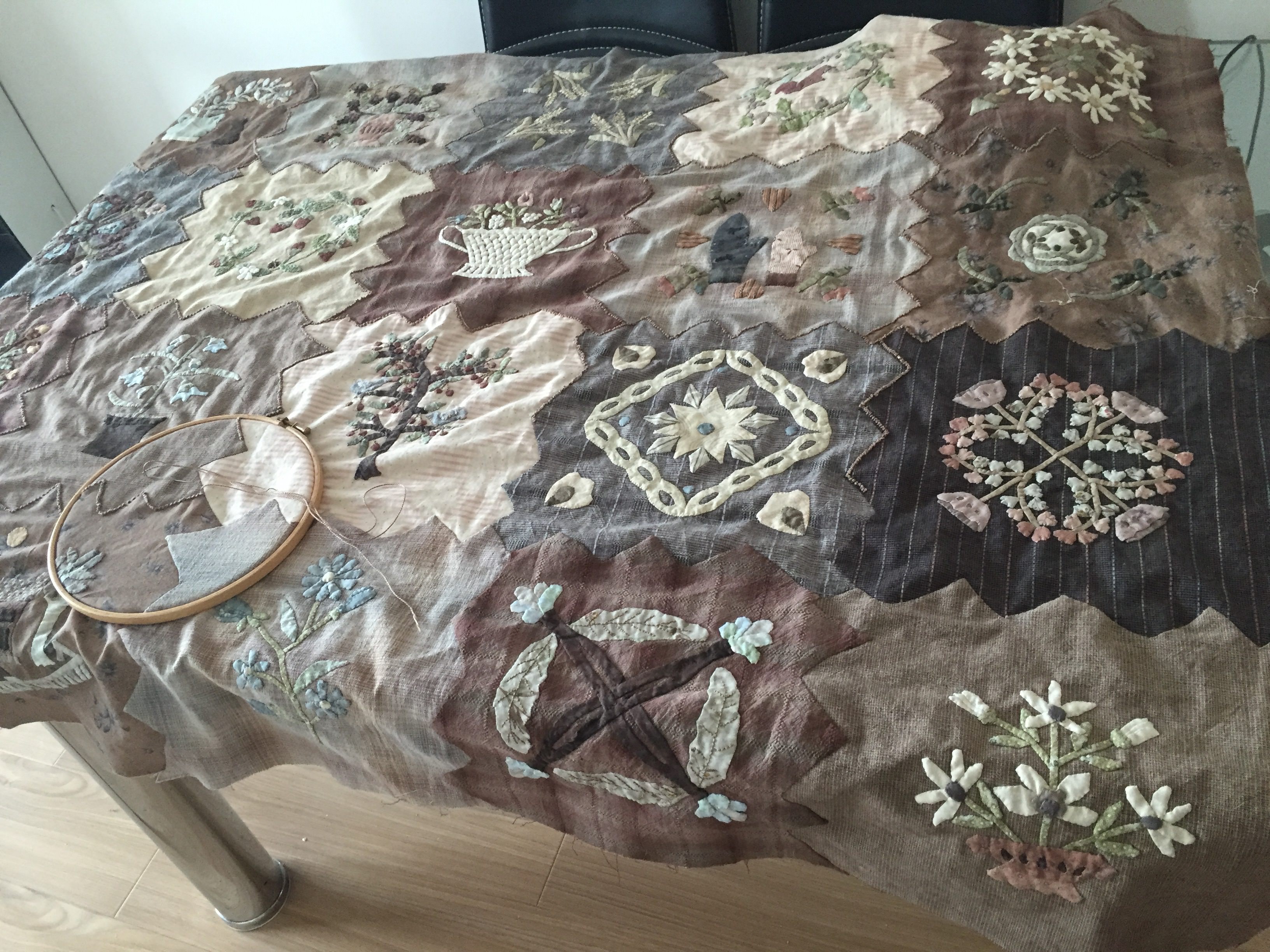 a zig-zag border between the blocks, appliquéing one block on top of another. All these seams were then reinforced by embroidering a row of colonial knots on the edge of the appliqué seam (thanks Jenny!). The central part was then surrounded by a border made from darker fabric appliquéd with oak tree branches with acorns and attached in the same manner. Here is the partially finished border showing the papers I use to cut out the fabric shapes that go to make the pictures.
 And last month I took it back to the UK and whilst there I completed it – the top layer that is. I didn’t want to keep it in Shanghai, otherwise I would have wanted to start hand-quilting it. It has already taken up too much of my life this year and I decided that I needed to leave it alone for a while. Taking it home and leaving it there means that I have now created enough space in my life to start writing again.

 Pearls From The Orient