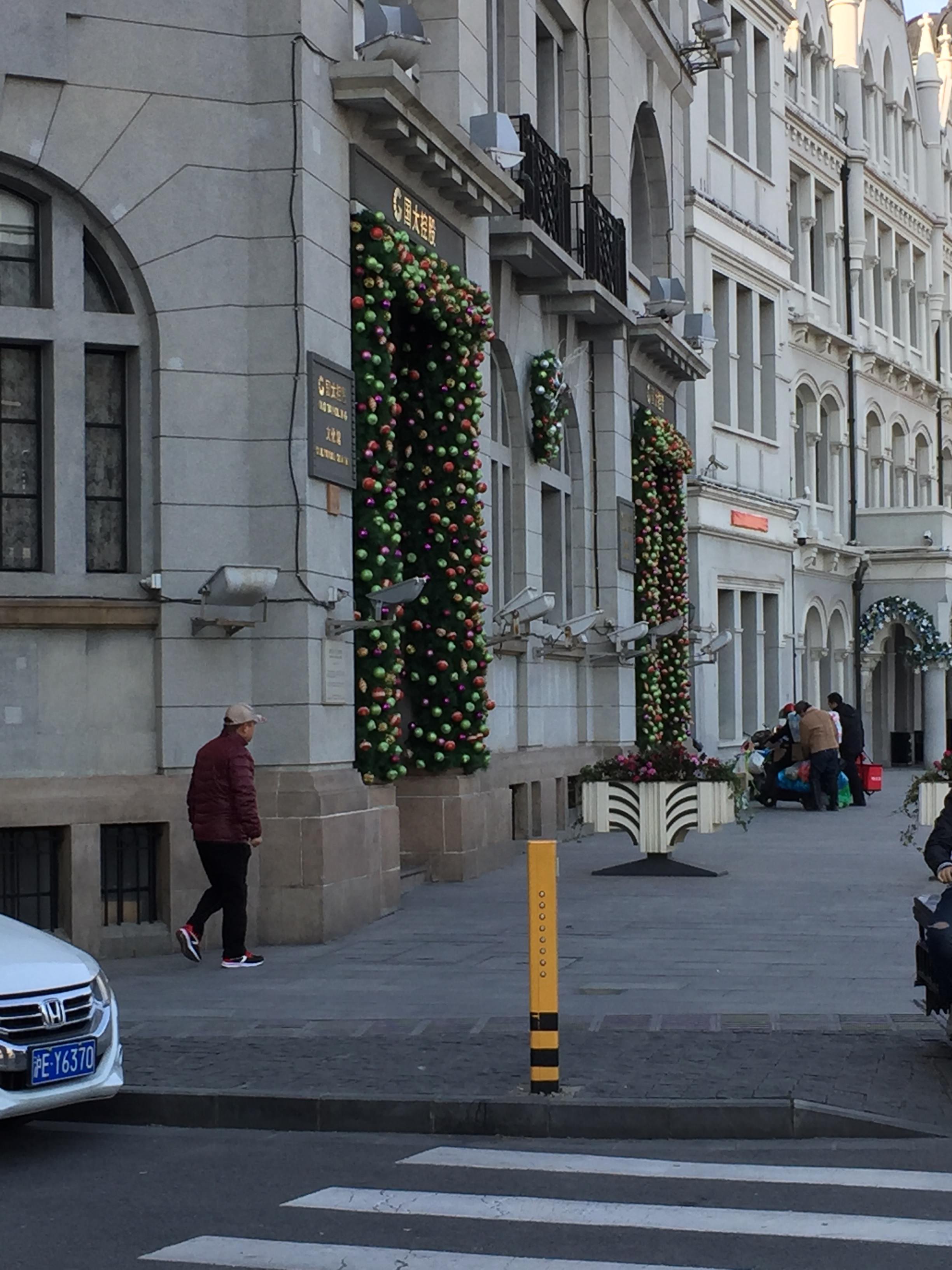
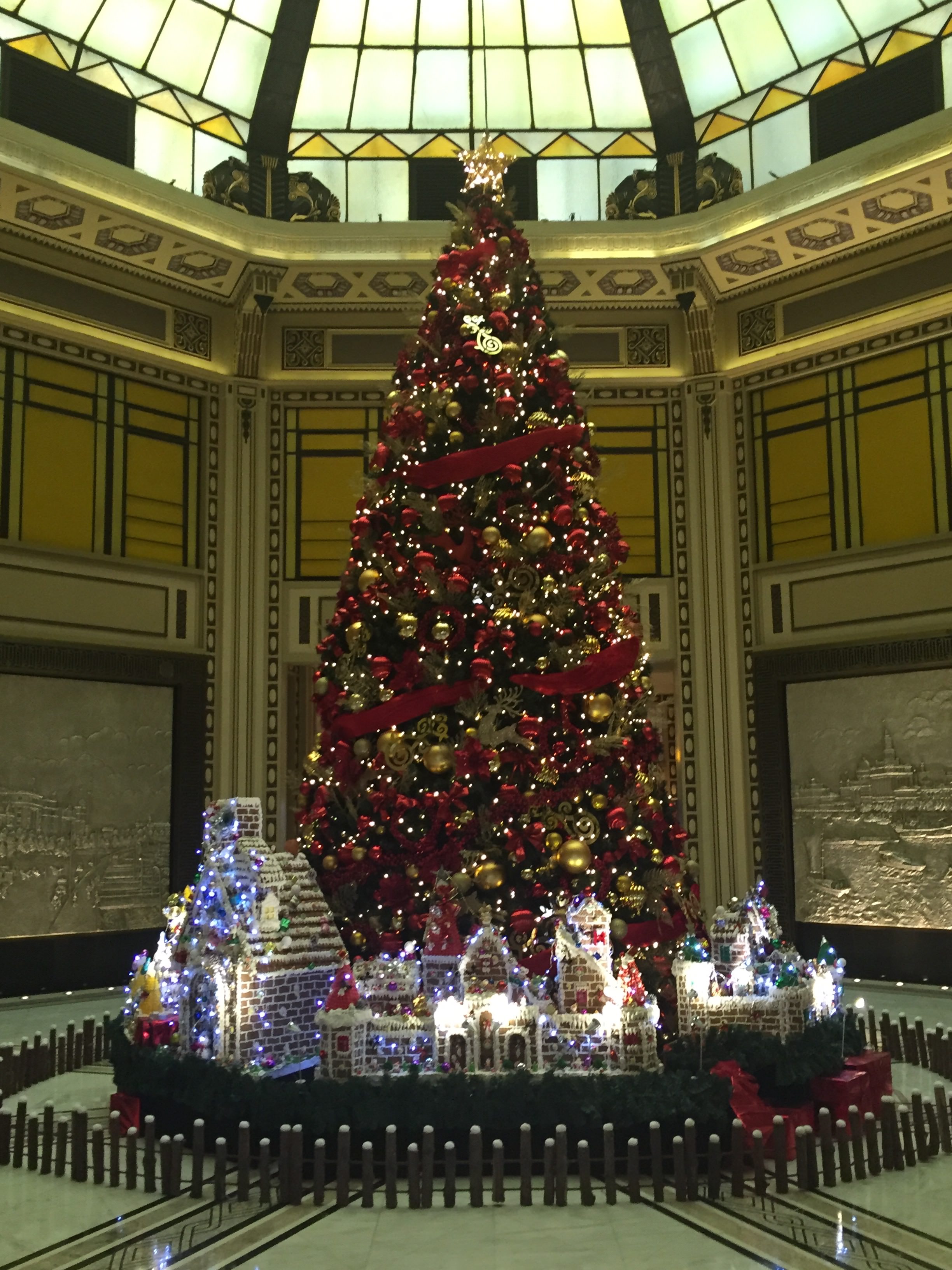
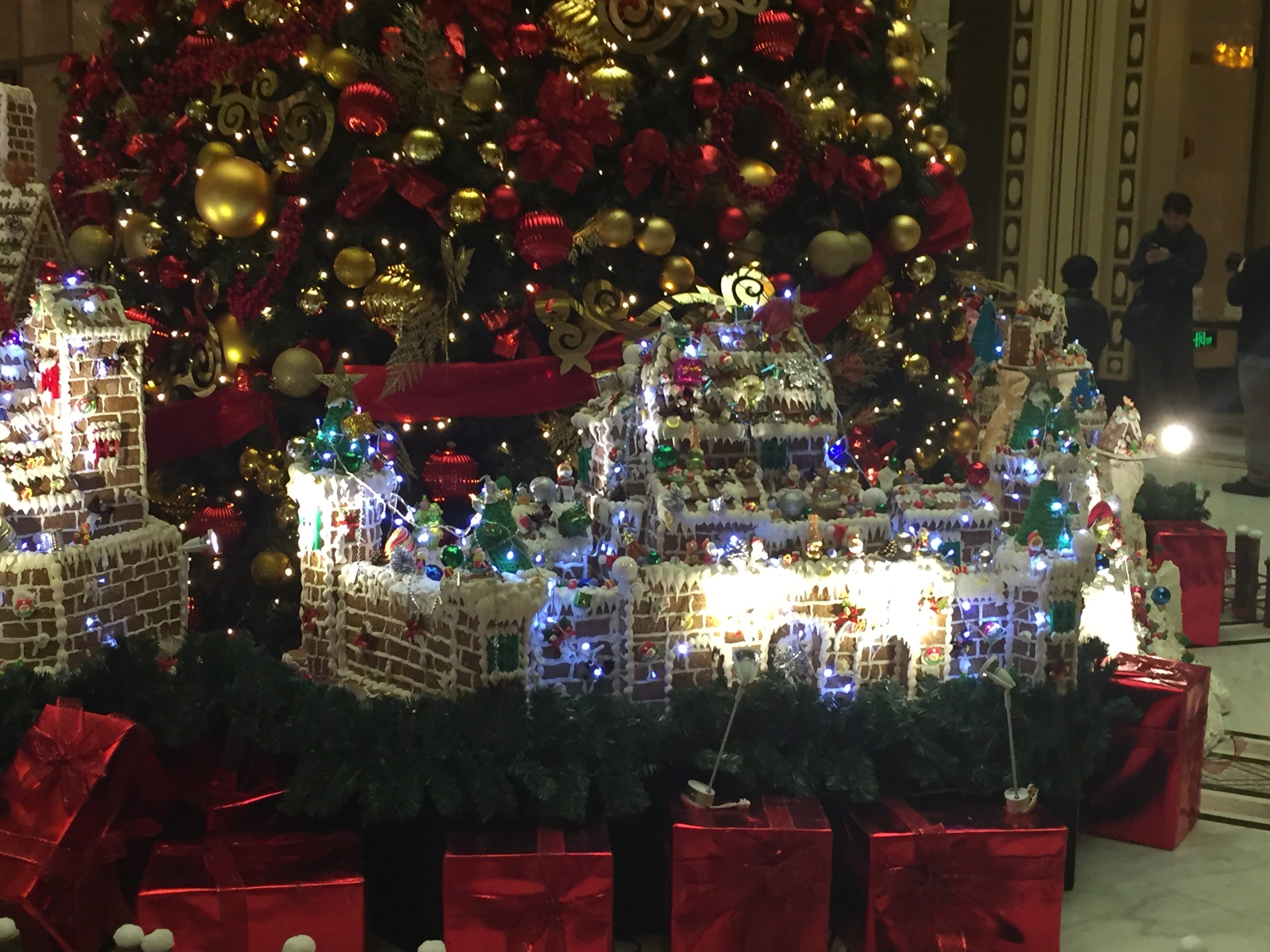
When it became obvious that we were going to be asked to stay for another year in Shanghai I agreed with Richard that we should do a little bit more to make our apartment homely. Arriving with three suitcases each and expecting to depart with the same amount had stopped us bringing or buying anything to decorate the flat. But I decided that if I had to spend another year in Shanghai I at least wanted to make the place feel a little more lived in.
 So we started with photographs from the contemporary art district 50 Mongashan Road. I wanted black and white photos of particular views of China that meant something personal to me. So we bought a few. Once we got them home there was the problem of how to put them up. We do not know what the lease details of the apartment are, so we didn’t want to damage the walls. With no Blu Tack in sight anywhere, no picture hooks and no picture rail, Richard came up with the ingenious idea of double-sided tape…… which worked for a few weeks, but as the moisture in the atmosphere finally reached the mounts they all tumbled off the walls, so we are back to the drawing board with those.
 of pink-veined yellow ones, which the florist at the Hongqiao Flower Market said would last the longest, which they have done by a mile. The other two types have more or less dropped all their flowers now and I expect Richard will be going back soon to get some more. We are surprised how much they do drop all their flowers – we kept some white orchids in flower for at least 18 months whilst living in Fordwich, from the moment we moved in as a moving in present to myself to when we left for China. But we seem to have little success here. I wonder if it is the variety of Dendrobium that we are buying.
 First of all we had to find a fish bowl that we actually liked. Not long before we knew we were coming to China I had seen an old Chinese porcelain fish bowl I liked on eBay, which although in need of some drastic repair I still liked it, so I bought it and it is currently at West Dean College being repaired by one of the ceramics students. Traditionally the large tall bowls have goldfish painted on the inside and are highly decorated on the outside. Often mistaken for planters in the west, ours was a typical Qing Dynasty bowl . Although there were fish bowls available in the local flower markets here neither of us really liked any of them – their designs and colouring were unsubtle.
However we did come across a ceramics shop as we were walking around the French Concession one day just before Christmas which sold modern understated designs that both of us liked and they had a modern, shallow, large circumference fish bowl and a matching tea jar with a jade stone handle that we ended up  purchasing then and there. Once we got them home we took a trip the flower market the next day and bought ourselves three fancy gold fish with long flowing tails, together with some fish food and some plants to help oxygenate the water. The fish bowl was duly filled with water, the goldfish in their plastic bag floated in the bowl as the two volumes of water equilibriated and the weed added so that when they were ready the fish could swim around and enjoy their new home. We loved watching them swimming around and coming up to take their food every day, after they got used to me and to the time of day that I fed them, they lost their inhibitions and came to the surface with relish.
 So on a walk one day, when we found another (better) flower market with more (better) fish stalls we bought a pump to bubble air into their water. But one of the fish was doomed. We soon noticed that the most beautiful of the three had fungus growing on its body, which spread eventually to its gills and Richard found it floating dead one morning. The other two fish had been doing their best to keep it afloat and the fungus transferred itself onto them. I wondered how I was going to treat them – there is a vet over the road from the apartment but the language barrier, and the potential cost of saving two gold fish put me off going. They were only gold fish after all.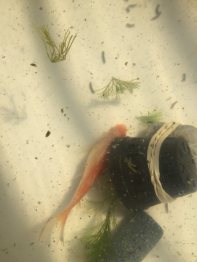
 And to add insult to injury they are both turning pink Looks as if the pet shop were feeding them something to dye them gold, a bit like the pink shrimp that make flamingoes pink. Our fish are no longer bold or gold.
 Mr Harry’s is a strange place. On the West Nanjing Road, more or less on top of Marks and Spencer’s is a British Restaurant. It is decorated with Union Jacks and knick-knacks you might find in a charity shop back home. There are piles of board games you can take out to play and when I was there one afternoon grabbing something to eat there was a group of people playing bridge; most of them were elderly i.e. much older than me – what are they doing in Shanghai? In theory you can’t get a work permit beyond the age of 60, unless you can prove that your job cannot be done by a local Chinese person. Were they married to Chinese people? Were they visiting expat relatives and taken refuge from
 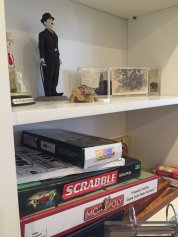 the mayhem that is Shanghai in this bastion of Britishness? Did they have much younger spouses that were working (you can’t get a visa for a non-working person unless you are married to a worker with a work permit, unless you come into the country as, say, a student). I didn’t ask – I was on my way to a meeting about a trip abroad I was making with the SEA, but I did wonder.
 The second time we went was for Burn’s Night celebrations. Mr Harry’s held Burn’s Night on the Saturday this year, two days before the usual night. We usually make a big deal of Burn’s Night at home, not because of Richard’s Scottish roots (and my very, very distant ones), but because 25th January is our son’s birthday and he loves haggis. He doesn’t like cake, never has, unless it is homemade, always eschewing it in preference for something savoury. So for as long as I can remember Charlie’s birthday “cake” has been haggis. And not just any old haggis if I can possibly help it, because according to his father, it has to be a MacSween’s haggis from Edinburgh. As far as Richard is concerned that is the authentic taste of haggis, which his father always brought back from Edinburgh when he visited (he was at school in the city) and no doubt his father before him (who was at Medical School there, and an authentic Scot).
 which he could play, and a kilt and instead of a dirk (the ceremonial dagger) in his socks he had a hip-flask. In such a small room the pipes were very loud, goodness knows that the people in the next door restaurants thought.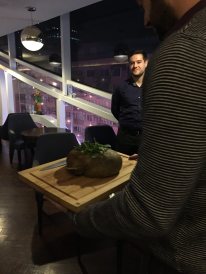

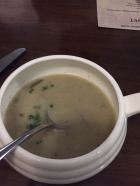
 the main course as Haggis, Neeps and Tatties, which is what you would expect for a Burn’s Night Supper, but the Haggis was strange and overly seasoned with pepper to disguise what quite, we weren’t quite sure. The tatties were certainly as they should be, but the Neeps – none of us could work out what they actually were. They certainly weren’t the mashed swede that they should have been. Not even Kirsty, a product development manager, who is even more obsessive about food than Richard could work out what we had been given. I’m sticking with my suggestion of white daicon radish dyed pink, in the absence of any other forthcoming contender. It was served with a very strange whisky sauce which seemed to add insult to injury.
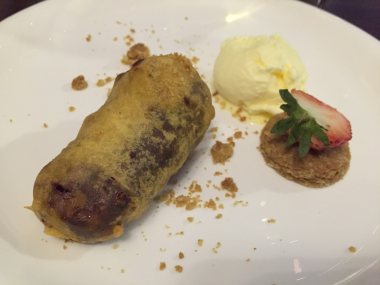 Next listed on the menu was Cranachan Trifle and Scottish Shortbread Biscuits, but the owner announced a change of plan and we thought he was joking when he said deep fried chocolate bar. But he wasn’t. When it arrived we actually looked forward to eating the traditional deep fried Mars bar as neither I nor Richard had had it before. But that too turned into a disappointment because they were deep-fried snickers bars instead.
 At least The Glenlivet 12 Excellence Single Malt didn’t disappoint.



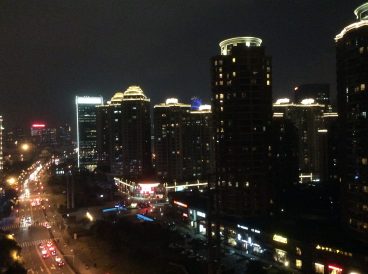


 why they are also called the Maidenhair tree as the leaves fall in hair-like strands from the branches in thick yellow cascades.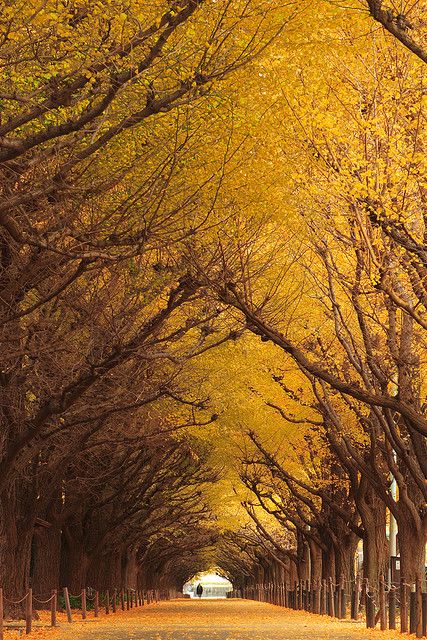
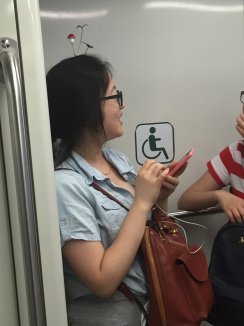 Sometimes here in China you can’t help thinking to yourself what on earth are they thinking. That happened to us during the summer. It started when Charlie and Ella were over here visiting in August when we were in Hangzhou on a day trip and I suddenly caught sight of someone wearing what looked like a seedling in their hair – a dicotyledon with two small circular leaves. But as the days went on, we started to see some appearing in Shanghai – this lady was on the metro and it became obvious that the sprouts were made of plastic rather than a real plant. And then they started to appear for sale everywhere and the market and people’s hair became saturated (and yes, for a short it was not just a female thing).


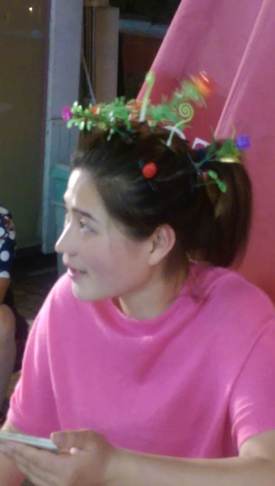 And now the craze has gone and is now dead and well buried. It lasted for a much shorter time than the punks’ safety pins and I could say that it was nice whilst it lasted, but I don’t think I would be telling the truth.



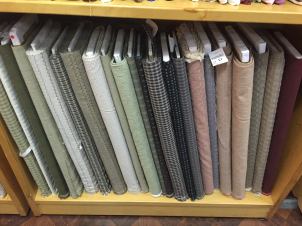 I had become interested in the Japanese use of colour many moons ago after my mother had visited Japan from their home in Hong Kong and had remarked that the Japanese are much more sophisticated in their use of colour than the Chinese. She would often say mysterious things like that. I, as a scientist, would sometimes not have a clue what my mother, an art teacher, was talking about. But over the years there are some things that she has said which I have come to understand and the sophisticated use of colour in Japan is one of those things. In fact by the time we had moved into our house in Kent with its mainly taupe furnishings I became truly excited at the prospect of creating some Japanese quilted items using taupe fabrics, following in the footsteps of the Japanese Quilter Yoko Saito. I had even gone out around Fordwich and photographed all the houses to make into a Fordwich town quilt, which I hoped would depict many of the medieval buildings in the town. That project has been left behind in the UK for another time, but what I did bring out with me was the first of a number of Yoko Saito’s books I have on quilting and a selection of Japanese taupe fabric squares to make a Baltimore Quilt.
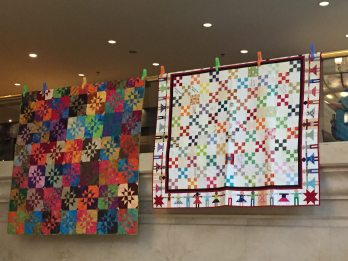 When I entered the ballroom of the Regal International East Asia Hotel, having paid my sub and armed with a coffee I found a seat next to a lady with a quilt in front of her. Here was somebody with whom I tentatively had something in common, I thought. Willemijn, a Dutch lady who has been living in Shanghai for many years, was a member of the quilt group I had tried to join in March. Lying in front of her was a quilt made by past and current members of the group – (the ones from overseas sending their contributions back to China). The quilt was to be auctioned off in November to raise money for a charity and during the coffee morning I helped her carry the quilt around the huge room drumming up interest for the cause as we went. We appeared to hit it off well, and although I’ve ended up with clashing commitments on Thursdays when they meet up I have at last joined their group. When I found out that Willemijn loved Ottolenghi’s food and had indeed been to his very first tiny restaurant in Jerusalem before he moved to the UK, when she and her husband lived there, I knew I’d found someone who was very interested in the type of things that interest me. (When I told Richard about Willemijn and Ottolenghi in Jerusalem he was so impressed that he bowed calling out All Hail! – he is the chilled food industry’s guru you have to understand).
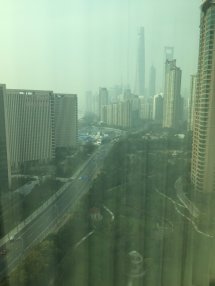 So every Thursday, when I can, I go along to the house of one of the members of the quilt group, where we sit and quilt and talk for four hours or more. We either take a packed lunch or the hostess makes a meal for us. I have been over to Pudong to an apartment overshadowed by the massive Shanghai tower and into a flat in the French concession, out to the far west and elsewhere. So far these homes have been decorated with beautiful quilts and I have met some wonderfully kind and interesting people, from all over the world, from Dutch to Chinese, American to a New Zealander. I’ve had to miss some meetings because of a course I have also signed up for, which takes place on Thursday mornings, but I have tried to get along to the quilt group as often as I can. And it means I get a chance to view Shanghai from some very different apartments with some very different views from our own.
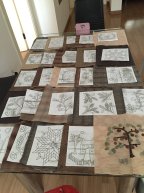 my brothers and boyfriend of the time to take to university with them. They were made using English patchwork with paper-forms over-stitched together in the traditional way. In 1999 I made an appliqued picture of Geddington’s post office as my contribution for the millennium wall hanging that lives in the village church, using applique and machine embroidery techniques my mother used. I even went on a City and Guilds course on embroidery and quilting which came to an abrupt end half way through, due to an accident on a skiing holiday, but I have never actually quilted anything in my life. That all comes later with my own quilt of course.
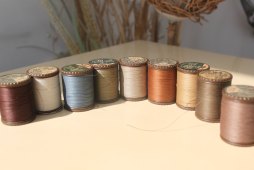 The applique on these squares needs tiny stitching to try and be invisible and I have been out and about to find a shop that sells suitable threads. Luckily a number of the group recommended some shops to me (someone currently in the US even offered to bring me some threads back with her), and I have found a shop not very far from here – one of two quilt shops within walking distance of the apartment (who would have thought it?) – who sell an excellent selection of
  Japanese threads that are perfect for the fabrics I have. My desk is now set up in a little alcove that gets bright direct morning sunlight so that I can see to stitch very easily in the mornings – in the evenings the light in the apartment is not nearly good enough to sew by.
 a couple of blue birds in a cherry tree, the second is a house with a picket fence and standing between two silver birches, the third interlocking something or others, the fourth an eight pointed star, the fifth a pair of mittens and the sixth, just finished yesterday a kind of columbine-cum-honeysuckle.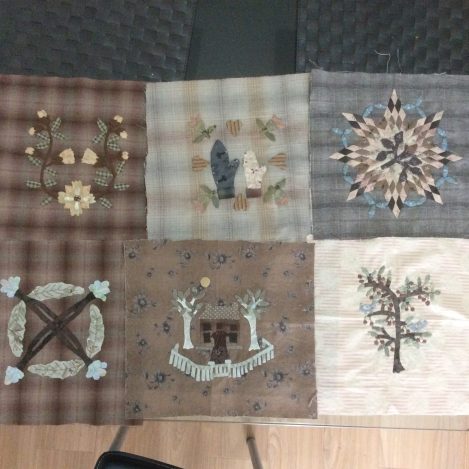












 Pearls From The Orient