Chairman Mao and Shanghai 2

The House at Jiaxiu Lane, Morming Road

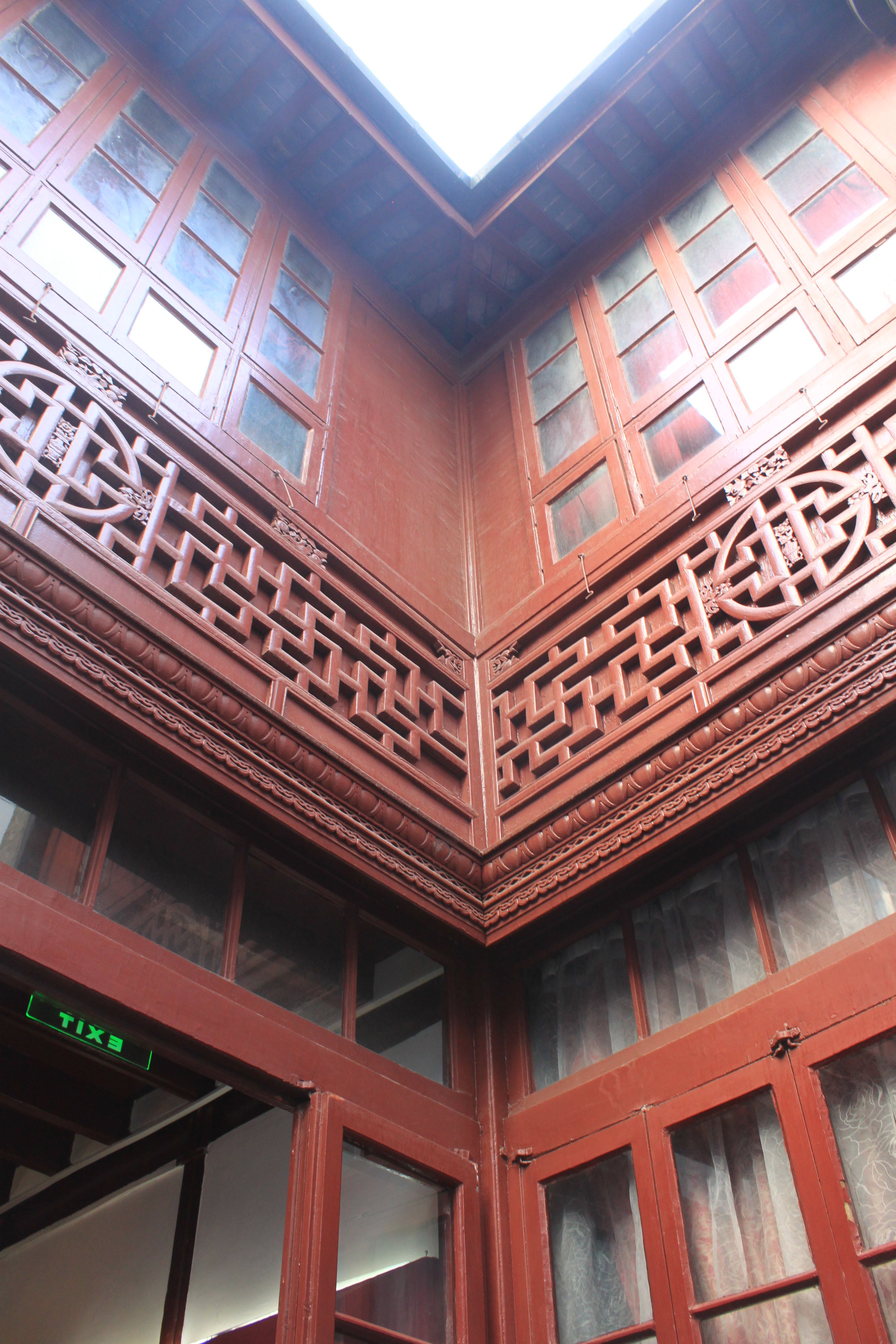
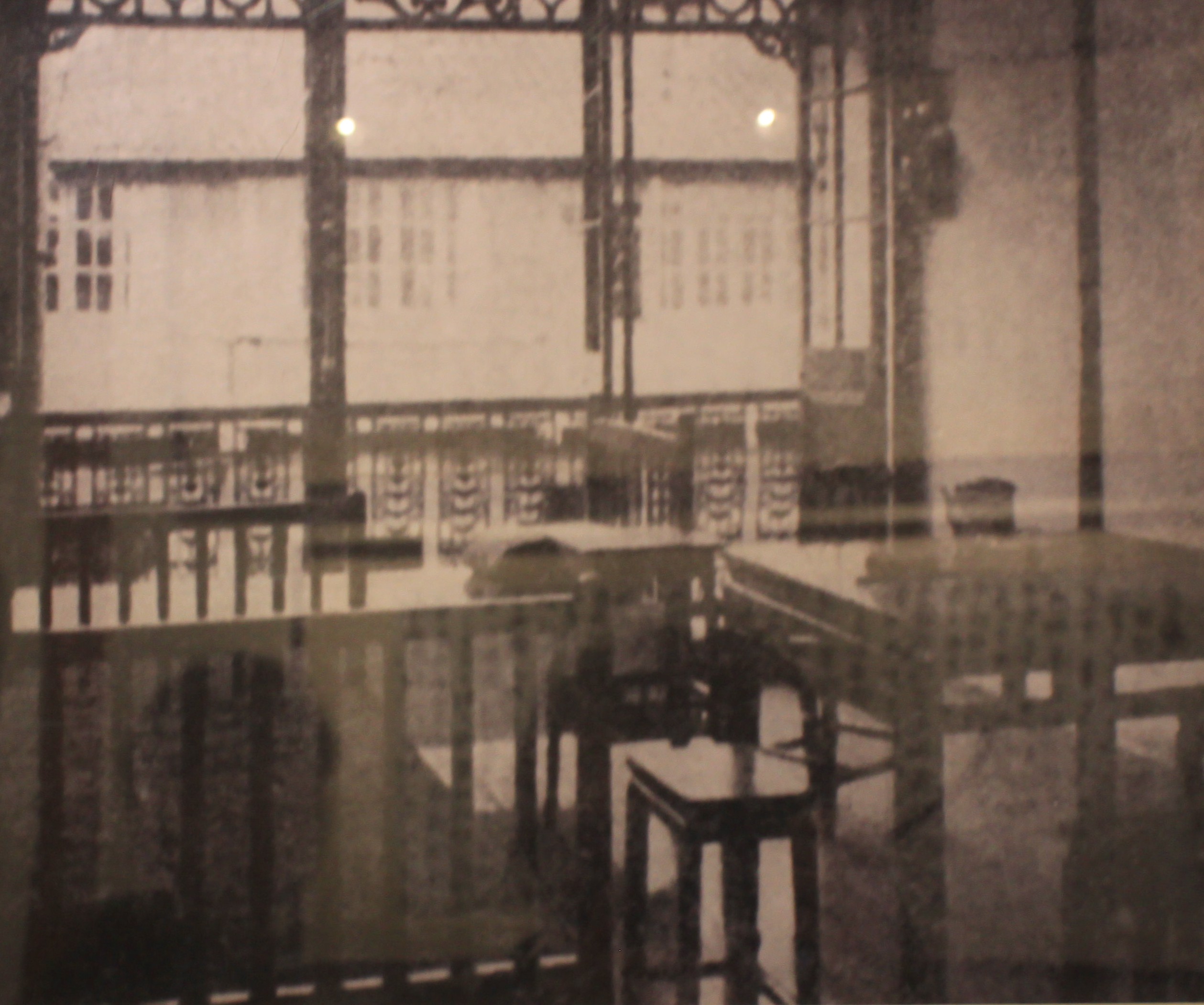
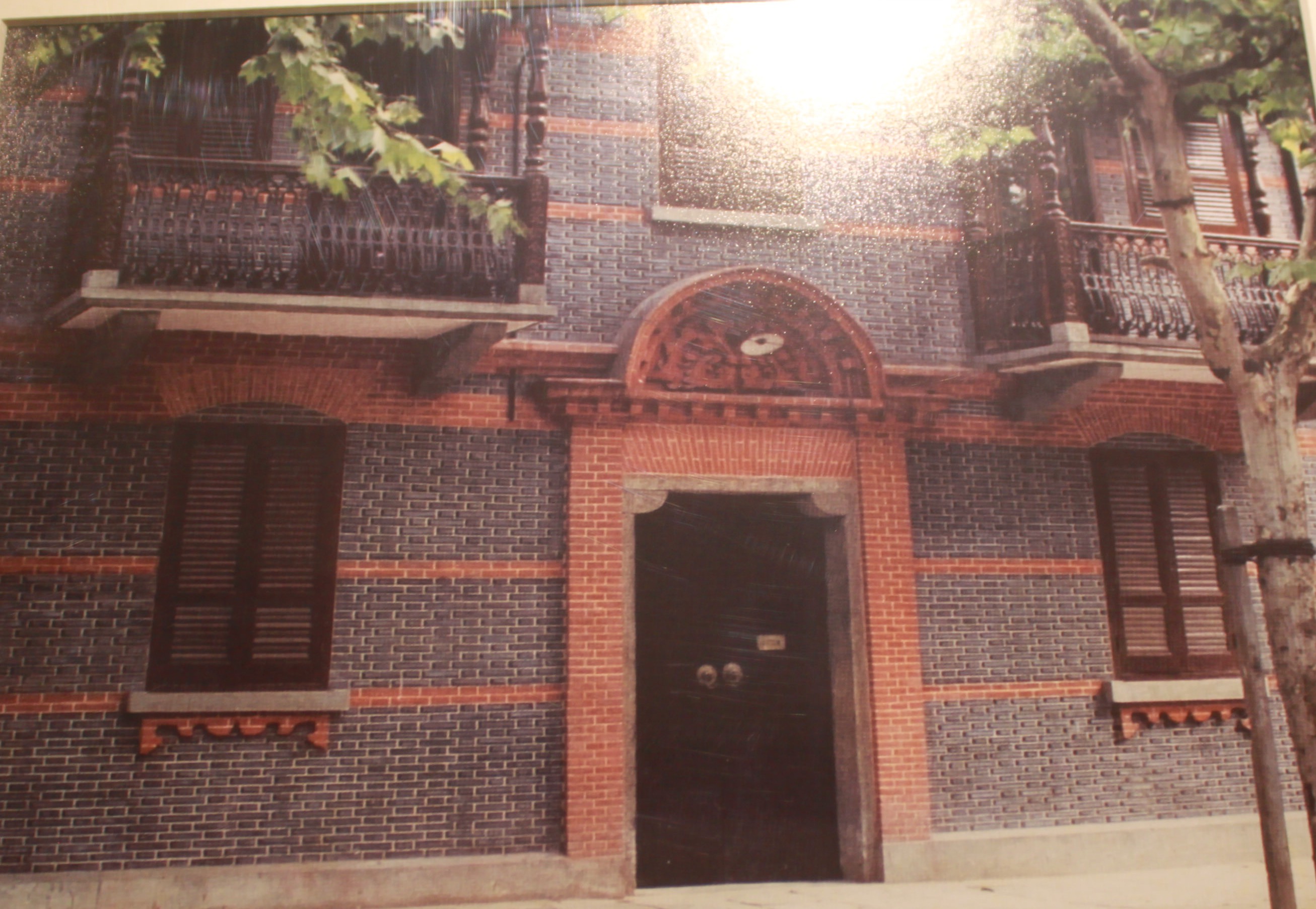
Down this unprepossessing alleyway, and around a couple of corners I came across this Shikumen House with a classically designed portico and typical black doors with heavy metal door fixtures. Immediately inside is the usual mini open air courtyard.   IMG_2114 IMG_2116

The upstairs floor from courtyard

The upstairs floor from courtyard

A wing of this house was originally lived in by Cai Heisen, an early leader of the Chinese Communist Party, who had been one of the students who had gone to France, and his wife Xiang Jingyu in 1924.  In June they were joined by a friend from his home province (he was born in Shanghai but grew up in Hunan), Mao who had been in Shanghai since March and his family. Cai and Xiang moved upstairs – the Maos and her mother lived downstairs.  Mao was appointed by the Communists to work for the Kuomintang Shanghai Executive Office, whilst still working for the executive bureau of the CPC, after the formal co-operation between the two parties was signed in January of that year. By mid July he was ousted from the KMT job and by the end of the year returned following exhaustion to Hunan.

Kitchen LHS
Kitchen LHS

Kitchen RHS

Kitchen RHS

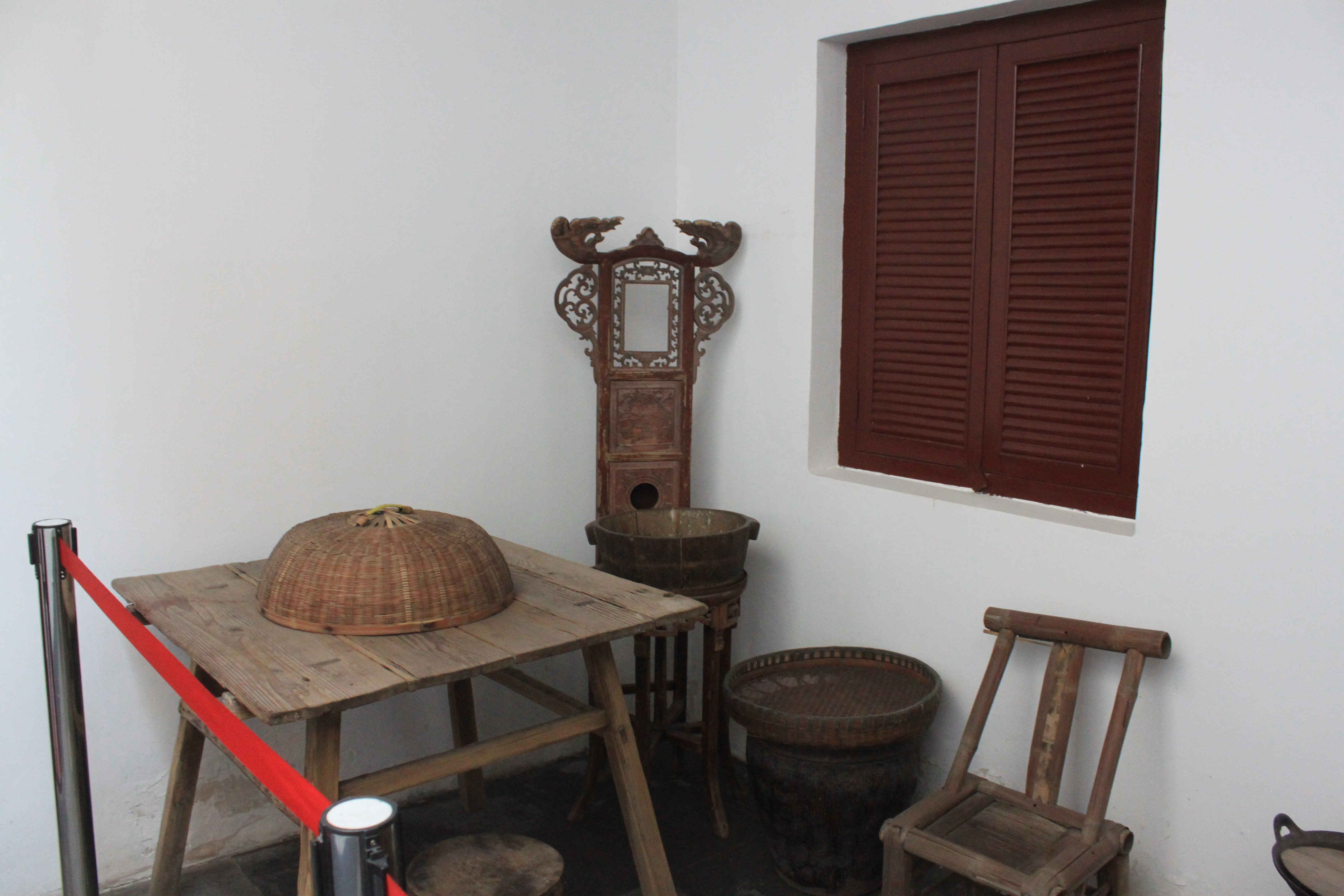
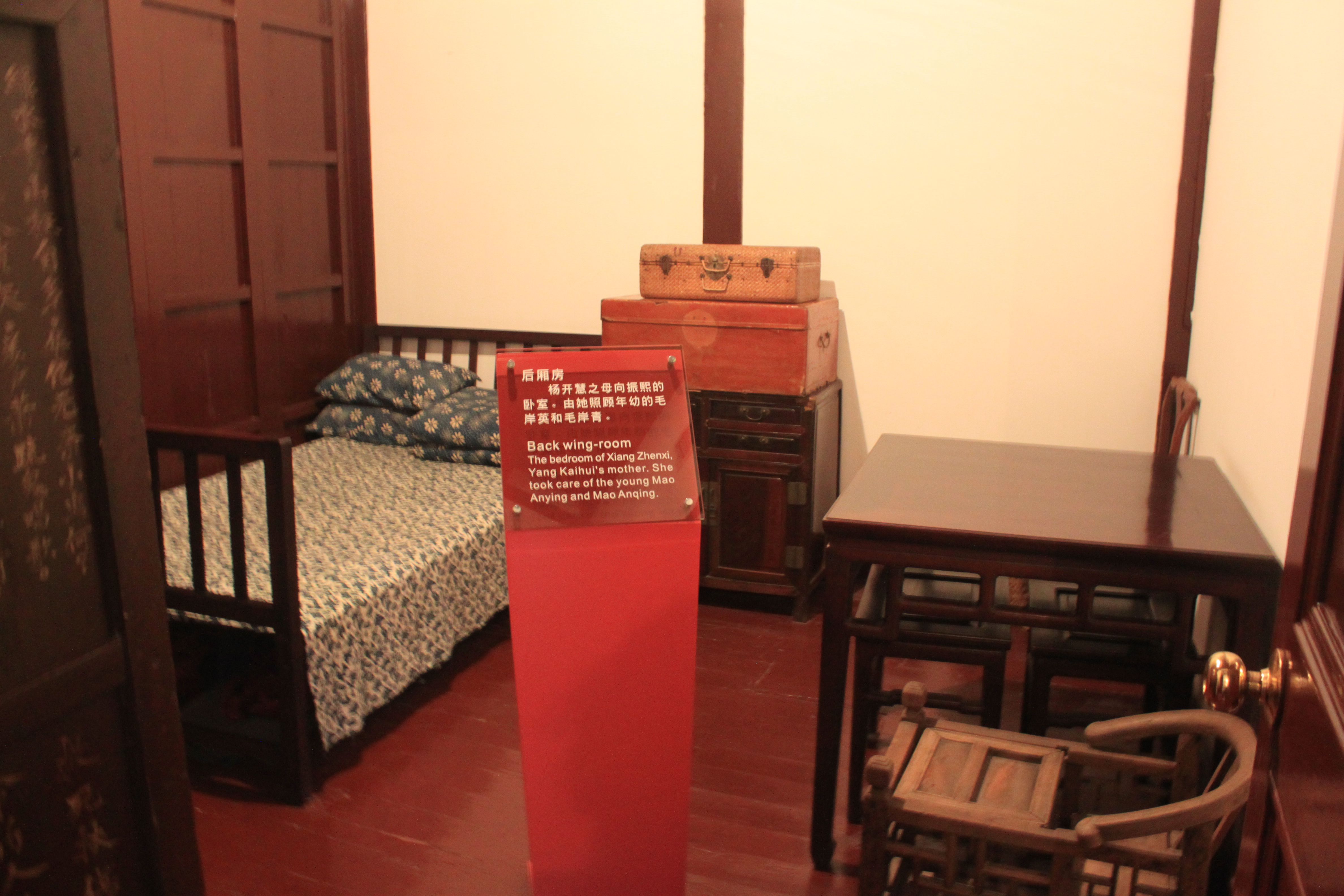
The house contains simple furniture here shown in the bedroom and in the kitchen of the house.  Granny, Xiang Zhenxi looked after the two boys Anying and Anging.


Living room Furniture

Living room Furniture

Front wing Room - Bedroom and Study of Mao, his wife and children
Front wing Room – Bedroom and Study of Mao, his wife and children

Back-wing Room lived in by Granny Xiang

Back-wing Room lived in by Granny Xiang

Typical Shikumen House portico

Typical Shikumen House portico


The rest of the exhibition turned out to be more about Mao’s son Anying than his father:

Mao Zedong and Yang Kaihui married in Changsha Hunan in the winter of 1920

Mao Zedong and Yang Kaihui married in Changsha Hunan in the winter of 1920

Yang Kaihui with her children

Yang Kaihui with her children

Inside the building there are a number of family photographs some of a young Mao – he was a tall man – and pictures of his family.  On 24th October 1922 their eldest son Anying was born in Changsha Hunan.

Anying’s childhood is described in the exhibition as turbulent.

Annoying was two when his mother, Yang Kaihui, moved to Jiaxiu Lane to be with his father Mao Zedong. He was in prison at eight with his mother; at nine he roamed about with his two brothers, Anqing and Anlong, in Shanghai Bund where they made their livings by picking up cigarette ends, taking odd jobs, trundling handcarts and selling newspapers, and had to sleep in a ruined temple.  They were often hungry. His turbulent childhood is reported to have tempered his strong willpower.

No-one is smiling in any of the photographs and the ones of his two boys who lived here with him (he had 10 children in all by 3 different women) made me think that they were both very sad children.
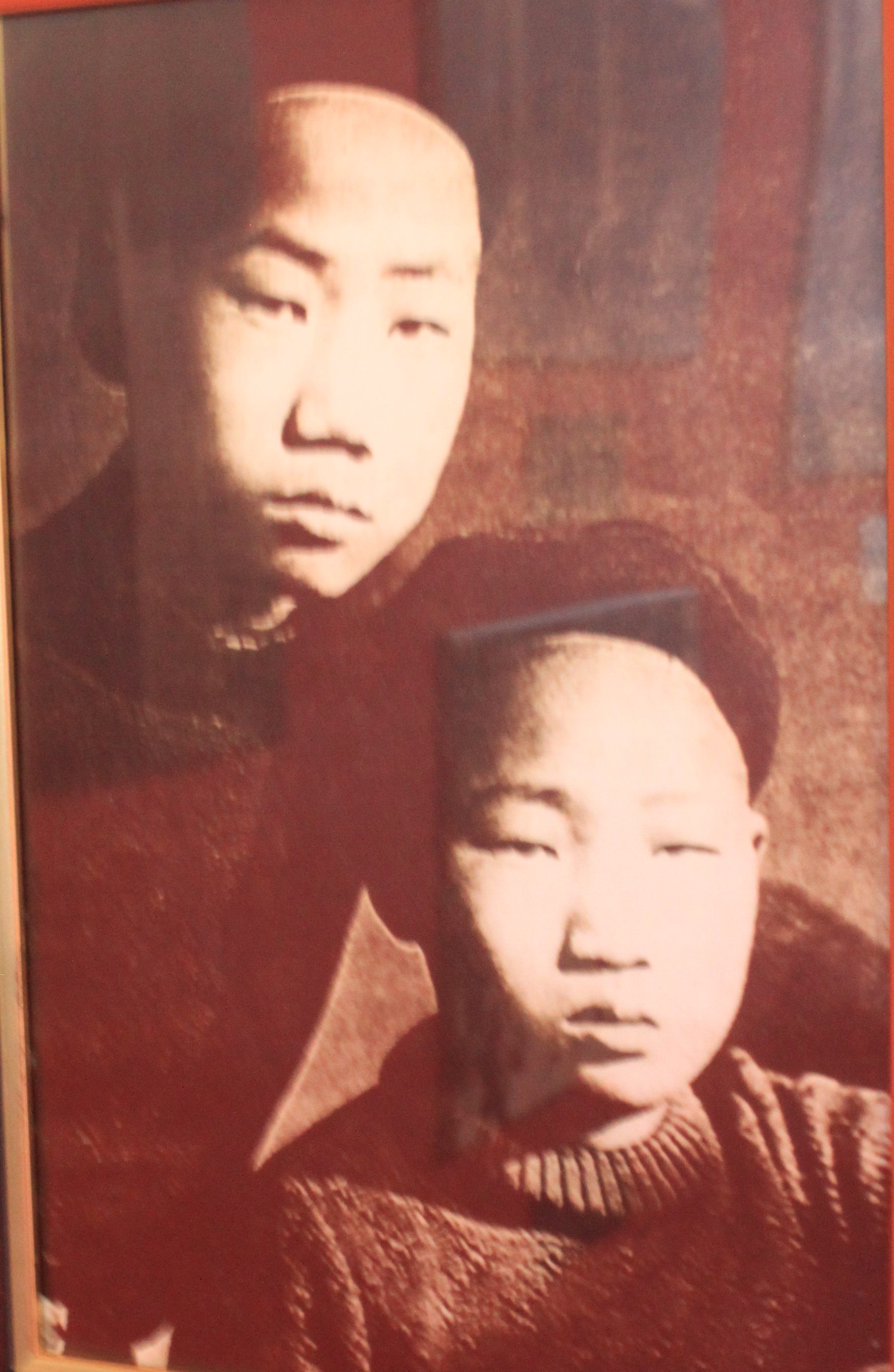


Mao Anying with Mao Anging in the Soviet Union 1942

Mao Anying with Mao Anging in the Soviet Union 1942

Mao Anying in the Soviet Union International Children's Home

Mao Anying in the Soviet Union International Children’s Home
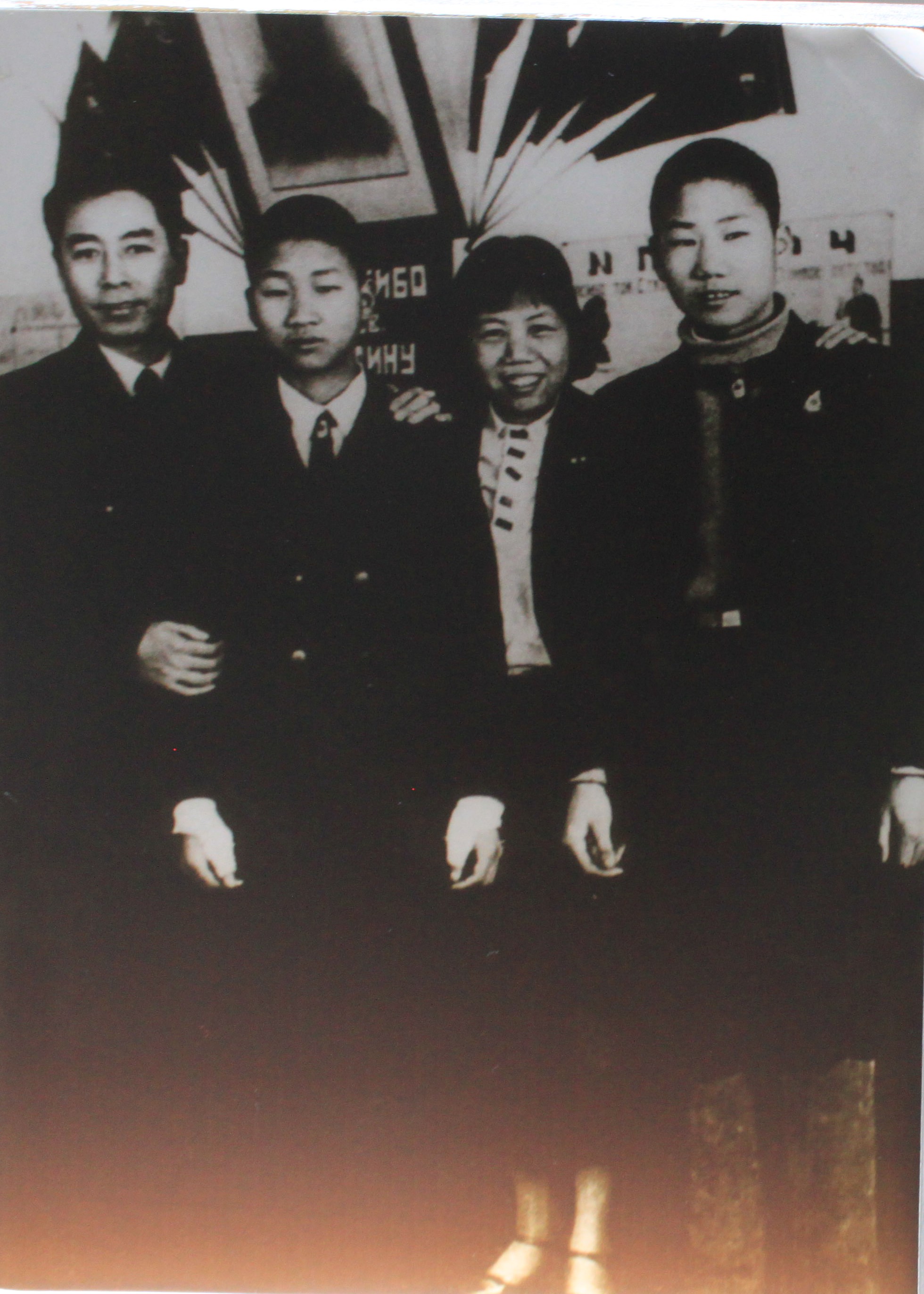
New Year's Day 1940

New Year’s Day 1940


At some point two of the brothers, Anying and Anging ended up in the Soviet Union, where they lived in the Communist International Children’s home, where Anying was once a young leader.  He joined the Red Army and was received by Stalin.

If Jung Chang’s book Mao: The Unknown Story is to be believed the two boys were held as hostages in the Soviet Union by Stalin, to make sure that Mao didn’t step out of line.

The last photograph above was taken on New Year’s Day 1940 Zhou Enlai and his wife Deng Yingchao made a special trip to visit the Chinese Children in the Children’s Home during his “healing period in the Soviet Union”.  From left to right: Zhou Enlai, Mao Anqing, Deng Yingchao and Mao Anying.

After returning to China Mao Anying went to the countryside, working in various grass-roots units to strengthen his mind and body.


Mao Zedong and son Anying

Mao Zedong and son Anying


Taken after returning to Yan’an, Mao Anying joined in productive labor at Wujia Zaoyuan upon his father’s instruction and became a member of the “Eighth Route Army” after being a “Foreign Student”


Mao Anying & father in April 1949

Mao Anying & father in April 1949

This is one of the few photos in which somebody is smiling.


Mao Anying and His Wife Liu Siqi married 1949

Mao Anying and His Wife Liu Siqi were married 1949

Mao Anying and his wife Liu Siqi were married in 1949.
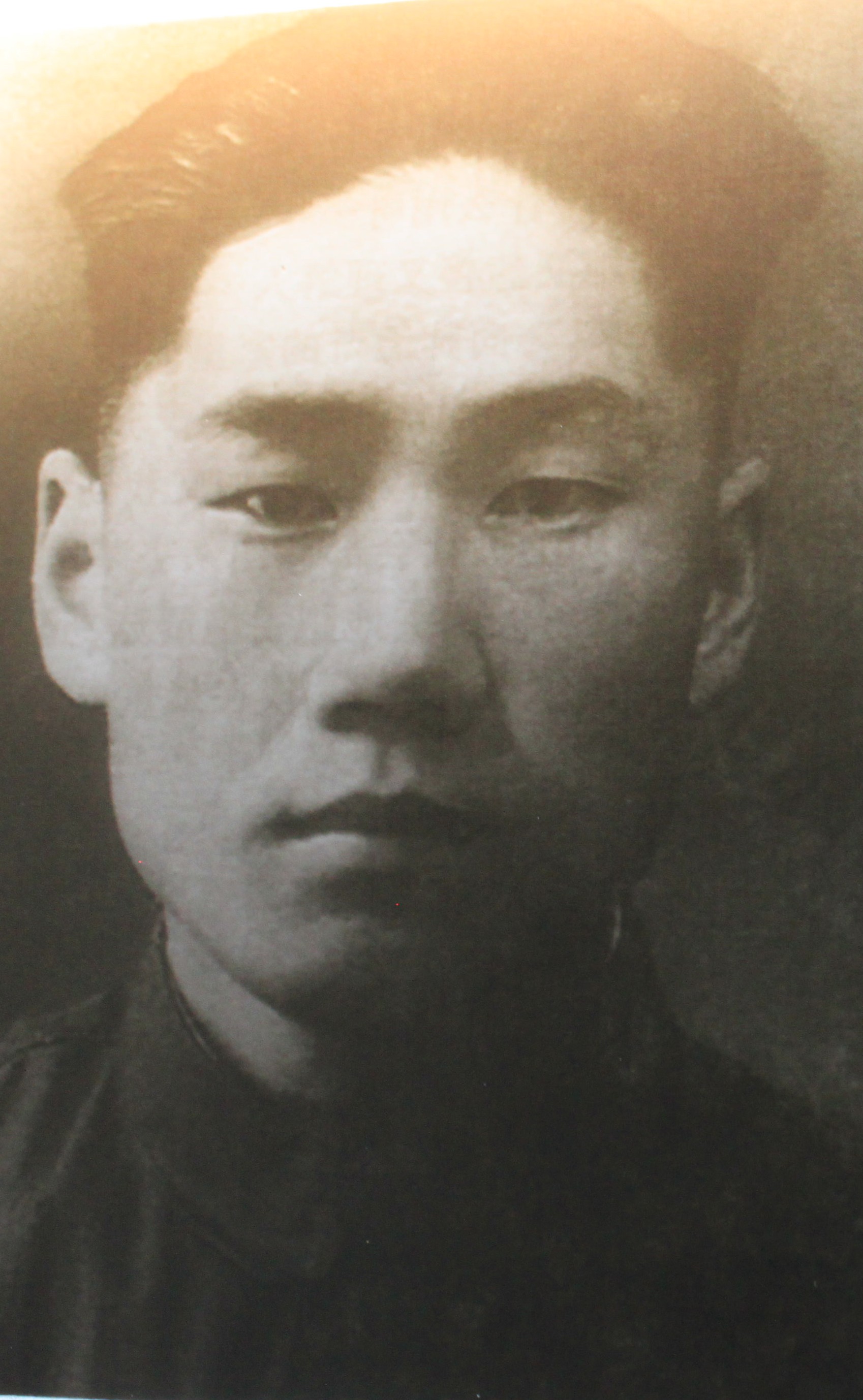


Mao Anying

Mao Anying

Mao’s son Mao Anying in the Beijing Machine General Factory.  In 1950 he made repeated requests to be transferred from the Social Affaires Department to Deputy Secretary of the Party General Branch where he was mainly responsible for the propaganda work.


Mao Anying in Beijing

Mao Anying in Beijing

Mao Anying on Beijing Tian’anmen Rostrum with Liu Shaoqi and Zhu De 1st October, 1950

“In 1950 Mao Anying took initiative to join the Chinese People’s Volunteer Army, and died a hero’s death when he was merely 28 years old on November 25, 1950 in the War to Resist US Aggression and Aid Korea”


Liu Siqi at Mao Anying's grave, Korea

Liu Siqi at Mao Anying’s grave, Korea

Earth From the place where Mao Anying died in Korea

Earth From the place where Mao Anying died in Korea

Many of the photographs and artefacts were donated by Mao Anying’s wife, Liu Siqi.

” The exhibition hall displayed Comrade Mao Anying’s short and glorious life through pictures and material objects. His sublime quality and noble character his deep love for the nation and people his spirit of patriotism and internationalism will educate and inspire the young generations forever.”


By the time that I reached this point in this particular exhibition I had lost the plot. I think, but I am not certain, that this section about handmade shoes and the Chinese shoulder poll is about the Long March.  But I could be wrong.

The Small Shoulder Pole
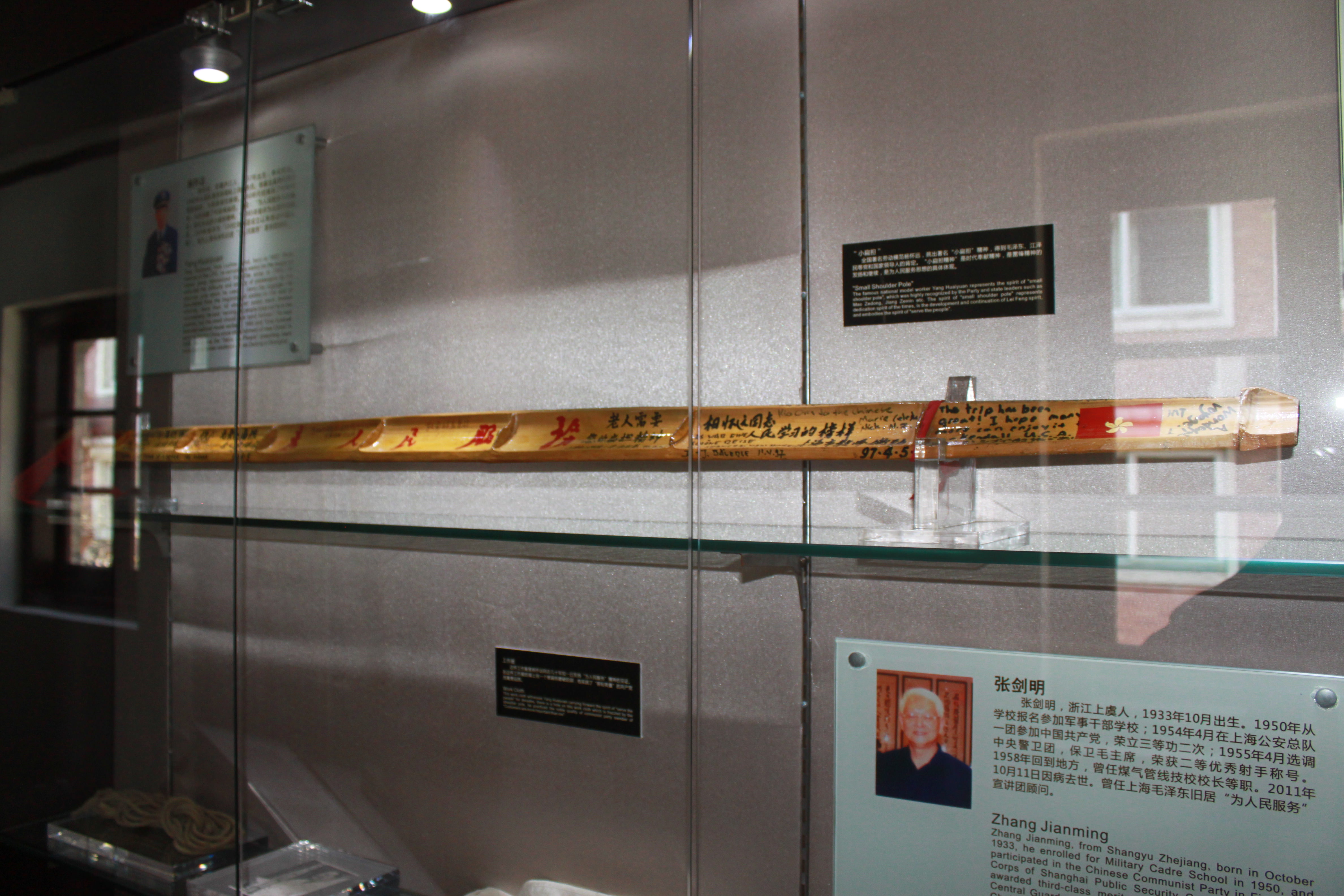
Small Shoulder Pole

Small Shoulder Pole

The famous national model worker Yang Huaiyuan represents the spirit of “small shoulder pole”, which was recognised by the Party and State leaders such as Mao Zedong, Jaing Zemin etc.  The spirit of “small shoulder pole” represents dedication spirit of the times, is the development and continuation of Lei Feng spirit, and embodies the spirit of “serve the people”.

Straw Shoes

Straw Shoes

Rag Shoes

Rag Shoes

In order to reduce the heavy burdens of civilians he and his comrade-in-arms of “Good Eighth Company” weaved shoes with straws or rags if straws were not available. They walked to Hualong and Jiangwan areas to open up wastelands, marched and did camping training. They supplied good vegetables they planted to the market, but ate just bad ones and even vegetable skins.

Much was made in the exhibition that although Mao didn’t visit Shanghai for the many years between 1927 and 1949:

he kept close attention to Shanghai all the time. At every crucial historical moment, including the War of Resistance against Japan, the Kuomintang-Communist Negotiations, the War of Liberation and the Battle of Liberating Shanghai, Mao Zedong timely gave instructions to point out the way forward for the struggle of the people of Shanghai.


Shanghai 27th May 1949

Shanghai 27th May 1949

The People’s Liberation Army of China liberated Shanghai (from the Nationalists) on 27th May, 1949.


After Shanghai returned to the embrace of the people Mao Zedong paid close attention to the establishment of the new state power. He invited different democratic parties and patriotic personages to the construction of the new China. He managed to consolidate the newborn state power through the movement for the suppression of counter-revolutionaries, the campaign against corruption, waste and bureaucracy and the campaign against bribery of government workers, tax evasion, theft of state property, cheating on government contracts, and stealing economic information from government sources for private speculation. Besides, Mao Zedong attached great importance to the economic operation Shanghai, timely adjusting the policy to the recovering economy. After the general line for the transition period was determined he paid special attention to Shanghai’s transformation of agriculture……
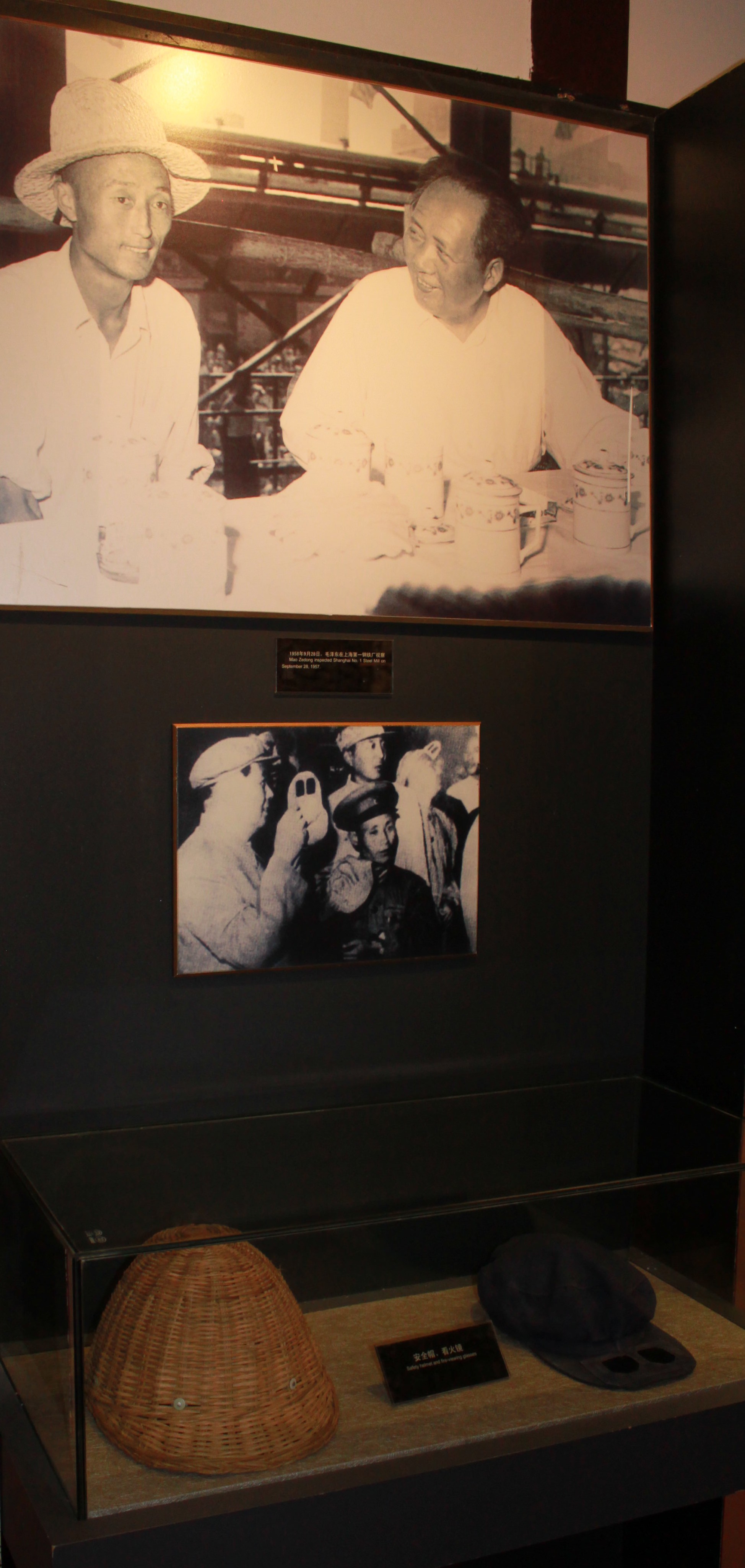
 

Mao Zedong visiting Shanghai and the hard hat he used

Mao Zedong visiting Shanghai and the bamboo hard hat he used

In his life time, Mao Zedong came to Shanghai tens of times.  During his stays in Shanghai he made extensive contacts with people from all walks of life.  He fervently expected the workers and the youths of Shanghai to take on the heavy responsibility for the socialist construction.  He made friends with many democratic personages, scientist and artist, paying great attention to their mood, life and work.  Mao Zedong showed loving care for the people of Shanghai.  His noble bearing will be kept in mind of the people of Shanghai forever.


Datong Alley, Datong Road (now 331 Datian Road)

Datong Alley, Datong Road

Datong Alley, Datong Road

Mao lived here from November 1926 when he became secretary of the CPC Central Peasant Committee.


Nowadays the house at Anyi Road is completely surrounded by towers China’s version of capitalism and the Bowen’s Women’s School is in the middle of Xintiandi.

This is a direct result of Deng Xiaoping’s opening up and liberalising the economy following his visits to the four dragons, South Korea, Taiwan, Hong Kong but in particular Singapore where he was profoundly impressed by the achievements of the Prime Minister Lee Kuan Yew, after that island state was ousted from Malaysia.  Deng was very impressed with Singapore’s economic development, greenery and housing, not least beaches, it was achieved by Chinese and he later sent many thousands of Chinese to Singapore to learn directly from their experience.

“Of course old Deng likes Singapore,” said a young Chinese Government official, at the time. “It’s run by Chinese, it’s efficient, it’s rich, and no one jabbers about human rights.”

It was Deng who combined the Communist Party’s ideology with the practices of the market economy. The adoption of his original 1961 pronouncement (which caused him so much trouble by being labelled a capitalist-roadster at the time and which led to Mao’s Cultural Revolution):

it doesn’t matter whether a cat is black or white, if it catches mice it is a good cat

together with the idea that they are going to have to let some of the Chinese people get rich means that he is generally credited with developing China into one of the fastest-growing economies in the world for over 35 years and for raising the standard of living of hundreds of millions of Chinese citizens.

What would Mao Zedong have thought of the results of Deng’s success?
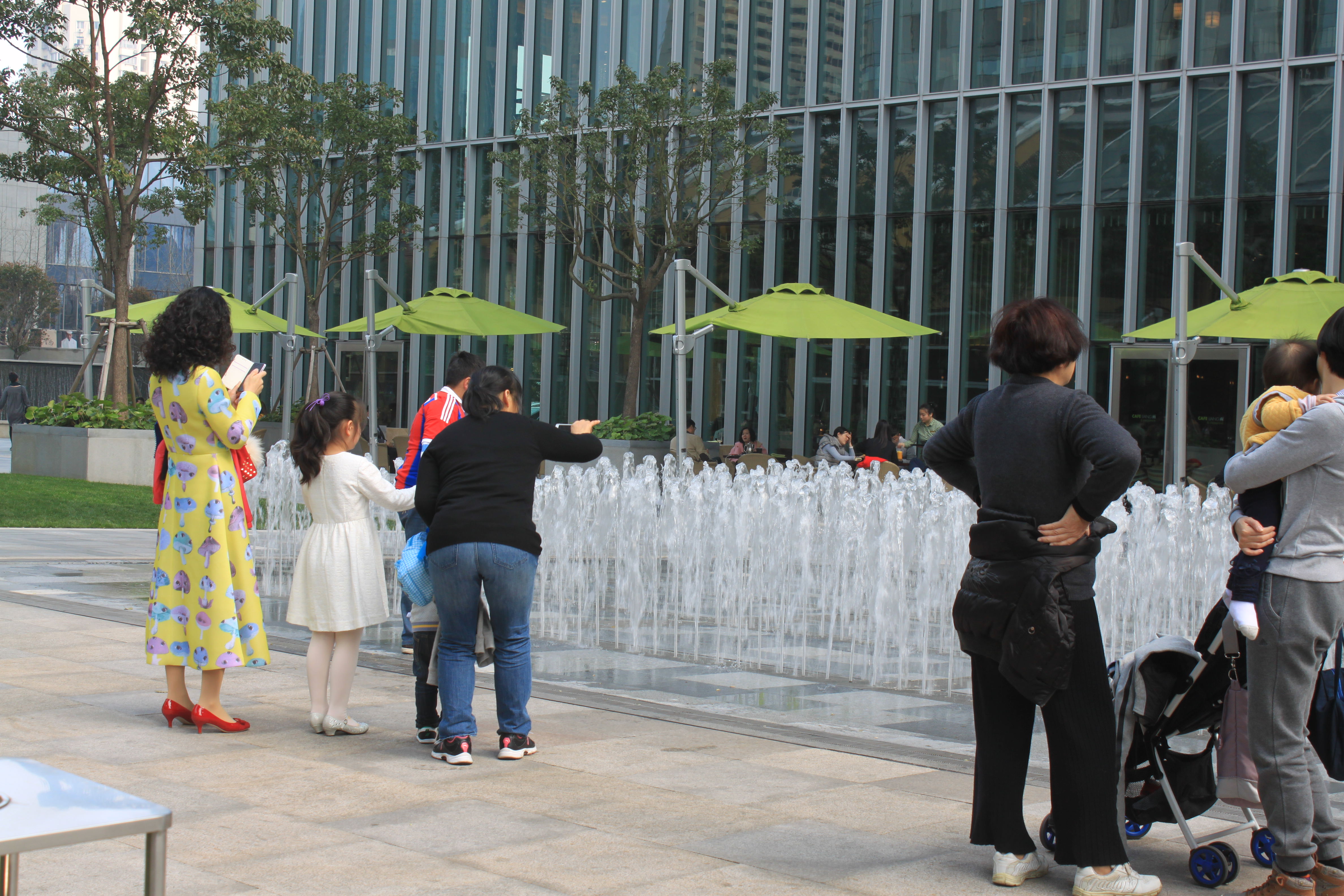
Expensive cafes and play fountain behind
Expensive cafes and play fountain behind

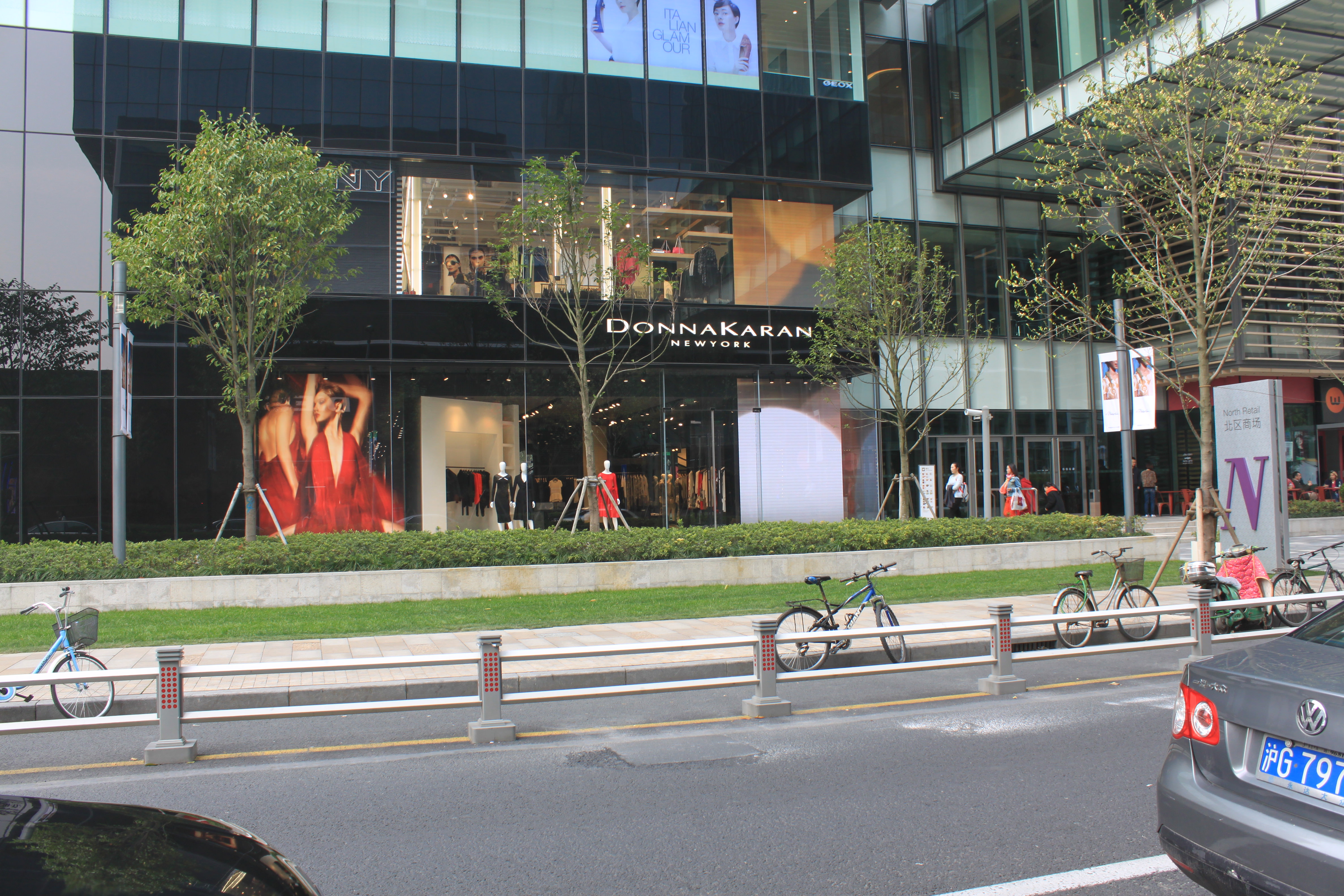
Donna Karan Shop alongside
Donna Karan Shop alongside


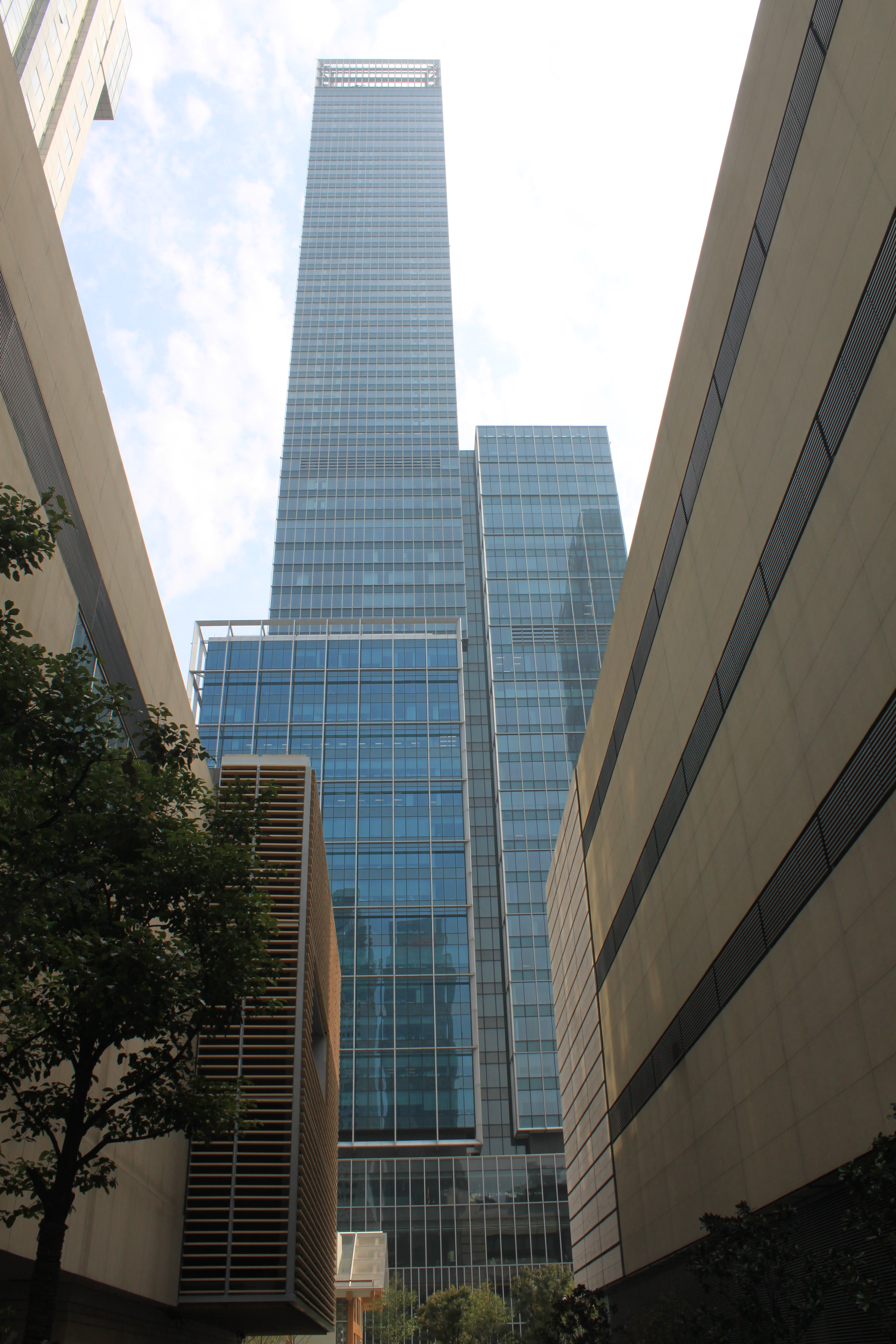
Tower blocks in front
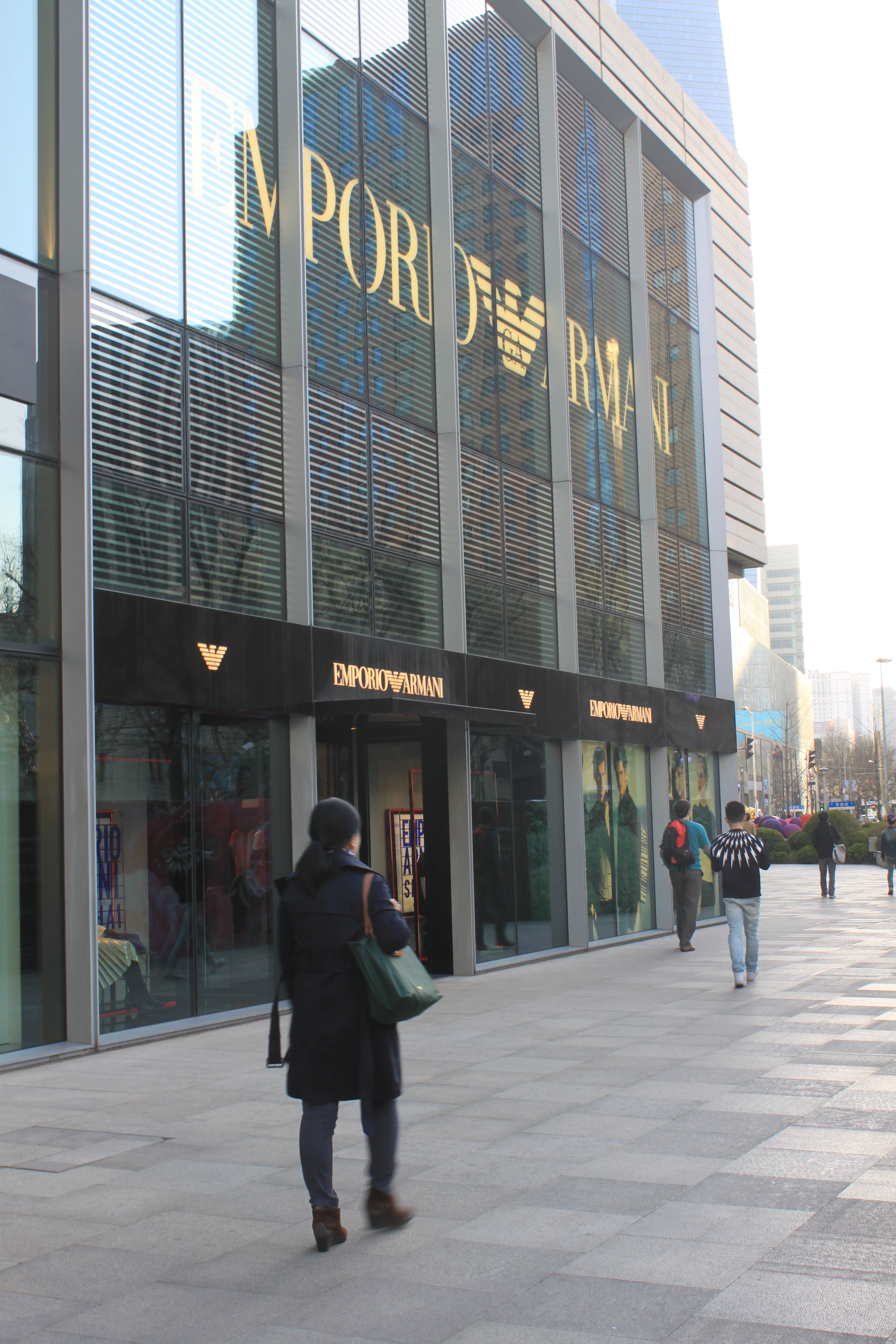
Tower blocks in front

Emporio Armani on next block

Emporio Armani on next block 50 metres away


Unlike the former residencies of Zhou Enlai, Dr Sun Yat-sen and Soong Ching Ling the two houses lived in by Mao that I have visited in Shanghai have few signs of security guards and both appear to be much more low-key than the others.
Posted in Jingan, Museum | Tagged , , | 1 Comment

Chairman Mao and Living in Shanghai

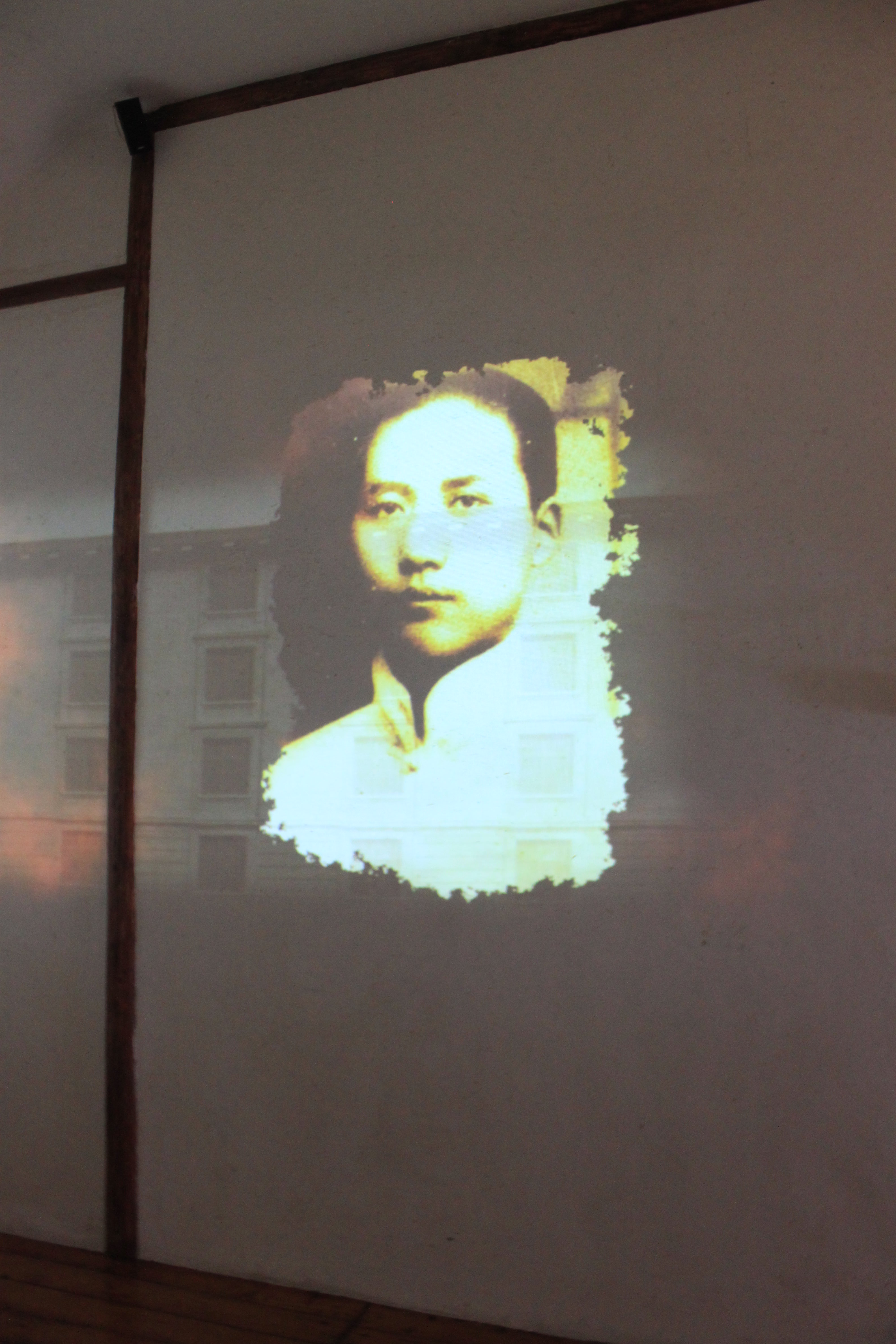
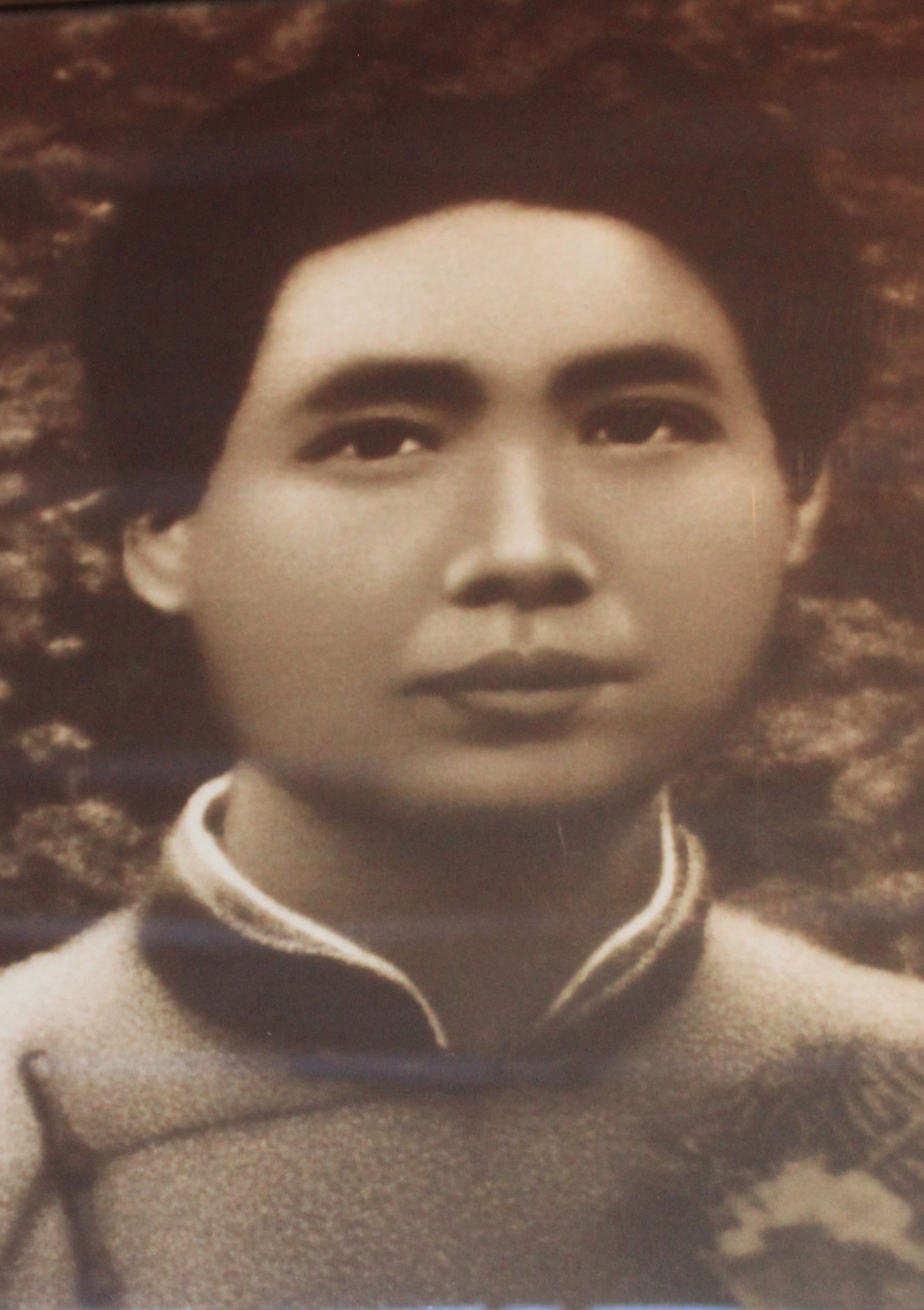
A Young Mao Zedong

A Young Mao Zedong

I’m not sure I like Mao Zedong.  This was reinforced by reading Jung Chang’s book Mao: The Unknown Story, in which she describes how ruthless he was, both towards his fellow communists in the pursuit of power and towards his own family.  I suspect this account of hers is a little biased.  But I have no way of telling.  It is based on spoken accounts, not on written material and therefore is not accepted by academics as being a true historical piece of work. What I do know is that here in Shanghai I have seen no remnants of his personality cult which was still everywhere in China in the 1980s.  In fact there is very little of Mao anywhere to be seen here in Shanghai.  Reading Peter Hessler’s River Town: Two Years on the Yangtze gave me something that is helping me deal with my ideas about Mao.  It was written by one of his Chinese students in his english class in Fuling in the late 1990s:

I think in the history of the People’s Republic of China, there are two great men: Mao Zedong and Deng Xiaoping.  We should mention the two men if we want to point out the difference between two generations’ views on China

When my parents were at my age, China wasn’t rich.  Even the people couldn’t live the type of dressing warmly and eating there fill.  The situation was very hard at that time.  Because of lack of experience, the leaders of China didn’t solve some questions very well.  Maybe, that period, was the hardest within the progress of China.  But, there is a fact that is beyond all question: it was Mao Zedong and his comrades that founded the People’s Republic of China, and brought the Chinese people independence and democracy which is a long cherished goal for the Chinese. So, people admired him from the bottom of their heart.  This kind of admiration led to people’s profound love of China to a great extent.  My parents did the same.  It was the Great Cultural Revolution then; there were many things wrong in life.  But they thought China was the best and perfect country and had splendid position.  In their minds, China would reach its great goal only by performing planned economy because it was a socialist country.  Anything about market economy was Right deviation.  My parents only did what they were ordered to do and didn’t consider whether they were true or false.

Today, when we see those days with our own sight, we’ll feel our parents’ thoughts and actions are somewhat blind and fanatical.  But if we consider that time objectively, I think, we should understand and can understand them.  Each generation has its own happiness and sadness.  To younger generation, the important thing is understanding instead of criticising.  Our elder generation was unlucky; they didn’t own a good chance and circumstances to realize their value.  But, their spirit, their love to our country set a good example to us.

Having read this I now feel able to put together a piece about Chairman Mao that has been hanging around for several months.  Without this I have found it difficult to reconcile the conflicting facts I have acquired en route. (I am no historian after all, as a chemist I am only trained in the behaviour of atoms and electrons, not in people, their languages, their histories or their politics.)  So here we go:

As a port and westernised at that, Shanghai was the centre of China’s slow industrialisation and a focal point for revolutionaries such as Dr. Sun Yat-sen and his wife Soong Ching Ling, and early members of the Chinese Communist Party.  This core of revolutionary thought brought people interested in over-throwing the feudal system from all over the country to Shanghai. Some came to visit; some came to live in the early years of the 20th Century.  One such person was Chairman Mao.

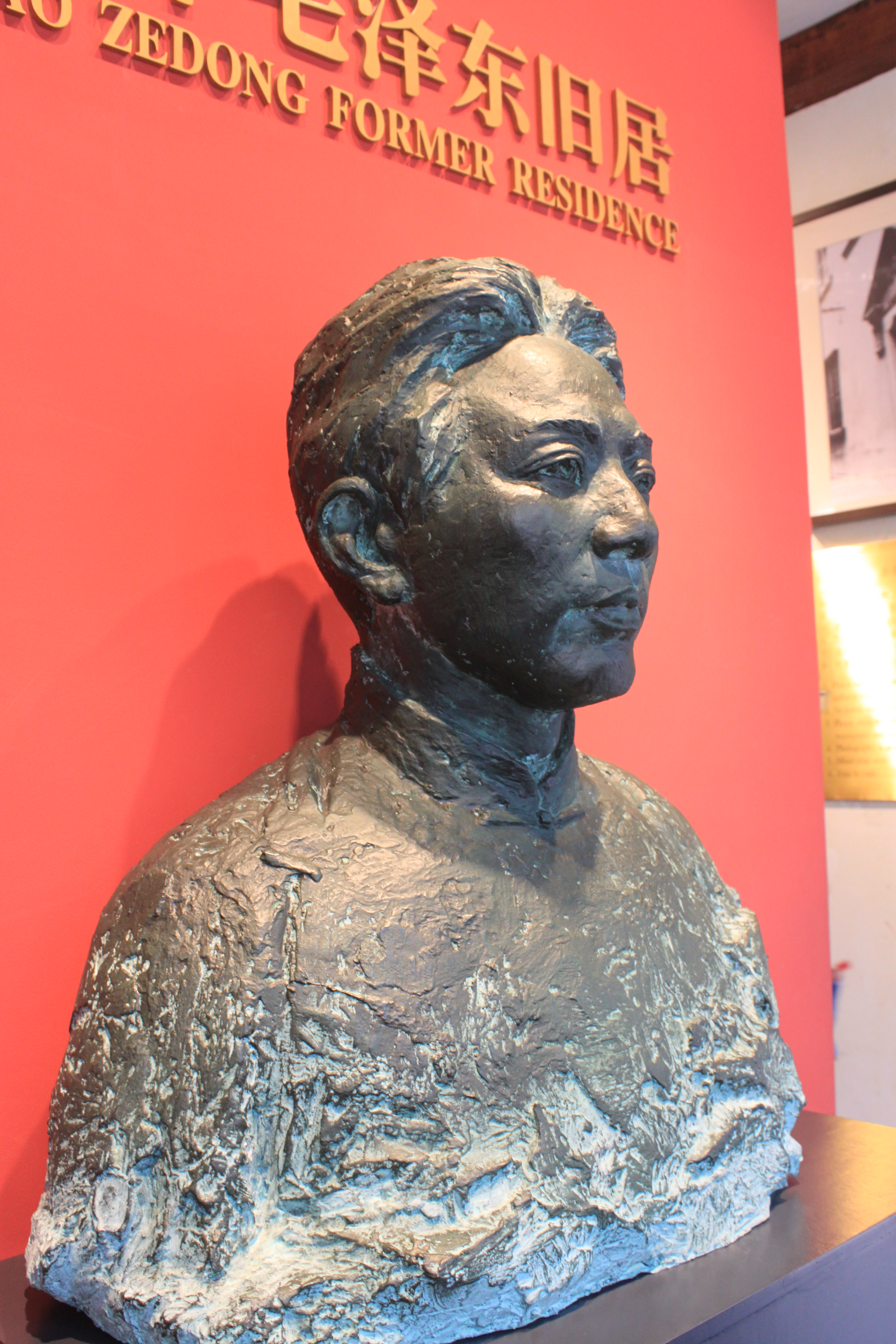
Bust of Mao Zedong

Bust of Mao Zedong

Mao Zedong was the son of a wealthy farmer from Hunan Province, south west of Shanghai, but in his teenage years Mao turned his back on his father’s successful farm and spent his time reading voraciously. Photographs of his family show his brother and parents in typical farmers attire, whereas he is wearing the clothes typical of an early 20th Century man from Shanghai the changshan (literally a long shirt).  He aspired to leave his farming roots and become a scholar.  He was later bullied at school for his peasant background.  He read voraciously about history, in particular about the Napoleonic and other wars and took a great interest in WWI and was informed by riots resulting from famine in his home town.

Mao was attracted to the revolutionaries of the time, particularly Chen Duxiu who had been a leading figure in the May Fourth Movement which protested at The Treaty of Versailles’ decision to hand over German land in China to Japan.  In 1917 he found a job working for the librarian Li Dazhao at Beijing university whose boss was Cai Yuanpei, the revolutionary thinker and the president of Beijing University.  Li Dazhao and Chen Duxiu, the dean of the university, founded the Chinese Communist party in 1920/1 (reports are conflicting).   Mao had many discussions with Chen Duxiu, which transformed Mao from a radical nationalist to a Marxist-Leninist in the clandestine Marxist meetings at the university.

Mao Zedong

Mao Zedong

From 1919 to 1920 Mao visited Shanghai three times.  One of the reasons was to say good-bye to a group of Students bound for a work-study program in Paris.  Some of the 196  students were from Hunan, others included Zhou Enlai (later Premier of the CCP from 1949 – 1976) who had been to university in Japan, had witnessed the Fourth of May Movement in Tianjin and on his return set up the “Awakening Society” similar to Li Dazhao’s group.

“After returning from Shanghai to Hunan, Mao Zedong, set about organizing Changsha Communist Group. In July 1921, as a representative of Hunan, he came to Shanghai to attend the First National Congress of the Chinese Communist Party. From then on, his name was closely linked to the revolutionary cause of the Chinese people.”

I have been to visit three houses where Mao Zedong stayed whilst in Shanghai, although he has visited the city “tens of times”.

63 Anyi Road (formerly No. 29 Min Hou Nan Lane Min on Hatong Road)

63 Anyi Road Shanghai

63 Anyi Road Shanghai

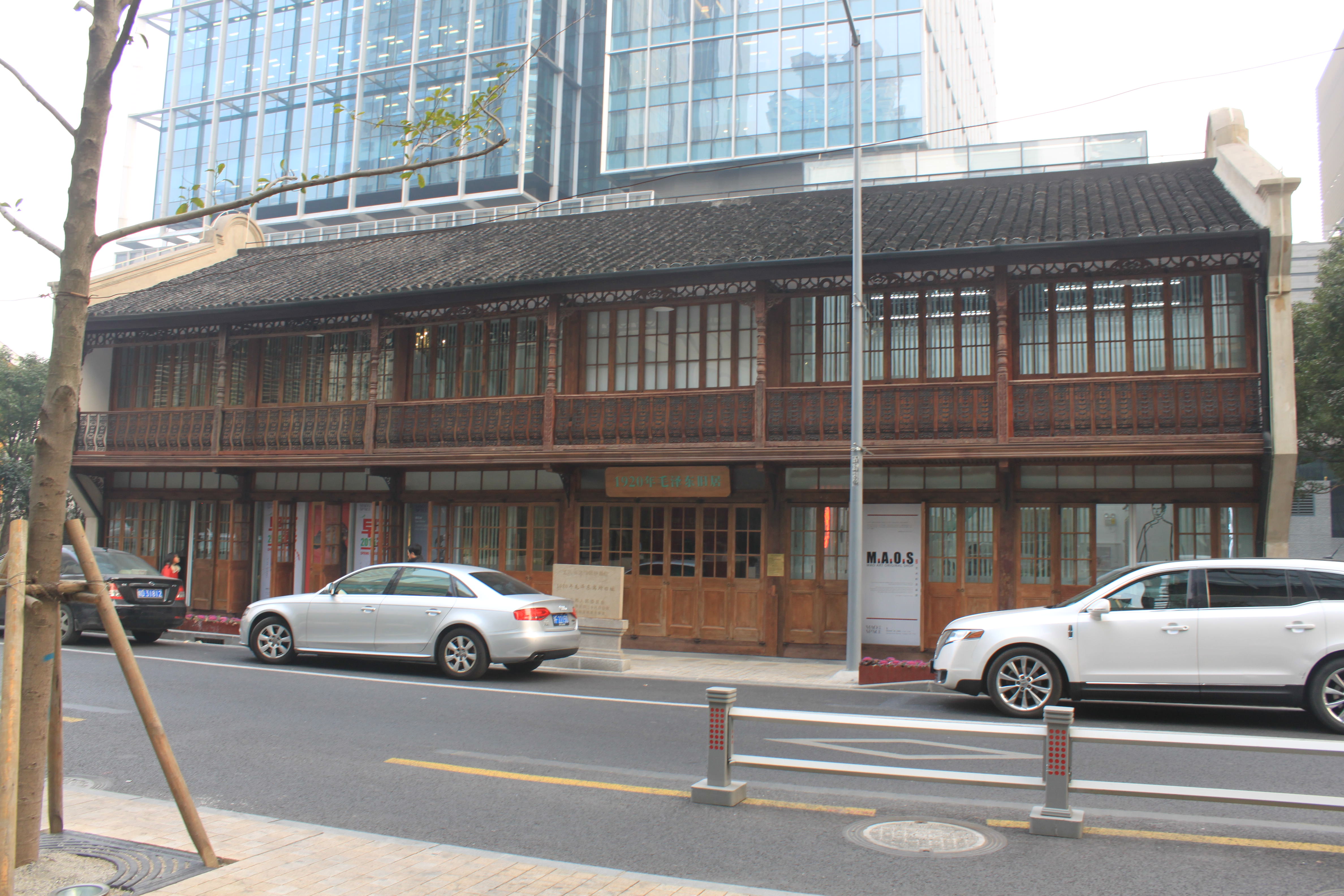
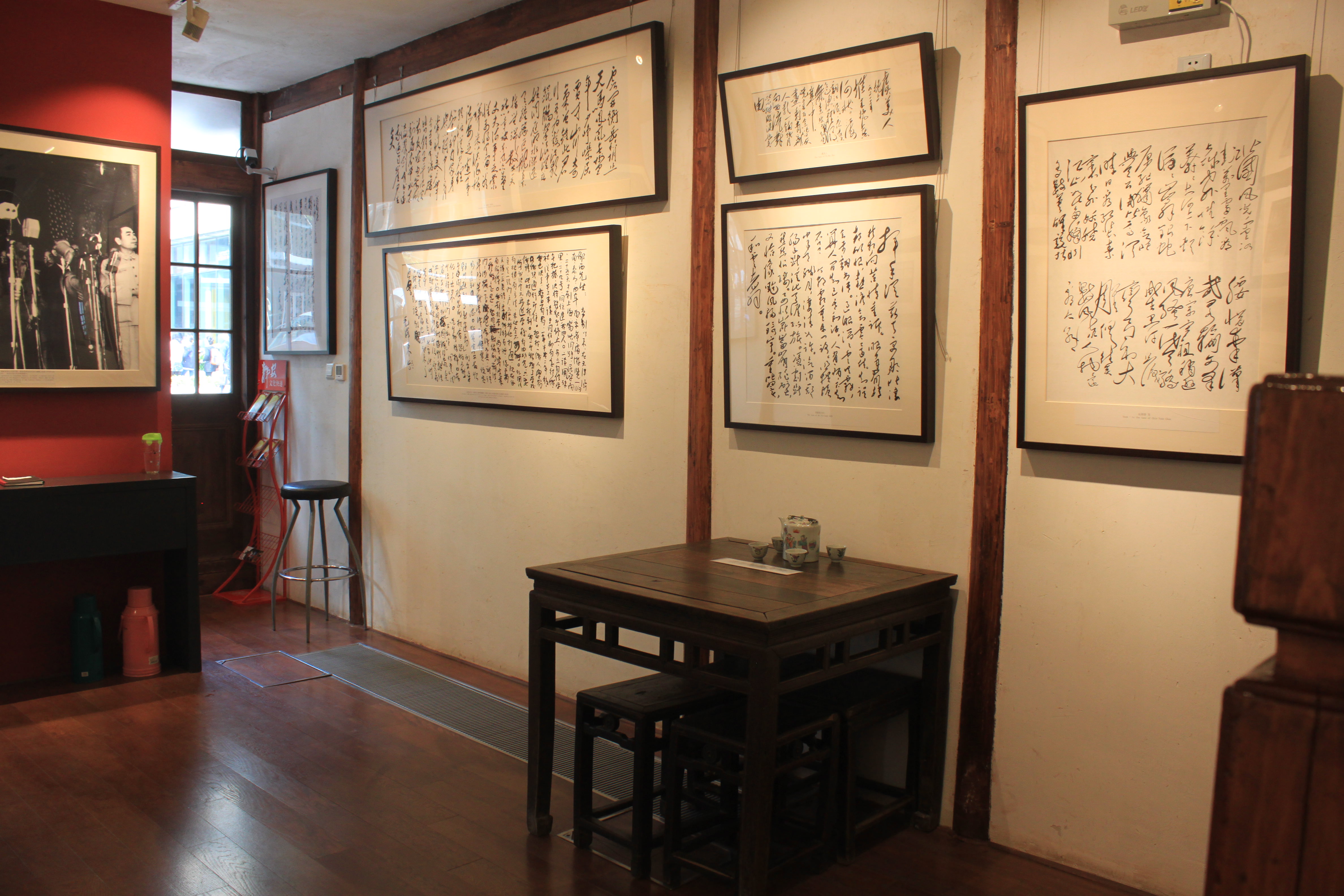
The first former residence of Mao Zedong I visited is at 63 Anyi Road (formerly 29 Minhou Alley) is near to the Jing’an Temple.  This preserved terraced Shikumen house, is where Chairman Mao lived from May to July 1920 the third time that he came to Shanghai. The front room is filled with photographs and writings of the Chairman.

Here I am told that “Shanghai is the birthplace of the Communist Party of China (CPC).  As a young man, Mao Zedong, founder of the party, resided at No. 63 Anyi Road for a brief but critical period.”

IMG_2295 I am told that during this critical period Mao “paid many visits to Chen Duxiu to discuss Marxist principles; and thus the seeds of the CPC began to germinate”.  Here too, I am told that “he was an extraordinary poet and astute politician, observing the world and coming to know it deeply.”  I was curious about his poetry as I had learned sometime ago that he and a fellow student had fed themselves on a walking tour through Hunan by writing literary couplets in return for meals. This is an example of his poetry which was written on The Long March between 1934-5.

Mountain.
I whip my quick horse and don’t dismount
and look back in wonder.
The sky is three feet away.

Mountain.
The sea collapses and the river boils.
Innumerable horses race
insanely into the peak of battle.

Mountain.
Peaks pierce the green sky, unblunted..
The sky would fall
but for the columns of mountains.

It has to be said that it is quite extraordinary poetry.  Perhaps the merit of it has been lost in translation.  Wikipedia tells me that “Arthur Waley, the eminent British translator of Chinese literature, …….. described Mao’s poetry as “not as bad as Hitler’s paintings, but not as good as Churchill’s.”

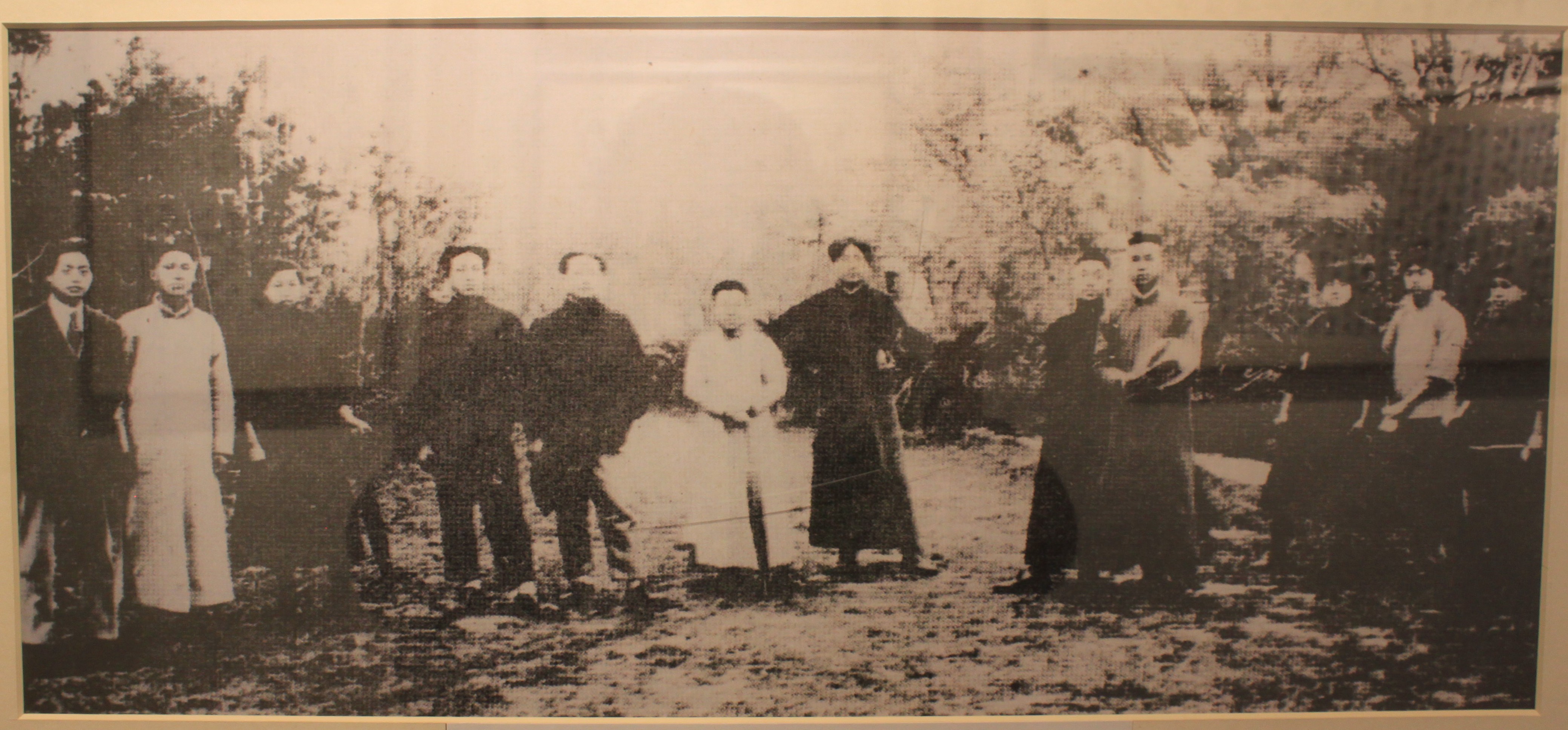
“On May 8, 1920 Mao and members of the Shanghai Ximin Society participated in a rally at Bansong Garden to discuss their association business and provide a send-off to the students who were departing for France.”


Bansong Garden

Banging Garden Mao 7th from left

Whilst living in this house on May 8th 1920, Mao joined a gathering at Bansongyuan Road, which elsewhere in Shanghai was described as “to say farewell to the students who were departing for France” of whom Zhou Enlai was one. Here I’m told that the meeting was to discuss the Changsha Xinmin Society business – how to accept new members that follows the values of the society and Marxism –  (to which Mao was first introduced by his Professor Yang Changji at Hunan First Normal College 1913 -1918) – how it would expand and accept new members.

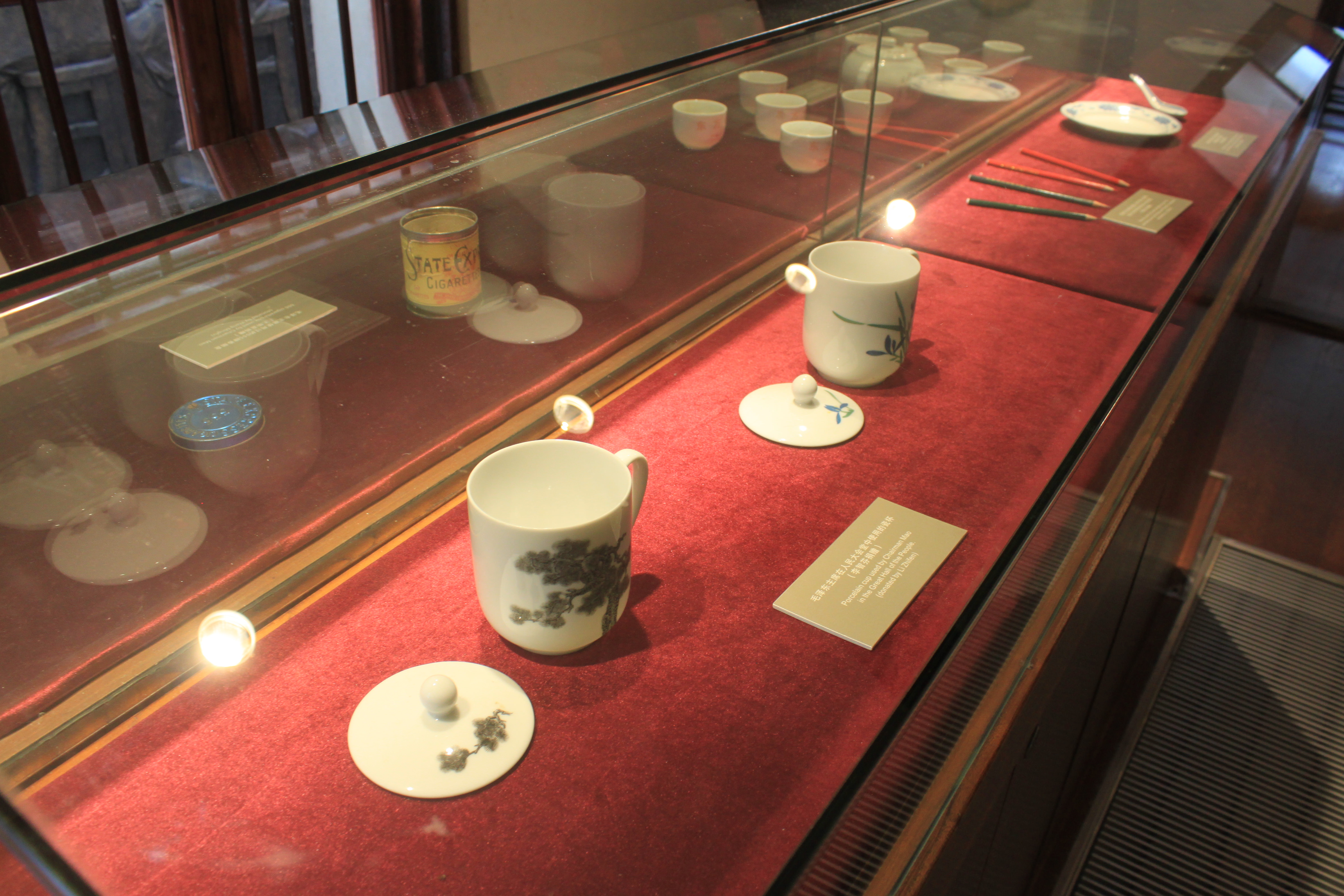
Chairman Mao memorabilia

Chairman Mao memorabilia

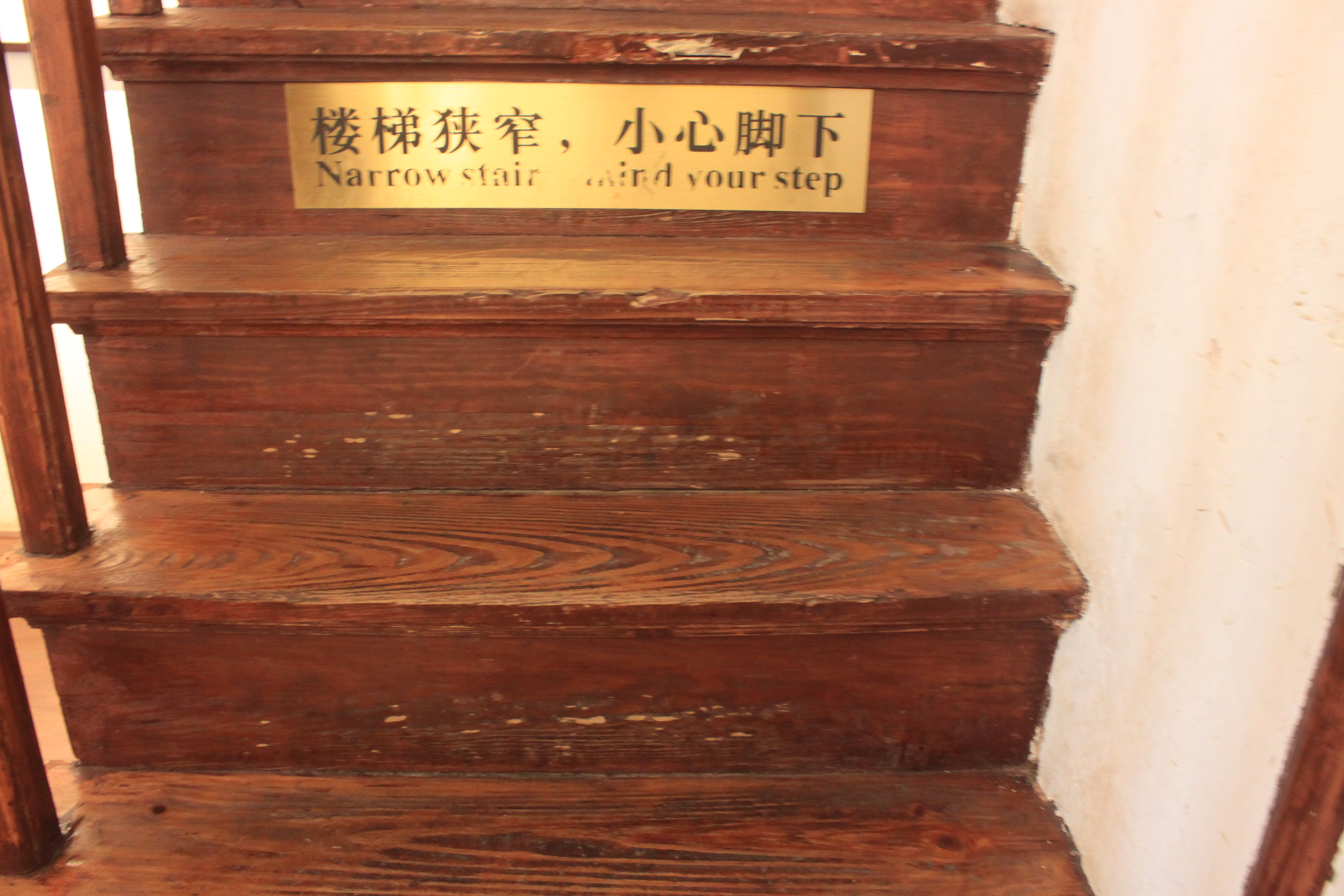
Narrow steps to 1st floor

Narrow steps to 1st floor

In the small back room which was the kitchen are items used by Mao Zedong (but they were not, as the guide pointed out to me, used within these four walls).  More of the “Mao Zedong once used this cup when he visited the No.1 workers factory” type of memorabilia.  The steps up to the top floor were incredibly narrow, with a sign to tell you so – so narrow in fact that  going up the steps on tip toe or with your feet sideways was the only way to go.

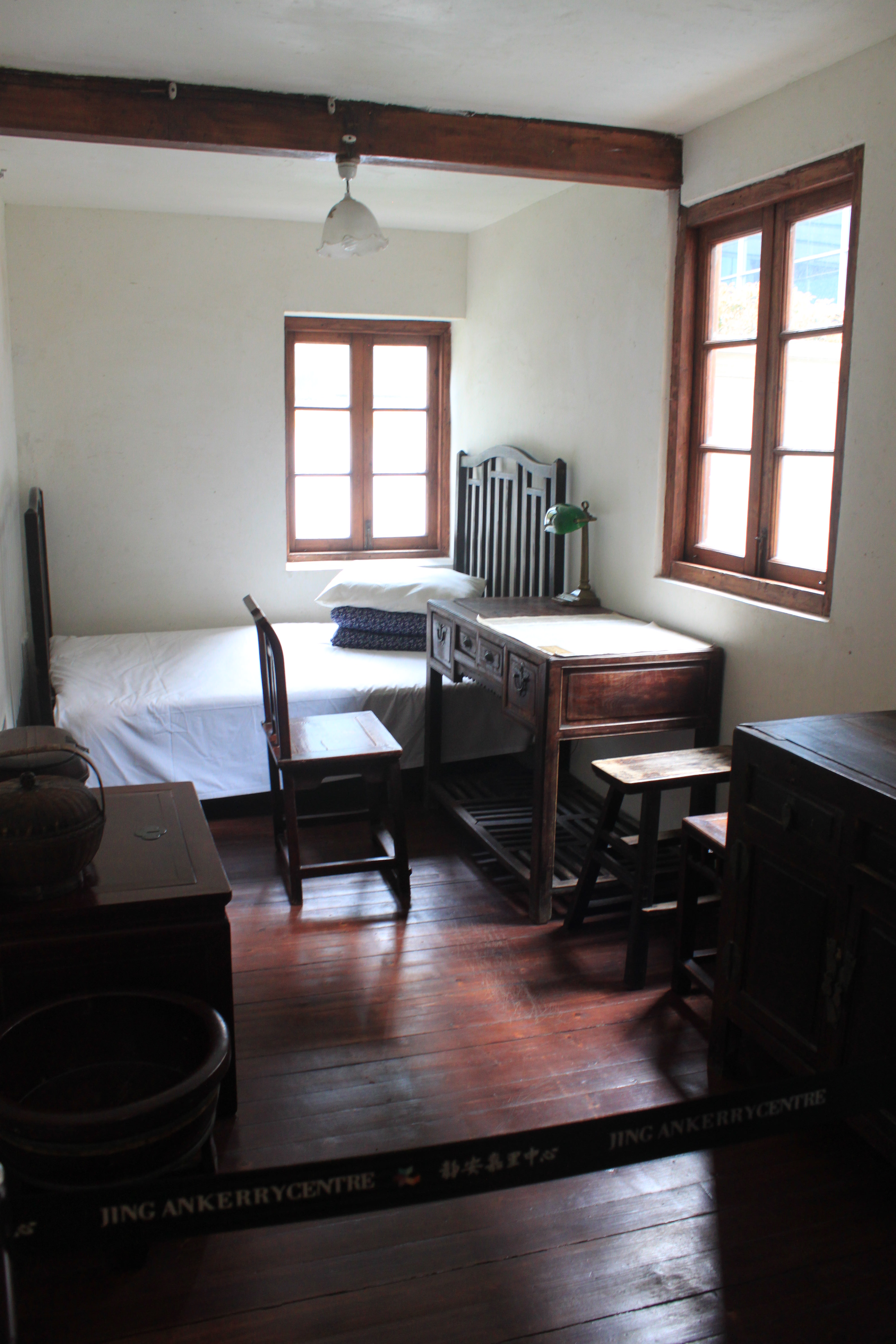
Back Bedroom

Back Bedroom

Mao's front room as it was

Mao’s front room as it was

The house had a small back bedroom and in the front room a short slide show about some aspects of his life.  The slide show tells me that Mao arrived in Shanghai on 12th March, 1919 “to say farewell to his fellow students going to France” and in May, June 1920 he decided to stay in Shanghai on a work study programme.   The group of 196 work study students actually left for France on 7 November 1920.

August 1920  China’s Early Communist Organisation officially founded by Chen in Shanghai.  Earlier in July, Chen commissioned Mao to go back and establish the formation of that organization in Changsha.  When Mao returned to Shanghai to attend the 1st Congress of the communist Party he served as the elected Changsha’s Early Communist Organization Representative.”

The group of houses in the Shikumen terrace are nowadays completely isolated from other houses of similar type – all the others having been knocked down (one of the men who works with Richard lived in one as his childhood home) and replaced by high rise buildings.  Other units within the terrace house art galleries such as Mao Space.

Shanghai is considered as the birthplace of China’s modern industry and therefore it had the most concentrated urban working class. I think Marx argued that it was only from these ranks that revolution could be started. It was on 23rd July, 1921 that Mao attended the First National Congress of the Chinese Communist Party as a minor delegate, so he was living elsewhere at this time – at The Bowen Women’s School:

Bowen Women’s School 389 Bare Road (127 Taikang Road)

Bowen Women's School

Bowen Women’s School

When Mao Zedong came to Shanghai to attend the First National Congress of the Chinese Communist Party he shared lodging with other representatives in the Bowen Women’s School at 389 Bare Road (now 127 Taikang Road) in the French Concession.  (It was the school holidays!)  Chen Duxiu (in absentia) was elected at this meeting as the Party’s First General Secretary.  It has been said that up until this time the Chinese Communists were a number of different reactionaries from all over the country but the Comintern representative Grigori Naumovich Voitinsky, brought all the various groups together.

Posted in Jingan, Museum | Tagged , , , | Leave a comment

Ballet at The Shanghai Grand Theatre

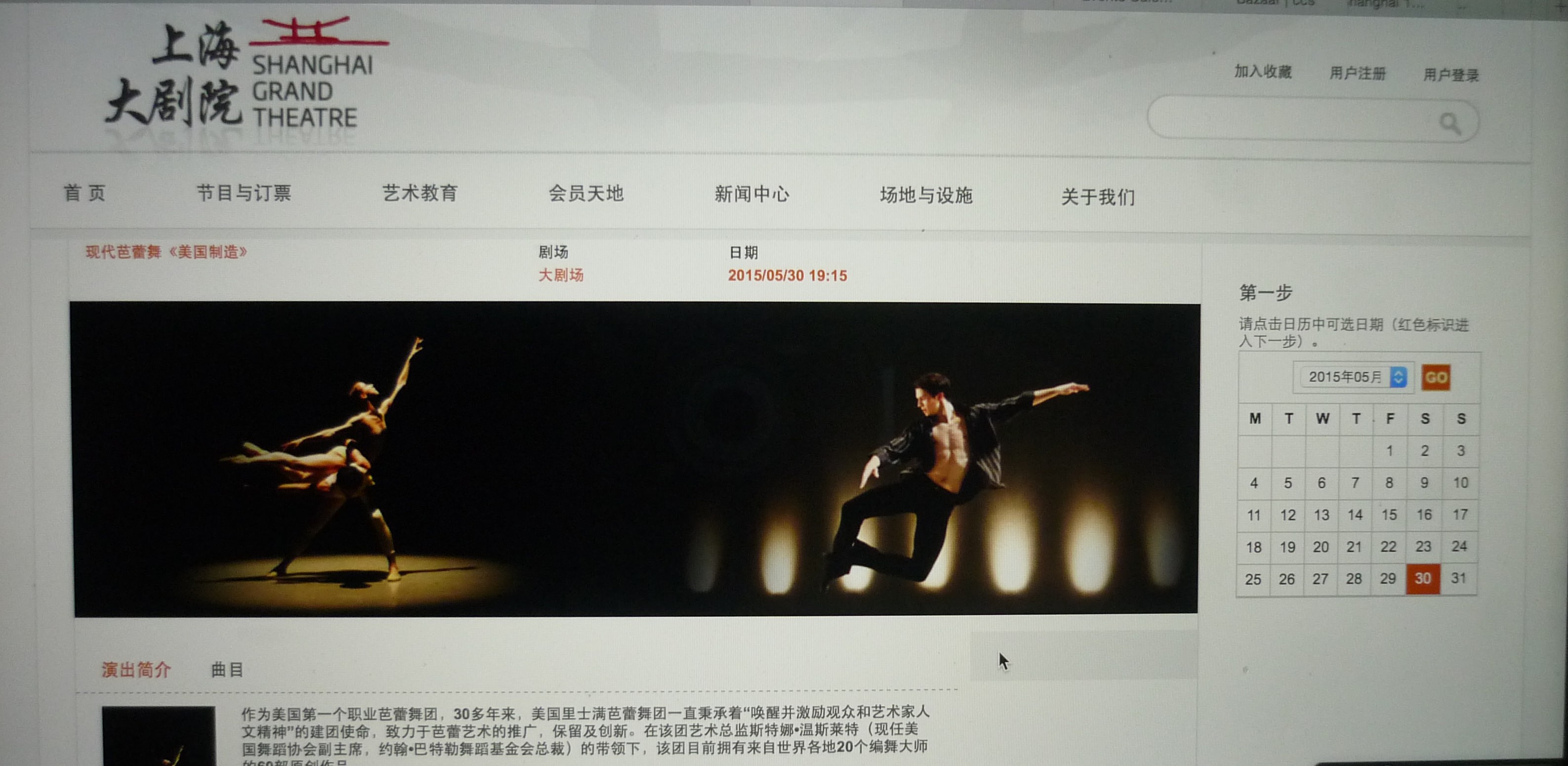
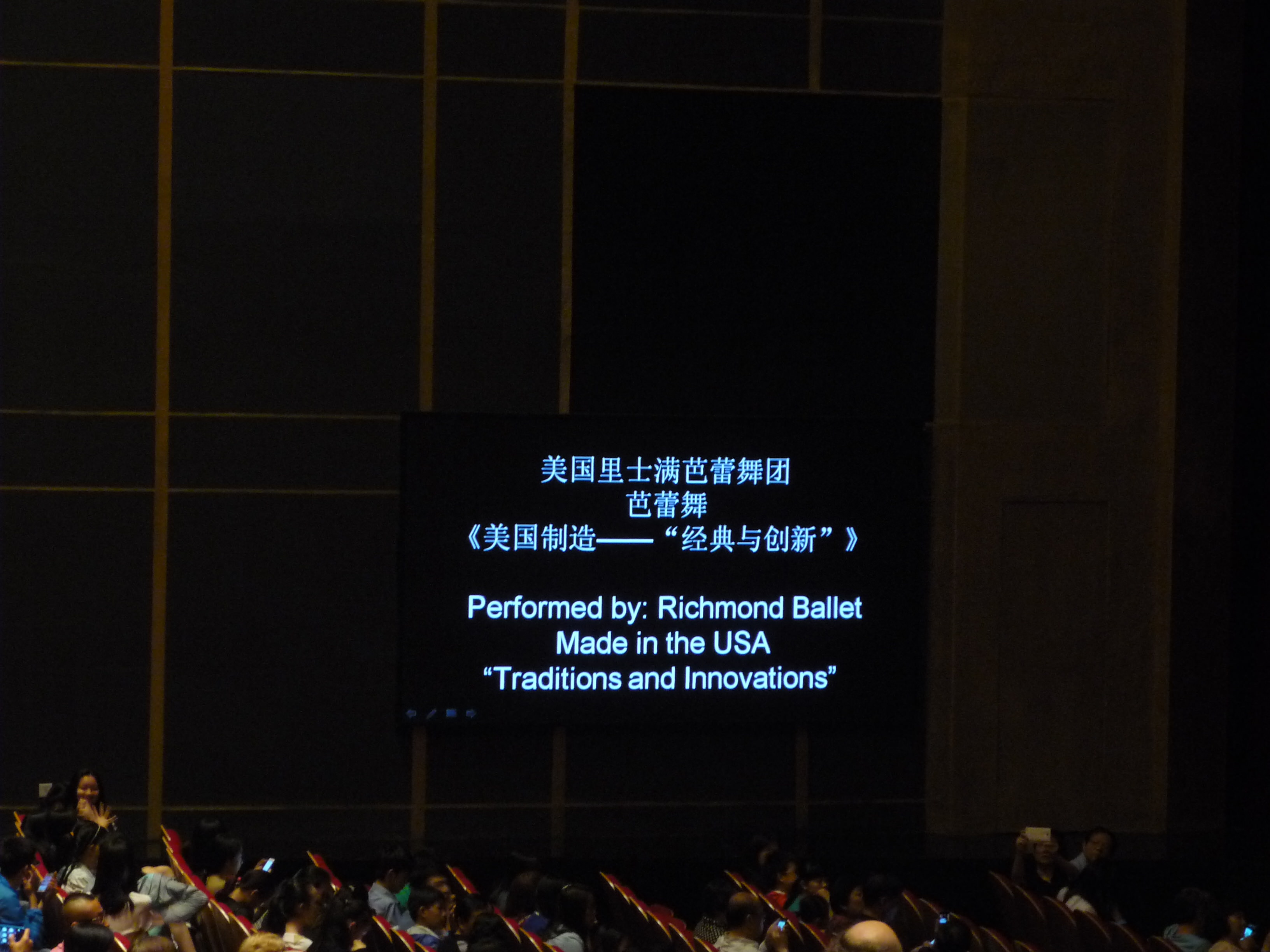
Screen-shot Shanghai Grand Theatre

Screen-shot Shanghai Grand Theatre

Time for a bit of western culture.  We had been told a couple of months ago that an American Ballet Company  – The Richmond Ballet Company of Virginia would be in Shanghai at the end of May.  As the time drew near, when I started to try and get tickets, it turned out they they wouldn’t be performing at Shanghai Culture Square (on the site of the old dog track) but at the much more prestigious Shanghai Grand Theatre.  I looked on line, but all the ticket information I could get was solely in Chinese so that meant that I wasn’t going to get anywhere doing it that way.  A quick search using Bing (Google Search along with all other Google products is banned in China) led me to locate a ticket office near West Nanjing Road metro station, so off I set in search of tickets.  When I got there the ticket office was closed, so my only option was to wend my way through the streets from the ticket office to the theatre itself to see if they were selling them directly.


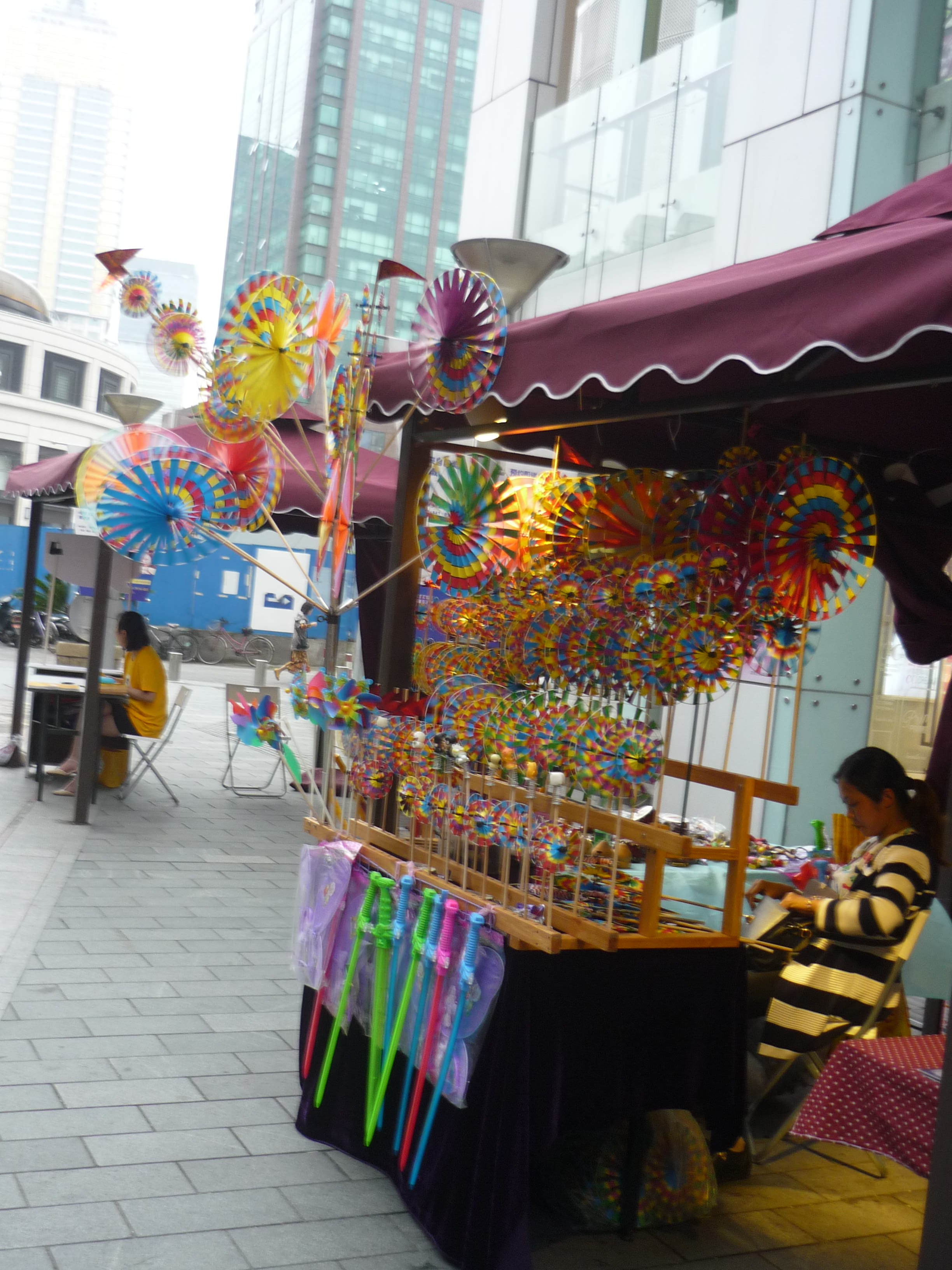
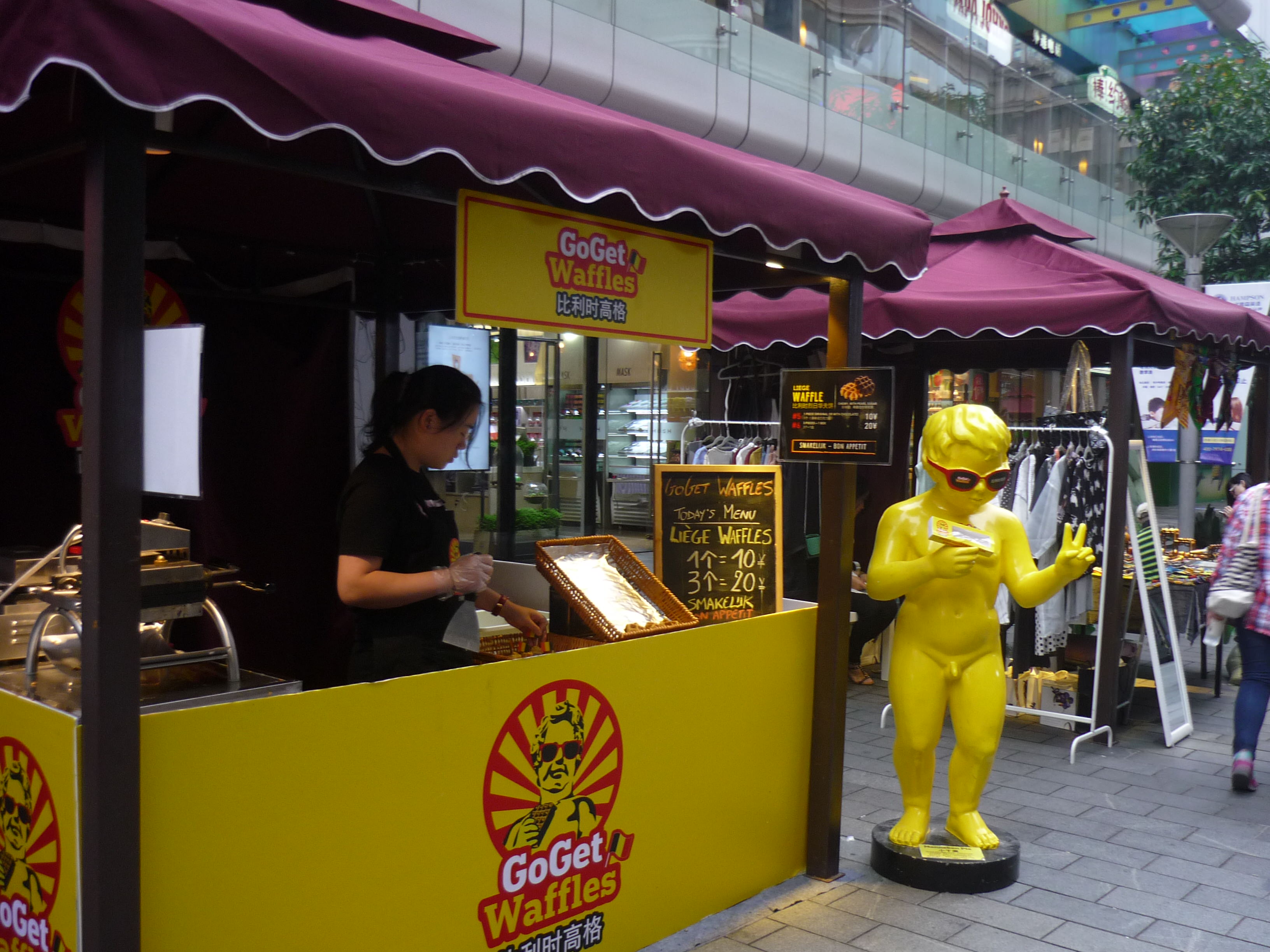
P1070856P1070859 P1070858The route I took led me through a market that was described as a pet market street in one of my guide books, but there wasn’t an animal in sight, only some very colourful stalls and a bright yellow manneken pis advertising waffles, I presume because of the Belgium (Brussels) connection between the two.  Anyway I got my tickets for the one and only ballet performance on the last Saturday in May, and last Saturday we set off to the centre of town for a late lunch and then onto the show.  Looking for food around the Grand Theatre the guidebooks suggested

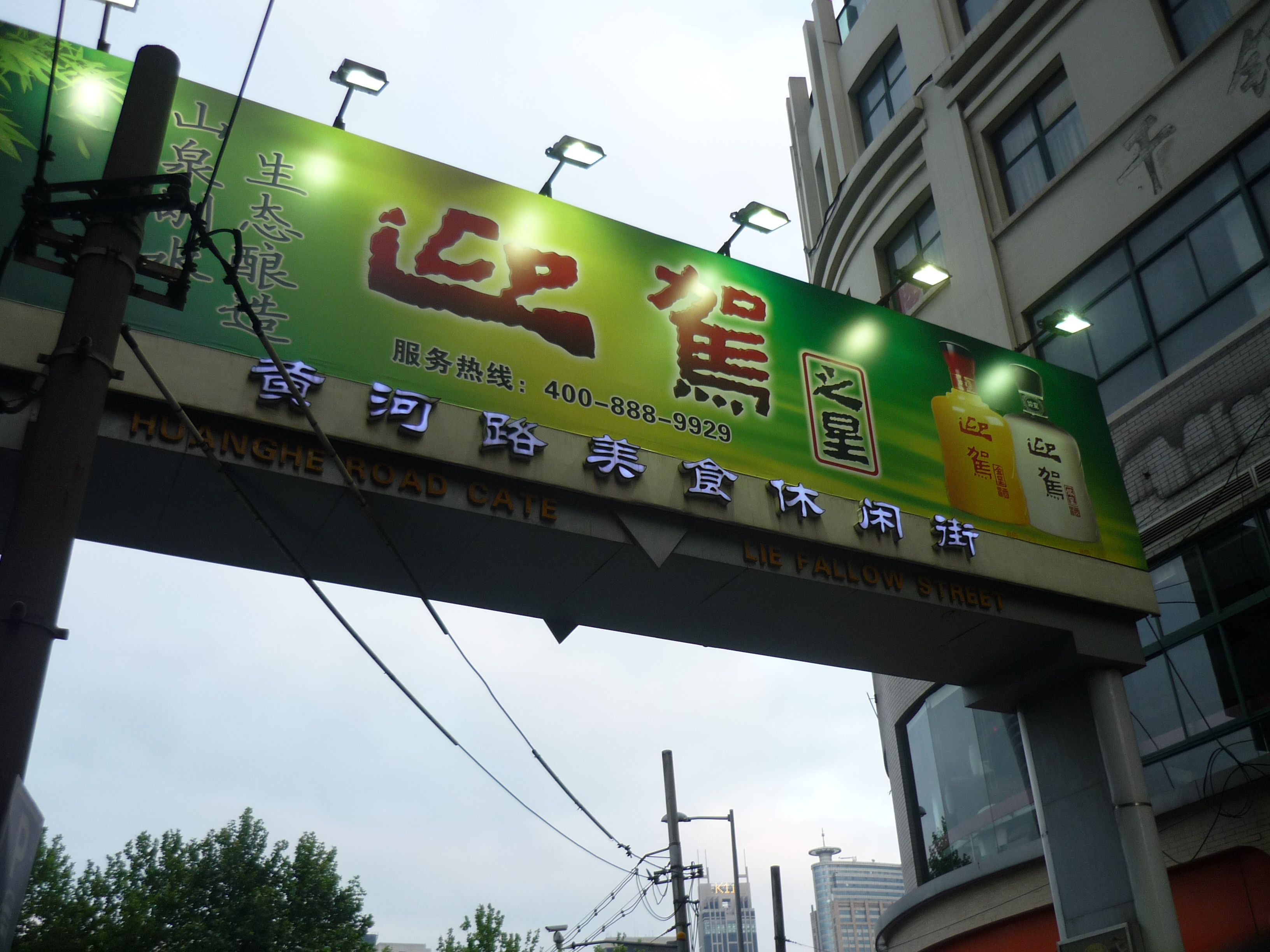
Entrance to Huanghe Lu Food Street

Entrance to Huanghe Lu Food Street

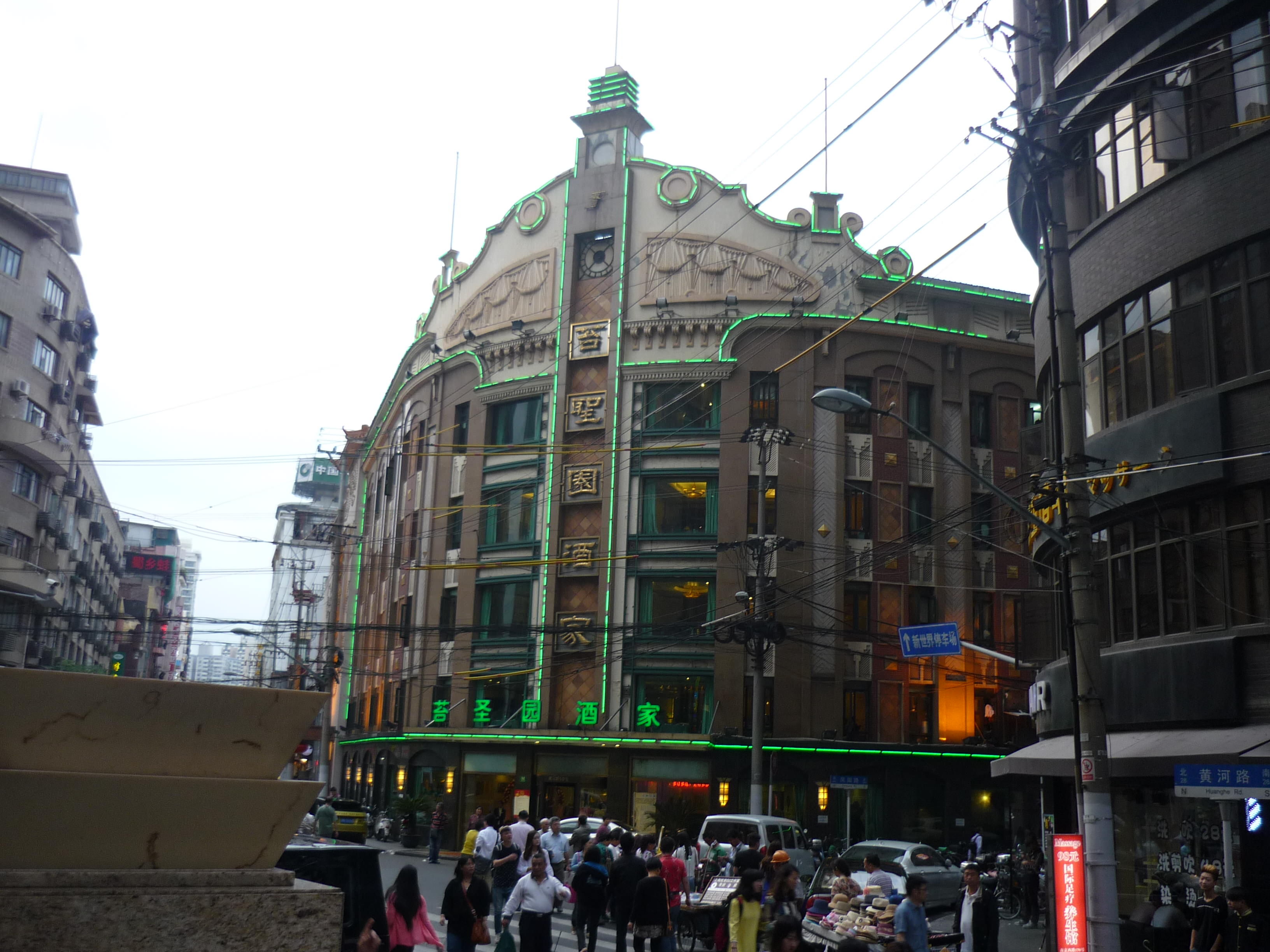
No 50 Tai Sheng Yuan Restaurant

No 50 Tai Sheng Yuan Restaurant

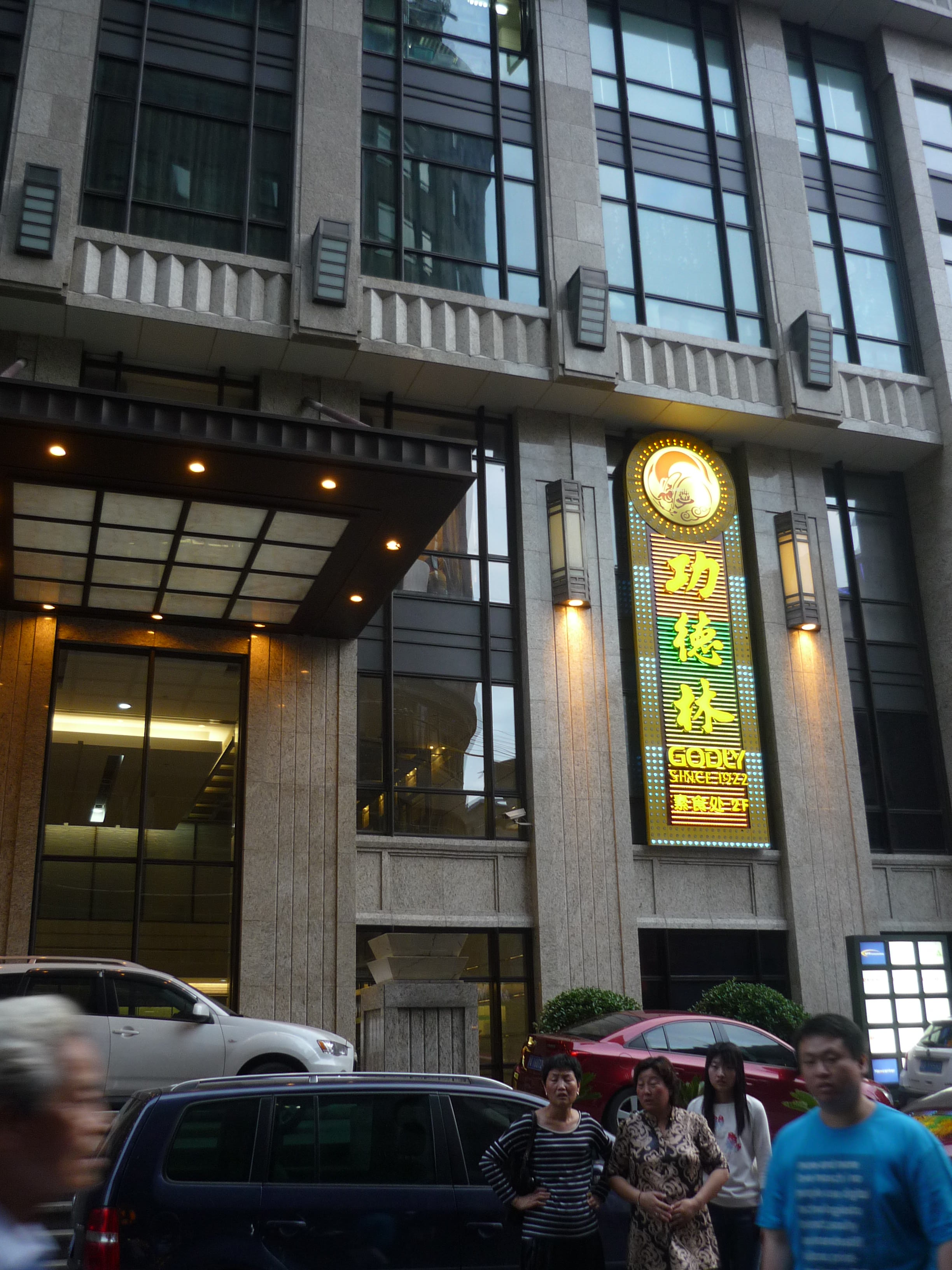
we try one of three restaurants on the food Street Huanghe Lu (Lie Fallow Street).  We already eaten here on our first Sunday in Shanghai at Yang’s Fried Dumplings, which was fine, but we couldn’t find Lai Tian Hua at no 159, only the sign above the door, and Tai Sheng Yuan at No. 50 didn’t appeal, so we tried Gong De Lin at no. 21 – the Godly restaurant which prides itself on having been a vegetarian restaurant since 1922.  We took the lift to the first floor, as soon as the restaurant opened for the evening session and had

Gong De Lin - The Godly Restaurant

Gong De Lin – The Godly Restaurant

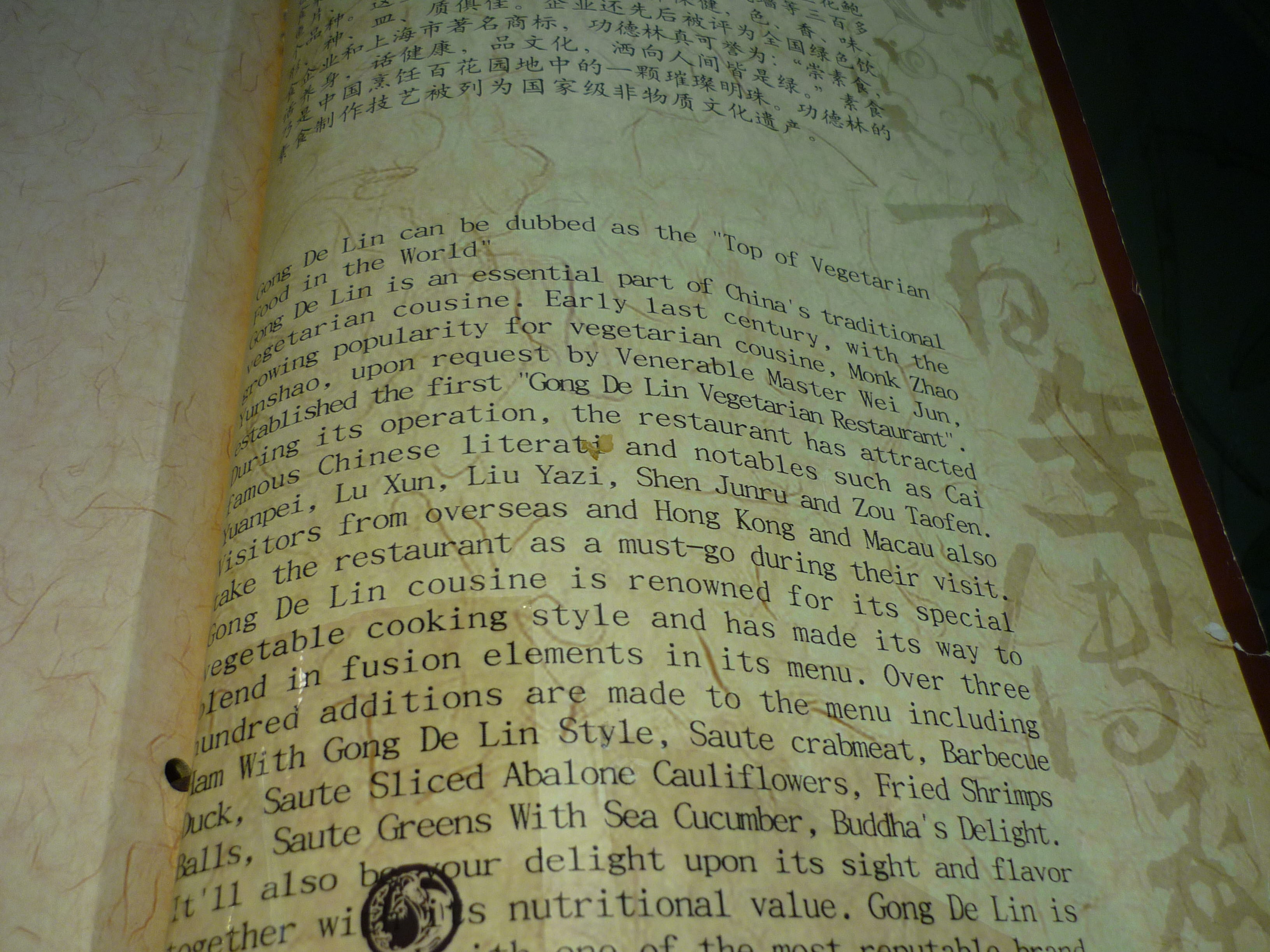
a look at the menu.

Front page of Menu

Front page of Menu

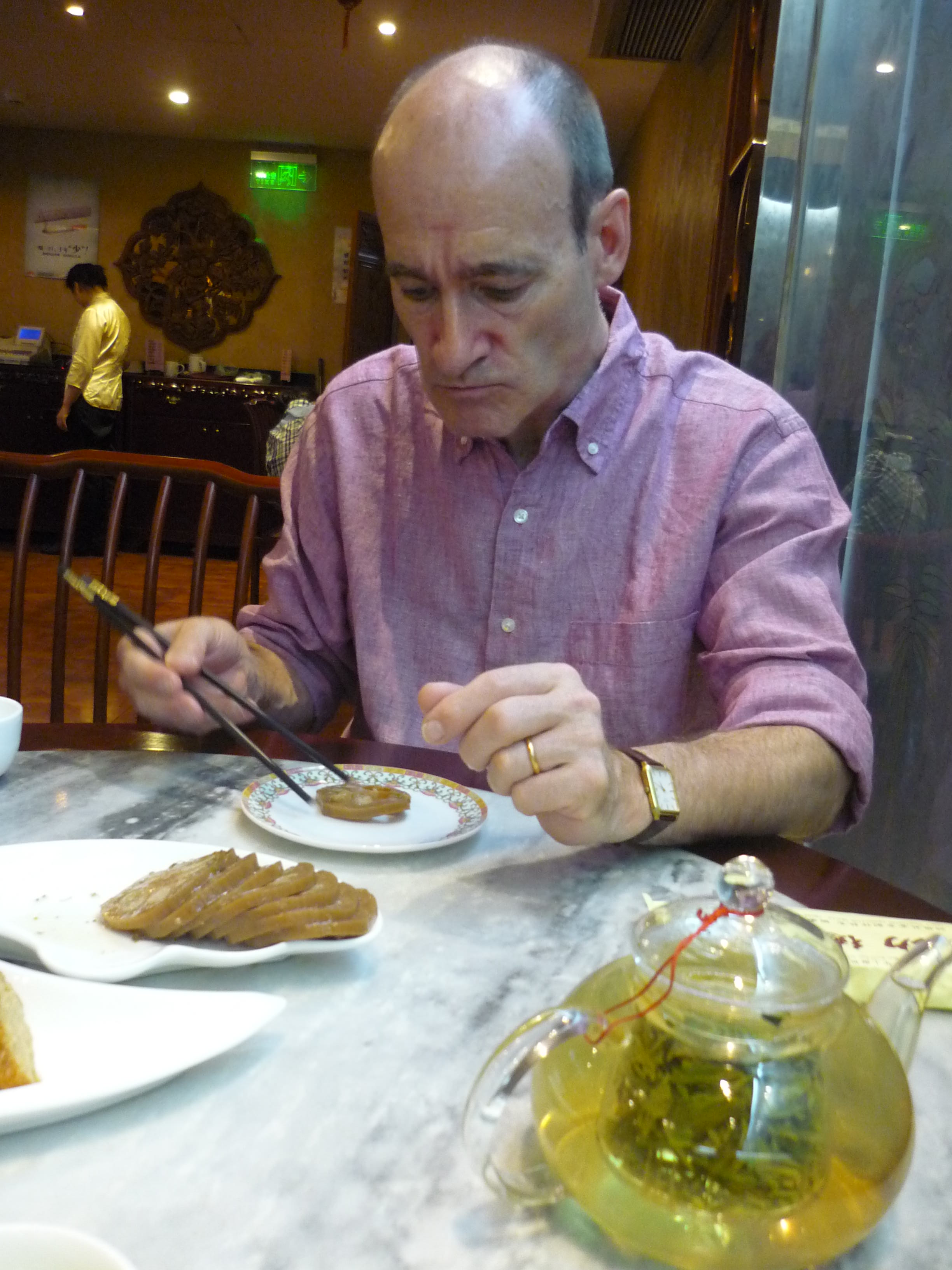
I ordered West Lake Green Tea, which was fine.

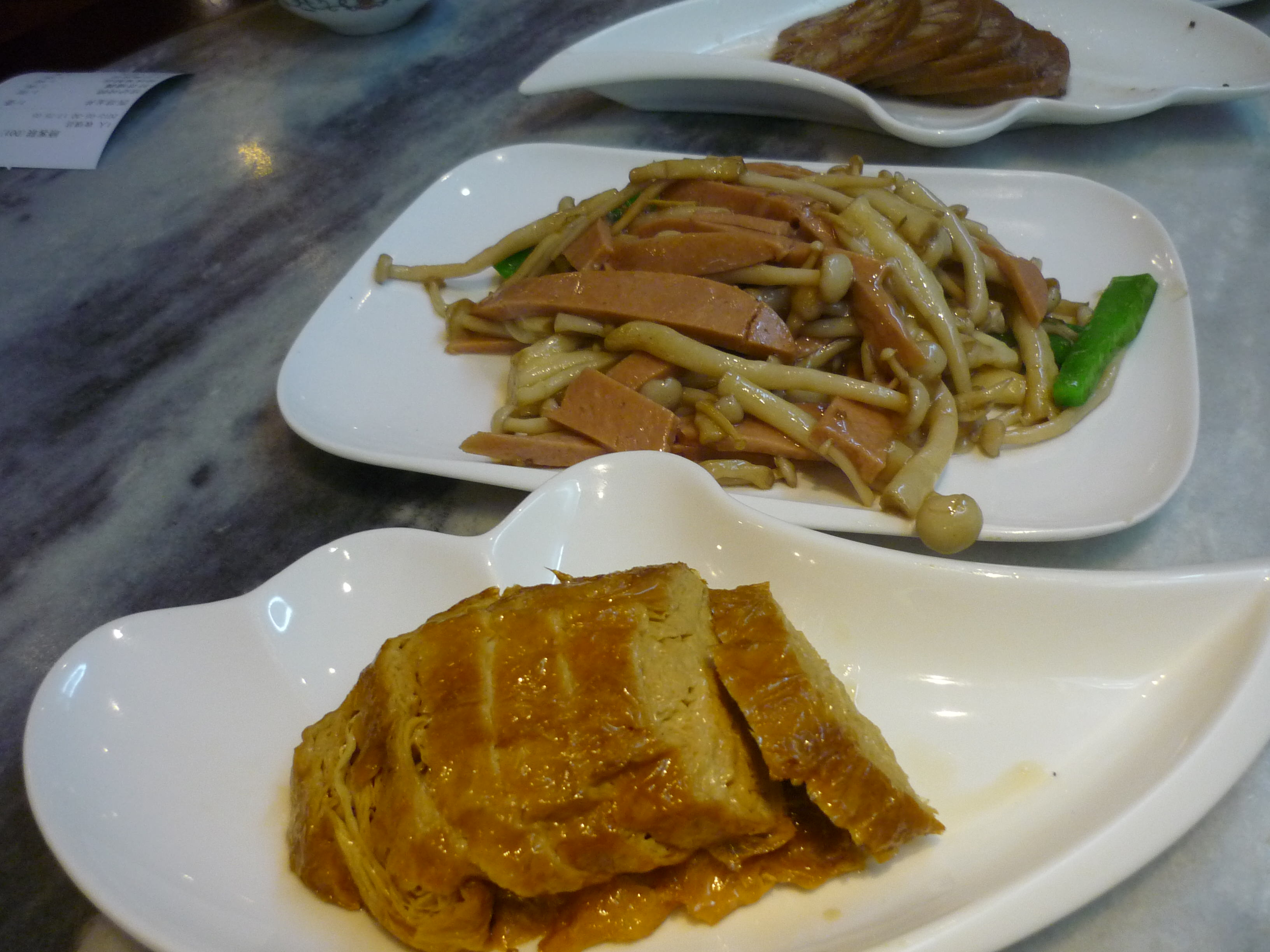
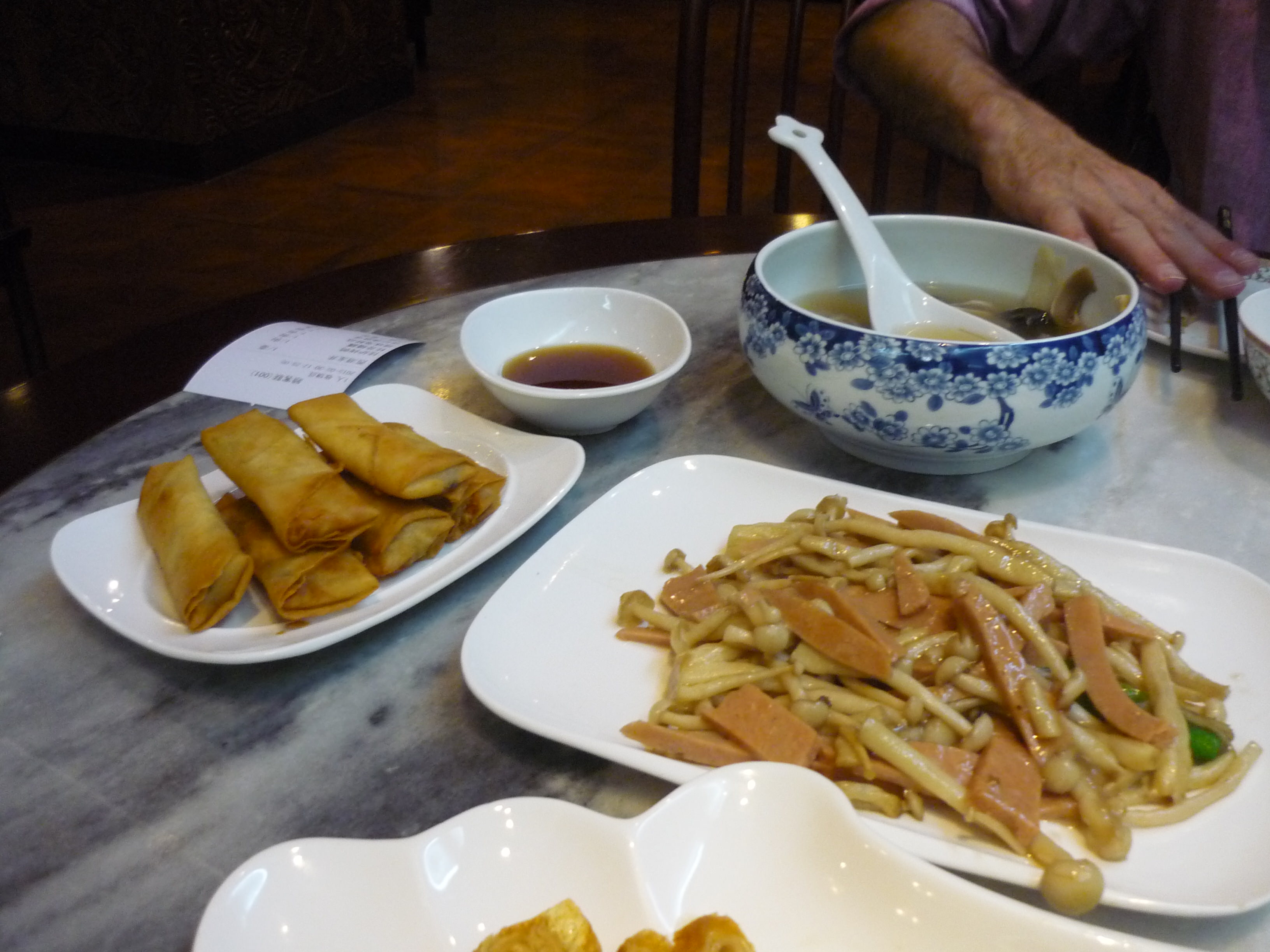
The rest was the worst meal we have had in Shanghai so far.  The flavours reminded me somewhat of the food we ate in China on my tour around the country in 1986.  The bean curd was made into pretend duck skin, the “ham” with the mushrooms tasted of spam and the lotus roots in osmanthus had been steeped in sugar and were sweet and sickly.

West Lake Green Tea

West Lake Green Tea

Duck skin, ham and lotus roots

Duck skin, ham and lotus roots

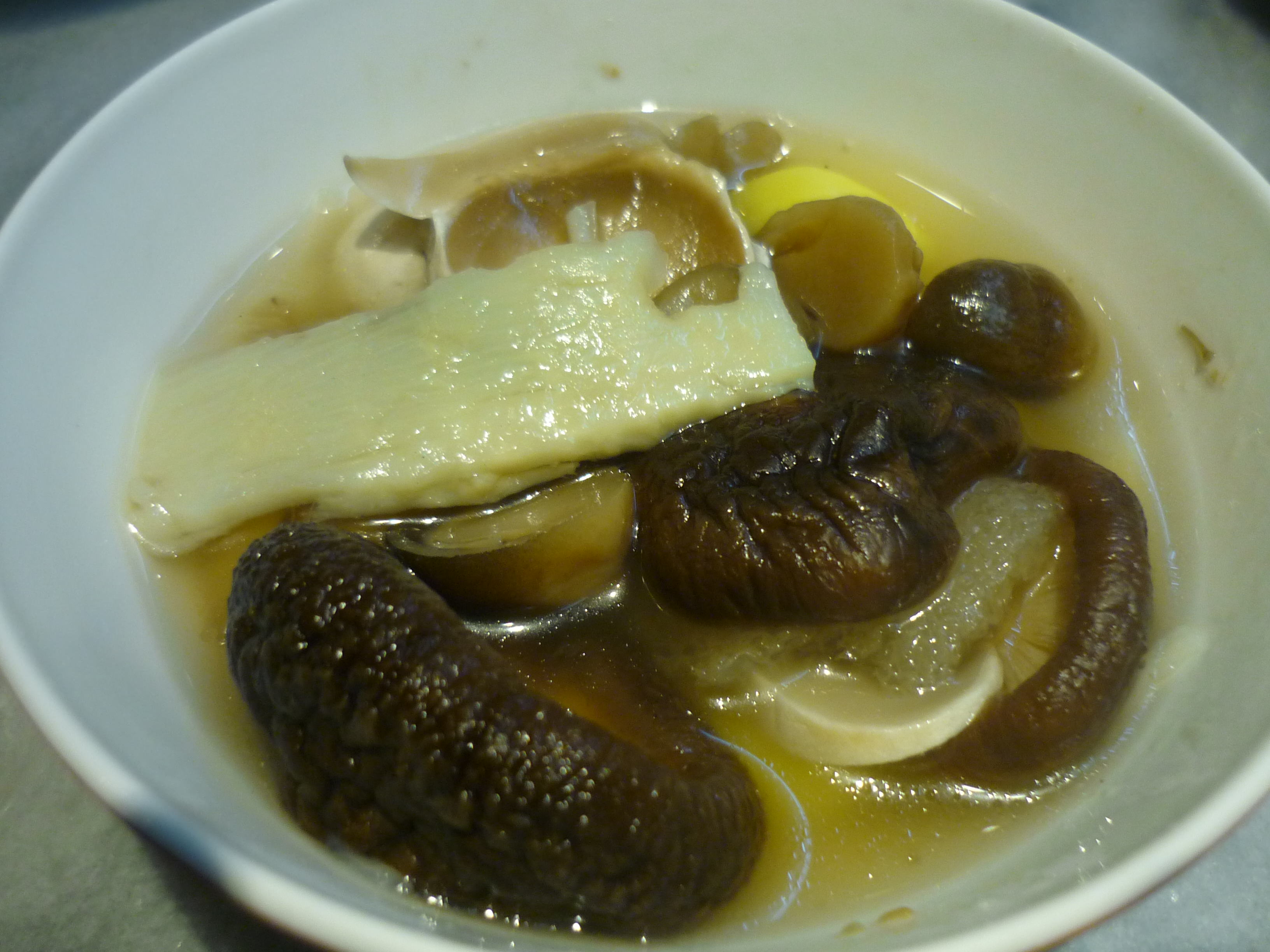
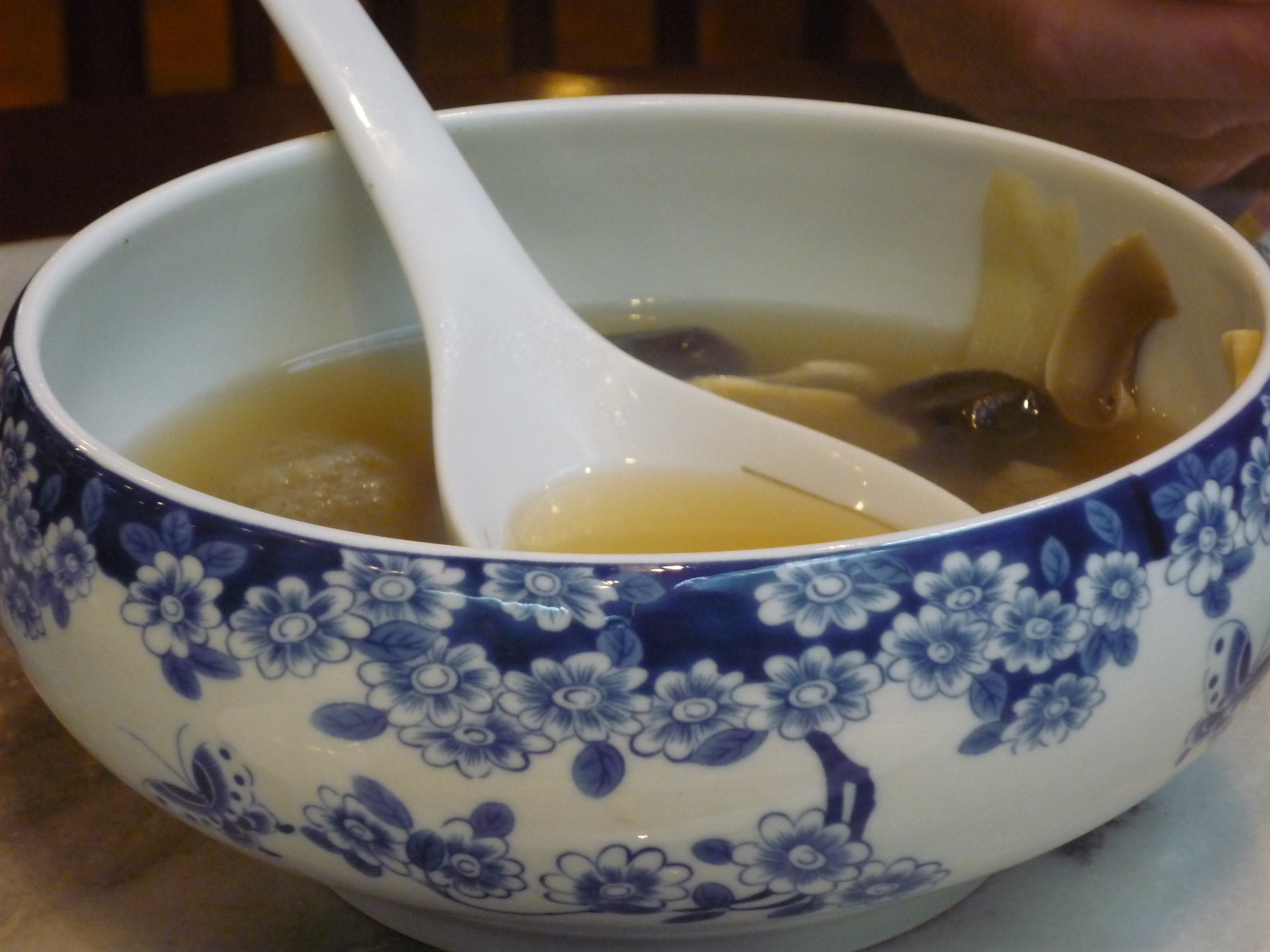
Spring Rolls and Mushroom soup

Spring Rolls and Mushroom soup

P1070879 P1070880

Duck skin, ham and lotus roots

Duck skin, ham and lotus roots

The mushroom soup was watery and insubstantial and the spring rolls were rolling more than they were springing.  There were a couple of strips of green pepper lurking beneath the pseudo ham dish, but that was it.  Now the lack of greenery may have been partly our fault in what we ordered, but looking around the other tables all their food seemed to be either brown or brown, just like ours. Considering how good vegetable cooking is nowadays in other parts of the world, with chefs such as Yotam Ottolenghi who does cook meat dishes, but uses vegetables fantastically well we were very disappointed. We won’t be visiting again.


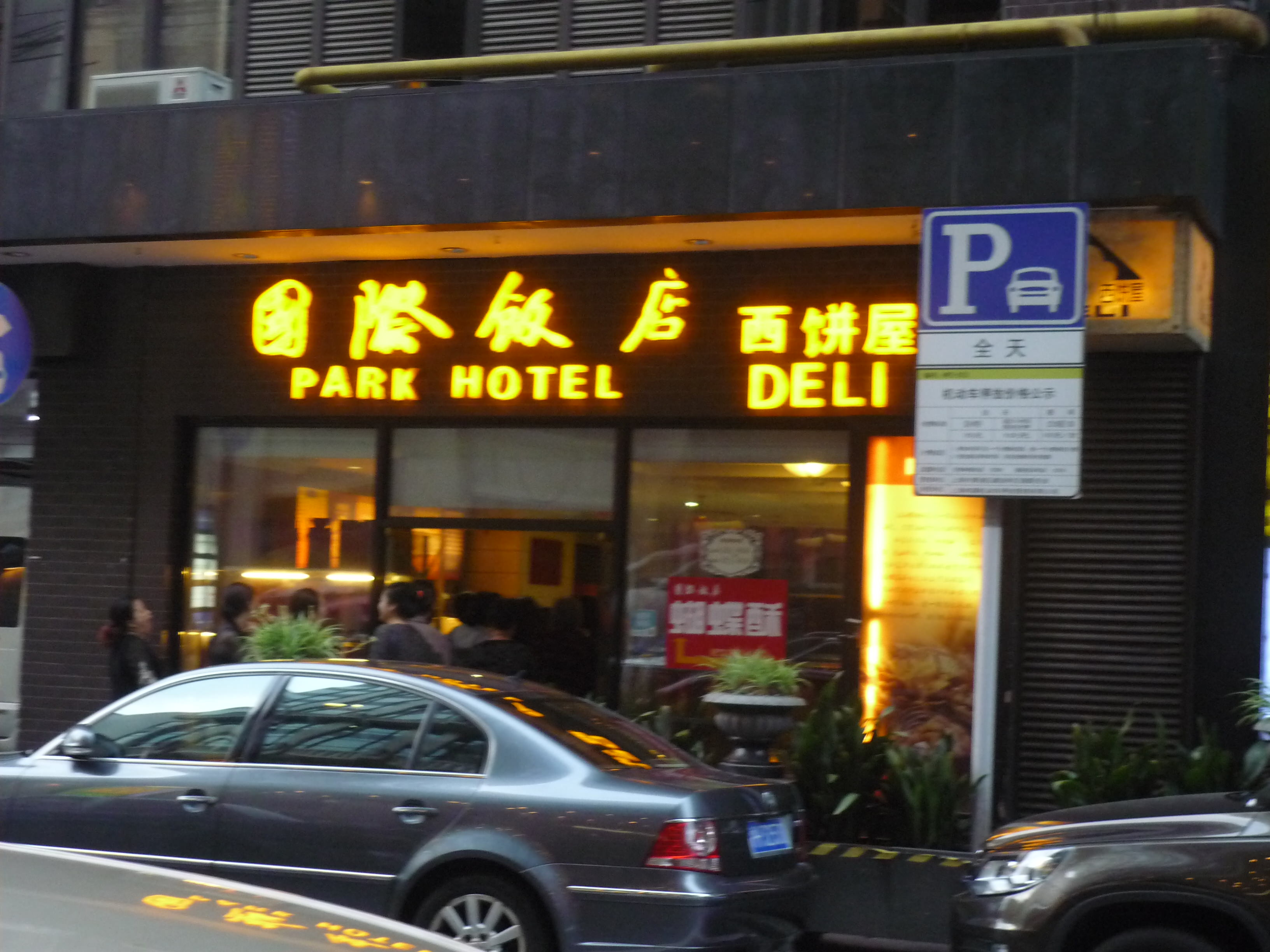
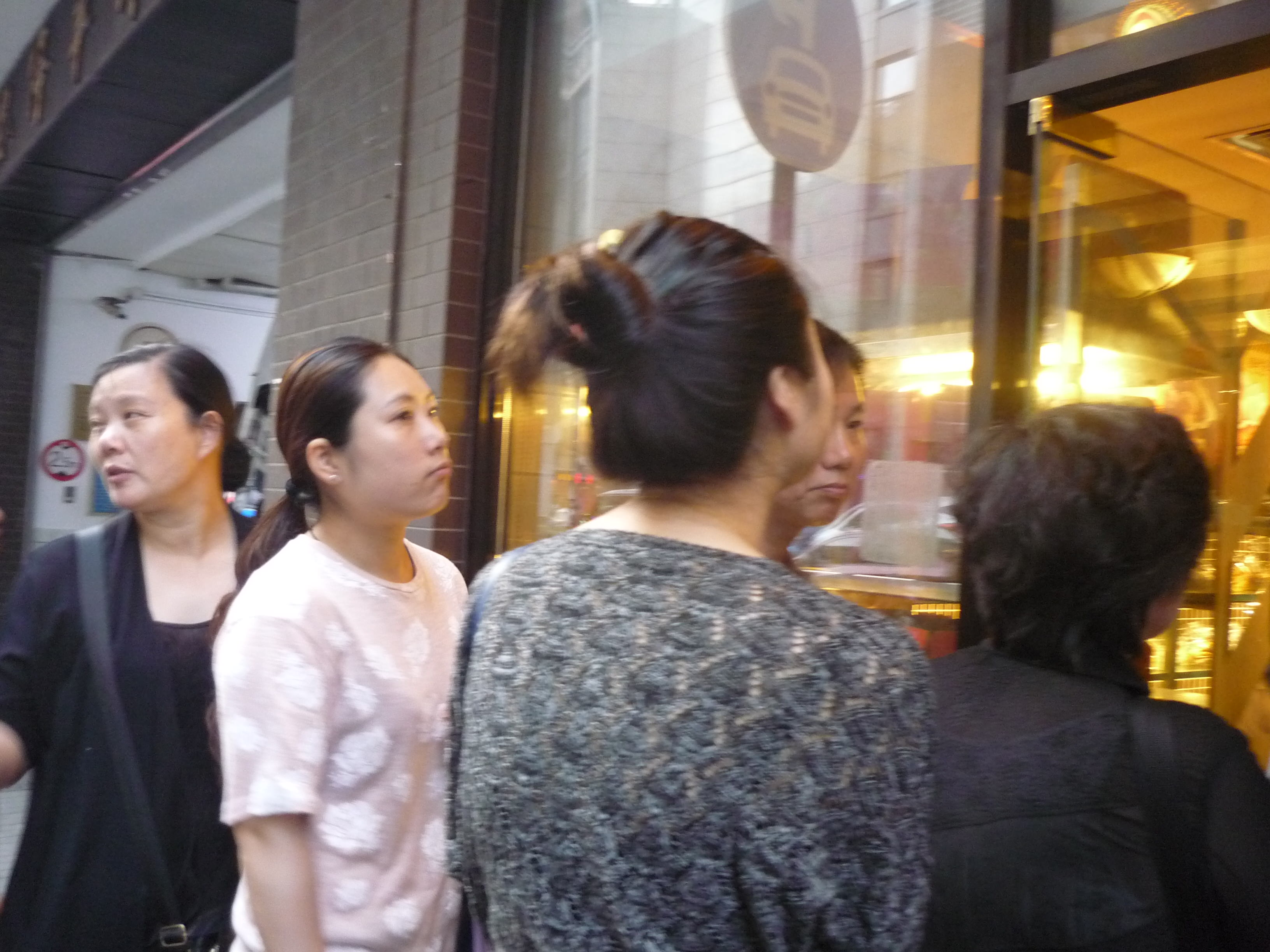
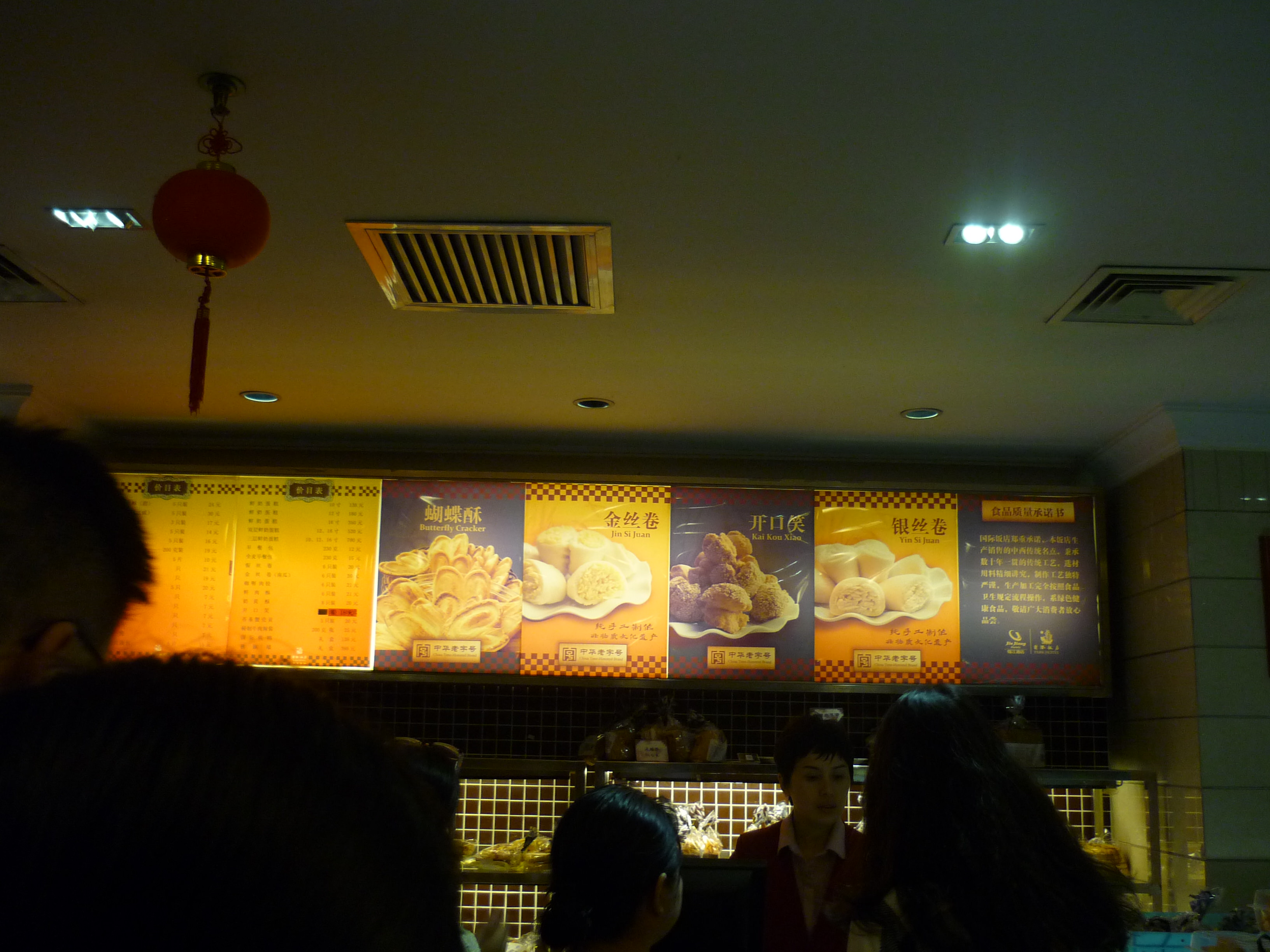
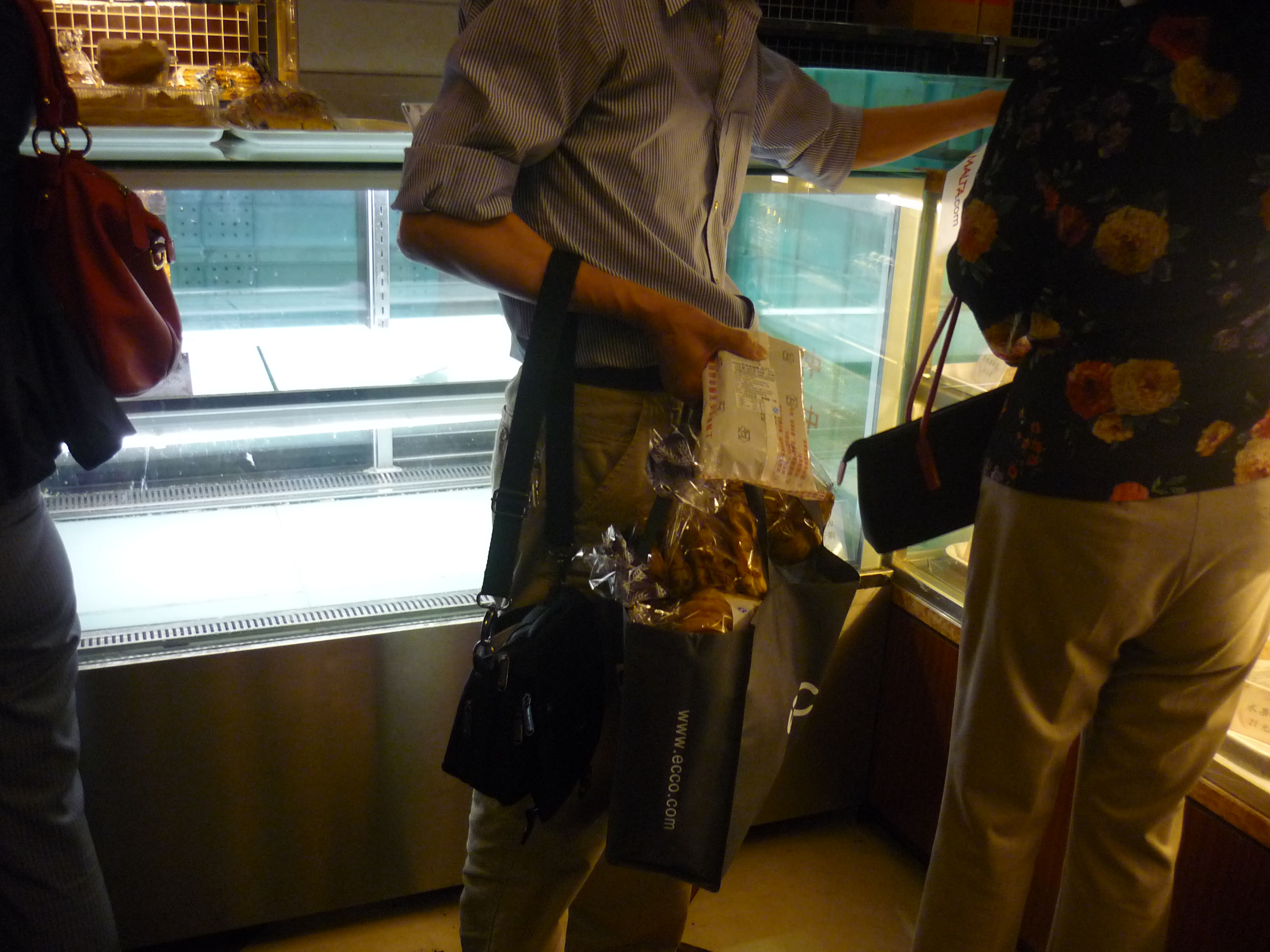
Across the street was the Park Hotel Deli.  There was a queue outside when we had gone into eat at the Godly and it was still there when we came out.  Richard went to investigate but we couldn’t work out quite what it was they were all queueing for. There seemed to be P1070888P1070886P1070885P1070884croissants and galettes, but Richard wasn’t convinced that that could possibly be the reason for the queue, but this man did seem to have a shopping bag completely stuffed full with croissants.

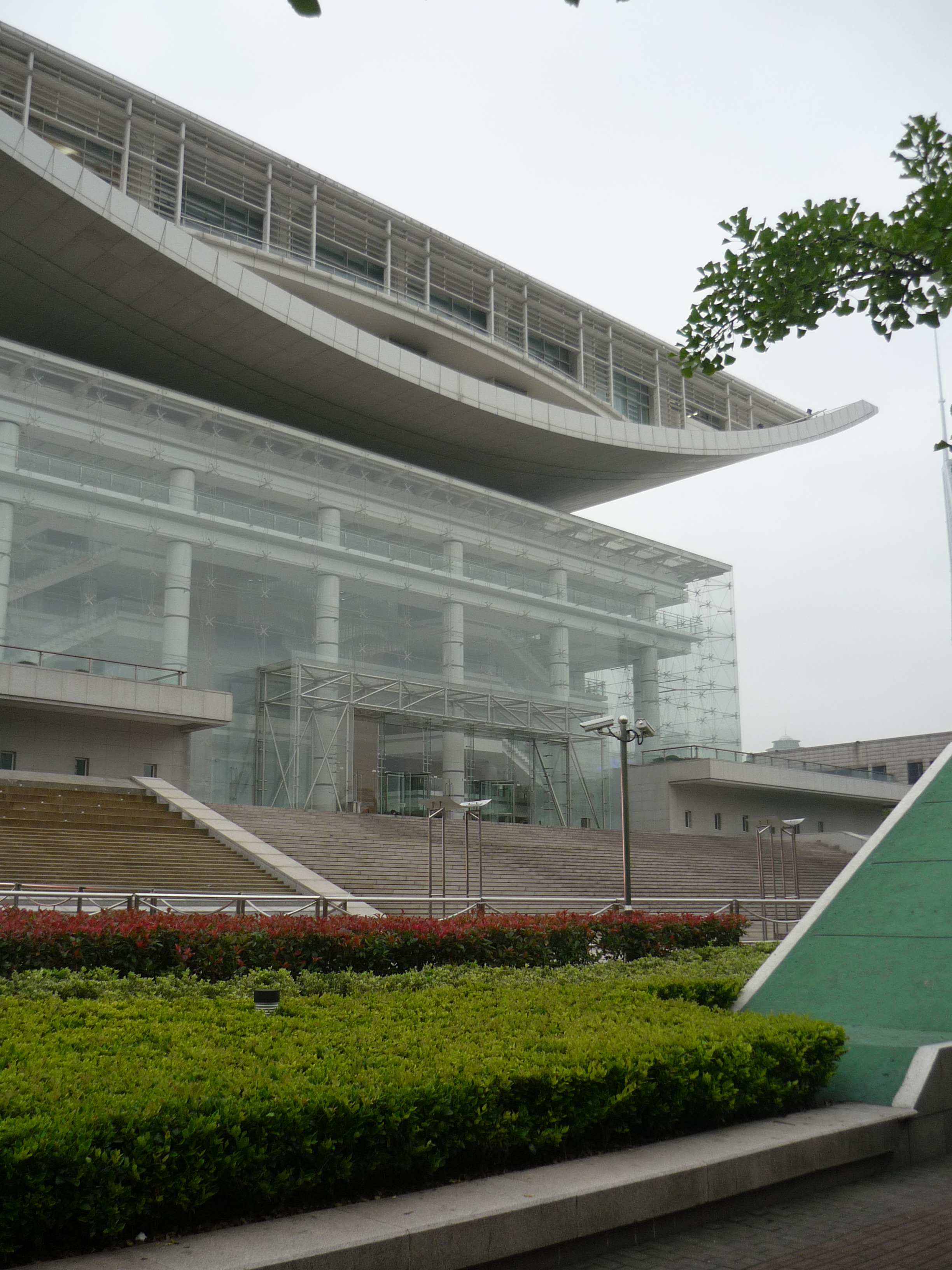
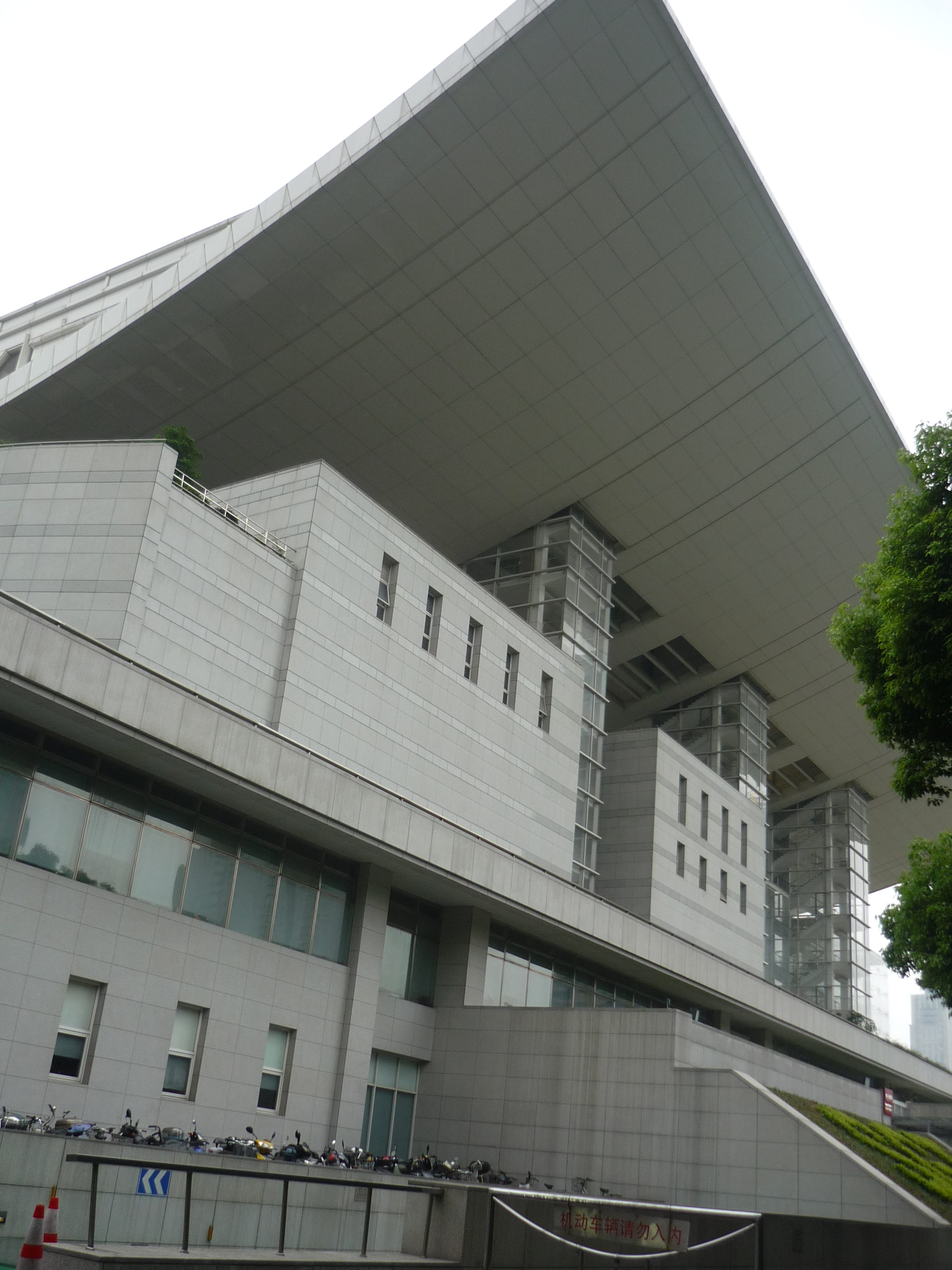
After our disappointing meal we headed over to The Shanghai Grand Theatre, which opened just under 17 years ago, but which still looks very modern, with its unusual curved top floors.  It was designed by the French Company  ARTE Charpentier.

Shanghai Grand Theatre Front Entrance

Shanghai Grand Theatre Front Entrance

Shanghai Grand Theatre Side View

Shanghai Grand Theatre Side View


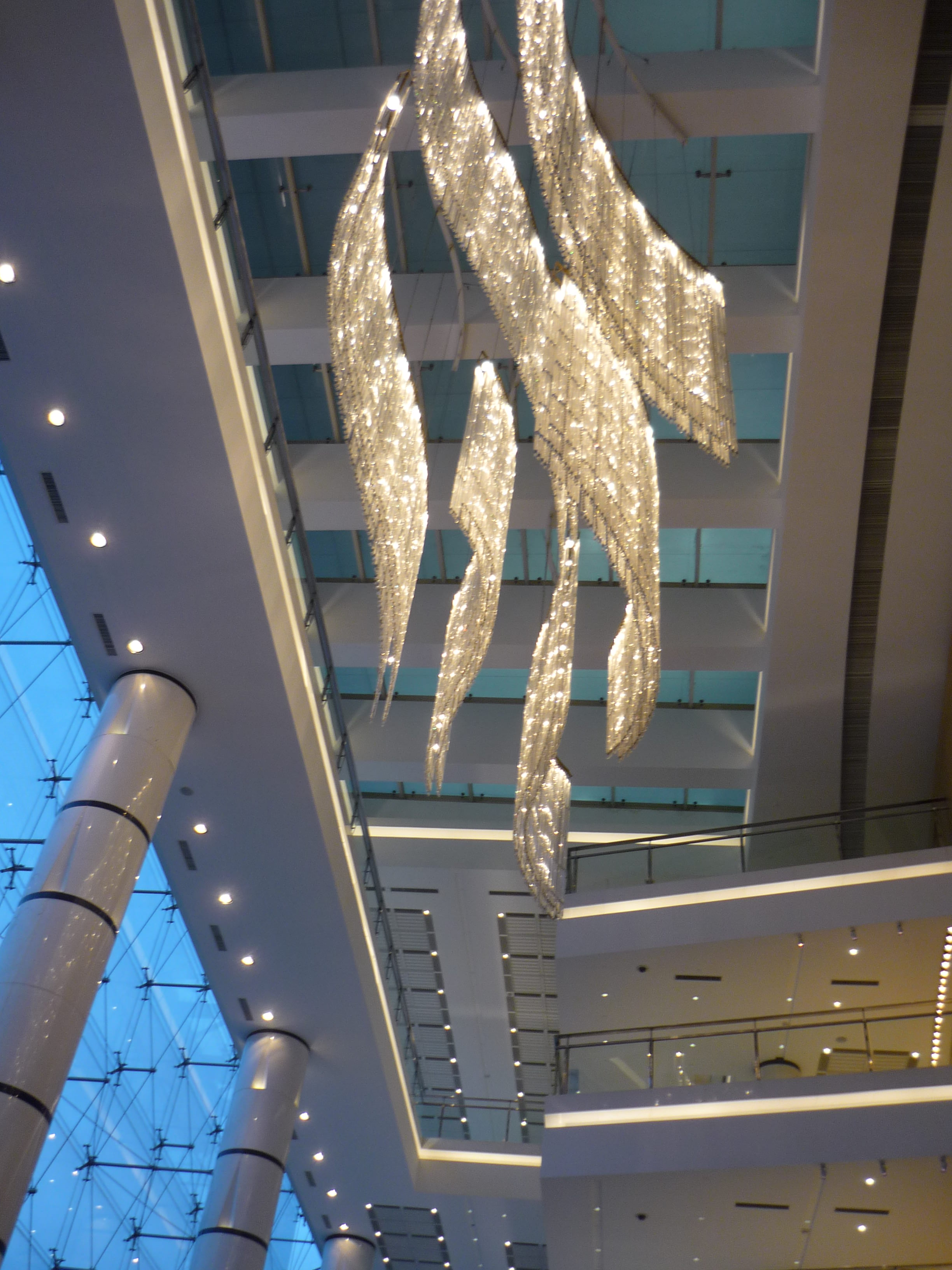
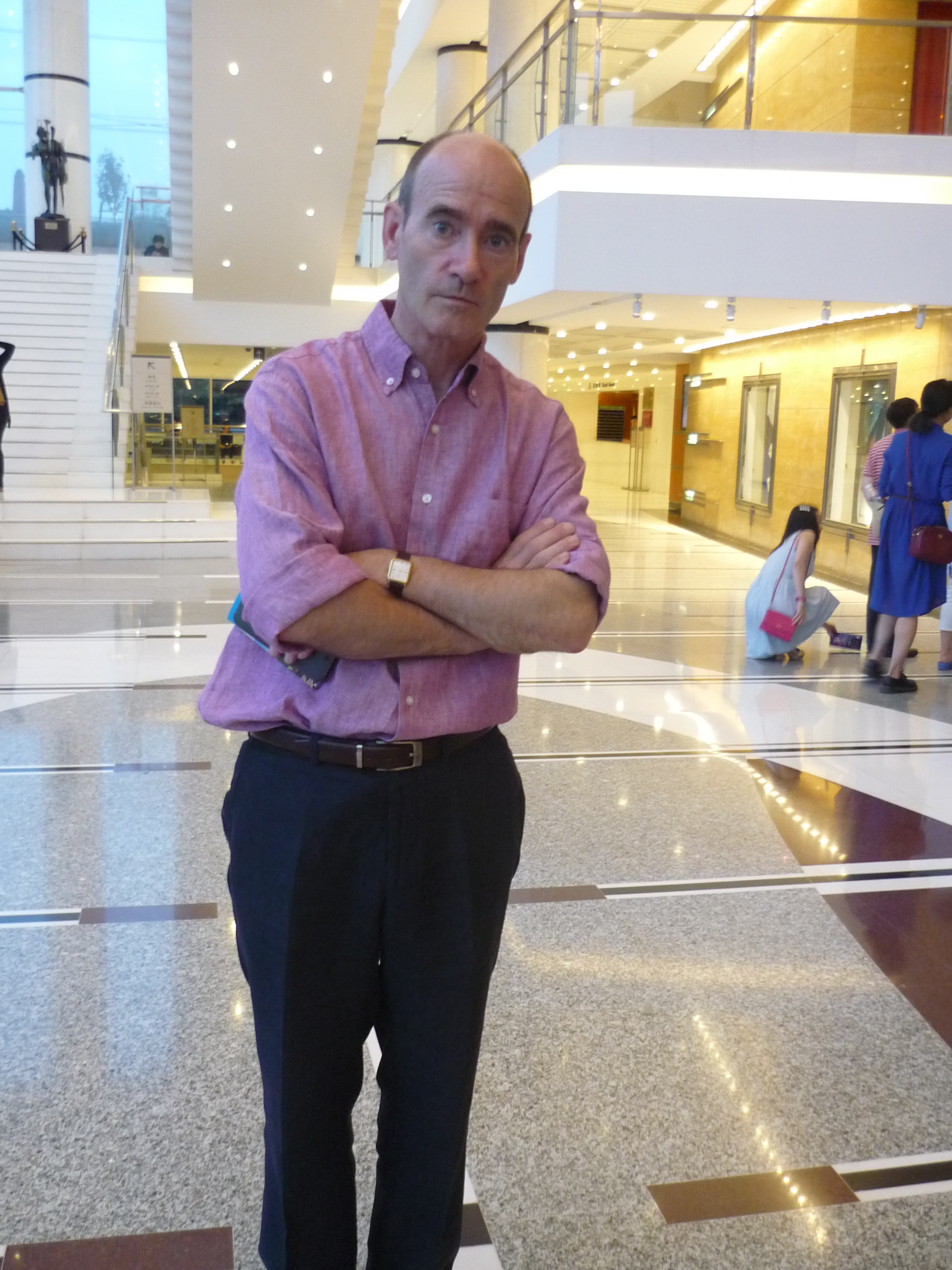
The inside is equally as stunning:
P1070891P1070892P1070893


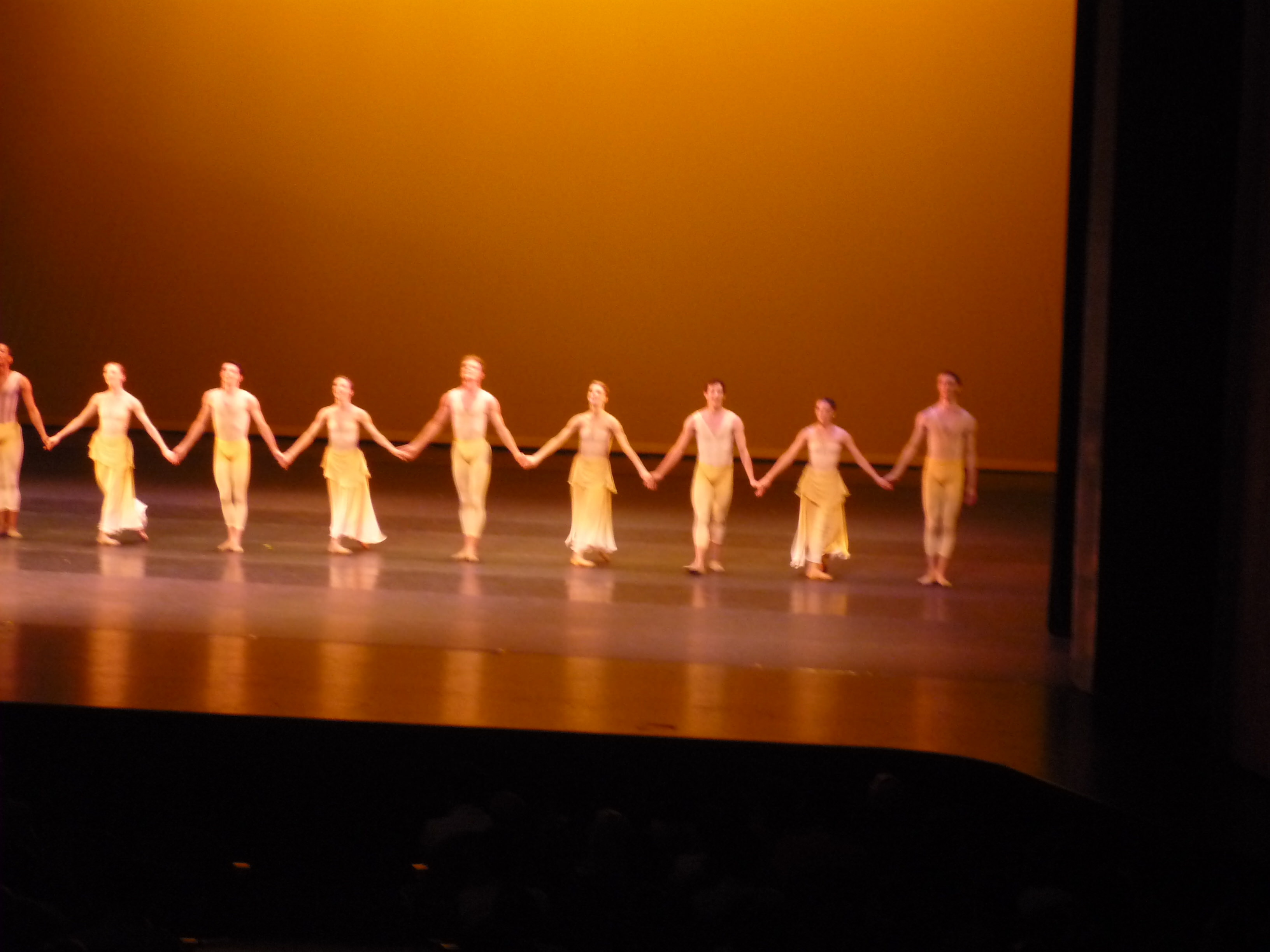
The ballet we had come to see was Traditions and Innovations performed by the State Ballet of Virginia, USA – The Richmond Ballet.  I was very good (mostly) and didn’t take any photographs as the young ladies walking around the theatre with placards just before the performance had started had requested.  Anyone who tried to, or had the light from their mobile phones showing, were quickly marked out by a small green light that was shimmered over their device.  I did take photos of the curtain calls for each ballet and only once got told off by the dreaded green light.

Ballet Traditions and Innovations

Ballet Traditions and Innovations

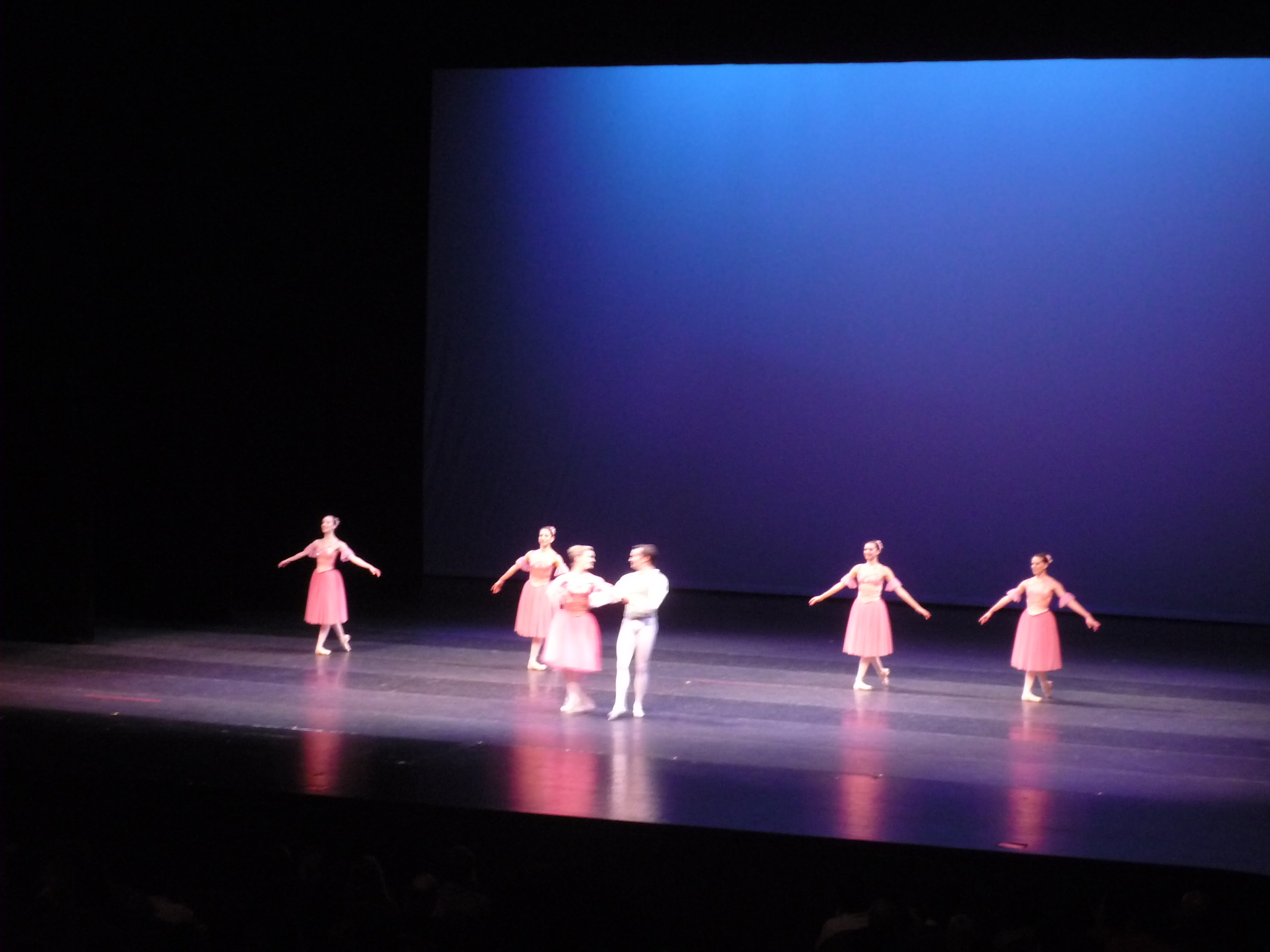
Valse Fantasie by George Balanchine

Valse Fantasie by George Balanchine

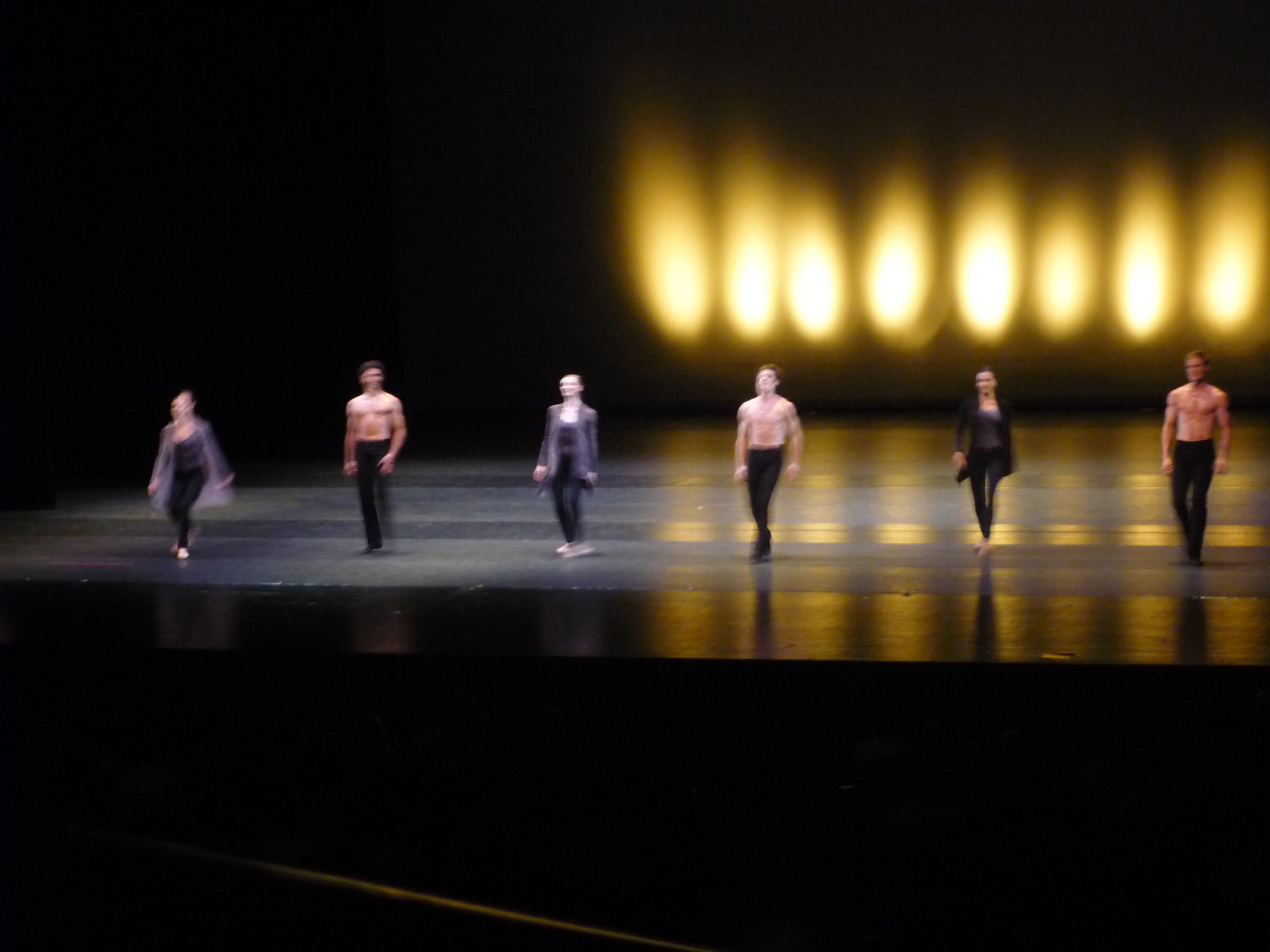
Swipe by Val Caniparoli

Swipe by Val Caniparoli

After Eden by John Butler

After Eden by John Butler

Lift The Fallen by Ma Cong

Lift The Fallen by Ma Cong


Us dwarfed by Richard Foggio

Us dwarfed by Richard Foggio

Valse Fantasie is a 1965 is a typical classical ballet and was quite frankly rather dull in a Les Sylphides kind of way.  Swipe, using music by Prokoviev (Gabriel the grandson, not Serge the grandfather) was striking, thrusting and exciting combining classical ballet point work with hip-hop moves.  It reminded me a bit of Still Life at The Penguin Cafe Orchestra, at least the strings did, but there was ample use of forceful rhythm drumming in the music as well.

After Eden another traditional ballet from the 1960s by John Butler about Adam and Eve seemed a bit of a strange choice for a ballet taken to China.  I wonder how many of the Asian audience knew who Adam and Eve were, let alone what Eden was.  But maybe that was the point?  Any way a more interesting ballet than George Balanchine’s with Eve evidently part of Adam in the beginning and then breaking away to become her own being and then the two bodies then combining again. (Made me think of all the genetic problems their off-spring must have had.)

The final piece was Lift The Fallen a contemporary piece by the Chinese choreographer Ma Cong, in which he describes the loss of his mother and the healing process which eventually follows as grief subsides.  There is much use of large swathes of metres of fabric in this ballet which are run around and manipulated over the stage in various ways.  And I loved it.

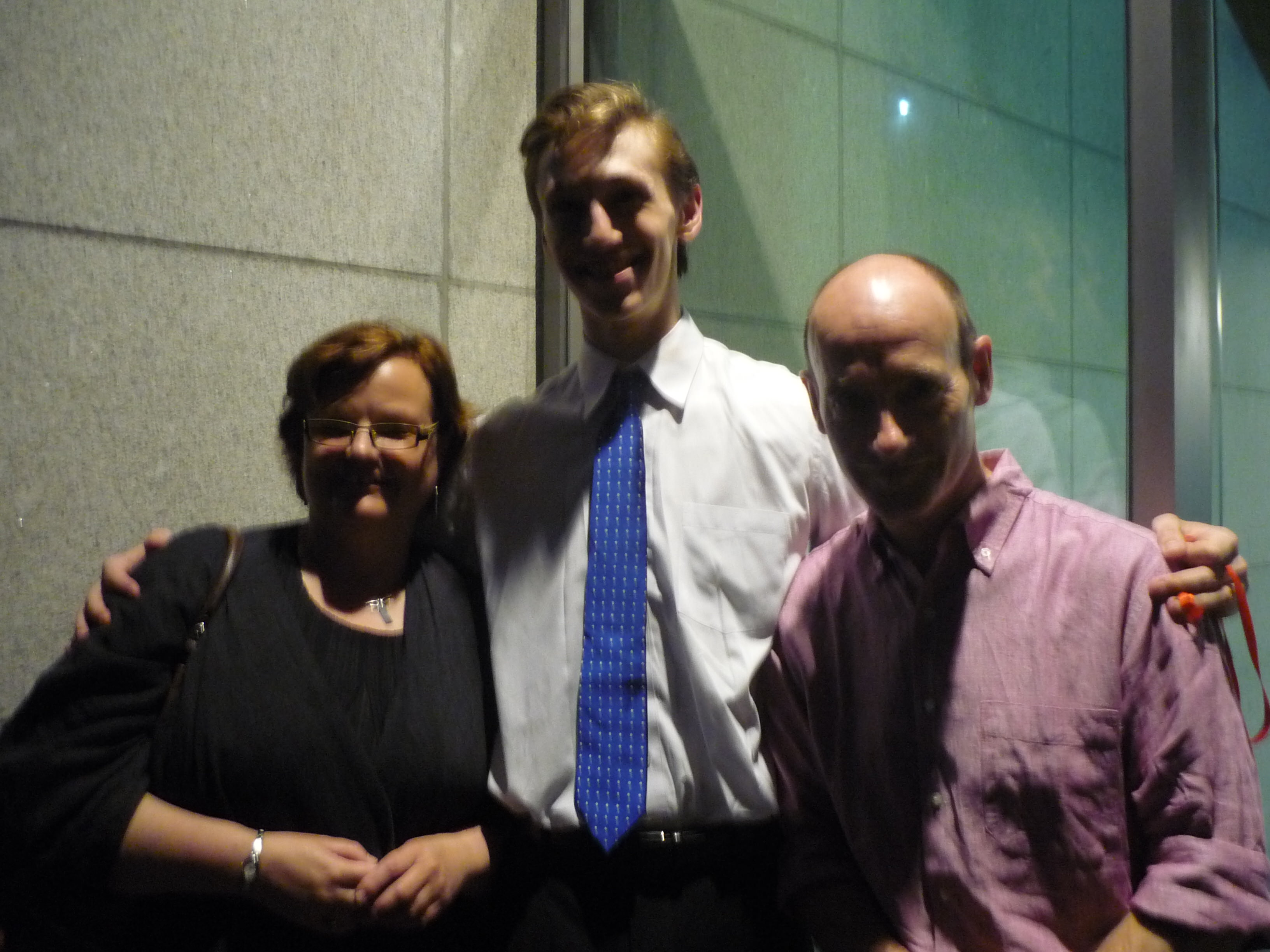
But the real reason we came to the ballet, even though we do enjoy watching this art form was to see the young man right on the very end of this line up for the curtain call for Lift The Fallen.  It is a little difficult to really keep your eyes on the whole changing dynamics of a ballet when you are constantly trying to pick out one particular performer.  Richard Foggio was a stand-in and had danced in the first half of the ballet.  An American, he had been in my daughter’s class when they both started school together (and probably even did ballet lessons together too, I believe) when his parents were living in Northamptonshire.  It was lovely to see him outside the Stage Door (the security guards wouldn’t let us in without a pass) having grown into such a fine (and tall) young man, and doing what he evidently enjoys in a theatre which he described as fantastic.

Postscript

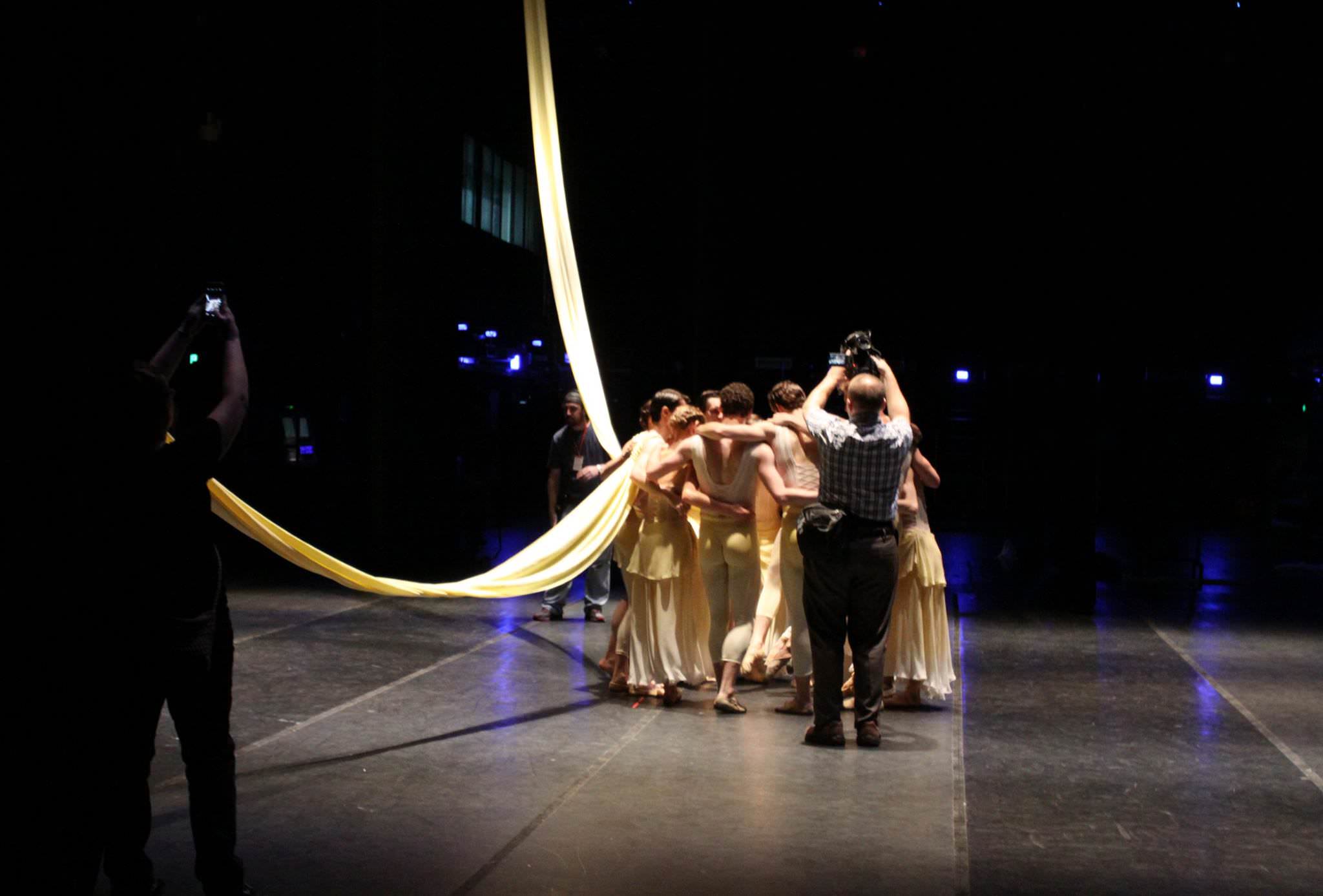
Group-hug prior to curtain up for Lift The Fallen

Group-hug prior to curtain up for Lift The Fallen

Richard’s mother messaged me not long after with the following (and the photo):

Richard was thrilled to have been invited to participate in this tour. As a member of Richmond Ballet’s second company, RBII, he was brought to be back up for the demanding male roles. He was thrilled to have been able to perform in several of the performances, and Shanghai was the ‘crowning jewel’ when he got to perform the ‘torch lift’ in ‘Lift the Fallen’ with the prima Lauren Fagone. Having friends in the audience made it the perfect end to the season for him. The best news is he was promoted into the first company with his contract for next season!

Posted in Event, People's Square | Tagged , , , , , , | Leave a comment

The Jiading Museums

The Jiading Chinese Imperial Examination System Museum

The China Imperial Examination System Museum

The China Imperial Examination System Museum

Jiading, a water town subsumed by Greater Shanghai, is an odd place to find a museum about the Chinese Civil Service Examination, but we found one in the midst of a Confucian Temple, 30km from the centre of Shanghai.  We are usually fortunate in having museum commentaries translated into English for us, but this museum was displaying more Chinglish than English, but with a little help I hope I can explain to you what it was all about.

The Chinese Imperial Examination System was originally started in the Han dynasty (206BC – 220AD) and by the middle of the Tang Dynasty (618AD – 907AD) it was the mechanism for identifying which men would become bureaucrats in Imperial China.  The exam was based on a knowledge of the classics and on literary style, not on technical knowledge, thus

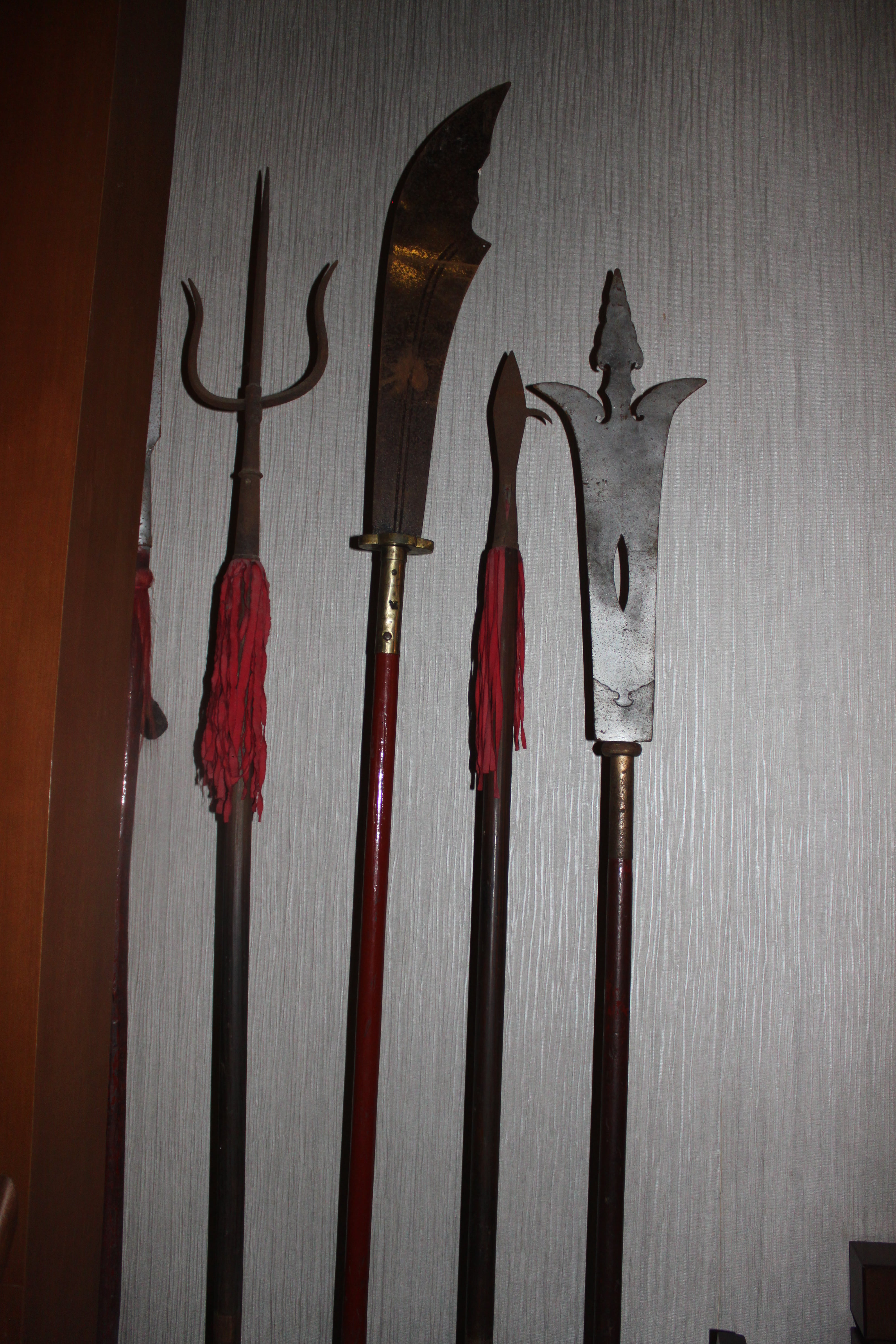
Chinese Weapons of war

Chinese Weapons of war

successful candidates were generalists, not specialists; classicists not technicians.  And the examination led to a country-wide education system whereby the candidates shared a common culture of Confucianism and the Mandarin language with the successful ones becoming scholar bureaucrats. It was a system that continued for 1300 years (although with short breaks).  It superseded more war-like tests based on skill with various weapons.

The benefits were that the system was a meritocracy so that talented poor students were capable of rising to the top of the system, although I have read elsewhere that wealthy families could opt into the system by educating their sons or by purchasing degrees.  The Imperial Chinese Examination system had a significant role in unifying the country and propagating Chinese Culture

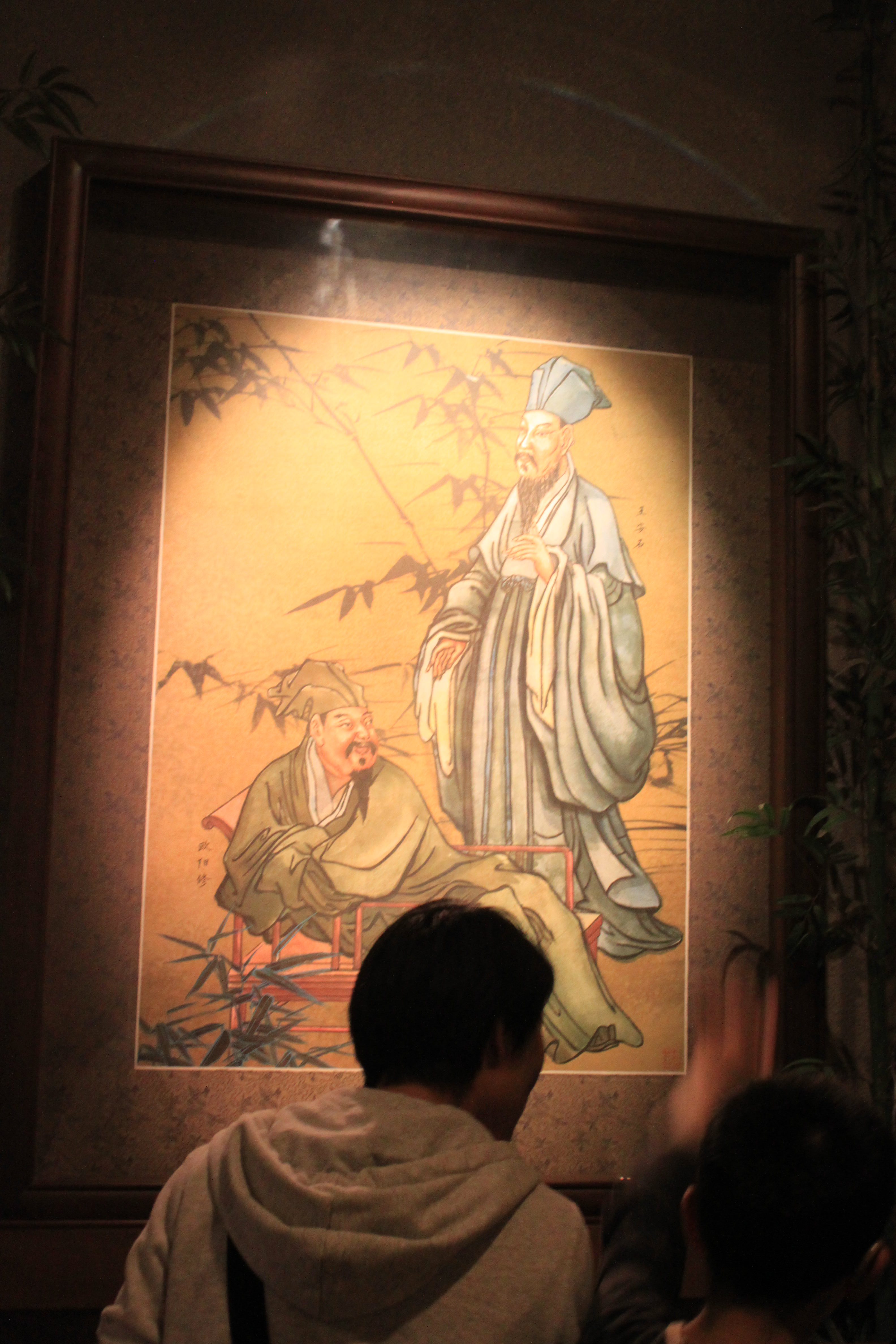
Distinguished Scholar

Distinguished Scholar

throughout the Empire.  The system permeated all walks of life and created a culture of doing well through academic performance, which despite the Cultural Revolution is still seen in China today.

Over the long history of the examination over 700 champion scholars have been recognised, 110,000 presented scholars and millions of Juren or “cultivated talents.”

Critics say that the system stifled creativity and created officials who dared not challenge authority.  By the beginning of the 20th Century, when the system was abolished, it was said that the lack of technical knowledge amongst its bureaucrats led to China’s defeat by foreign powers.

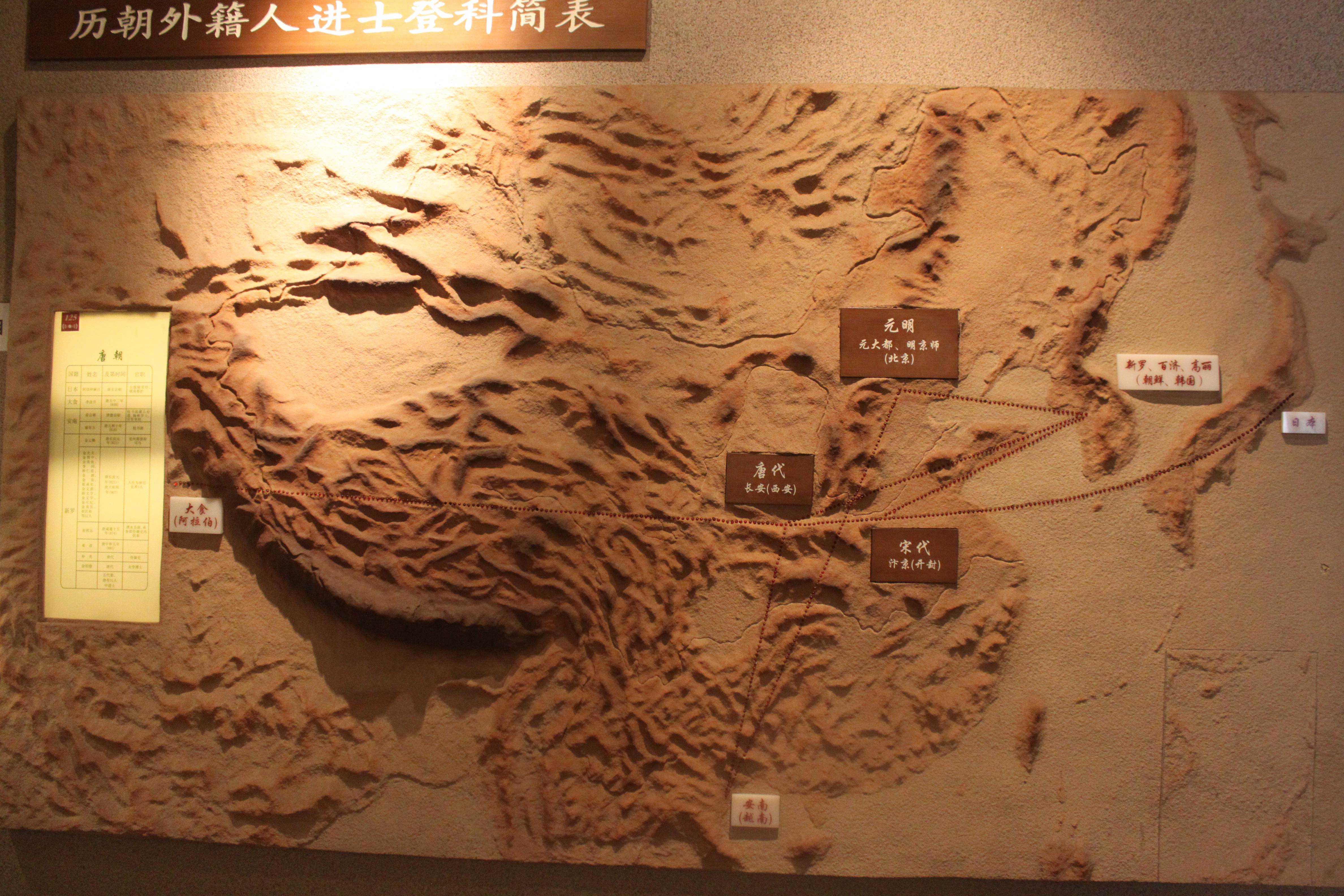
Countries sending foreigners for the exam

Countries sending foreigners for the exam

Since the Tang Dynasty foreigners have come to China to study its culture and language and some have even taken part in the imperial examination system and frequently succeeded. Whilst some returned to their native lands, others remained in China.

The Chinese Imperial Examination System was adopted by a number of neighbours namely Vietnam, Korea and briefly by Japan and the Ryukyu Kingdom of Okinawa, now part of Japan.  Missionaries and diplomats from the West described the system to the leaders of their own countries and encouraged organisations, such as England’s East India Company (1600 – 1874), to adopt similar examinations based on merit, which in turn was adopted by the British Civil Service in 1855, and later by those of France, German and the US.

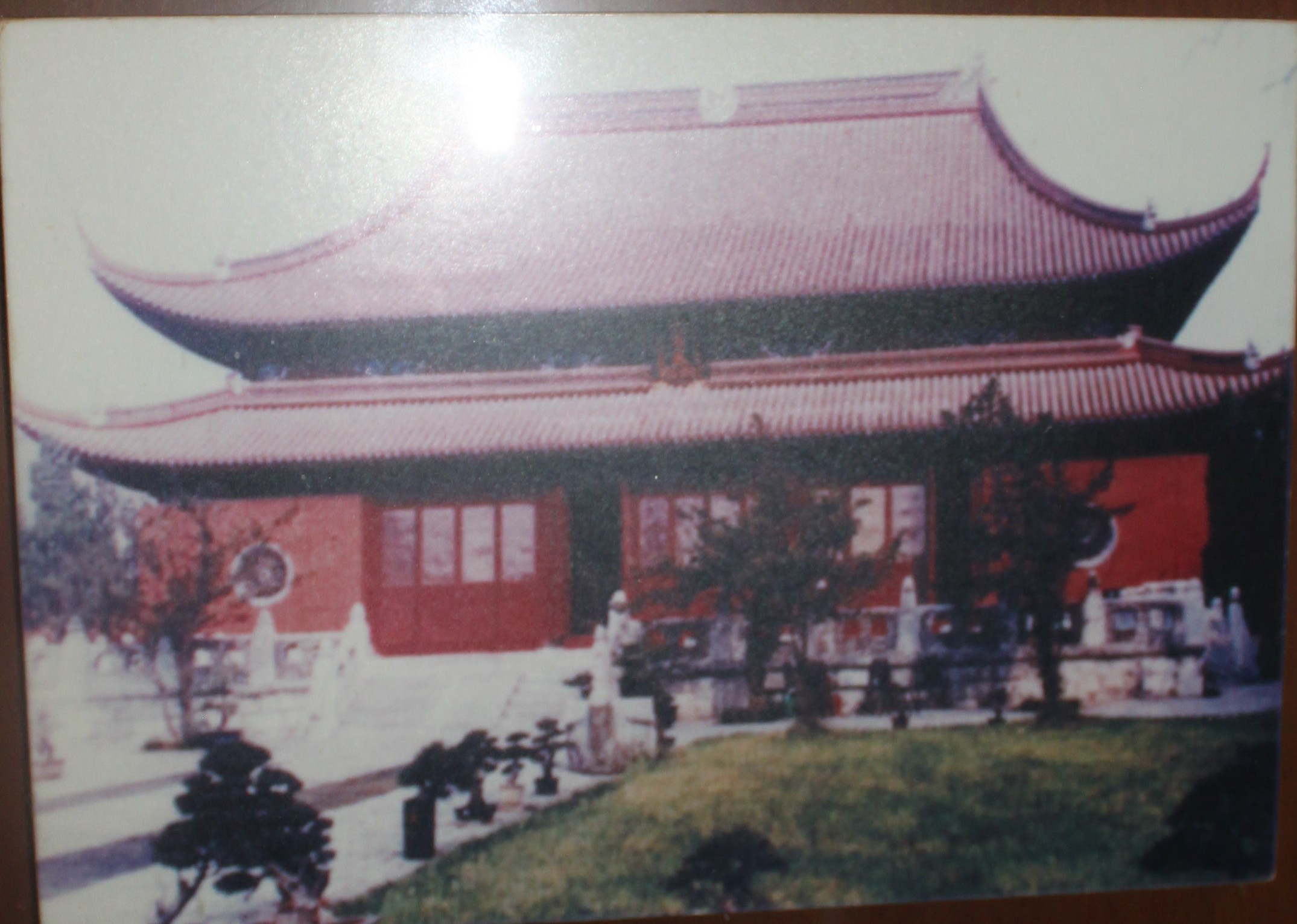
The Confucian Temple in Suzhou established in 1034 which fostered many successful candidates

The Confucian Temple in Suzhou established in 1034 which fostered many successful candidates

The dominant style of imperial examination during the Ming and Qing dynasties was the eight-legged essay – a style of writing around a rigid artificial structure that had to be mastered.  The essay had 8 parts with a set number of sentences allowed for each part and a restriction on the total number of words that could be used, which lead to the dominance of the form over content.  Not only that, but no words or references that occurred after the death Mencius in 298BC could be used!  Thus in the later life of the examination it was testing skills that were hardly useful in the age of steam railways, steam ships and the telegraph  – technological advances that were soon to be followed by Dreadnoughts, tanks and all the rest that came along in World War 1.  It smothered the scientific spirit and the creative mind. The Qing Dynasty finally abolished the examination in 1905 as part of the sweeping reforms undertaken on their return to Beijing from Xi’an following the anti-foreigner Boxer Rebellion.


The Jiading Bamboo Carving Museum

Tucked away round a corner at the end of a little lane – we only knew it was there because we came across one signpost to it in a backstreet in the town – is the Jiading Bamboo Carving Museum.  There are small museums like this all over Shanghai which either cover

Tableau of Bamboo Carving

Tableau of Bamboo Carving

one person’s obsession for collecting or one family’s skill passed down from one generation to another.  In this case it is the Zhu family and their carvings made from bamboo.  The family started carving bamboo in the middle of the Ming Dynasty, 400 years ago, and the first three generations Zhu He, Zhu Ying and Zhu Zhizheng handed down the craft from man to boy.  The carvings are either made in relief or what the museum described as “under-earth deep carving” , which I think  meant the 3-D carving of bamboo roots.  The Zhus were the first to incorporate painting and calligraphy into the carving of bamboo stems.  In later centuries other locals took on the art form so that Jiading has become known as the home of Bamboo carving.  The art form declined during the social upheavals of 20th Century China, but since 2006 it has been included in “The First List of Intangible Cultural Heritages”.

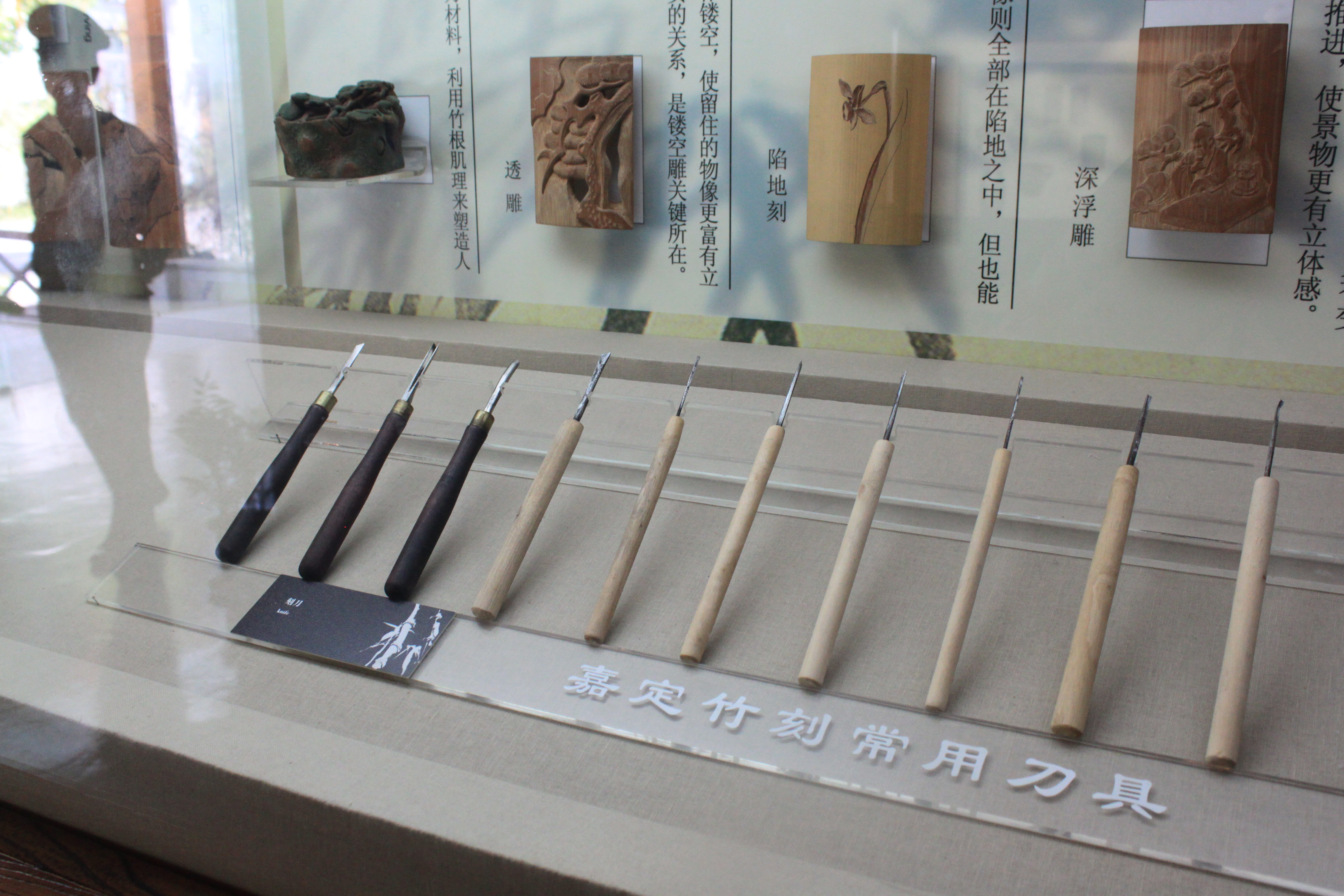
Bamboo Carving tools:

Bamboo Carving Tools

Bamboo Carving Tools

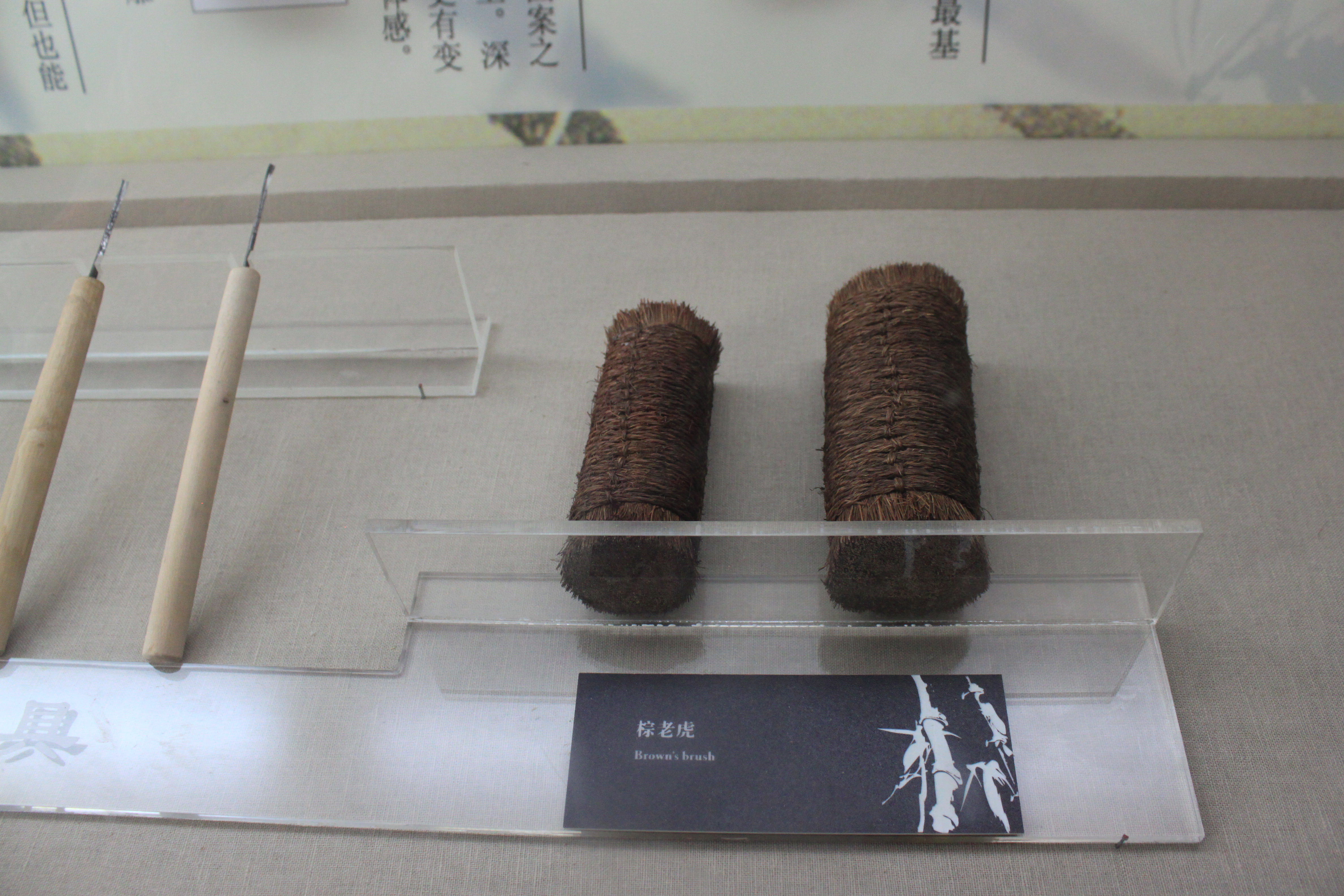
Brushes

Brushes


The 3-D carving of bamboo roots:

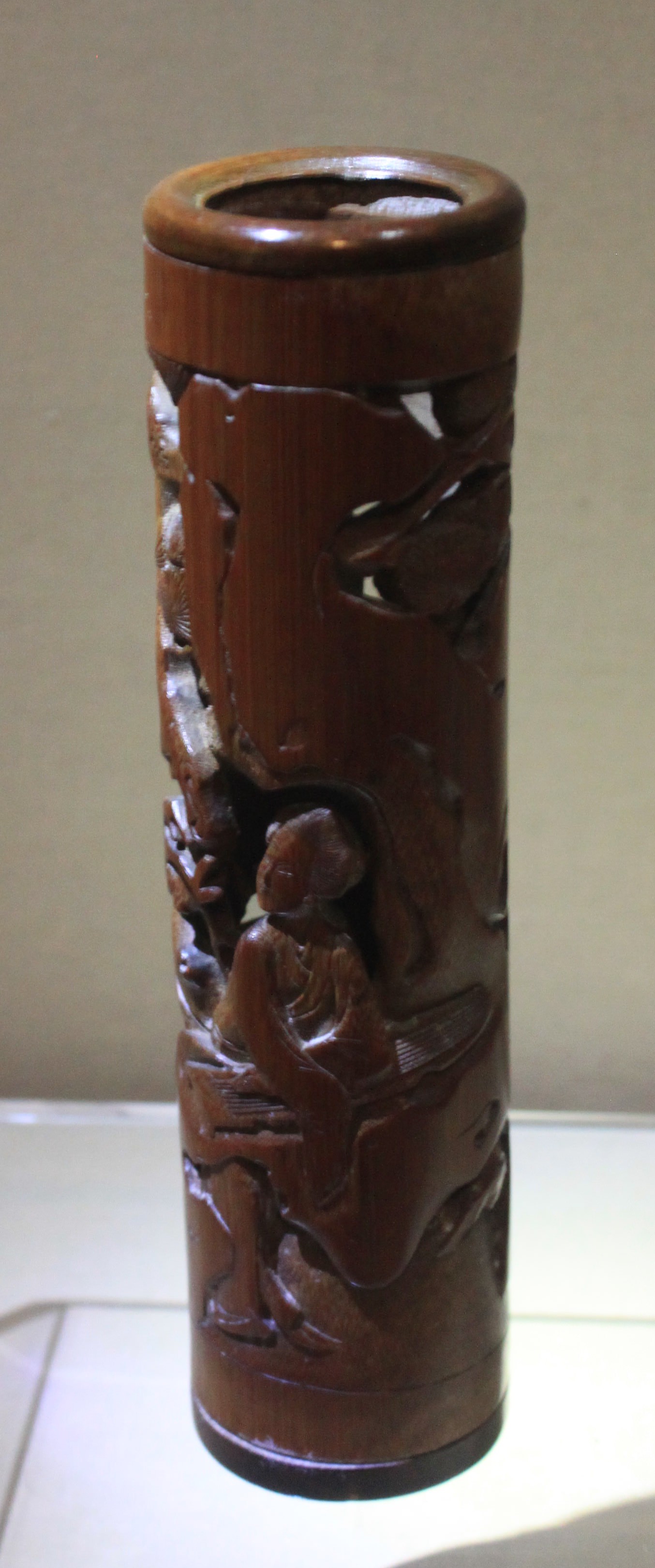
Perfume Holder carved with Beauty

Perfume Holder “carved with Beauty”
Qing Dynasty

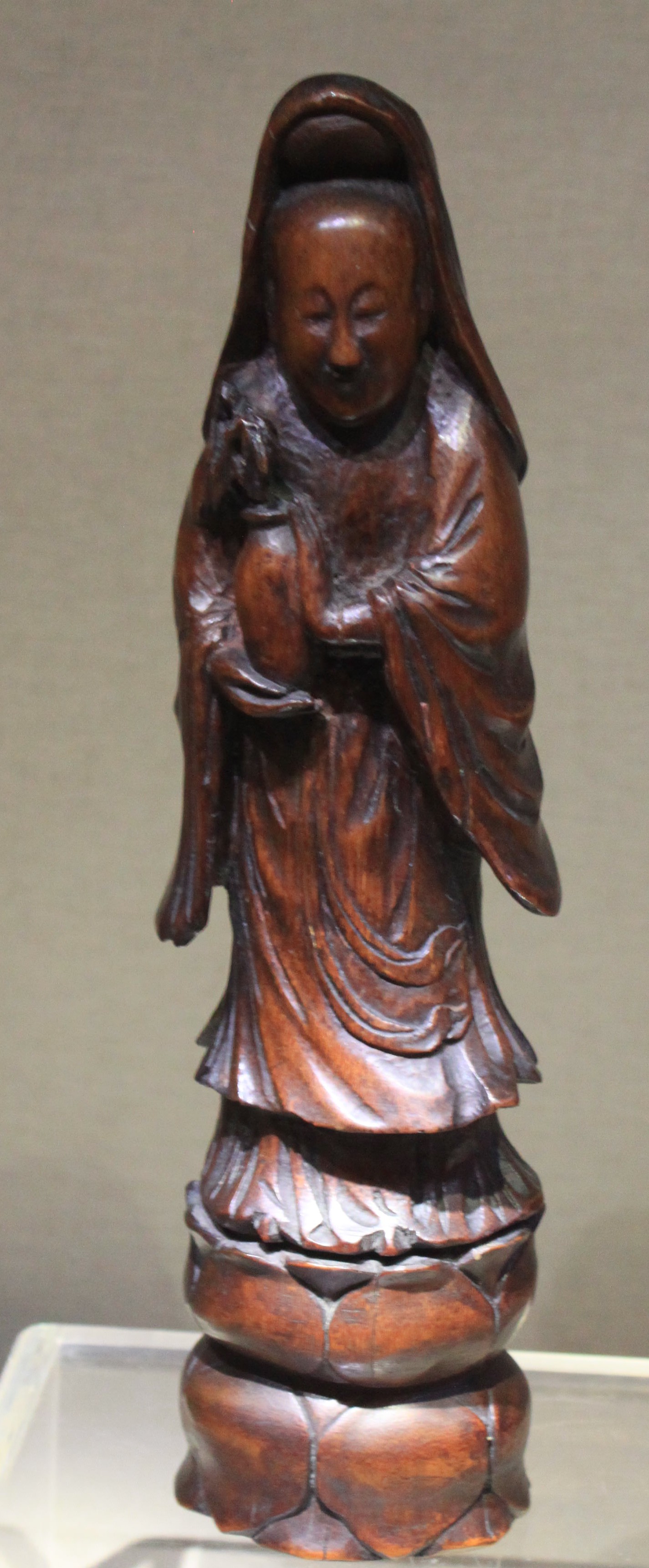
Kwan-yin Round Carving

Kwan-yin Round Carving
Qing Dynasty

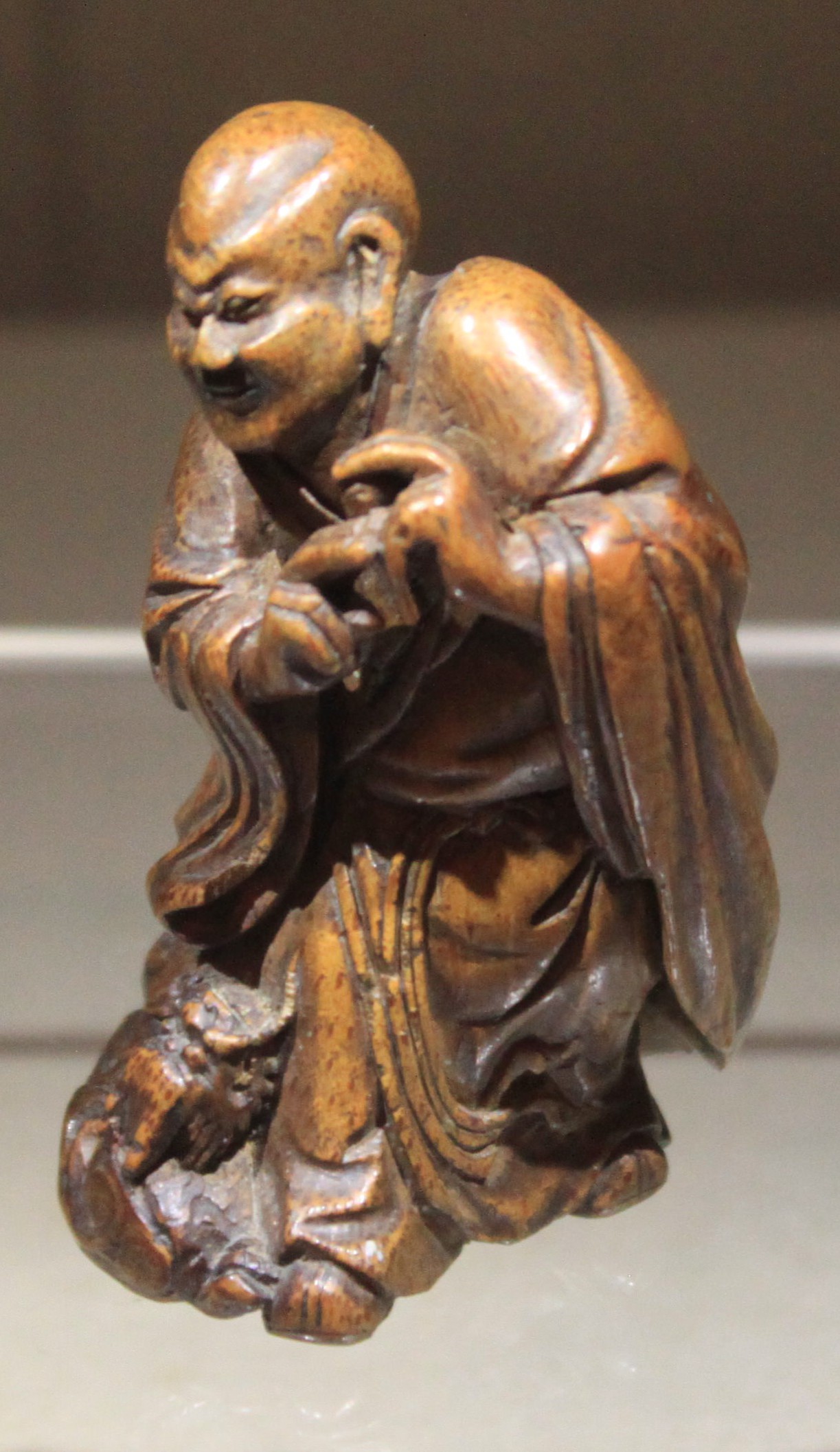
Taming Dragon Lohan

Taming Dragon Lohan
Qing Dynasty

Water Container Round Carving

Water Container Round Carving
Qing Dynasty

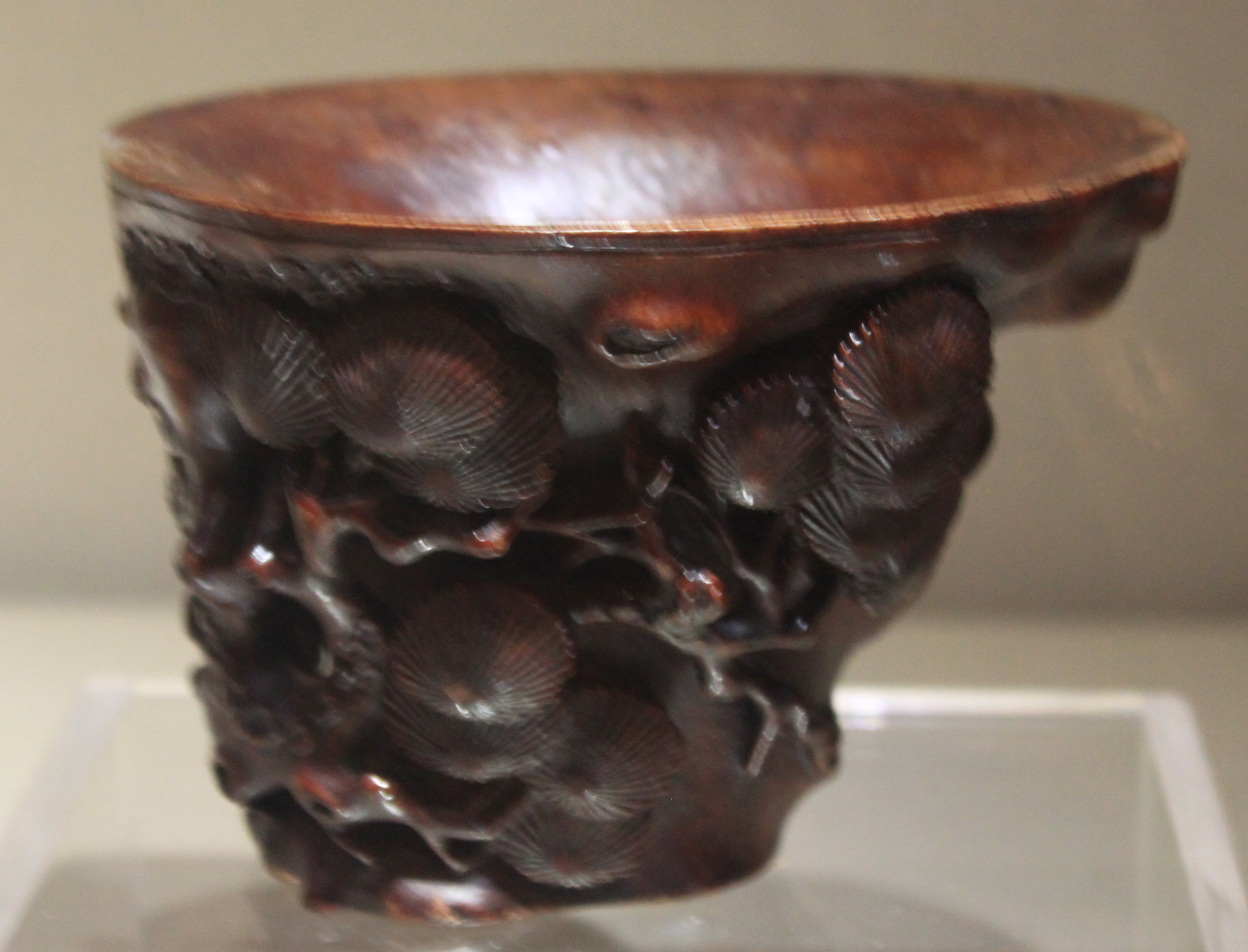
Bamboo cup carved with pine tree

Bamboo cup carved with pine tree
Mid-Qing Dynasty

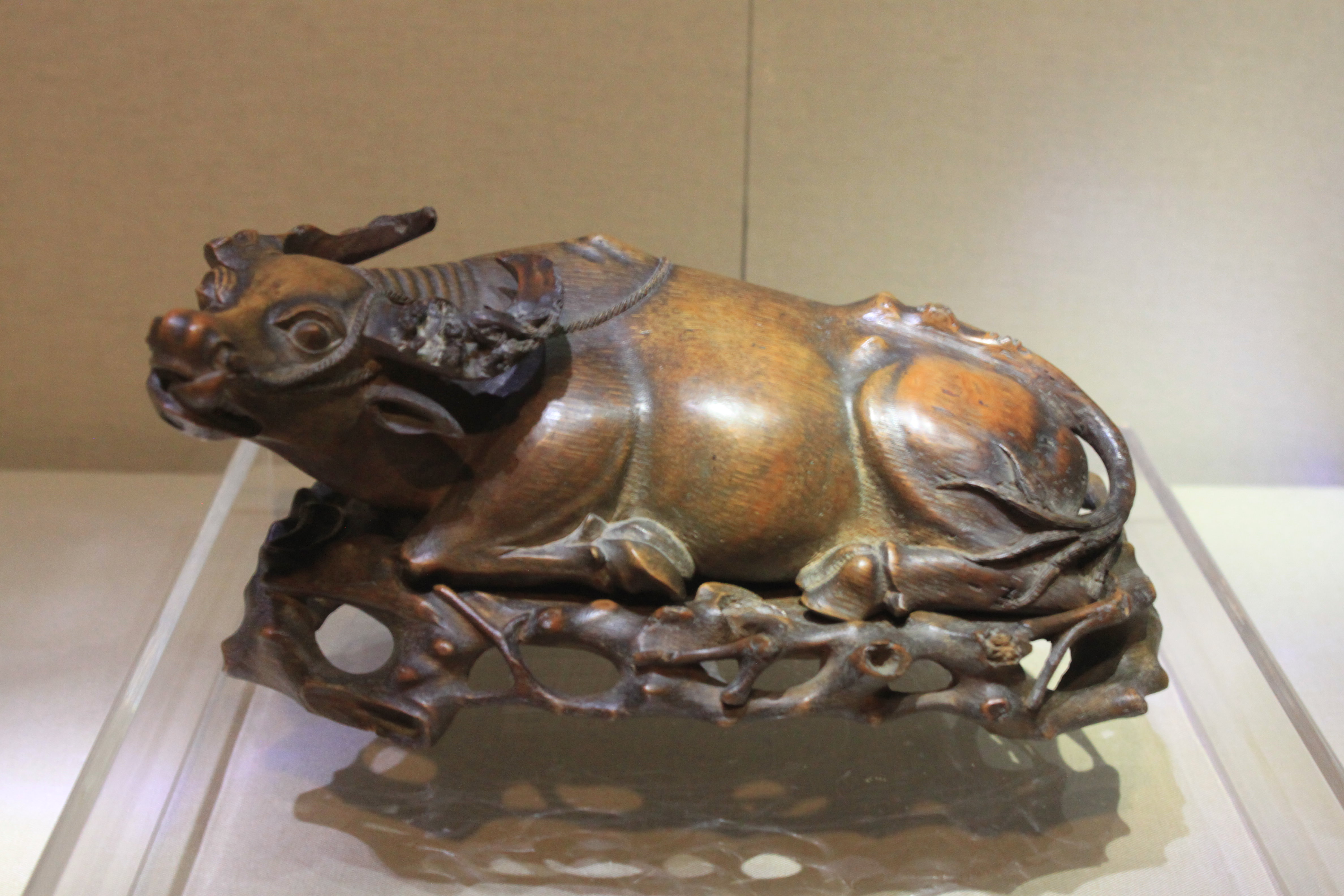
Bamboo decoration carved with Buffalo

Bamboo decoration carved with Buffalo
Circular Engraving, Qing Dynasty

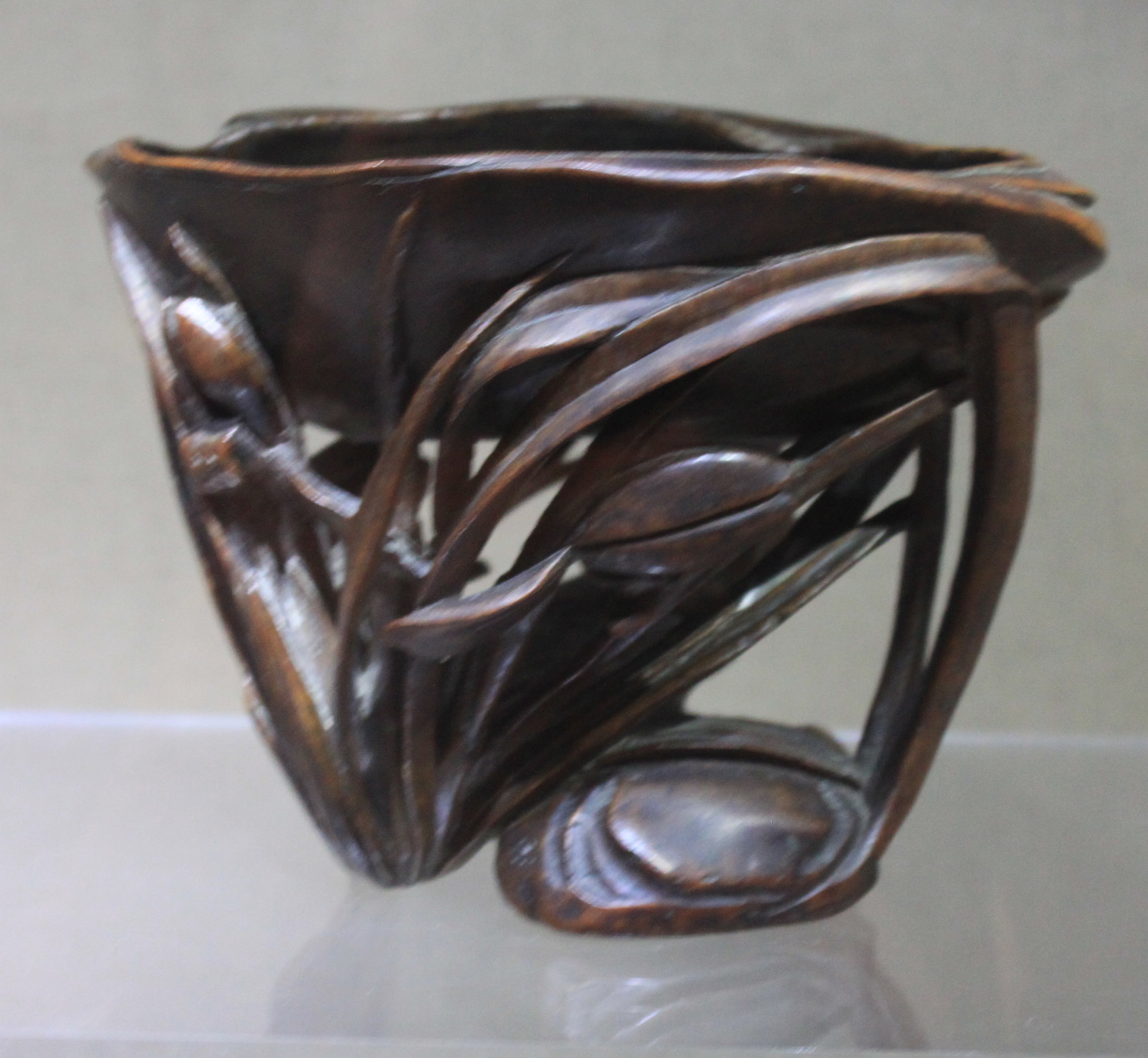
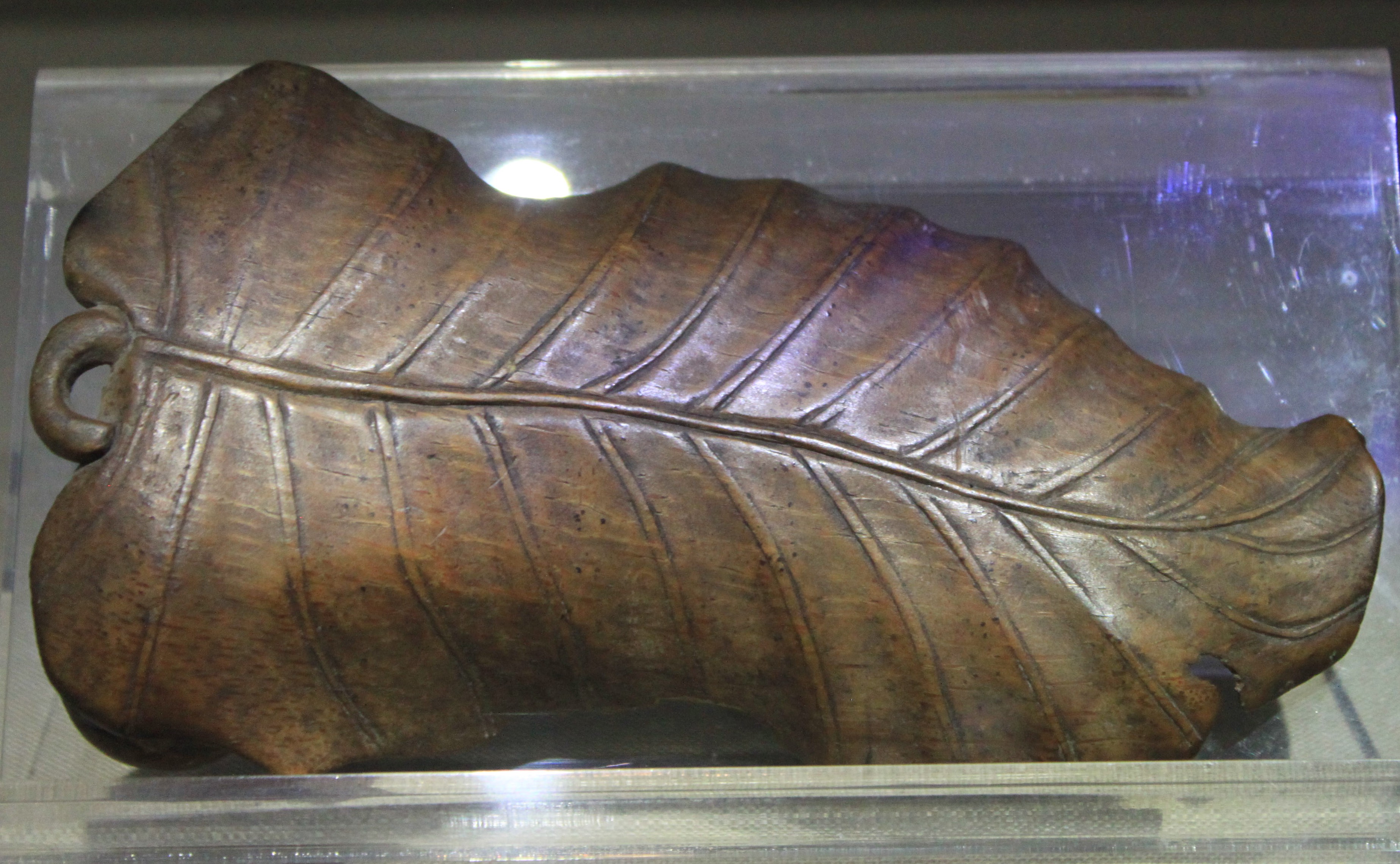
Basjoo leaf Round Carving

Basjoo leaf Round Carving
Qing Dynasty


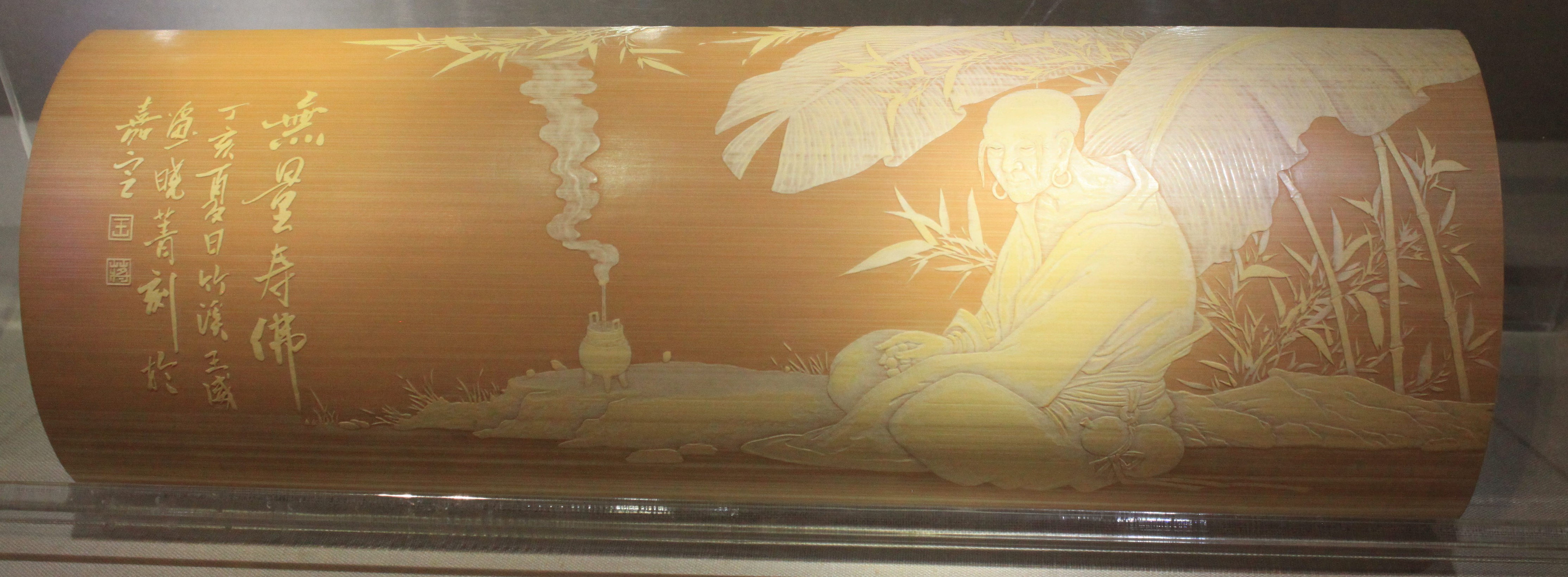
The Basjoo is the Musa banjo or Japanese Banana and Kwan-yin is the Buddhist goddess of compassion.  The Lohan is the Arhat, Arahat or Arahant of Theravada Buddhism one who has followed the Eightfold Path and has achieved deliverance of this earthly existence. In him the asavas – the craving for sensual pleasures, earthly existence, ignorance and wrong views – are gone and he is subject to no more rebirths and karma.


Engraved and Relief carved items:

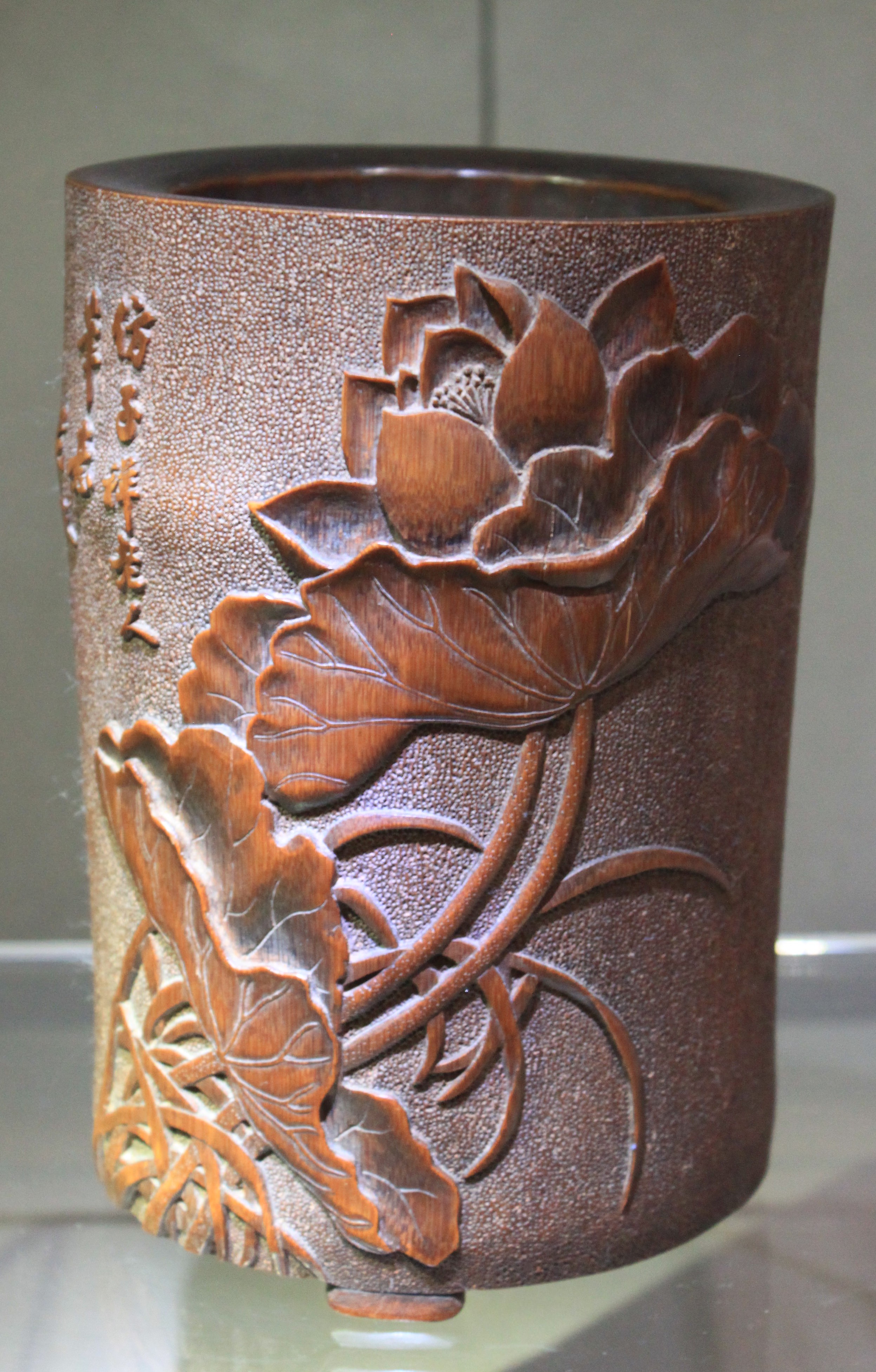
Brush pot carved with lotus flower

Brush pot carved with lotus flower Modern China

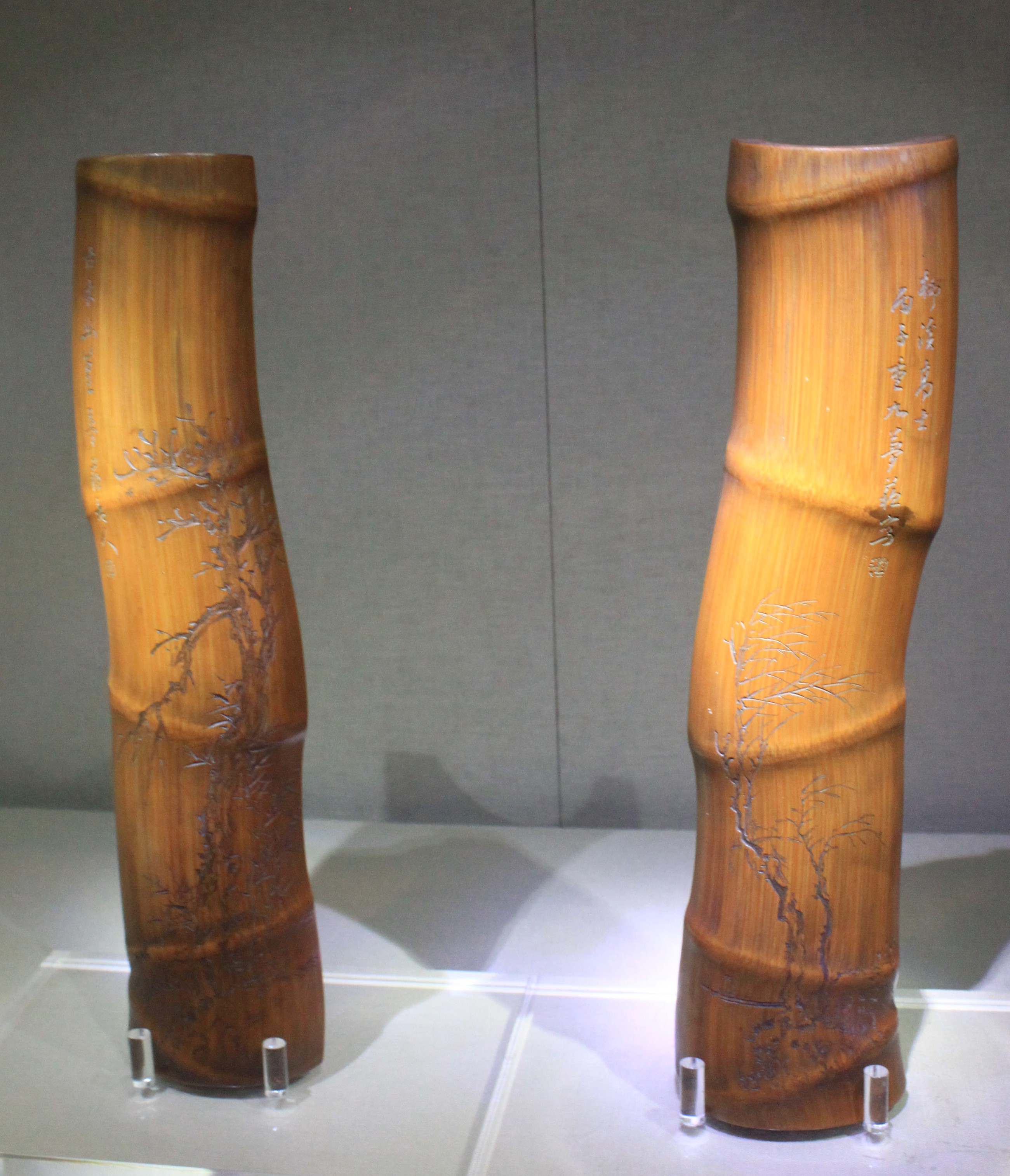
Wrist Rest Engraved with Landscape

Wrist Rest Engraved with Landscape Qing Dynasty


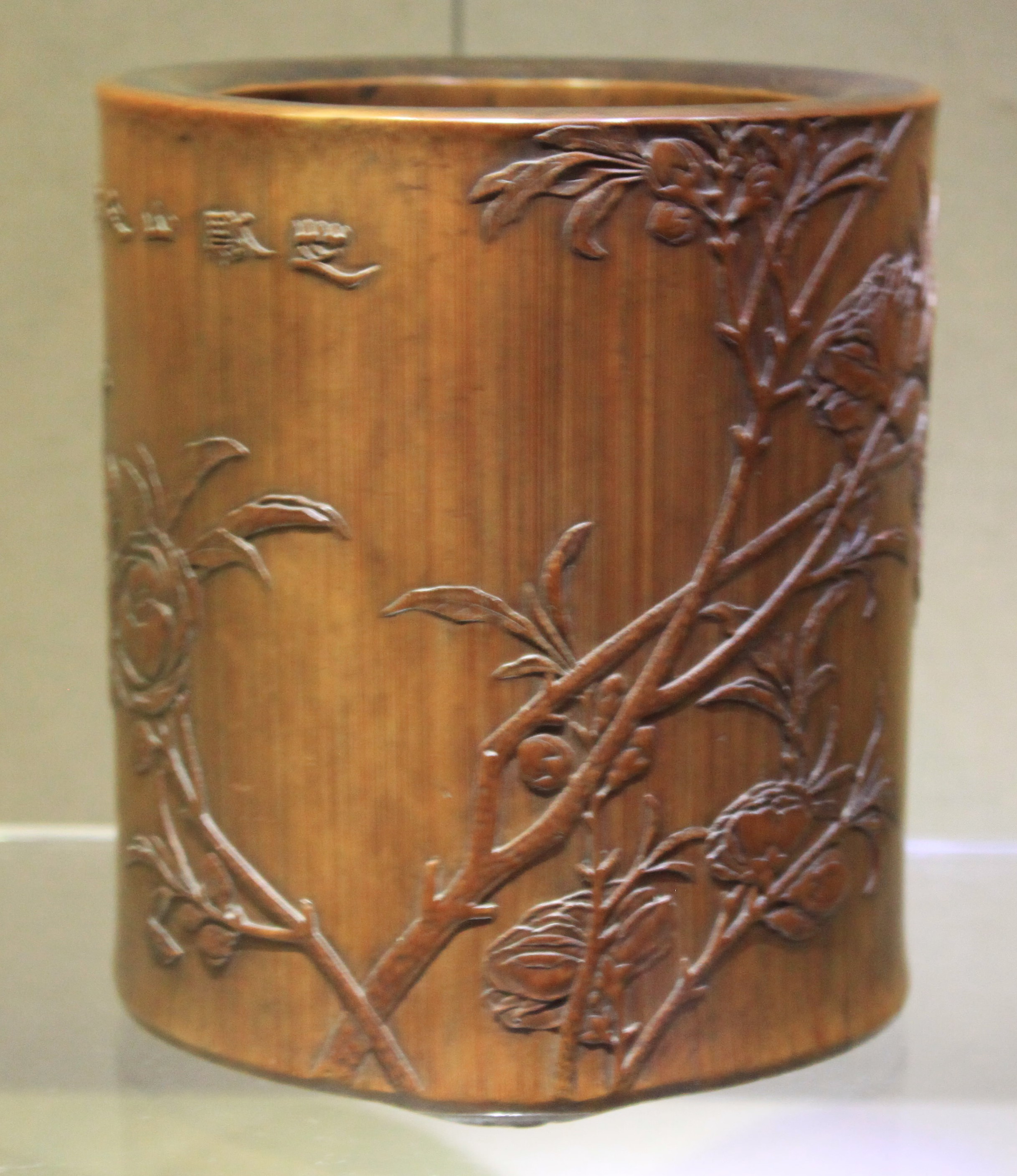
Brush pot carved with Peach Blossoms

Brush pot carved with Peach Blossoms Qing Dynasty


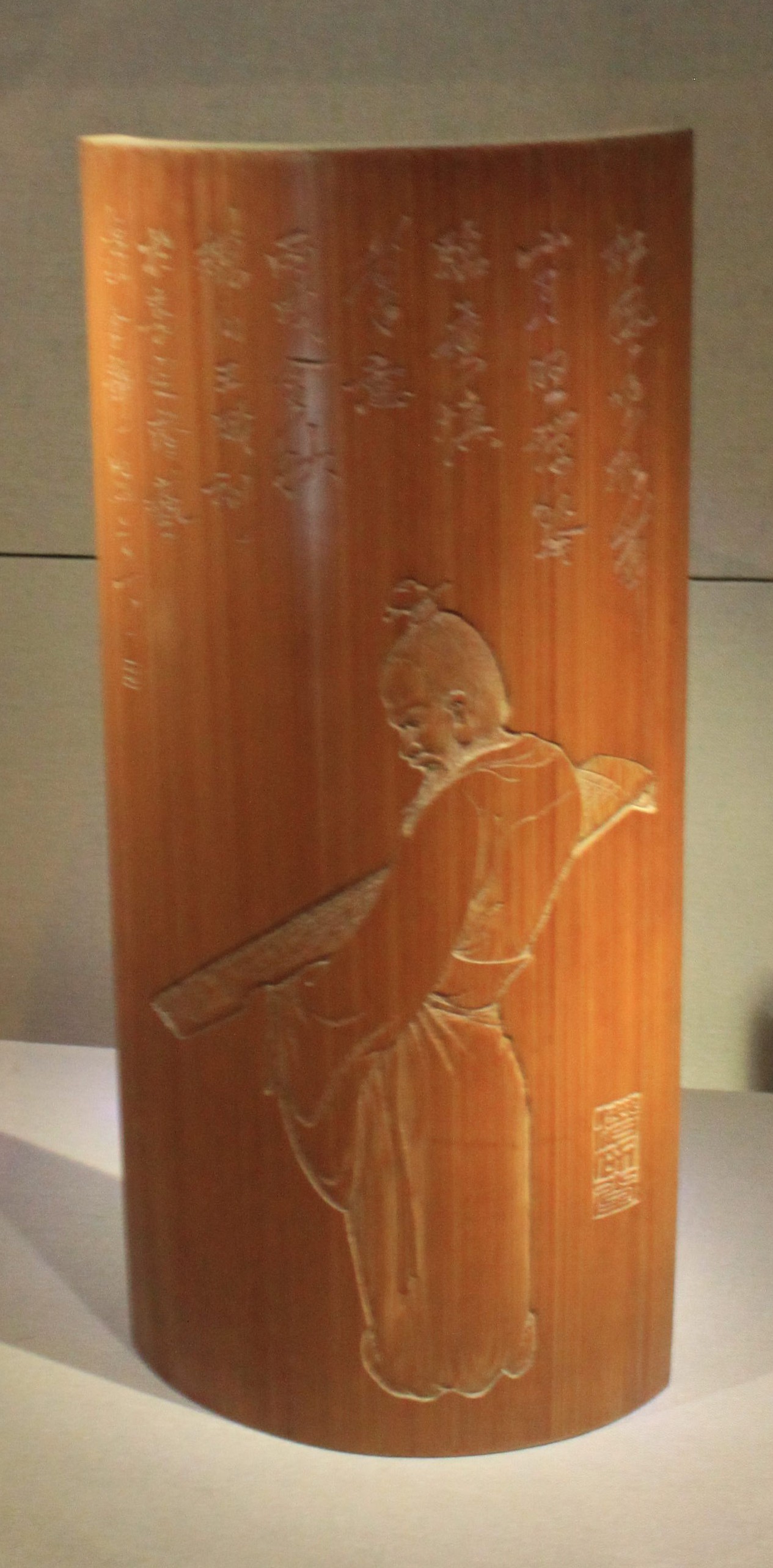
Wrist-rest carved with A lady carrying zheng

Wrist-rest carved with A lady carrying a zheng or plucked zither

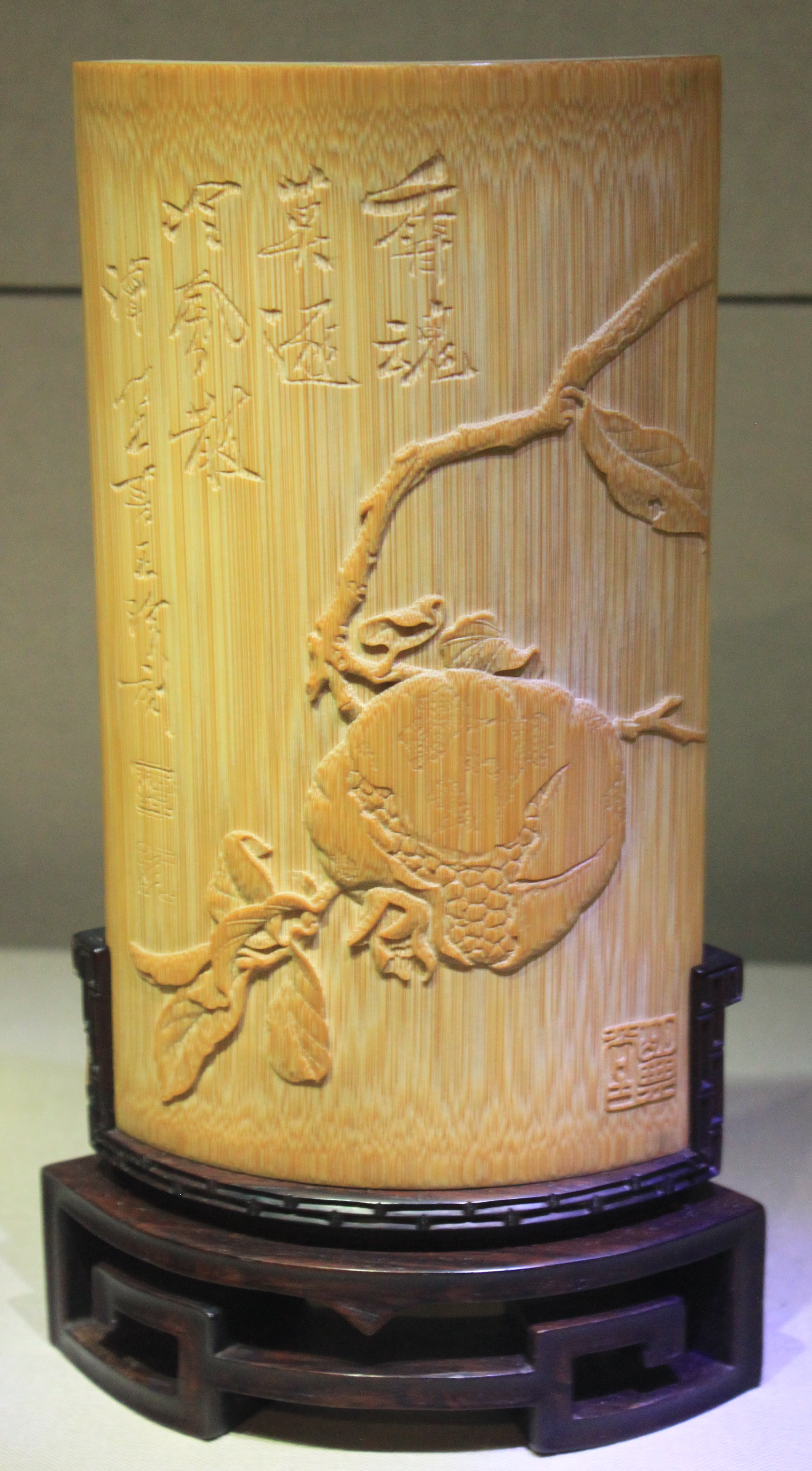
Screen carved with Pomegranate relief carving

Screen carved with Pomegranate relief carving


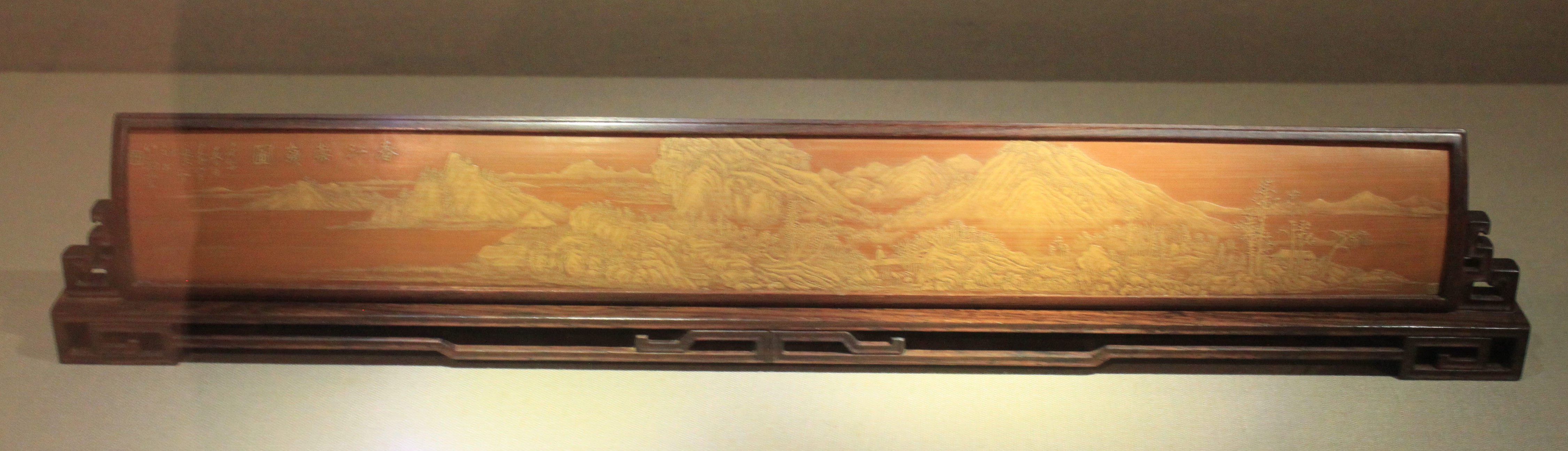
Screened carved with Landscape with liuqing carving

Screened carved with Landscape with liuqing carving

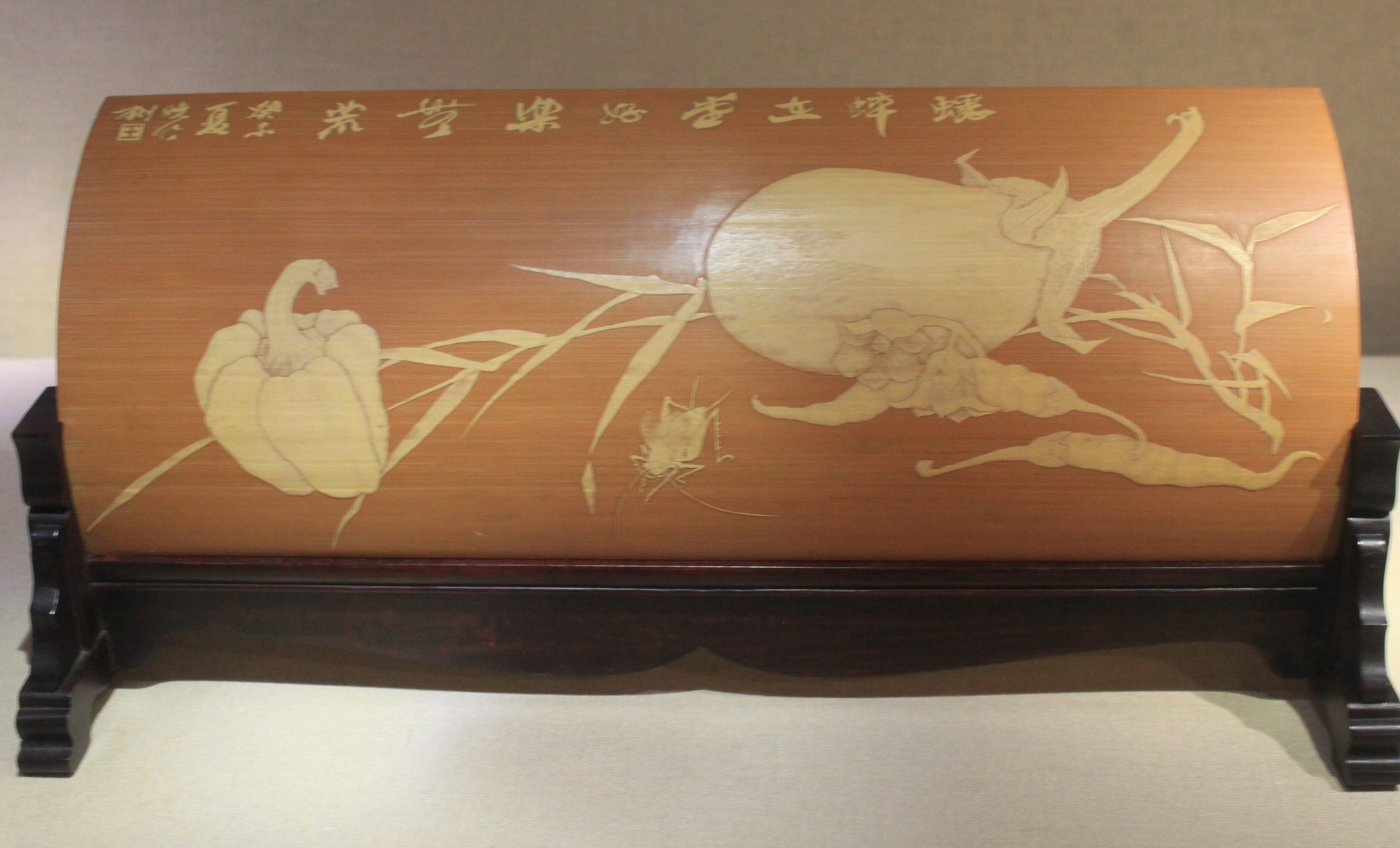
The liuqing technique, a method of carving that manipulates the contrasting colours of the smooth greenish bamboo skin and the darker fibrous inner layers. On these wrist rests the outer skin of the bamboo branch has been reserved for the backgrounds. The elegant

Wrist-rest carved with fruit liuqing carving

Wrist-rest carved with fruit liuqing carving

contrast between light and dark tones is further enhanced through a dyeing process in which the green skin of the material turns into a golden light brown colour while the inner layer of the worked bamboo develops into a rich darker brown.

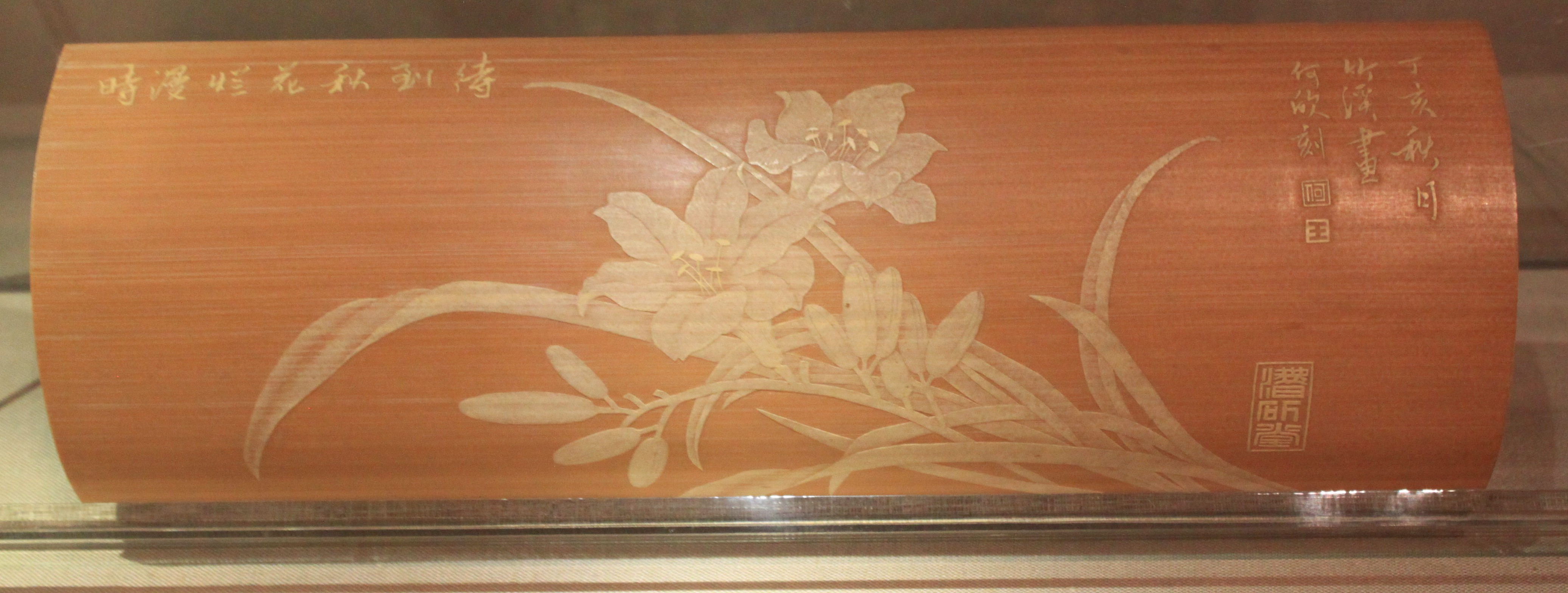
Wrist-rest carved with plants liuqing carving

Wrist-rest carved with plants liuqing carving

Wrist-rest carved with Buddhist Liuqing carving

Wrist-rest carved with Buddhist Liuqing carving

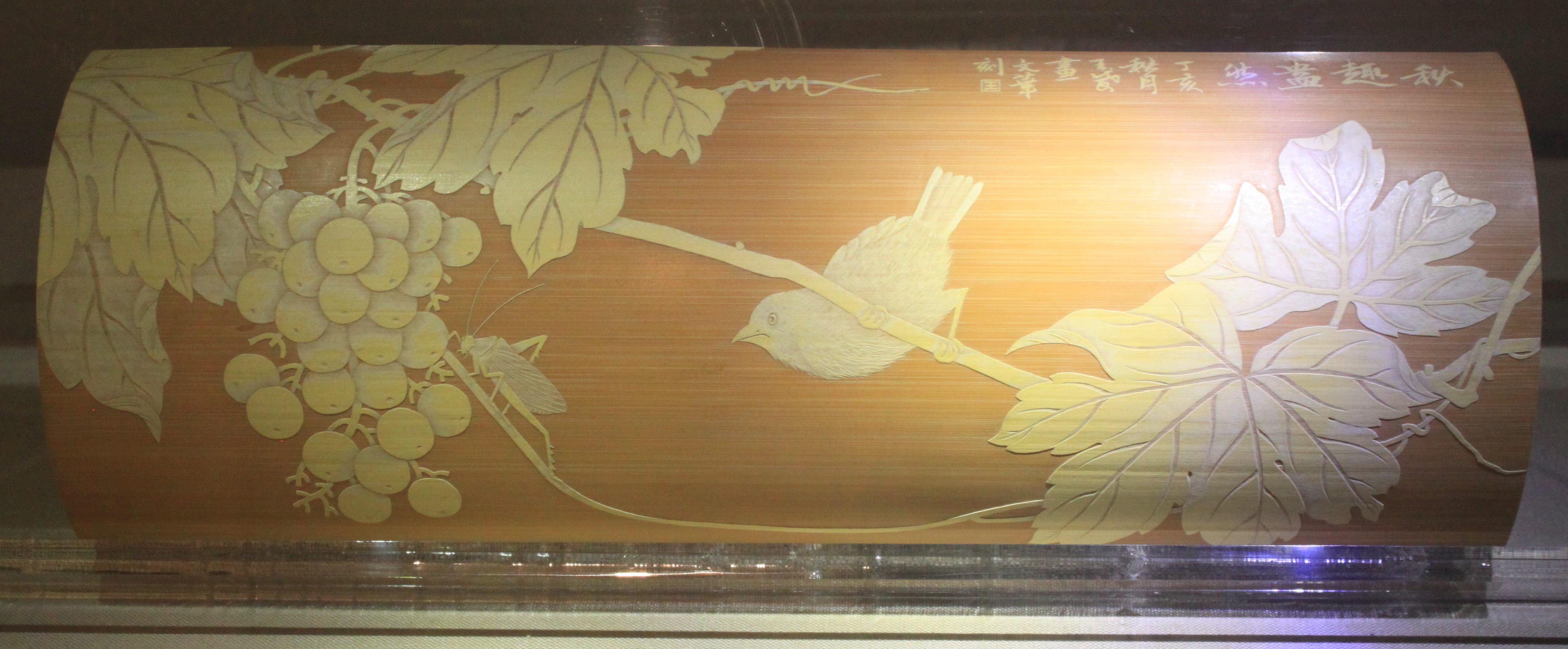
Wrist-rest carved with grapes liuqing carving

Wrist-rest carved with grapes liuqing carving


Posted in Jiading, Museum | Tagged , , , , , , , , | Leave a comment

Orchids at The Shanghai Botanic Garden

The Cymbidium Room

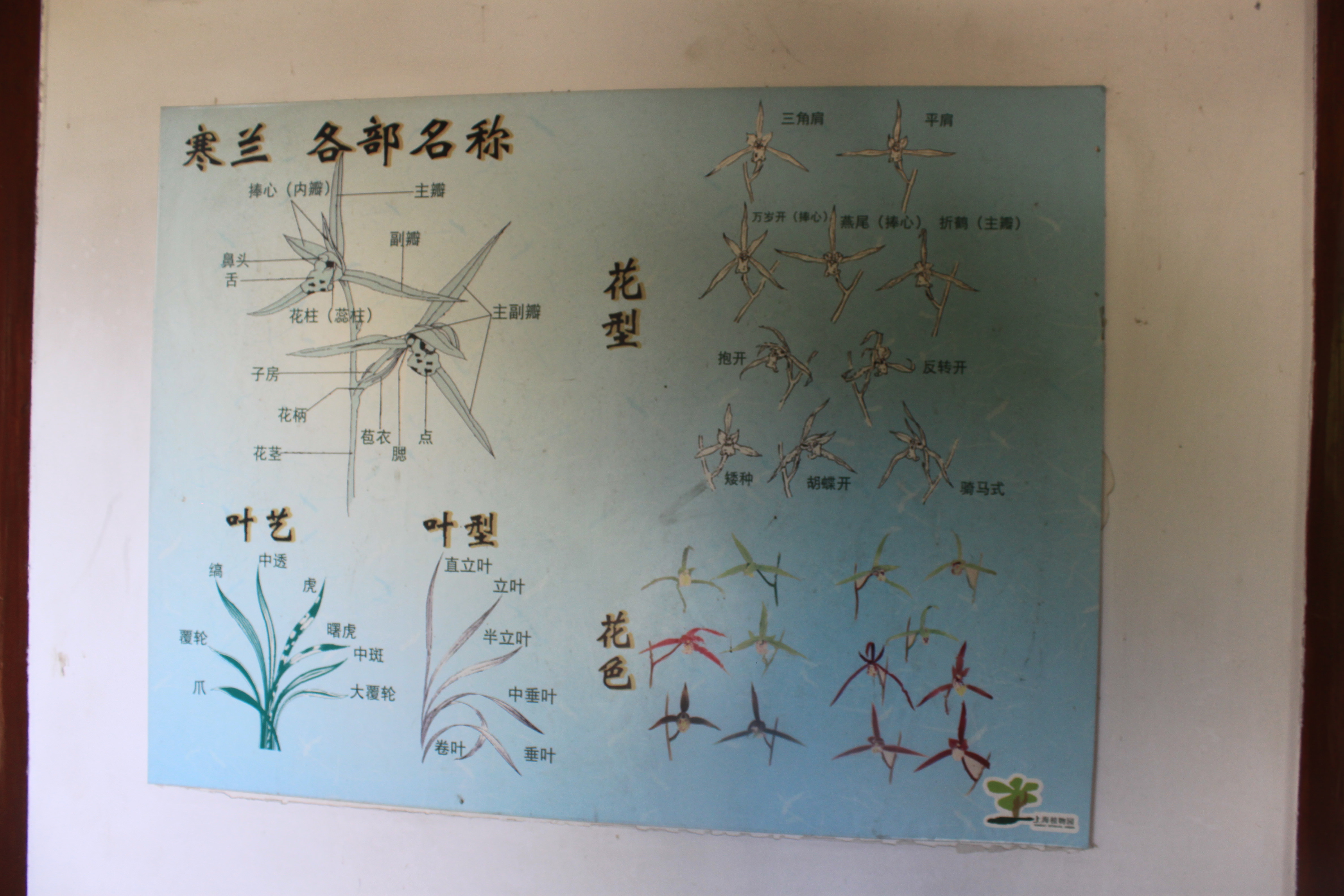
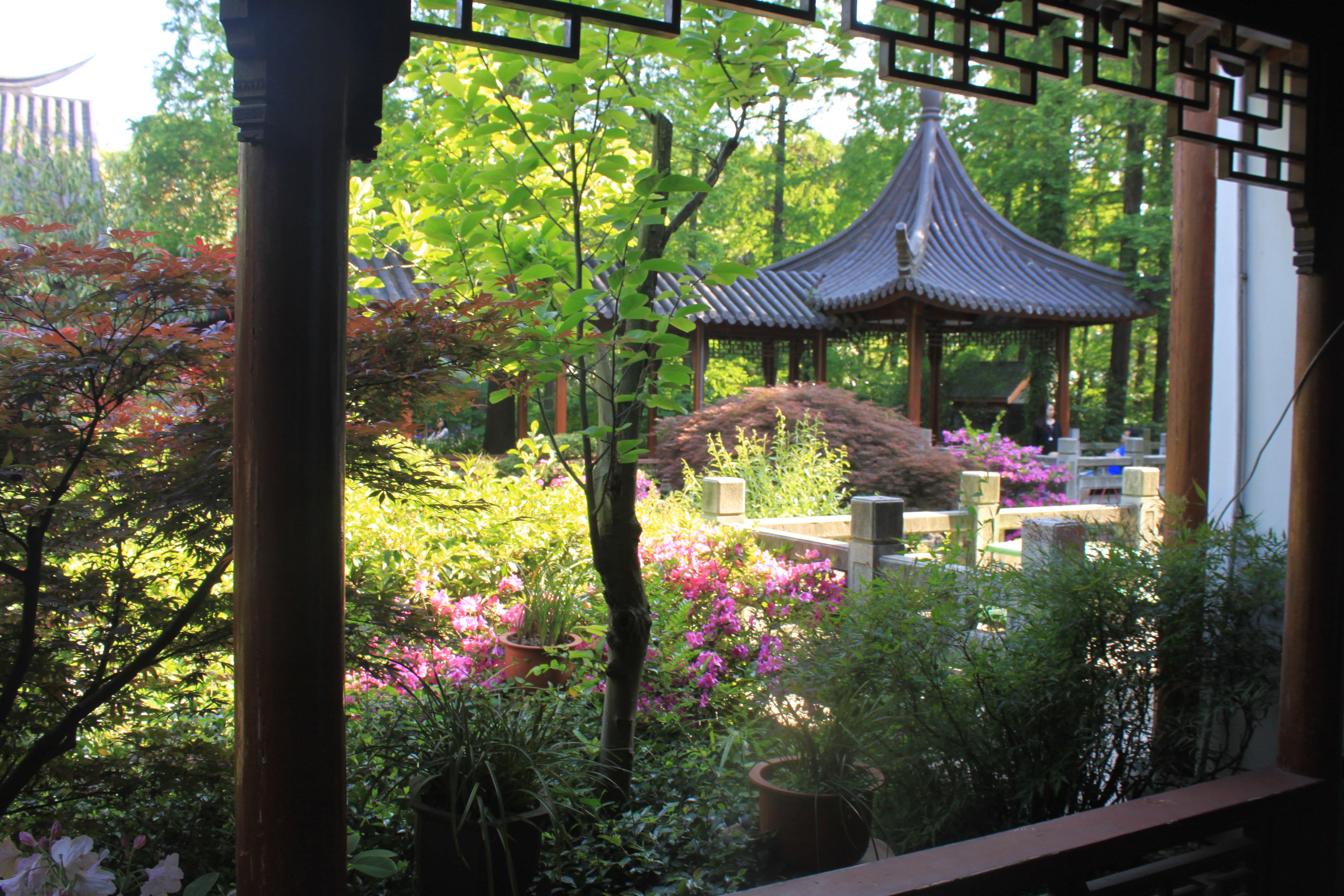
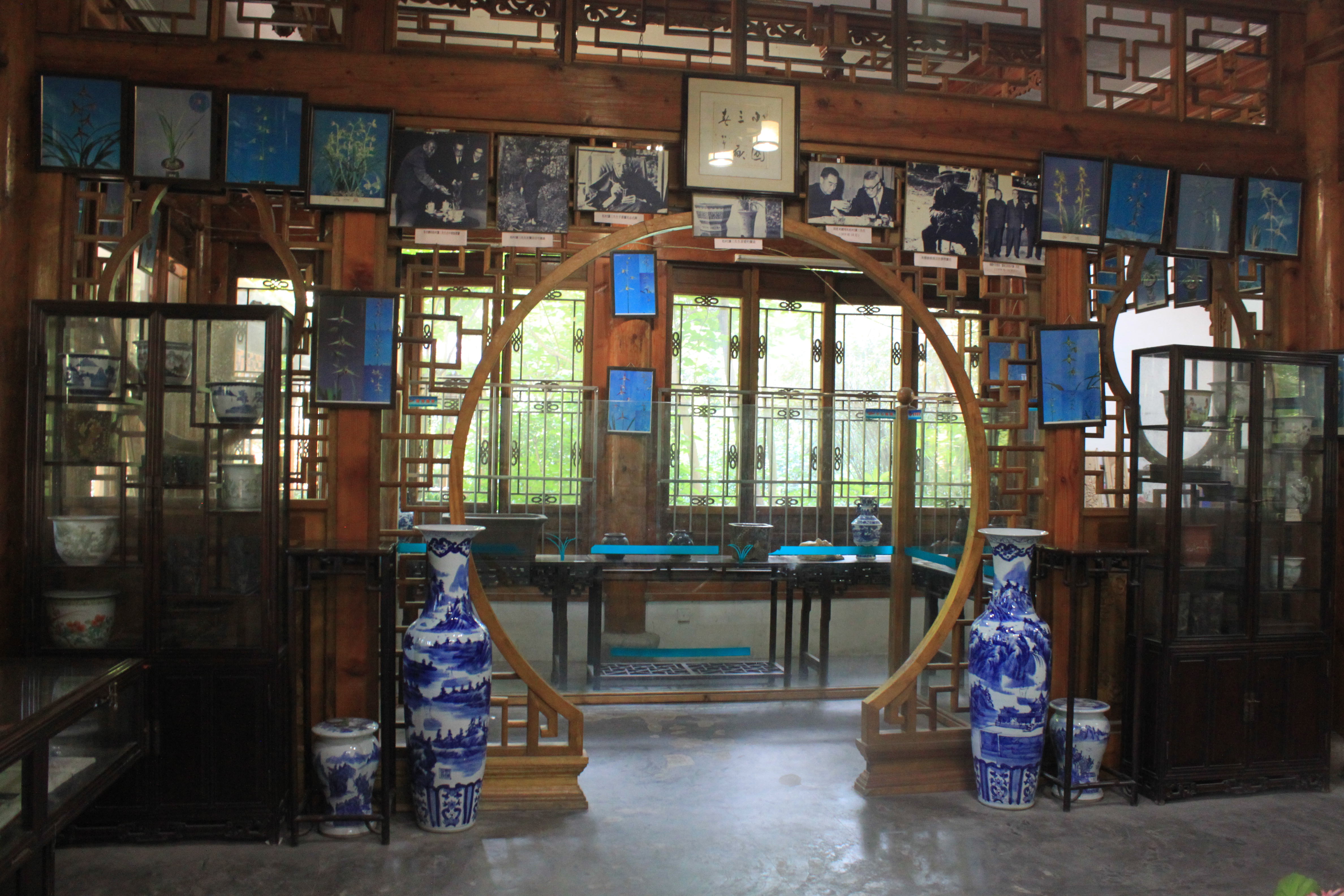
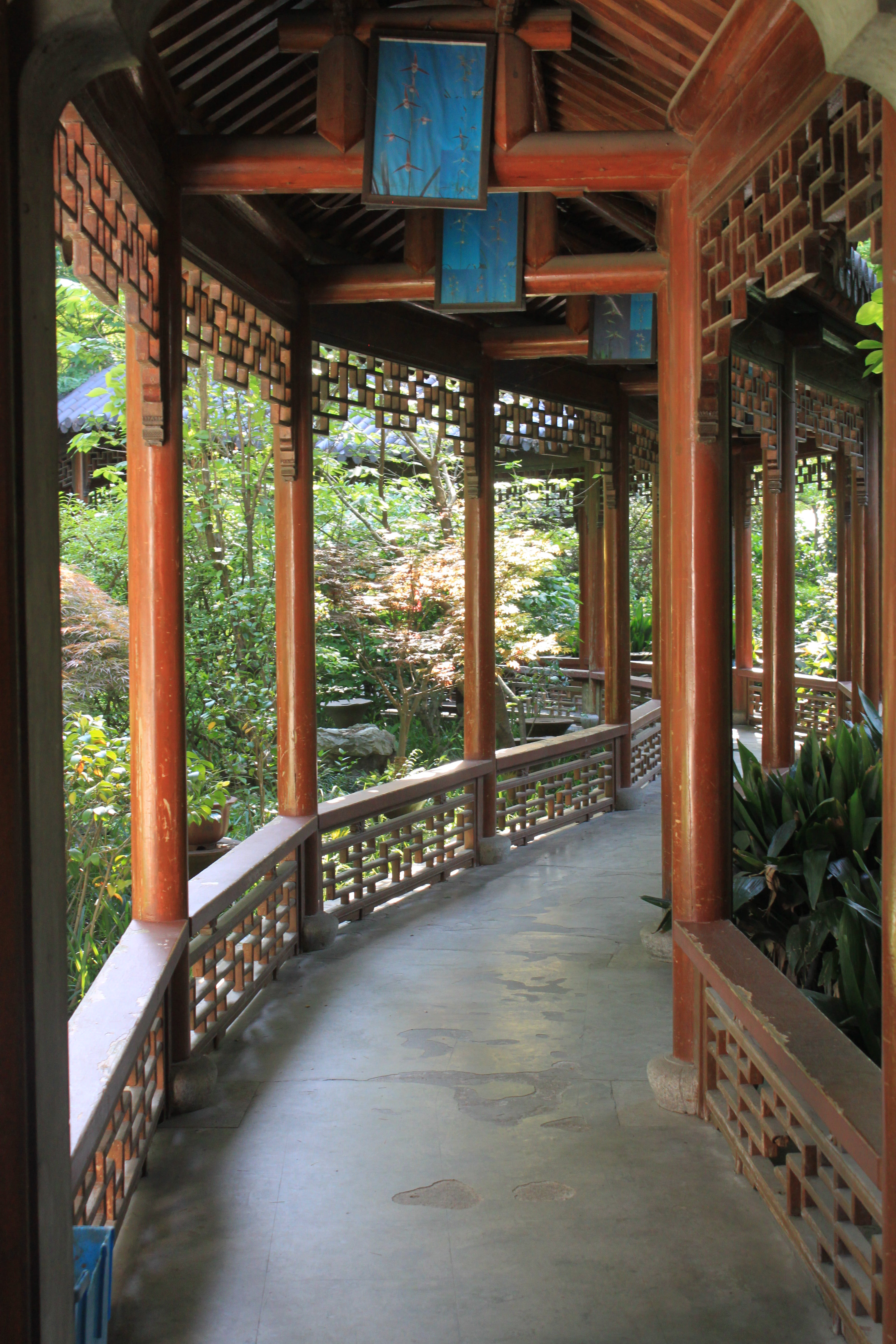
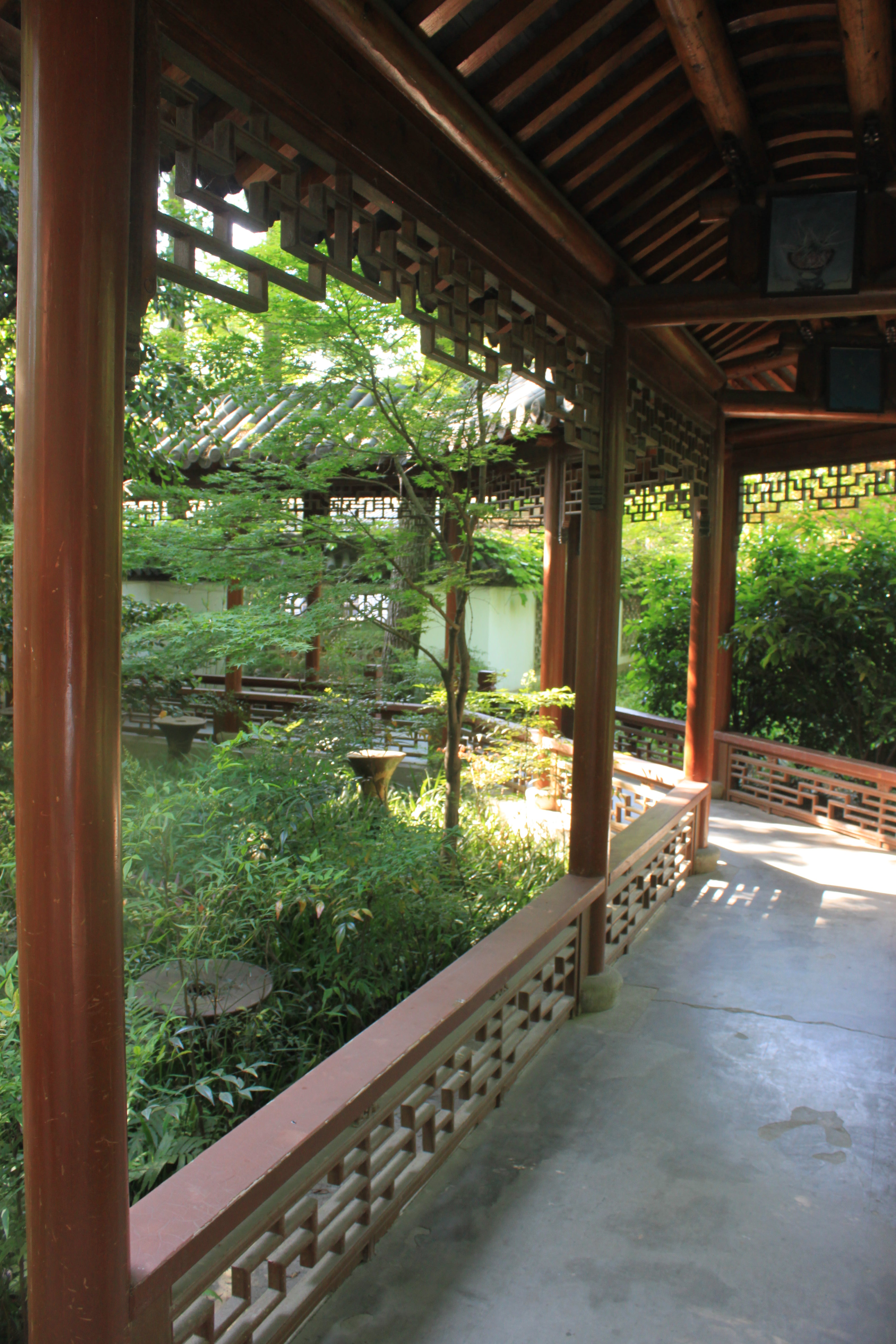
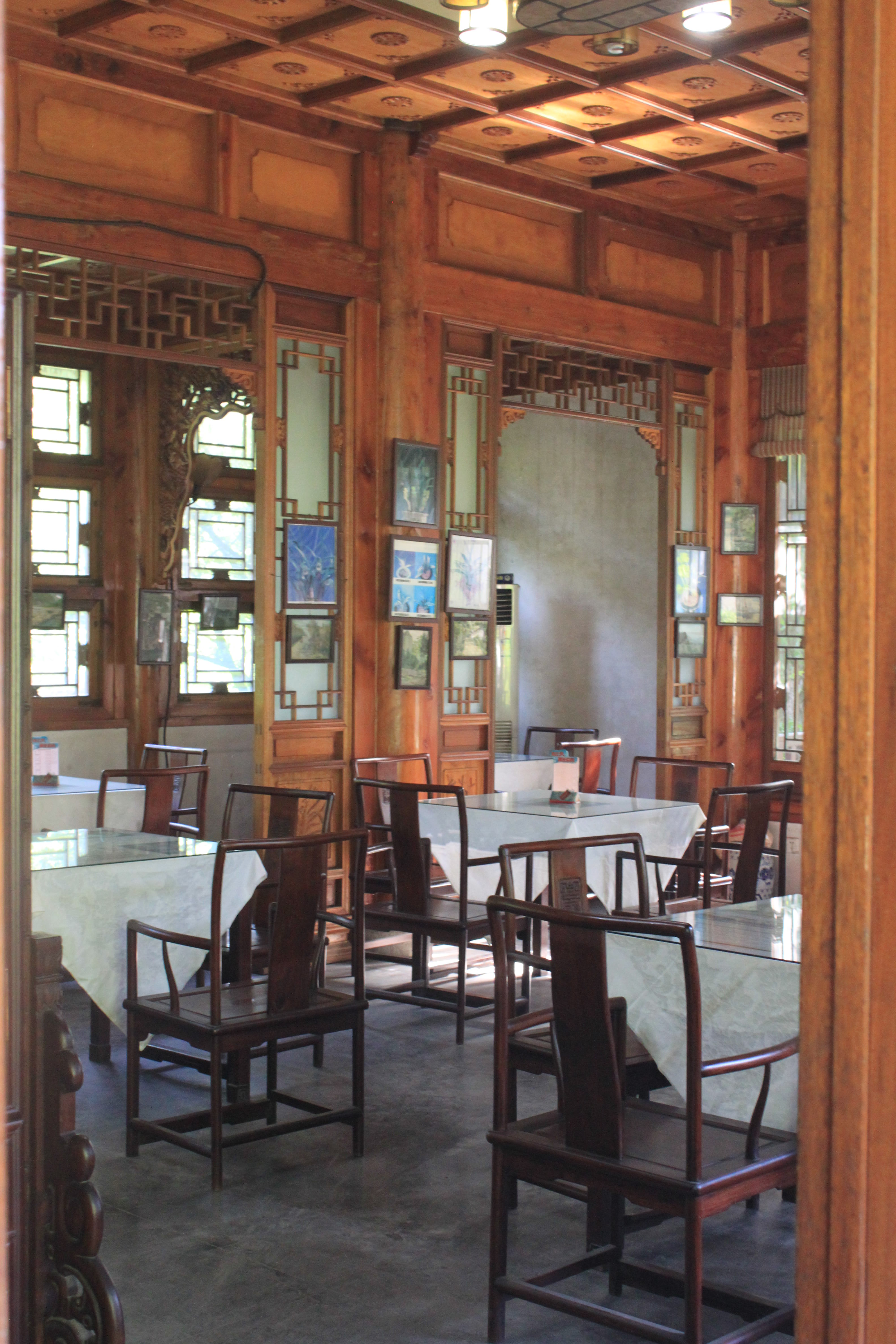
In the middle of the Shanghai Botanical Gardens is a curious place named The Cymbidium Room.  It is curious as it contains more than a room – in fact it is a garden within a garden, with many pavilions and covered walkways in the traditional Chinese style.  But it contains no Cymbidiums.  In fact it contains no orchids at all.  It did have a wall chart showing something about orchids, but the ones shown in the diagrams are not cymbidiums. Cymbidiums are the really fleshy orchids the most often ones seen in the UK have many to a stem, and are acid green or yellow with red flashings in the central petals.

IMG_4461 IMG_4465

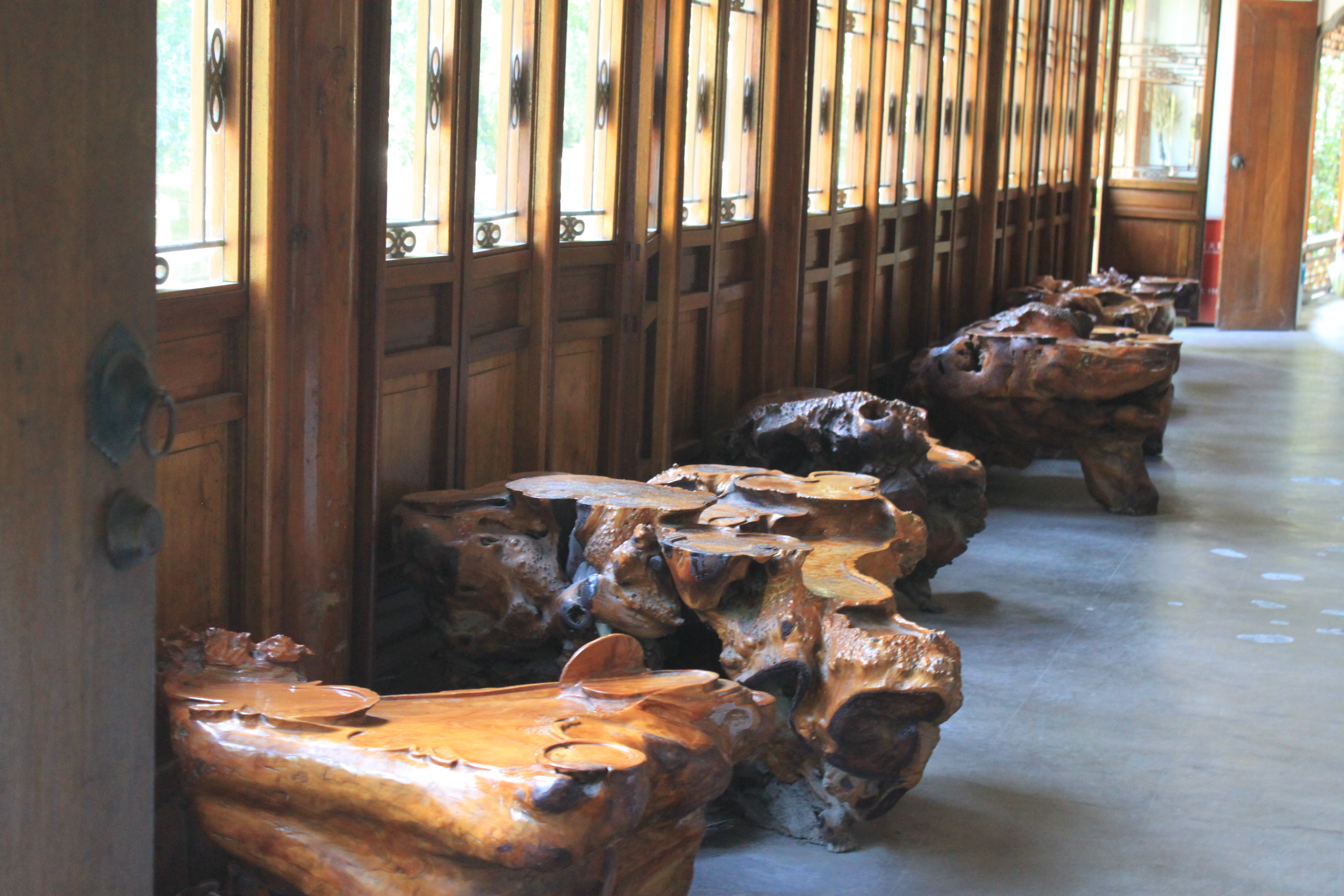
There were displays of orchid stands – great lumps of what must be tree roots or lower trunks with flat circular areas carved into them ready to hold a vase containing orchids.IMG_4466 IMG_4469

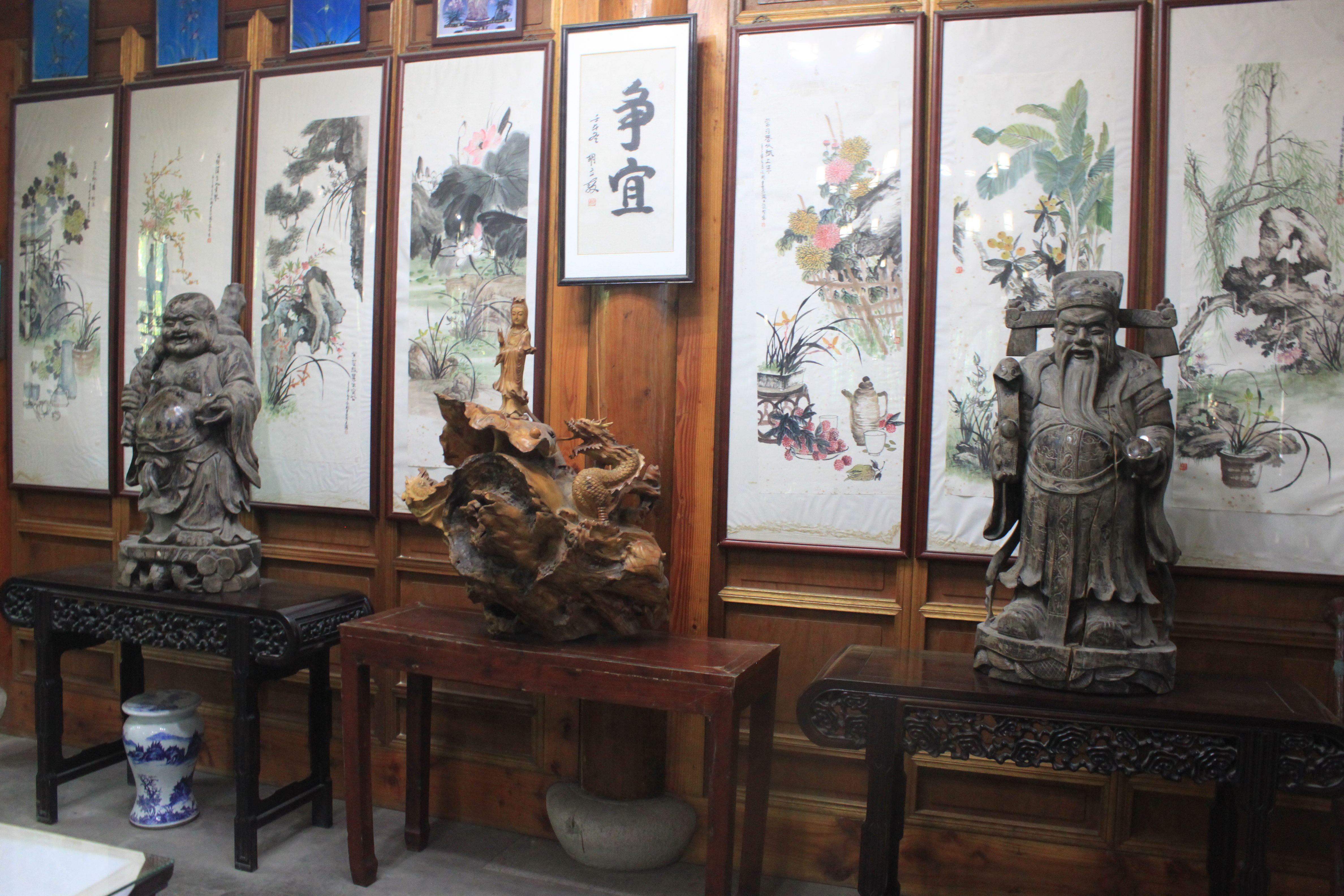
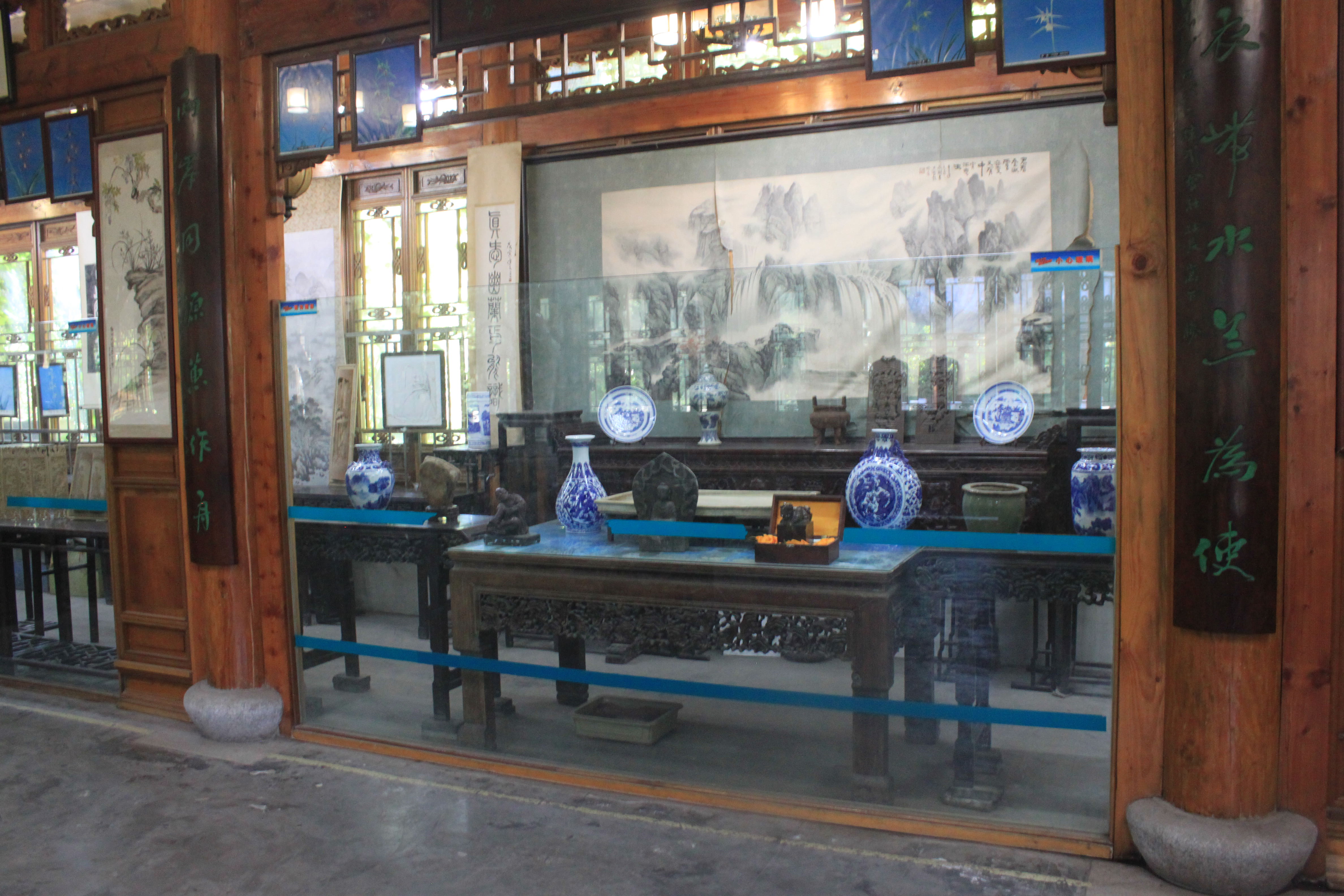
There were pictures of orchids and vases for orchids to show you how they would be displayed.

IMG_4470 IMG_4471

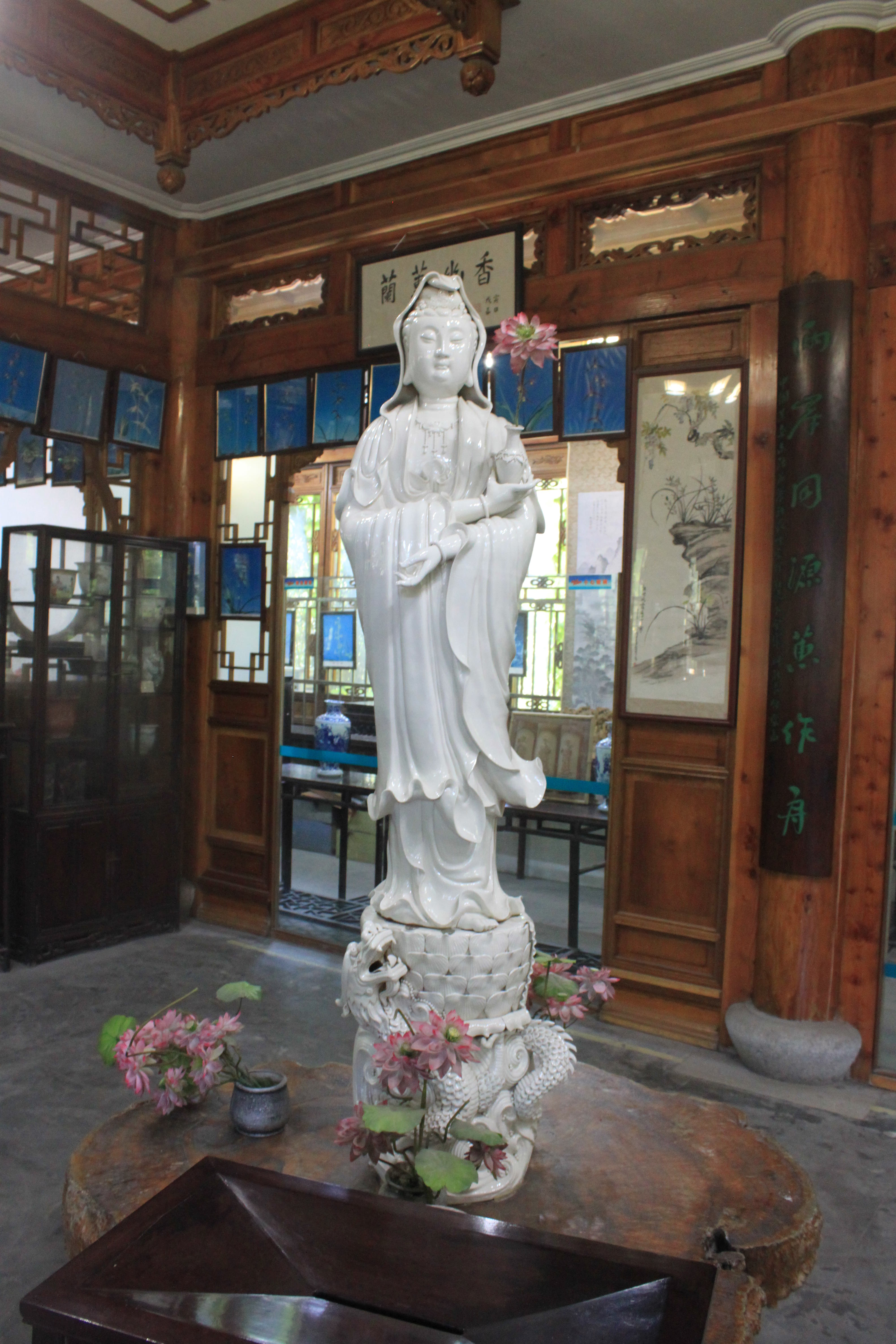
Sorry, my mistake there were some orchids around this statue of Guan Yin the Chinese name synonymous with the Bodhisattva Avalokitesvara, the pinnacle of mercy, compassion, kindness and love.

IMG_4472 IMG_4474 IMG_4479

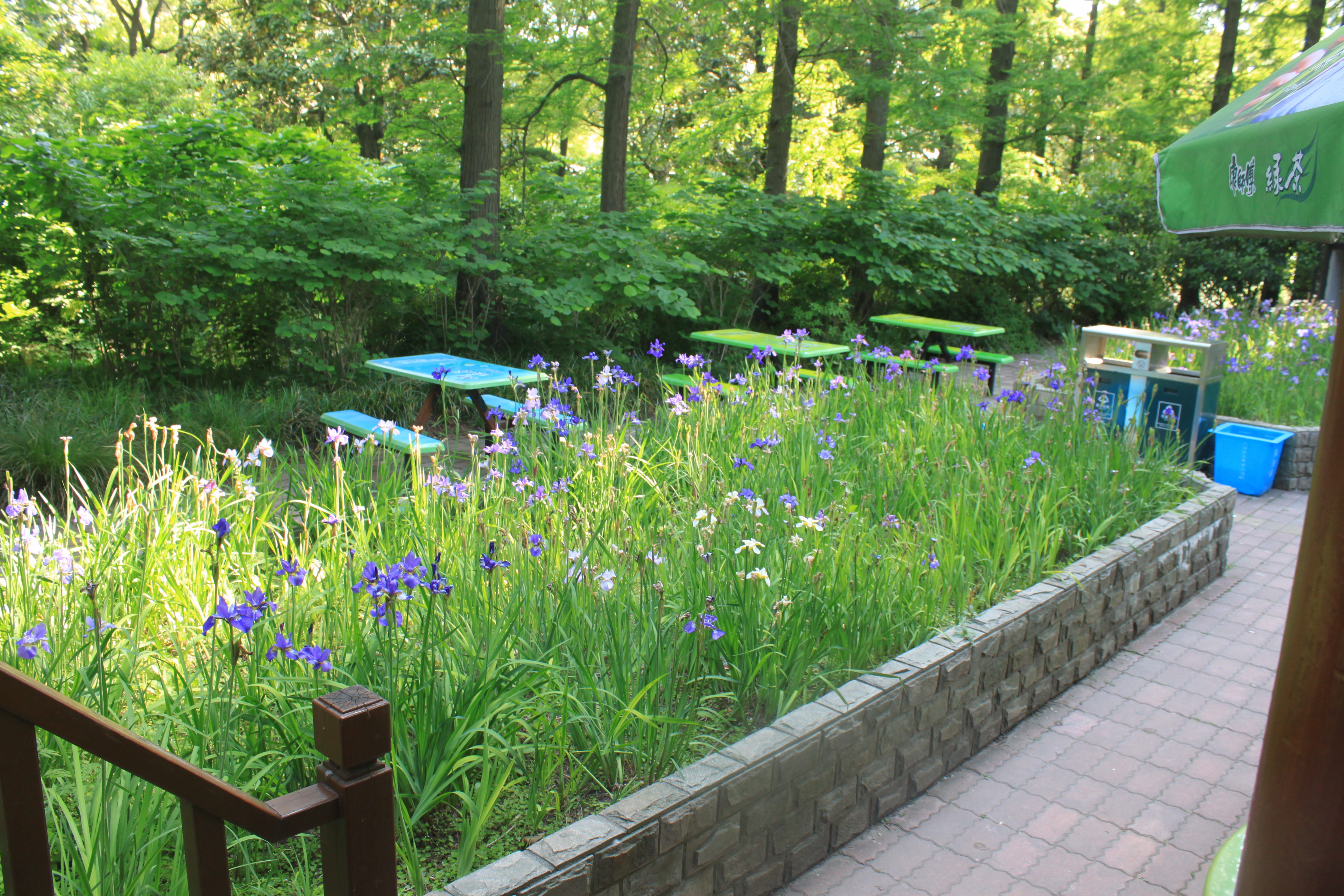
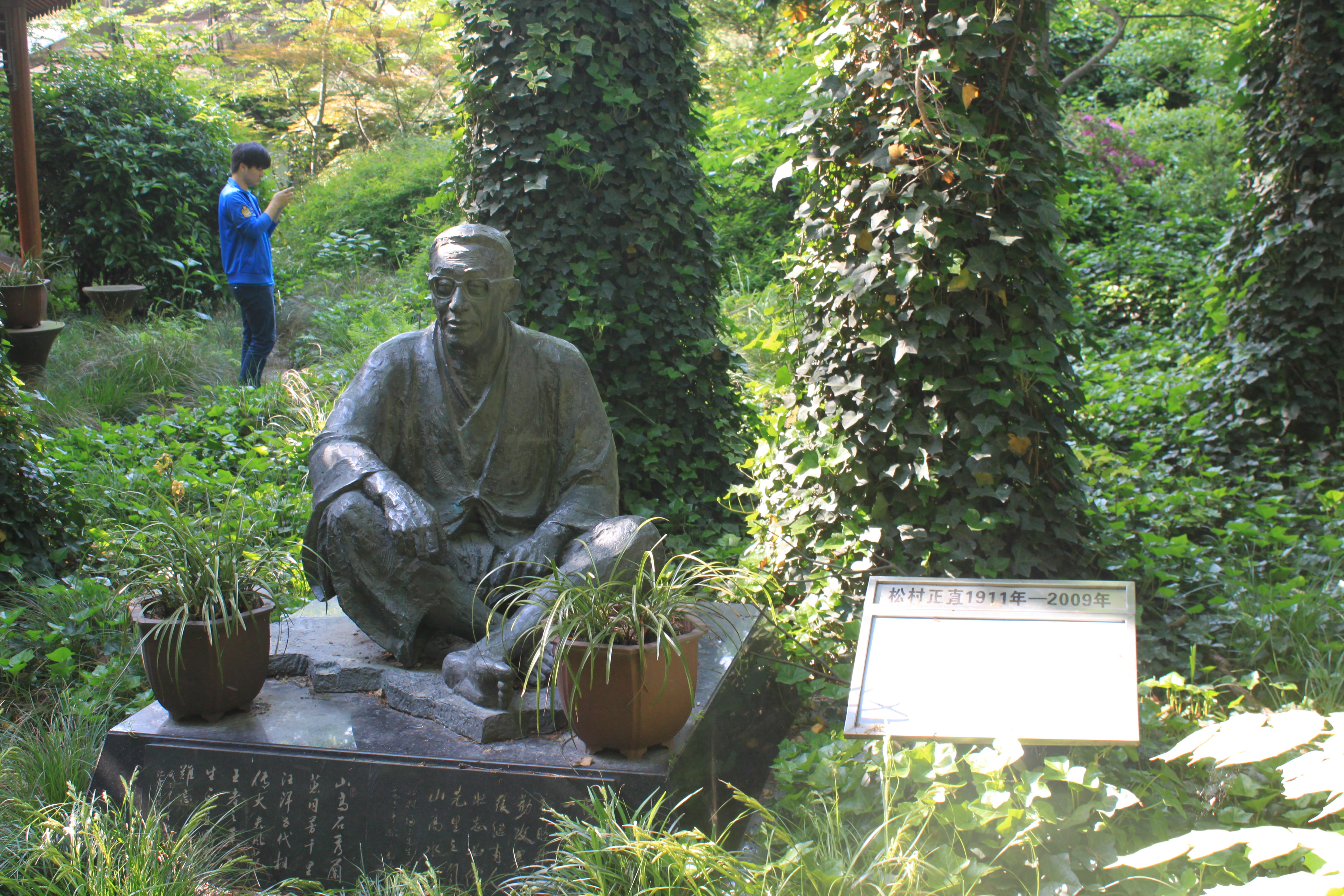
The outdoor picnic area had raised beds of irises and other flowers in amongst lush green foliage.  And I do not know who the statue of the seated figure is – I cannot read the Mandarin – but he may have been the founder of the Botanical Gardens which were founded in 1974. The whole inner garden was cool and inviting on the hot day that I  IMG_4481IMG_4477 visited, although I wasn’t tempted by the tea house, which overlooked this patch with pink flowering azaleas, pruned bushes, conifers and deciduous trees with bright fresh newly sprouted leaves.

IMG_4483 IMG_4484

The Conservatory Displays of Phalaenopsis Orchids

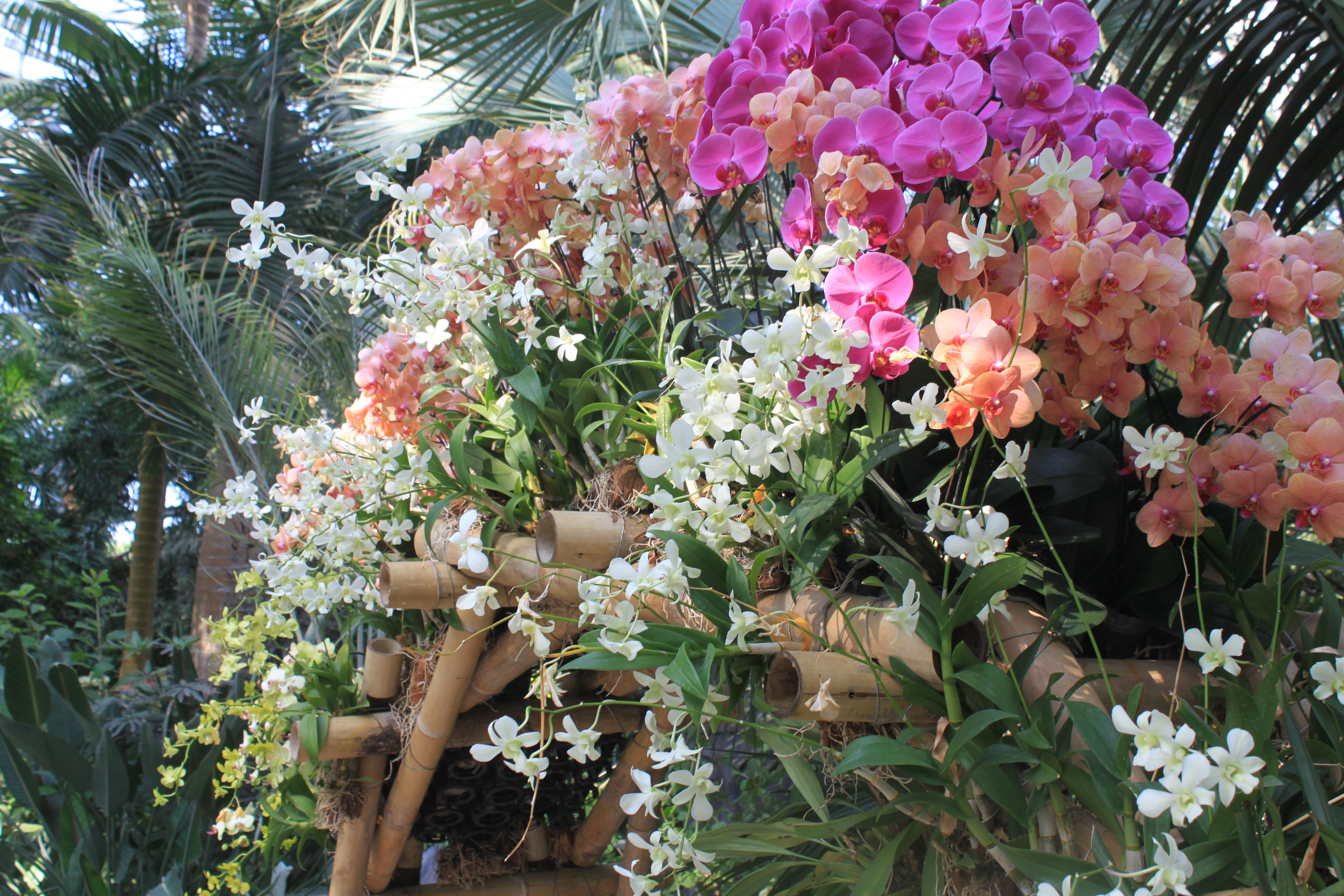
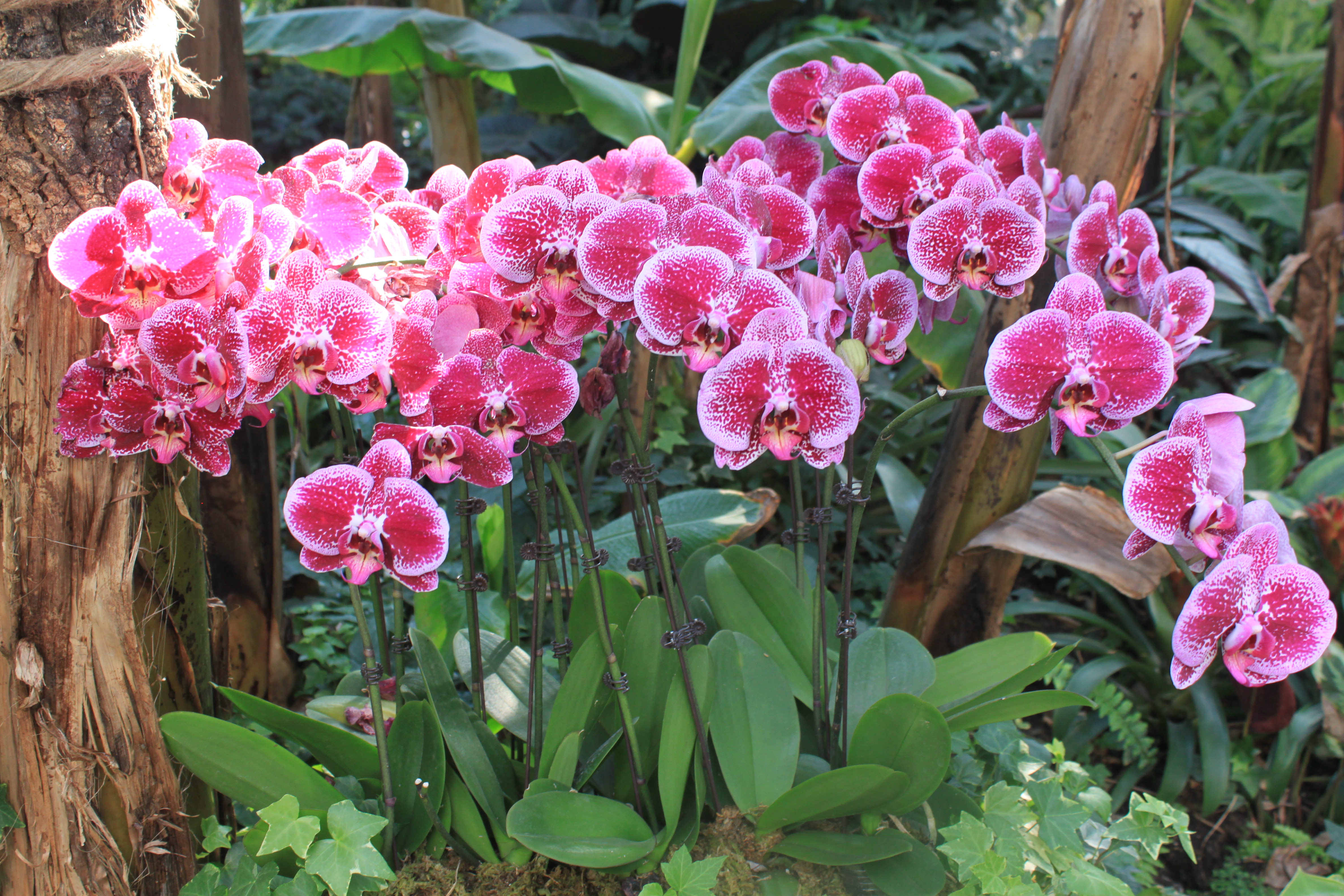
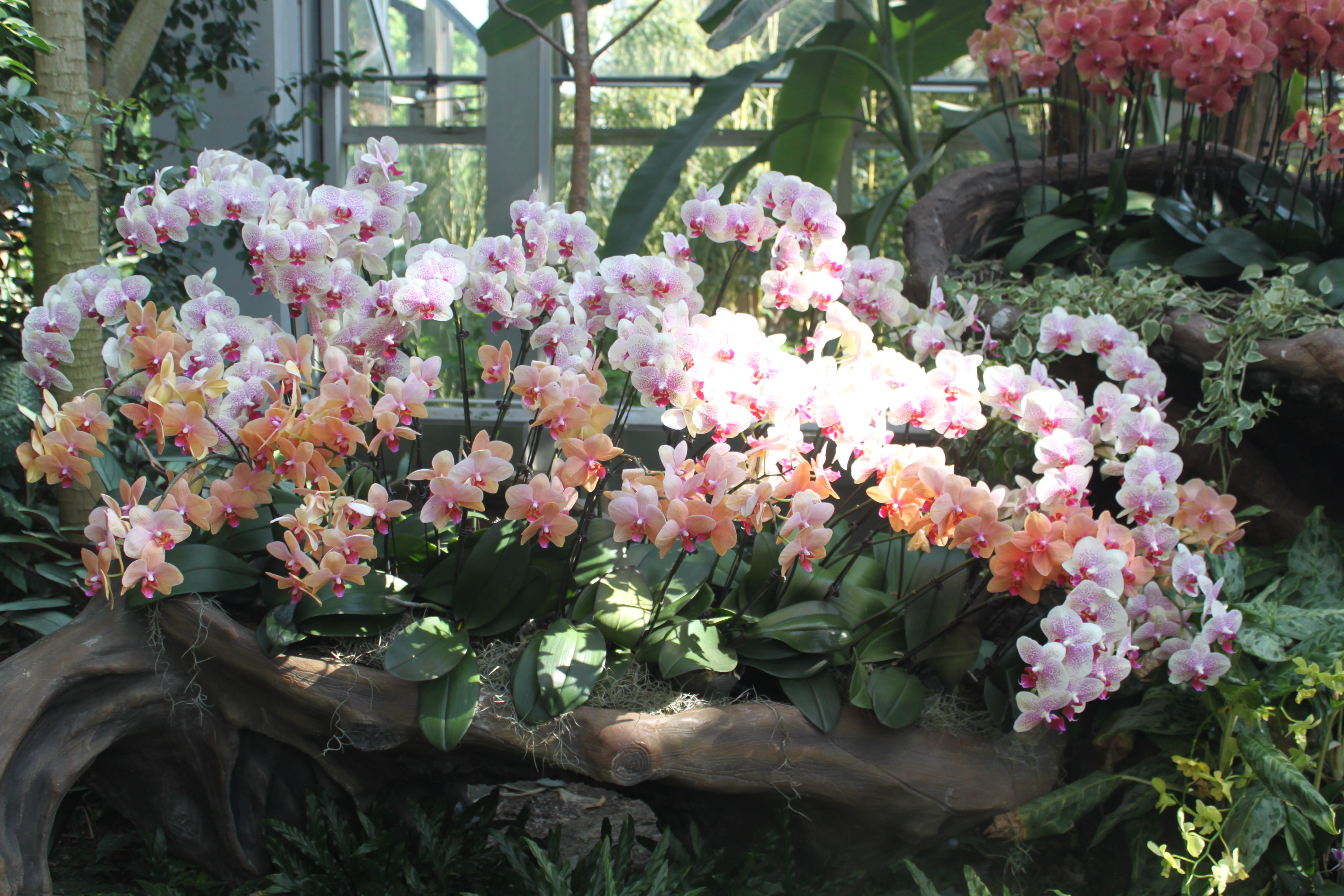
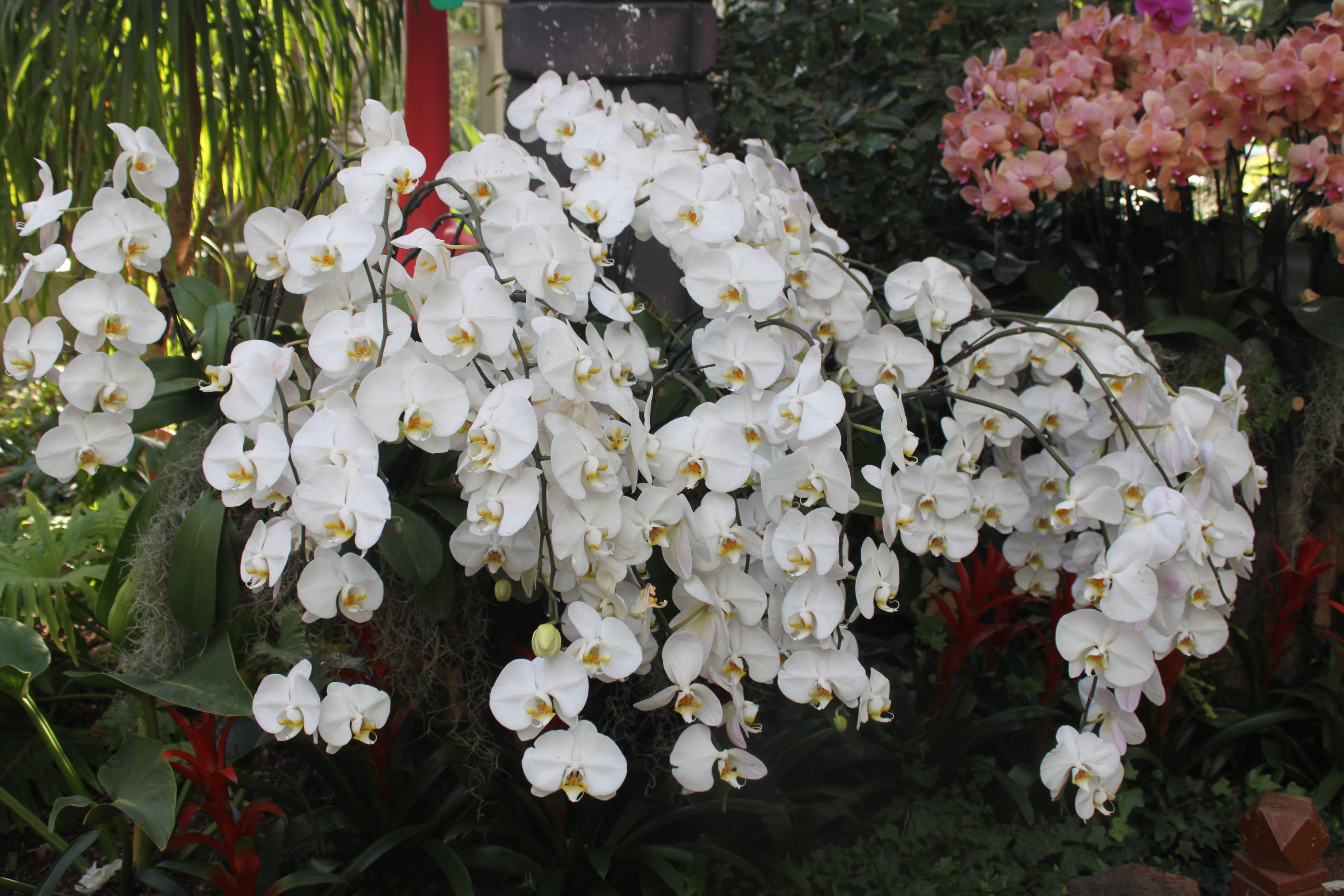
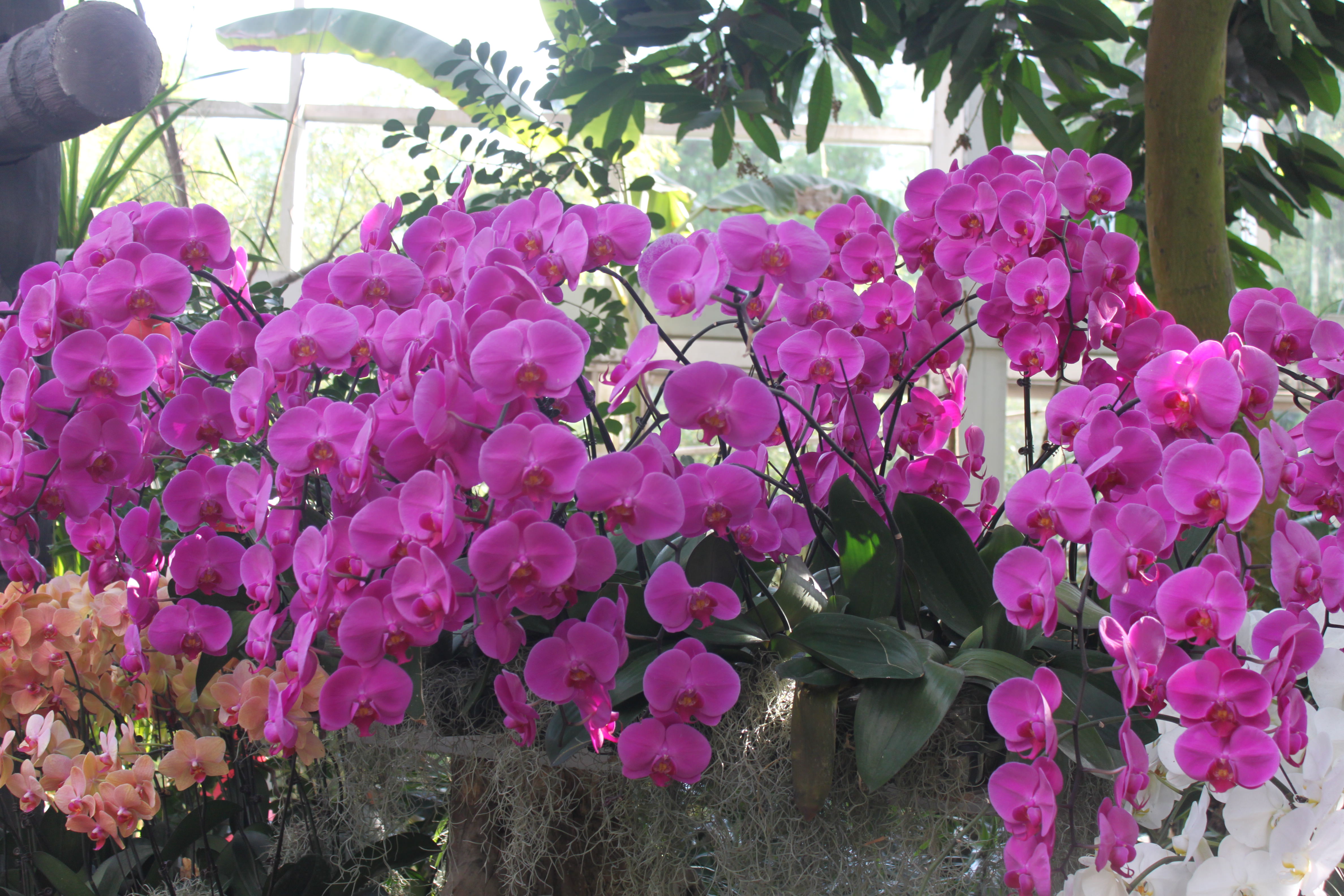
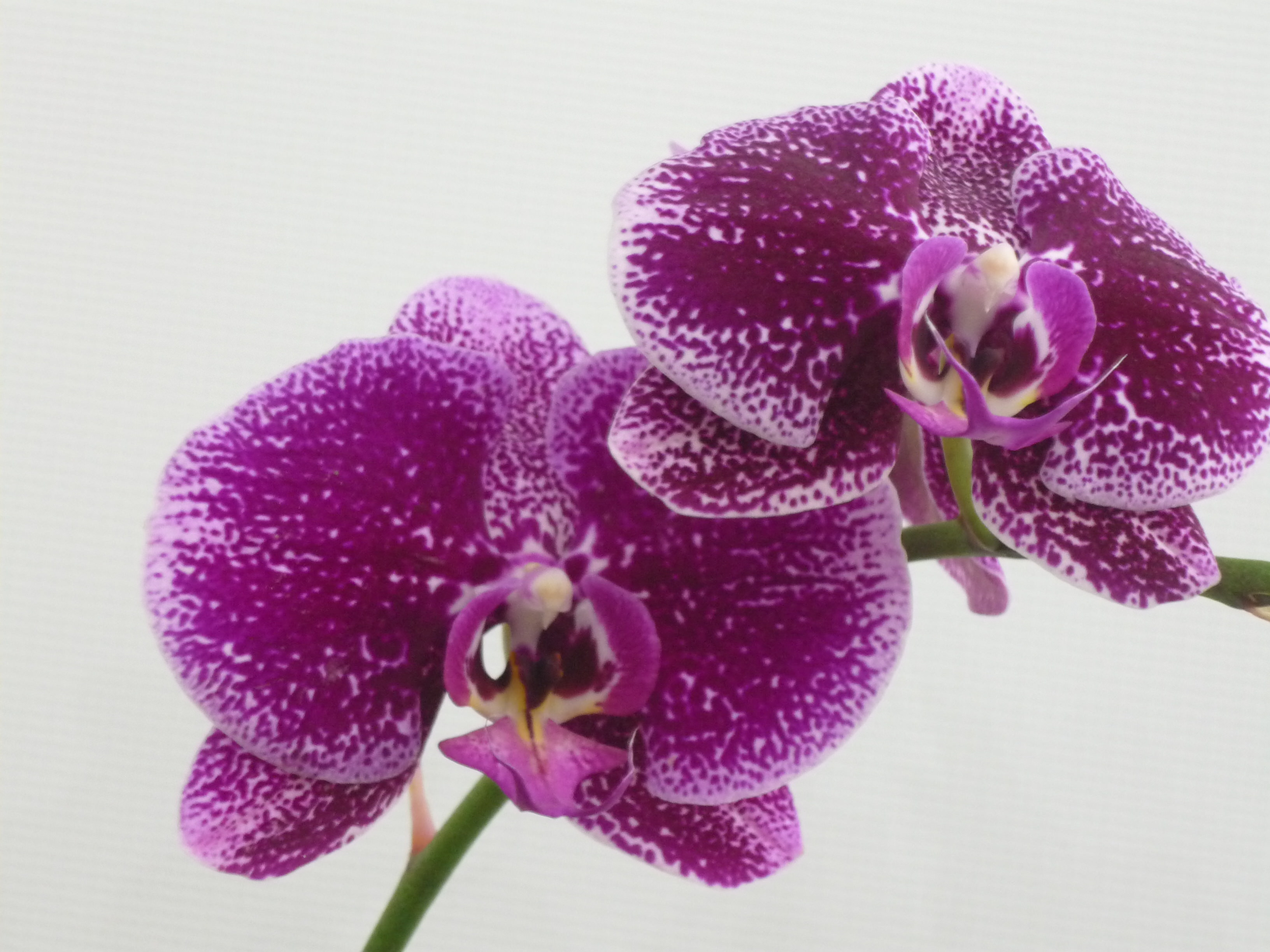
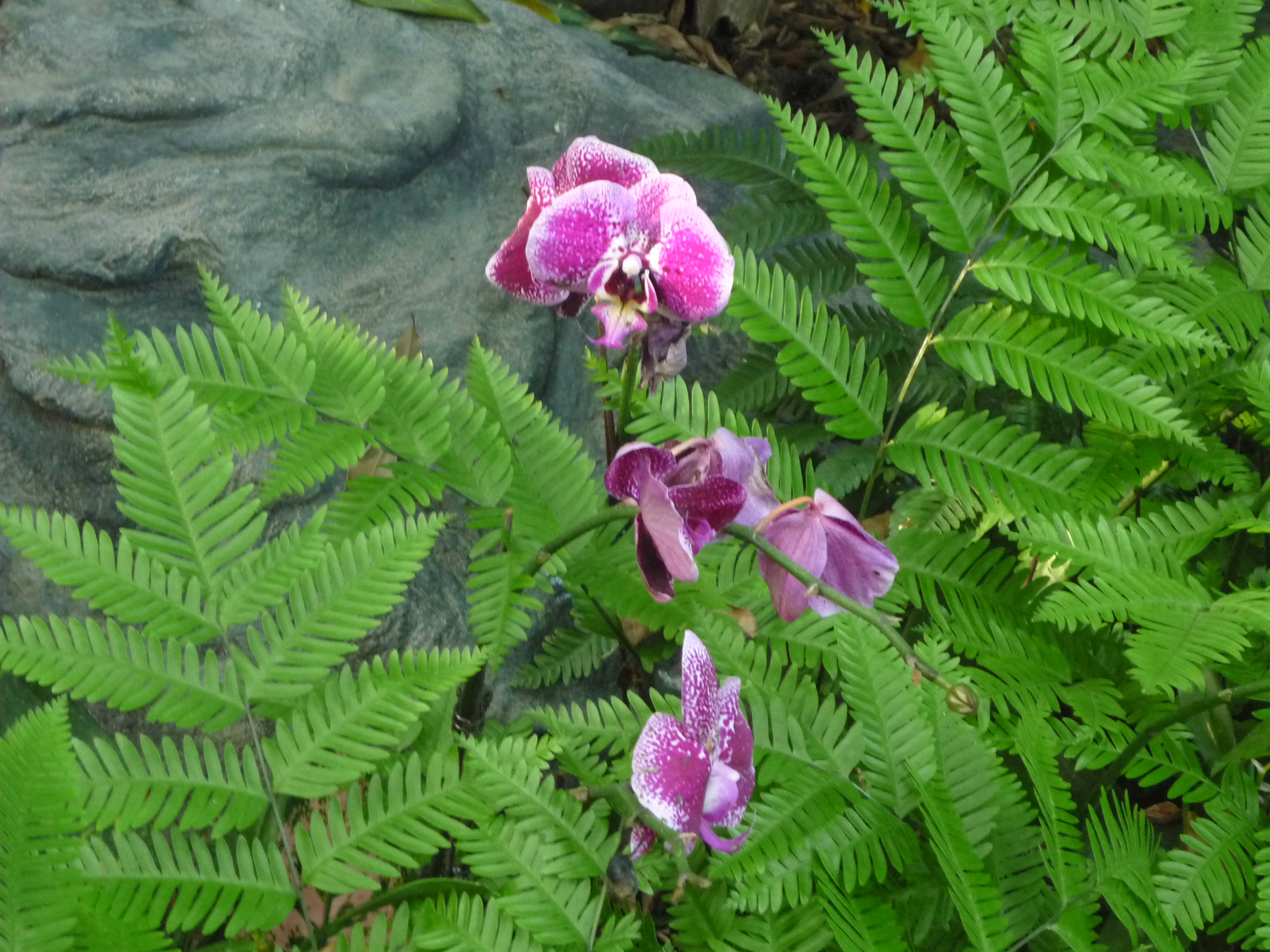
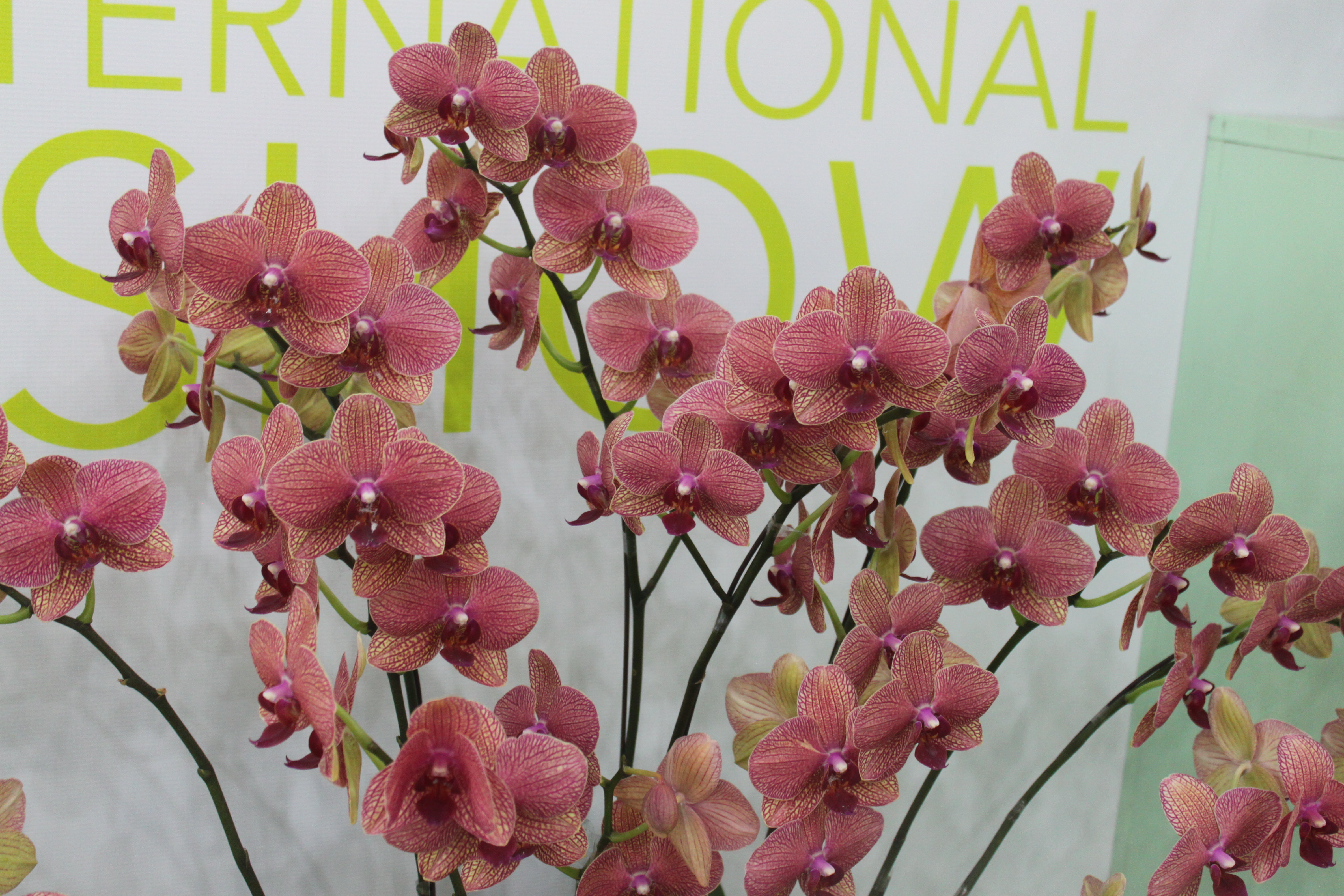
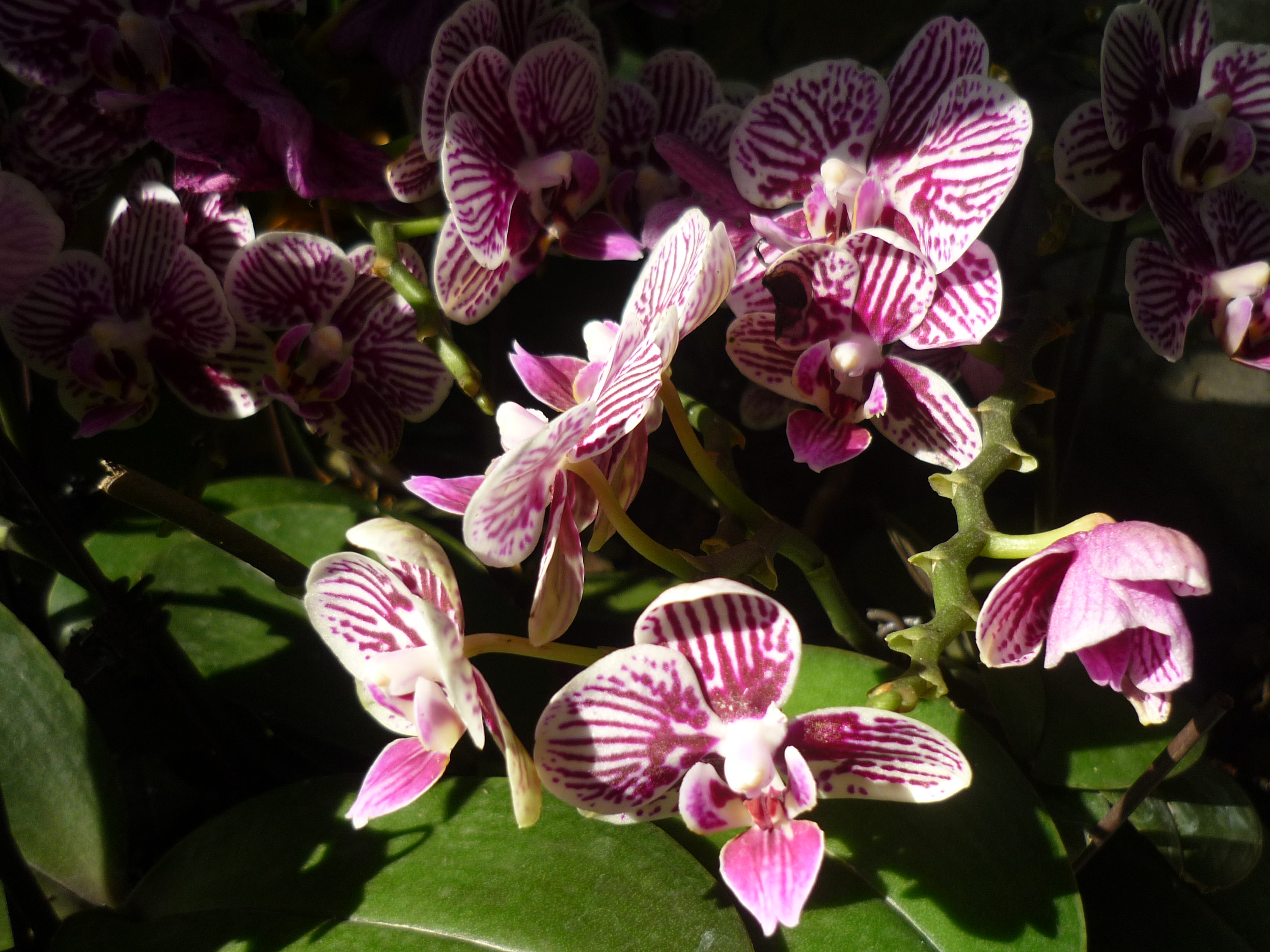
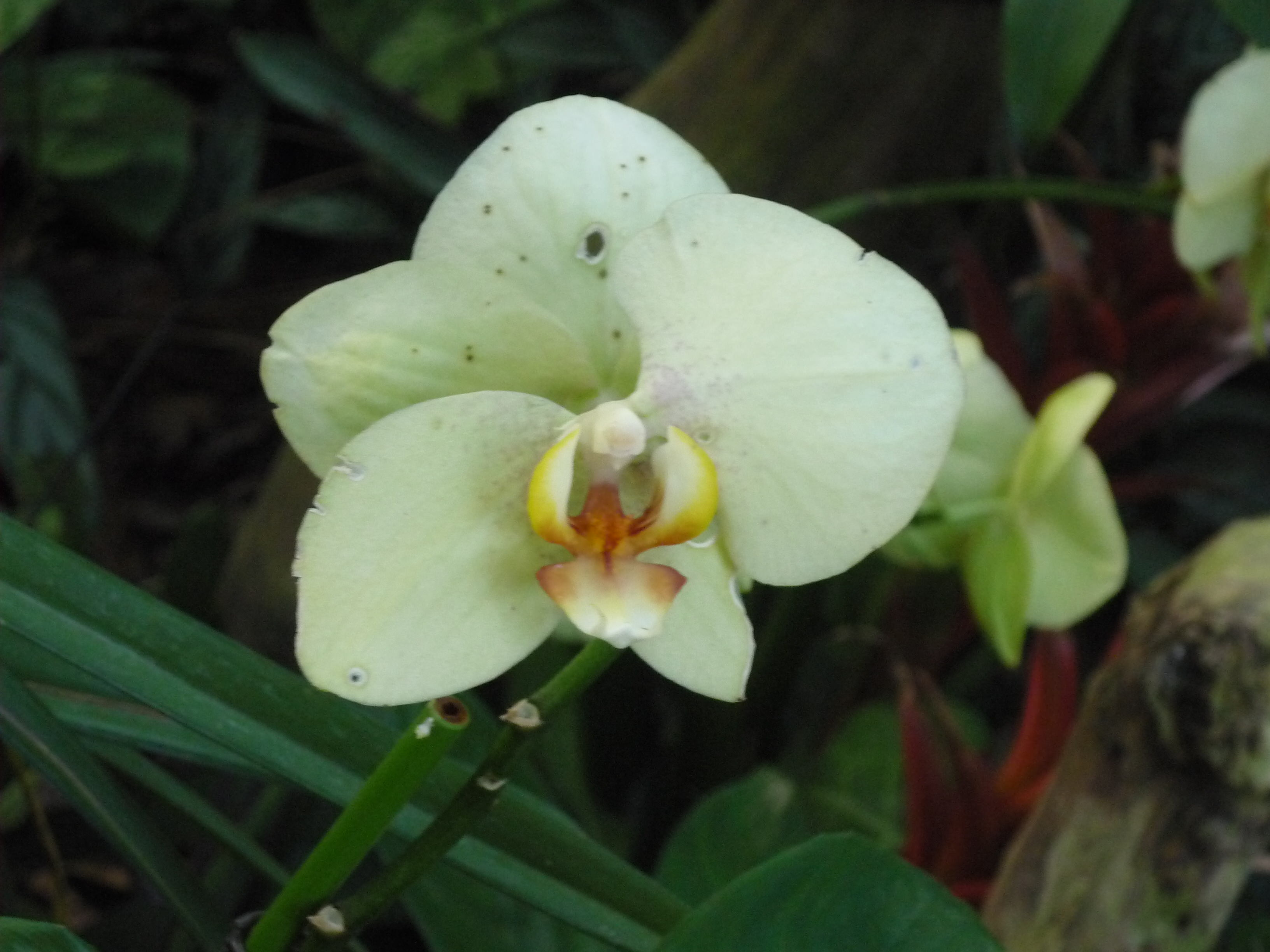
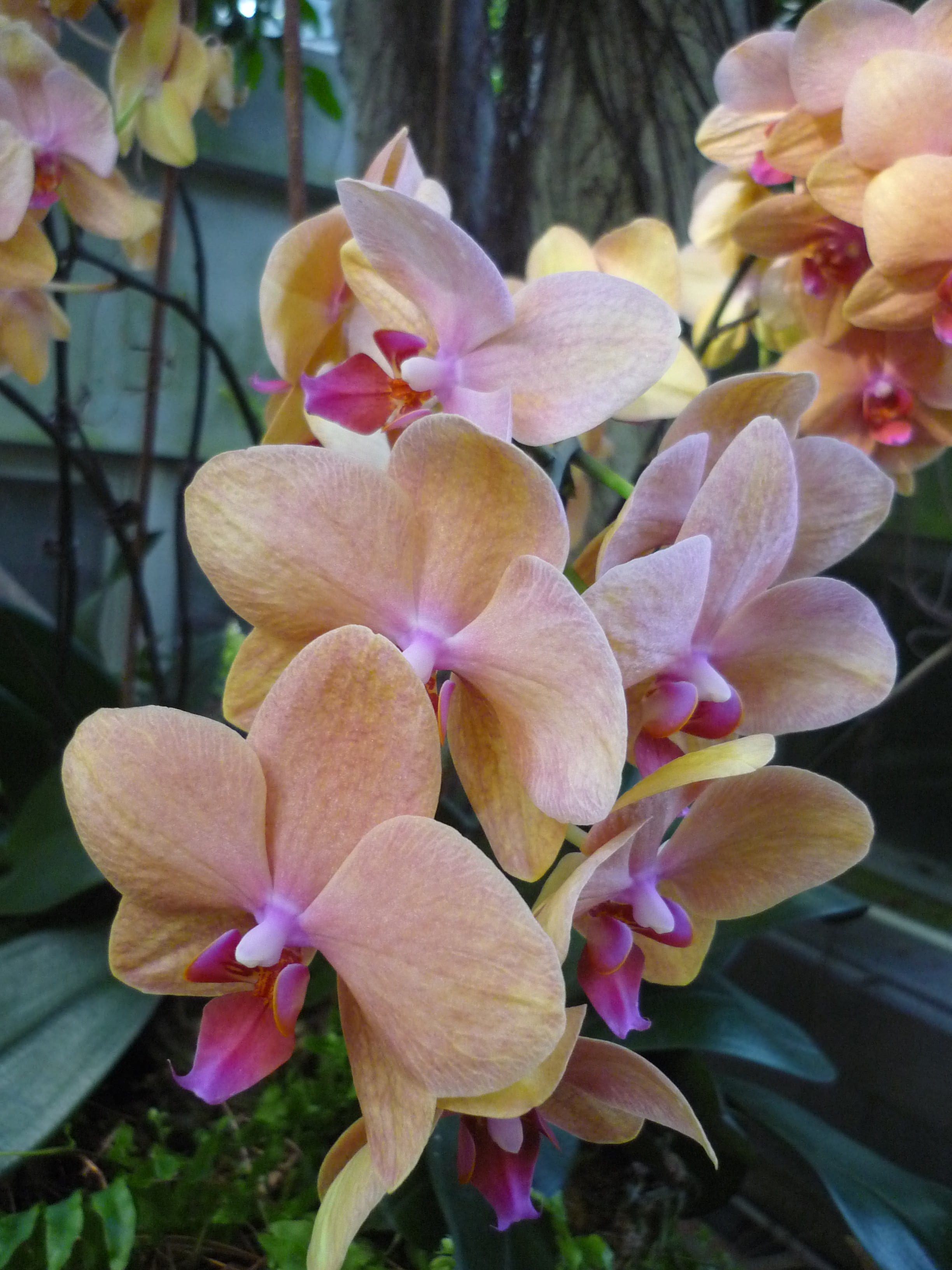
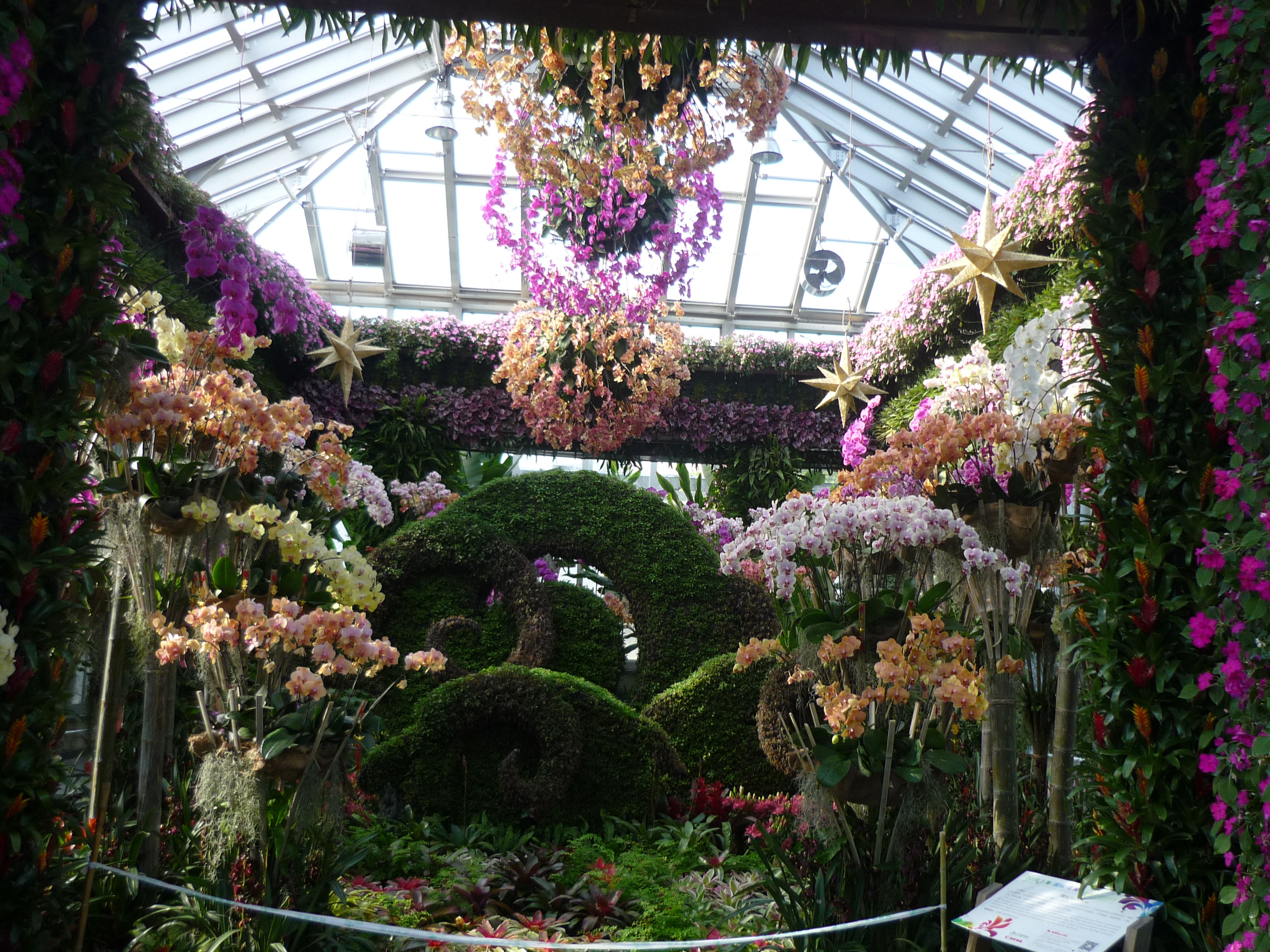
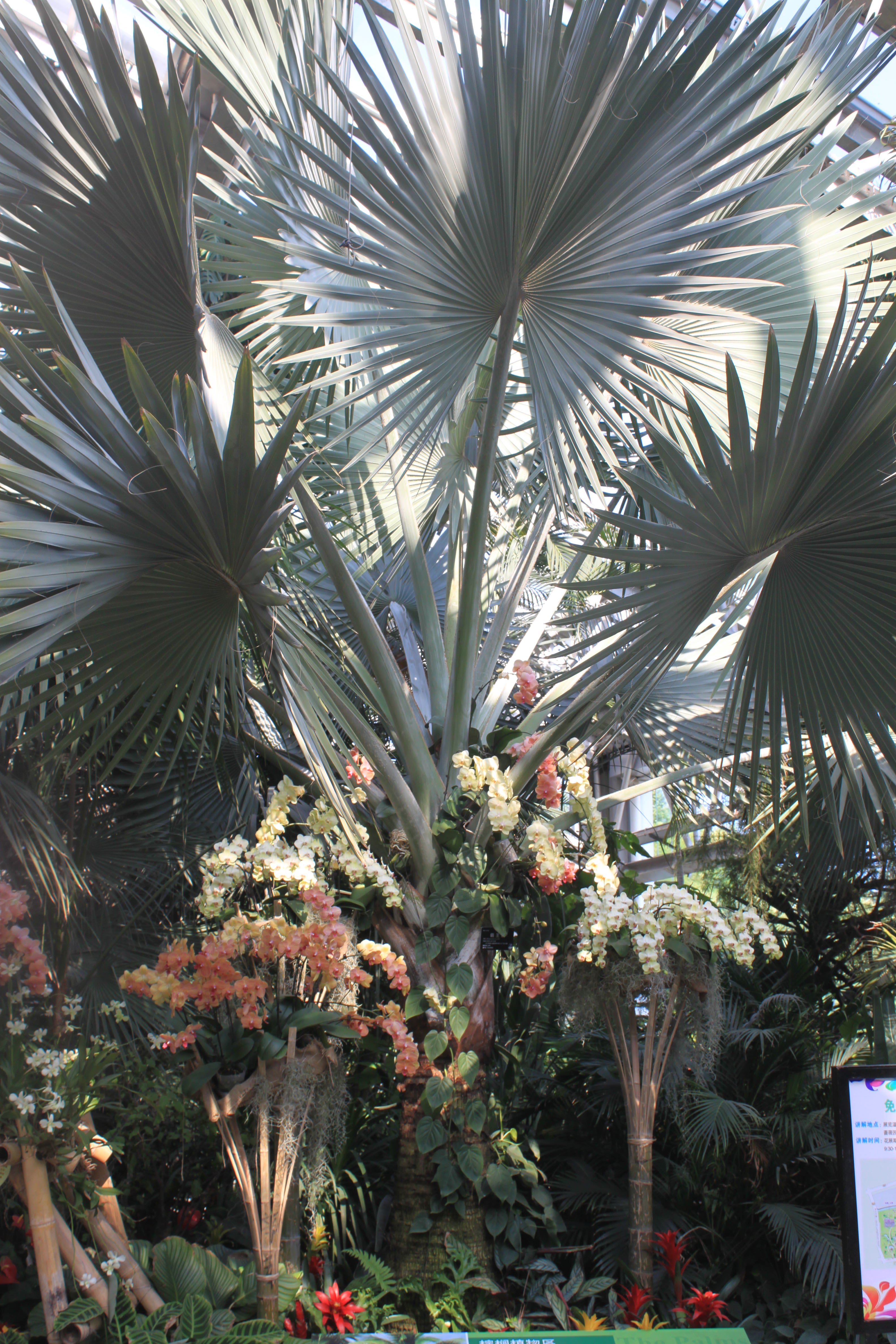
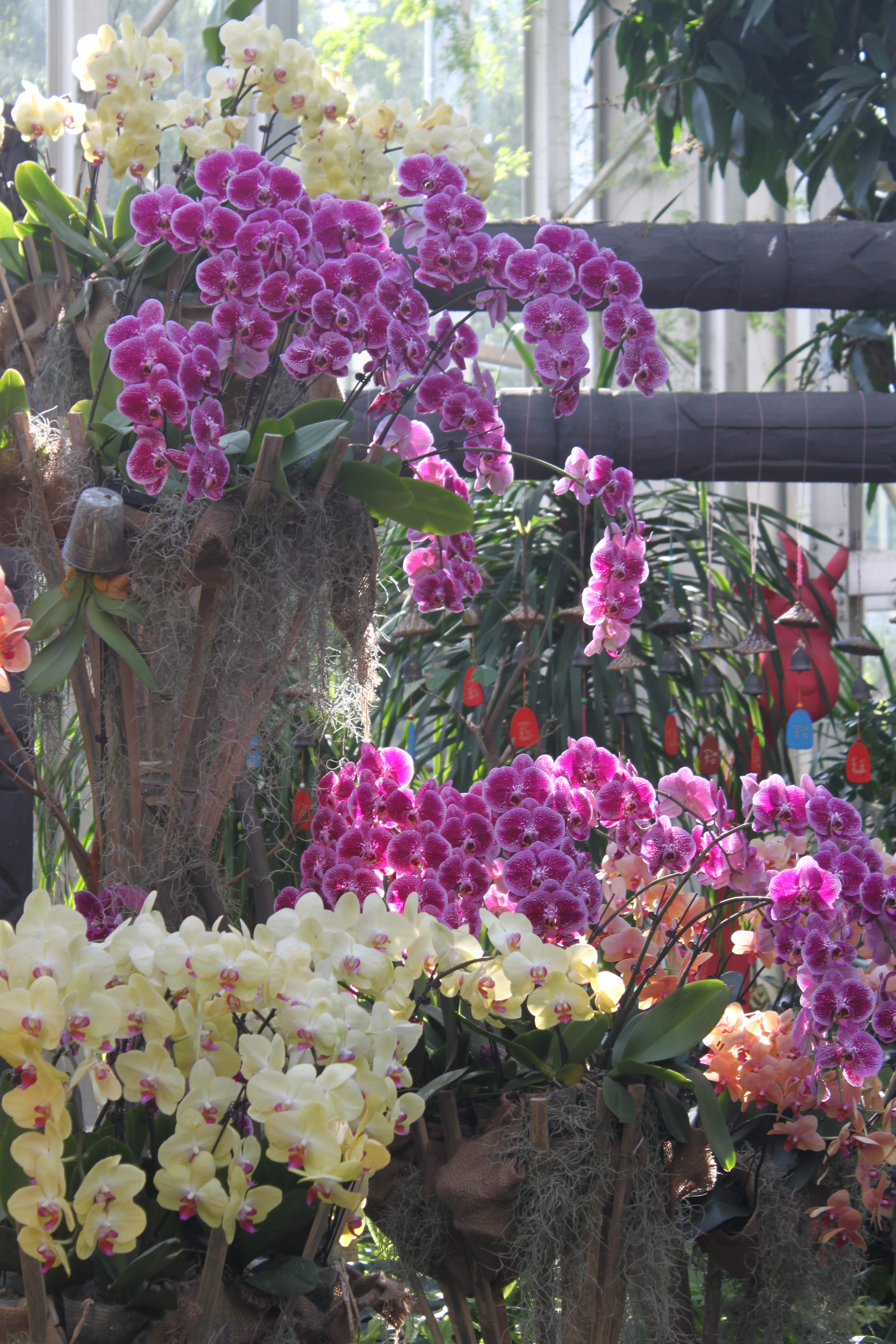
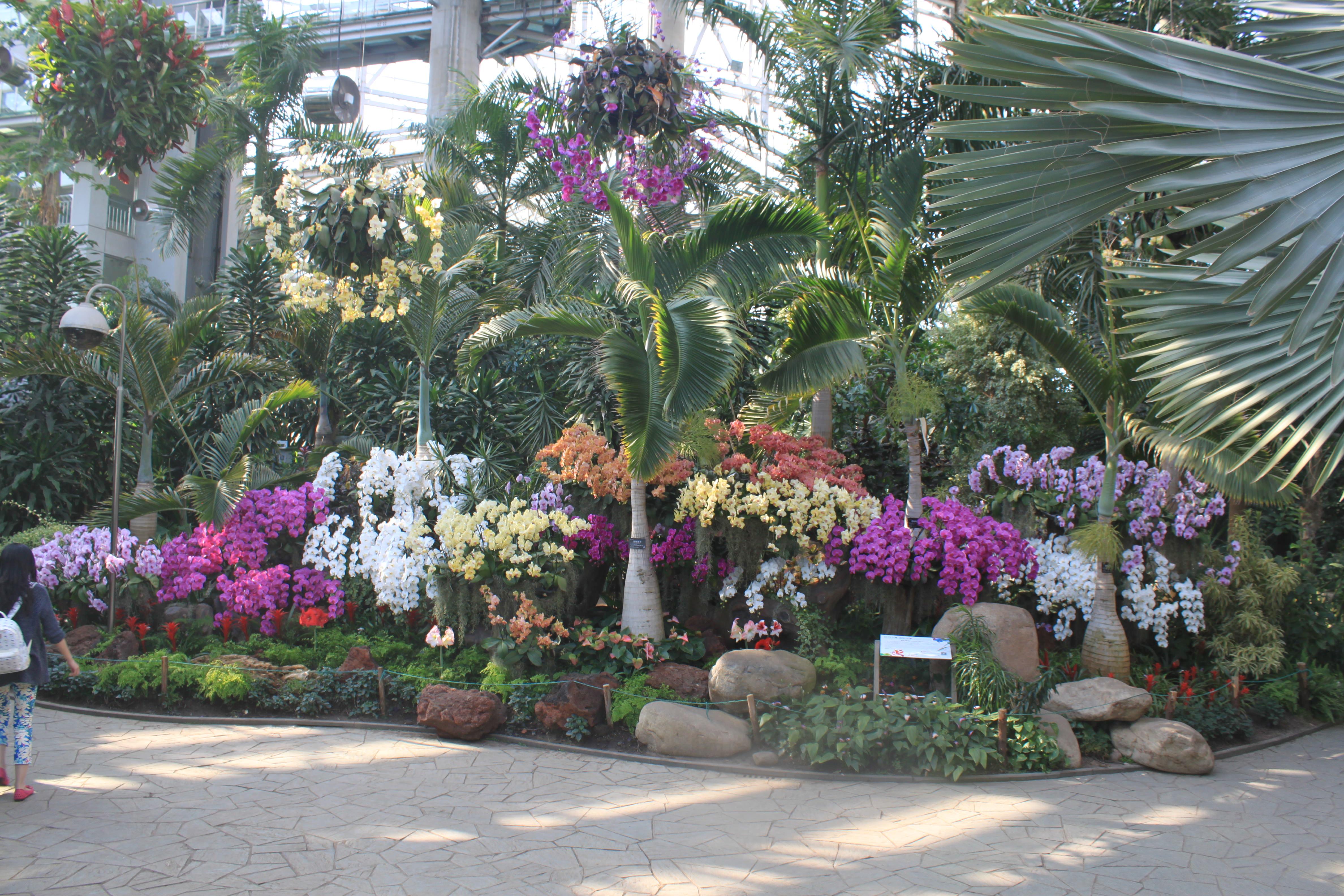
Elsewhere in the Botanical Gardens there were orchids.  They were housed mainly within a couple of conservatories or palm houses – I assume to lift the colour, as such places are usually rather unexciting, being mainly green. Generally with Phalaenopsis there is one stem per plant, but each stem may contain a number of flowers which here in China are trained over curving supports.

IMG_4508 IMG_4510 IMG_4514 IMG_4517 IMG_4519P1070640P1070660IMG_4531P1070666P1070661

The Slipper Orchid House

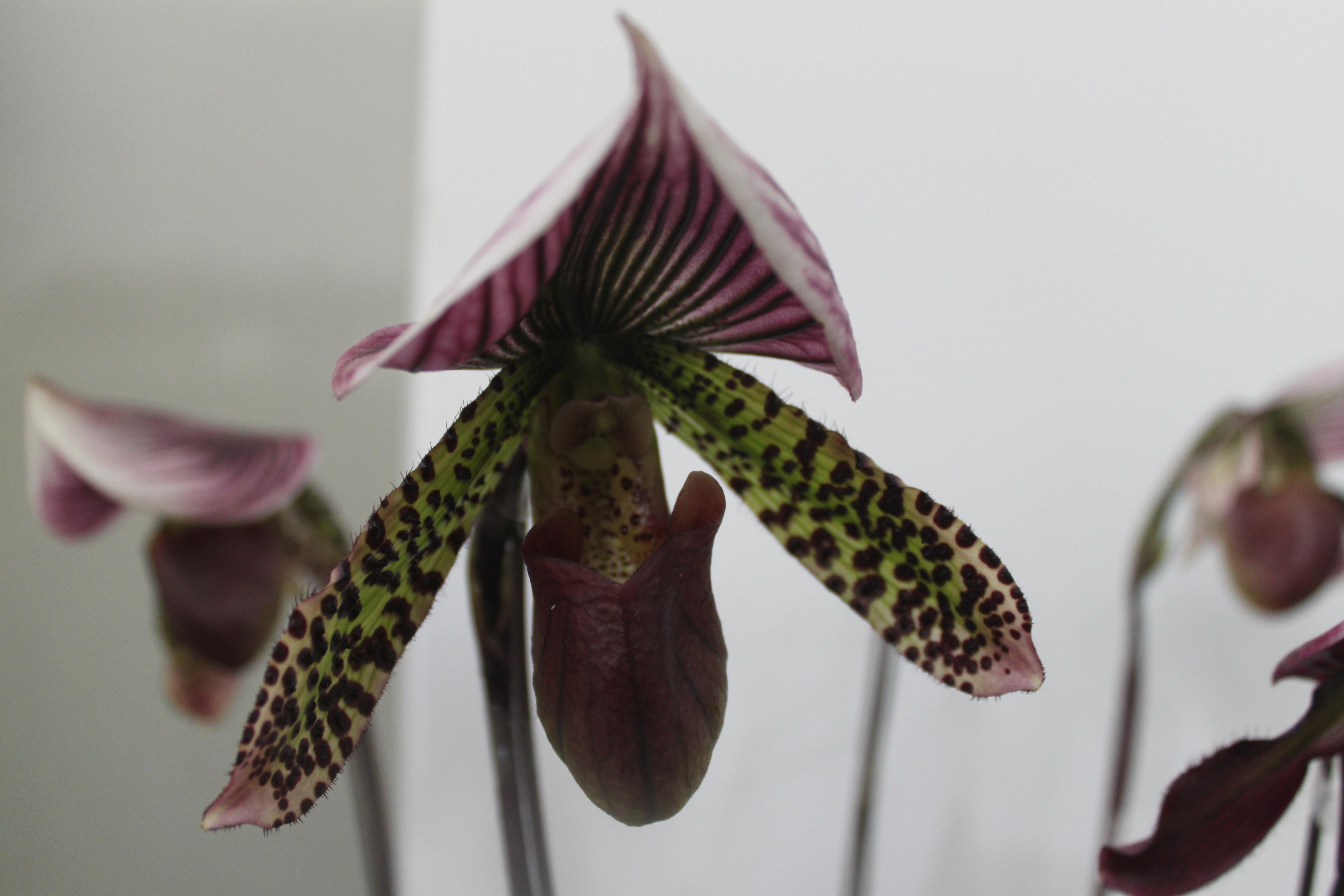
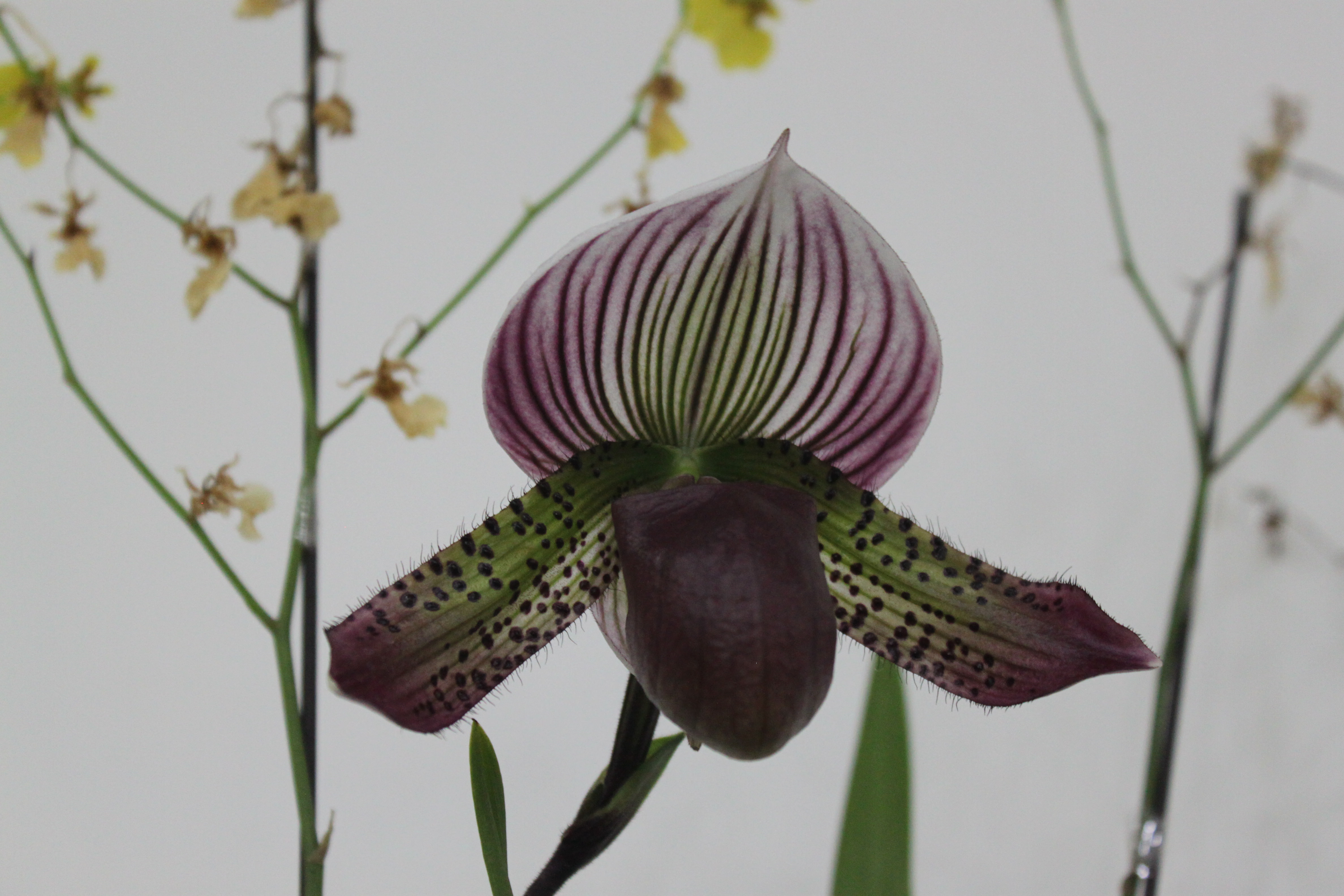
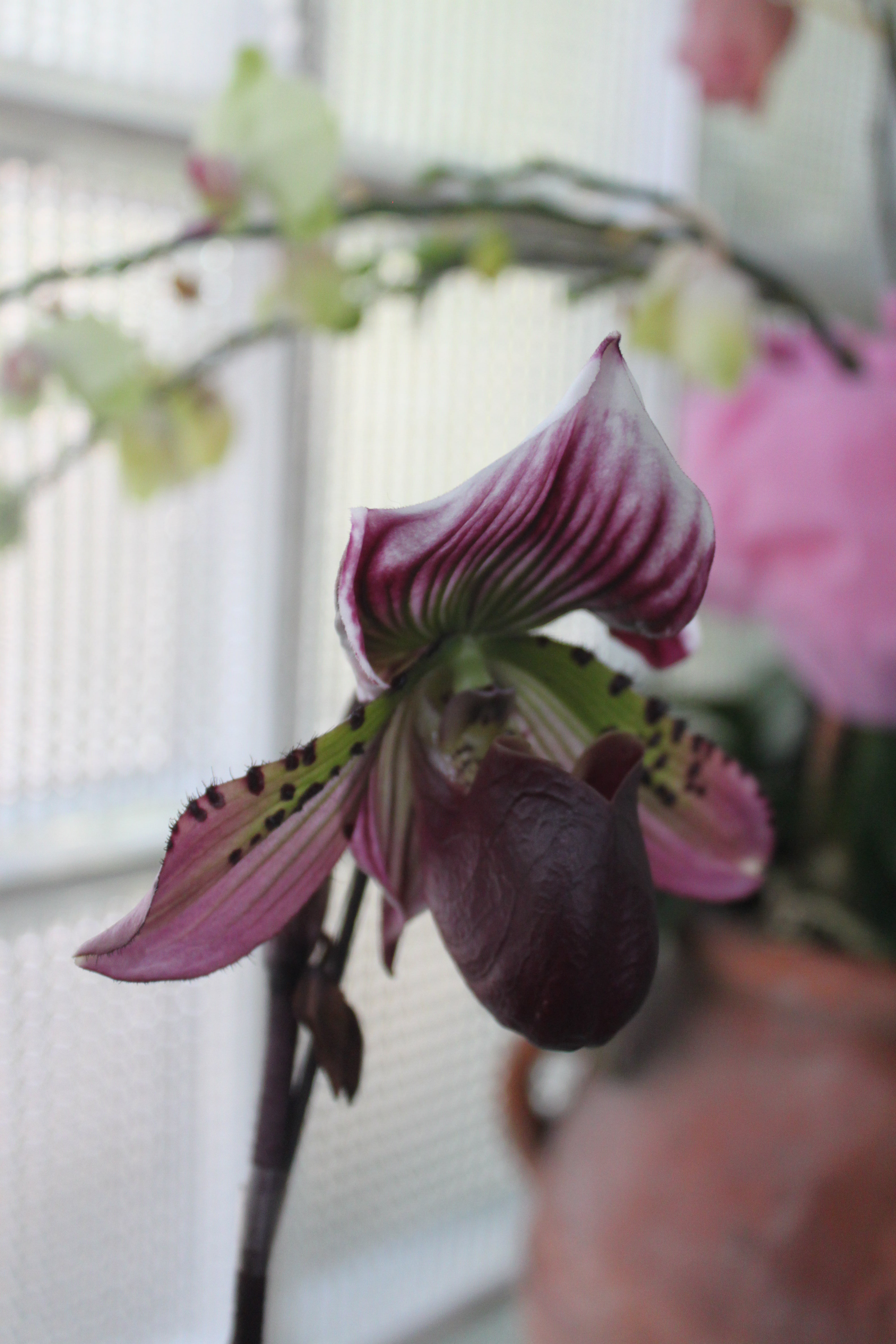
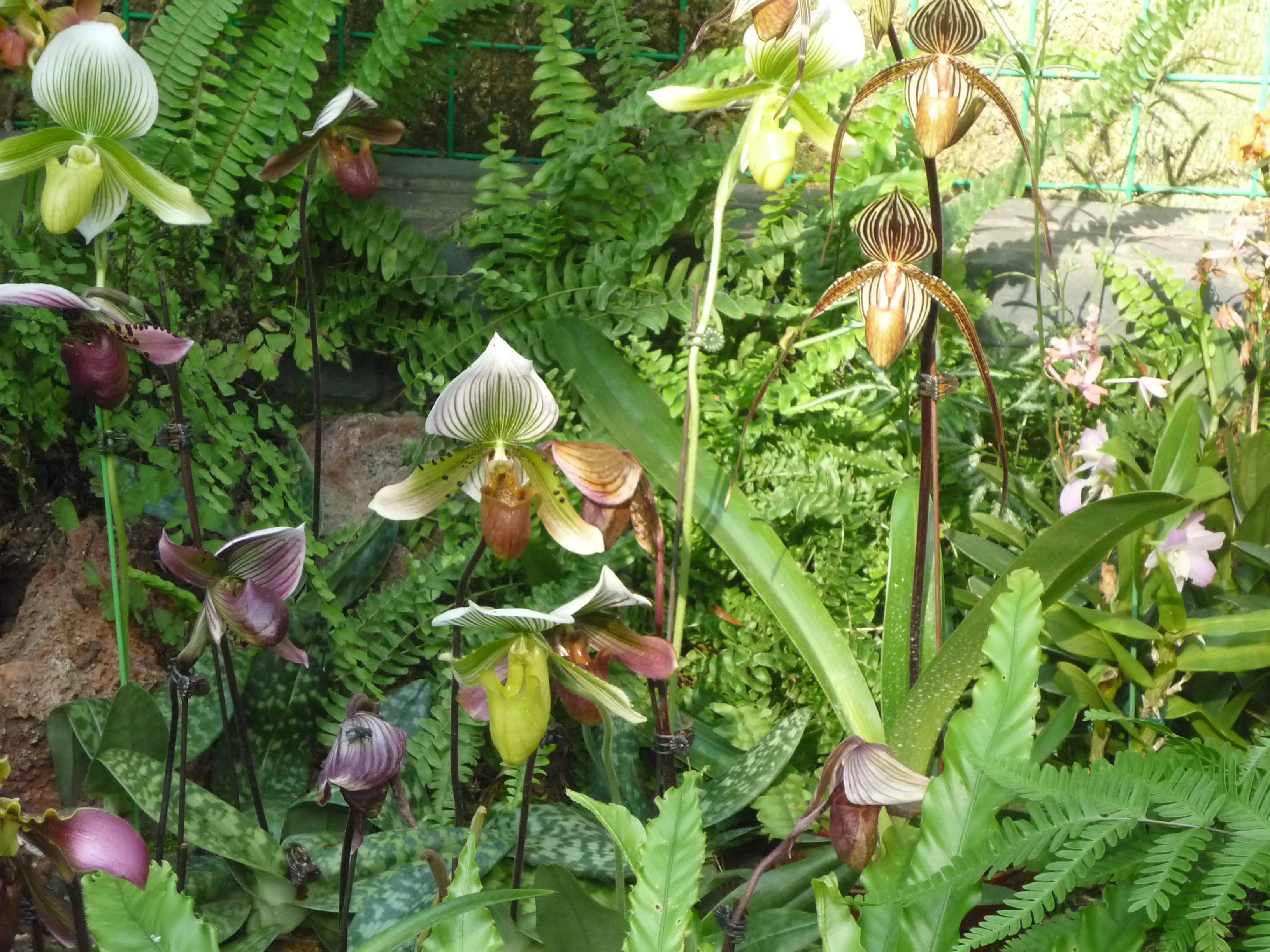
In a side room off Conservatory one was a display of intriguing slipper orchids. ( I’ve tried to name as many of these plants as I can, but as there were no labels in English or Latin or even Chinese I have had to do it by researching later.)

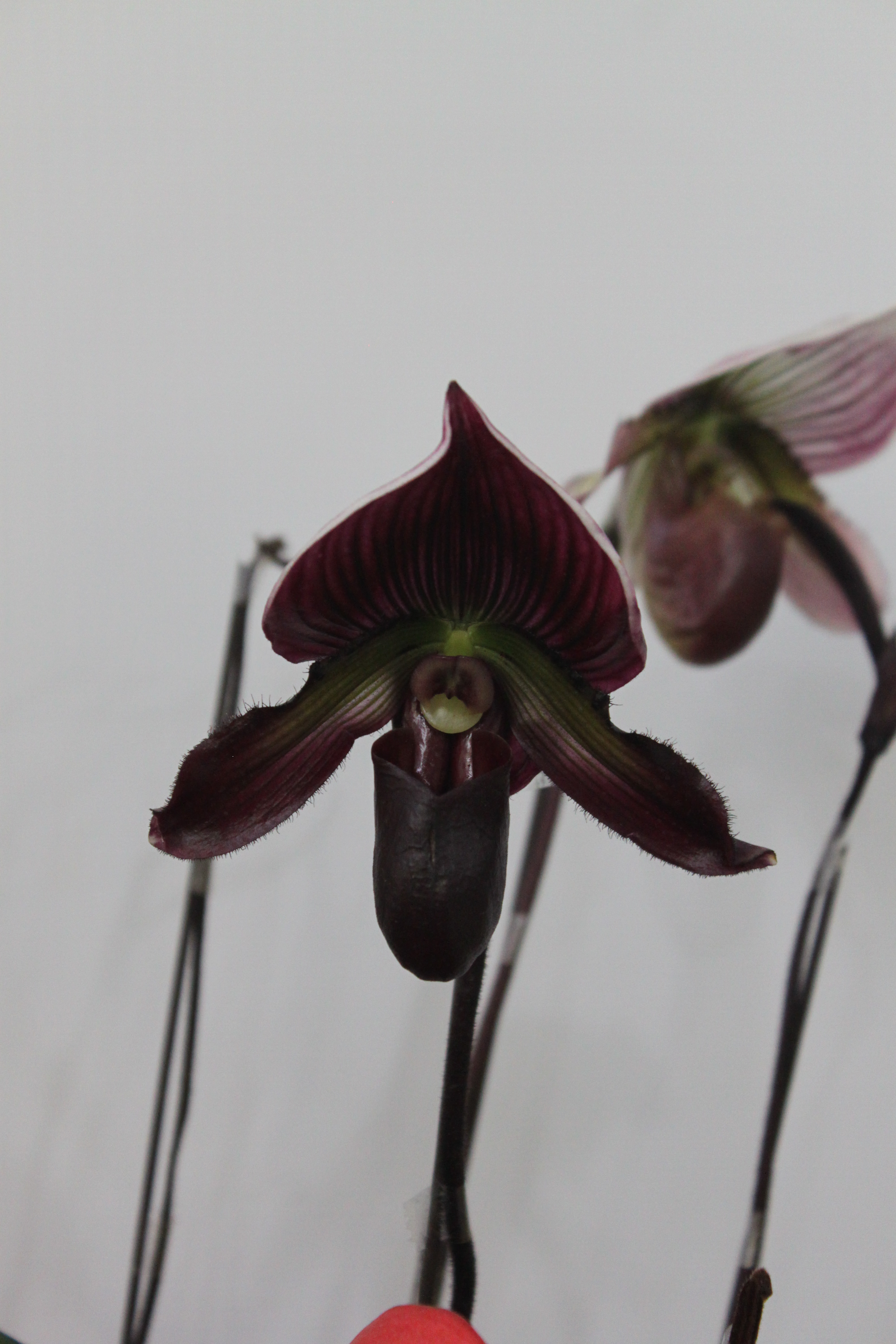
Paphiopedilum macabre

Paphiopedilum macabre

Slipper Orchid

Slipper Orchid

Paphiopedilum - slipper orchid

Paphiopedilum – slipper orchid

Slipper Orchid

Slipper Orchid

Paphiopedilum varieties

Paphiopedilum varieties

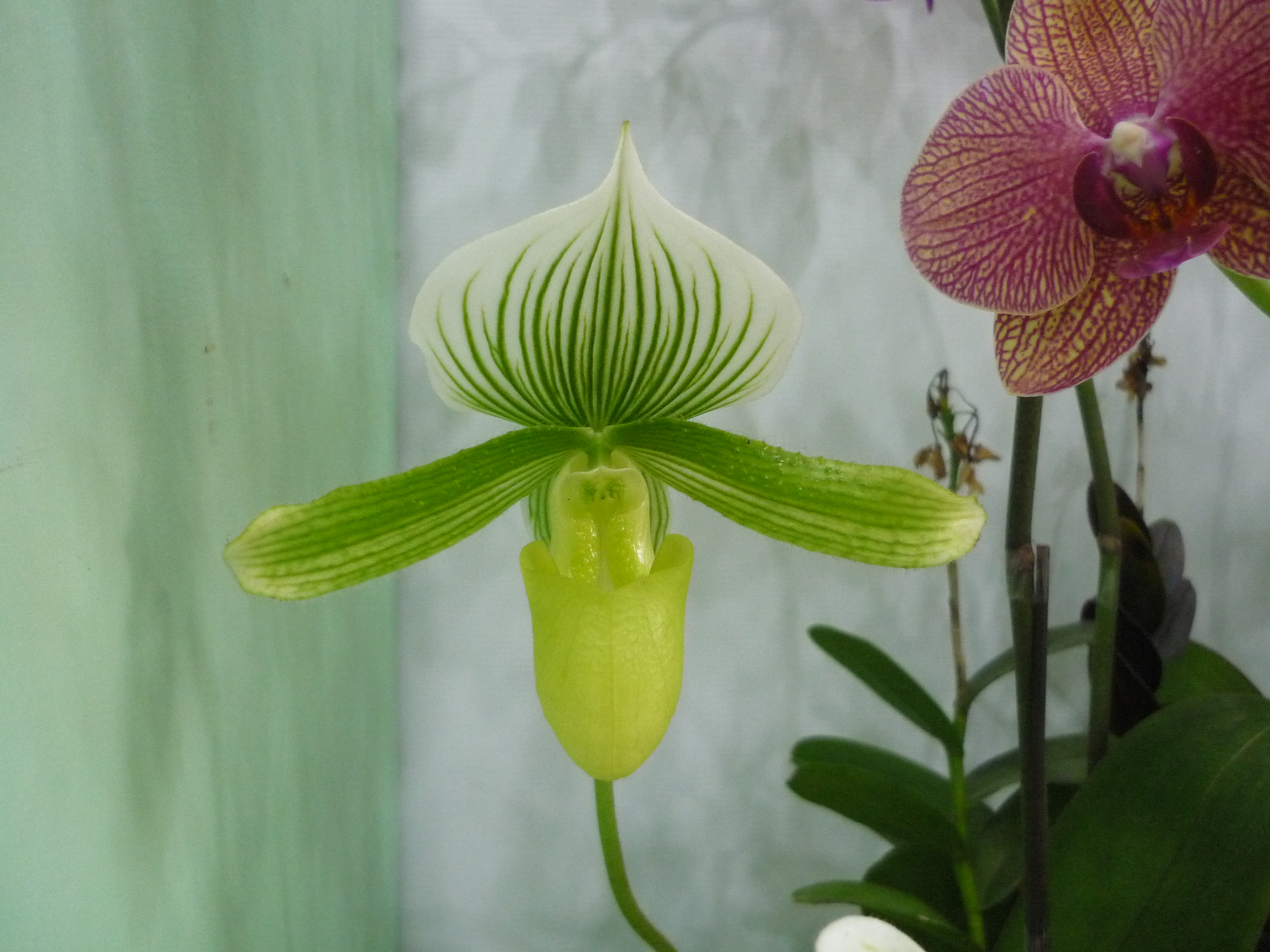
Paphiopedilum Claire de Lune

Paphiopedilum Claire de Lune


The Slipper Orchids were displayed alongside other types – again I’ve tried to name them where I can with one or two others from other glass houses thrown in for good measure.

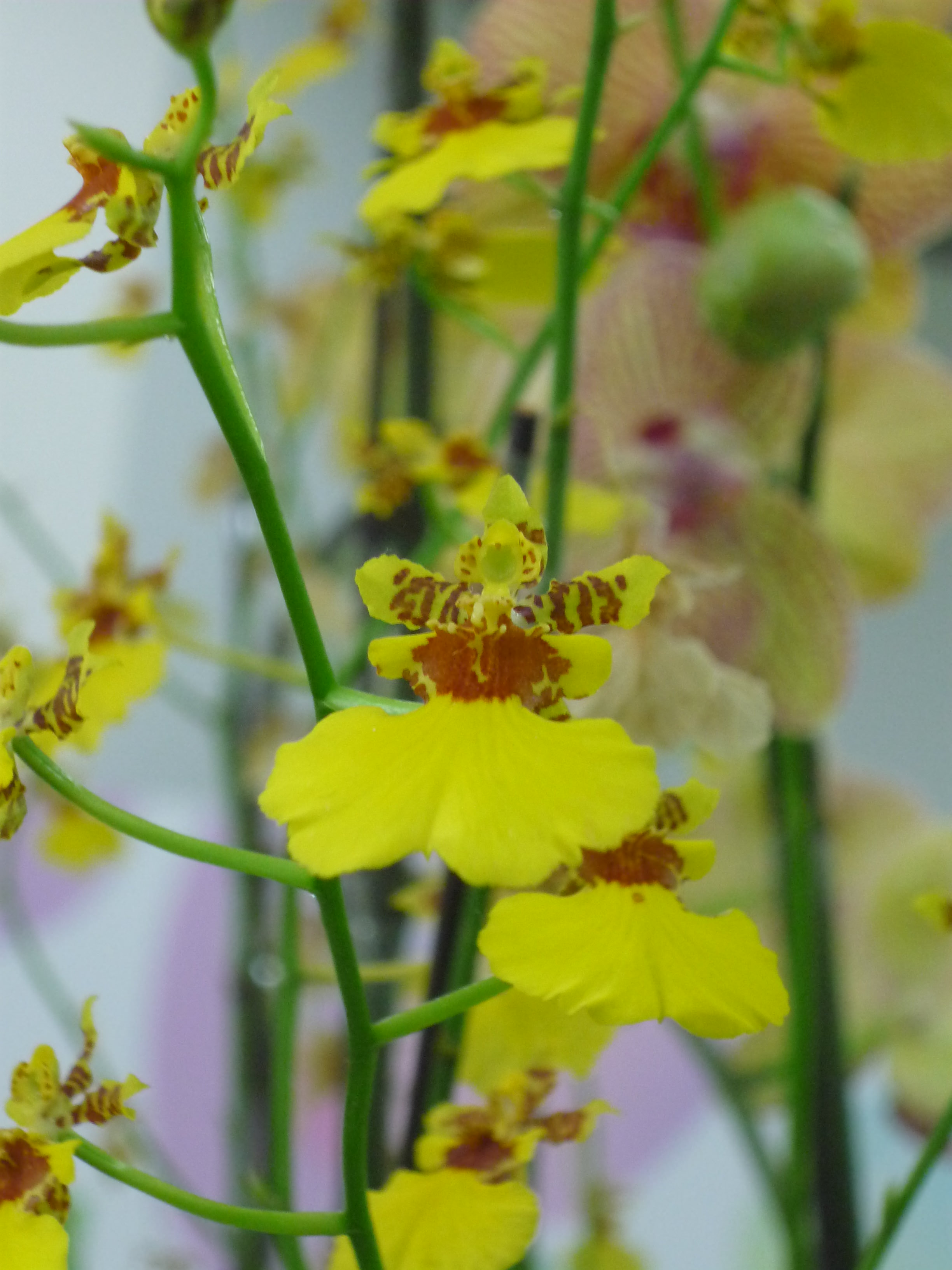
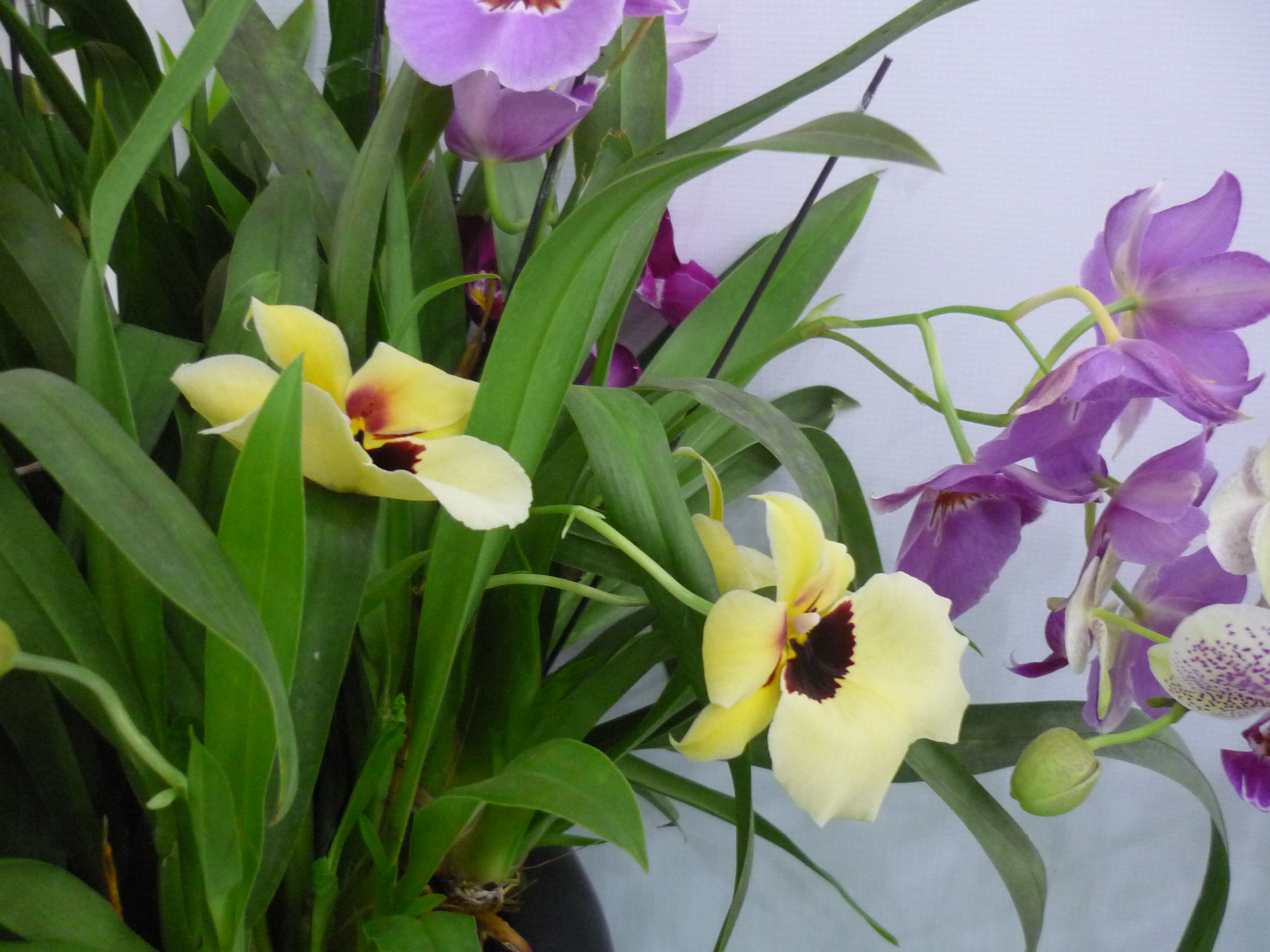
Oncidium sphacelatum

Oncidium sphacelatum

Doritaenopsis Sin-Yuan Golden Beauty

Doritaenopsis Sin-Yuan Golden Beauty


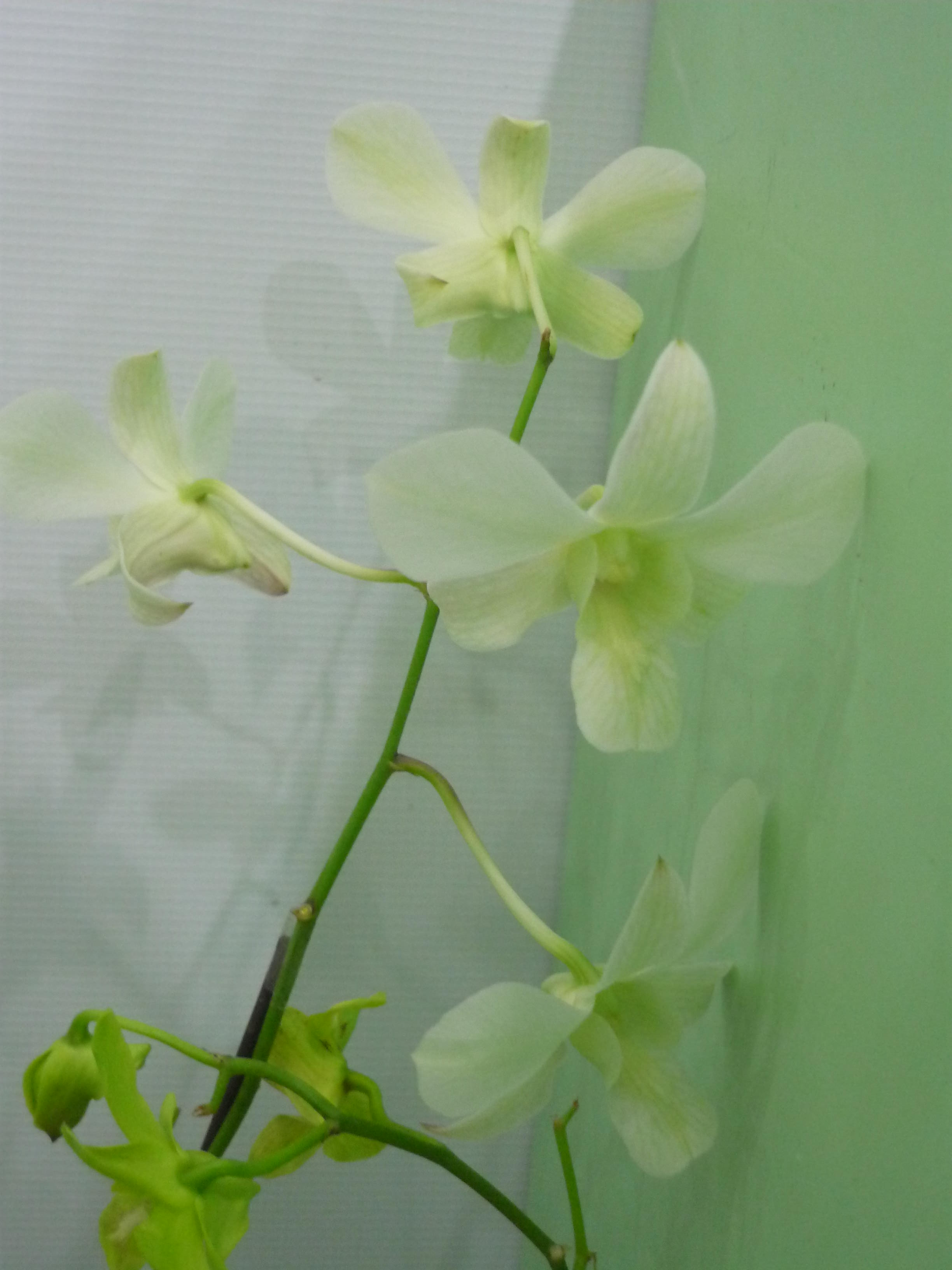
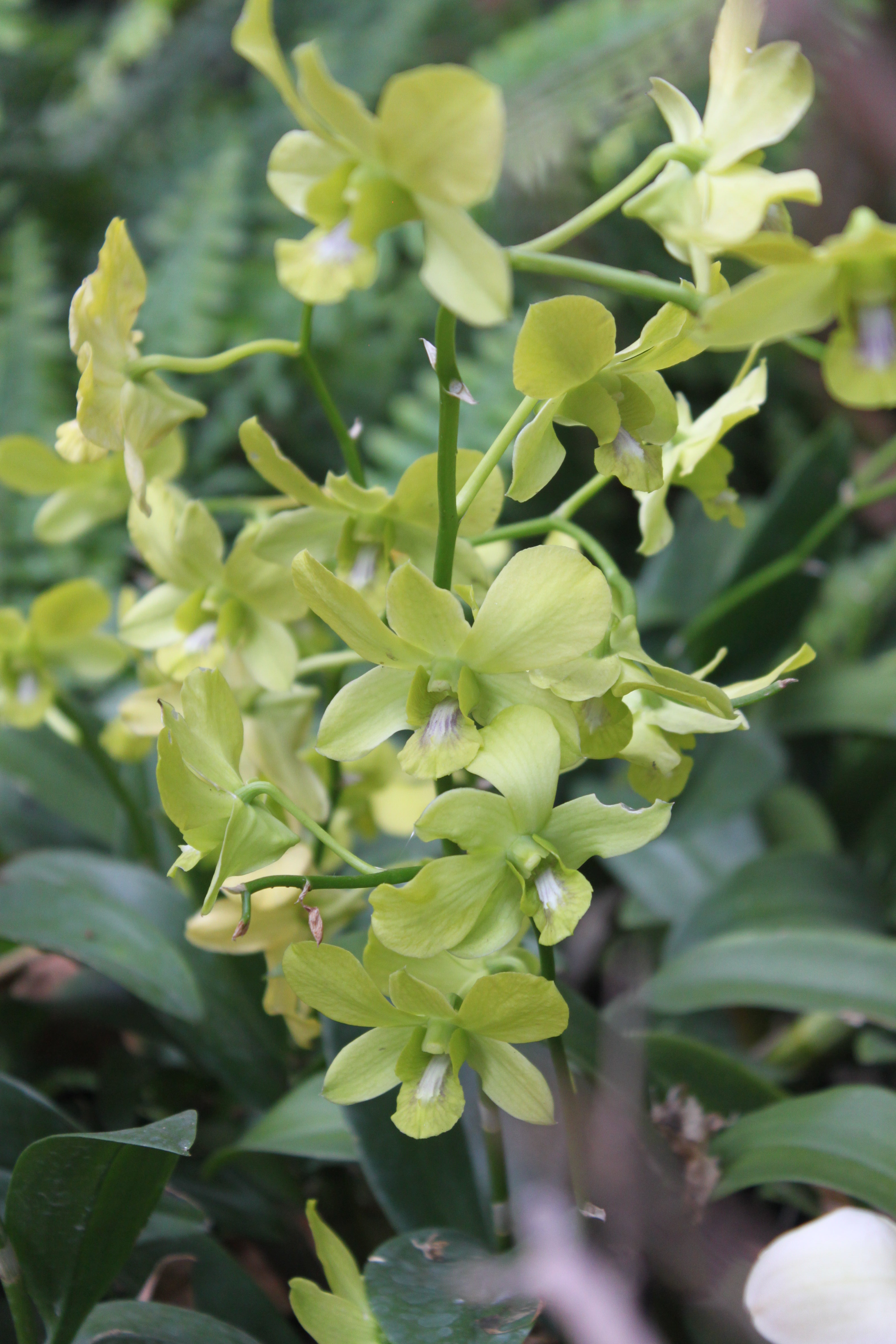
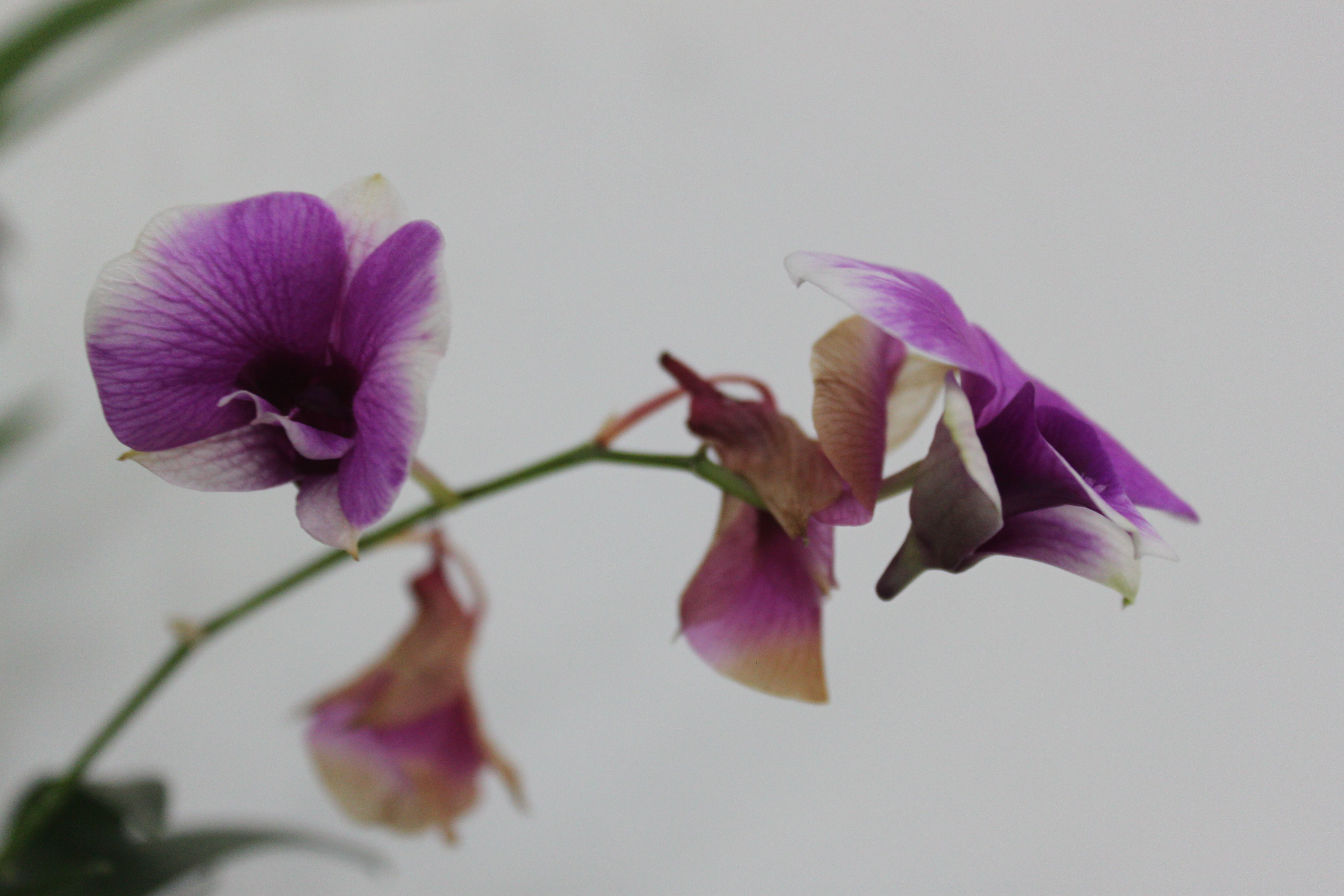
Dendrobium orchid

Dendrobium orchid

Dendrobium farmeri

Dendrobium farmeri


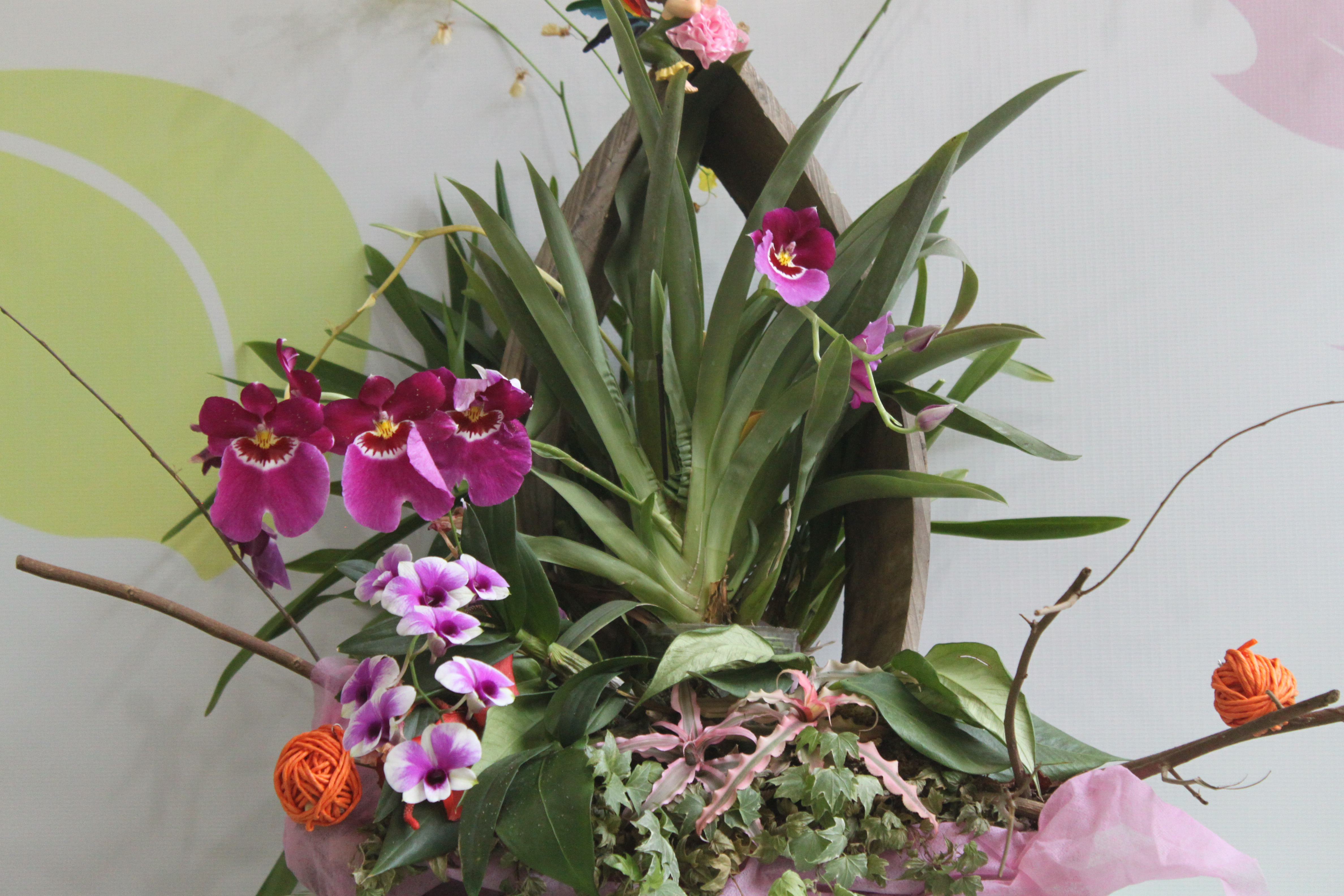
Miltoniopsis Jean Carlson

Miltoniopsis Jean Carlson

IMG_4513


Miltoniopsis orchid

Miltoniopsis orchid

Miltoniopsis orchid

Miltoniopsis orchid

IMG_4532

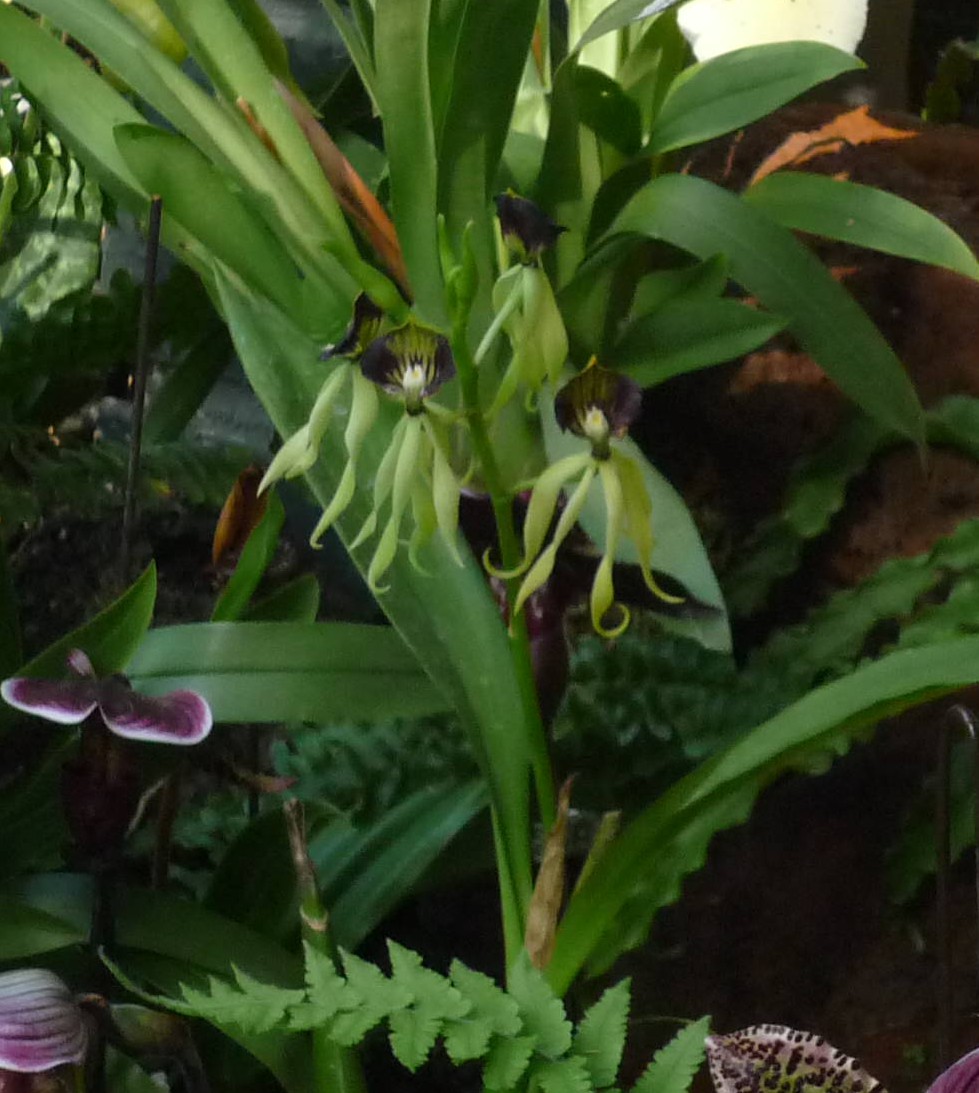
Prosthechea cochleata

Prosthechea cochleata


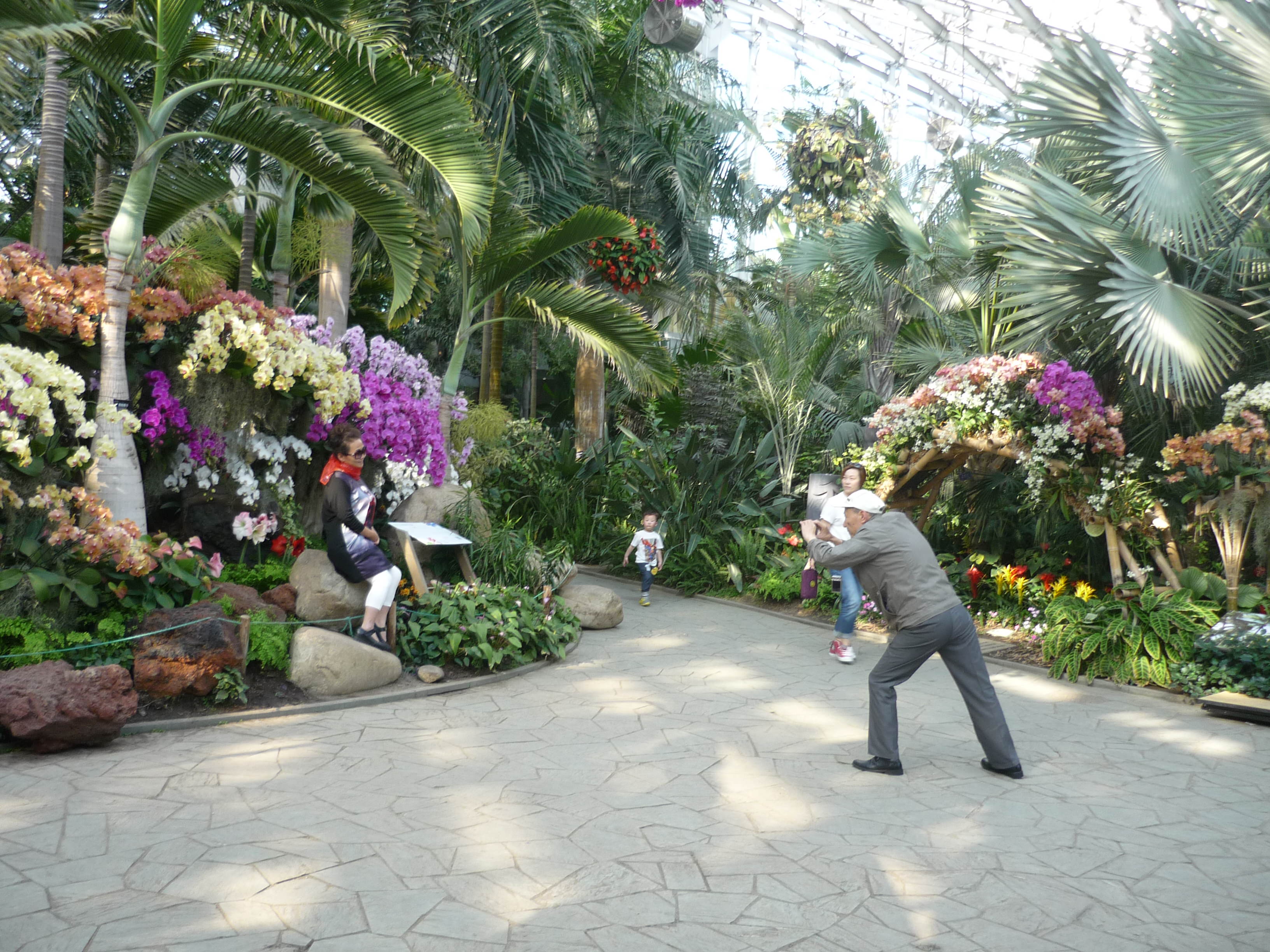
The Big Conservatory Displays

To show you what all these orchids looked like in the main Conservatory displays:

P1070675

This display was entitled Fireworks

This display was entitled Fireworks

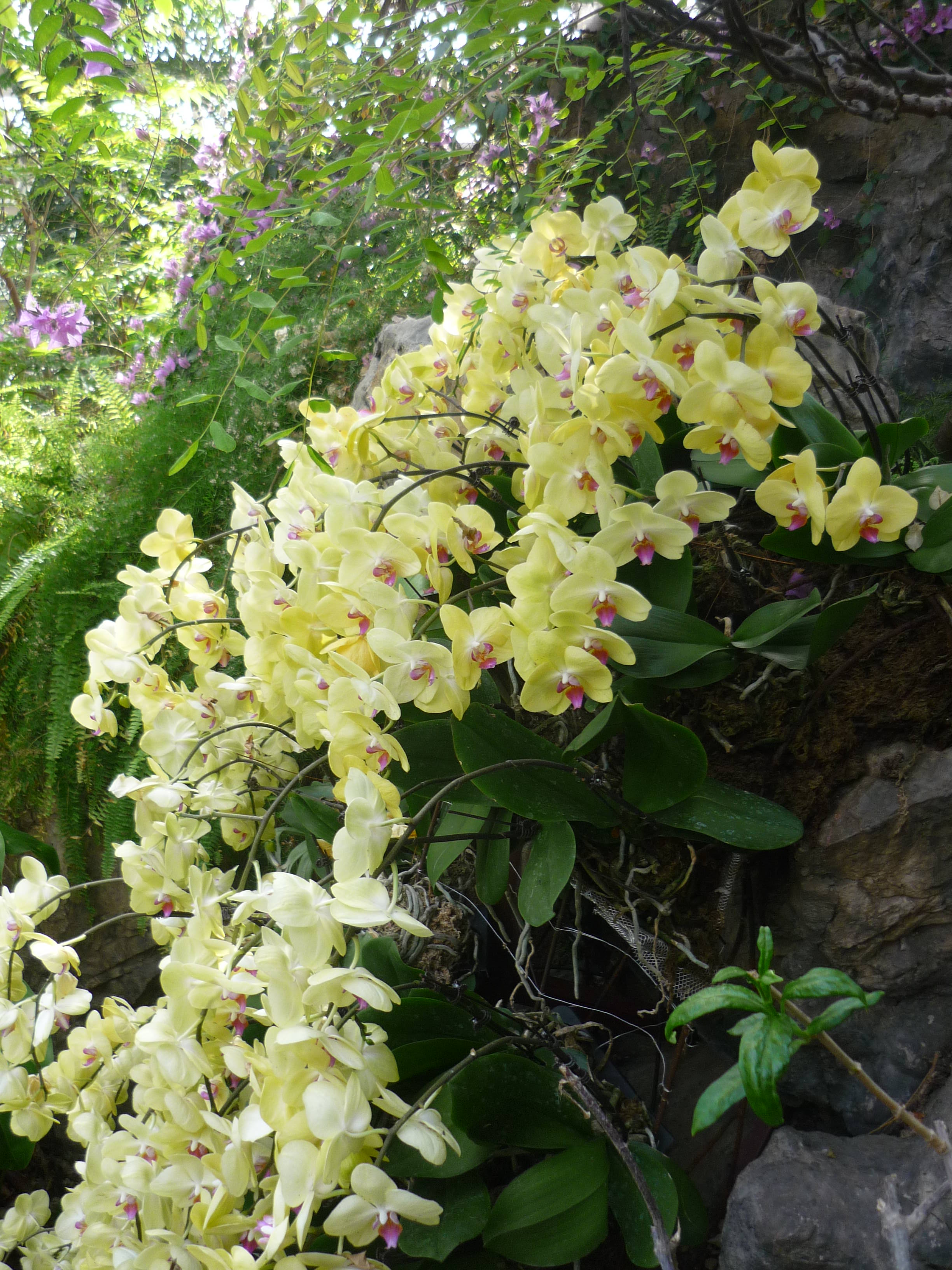
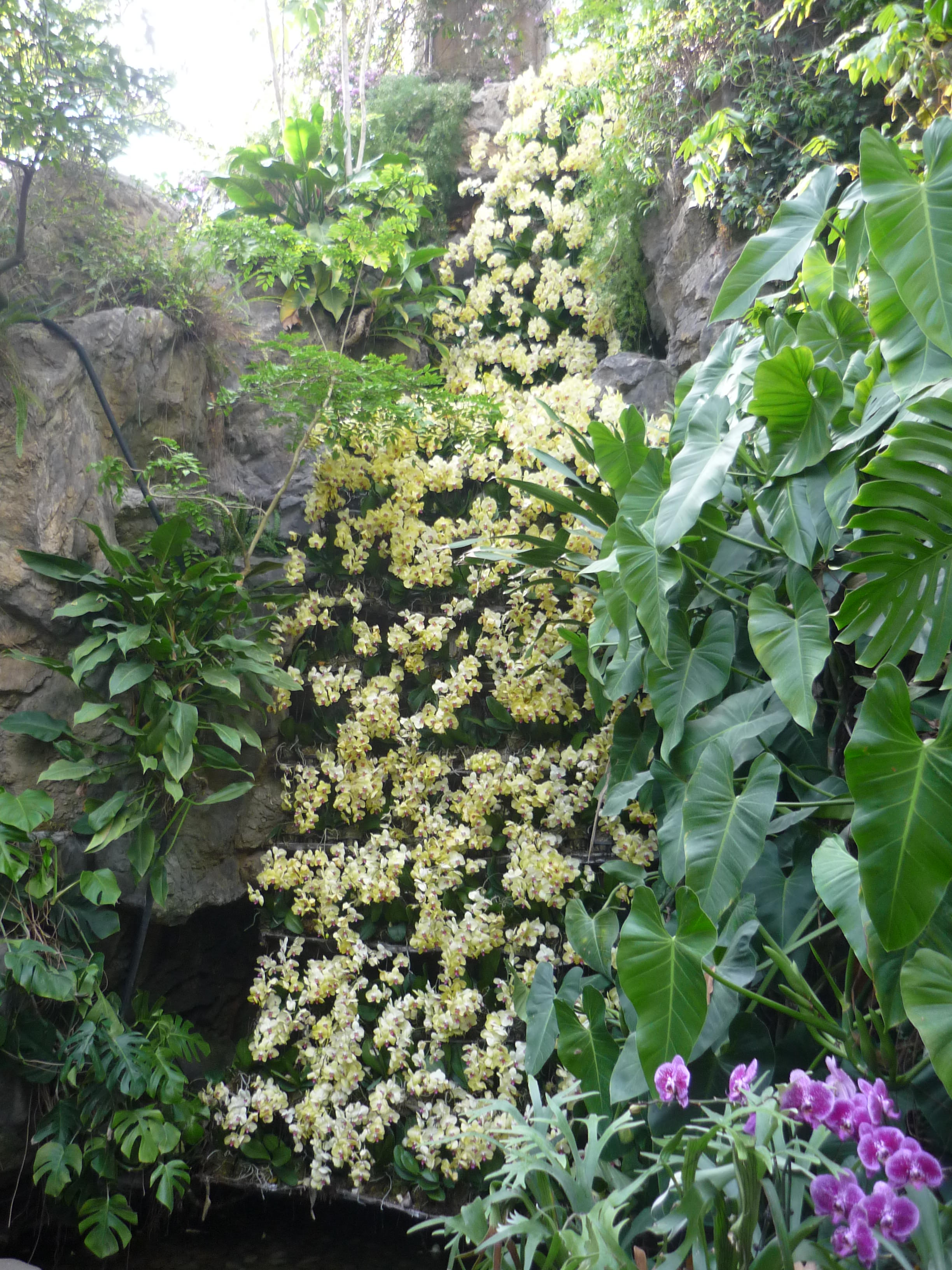
IMG_4504IMG_4515 These yellow Phalaenopsis were rows and rows of plants planted in slowly descending rows down the rock face.

P1070651P1070653

IMG_4503

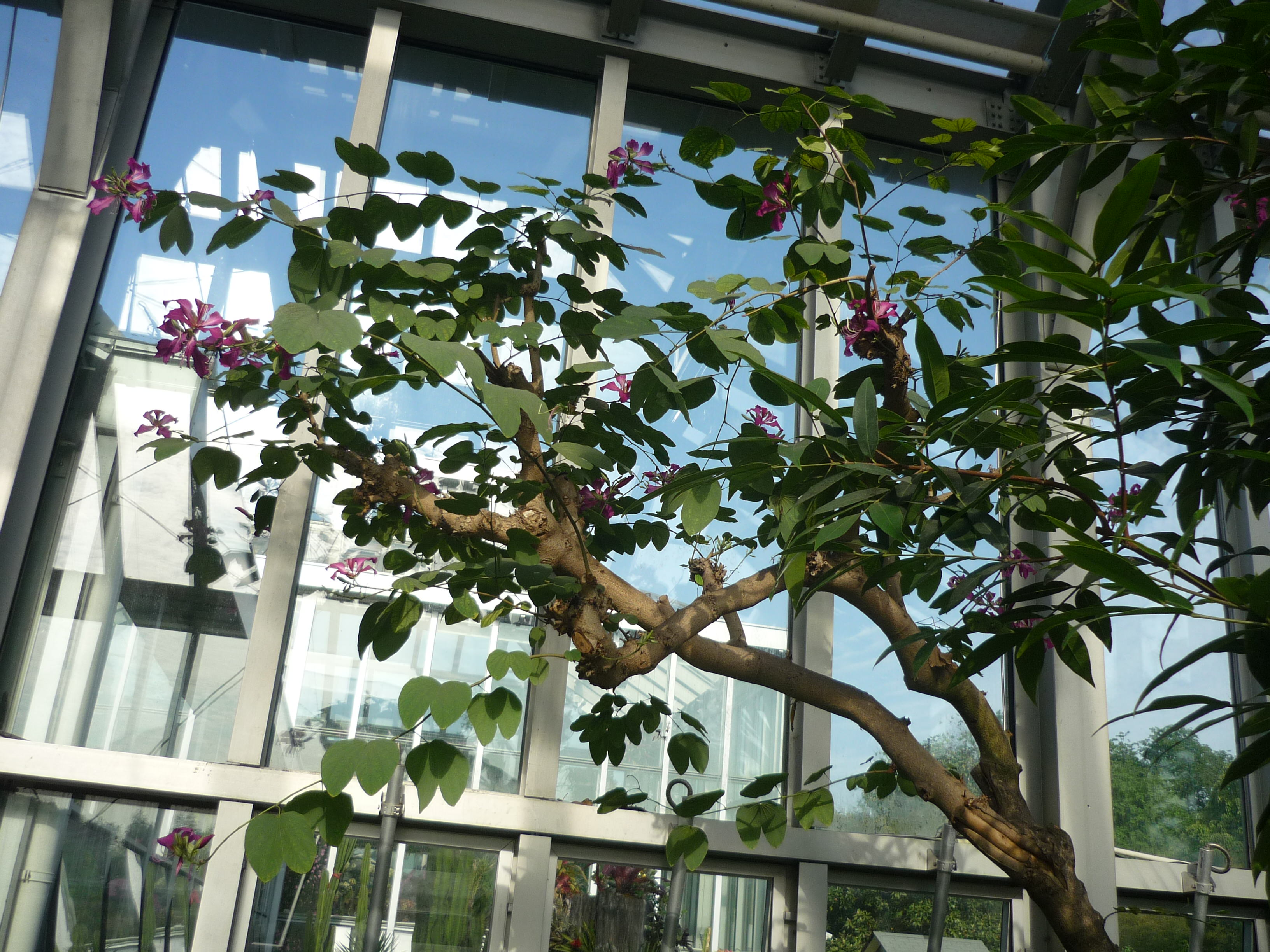
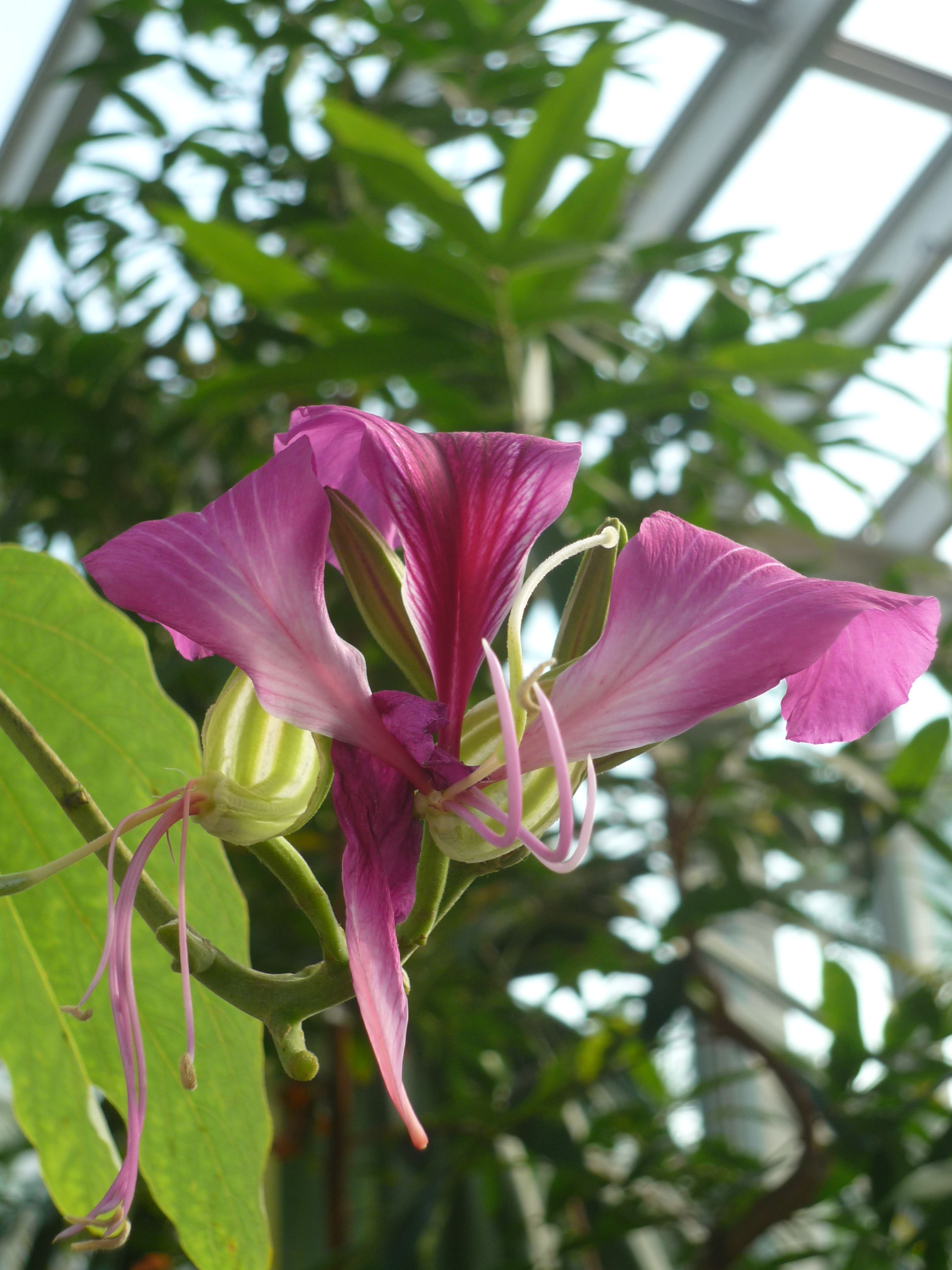
Bauhinia, The Orchid Tree

Finally in the second conservatory I came across this Bauhinia, the orchid tree which has stunning pink flowers and after whom one of my daughter’s special friends is named.P1070697P1070698

Posted in Garden, Xuhui | Tagged , , , , , | 2 Comments

Being all European for a Change

Pond on Golden Street

Pond on Golden Street

Munich Beer Garden

Munich Beer Garden

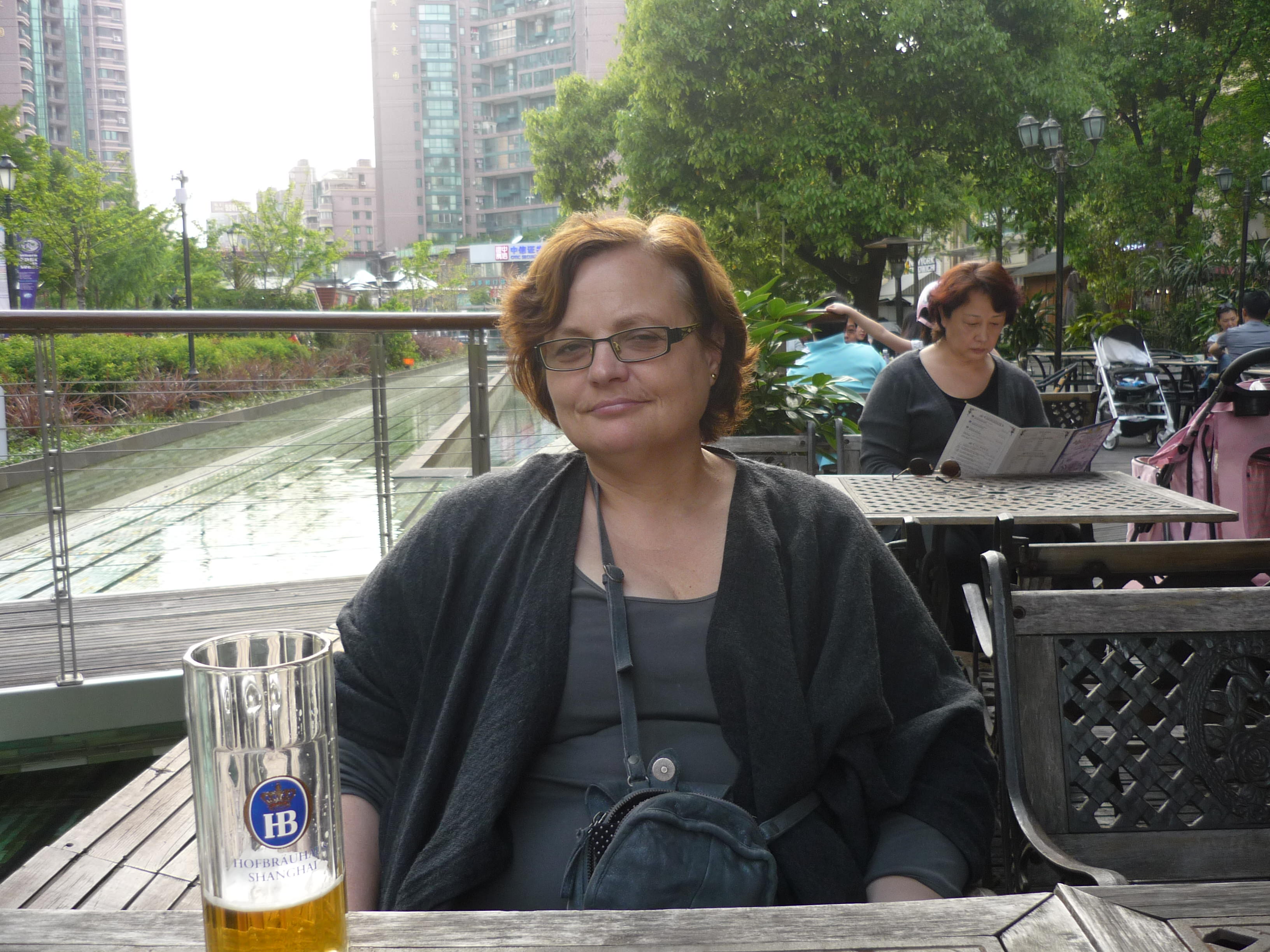
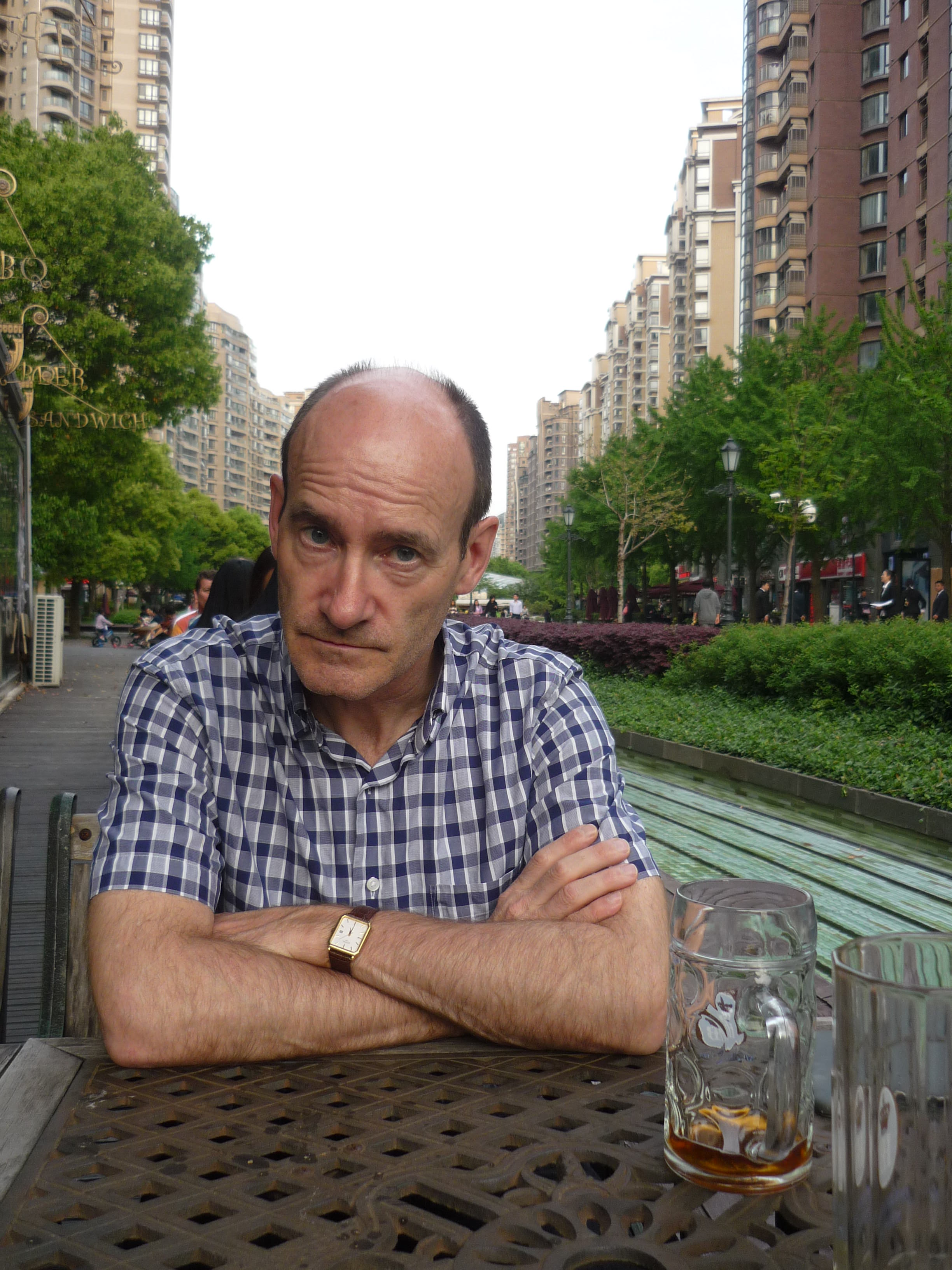
On the Saturday of the May Day weekend Richard was having to work at home most of the day, so towards the end of the afternoon, when he had decided that enough was enough we went out of the apartment and walked the 5 minutes or so to Golden Street in search of some much deserved rest and recreation.  Down the centre of this pedestrianised road is a long thin pond and along side it you can find little pockets of Europe.  We hadn’t tried it before, but now in the late afternoon sun was a good time to try out the Munich Beer Garden, which sells beer in traditional German-sized litre glasses, so we sat and mellowed and watched the world go by.

I'm already rather mellow, I think

I’m already rather mellow, I think

Richard's got a little further to go

Richard’s got a little further to go


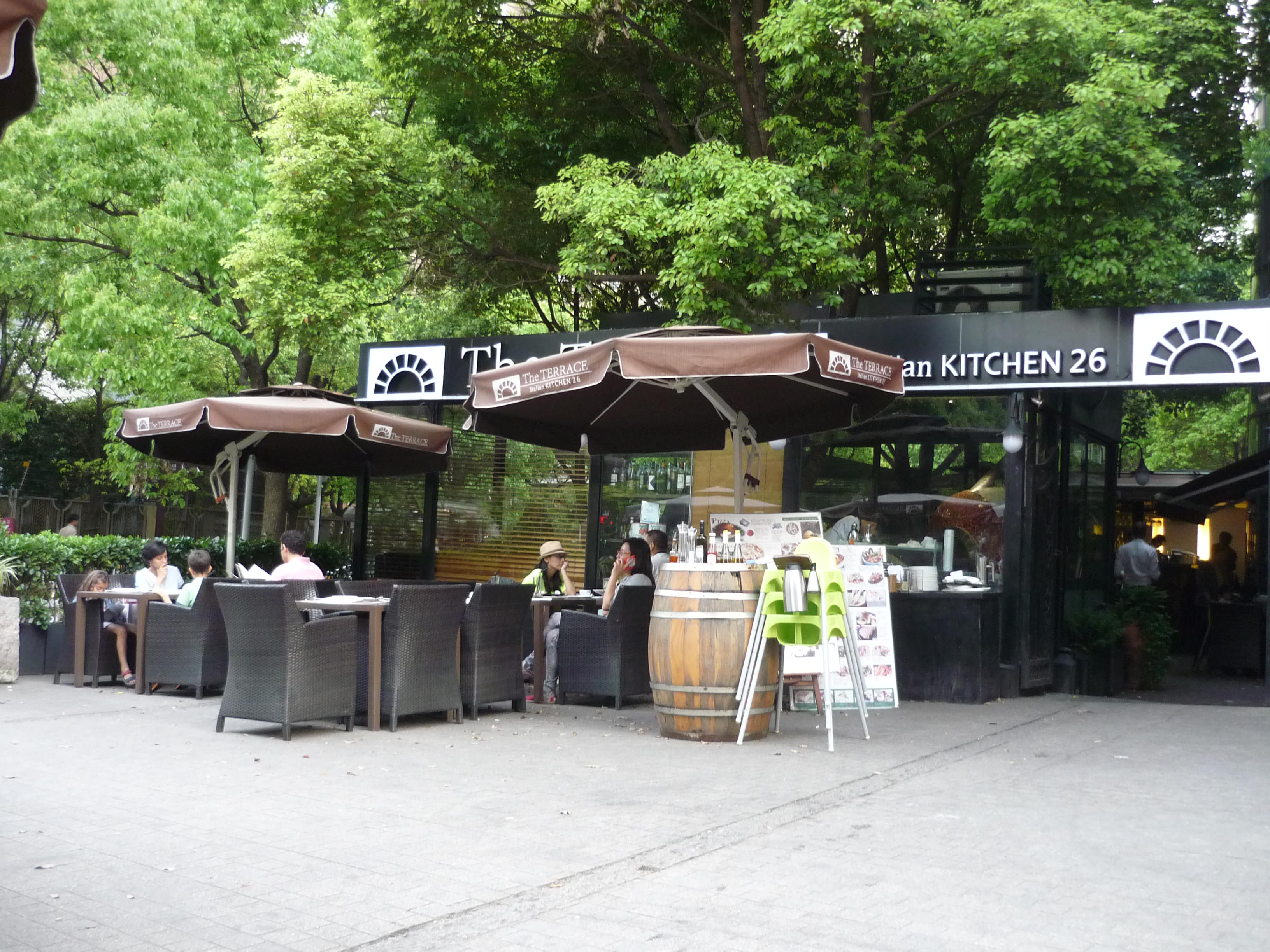
Now the German beer did such a good job at relaxing us that we decided that we would continue along our European theme and go and check out the Italian restaurant further

The Italian Kitchen, Golden Street

The Italian Kitchen, Golden Street

The Italian Kitchen's Pizza Oven

The Italian Kitchen’s Pizza Oven

down the street, called The Italian Kitchen.  I walk past it most days on my way to the metro station and had seen that it has its own Pizza oven, so I was intrigued to see whether the pizzas were any good. We found a table outside and the place was already busy, mainly with local Koreans and Japanese families with their children and we settled down to order.


P1070416

Now I think he's got there

Now I think he’s got there

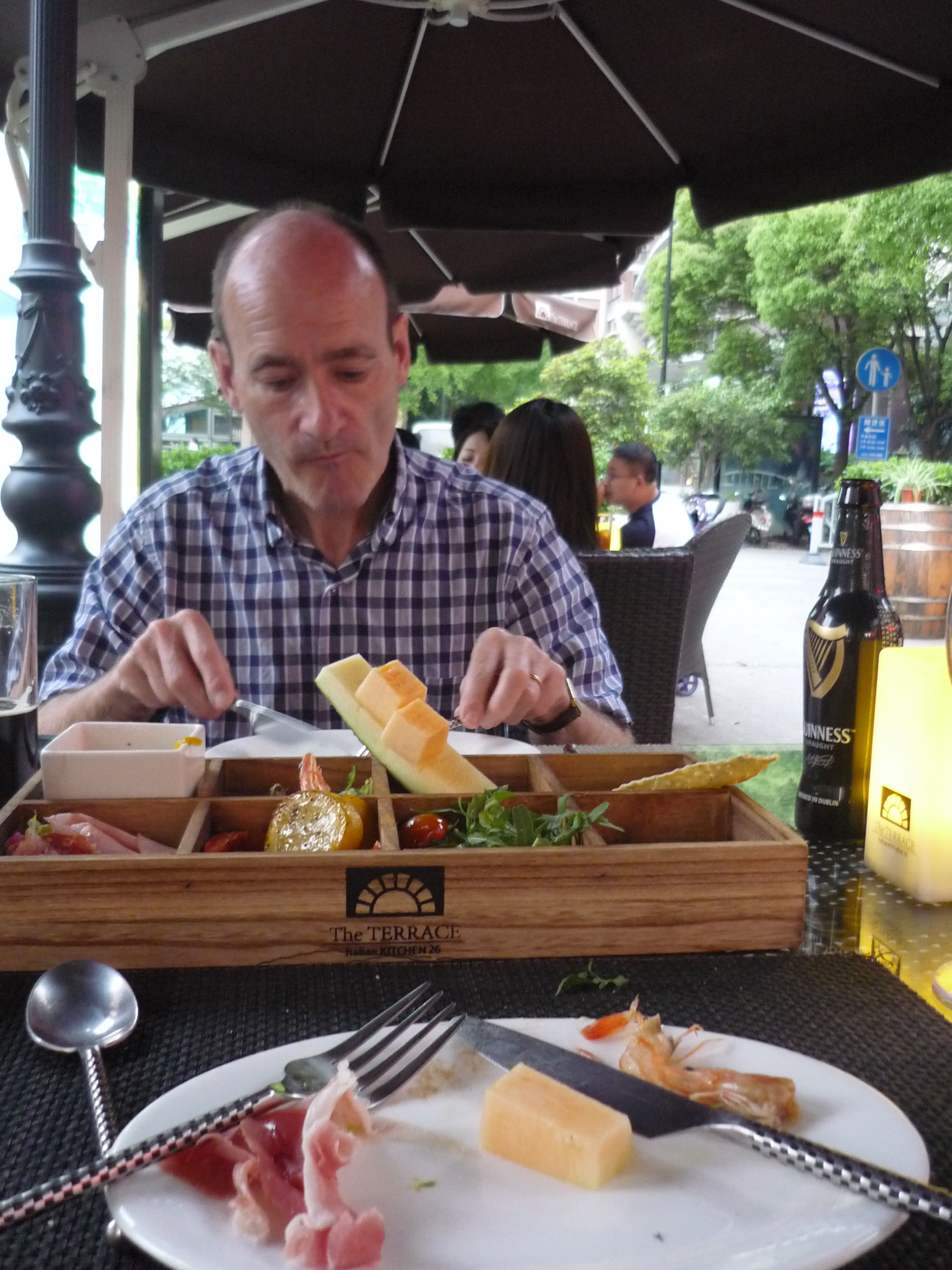
We chose antipasti for two which came in a wooden box with typical Italian food such as Parma Ham, Mozzarella, melon and olives.  It was all very tasty and very authentic.  After that our pizzas came.  Now I

Antipasti in a wooden box

Antipasti in a wooden box

have generally been rather disappointed by the quality of western food available in Shanghai and our natural curiosity and our experience has tended to push us towards if not always Chinese food, then at least East Asian.  But here for the first time in China I had a really good pizza.  It was a standard order for me –  parma ham topped with rocket (arugula) a combination I first had at the Pizzeria San Domenico in Fiesole overlooking Florence with Richard’s sister-in-law’s sister who lives in the family home in the street below, the via delle Palazzine, and overlooking more or less, it turns out, Andrea Russo’s family home at the bottom of the hill. (He is now in charge of the Town Hall volunteers at Fordwich).  That is my standard for the best pizza and for the first time in

Prosciutto and Arugula Pizza

Prosciutto and Arugula Pizza

Shanghai I found a restaurant that could deliver a pizza that was a good approximation to the real deal.  The pizza tasted slightly smoking as it had been cooked in the pizza oven, and basil had been laid across the pizza base under the cheese and tomato topping.  In one mouthful I thought I got a taste of aniseed which made me think that some of the basil was in fact Thai Basil and not Neapolitan, but it was only one mouthful, so I’m not sure. We left mellowed, satisfied and sated.

Posted in Changning, Restaurant | Tagged , , , , | Leave a comment

Lolita Fashion

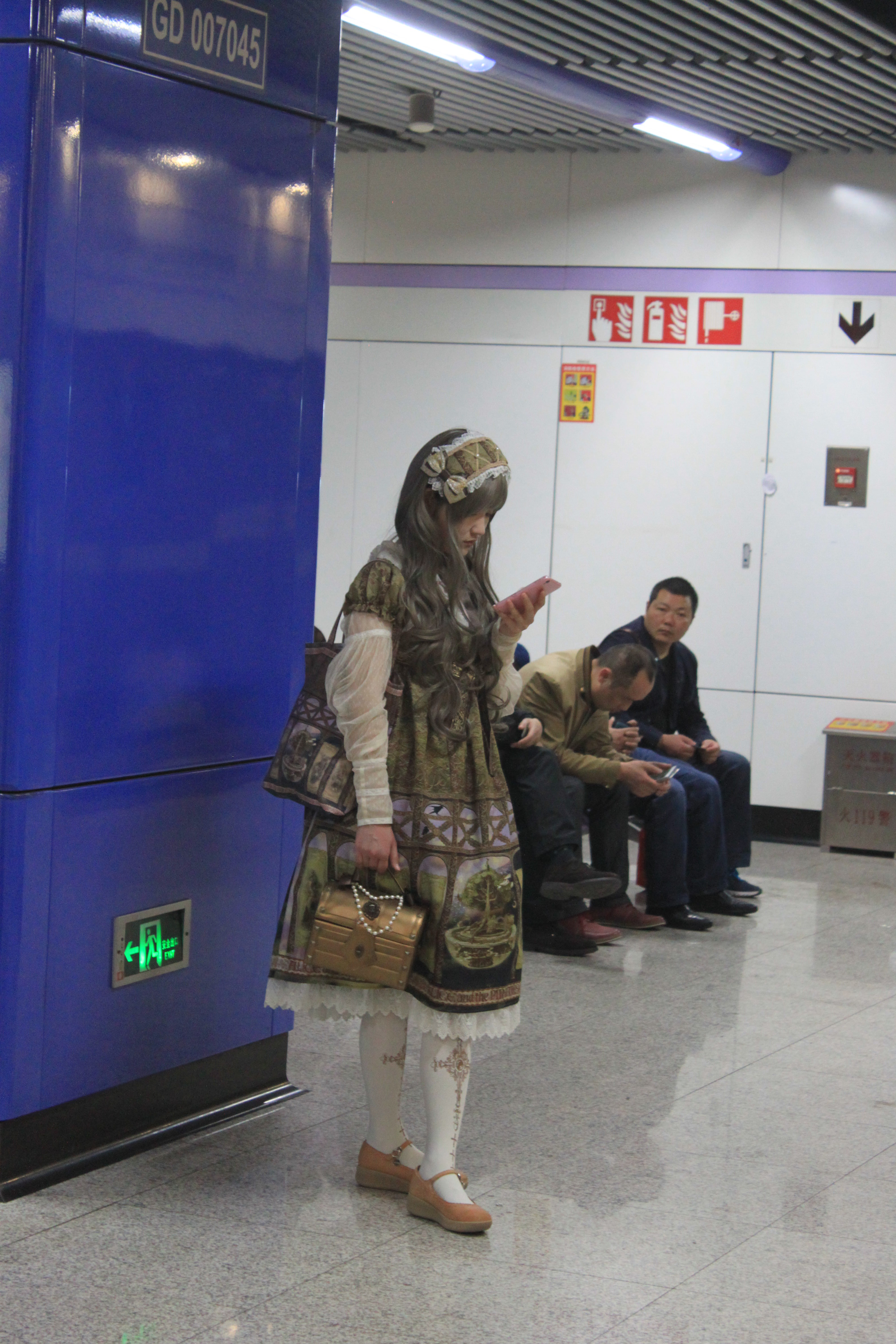
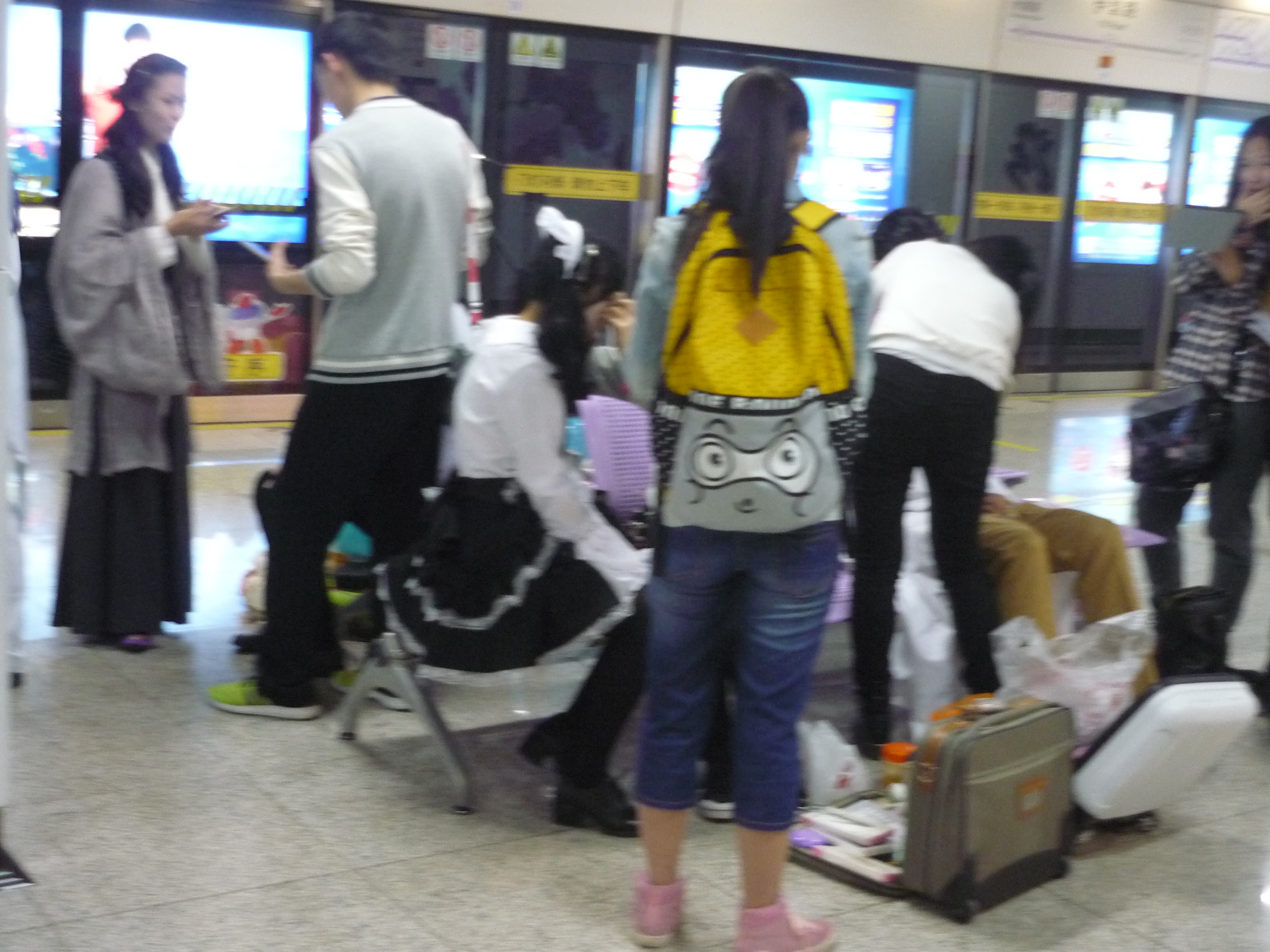
At Yilli Lu Metro Station

At Yilli Lu Metro Station

I had come across a number of youngsters dressed in extraordinary clothing – mainly at weekends it has to be said – as I wandered around Shanghai.  First of all it was the girls that struck me first and my first reaction was one of feminist horror.  But my daughter put me straight – this is Lolita Fashion, a phenomenon that originated in Japan in the 1970s and has since made its way around the world.  I’ve come to regard it now as similar to the Punk costumes of my youth – people, particularly teenagers, just like dressing up.  And so do the older Japanese.  A lady from Kyoto said that she liked wearing her kimono because she liked getting dressed up.  The phenomenon does however seem to have a very odd name as far as I’m concerned.  Lolita for me is a mid 20th Century book about child abuse.  Is this fashion phenomenon named after the book? I’m not sure, but I’m certainly still rather disturbed by the thought that it might be.

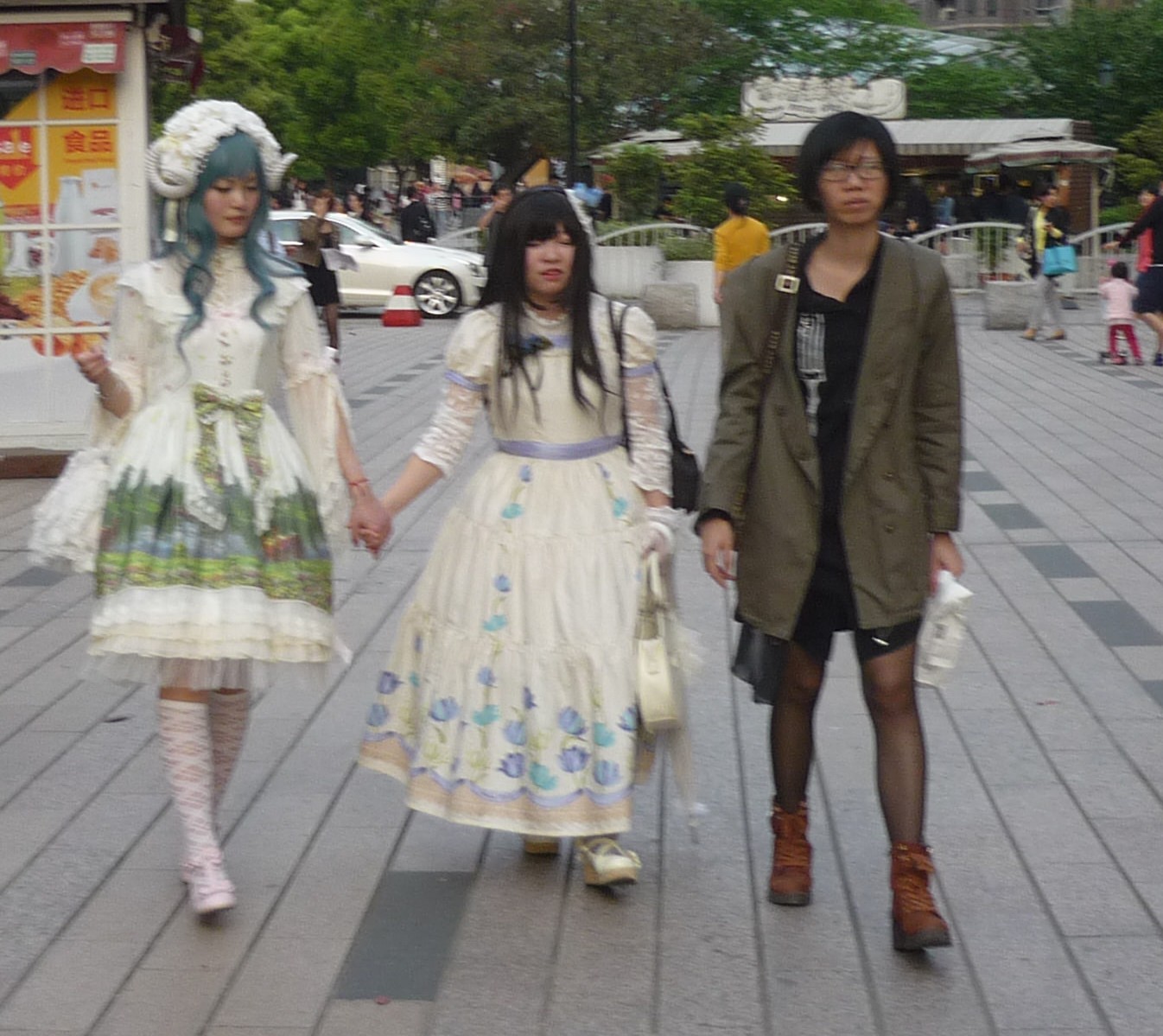
Shirt Lolita Fashion Fans on Golden Street

Shiro Lolita Fashion Fans on Golden Street

A whole industry has been set up selling costumes and accessories and the youngsters take part in competitions which show off their interpretations of Lolita fashion.  I’ve seen groups similarly dressed at People’s Park and this group strolling down Golden Street just down the road from our apartment.  It started off with some Japanese dressing in Victorian-style costumes in a 1970s sub-culture, but now there are gothic, classic, sweet, princess, Shiro & Kiro (White & Black) Lolitas amongst others.

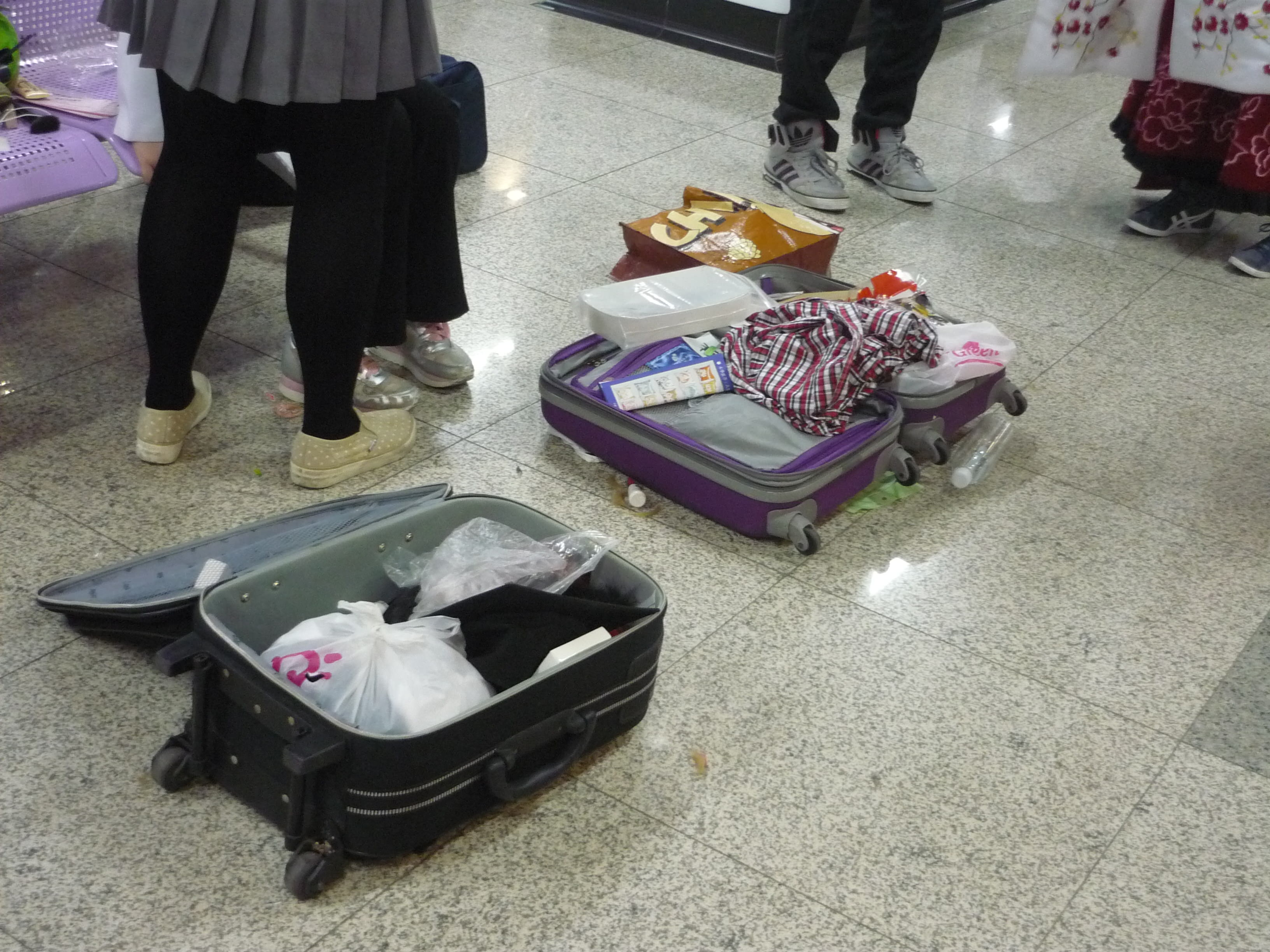
At our metro station the other day whilst we were waiting for the next train we wandered down the platform and came across a whole gang getting ready for an afternoon’s fun.

Suitcases full of Lolita kit

Suitcases full of Lolita kit

P1070436


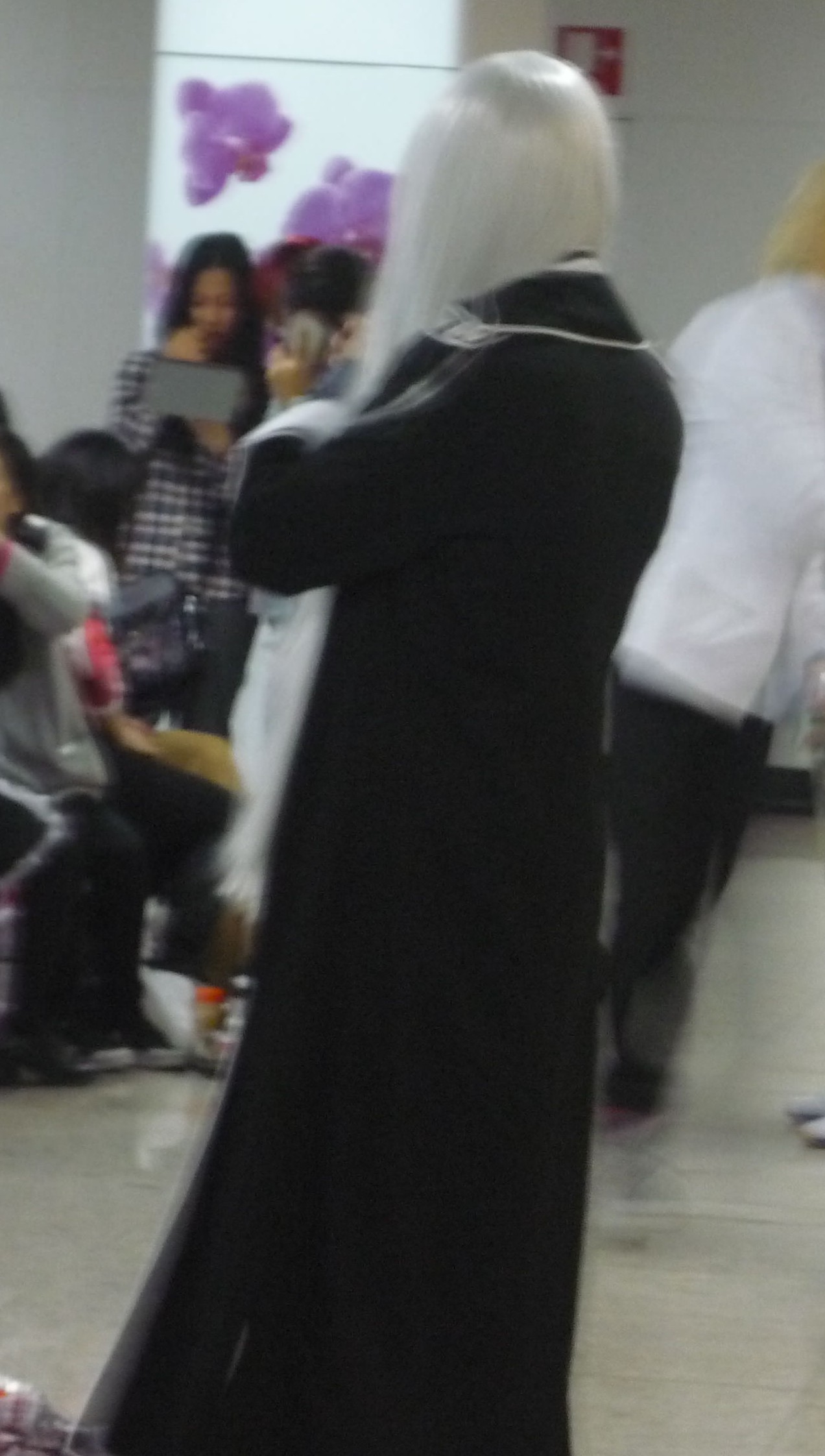
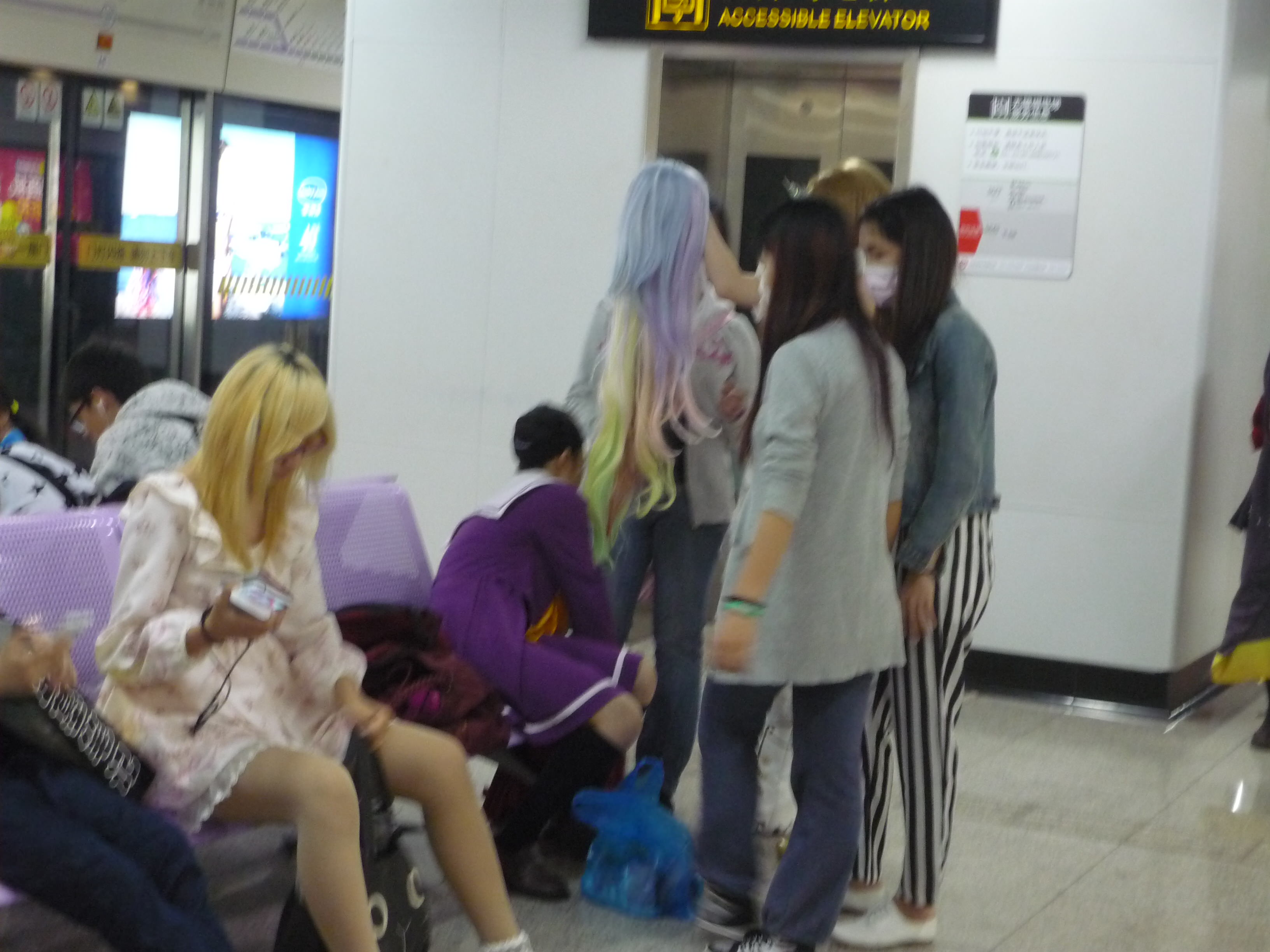
Wigs are important, as is make-up.

Wigs are important

Wigs are important


Make-up being applied

Make-up being applied


The boys seem to have a more individual approach to what this fashion means to them:

P1070438Blue-themed costume

but both sexes were taking a great deal of time and care getting ready, despite the fact that this was on the platform of a tube station

P1070430 P1070429

and why here on a Saturday afternoon at Yili Lu Metro station?  The answer, I think, lay upstairs, although I can’t be certain.  That and watching NHK World an English -language Japanese TV Channel on which I saw a programme about Lolita Fashion competitions.  It appears that part of the deal is to have your photograph taken in a suitable place and send it in to the Japanese TV programme.

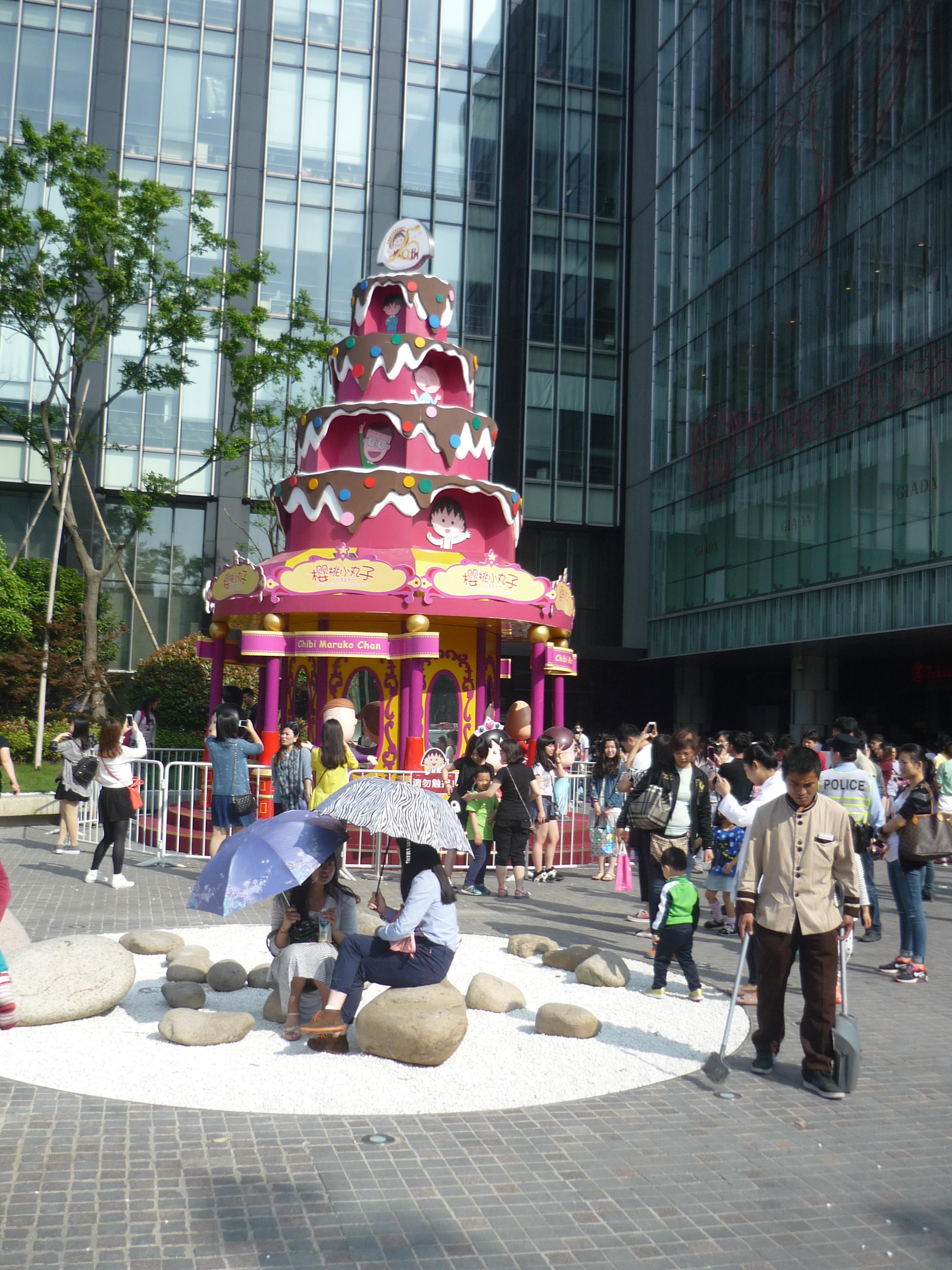
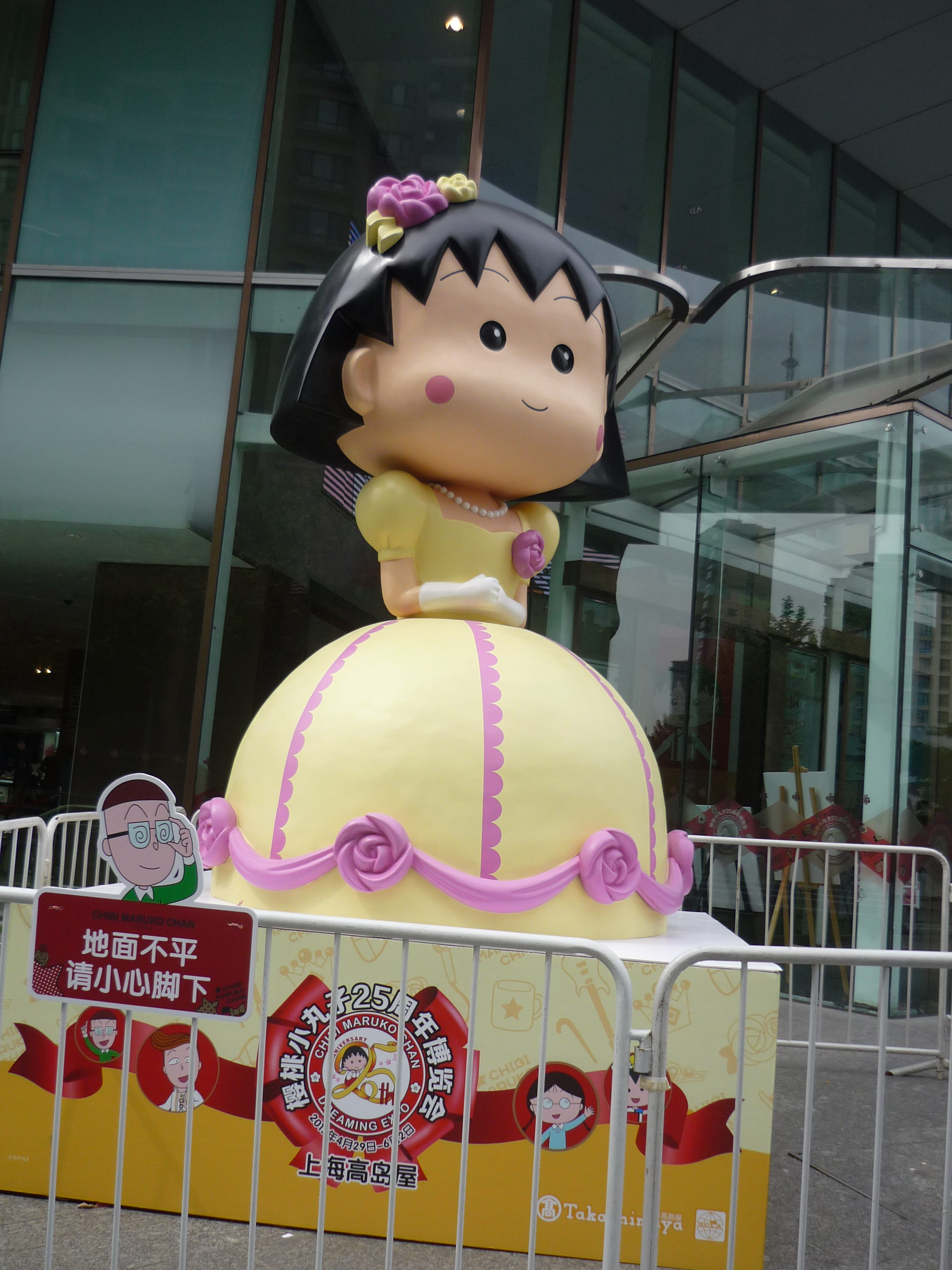
Upstairs at the Yili Metro station is the Shanghai Takashimaya department store, where  I went to investigate the following day, was a Chibi Maruko Chan Dreaming Expo of the apparently popular Japanese cartoon brand with outsize models outside the store and crowd barriers set up to manage the crush.

Chibi Maruko Chan Dreaming Expo Cake

Chibi Maruko Chan Dreaming Expo Cake

Chibi Maruko Chan Character

Chibi Maruko Chan Character

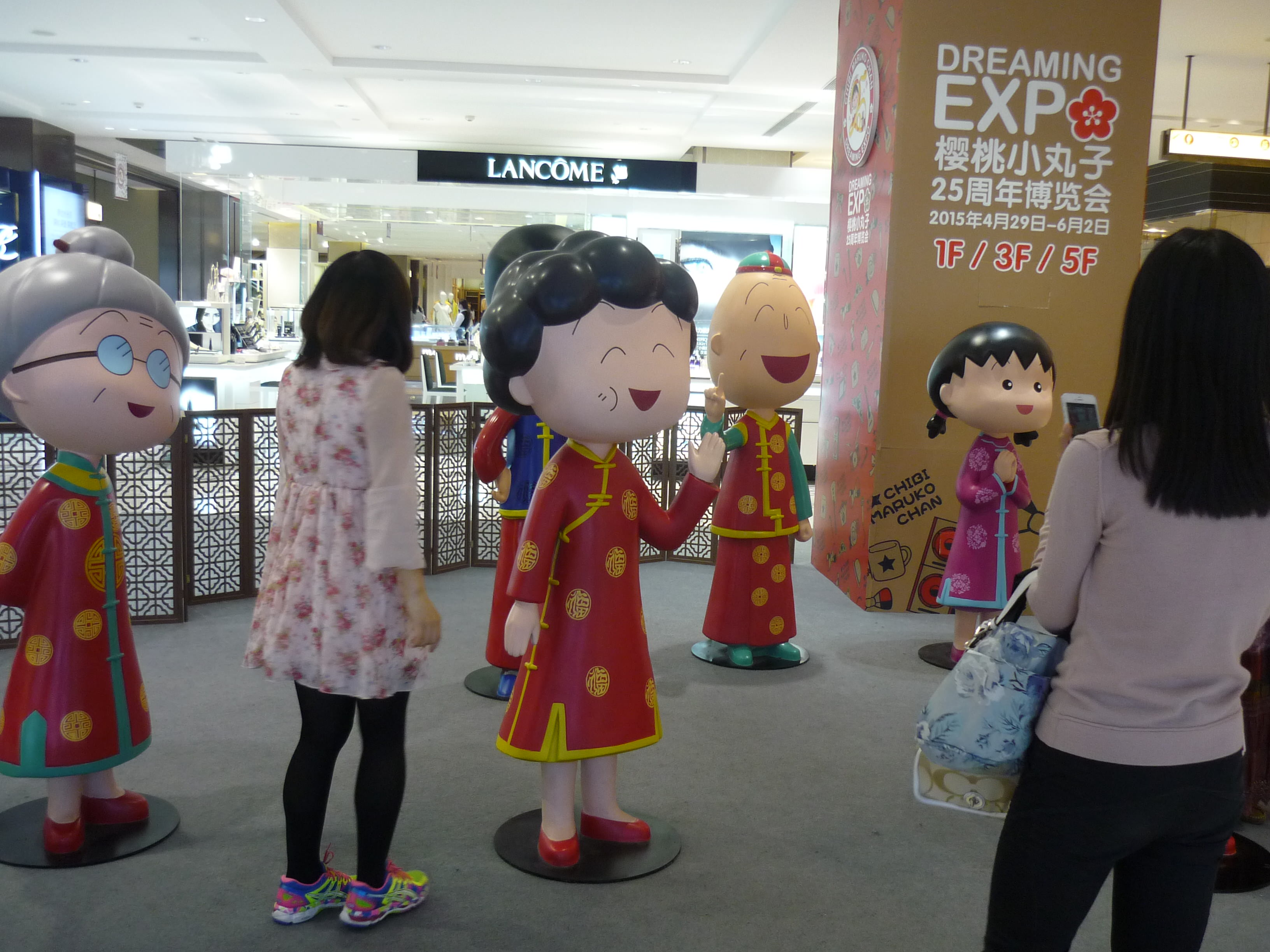
And inside the store, which is where I think  the Lolita fans must have been heading, were life-size models and scenes where children and adults alike were paying to go in and have their picture taken.


Life-size models of the cartoon characters

Life-size models of the cartoon characters

Cartoon sets

Cartoon sets


Having your picture taken in a location appears to be a particularly important East Asian phenomenon.  We have noticed it over the years that we have been visiting Hong Kong, China, Taiwan and Japan.  Whereas a European will often just take a photograph of a view or a building, it appears to be very important for East Asians to appear in such a view.  Perhaps it is to prove that they were there.  Anyway it often means that they end up ruining good pictures of mine by standing in the way.  And it is the reason why they invented the selfie-stick which is slowly making its way over to the west, but which we have seen in operation in Asia for quite a few years now.

Westerners can also sometimes be part of the subject of their photographs. I’ve seen my self being framed in a selfie by a girl on the metro and turned away suddenly when I realised what she was doing.  I don’t understand the attraction myself, of putting me or myself in a picture, but there you go.


Posted in Changning | Tagged , , | Leave a comment

May Day and Chinese Wine

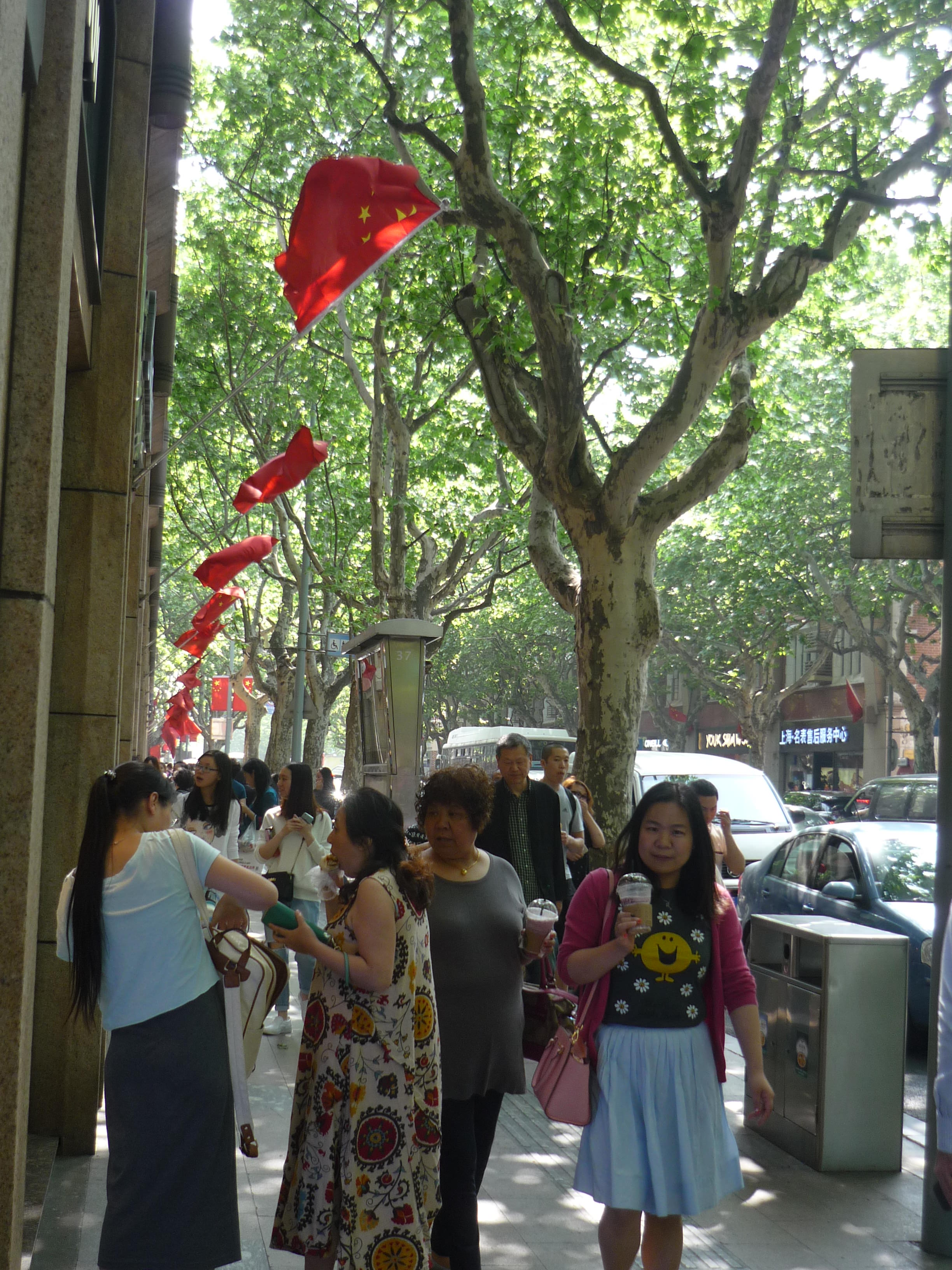
May Day Flags on Gubei Lu

May Day Flags on Gubei Lu

Red Flags on HuaiHai Middle Road

Red Flags on HuaiHai Middle Road

The weekend before we left for our holiday in the UK was a long one, as May 1st on the Friday is a national holiday in China.  The weekend before, Chinese national flags had been hung from the lampposts in Gubei Lu and other streets around Shanghai. Richard and I were

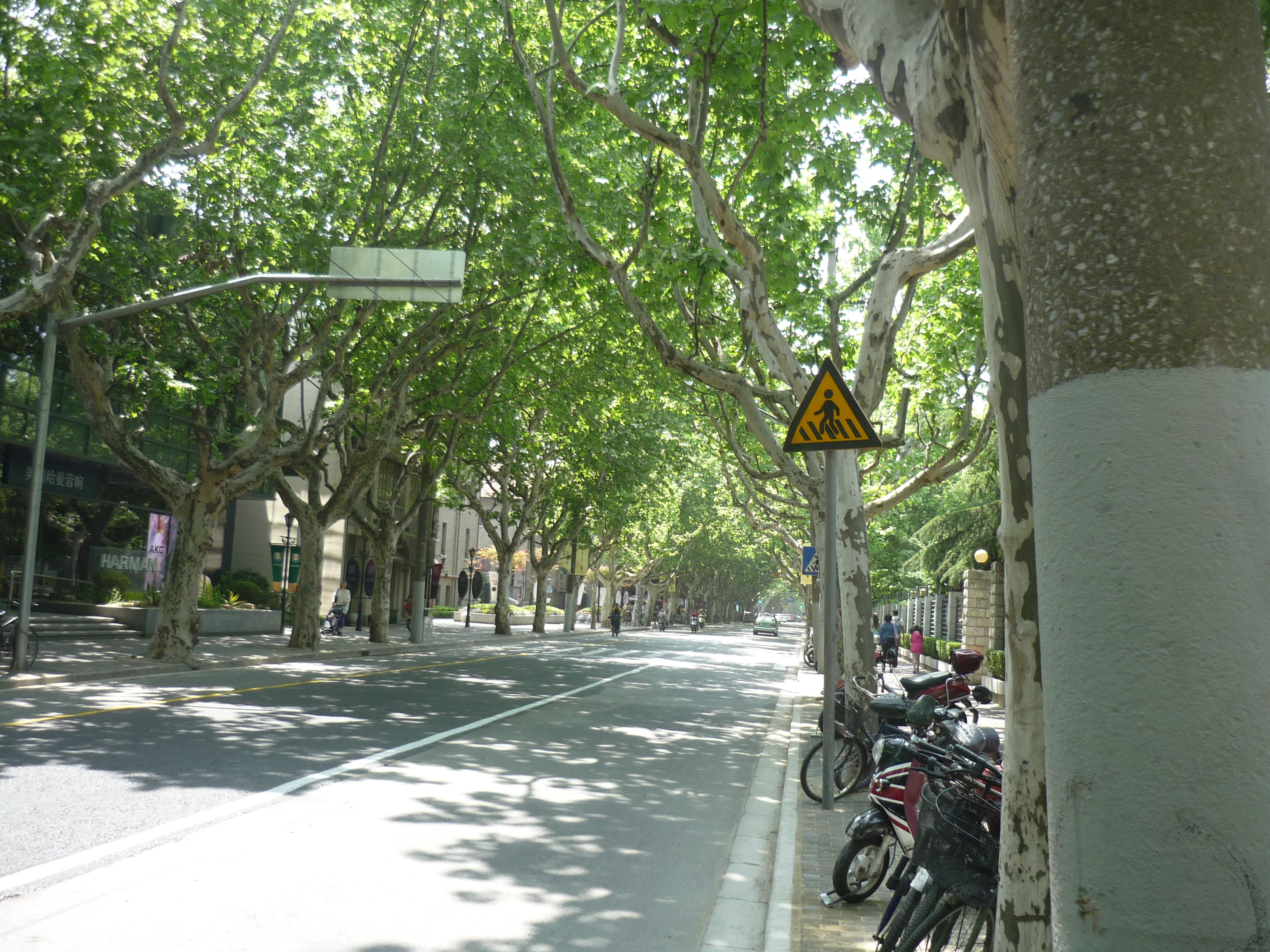
Fuxing Middle Road

Fuxing Middle Road

heading into the Old French Concession to buy some presents to take back to England with us.  It being Labour Day, nobody was working.  In fact for most of the day many of the major roads that are usually busy with traffic were practically empty.  A few weeks before, these London Plane trees had been shedding their pollen which had blown in great handfuls around the pavements, but now the leaves were fully open making the streets very shady and very appealing in the heat.  We

Sen Cha flavoured desserts

Sen Cha flavoured desserts

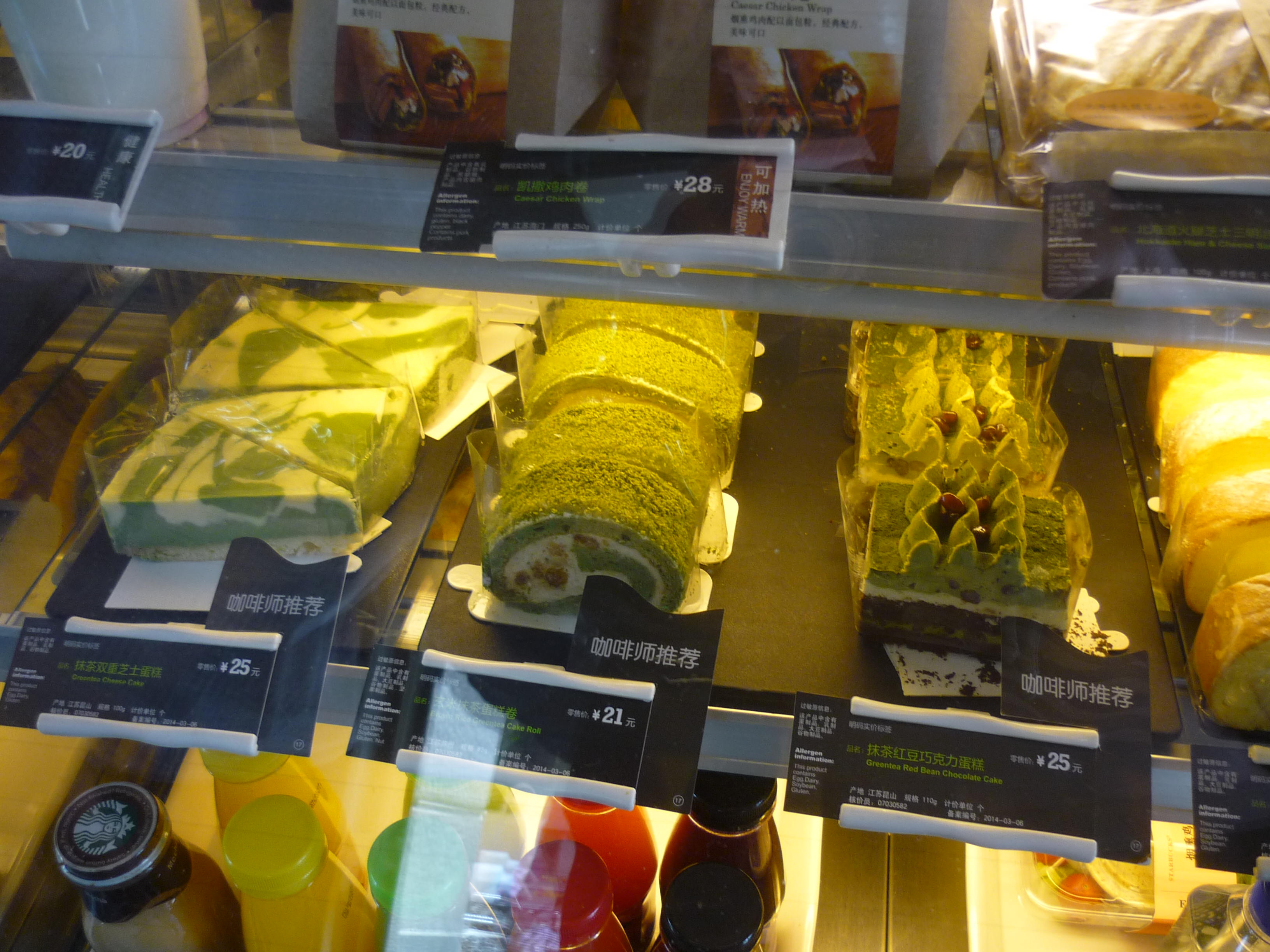
stopped for a snack at the local Starbucks and I was intrigued by the number of Sen Cha (Japanese Green Tea Powder) flavoured desserts they had for sale – the Sen Cha making the products green.  I chose a marbled Cheesecake and the tea added an interesting fresh flavour to the cake and lightened the often cloying texture.  Richard chose a normal cheesecake and we both had their new panna cotta drink.  I wouldn’t normally choose such a dairy-based drink, but it was surprisingly good.

Sen Cha marbled cheesecake

Sen Cha marbled cheesecake

I'm not the only one who photographs food

I’m not the only one who photographs food


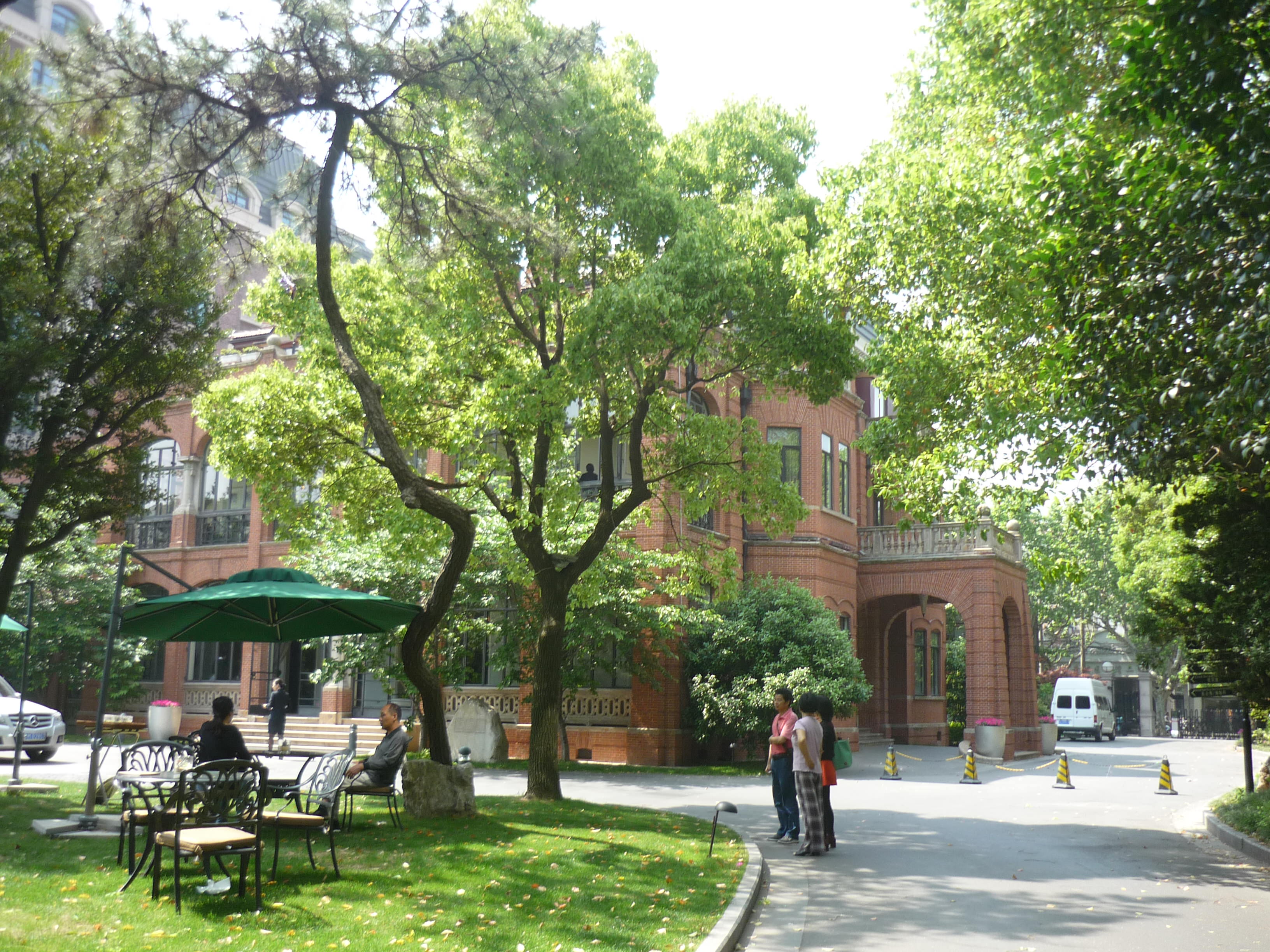
We had read in our guidebook that it was worth visiting the grounds of the Intercontinental Rujin Hotel, which was originally the early 20th Century home of the Morris family, owners of the North China Daily News.  Mr Morris raised greyhounds in the grounds during Shanghai’s Art Deco heyday and raced them at the Canidrome dog track across the road.  The building escaped the more usual level of destruction during the Cultural Revolution because apparently at the time it was home to a number of high-ranking party officials.

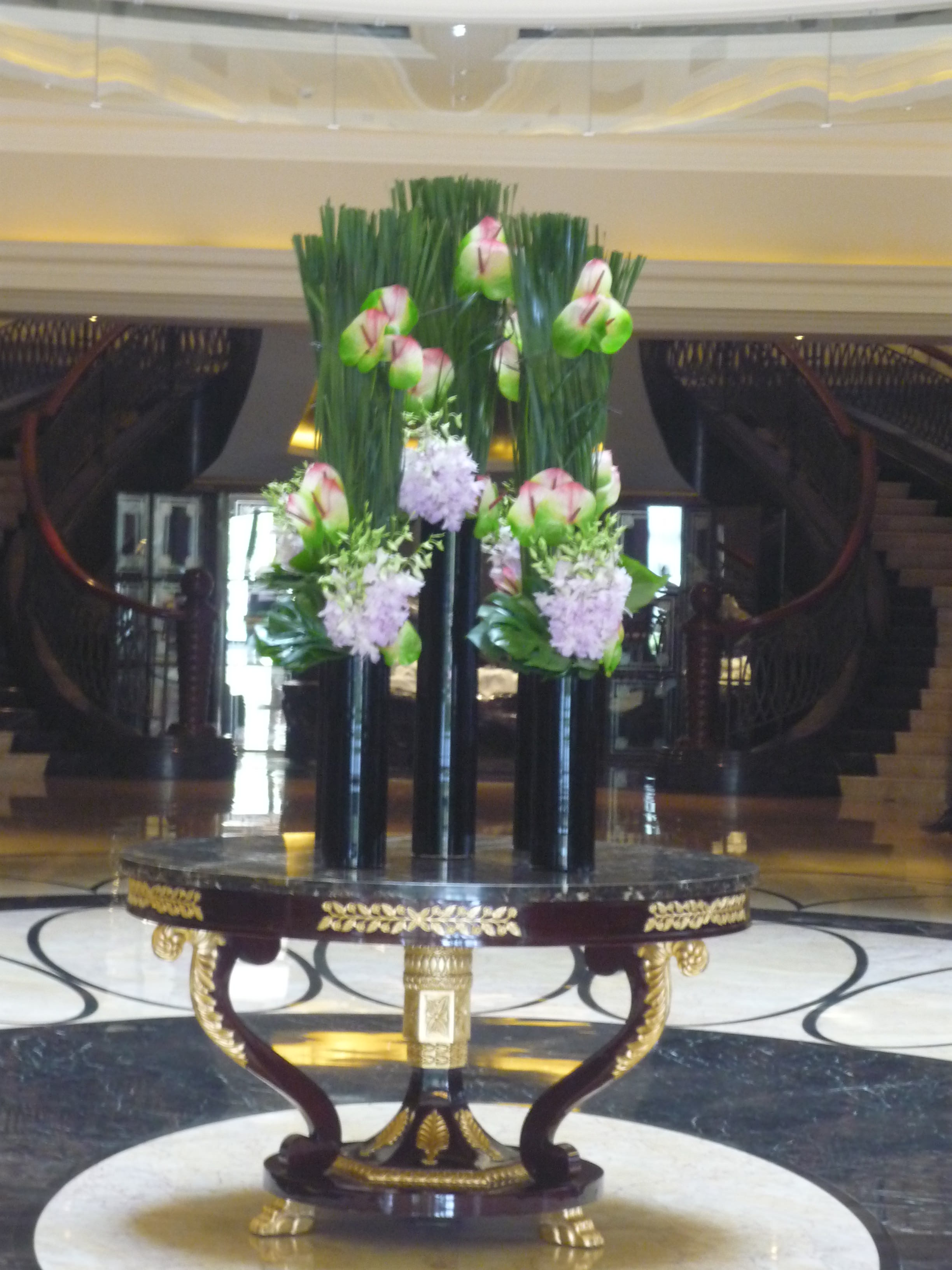
P1070459 P1070458 P1070457 P1070454 We were invited inside by the door man (I think that was because I was wearing a dress and had a tasteful floral sun hat on), so we had a chance to have a look at the sumptuous atrium, with its grand floral display:

Atrium of the Intercontinental Rujin hotel

Atrium of the Intercontinental Rujin hotel

Floral display Rujin Hotel

Floral display Rujin Hotel

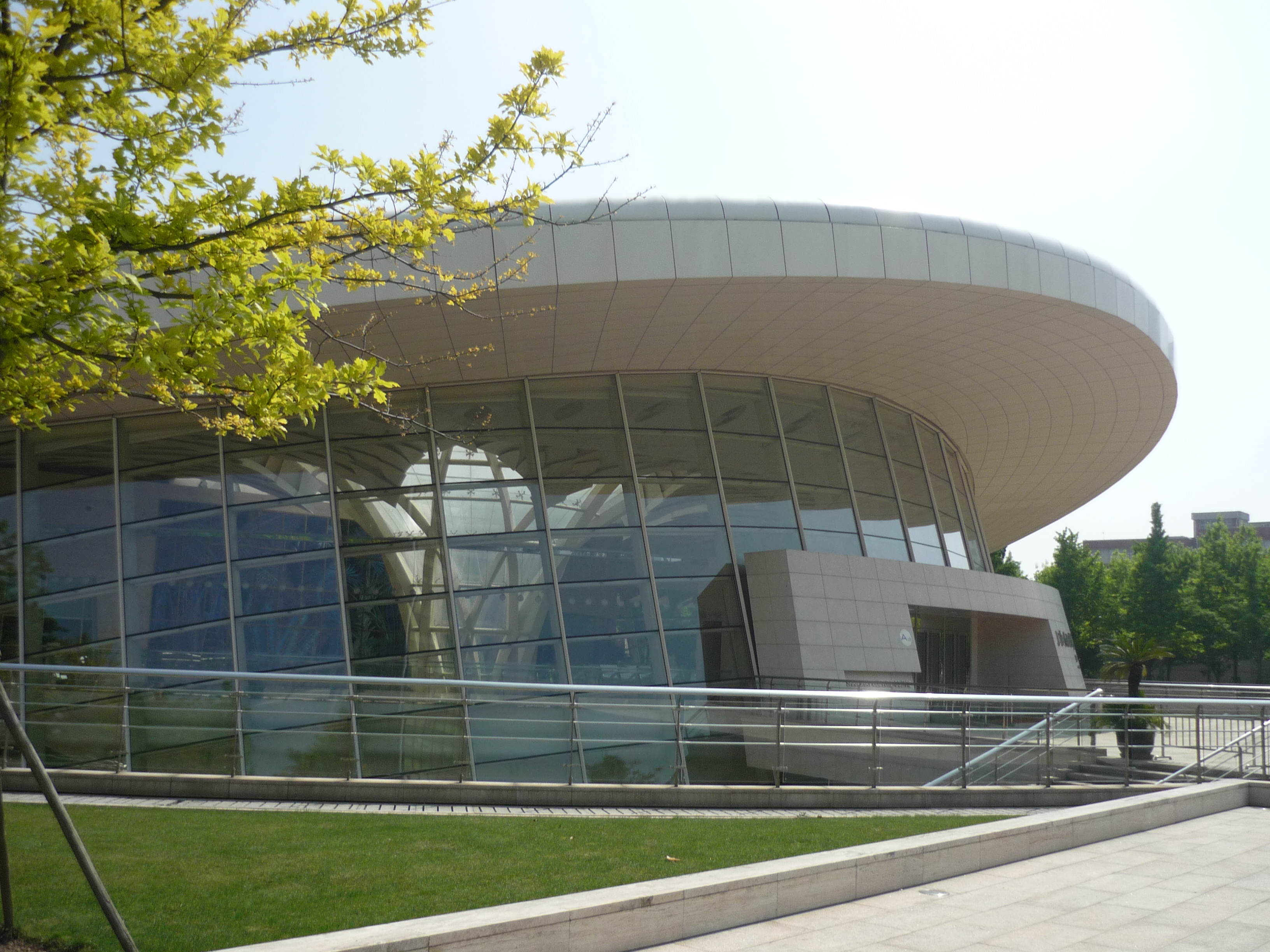
We went on from there to have a look at the site of the Shanghai Canidrome where Mr Morris raced his greyhounds.  Alongside the dog track had been a casino.  Since then it has worn a number of

Shanghai Culture Square

Shanghai Culture Square

hats.  After 1949 it became a CCP political site until 1976 when it was then used for government business for a short while, before becoming a venue for Peking Opera performances.  It then had a life as the Shanghai Flower Market for 8 years, before being set aside in 2005 as the Shanghai Culture Center. I had been told that a friend’s son would be performing with his ballet company, The Richmond Ballet, here at the end of the month and had hoped to buy our tickets, but the partially-submerged six-story structure was completely closed and empty except for the man on the roof cutting the hedge who gave Richard the collywobbles about risk assessments and safety hazards.

Front of The Shanghai Culture Center

Front of The Shanghai Culture Center

Hedge-cutter

Hedge-cutter


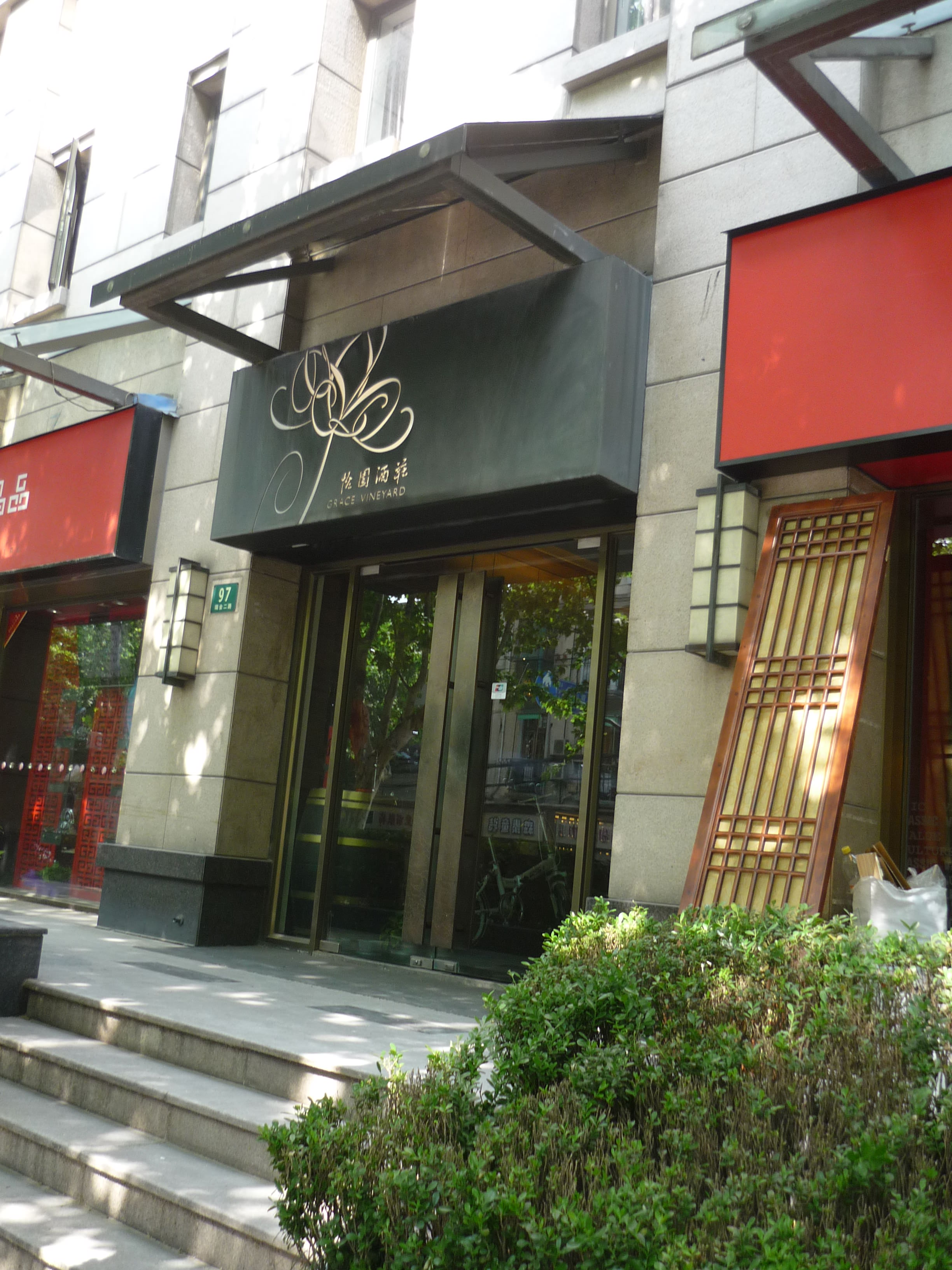
Grace Vineyard

Grace Vineyard

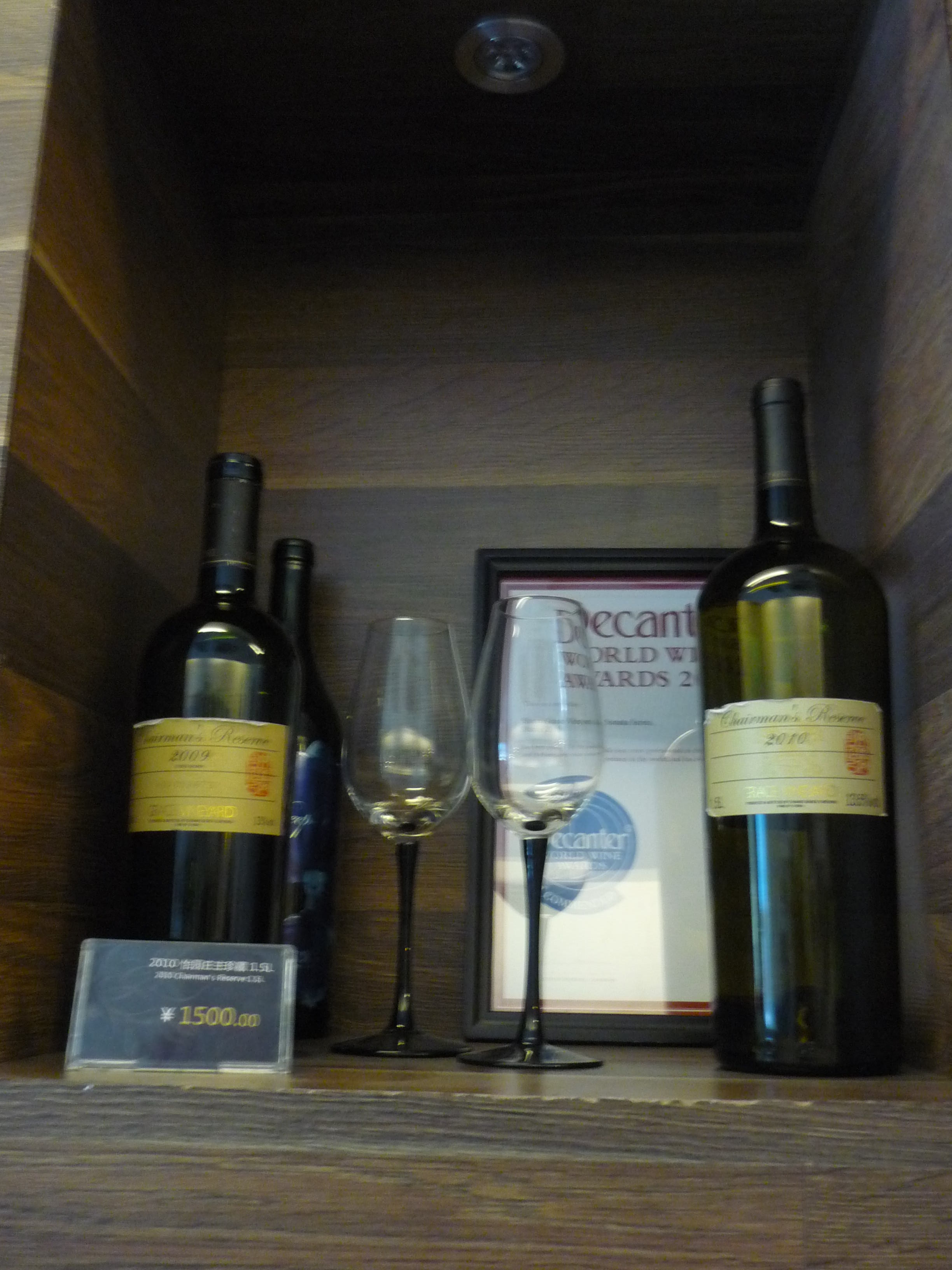
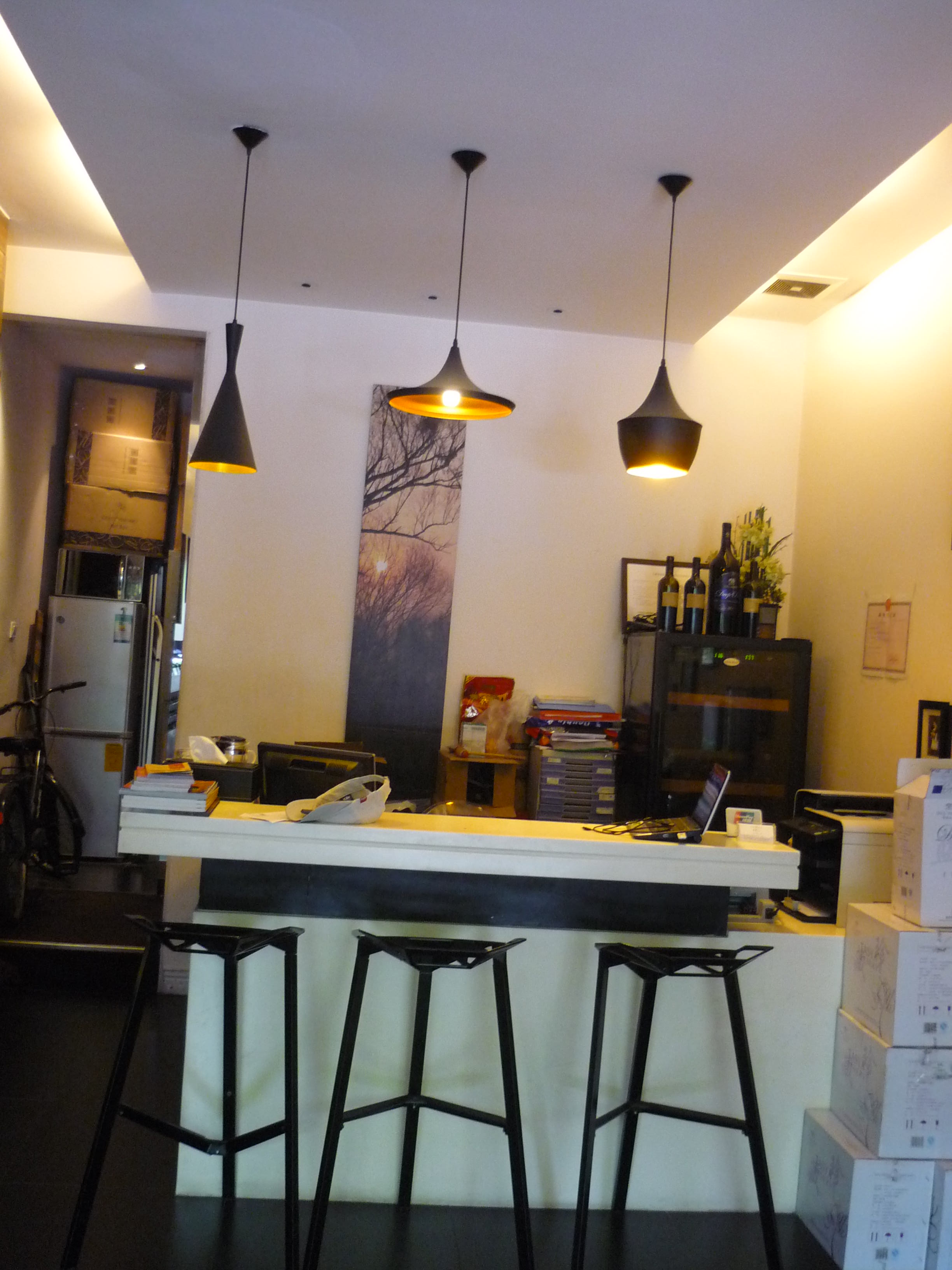
From here we went onto Grace’s Vineyard – a wine shop. I first heard of Grace’s Vineyard from a television programme about young Chinese Entrepreneurs.  Whilst the youngster in question had been away in the US getting a degree in psychology her father, a coal mining industrialist who had been searching for the right spot for many years, had bought in 1997 a 200 Hectare farm in Shanxi Province (south-west of Beijing) in partnership with a french viticulturist and planted its many acres with 5 varieties of vines: Chenin Blanc, Chardonnay, Merlot, Cabernet Franc and Cabernet Sauvignon.  When she returned home she worked for Goldman Sachs in HK until 2002 when she resigned to take up her job to market the wine.  She bought in wine-making experts from France to help. None of this makes her an entrepreneur in my book – even the limited facts revealed in the TV programme made me think that she didn’t deserve the title – but never mind, the wines that they are producing are excellent and award winning.
P1070477 P1070479

P1070482 P1070481 P1070480

The wines are sold at similar prices to those in the UK  and we took a few home to England as presents and to show that the Chinese do indeed produce some excellent wine, despite the arguments we had heard to the contrary before we left the UK.  We bought a couple of bottles of Merlot and one bottle of  a Merlot – Cabernet Sauvignon mix, which we had the good fortune to share with Richard’s father whilst we were in the UK.  It was a good enough wine to consider it for use at Christmas and rightly deserved its plaudits.
Posted in Food Shop, Hotel, The Old French Concession | Tagged , , , , , , , | Leave a comment

Silk King

A couple of weekends before we left for the UK I went in search of some Chinese silk to be made into blouses.  I had brought a couple of one-sized silk blouses out with me to Shanghai as a general cover-up in the hot weather, but my swollen lymphoedemic arm had stretched the seams of the left arm of each one and I was in desperate need of some substitutes.  There are a number of places where one can buy silk, but I’d been warned that sometimes the sellers aren’t selling the real McCoy.  Now the test for real silk is to burn it.  Well a thread of it at least, but I didn’t have the confidence to go round setting fire to the stuff in the local markets, so I opted instead for a branch of the Silk King, which was recommended in a couple of guidebooks and which turned out to be a government owned chain.
Just in case you are wondering natural silk is a fibre that burns like hair, with the same smell as burnt hair and it leaves a black residue of ash once burnt.  Artificial silk will melt on burning if it is made of polyester or some other manmade fibre, or if it is rayon which is made of wood pulp it will smell of paper as it burns and leaves a white ash behind.

Mr Harrys

Mr Harrys

Tables at Mr Harrys

Tables at Mr Harrys

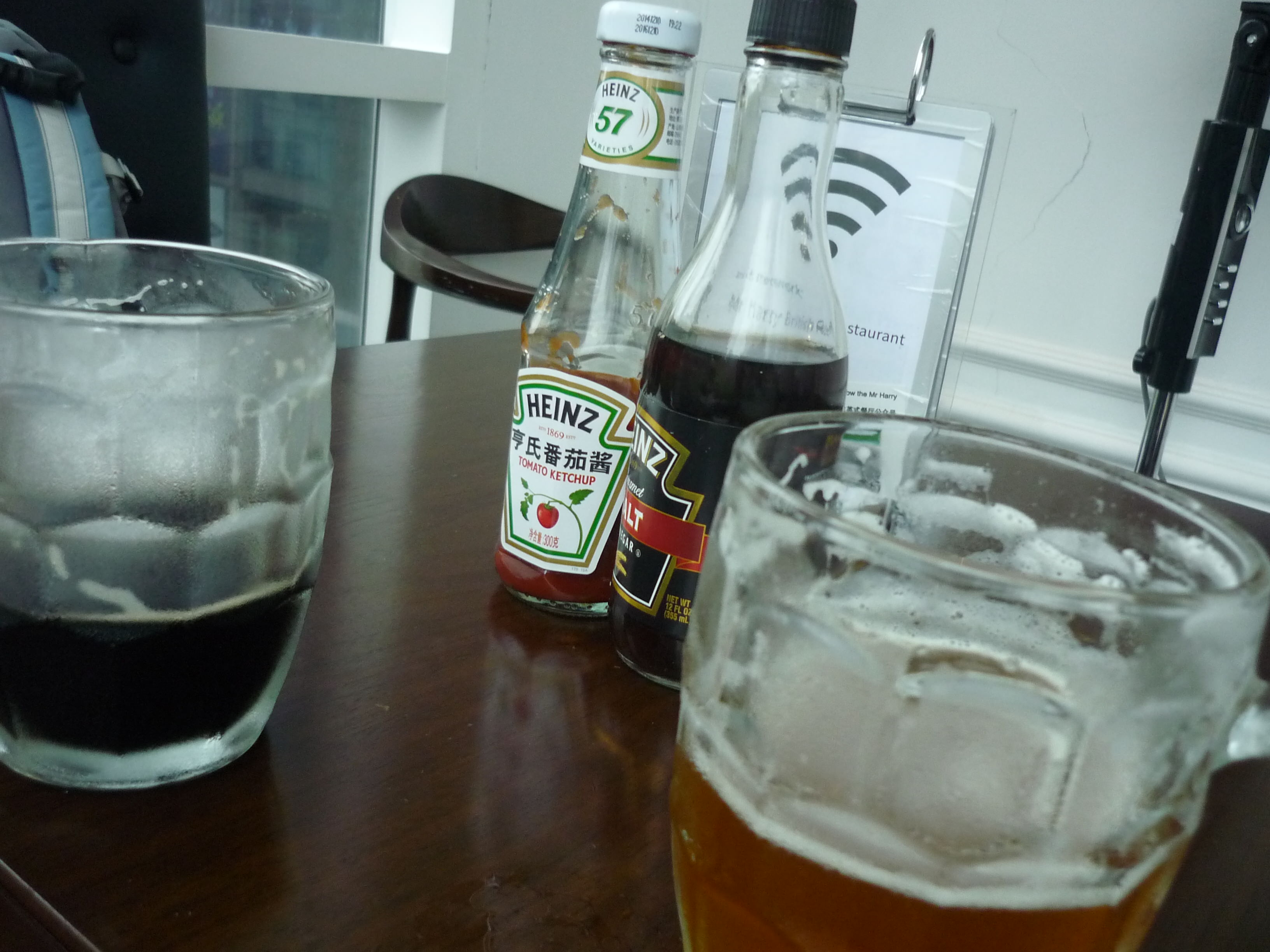
Beer, Ketchup and Vinegar

Beer, Ketchup and Vinegar

We went up to West Nanjing Road where I had walked past a branch of Silk King several weeks before and we stopped off at Mr. Harry, at Richard’s suggestion, for some lunch.  (His work takes us to all sorts of places!) This establishment on the second floor of a tower block is a cross between a Harry Ramsdens, a British pub and a sort of tea shop.  There was even tomato ketchup and vinegar on the tables and we had British beer in traditional beer glasses.  Richard had fish and chips, complete with pureed peas (not mushy) and

Mr Harry's Fish and Chips

Mr Harry’s Fish and Chips

Mr Harry's lasagne

Mr Harry’s lasagne

Tomorrow Square

Tomorrow Square

tartare sauce.  The cod was excellent and he was convinced that it had been bought in frozen from the Marks and Spencer’s store down below.  I had lasagne, which came with chips, a salad and some garlic bread, but it didn’t quite pass muster as the sauce in the lasagne had carrot in it, but it wasn’t a bad attempt.

After lunch we headed along the road a 100 meters or so, overlooked by the Tomorrow Square Tower, home to the JW Marriott Hotel, but looking as if it belongs more to The Lord of the Rings (Sauron Tower) than Shanghai, to the West Nanjing Road branch of Silk King.


Silk King West Nanjing Road

Silk King West Nanjing Road

Silk Garments

Silk Garments

Five Lengths of Silk

Five Lengths of Silk

Here the government sells silk on the roll in various weights – the heavier the silk, the more expensive it is per metre.  They also sell silk scarves and silk garments and they will also make up clothes to your own specifications.  I ended up buying five lengths of silk to be made up into over-size blouses. However the quote that I was given for making-up was far more expensive than I would pay a dressmaker in the UK to do them for me (and indeed they were made up for me for less than half the price they asked for in China when I brought the fabric back to the UK).  As I could have also made them up myself if I had had access to my sewing machine and the time, I certainly wasn’t going to pay over the odds for someone in China to do it for me.

Across the street from the silk shop was one of a number of green walls we have seen around the city.  This one was multi-textured and multi-coloured and included some flowering plants.  All the plants are in pots set at a slight angle to the vertical and set into a frame.  I peered inside to see if I could see the watering system, but there was nothing obvious.

P1070505 P1070508

Marks & Spencer West Nanjing Road

Marks & Spencer West Nanjing Road

We walked back along the West Nanjing Road and continued on beyond Marks and Spencers until we reached the Jing’an Metro station much further down the street.  However we were struck by how much of a mess the Mark and Spencer shop front looked compared with the H&M store right next door to it, where the models were uniform and had a blank background and looked attractive.

P1070513 P1070512

The M&S storefront by way of contrast was bitty, messy and had a completely confusing look. We both felt that the British iconic retailer needed to up its game somewhat. P1070511 P1070510

Silk Blouse

Silk Blouse

The five blouses were indeed made up for me when we were back in the UK for a fortnight – each with slightly larger sleeves to be able to cope with my swollen left arm.  I’m wearing one of them today……

Posted in Independent Shop, People's Square | Tagged , , , , , | Leave a comment

It’s Been a While

It’s been a while since I have posted an article to this blog and that was not because I succumbed to the attentions of the black dog.  I did in fact make it to the Shanghai Botanical Gardens the very next day (more of that another time), but because I ran out of time before we headed back to the UK for a fortnight-long trip.  I had planned to keep the posts coming whilst we were in the UK, but that was just not possible, so I now have a huge back-log of things to write about.

Shanghai

Shanghai

We flew to the UK via China Eastern Airlines which isn’t the best airline in the world and we didn’t get this good view of Shanghai as we flew out – this picture comes from a friend of mine from my days at Merton, Oxford who is a television camerman and excellent photographer, who flew into and out of Shanghai on a filming trip whilst we were in Blighty.  Our own plane went south of the city and then turned eastwards, before heading in a more northerly direction towards Mongolia.  Our air hostess on China Eastern on the trip out was rude and aggressive and the food was poor, but at least onboard plane discipline has improved from the days when I first took a series of plane trips in China, when even sitting in your seats (never mind seat-belts) were an optional extra on take-off and landing on the trip between Guilin and Guangzhou in 1987 when I was the only westerner on board. (I really thought that someone would light up a Samovar mid-flight).

The Inn at Welland

The Inn at Welland

We crammed a lot into our two weeks.  We managed to have fish and chips at Wargrave on the river bank overlooking the Thames, one of the many towns my mother was evacuated to during the war, at Ottolenghi’s Nopi restaurant in a road parallel to London’s Carnaby Street, lunch in the courtyard at the Wallace Collection just round the corner from where my mother lived in London, at my favourite London shop Libertys, at The Inn at Welland in Worcestershire where we just had to have locally grown asparagus – the

The Malverns from Welland

The Malverns from Welland

right place and the right season for it, and at the Grosvenor Arms at Alford just outside Chester, at Carluccios on St Pancras Station, at the Red Lion at Stodmarsh in Kent and at Chilli Cool a Szechuan restaurant in Bloomsbury, as well as at countless Starbucks, Costas etc……

We met up with Rozy who was in the final throes of her degree in Chinese at SOAS, and with Charlie and his girlfriend Ella who had come all the way up from Falmouth, my father-in-law and father, Richard’s brother Graham and wife Nicki, my brother and family, my friends Susie and Rosie, Richard’s god mother, his second cousin and wife and his friend Adrian, and our neighbours in Fordwich Philip, Elizabeth and Julie.

The V and A

The V and A

Richard went to a Commercial Conference, met two customers and had two meetings with upper management, but failed to meet former colleagues for lunch on our penultimate day as a lock needed changing on our house in Kent.  He went to Nottinghamshire to see a man about a car and bought a bike box so that he could bring his racing bike back to Shanghai.  I went to Letchworth for a day’s Dutch Floral Design and visited the stunning Alexander McQueen exhibition Savage Beauty at the V&A on a whim and I am so glad that I did.  I popped into St.

St George's Hanover Square

St George’s Hanover Square

Libertys

Libertys

George’s Hanover Square as I was passing and enjoyed being in a city where you can see a bright blue sky and also see the stars at night. I bought a pot of Marmite and a few other things besides to bring back to Shanghai with me and downloaded my VPN onto my iPad which is going to make reading electronic books so much easier.

Alliums on the Drive at Fordwich

Alliums on the Drive at Fordwich

In Fordwich Richard cut the lawn and I pulled out armfuls of forget-me-nots and sat by the pond with our two cats who followed me around our garden all afternoon. And we arranged for someone to come and cut the lawn, as it evidently wasn’t being done properly, and I rang the bank (yet again) and organised next year’s insurance for the house and whilst I saw Julie about the roof of her garden shed Richard talked to someone about doing the repointing on our house, and I had my hair done in Whitfield.  I got five blouses made up from silk I had bought back from China with me, as I could get it done more cheaply in the UK than I was being offered in Shanghai…..and somewhere in the middle of all this I had a day in bed because I was suffering from fatigue.

TaiChi Class on China Eastern

TaiChi Class on China Eastern

Richard trying out the Tai Chi

Richard trying out the Tai Chi

We left the UK on Friday evening again on China Eastern and this time our air hostess was much kinder and understood her role perfectly.   And there is one benefit of using this airline: an hour before you land you get a free Tai Chi lesson on the plane’s monitors….

We arrived at Pudong International Airport with our two large suitcases and two carry-on cases and a bicycle box and after clearing customs etc. we went in search of a taxi.  Most of the taxis arriving at the rank were the normal Shanghai VW Jettas, but after a few minutes a slightly taller taxi arrived.  This meant that we could get all the suitcases upright in the boot and the bike box in the foot well of the back seat.  Richard took the front passenger seat, whilst I sat sideways, legs outstretched along the back seat there being no space for my legs on the floor….

We are now back in Shanghai and normal service has resumed.  Richard will be away tonight – he is going to the factory in Beijing.

Posted in UK | Tagged , , | 1 Comment