
Last weekend we decided to go for a walk from the apartment. It had been raining, but the water was no longer falling from the sky. My most recently purchased guidebook highlights a few places to visit in our neighbourhood, so we decided to go and seek out a place that the book described as being “a park that is rarely visited due to its somewhat hidden location”. It is just beyond the flyover that we can see from our kitchen (as long as the air quality is good enough).

VW Beetle Bling
As we left our apartment block we passed, at the entrance, a blinged-up VW Beetle – sorry the picture isn’t very good, but the curtains with the teapot tieback in the window should give you some idea of what else was going on inside the car. Meanwhile outside the compound a little further up the main Gubei Road where it meets the overhead Ya’an Elevated Road – the flyover – and the Ya’an West Road on the ground and the major Hongqiao Road going ENE – SWS in a crazy intersection

Recycling Cart
that involves lines of traffic doing 180° turns in the middle of the road (why not install a large roundabout?) this man was pulling his recycling cart right in the middle of something like ten lines of free-range traffic with barely a white line to muster any of it. As I stood waiting to cross the road, across from the strange sculpture that does not know whether it is a mushroom or a bunch of flowers, I was joined at the roadside by this dog, its pram and its owner. I haven’t seen many dogs in prams in Shanghai – they were
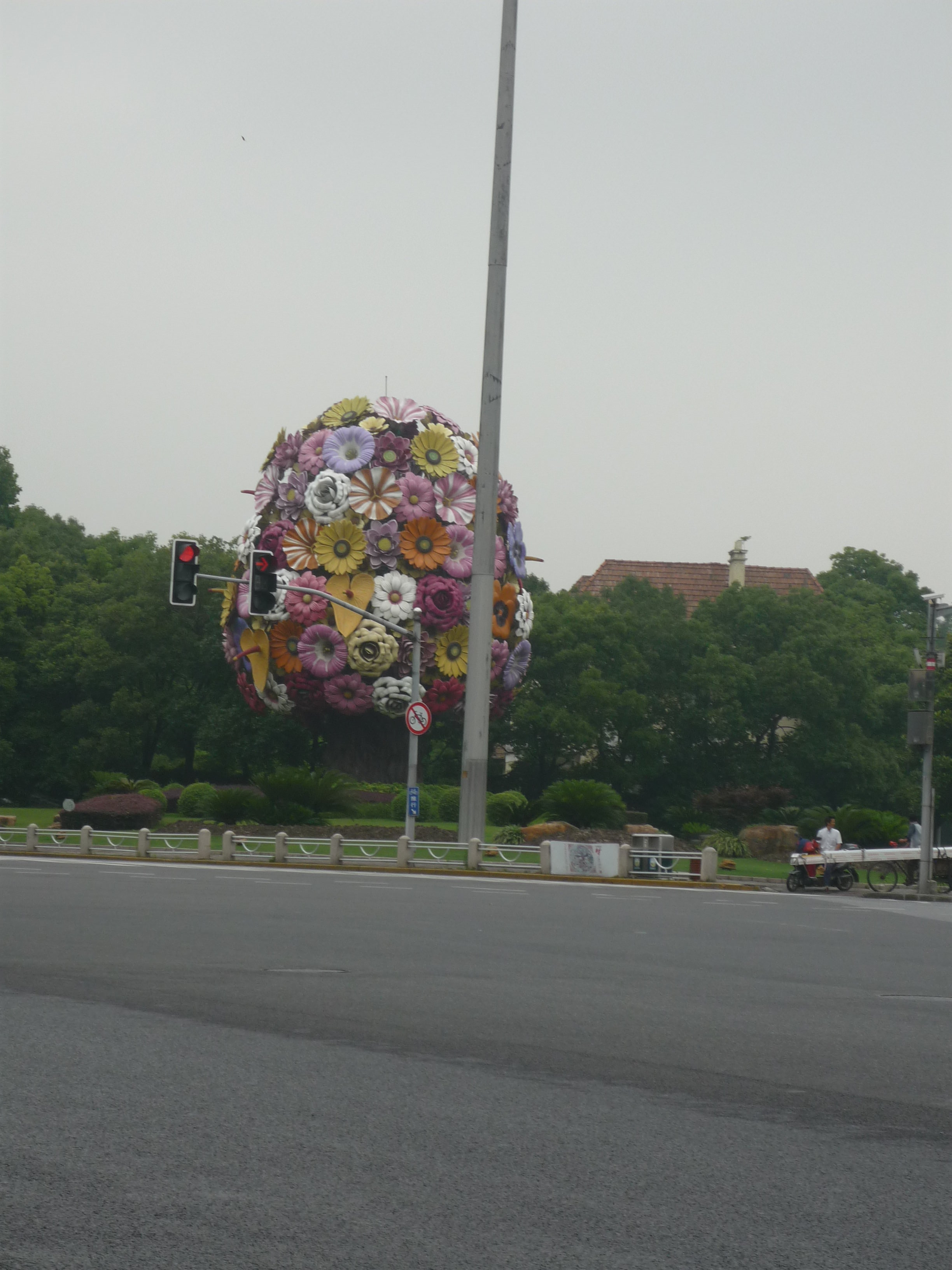
Mushroom Bouquet

Dog in Pram
everywhere in Taipei, Taiwan where we were last May. Perhaps the ROC will start spreading this idea to the mainland PRC shortly.
Richard hadn’t managed to get this far – he had had to go back and change his footwear and caught me up later by riding his Shanghai-bought traditional bicycle. Meanwhile I followed the directions in the guidebook to The Hongqiao State Guesthouse, but could not find it nowhere. Well at least nowhere where the guidebook said it would be. No wonder they described it as being “rarely visited due to its somewhat hidden location”. If you don’t label your maps correctly is it surprising? What we did find in the guide’s location for it was a series of modern, highly impregnable, heavily guarded consulates, the more impregnable the consulate seemingly dependant on how much that country is currently in dispute with China.

Armed Soldiers at The Japanese Consulate
The Japanese Guozong Consulate, was the most like a concrete box, with evident satellite communications equipment on the roof and armed Chinese soldiers at the gates.
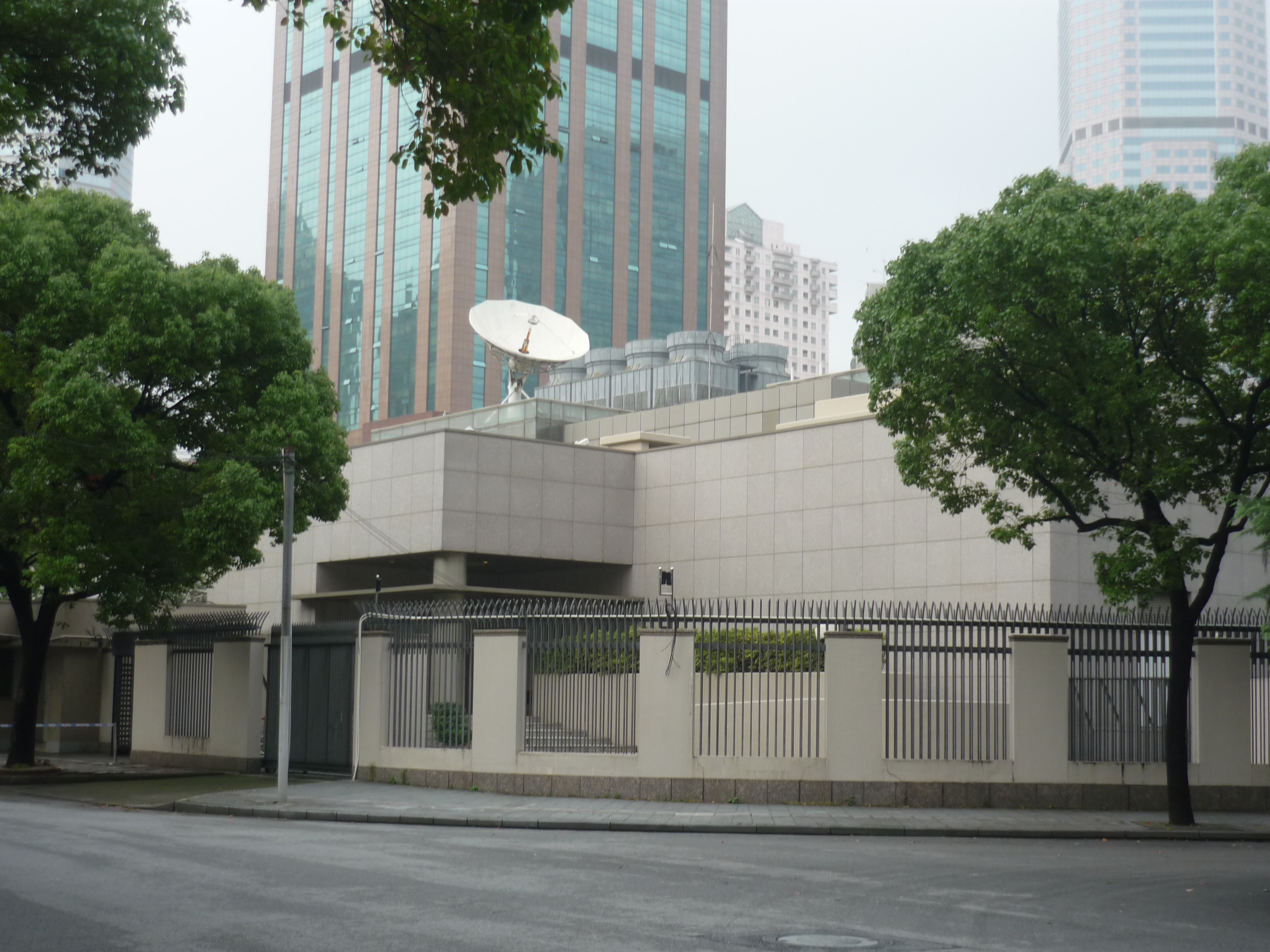
The Japanese Guozong Consulate
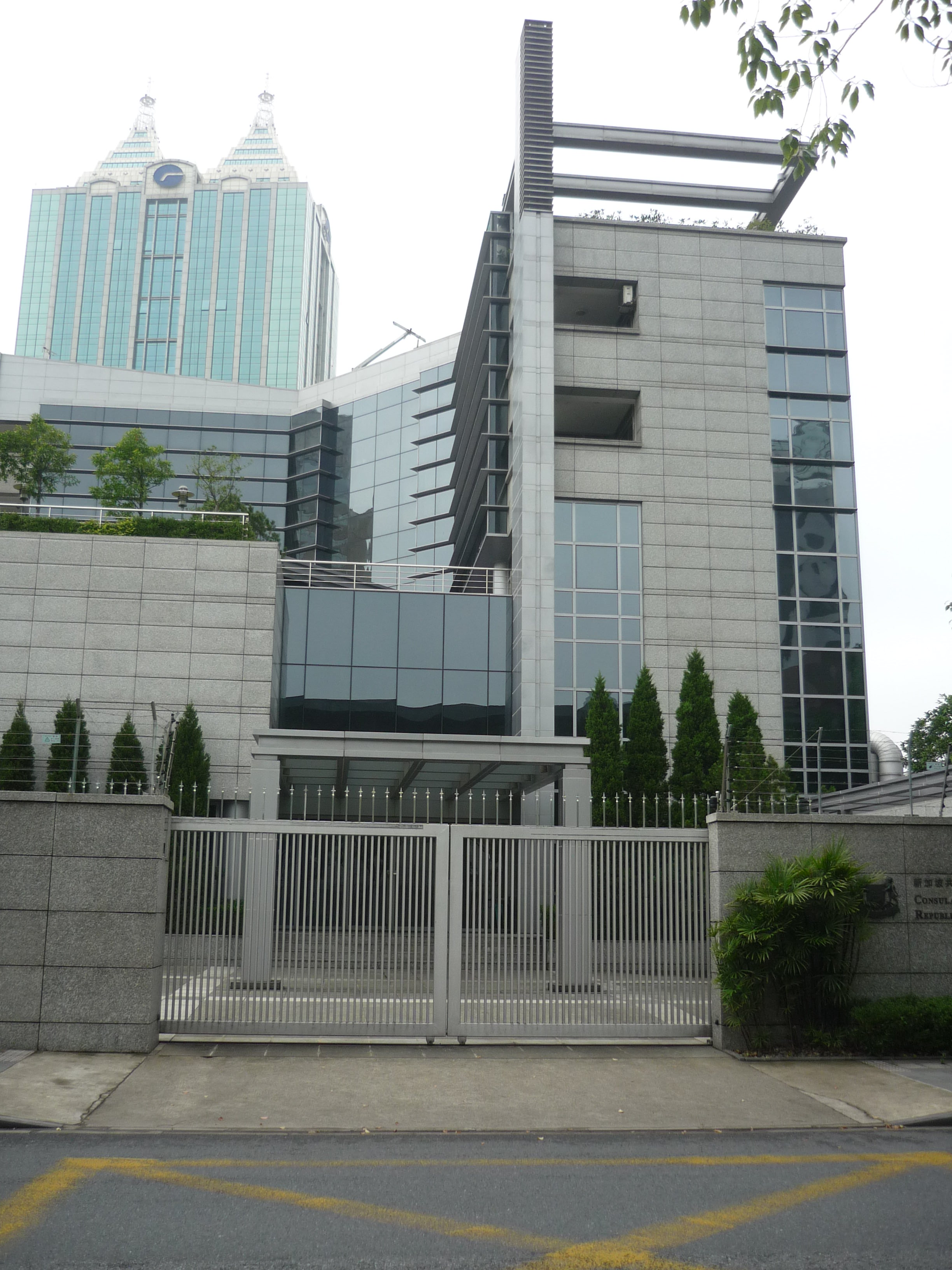
The Consulate General of the Republic of Singapore
The Korean Consulate had a bit more glass on show – they have allowed themselves some windows on the outside world, whilst The Consulate General of the Republic of Singapore had by way of contrast vast plates of glass on show. There are various reasons why Japan,

The Korean Consulate
Korea and China don’t all get along. Much has to do with the years leading up to the Second World War when Japan gained German territory as a result of the Treaty of Versailles and then went onto highjack China’s deposed Emperor Pu Yi, installing him as a puppet in Manchuria which the Japanese seized and called Manchuko. The Japanese continued to expand into China well before the official start of the Second World War, the next phase starting with the capture of Shanghai between August and November 1937 and the Rape of Nanjing in December of that year (A good, if harrowing, book on the subject is The Rape of Nanking by Iris Chang). When the Japanese surrendered to the US in 1945, the war with China also ended. But it appears that Japan did not do what Germany did which was to put up its hands and declare mea culpa. There are disputes today with its neighbours about what is written in Japanese school history books about the

Disputed Spratly Islands in the South China Sea
period, what is said about the “comfort women” – the personal testimony of some of the women involved being in direct conflict with the Japanese line etc. When Rozy was in Beijing there was an incident between the two countries about the Spratly Islands and the Japanese students at her university went to ground, not daring to show their faces in the city (their Ambassador’s car had been attacked). I have no idea what happened to the Japanese living in our neighbourhood here in Shanghai in 2012/2013 when the animosity boiled to the surface, but it could all happen again as China continues its efforts to take concrete ownership of some of the disputed Spratly Islands (claimed by Brunei, China, Malaysia, The Philippines, Taiwan and Vietnam) by land reclamation of the coral reefs and the building of a runway. Oil and gas reserves are at the heart of their appeal. Japan in response is cosying-up to its neighbours and its ally America.
Whilst Consulate viewing is all very interesting it had nothing to do with The Hongqiao State Guesthouse, other than it is the place where visiting dignitaries from other countries stay when they are visiting Shanghai. Richard by this time had joined me on his bike and after he had cycled the circuit I had already made on foot, to prove to himself that my map was indeed wrong we decided that we should try and use the address given instead.
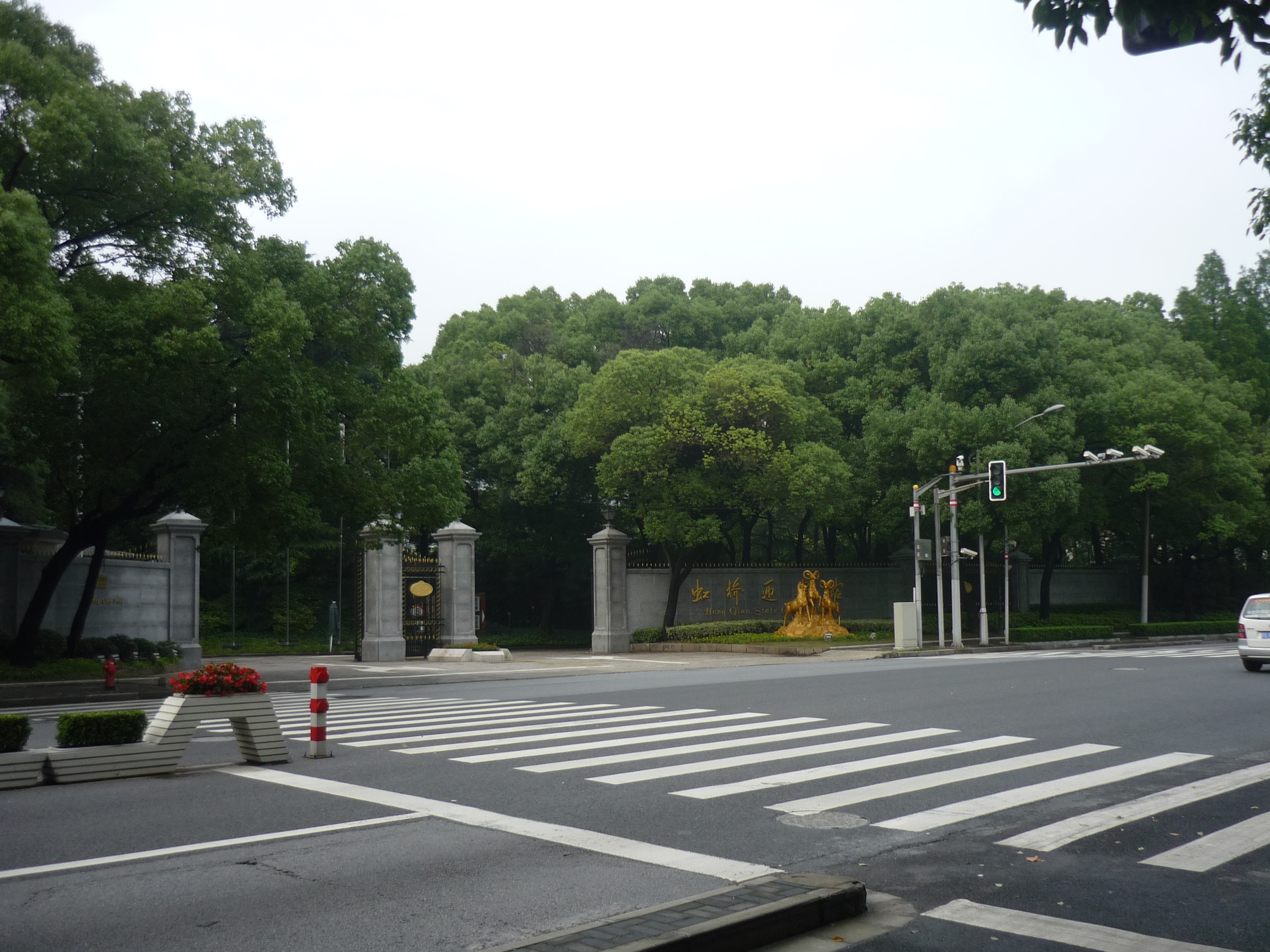
Entrance to the Hongqiao State Guesthouse
This mismatch of map and actual location happens a lot in Shanghai. It doesn’t help that the GPS locators and the maps on our Chinese phones are about 200 metres out. This is what I think happened in drawing up the map for the guidebook – the author probably located it on a local Chinese phone and drew it on the map, not taking into account the fact that the maps are approximately 200m more easterly than they should be……….We found the entrance to the Guesthouse

Inside the Entrance
about 200 metres further west. Bizarrely this mismatch doesn’t happen if you ask the Chinese mobile for directions from where you are to where you want to go. This type of search always appears to be accurate……you just need to understand the quirks of the system and compensate for it.
The gardens of the Hongqiao State Guesthouse were once part of a 50 acre estate owned by Victor Sassoon, whose inner-city pad was under the copper

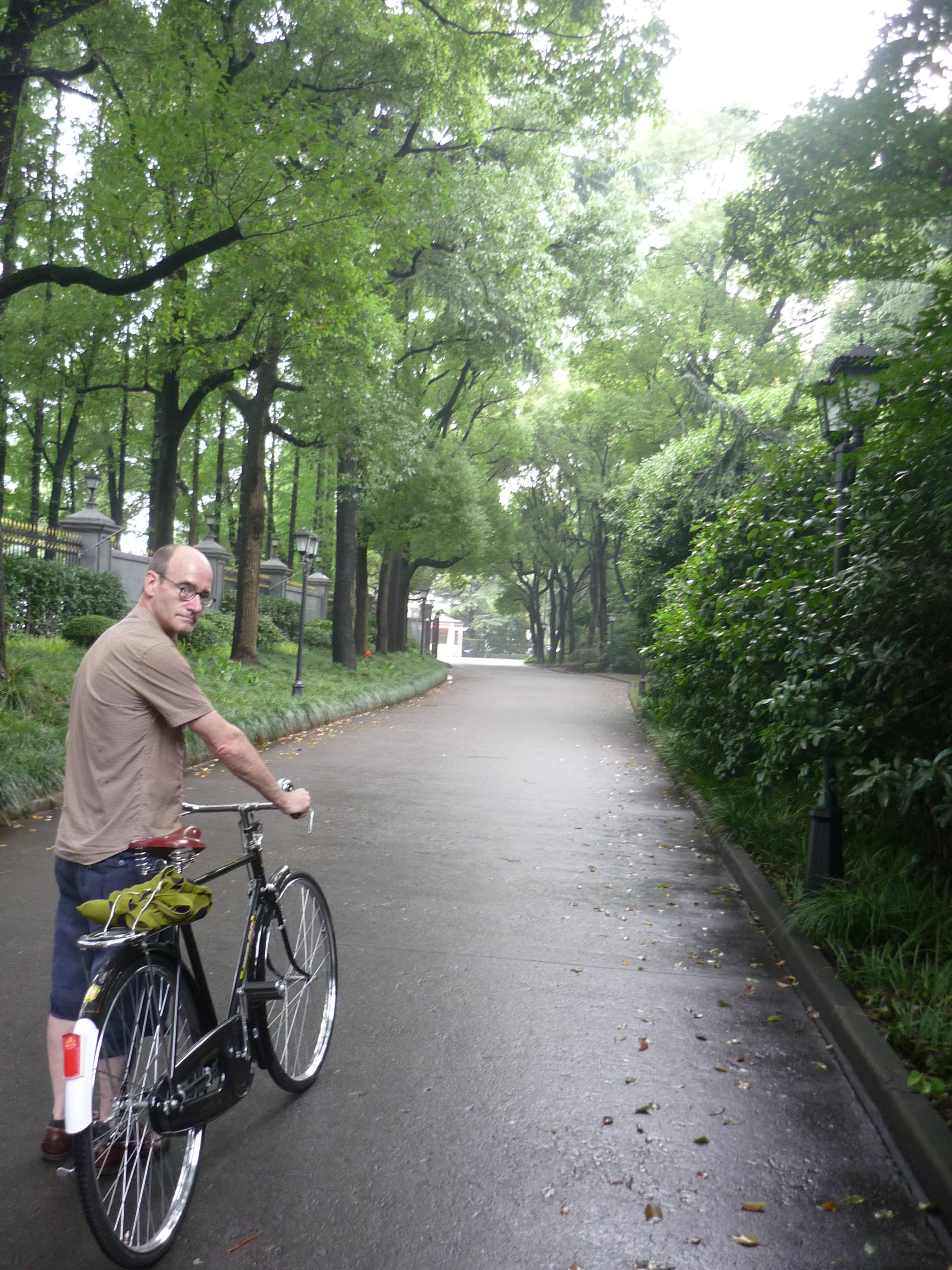
Richard, The Shanghai Bike and Palm Trees

Palms and Grasses

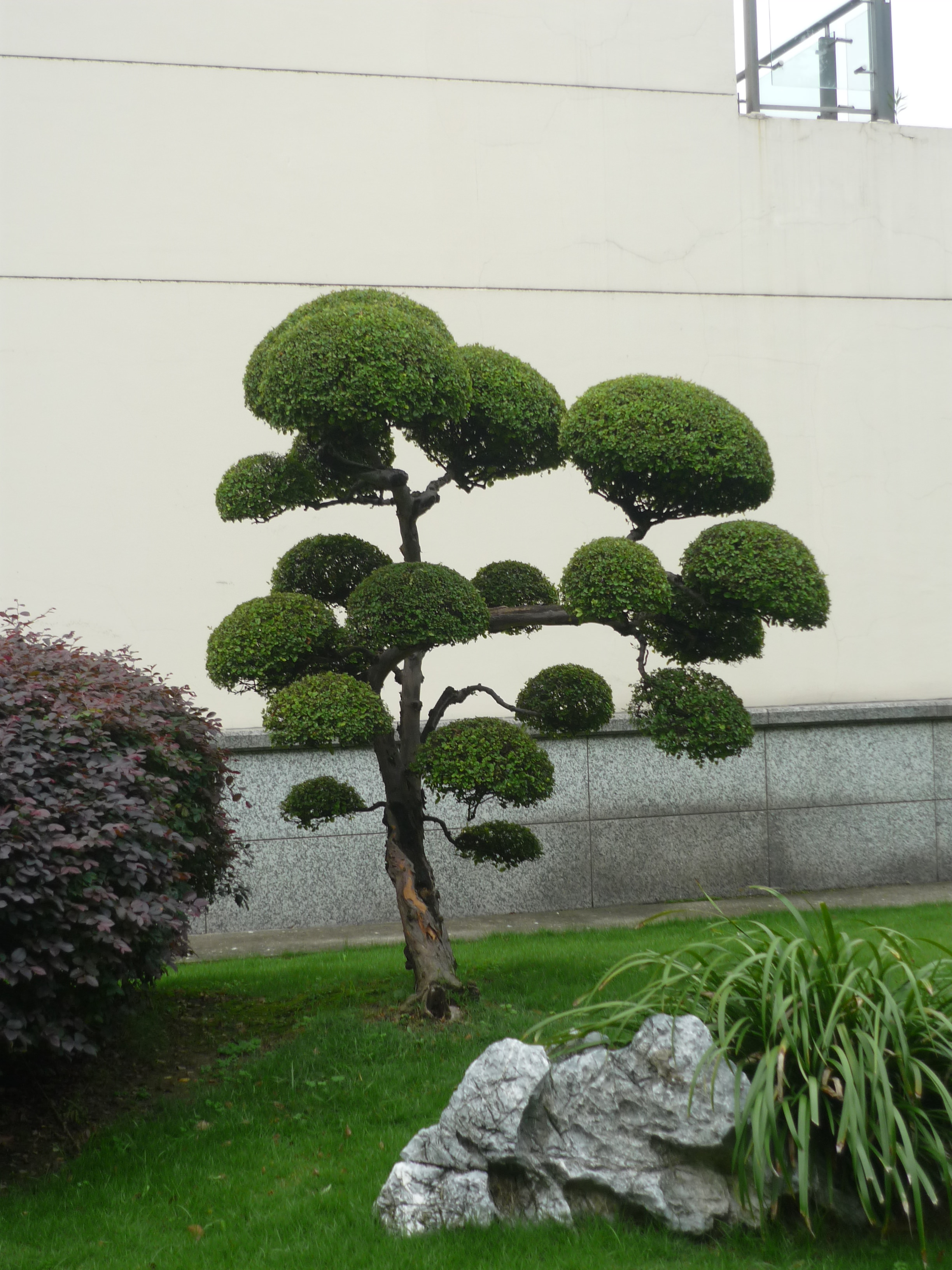
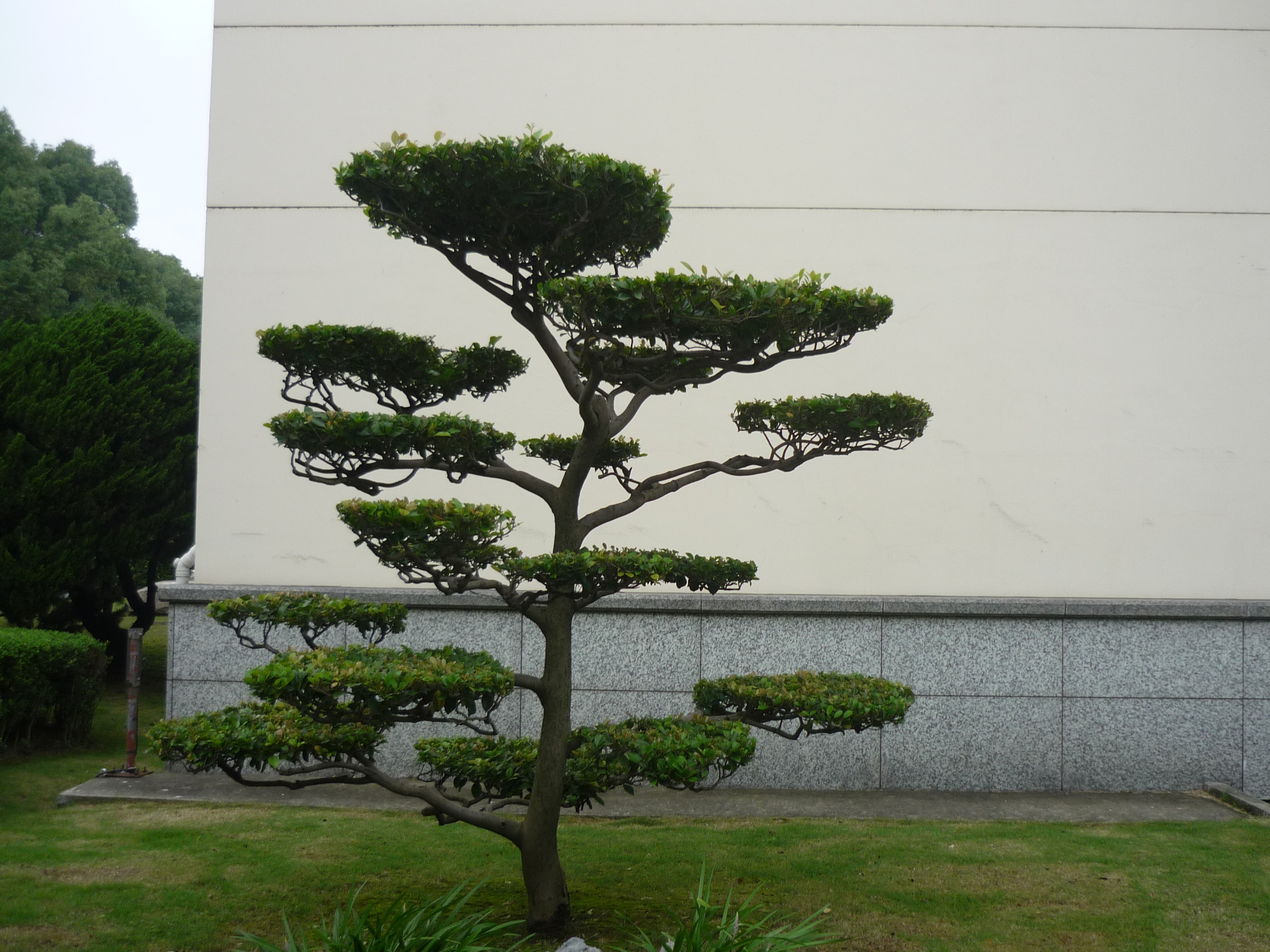
Trained Orange Trees
dome of his Peace Hotel on The Bund. He was from a Baghdadi-Jewish family who owned cotton mills in India and profited from the opium trade. He was educated in Britain and in the 1920s he moved much of his money out of India and into property in Shanghai where he made even more money building the smarter parts of the city. The upshot of all this is that the gardens not only have oriental orange trees and palms, but british-stlye grand mature conifers and big wide open green lawns.
The Guesthouse has a main central building and a large number of smaller villas scattered throughout the grounds. I understand that Queen Elizabeth II stayed in one of these when she visited Shanghai.
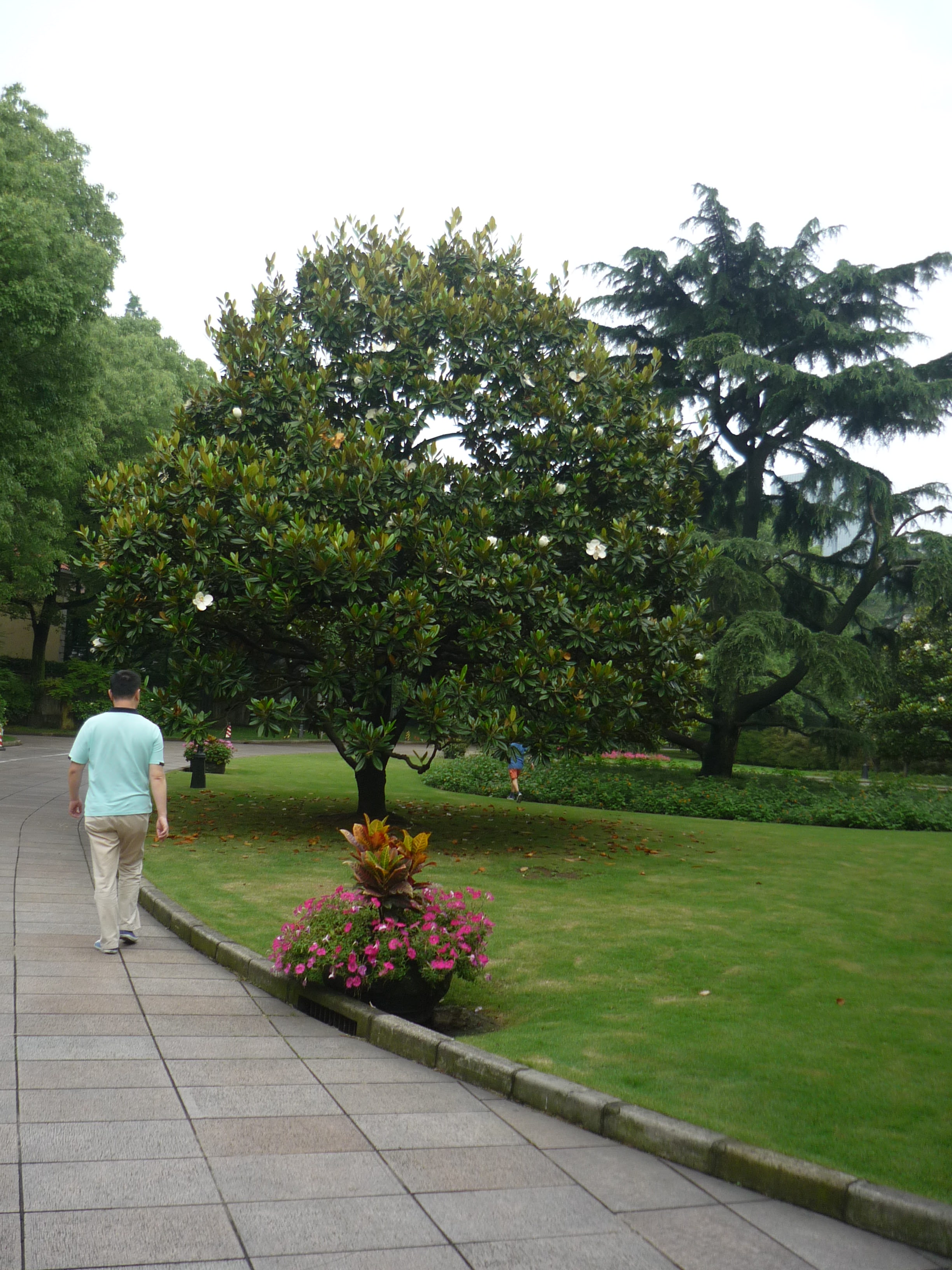
Conifers

English-style lawns
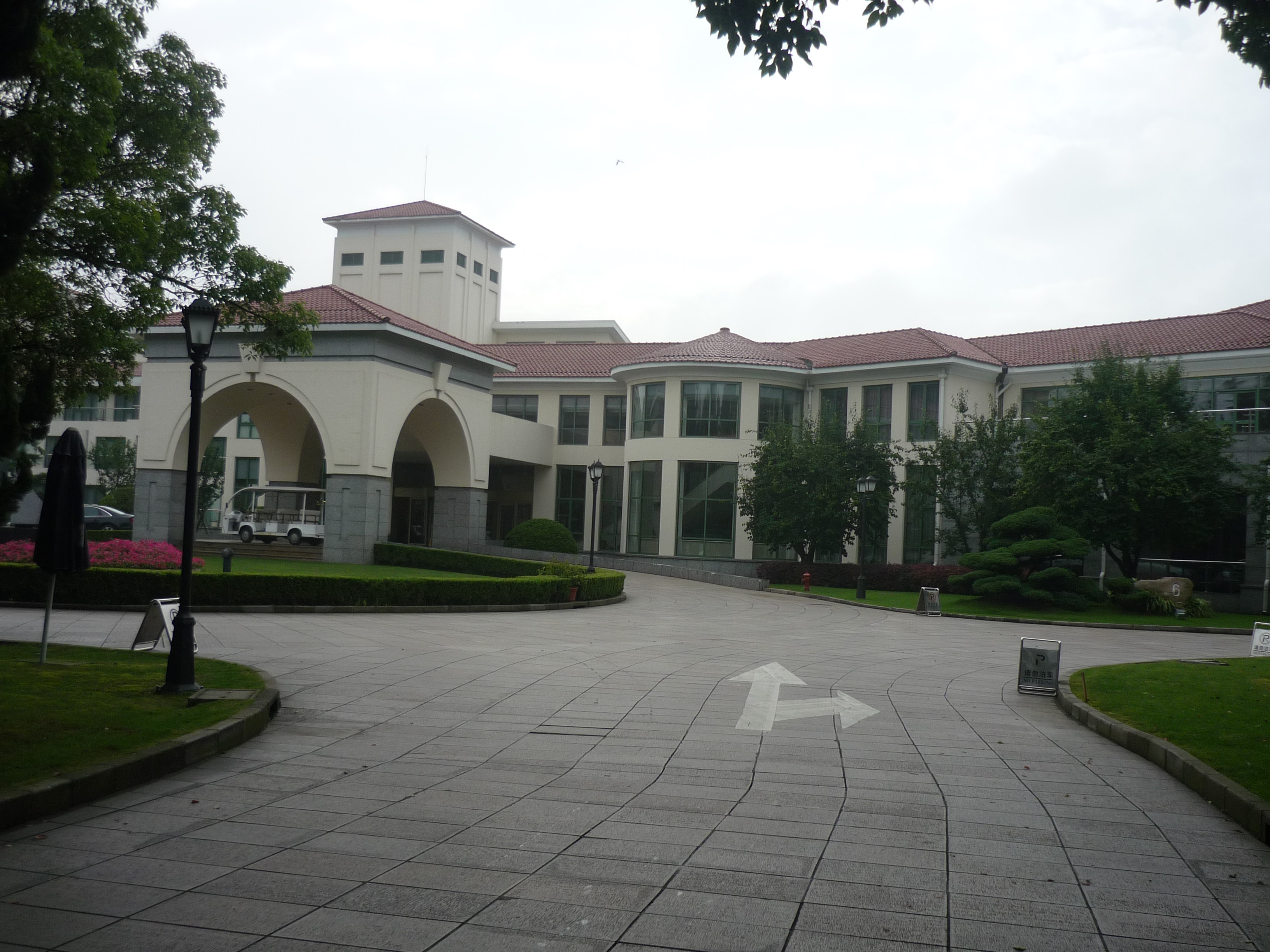
The Central Guesthouse Building
It was Deng Xiaoping who decided in the 1980s to create a series of guesthouses to accommodate visiting dignitaries and this 5* hotel is part of that state-owned Donghu Hotels group.
Despite the fact that this is a 5* Hotel where VIP guests could stay, we appeared to be perfectly at liberty to wander around the grounds, even with a bicycle in tow. The various guesthouses were in different


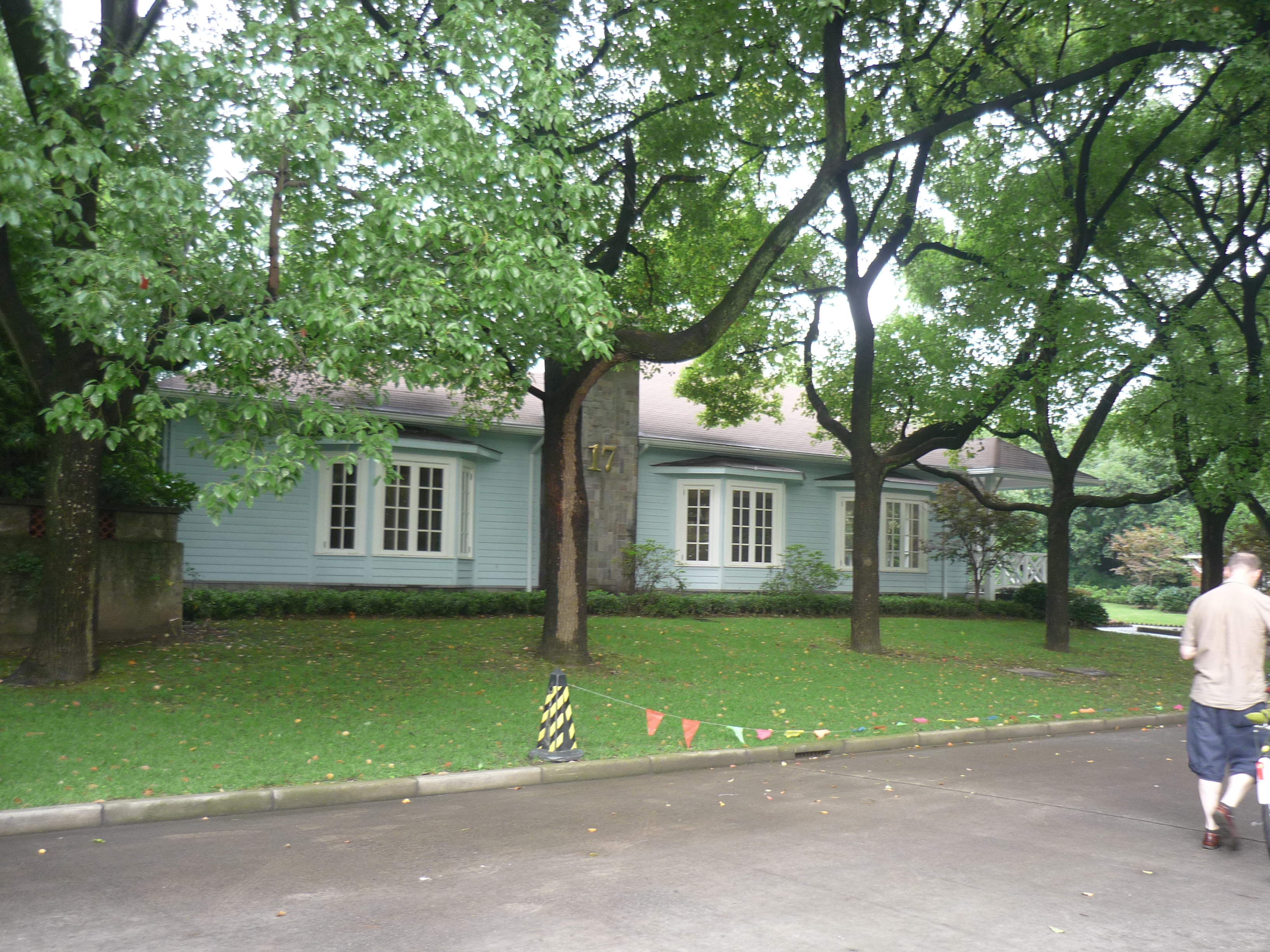
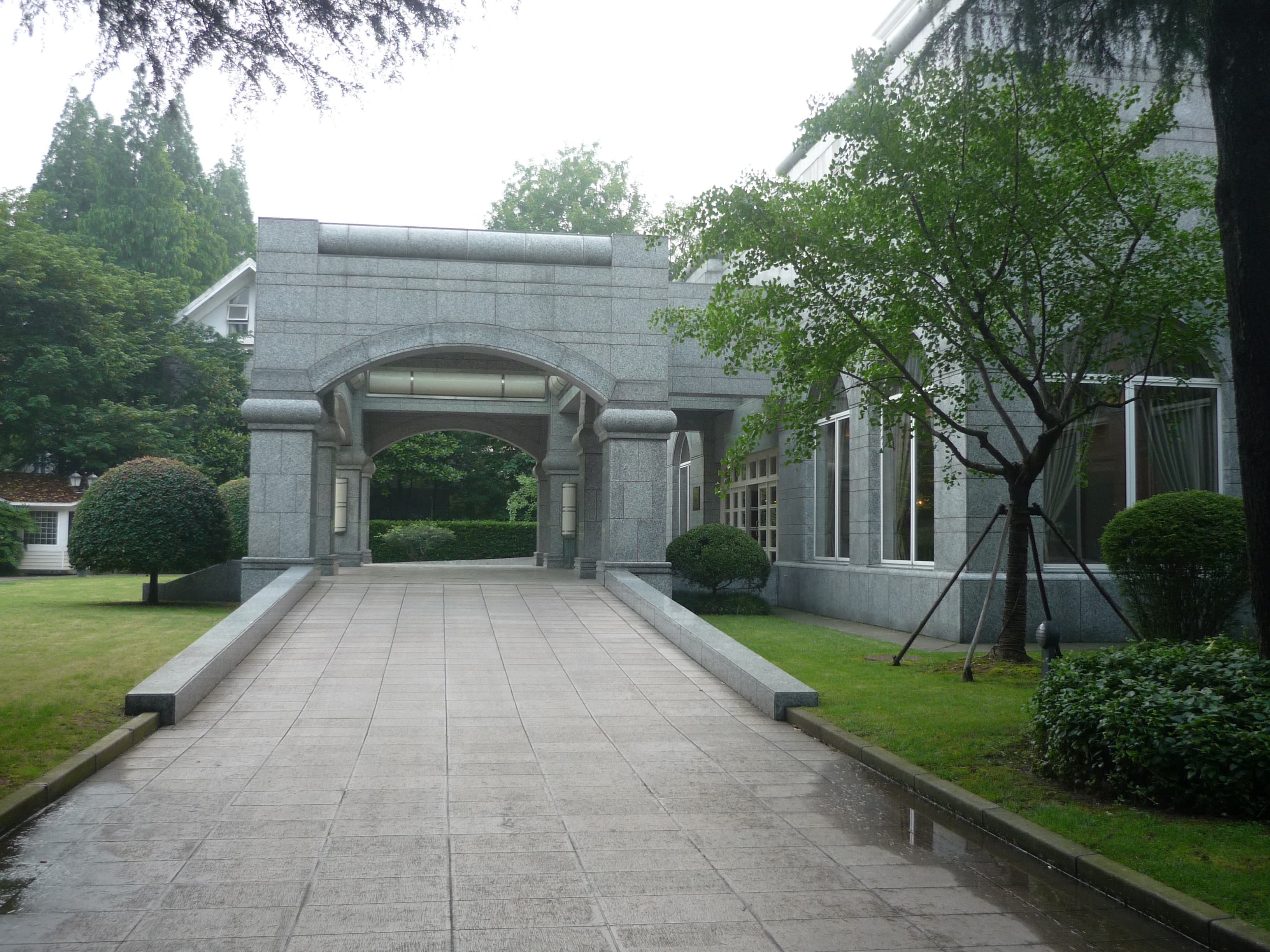


styles and each was in its own secluded area, surrounded by vegetation and therefore secluded. A few, but not many, of the trees had been cloud-pruned. My guidebook described the sprawling manicured grounds as one of the most beautiful green spaces in the city. I don’t think that is the case. There are other parks that I have visited that I have liked more. But if you are looking for somewhere that is quiet and devoid of people here is the place to come and that is a rarity in this teeming city.


When we got back to our apartment block it was sad to see that the Gardenias with their waxy white flowers and heady almost over-powering scent and which had only opened the week before, had been damaged in the recent rains.
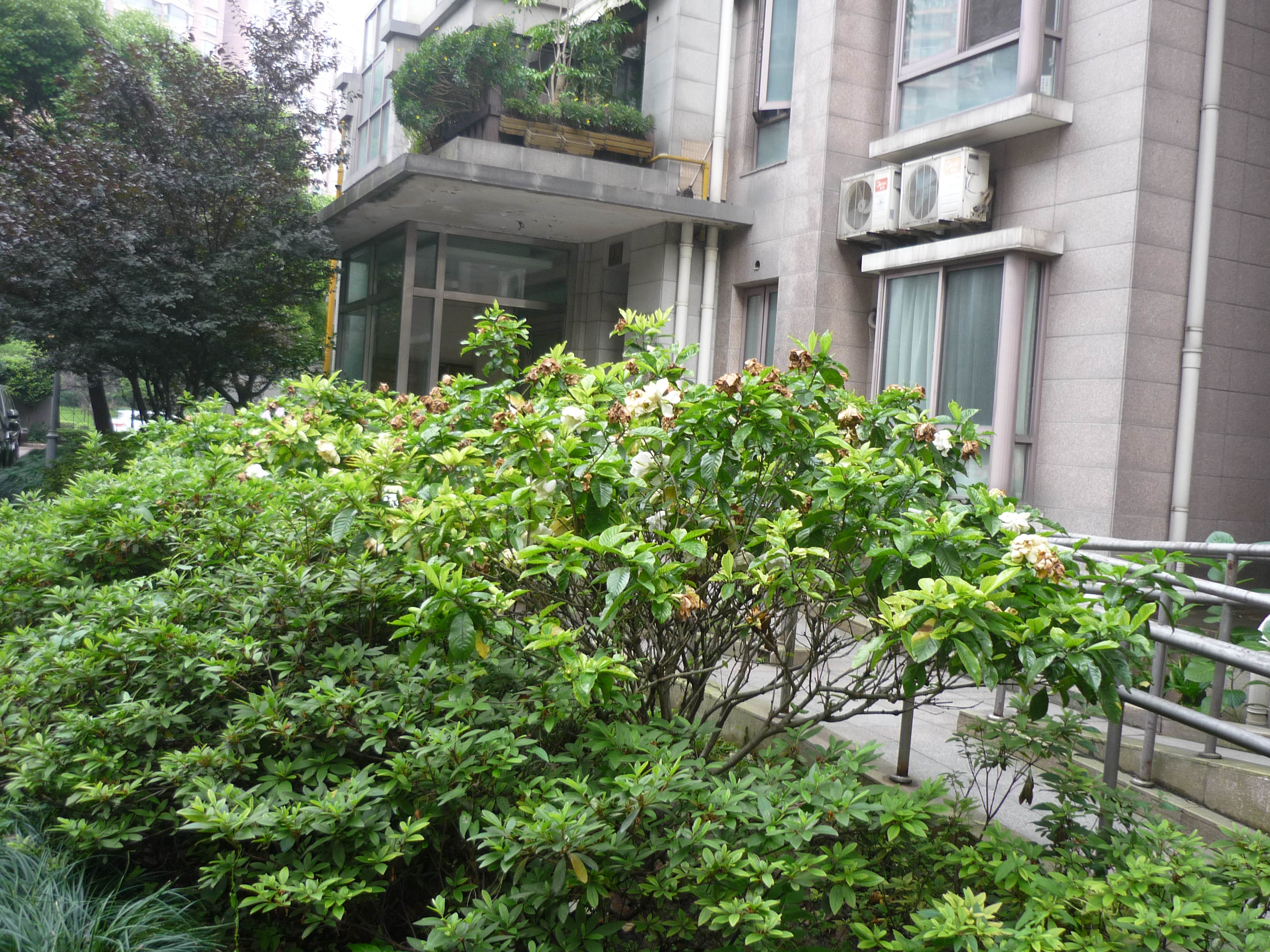
Gardenia Bushes
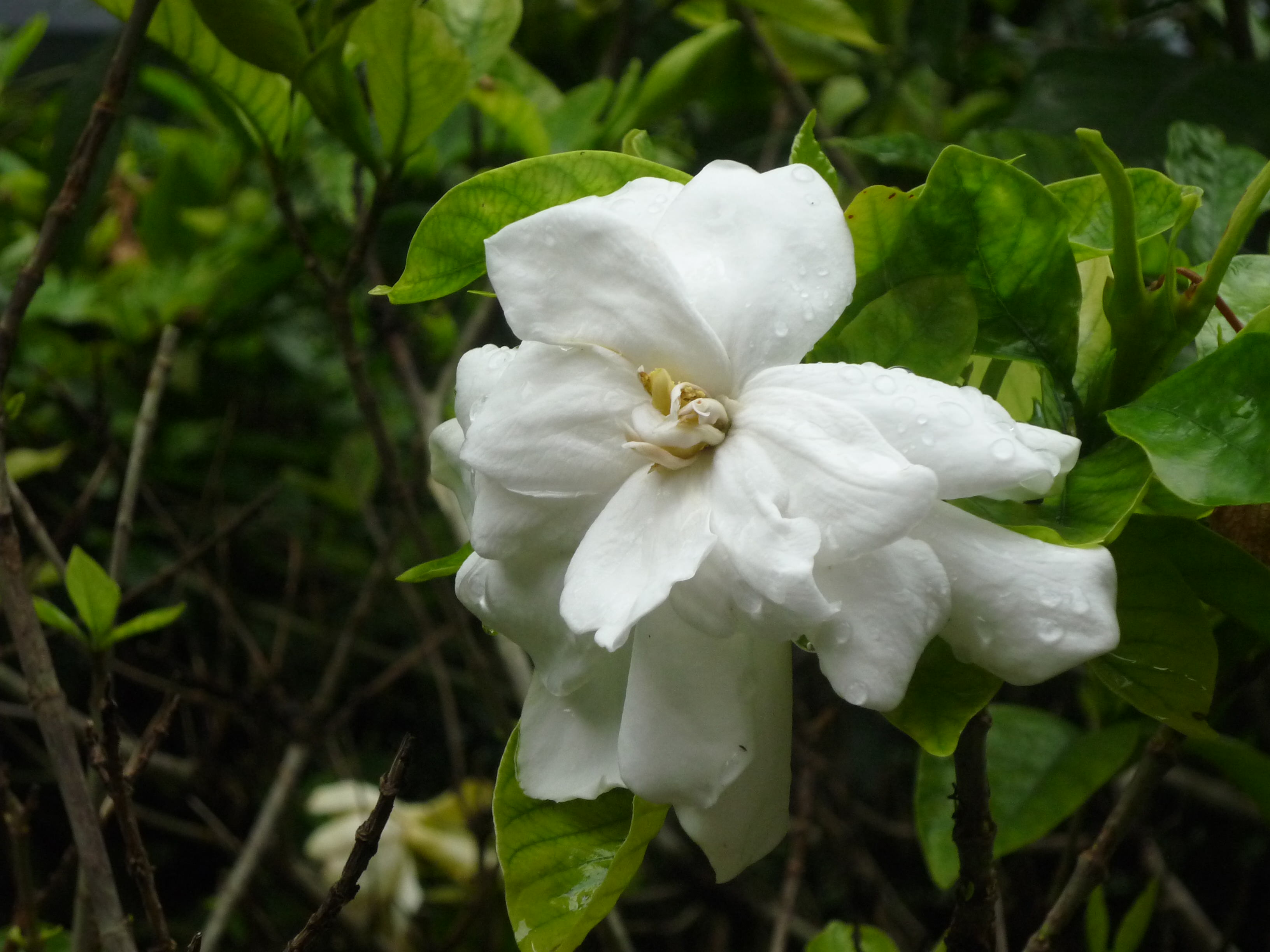
Gardenia Flower

 Pearls From The Orient
I didn’t know this little bit of trivia about the Hongqiao state guest house. I’ll look in on it next time I’m in Shanghai. David Sassoon was based out of Mumbai, lots of public buildings here were donated by him. Thanks for posting.
Useful information about the maps. No wonder I’m always lost in China.
LikeLike