
 Apart from sightseeing, writing and quilting one of the things that has kept me off the streets of Shanghai has been my cookery lessons at The Chinese Cooking Workshop. Just after we arrived I reported to you my first Dim Sum lesson in which I learnt to make Spring Onion Pancakes and Pumpkin Dumplings. Since then I have done another 19 more Dim Sum classes and so in theory I can make for you the following 40 dim sum dishes:
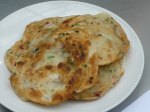
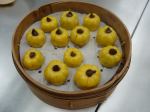
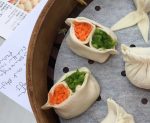
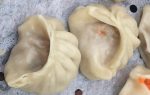
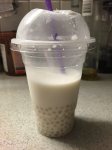
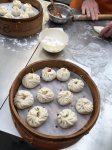
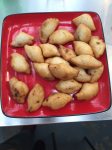
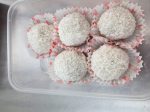
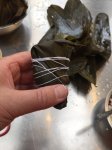
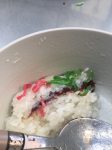

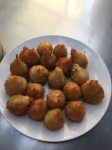

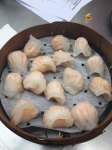
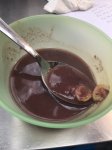
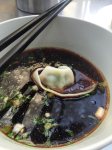
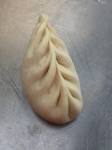
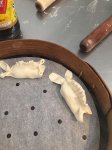
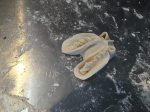
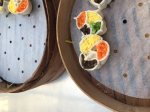
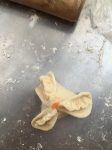
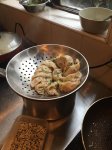

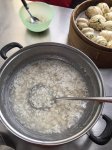
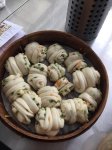
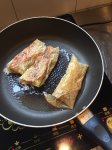
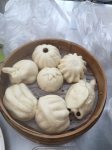

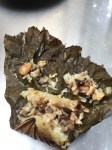
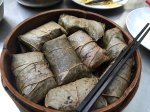
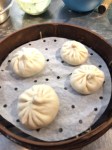
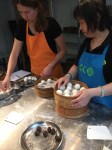
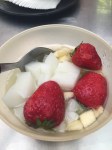
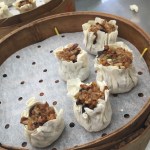
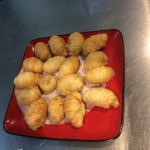
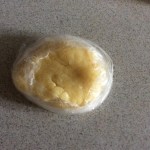

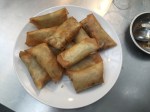
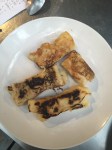
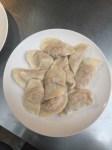
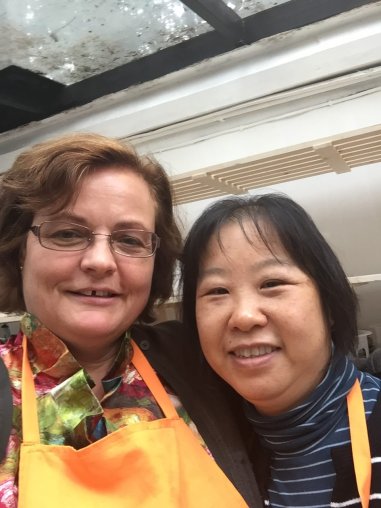 Some of them taste wonderful. Others do not. Some are dumplings, some are buns, others are wraps and still more are desserts and soups. The fillings run from pork meat to seafood from vegetables to rice. Some are steamed, some are deep fried. Some I overcooked, others I did not. The wraps can be made from bean curd, leaves, bread dough or pastry. With wheat flour, rice flour or potato flour. In general we learned to make the wrappers from scratch, from piles of flour and water. Some used hot water at this stage, others cold. Dim Sum dishes are often served with a sauce. This can vary from simple soy sauce or rice wine vinegar to the more complicated hot chilli sauce, ginger soy sauce, plum or black bean sauce. I was helped all the way by this kind lady, who speaks about as much English as I do Chinese (not a lot) and whose favourite term (like a lot of stall traders with limited English here) “looky, looky”. But we got by, making as you can see, some quite complicated shapes, essentially out of flour and water paste, all the while translating my left-handed versions from her right-handed ones. Once we are back in the UK I shall no doubt get out the tiny rolling pins I have acquired and make them again. And if you are interested, I expect I could give you a lesson or two.
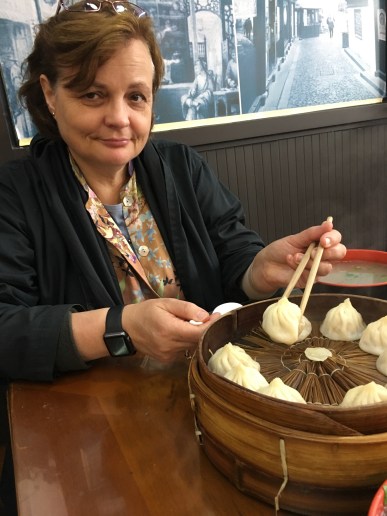 Taking Dim Sum is a Cantonese tradition, eaten as a brunch with lashings of tea. Last year we had Dim Sum with one of Rozy’s friends, Joyce, in Hong Kong and we have been to lunch with American friends – the husband is of Cantonese descent who took us to their favourite Dim Sum restaurant in Shanghai on the 3rd floor of IAPM shopping Mall over the top of Shaanxi Nan Lu Metro Station. (I think they have done quite a bit of research on the topic). Dim Sum is said to be related to the earlier silk road tradition of Yum Cha – drinking tea. Other parts of China also produce and eat these morsels – the most famous ones from the Shanghai region are the Xiao Long Bao of Nanxiang town, now subsumed into greater Shanghai and Jiaozi which are similar steamed dumplings that are then fried and so also known as potstickers. In fact this weekend we went to Nanxiang town by Metro on line 11 and whilst we were there we called in at the Rihuaxuan Restaurant the birthplace of the Xiao Long Bao. The dumpling traditionally contains pork, or pork and shrimp or pork and crab meat combined with a gelatinous mixture that forms a soup on steaming, so a judicious use of spoon and sucking is required to avoid spraying soup everywhere when you take a bite out of the dumpling. The crab dumplings were particularly delicious (Richard preferred the shrimp ones) and the pastry soft yet strong – I only managed to puncture one of them as I tried to lift it off steamer’s the bamboo mat. I’m looking for my own bamboo steamer mats – so much prettier than the modern paper ones with holes in. I’ve not been successful so far, but I’m still looking.

 Pearls From The Orient
So happy to read about your experience and I can see a little part of the flattering silk blouse. Beautiful! I miss you!
Love Ulrika
LikeLike